StartseiteMCPWorkbenchSkills
StartseiteWorkbenchBenachrichtigungenMein Bereich
llms.txt · MCP-AnleitungDatenschutz · Nutzungsbedingungen · Supportv1.8.3
  1. Startseite
  2. /Verbindung

(Z)-2-Methyl-2-butennitril

cis-2-Methyl-2-butenenitrile

HCID 6028739
Neue Reaktion
Drucken
GrundinformationenNamen und BezeichnerEigenschaftenSicherheit und RegulatorischesChemie und IndustrieZugehörige ReaktionenNotizen zur Verbindung
TeilstruktursucheÄhnliche Strukturen suchen

Grundinformationen

CAS
20068-02-4
Standard-SMILES
C/C=C(/C)C#N
InChIKey
IHXNSHZBFXGOJM-HYXAFXHYSA-N
Summenformel
C5H7N
Durchschnittliche Molmasse
81,12 g/mol
Monoisotopische Masse
81,05784922

Namen und Bezeichner

Bevorzugter Name
cis-2-Methyl-2-butenenitrile
IUPAC
(Z)-2-methylbut-2-enenitrile
Lokaler Name
(Z)-2-Methyl-2-butennitril
Englischer Name
(Z)-2-methyl-2-butenenitrile
Summenformel
C5H7N
Molmasse
81.12

Namen und Synonyme

AngeliconitrileAngelic acid nitrilecis-2-Methyl-2-butenenitrilecis-2-Methyl-2-butenonitrileangelonitrile2-Butenenitrile, 2-methyl-, (Z)-2-Methyl-cis-2-butenenitrile20068-02-42-Butenenitrile, 2-methyl-, (2Z)-Crotononitrile, 2-methyl-, (Z)-HSDB 6156RKI9CB99KR
Weitere Namen anzeigen
(Z)-2-methyl-2-butenenitrile
EINECS 243-496-6DTXSID5027807HSDB-6156METHYL-2-BUTENENITRILE, (2Z)-(2Z)-2-Methyl-2-butenenitrile2Methylcis2butenenitrilecis2Methyl2butenonitrileRefChem:577315

Datenbank-Bezeichner

CAS
20068-02-4
PubChem CID
6028739
DTXSID
DTXSID5027807
ChEMBL
CHEMBL1884429
UNII
RKI9CB99KR
EC Number
243-496-6
Nikkaji
J280.434D

Eigenschaften

Berechnete Struktureigenschaften

XLogP
1,2
Polarare Oberfläche (TPSA)
23,8 Ų
H-Brücken-Donoren
0
H-Brücken-Akzeptoren
1
Frei drehbare Bindungen
0
Schwere Atome
6
Formalladung
0
Komplexität
102

Experimentelle und physikochemische Eigenschaften

Chemical ClassesNitrogen Compounds -> Nitriles
SpringerMaterials PropertiesBoiling point

Physikochemische Eigenschaften

Siedepunkt
121 · 121-122 °C(Press: 772 Torr)
Dichte
0.81968 g/cm3 · 0.81968 g/cm3
EPA chemische Informationen
-2 · cis-2-Methyl-2-butenenitrile (20068-02-4)

Sicherheit und Regulatorisches

Sicherheitsangaben dienen nur zur Orientierung und ersetzen weder das Sicherheitsdatenblatt (SDB) des Lieferanten noch geltende Vorschriften oder eine fachliche Bewertung.

Gefahrenhinweise

Regulatory InformationChemical: 2-Butenenitrile, 2-methyl-, (Z)-
Other Safety InformationEvaluation - Chemicals not considered for in depth evaluation - Not commercially active in Australia
DOT LabelFlammable Liquid Poison
Fire HazardsFlash point data for this chemical are not available, however it is probably combustible. (NTP, 1992)
Health HazardsExcerpt from ERG Guide 131 [Flammable Liquids - Toxic]:
Hazards SummaryEmergency treatment: Acetonitrile; Acetonitrile can cause delayed onset (2-13 hours) cyanide poisoning; [HSDB] See NITRILES.
Reactive GroupNitriles
Special ReportsKaplita PV and Smith RP; Toxicol Appl Pharmacol 84 (3): 533-540 (1986). Pathways for the bioactivation of aliphatic nitriles to free cyanide in mice.
Reactivity AlertsHighly Flammable
Reactivity Profile · 1 Eintrag

Nitriles, such as CIS-2-METHYL-2-BUTENENITRILE, may polymerize in the presence of metals and some metal compounds. They are incompatible with acids; mixing nitriles with strong oxidizing acids can lead to extremely violent reactions. Nitriles are generally incompatible with other oxidizing agents such as peroxides and epoxides. The combination of bases and nitriles can produce hydrogen cyanide. Nitriles are hydrolyzed in both aqueous acid and base to give carboxylic acids (or salts of carboxylic acids). These reactions generate heat. Peroxides convert nitriles to amides. Nitriles can react vigorously with reducing agents. Acetonitrile and propionitrile are soluble in water, but nitriles higher than propionitrile have low aqueous solubility. They are also insoluble in aqueous acids.

Chemie und Industrie

Pharmakologische Informationen

Absorption, Distribution and ExcretionMay be absorbed orally, dermally and by inhalation.

Verwendung und Herstellung

Uses · 4 Einträge

Used as chemical intermediate for cis-2-Methyl-2-butenoic acid and possibly for polymers and copolymers; Also used as a solvent; [HSDB]

CHEM INT, EG, FOR CIS-2-METHYL-2-BUTENOIC ACID

CHEM INT FOR POLYMERS & COPOLYMERS (POSSIBLE USE)

SOLVENT (POSSIBLE USE)

Methods of ManufacturingVAPOR PHASE AMMOXIDATION OF 2-METHYL-2-BUTENE WITH AMMONIA; ISOLATION AS A BY-PRODUCT OF ADIPONITRILE PRODN FROM BUTADIENE & HYDROGEN CYANIDE.
General Manufacturing Information2-Butenenitrile, 2-methyl-, (2Z)-: INACTIVE

Vor- und nachgelagerte Produkte

Nachgelagerte Produkte

2-ButenaMide, 2-Methyl-, (Z)-(Z)-Pent-2-ennitril

Zugehörige Reaktionen

6
Reaktionsaufzeichnung erstellen
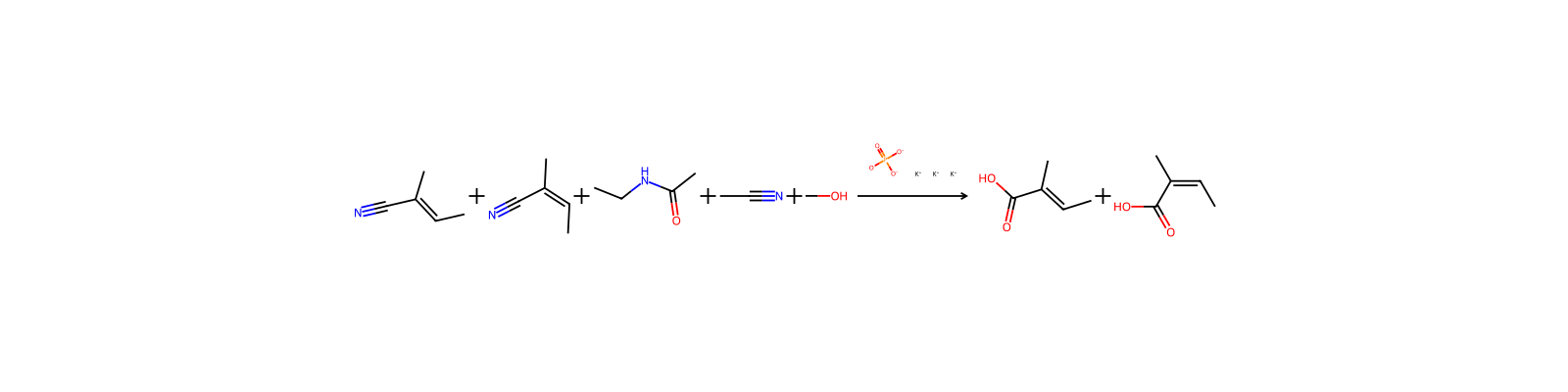
Reaktionsgleichung von HRID 1181177
HRID 1181177als Edukt
Reaktionsgleichung von HRID 1181178
HRID 1181178als Edukt
Reaktionsgleichung von HRID 1268662
HRID 1268662als Edukt
Reaktionsgleichung von HRID 1268663
HRID 1268663als Edukt
Reaktionsgleichung von HRID 1352182
HRID 1352182als Edukt
Reaktionsgleichung von HRID 1352183
HRID 1352183als Edukt

Notizen zur Verbindung

Auf dieser SeiteGrundinformationenNamen und BezeichnerEigenschaftenSicherheit und RegulatorischesChemie und IndustrieZugehörige ReaktionenNotizen zur Verbindung
Air and Water ReactionsHighly flammable.

Sicherheit und Schutzausrüstung

Fire FightingFires involving this compound can be controlled using a dry chemical, carbon dioxide or Halon extinguisher. (NTP, 1992)
First Aid · 1 Eintrag

EYES: First check the victim for contact lenses and remove if present. Flush victim's eyes with water or normal saline solution for 20 to 30 minutes while simultaneously calling a hospital or poison control center. Do not put any ointments, oils, or medication in the victim's eyes without specific instructions from a physician. IMMEDIATELY transport the victim after flushing eyes to a hospital even if no symptoms (such as redness or irritation) develop.

Nonfire Spill ResponseSTORAGE PRECAUTIONS: You should store this material in a refrigerator. (NTP, 1992)
Isolation and EvacuationExcerpt from ERG Guide 131 [Flammable Liquids - Toxic]:
Personal Protective Equipment (PPE) · 1 Eintrag

RECOMMENDED RESPIRATOR: Where the neat test chemical is weighed and diluted, wear a NIOSH-approved half face respirator equipped with an organic vapor/acid gas cartridge (specific for organic vapors, HCl, acid gas and SO2) with a dust/mist filter. (NTP, 1992)

Toxikologische Informationen

Adverse EffectsOther Poison - Chemical Asphyxiant

Sicherheitsdaten

tsca
TSCA listed
hs_code
2926909090
Giftige Stoffe Daten
20068-02-4(Hazardous Substances Data)