StartseiteMCPWorkbenchSkills
StartseiteWorkbenchBenachrichtigungenMein Bereich
llms.txt · MCP-AnleitungDatenschutz · Nutzungsbedingungen · Supportv1.8.0
  1. Startseite
  2. /Verbindung

3-Methyl-2-butenal

HCID 61020
Neue NotizNeue ReaktionAnfrage stellen
Druckvorschau
GrundinformationenÜberblickNamen und BezeichnerEigenschaftenSicherheit und RegulatorischesChemie und IndustrieZugehörige ReaktionenNotizen zur Verbindung
TeilstruktursucheÄhnliche Strukturen suchen

Grundinformationen

CAS
107-86-8
Standard-SMILES
CC(C)=CC=O
InChIKey
SEPQTYODOKLVSB-UHFFFAOYSA-N
Summenformel
C5H8O
Durchschnittliche Molmasse
84,12 g/mol
Monoisotopische Masse
84,05751487

Überblick

3-methylbut-2-enal is an enal consisting of but-2-ene with a methyl substituent at position 3 and an oxo group at position 1. It has a role as a metabolite. It is functionally related to a 3-methylbut-2-enoic acid.

Namen und Bezeichner

Bevorzugter Name
3-Methyl-2-butenal
IUPAC
3-methylbut-2-enal
Lokaler Name
3-Methyl-2-butenal
Englischer Name
3-Methyl-2-butenal
Summenformel
C5H8O
Molmasse
84.12

Namen und Synonyme

3-Methyl-2-butenal3-Methylbut-2-enal107-86-8Senecialdehyde3-Methylcrotonaldehyde3,3-DimethylacroleinSenecioaldehyde2-BUTENAL, 3-METHYL-Crotonaldehyde, 3-methyl-beta-Methylcrotonaldehydebeta,beta-Dimethylacrolein3,3-Dimethyl-acrylaldehyde
Weitere Namen anzeigen
PRENALFEMA 36463-methyl-but-2-enal-2-butenaL3-methyl-2-butena
beta,beta-Dimethylacrylic aldehydeFEMA No. 3646DTXSID80296062JZ2B60W76NSC-149164DTXCID509606CHEBI:15825RefChem:884868

Datenbank-Bezeichner

CAS
107-86-8
PubChem CID
61020
DTXSID
DTXSID8029606
ChEMBL
CHEMBL453815
ChEBI
CHEBI:15825
UNII
2JZ2B60W76
EC Number
203-527-6
Nikkaji
J9.338F

Eigenschaften

Berechnete Struktureigenschaften

XLogP
1,2
Polarare Oberfläche (TPSA)
17,1 Ų
H-Brücken-Donoren
0
H-Brücken-Akzeptoren
1
Frei drehbare Bindungen
1
Schwere Atome
6
Formalladung
0
Komplexität
68

Experimentelle und physikochemische Eigenschaften

Chemical ClassesOther Classes -> Aldehydes
SpringerMaterials PropertiesOptical coefficient
FragrancesFragrance Ingredient (3-Methyl-2-butenal) -> IFRA transparency List
LogP0.53
Food AdditivesFLAVORING AGENT OR ADJUVANT -> FDA Substance added to food
Density · 3 Einträge

0.9 g/cm³

Relative density of the vapour/air-mixture at 20 °C (air = 1): 1.01

0.870-0.875

Flavoring AgentsEU Flavoring substances
Solubility · 4 Einträge

slightly

Solubility in water, g/100ml at 20 °C: 11 (good)

Slightly soluble in water; soluble in fats

soluble (in ethanol)

Flash Point37 °C
Boiling Point

Sicherheit und Regulatorisches

Sicherheitsangaben dienen nur zur Orientierung und ersetzen weder das Sicherheitsdatenblatt (SDB) des Lieferanten noch geltende Vorschriften oder eine fachliche Bewertung.

GHS-Klassifizierung

GHS Classification · 6 Einträge

Danger

H226 (100%): Flammable liquid and vapor [Warning Flammable liquids]

P210, P233, P240, P241, P242, P243, P260, P261, P264, P264+P265, P270, P271, P272, P280, P301+P317, P301+P330+P331, P302+P352, P302+P361+P354, P303+P361+P353, P304+P340, P305+P354+P338, P316, P317, P321, P330, P333+P317, P362+P364, P363, P370+P378, P403+P233, P403+P235, P405, and P501 (click each P-code to see the statement)

Aggregated GHS information provided per 1699 reports by companies from 12 notifications to the ECHA C&L Inventory. Each notification may be associated with multiple companies.

Danger

H226: Flammable liquid and vapor [Warning Flammable liquids]

Gefahrenhinweise

Regulatory Information · 5 Einträge

Chemical: 2-Butenal, 3-methyl-

Commission Regulation (EC) No 1565/2000 (Repealed by Com. Implementing Reg. (EU) No 872/2012)

PMN - indicates a commenced PMN (Pre-Manufacture Notices) substance.

REACH registered substance: 3-methyl-2-butenal (EC: 203-527-6)

2-Butenal, 3-methyl-: Does not have an individual approval but may be used under an appropriate group standard

Other Safety InformationIMAP assessments - 2-Butenal, 3-methyl-: Environment tier I assessment
Fire HazardsFlammable. Above 37 °C explosive vapour/air mixtures may be formed.
Hazards Summary · 1 Eintrag

A mucous membrane irritant; May have narcotic effects at high concentration; [Merck Index] Corrosive to skin and eyes; A respiratory tract irritant; Inhalation of high concentrations can cause lowering of consciousness; May cause skin sensitization; Chronic exposure may cause tissue lesions in the respiratory tract; Can be absorbed through skin; [ICSC] Safe when used as a flavoring agent in food; [JECFA] Causes burns; May cause skin sensitization; Harmful by ingestion and inhalation; [OECD SIDS: IUCLID Data Set] An irritant that may cause serious eye injury; May cause skin sensitization; Harmful by ingestion and inhalation; [Alfa Aesar MSDS]

Chemie und Industrie

Pharmakologische Informationen

Cellular LocationsExtracellular

Verwendung und Herstellung

UsesUsed as a flavoring agent; [FDA] Used to make citral and other chemicals and for the reconstitution of essential oils and other natural products; [OECD SIDS: IUCLID Data Set]
Use Classification · 6 Einträge

Fragrance Ingredients

Flavouring Agent -> FLAVOURING_AGENT -> JECFA Functional Classes

Flavoring Agents -> JECFA Flavorings Index

Flavouring Agent -> FLAVOURING_AGENT -> JECFA Functional Classes

Flavouring Agent -> FLAVOURING_AGENT -> JECFA Functional Classes

Flavouring Agent -> FLAVOURING_AGENT -> JECFA Functional Classes

General Manufacturing Information2-Butenal, 3-methyl-: ACTIVE
Anwendungen · 2 Einträge

Beschreibung3-Methyl-2-butenal has an almond odor.

Verwenden3-Methyl-2-butenal is used in small quantities as food flavor in alcoholic beverages, chewing gums, confection frosting, frozen dairy, fruit ice, gelatin pudding, hard and soft candy and jam jelly. Used in daily flavor, and cosmetic flavor in perfumes. A starting material for the synthesis of vitamin A.

Vor- und nachgelagerte Produkte

Vorgelagerte Rohstoffe

5-(tert-Butyldimethylsilyloxy)-1-pentanol2-Methylbut-1-en-3-in2-Methyl-3-butin-2-ol

Zugehörige Reaktionen

121
Reaktionsaufzeichnung erstellen
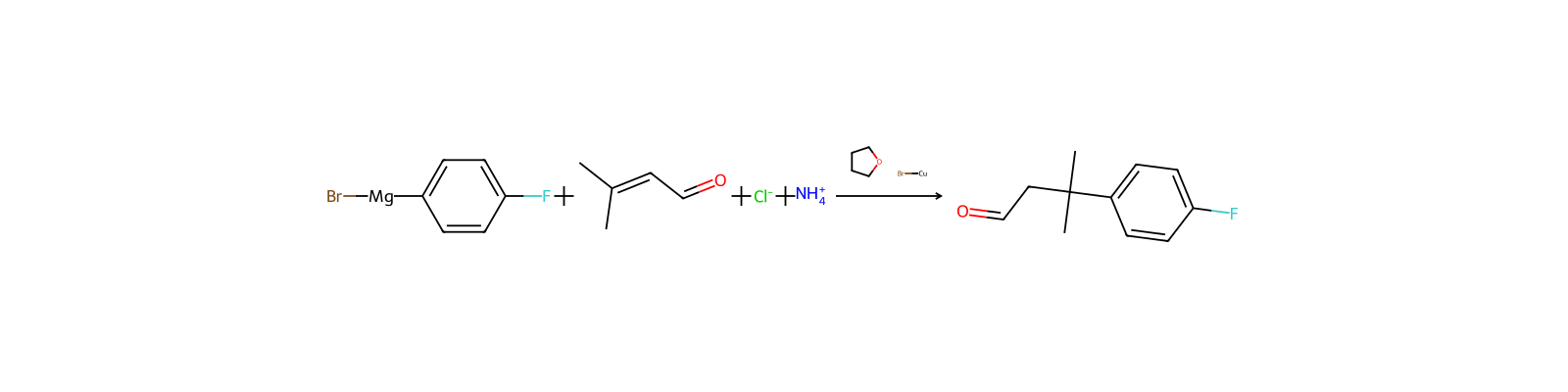
Reaktionsgleichung von HRID 1244
HRID 1244als Eduktuspto-grants-1998_03
Reaktionsgleichung von HRID 3013
HRID 3013als Eduktuspto-grants-1998_03
Reaktionsgleichung von HRID 21531
HRID 21531als Eduktuspto-grants-1995_06
Reaktionsgleichung von HRID 54256
HRID 54256als Eduktuspto-grants-1997_04
Reaktionsgleichung von HRID 54265
HRID 54265als Eduktuspto-grants-1997_04
Reaktionsgleichung von HRID 110281
HRID 110281als EduktTraining data from https://doi.org/10.1039/C8SC04228D (2/10)
Reaktionsgleichung von HRID 138371
HRID 138371als EduktTraining data from https://doi.org/10.1039/C8SC04228D (9/10)
Reaktionsgleichung von HRID 141087
HRID 141087als EduktTraining data from https://doi.org/10.1039/C8SC04228D (9/10)
Seite 1 von 16

Notizen zur Verbindung

Wird geladen…

Auf dieser SeiteGrundinformationenÜberblickNamen und BezeichnerEigenschaftenSicherheit und RegulatorischesChemie und IndustrieZugehörige ReaktionenNotizen zur Verbindung
Weitere Aktionen
Neue NotizNeue ReaktionAnfrage stellen
· 3 Einträge

134 °C

136 °C

133-135 °C

Melting Point-20 °C
Vapor DensityRelative vapor density (air = 1): 2.9

Physikochemische Eigenschaften

Schmelzpunkt
-20 °C · -20°C
Siedepunkt
133 · 133-135 °C (lit.)
Dichte
0.878 g/mL · 0.878 g/mL at 20 °C 0.872 g/mL at 25 °C (lit.)
Dampfdruck
7 mm · 7 mm Hg ( 20 °C)
Brechungsindex
20 · n20/D 1.462(lit.)
FEMA
3646 · 3646 | 3-METHYL-2-BUTENAL
Flammpunkt
93 °F · 93 °F
storage temp.
2 · 2-8°C
Löslichkeit
soluble
Aggregatzustand
Liquid
Farbe
Clear colorless to light yellow
Geruch (Odor)
1 % · at 1.00 % in dipropylene glycol. sweet fruity pungent brown nutty almond cherry
Geruchsart
fruity
Biologische Quelle
synthetic
Wasserlöslichkeit
soluble
Merck
14 · 14,8448
JECFA Number
1202 · 1202
BRN
1734740 · 1734740
Major Application
flavors and fragrances
Kosmetik-Inhaltsstoffe Funktionen
PERFUMING
InChI
1S/C5H8O/c1-5(2)3-4-6/h3-4H,1-2H3
InChIKey
SEPQTYODOKLVSB-UHFFFAOYSA-N
SMILES
[H]C(=O)\C=C(\C)C
LogP
0.53 at · 0.53 at 25℃
CAS Datenbank
107 · 107-86-8(CAS DataBase Reference)
NIST chemische Informationen
3 · 3-methyl-2-butenal(107-86-8)
EPA chemische Informationen
2 · 2-Butenal, 3-methyl- (107-86-8)
UN ClassificationUN Hazard Class: 3; UN Pack Group: III
Chemical DangersReacts with strong oxidants. This generates fire and explosion hazard.
Hazard Classes and Categories · 2 Einträge

Flam. Liq. 3 (100%)

Flammable liquids - Category 3

Explosive Limits and PotentialExplosive limits , vol% in air: 1.8-7

Sicherheit und Schutzausrüstung

Fire FightingUse foam, powder, carbon dioxide. In case of fire: keep drums, etc., cool by spraying with water.
First Aid Measures · 4 Einträge

Fresh air, rest. Half-upright position. Refer immediately for medical attention.

Remove contaminated clothes. Rinse skin with plenty of water or shower for at least 15 minutes. Refer immediately for medical attention.

Rinse with plenty of water (remove contact lenses if easily possible). Refer immediately for medical attention.

Rinse mouth. Do NOT induce vomiting. Give one or two glasses of water to drink. Refer immediately for medical attention.

Safe StorageFireproof. Well closed. Separated from strong oxidants. Store in an area without drain or sewer access.
Spillage Disposal · 1 Eintrag

Remove all ignition sources. Personal protection: chemical protection suit including self-contained breathing apparatus. Do NOT let this chemical enter the environment. Collect leaking liquid in sealable containers. Absorb remaining liquid in sand or inert absorbent. Then store and dispose of according to local regulations.

Eye PreventionWear face shield or eye protection in combination with breathing protection.
Fire PreventionNO open flames, NO sparks and NO smoking. NO contact with hot surfaces. Above 37 °C use a closed system, ventilation and explosion-proof electrical equipment. Use non-sparking handtools.
Inhalation RiskNo indication can be given about the rate at which a harmful concentration of this substance in the air is reached on evaporation at 20 °C.
Skin PreventionProtective gloves. Protective clothing.
Exposure PreventionAVOID ALL CONTACT! IN ALL CASES CONSULT A DOCTOR!
Ingestion PreventionDo not eat, drink, or smoke during work.
Inhalation PreventionUse ventilation, local exhaust or breathing protection.
Effects of Long Term ExposureRepeated or prolonged contact may cause skin sensitization. The substance may have effects on the respiratory tract. This may result in tissue lesions.

Toxikologische Informationen

Adverse EffectsDermatotoxin - Skin burns.
Exposure RoutesThe substance can be absorbed into the body by inhalation of its vapour and by ingestion.
Signs and Symptoms · 4 Einträge

Cough. Sore throat. Burning sensation in the throat and chest. Drowsiness.

Redness. Pain. Skin burns. Blisters.

Redness. Pain. Blurred vision.

Burning sensation in the throat and chest. Nausea. Abdominal pain. Drowsiness.

ICSC Environmental DataThe substance is harmful to aquatic organisms.
Toxicity DataLC50 (rat) = 3,700 mg/m3/4hr

Sicherheitsdaten

F
9-13-23
wgk
2
tsca
TSCA listed
ridadr
UN 1989 3/PG 3
hs_code
29121900
risk_code
10-22-37/38-41-43-36/37/38-34-20/22-20/21/22
hazard_code
Xn,Xi,C
safety_code
26-36-37/39-16-45-36/37/39
hazard_class
3
packing_group
III
Speicherklasse
3 - Flammable liquids
Hazard Classifications
Acute Tox. 3 InhalationAcute Tox. 4 OralEye Dam. 1Flam. Liq. 3Skin Corr. 1BSkin Sens. 1

Nachgelagerte Produkte

6-Methoxy-2-methylchinolin(E)-6-Methyl-3,5-heptadien-2-onecalanolide BZanthobungeanine2-Isopropenyl-5-methylhex-4-enylacetat2,2-Dimethyl-2H-chromene-6-carbonitrileIsopropenylmethylketonalpinumisoflavone3-Methylbutanon1-(7-Hydroxy-5-methoxy-2,2-dimethyl-2H-chromen-8-yl)ethanoneButanal, 3-methyl-3-(phenylthio)-5,8-Dihydroxy-2,2-dimethyl-2H,6H-pyrano[3,2-b]xanthen-6-one

Ergänzende Hinweise

DefinitionChEBI: An enal consisting of but-2-ene with a methyl substituent at position 3 and an oxo group at position 1.