

Grundinformationen
- Standard-SMILES
CC(C)N=C=O- InChIKey
GSLTVFIVJMCNBH-UHFFFAOYSA-N- Summenformel
- C4H7NO
- Durchschnittliche Molmasse
- 85,1 g/mol
- Monoisotopische Masse
- 85,05276385
Namen und Bezeichner
- Bevorzugter Name
- Isopropyl isocyanate
- IUPAC
- 2-isocyanatopropane
- Lokaler Name
- Isopropylisocyanat
- Englischer Name
- Isopropyl isocyanate
- Summenformel
- C4H7NO
- Molmasse
- 85.1
Namen und Synonyme
Isopropyl isocyanate2-Isocyanatopropane1795-48-8Propane, 2-isocyanato-Isocyanic acid, isopropyl ester1-methylethyl isocyanateEINECS 217-276-5UN2483AI3-28282DTXSID3061976Propane, 2isocyanaton-isopropyl isocyanate
Weitere Namen anzeigen
i-pic2-PROPYLISOCYANATEIsopropylisocyanat2-isocyanato-propansopropyl isocyaneteIsorpopyl IsocyanatePropane,2-isocyanato-IsopropylIsocyanate>
RefChem:792176DTXCID9035701217-276-5Isocyanic Acid Isopropyl Ester2-isocyanato-propaneiso-propyl isocyanateMFCD00002037ISOPROPYLISOCYANATE
Datenbank-Bezeichner
- CAS
1795-48-8- PubChem CID
- 61277
- DTXSID
DTXSID3061976- UNII
- K7N2Z27VQ9
- EC Number
- 217-276-5
- Nikkaji
- J68.772C
Eigenschaften
Berechnete Struktureigenschaften
- XLogP
- 1,8
- Polarare Oberfläche (TPSA)
- 29,4 Ų
- H-Brücken-Donoren
- 0
- H-Brücken-Akzeptoren
- 2
- Frei drehbare Bindungen
- 1
- Schwere Atome
- 6
- Formalladung
- 0
- Komplexität
- 71
Experimentelle und physikochemische Eigenschaften
Physical Description
Isopropyl isocyanate appears as a colorless liquid with a pungent odor. Insoluble in water. Very toxic by ingestion and inhalation. Vapors are heavier than air. Used to make other chemicals.
Colorless liquid with a pungent odor; [CAMEO]
Physikochemische Eigenschaften
- Schmelzpunkt
- -75 ℃ · <-75℃
- Siedepunkt
- 74 · 74-75 °C(lit.)
- Dichte
- 0.866 g/mL · 0.866 g/mL at 25 °C(lit.)
- Brechungsindex
- 20 · n20/D 1.382(lit.)
- Flammpunkt
- 27 °F · 27 °F
- storage temp.
- 2 · 2-8°C
- Löslichkeit
- Chloroform (Soluble), Ethyl Acetate
- Aggregatzustand
- Oil
- Farbe
- Colourless
- Wasserlöslichkeit
- Insoluble
- BRN
- 969356 · 969356
- Stabilität
- Hygroscopic, Light Sensitive, Moisture Sensitive, Volatile
- CAS Datenbank
- 1795 · 1795-48-8(CAS DataBase Reference)
- EPA chemische Informationen
- 2 · Propane, 2-isocyanato- (1795-48-8)
Sicherheit und Regulatorisches
GHS-Klassifizierung
GHS Classification
Danger
H225 (100%): Highly Flammable liquid and vapor [Danger Flammable liquids];H260 (52.5%): In contact with water releases flammable gases which may ignite spontaneously [Danger Substances and mixtures which in contact with water, emit flammable gases];H301 (20.2%): Toxic if swallowed [Danger Acute toxicity, oral];H302 (53.5%): Harmful if swallowed [Warning Acute toxicity, oral];H315 (98.5%): Causes skin irritation [Warning Skin corrosion/irritation];H317 (23.7%): May cause an allergic skin reaction [Warning Sensitization, Skin];H319 (98.5%): Causes serious eye irritation [Warning Serious eye damage/eye irritation];H330 (96%): Fatal if inhaled [Danger Acute toxicity, inhalation];H334 (27.3%): May cause allergy or asthma symptoms or breathing difficulties if inhaled [Danger Sensitization, respiratory];H335 (98%): May cause respiratory irritation [Warning Specific target organ toxicity, single exposure; Respiratory tract irritation]
P210, P223, P231+P232, P233, P240, P241, P242, P243, P260, P261, P264, P264+P265, P270, P271, P272, P280, P284, P301+P316, P301+P317, P302+P335+P334, P302+P352, P303+P361+P353, P304+P340, P305+P351+P338, P316, P319, P320, P321, P330, P332+P317, P333+P317, P337+P317, P342+P316, P362+P364, P370+P378, P402+P404, P403, P403+P233, P403+P235, P405, and P501 (click each P-code to see the statement)
Aggregated GHS information provided per 198 reports by companies from 14 notifications to the ECHA C&L Inventory. Each notification may be associated with multiple companies.;Information may vary between notifications depending on impurities, additives, and other factors. The percentage value in parenthesis indicates the notified classification ratio from companies that provide hazard codes. Only hazard codes with percentage values above 10% are shown. For more detailed information, please visit ECHA C&L website.
Gefahrenhinweise
Hazards IdentificationToxic/poison by inhalation (TIH/PIH)
Regulatory Information
Status: Active Update: 16-05-2018 https://echa.europa.eu/registration-dossier/-/registered-dossier/22506
The New Jersey Worker and Community Right to Know Act requires public and private employers to provide information about hazardous substances at their workplaces. (N.J.S.A. 34:5A-1 et. seq.)
DOT LabelPoison Inhalation Hazard Flammable Liquid
Fire Hazards
Excerpt from ERG Guide 155 [Substances - Toxic and/or Corrosive (Flammable / Water-Sensitive); polymerization hazard]:;HIGHLY FLAMMABLE: Will be easily ignited by heat, sparks or flames. Vapors form explosive mixtures with air: indoors, outdoors and sewers explosion hazards. Most vapors are heavier than air. They will spread along the ground and collect in low or confined areas (sewers, basements, tanks, etc.). Vapors may travel to source of ignition and flash back. Those substances designated with a (P) may polymerize explosively when heated or involved in a fire. Substance will react with water (some violently) releasing flammable, toxic or corrosive gases and runoff. Corrosives in contact with metals may evolve flammable hydrogen gas. Containers may explode when heated or if contaminated with water. (ERG, 2024)
· HIGHLY FLAMMABLE: Will be easily ignited by heat, sparks or flames.;· Vapors form explosive mixtures with air: indoors, outdoors and sewers explosion hazards.;· Most vapors are heavier than air. They will spread along the ground and collect in low or confined areas (sewers, basements, tanks, etc.).;· Vapors may travel to source of ignition and flash back.;· Those substances designated with a (P) may polymerize explosively when heated or involved in a fire.;· Substance will react with water (some violently) releasing flammable, toxic or corrosive gases and runoff.;· Corrosives in contact with metals may evolve flammable hydrogen gas.;· Containers may explode when heated or if contaminated with water.
Health Hazards
Excerpt from ERG Guide 155 [Substances - Toxic and/or Corrosive (Flammable / Water-Sensitive); polymerization hazard]:;TOXIC and/or CORROSIVE; inhalation, ingestion or contact (skin, eyes) with vapors, dusts or substance may cause severe injury, burns or death. Bromoacetates and chloroacetates are extremely irritating/lachrymators (cause eye irritation and flow of tears). Reaction with water or moist air may release toxic, corrosive or flammable gases. Reaction with water may generate much heat that will increase the concentration of fumes in the air. Fire will produce irritating, corrosive and/or toxic gases. Runoff from fire control or dilution water may be corrosive and/or toxic and cause environmental contamination. (ERG, 2024)
· TOXIC and/or CORROSIVE; inhalation, ingestion or contact (skin, eyes) with vapors, dusts or substance may cause severe injury, burns or death.;· Bromoacetates and chloroacetates are extremely irritating/lachrymators (cause eye irritation and flow of tears).;· Reaction with water or moist air may release toxic, corrosive or flammable gases.;· Reaction with water may generate much heat that will increase the concentration of fumes in the air.;· Fire will produce irritating, corrosive and/or toxic gases.;· Runoff from fire control or dilution water may be corrosive and/or toxic and cause environmental contamination.
Hazards SummaryVery toxic by ingestion or inhalation; Highly flammable; [CAMEO] A lachrymator; [CHEMINFO] See Methyl isocyanate. See MONOISOCYANATES.
DOT ID and Guide2483 155P
Reactive GroupIsocyanates and Isothiocyanates
Reactivity AlertsHighly Flammable;Polymerizable
Reactivity Profile
Isocyanates and thioisocyanates, such as ISOPROPYL ISOCYANATE, are incompatible with many classes of compounds, reacting exothermically to release toxic gases. Reactions with amines, aldehydes, alcohols, alkali metals, ketones, mercaptans, strong oxidizers, hydrides, phenols, and peroxides can cause vigorous releases of heat. Acids and bases initiate polymerization reactions in these materials. Some isocyanates react with water to form amines and liberate carbon dioxide. Base-catalysed reactions of isocyanates with alcohols should be carried out in inert solvents. Such reactions in the absence of solvents often occur with explosive violence, [Wischmeyer(1969)].
DOT Hazard Classification
Isopropyl isocyanate
UN2483
Div 6.1 Poisonous materials (49 eCFR § 173.132)
Div 6.1 Poisonous materials (49 eCFR § 173.132);Class 3 Flammable and combustible liquid (49 eCFR § 173.120)
PG I: the degree of danger presented by the material is great;For more information about the packing group assignment, please visit 49 eCFR § 173
Air and Water ReactionsHighly flammable. Insoluble in water.
Sicherheit und Schutzausrüstung
Fire Fighting
Excerpt from ERG Guide 155 [Substances - Toxic and/or Corrosive (Flammable / Water-Sensitive); polymerization hazard]:;Note: Most foams will react with the material and release corrosive/toxic gases. CAUTION: For Acetyl chloride (UN1717), use CO2 or dry chemical only.;SMALL FIRE: CO2, dry chemical, dry sand, alcohol-resistant foam.;LARGE FIRE: Water spray, fog or alcohol-resistant foam. FOR CHLOROSILANES, DO NOT USE WATER; use alcohol-resistant foam. If it can be done safely, move undamaged containers away from the area around the fire. Avoid aiming straight or solid streams directly onto the product.;FIRE INVOLVING TANKS, RAIL TANK CARS OR HIGHWAY TANKS: Fight fire from maximum distance or use unmanned master stream devices or monitor nozzles. Do not get water inside containers. Cool containers with flooding quantities of water until well after fire is out. Withdraw immediately in case of rising sound from venting safety devices or discoloration of tank. ALWAYS stay away from tanks in direct contact with flames. (ERG, 2024)
Accidental Release Measures
· CALL 911. Then call emergency response telephone number on shipping paper. If shipping paper not available or no answer, refer to appropriate telephone number listed on the inside back cover.;· Keep unauthorized personnel away.;· Stay upwind, uphill and/or upstream.;· Ventilate closed spaces before entering, but only if properly trained and equipped.
· ELIMINATE all ignition sources (no smoking, flares, sparks or flames) from immediate area.;· All equipment used when handling the product must be grounded.;· Do not touch damaged containers or spilled material unless wearing appropriate protective clothing.;· Stop leak if you can do it without risk.;· A vapor-suppressing foam may be used to reduce vapors.;· FOR CHLOROSILANES, use alcohol-resistant foam to reduce vapors.;· DO NOT GET WATER on spilled substance or inside containers.;· Use water spray to reduce vapors or divert vapor cloud drift. Avoid allowing water runoff to contact spilled material.;· Prevent entry into waterways, sewers, basements or confined areas.;Small Spill;· Cover with DRY earth, DRY sand or other non-combustible material followed with plastic sheet to minimize spreading or contact with rain.;· Use clean, non-sparking tools to collect material and place it into loosely covered plastic containers for later disposal.
First Aid
Excerpt from ERG Guide 155 [Substances - Toxic and/or Corrosive (Flammable / Water-Sensitive); polymerization hazard]:;Refer to the "General First Aid" section. Specific First Aid: For corrosives, in case of contact, immediately flush skin or eyes with running water for at least 30 minutes. Additional flushing may be required. (ERG, 2024)
General First Aid:;· Call 911 or emergency medical service.;· Ensure that medical personnel are aware of the material(s) involved, take precautions to protect themselves and avoid contamination.;· Move victim to fresh air if it can be done safely.;· Administer oxygen if breathing is difficult.;· If victim is not breathing:;-- DO NOT perform mouth-to-mouth resuscitation; the victim may have ingested or inhaled the substance.;-- If equipped and pulse detected, wash face and mouth, then give artificial respiration using a proper respiratory medical device (bag-valve mask, pocket mask equipped with a one-way valve or other device).;-- If no pulse detected or no respiratory medical device available, provide continuous compressions. Conduct a pulse check every two minutes or monitor for any signs of spontaneous respirations.;· Remove and isolate contaminated clothing and shoes.;· For minor skin contact, avoid spreading material on unaffected skin.;· In case of contact with substance, remove immediately by flushing skin or eyes with running water for at least 20 minutes.;· For severe burns, immediate medical attention is required.;· Effects of exposure (inhalation, ingestion, or skin contact) to substance may be delayed.;· Keep victim calm and warm.;· Keep victim under observation.;· For further assistance, contact your local Poison Control Center.;· Note: Basic Life Support (BLS) and Advanced Life Support (ALS) should be done by trained professionals.;Specific First Aid:;· For corrosives, in case of contact, immediately flush skin or eyes with running water for at least 30 minutes. Additional flushing may be required.
Exposure Control and Personal Protection
· Wear positive pressure self-contained breathing apparatus (SCBA).;· Wear chemical protective clothing that is specifically recommended by the manufacturer when there is NO RISK OF FIRE.;· Structural firefighters' protective clothing provides thermal protection but only limited chemical protection.
TIH (Toxic Inhalation Hazard) - Term used to describe gases and volatile liquids that are toxic when inhaled. Some are TIH materials themselves, e.g., chlorine, and some release TIH gases when spilled in water, e.g., chlorosilanes. [ERG 2016].
Nonfire Spill Response
Excerpt from ERG Guide 155 [Substances - Toxic and/or Corrosive (Flammable / Water-Sensitive); polymerization hazard]:;ELIMINATE all ignition sources (no smoking, flares, sparks or flames) from immediate area. All equipment used when handling the product must be grounded. Do not touch damaged containers or spilled material unless wearing appropriate protective clothing. Stop leak if you can do it without risk. A vapor-suppressing foam may be used to reduce vapors. FOR CHLOROSILANES, use alcohol-resistant foam to reduce vapors. DO NOT GET WATER on spilled substance or inside containers. Use water spray to reduce vapors or divert vapor cloud drift. Avoid allowing water runoff to contact spilled material. Prevent entry into waterways, sewers, basements or confined areas.;SMALL SPILL: Cover with DRY earth, DRY sand or other non-combustible material followed with plastic sheet to minimize spreading or contact with rain. Use clean, non-sparking tools to collect material and place it into loosely covered plastic containers for later disposal. (ERG, 2024)
Isolation and Evacuation
Excerpt from ERG Guide 155 [Substances - Toxic and/or Corrosive (Flammable / Water-Sensitive); polymerization hazard]:;IMMEDIATE PRECAUTIONARY MEASURE: Isolate spill or leak area in all directions for at least 50 meters (150 feet) for liquids and at least 25 meters (75 feet) for solids.;SPILL: See ERG Table 1 - Initial Isolation and Protective Action Distances on the UN/NA 2483 datasheet.;FIRE: If tank, rail tank car or highway tank is involved in a fire, ISOLATE for 800 meters (1/2 mile) in all directions; also, consider initial evacuation for 800 meters (1/2 mile) in all directions. (ERG, 2024)
Immediate precautionary measure;· Isolate spill or leak area in all directions for at least 50 meters (150 feet) for liquids and at least 25 meters (75 feet) for solids.;Spill;· For highlighted materials: see Table 1 - Initial Isolation and Protective Action Distances.;· For non-highlighted materials: increase the immediate precautionary measure distance, in the downwind direction, as necessary.;Fire;· If tank, rail tank car or highway tank is involved in a fire, ISOLATE for 800 meters (1/2 mile) in all directions; also, consider initial evacuation for 800 meters (1/2 mile) in all directions.
Small spill:;- ISOLATE in all directions: 150 m (500 ft);Large spill:;- ISOLATE in all directions: 1000 m (3000 ft)
Small spill:;- PROTECT people from downwind during DAY time: 1.5 km (1.0 mi);- PROTECT people from downwind during NIGHT time: 3.3 km (2.1 mi);Large spill:;- PROTECT people from downwind during DAY time: 11.0+ km (7.0+ mi);- PROTECT people from downwind during NIGHT time: 11.0+ km (7.0+ mi)
Personal Protective Equipment (PPE)
Excerpt from ERG Guide 155 [Substances - Toxic and/or Corrosive (Flammable / Water-Sensitive); polymerization hazard]:;Wear positive pressure self-contained breathing apparatus (SCBA). Wear chemical protective clothing that is specifically recommended by the manufacturer when there is NO RISK OF FIRE. Structural firefighters' protective clothing provides thermal protection but only limited chemical protection. (ERG, 2024)
Emergency Response Planning Guidelines
· Note: Most foams will react with the material and release corrosive/toxic gases.;CAUTION: For Acetyl chloride (UN1717), use CO2 or dry chemical only.;Small Fire;· CO2, dry chemical, dry sand, alcohol-resistant foam.;Large Fire;· Water spray, fog or alcohol-resistant foam.;· FOR CHLOROSILANES, DO NOT USE WATER; use alcohol-resistant foam.;· If it can be done safely, move undamaged containers away from the area around the fire.;· Avoid aiming straight or solid streams directly onto the product.;Fire Involving Tanks, Rail Tank Cars or Highway Tanks;· Fight fire from maximum distance or use unmanned master stream devices or monitor nozzles.;· Do not get water inside containers.;· Cool containers with flooding quantities of water until well after fire is out.;· Withdraw immediately in case of rising sound from venting safety devices or discoloration of tank.;· ALWAYS stay away from tanks in direct contact with flames.
Acute Exposure Guideline Levels (AEGLs)The compound is currently at the Holding Status AEGLs which have been reviewed by the NAC/AEGL Committee and are on hold due to insufficient data to develop AEGL values.
AEGLs NotesAEGLs Status: Holding
Toxikologische Informationen
Adverse EffectsLacrimator (Lachrymator) - A substance that irritates the eyes and induces the flow of tears.;Toxic Pneumonitis - Inflammation of the lungs induced by inhalation of metal fumes or toxic gases and vapors.
Regulatorische Informationen
Regulatory Information
Status: Active Update: 16-05-2018 https://echa.europa.eu/registration-dossier/-/registered-dossier/22506
The New Jersey Worker and Community Right to Know Act requires public and private employers to provide information about hazardous substances at their workplaces. (N.J.S.A. 34:5A-1 et. seq.)
Sicherheitsdaten
- F
- 10-21
- wgk
- 1
- tsca
- TSCA listed
- ridadr
- UN 2483
- hs_code
- 29291090
- risk_code
- 11-26-36/37/38-42
- hazard_code
- F,T+,Xi
- safety_code
- 16-23-26-36/37/39-45
- hazard_class
- 6.1
- packing_group
- I
Chemie und Industrie
Verwendung und Herstellung
UsesUsed to make other chemicals; [CAMEO]
General Manufacturing InformationPropane, 2-isocyanato-: ACTIVE
Anwendungen
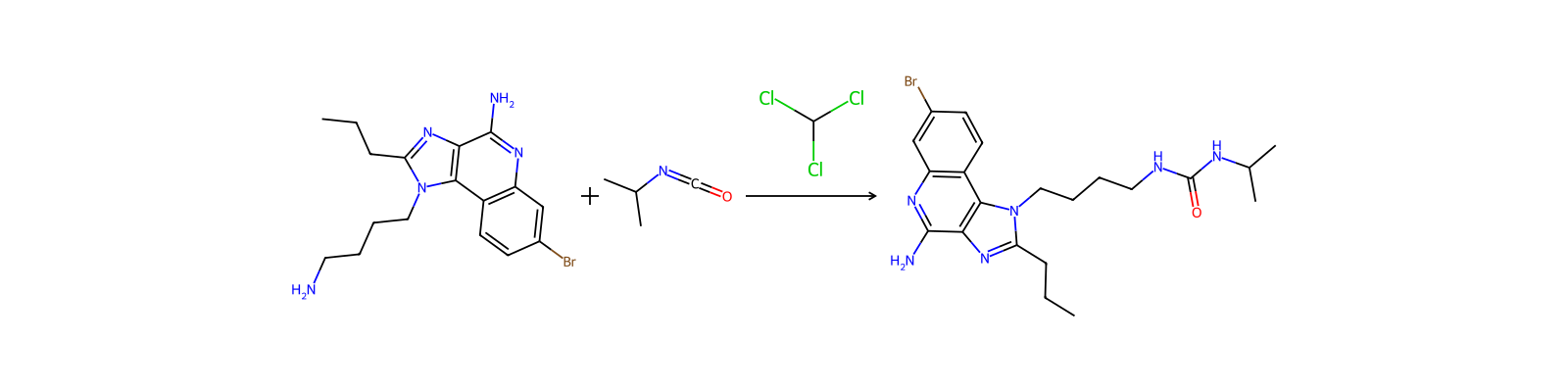
VerwendenIsopropyl isocyanate is used as a reagent in the preparation of androgen receptor antagonist for prostate cancer treatment. It is also used in the synthesis of selective dual inhibitor of mammalian target of rapamycin (mTORC1 and mTORC2). Further, it serves as a reagent in the synthesis of O-aryl N-isopropylcarbamates. In addition to this, it is used as a derivatization reagent during the stereoisomeric analysis of secondary alcohols.
Vor- und nachgelagerte Produkte
Nachgelagerte Produkte
Anbieter50 Anbieter
国药集团化学试剂有限公司86-21-63210123 · [email protected]
梯希爱(上海)化成工业发展有限公司021-67121386 · [email protected]
江西益众化工有限公司15307925109 15350027073 · [email protected]
阿诺西(上海)生物技术有限公司400-1107768 15058188853 · [email protected]
上海阿拉丁生化科技股份有限公司400-6206333 13167063860 · [email protected]
Shandong chuangyingchemical Co., Ltd.18853181302 · [email protected]
湖北成丰化工有限公司13125175253 · [email protected]
武汉欣扬瑞和化学科技有限公司153-07155313 15307155313 · [email protected]
武汉问津化学科技有限公司13517196568 · [email protected]
爱斯特(成都)生物制药股份有限公司+86-28-85122536 85324413 · [email protected]
Dayang Chem (Hangzhou) Co.,Ltd.+86-0571-88938639 17705817739 · [email protected]
武汉绿景丰华生物科技有限公司19972070065 · [email protected]
淮安嘉目生物科技有限公司0517-83187139 18205232085 · [email protected]
Syntechem Co.,Ltd[email protected]
上海迈瑞尔生化科技有限公司4006356688 18621169109 · [email protected]
武汉市聚舜化工有限公司027-02783261126 18971318572 · [email protected]
阿法埃莎(中国)化学有限公司400-6106006 · [email protected]
安耐吉化学&3A(安徽泽升科技股份有限公司)400-0056266 · [email protected]
武汉卡诺斯科技有限公司027-83238443 15327105076 · [email protected]
上海瀚鸿科技股份有限公司021-54306202 13764082696 · [email protected]
新沂市永诚化工有限公司15952286050 · [email protected]
嘉兴市艾森化工有限公司0573-85285100 18627885956 · [email protected]
武汉威顺达科技发展有限公司86-027-88774375 · [email protected]
武汉市皇臻生物化工有限公司13795480948 · [email protected]
山东西亚化学有限公司13355009207 13355009207 · [email protected]
广东大小化工有限公司1866-171603 18666171603 · [email protected]
玛雅试剂+86 (573) 82222445 (0)18006601000 452520369 · [email protected]
天津希恩思生化科技有限公司400 638 7771 · [email protected]
Xiamen AmoyChem Co., Ltd+86-86-5926051114 · [email protected]
杭州云易国科生物科技有限公司18457506494 · [email protected]
南京维奥化工有限公司Please Send Email 18652950785 · [email protected]
艾科试剂4008-755-333 18080918076 · [email protected]
上海思域化工科技有限公司86-21-34053660 · [email protected]
赛默飞世尔科技(中国)有限公司800-810-5118 · [email protected]
上海特伯化学科技有限公司+86-21-60341587 · [email protected]
江苏艾康生物医药研发有限公司025-66113011 13913916777 · [email protected]
TOKYO CHEMICAL INDUSTRY CO., LTD.03-36680489 · [email protected]
武汉卡诺斯科技有限公司153-37111468 15337111468 · [email protected]
Xunteng International Trading Co.,Limited—
上海将来实业股份有限公司400-0066400 13621662912 · [email protected]
HBCChem, Inc.+1-510-219-6317 · [email protected]
成都零六生物科技有限公司400-1166-196 13458535857 · [email protected]
雷丁试剂0510-85629785 18013409632 · [email protected]
上海麦克林生化科技股份有限公司15221275939 15221275939 · [email protected]
康迪斯化工(湖北)有限公司13125172151 · [email protected]
Changzhou Fullone Chemical Co., Ltd.+86-13328197671 +86-13861172460 · [email protected]
深圳振强药物研发有限公司+86-0755-66853366 +86-13670046396 · [email protected]
九鼎化学(上海)科技有限公司4009209199 · [email protected]
厦门志信化学有限公司+86-5922680277 +86-13806087780 · [email protected]
广东翁江化学试剂有限公司0751-2886766 13927870850 · [email protected]
Zugehörige Reaktionen
614


Verknüpfte Notizen
Wird geladen…