
Grundinformationen
- Standard-SMILES
O=C(O)C1CCCN1- InChIKey
ONIBWKKTOPOVIA-UHFFFAOYSA-N- Summenformel
- C5H9NO2
- Durchschnittliche Molmasse
- 115,13 g/mol
- Monoisotopische Masse
- 115,06332853
Überblick
Proline is an alpha-amino acid that is pyrrolidine bearing a carboxy substituent at position 2. It has a role as a human metabolite and a Daphnia magna metabolite. It is an alpha-amino acid and a member of pyrrolidines. It is a conjugate base of a prolinium. It is a conjugate acid of a prolinate.
Namen und Bezeichner
- Bevorzugter Name
- proline dl-form
- IUPAC
- pyrrolidine-2-carboxylic acid
- Lokaler Name
- L-Prolin
- Englischer Name
- L-Proline
- Summenformel
- C5H9NO2
- Molmasse
- 115.13
Namen und Synonyme
609-36-9Proline, DL-Proline DL-formUNII-DCS9E77JPQDCS9E77JPQCCRIS 8602EINECS 210-189-3NSC 97923NSC-97923PROLINE DL-FORM [MI]2-PYRROLIDINYLCARBOXYLIC ACID(+-)-proline
Weitere Namen anzeigen
PROH-PRO-OHL-PROl-prolinL-Pro-OH2-pyrrolidinecarboxylic acid(S)-PYRROLIDINE-2-CARBOXYLIC ACID(2S)-pyrrolidine-2-carboxylic acidL-PolineH-L-PRO-OH
RefChem:202730210-189-3DL-Prolinepyrrolidine-2-carboxylic acidH-DL-Pro-OHD-Pyrrolidine-2-carboxylic acidMFCD000052502-Pyrrolidine carboxylic acid
Datenbank-Bezeichner
- CAS
147-85-3、609-36-9- PubChem CID
- 614
- DTXSID
DTXSID9041104- ChEBI
CHEBI:26271- UNII
- DCS9E77JPQ
- EC Number
- 210-189-3
- Nikkaji
- J1.287D
Eigenschaften
Berechnete Struktureigenschaften
- XLogP
- -2,5
- Polarare Oberfläche (TPSA)
- 49,3 Ų
- H-Brücken-Donoren
- 2
- H-Brücken-Akzeptoren
- 3
- Frei drehbare Bindungen
- 1
- Schwere Atome
- 8
- Formalladung
- 0
- Komplexität
- 103
Experimentelle und physikochemische Eigenschaften
Chemical ClassesBiological Agents -> Amino Acids and Derivatives
DrugsPharmaceuticals
Physical DescriptionBeige solid; [Sigma-Aldrich MSDS]
Physikochemische Eigenschaften
- Schmelzpunkt
- 228 °C · 228 °C (dec.) (lit.)
- Siedepunkt
- 215.41 °C · 215.41°C (rough estimate)
- Dichte
- 1.35 · 1.35
- Dampfdruck
- 0 Pa · 0Pa at 25℃
- FEMA
- 3319 · 3319 | L-PROLINE
- Brechungsindex
- -85 ° · -85 ° (C=4, H2O)
- storage temp.
- 2 · 2-8°C
- Löslichkeit
- 2 O: · H2O: 50 mg/mL
- Aggregatzustand
- powder
- pka
- 1.95 · 1.95, 10.64(at 25℃)
- Farbe
- White
- PH
- 6 · 6.0-7.0 (25℃, 1M in H2O)
- Geruch (Odor)
- 100 % · at 100.00 %. odorless
- Geruchsart
- odorless
- Biologische Quelle
- synthetic
- Wasserlöslichkeit
- soluble
- JECFA Number
- 1425 · 1425
- Merck
- 14 · 14,7780
- BRN
- 80810 · 80810
- Stabilität
- Stable. Incompatible with strong oxidizing agents.
- Kosmetik-Inhaltsstoffe Funktionen
- SKIN CONDITIONINGHAIR CONDITIONING
- InChI
- 1S/C5H9NO2/c7-5(8)4-2-1-3-6-4/h4,6H,1-3H2,(H,7,8)/t4-/m0/s1
- InChIKey
- ONIBWKKTOPOVIA-UHFFFAOYSA-N
- SMILES
- OC(=O)[C@@H]1CCCN1
- LogP
- -2.54 at · -2.54 at 20℃
- CAS Datenbank
- 147 · 147-85-3(CAS DataBase Reference)
- NIST chemische Informationen
- Proline(147-85-3)
- EPA chemische Informationen
- L-Proline (147-85-3)
Sicherheit und Regulatorisches
GHS-Klassifizierung
GHS Classification
This chemical does not meet GHS hazard criteria for 95.5% (21 of 22) of all reports.
Not Classified
Aggregated GHS information provided per 22 reports by companies from 2 notifications to the ECHA C&L Inventory.
Gefahrenhinweise
Regulatory InformationChemical: DL-Proline
Other Safety InformationIMAP assessments - DL-Proline: Environment tier I assessment
Hazards SummaryMay cause irritation; [Sigma-Aldrich MSDS]
Hazard Classes and CategoriesNot Classified
Sicherheitsdaten
- F
- 3-10
- wgk
- 3
- tsca
- TSCA listed
- hs_code
- 29339990
- RTECS-Nr.
- TW3584000
- risk_code
- 36/37/38-22
- Toxizität
- LD50 orally in Rabbit: > 5110 mg/kg
- hazard_code
- Xi,Xn
- safety_code
- 24/25-36/37/39-26
- Speicherklasse
- 13 - Non Combustible Solids
- Giftige Stoffe Daten
- 147-85-3(Hazardous Substances Data)
Chemie und Industrie
Verwendung und Herstellung
UsesProline is a non-essential amino acid; [Merck Index]
Household ProductsInformation on 32 consumer products that contain Proline in the following categories is provided:
Use ClassificationFlavouring Agent -> FLAVOURING_AGENT -> JECFA Functional Classes
General Manufacturing InformationProline: ACTIVE
Anwendungen
OccurrenceReported found as a component in many proteins; also widely occurring as the free acid in natural products. A major constituent of collagen, the main fibrous protein found in bone, cartilage and other connective tissue.
VerwendenL-Proline is an amino acid and precursor (with vitamin C) for collagen, the building block of the structure of tendons, ligaments, arteries, veins and muscles. It is important in wound healing.
Darstellung
synthetischeSynthesis of L-proline: Using glutamic acid as a raw material, it is esterified with absolute ethanol under the catalysis of sulfuric acid, and triethanolamine is added to free the aminosulfate to obtain glutamic acid-δ-ethyl ester. The glutamic acid-δ-ethyl ester is then reduced with a metal reducing agent potassium borohydride to obtain crude proline, which is finally separated and purified to obtain crude L-proline.
Vor- und nachgelagerte Produkte
Vorgelagerte Rohstoffe
Nachgelagerte Produkte
Anbieter50 Anbieter
国药集团化学试剂有限公司86-21-63210123 · [email protected]
北京华美互利生物化工010-56205725 · [email protected]
梯希爱(上海)化成工业发展有限公司021-67121386 · [email protected]
上海阿拉丁生化科技股份有限公司400-6206333 13167063860 · [email protected]
陕西晨明生物科技有限公司15529026321
T&W GROUP021-61551611 13296011611 · [email protected]
爱斯特(成都)生物制药股份有限公司+86-28-85122536 85324413 · [email protected]
上海如吉生物科技发展有限公司+86-21-65211385-8001 36031160 · [email protected]
北京安司莫森技术有限公司010-82954736 13391601435 · [email protected]
韶远科技(上海)有限公司021-50795510 4000665055 · [email protected]
Syntechem Co.,Ltd[email protected]
上海迈瑞尔生化科技有限公司4006356688 18621169109 · [email protected]
大连美仑生物技术有限公司0411-62910999 13889544652 · [email protected]
阿法埃莎(中国)化学有限公司400-6106006 · [email protected]
太原市瑞和丰科贸有限公司+86 351 7031519 · [email protected]
安耐吉化学&3A(安徽泽升科技股份有限公司)400-0056266 · [email protected]
上海瀚鸿科技股份有限公司021-54306202 13764082696 · [email protected]
常州市淇奥化工有限公司0519-85607258
天津万象恒远科技有限公司15722085254 · [email protected]
上海景颜化工科技有限公司13817811078 · [email protected]
嘉兴市艾森化工有限公司0573-85285100 18627885956 · [email protected]
Pure Chemistry Scientific Inc.001-857-928-2050 or 1-888-588-9418 · [email protected]
上海泰坦科技股份有限公司400-6009262 15618770481 · [email protected]
张家港市思普生化有限公司512-0512-58992291,58992287 18606280718 · [email protected]
上海常丰生物医药科技有限公司+86-021-61727342 13611721451 · [email protected]
武汉丰泰威远科技有限公司027-87465837 19945049750 · [email protected]
南京美博生物科技有限公司025-58619198 · [email protected]
孝感深远化工有限公司15527621225; 15527621225 · [email protected]
云南西力生物技术股份有限公司0871-65217109 · [email protected]
Beckmann-Kenko GmbH+49 4241 9308 88 · [email protected]
山东西亚化学有限公司13355009207 13355009207 · [email protected]
玛雅试剂+86 (573) 82222445 (0)18006601000 452520369 · [email protected]
四川库利南科技有限公司400-1166-196 18981987031 · [email protected]
天津希恩思生化科技有限公司400 638 7771 · [email protected]
南京斯贝源医药科技有限公司+86-25-68710855, +86-25-68710897 · [email protected]
湖南汇百侍生物科技有限公司0731-85526065 13308475853 · [email protected]
南京维奥化工有限公司Please Send Email 18652950785 · [email protected]
上海迪外化工科技有限公司021-61551100
南京瑞泰生化技术有限公司+86-(0)25-84931986,(0)18951962398
河南多贝化工有限公司0370-2785118 17550508557 · [email protected]
斯百全化学(上海)有限公司021-021-021-67601398-809-809-809 15221380277 · [email protected]
上海源叶生物科技有限公司13636370518 · [email protected]
艾科试剂4008-755-333 18080918076 · [email protected]
青岛保税区鲁联国际贸易有限公司0532-83893697 18561902820 · [email protected]
上海明褀化学有限公司86-21-60936353
上海思域化工科技有限公司86-21-34053660 · [email protected]
赛默飞世尔科技(中国)有限公司800-810-5118 · [email protected]
北京伊诺凯科技有限公司400-810-7969 010-59572699 · [email protected]
江苏艾康生物医药研发有限公司025-66113011 13913916777 · [email protected]
上海健超生物科技有限公司150-2103-5486 18017383231 · [email protected]
Ergänzende Hinweise
DefinitionChEBI: L-proline is pyrrolidine in which the pro-S hydrogen at position 2 is substituted by a carboxylic acid group. L-Proline is the only one of the twenty DNA-encoded amino acids which has a secondary amino group alpha to the carboxyl group. It is an essential component of collagen and is important for proper functioning of joints and tendons. It also helps maintain and strengthen heart muscles. It has a role as a micronutrient, a nutraceutical, an algal metabolite, a Saccharomyces cerevisiae metabolite, an Escherichia coli metabolite, a mouse metabolite and a member of compatible osmolytes. It is a glutamine family amino acid, a proteinogenic amino acid, a proline and a L-alpha-amino acid. It is a conjugate base of a L-prolinium. It is a conjugate acid of a L-prolinate. It is an enantiomer of a D-proline. It is a tautomer of a L-proline zwitterion.
Zugehörige Reaktionen
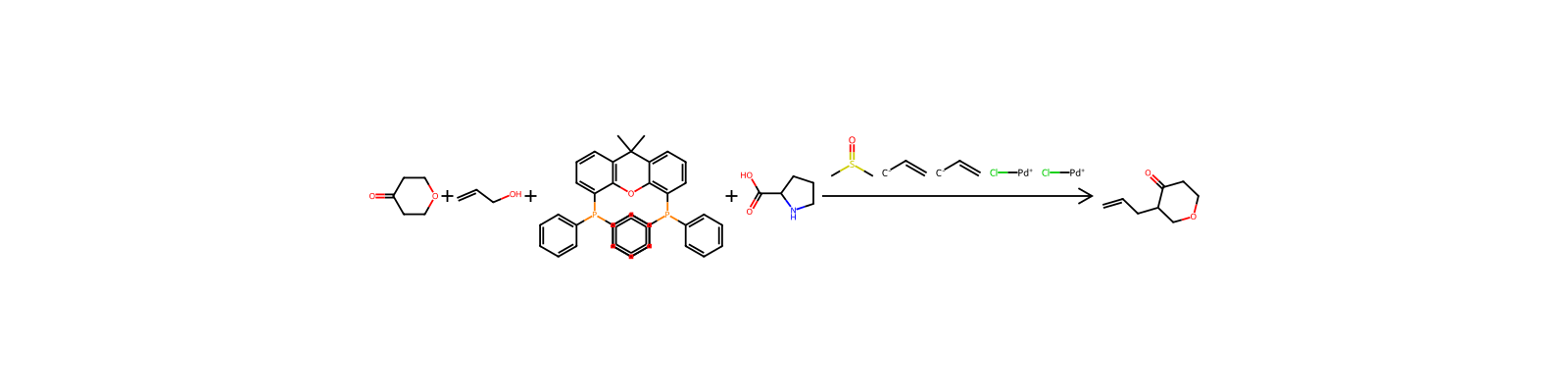
321


Verknüpfte Notizen
Wird geladen…