
Di-μ-chlor-bis(?-allyl)palladium
Palladium, di-mu-chlorobis(eta3-2-propenyl)di-

Grundinformationen
- CAS
12012-95-2- Standard-SMILES
C=C[CH2-].C=C[CH2-].[Cl][Pd+].[Cl][Pd+]- InChIKey
PENAXHPKEVTBLF-UHFFFAOYSA-L- Summenformel
- C6H10Cl2Pd2
- Durchschnittliche Molmasse
- 365,9 g/mol
Überblick
Allyl palladium(II) chloride dimer is a organopalladium compound. It is an important catalyst used in organic synthesis. Palladium is a chemical element with the chemical symbol Pd and an atomic number of 46. It is found as a free metal alloyed with gold and other platinum group metals and in the rare minerals cooperite and polarite. (L794, A27)
Namen und Bezeichner
- Bevorzugter Name
- Palladium, di-mu-chlorobis(eta3-2-propenyl)di-
- IUPAC
- bis(chloropalladium(1+));bis(prop-1-ene)
- Lokaler Name
- Di-μ-chlor-bis(?-allyl)palladium
- Englischer Name
- Allylpalladium(II) Chloride Dimer
- Summenformel
- C6H10Cl2Pd2
- Molmasse
- 365.89
Namen und Synonyme
Palladium, di-mu-chlorobis(eta3-2-propenyl)di-RefChem:858349Palladium, di-.mu.-chlorobis(.eta.3-2-propenyl)di-Palladium, di-mu-chlorobis(eta3-2-propenyl)di-(9CI)Allyl palladium (II) chloride dimer12012-95-2Allylpalladium chloride dimerAllylpalladium(II) chloride dimerallylpalladium(II) chloridePalladium allyl chloride dimer[Pd(allyl)Cl]2Bis(allyl(mu-chloro)palladium)
Weitere Namen anzeigen
[PdCl(C3H5)]2[PdCl(allyl)]2allylpaladiumAllylpalladium chlorideDi-μ-chlorobis(η3-2-propenyl)dipalladiumDiallyldichlorodipalladiumAllylpalladium(Ⅱ) chloride dimer
Bis(eta3-allyl)dichlorodipalladiumBis((eta3-allyl)(chloro)palladium)Bis((mu-chloro)(2-propenyl)palladium)Di-mu-chloro-bis(eta-allyl)palladiumbis(chloro(prop-2-en-1-yl)palladium)Bis(allyl)dichlorodipalladiumDiallydichlorodipalladiumpi-Allyl palladium chloride
Eigenschaften
Berechnete Struktureigenschaften
- Polarare Oberfläche (TPSA)
- 0 Ų
- H-Brücken-Donoren
- 0
- H-Brücken-Akzeptoren
- 2
- Frei drehbare Bindungen
- 0
- Schwere Atome
- 10
- Formalladung
- 0
- Komplexität
- 14,4
Physikochemische Eigenschaften
- Schmelzpunkt
- 120 °C · 120°C (dec.)
- storage temp.
- 2 · 2-8°C
- Aggregatzustand
- Crystals or Crystalline Powder
- Farbe
- Yellow to green-yellow
- Wasserlöslichkeit
- decomposes
- BRN
- 4124623 · 4124623
- InChI
- InChI=1S/2C3H2.2ClH.2Pd/c2*1-3-2;;;;/h2*1-2H;2*1H;;/q2*-1;;;2*+2/p-2
- InChIKey
- GSVMTGORPBRYQY-UHFFFAOYSA-L
- SMILES
- [Pd+2]123(C=C1[CH-]2)[Cl-][Pd+2]12(C=C1[CH-]2)[Cl-]3
- NIST chemische Informationen
- [Pd(Cl)(C3H5)]2(12012-95-2)
Sicherheit und Regulatorisches
Sicherheitsangaben dienen nur zur Orientierung und ersetzen weder das Sicherheitsdatenblatt (SDB) des Lieferanten noch geltende Vorschriften oder eine fachliche Bewertung.
GHS-Klassifizierung
GHS Classification
Danger
H228 (21.2%): Flammable solid [Danger Flammable solids]
P210, P240, P241, P261, P264, P264+P265, P270, P271, P273, P280, P301+P317, P302+P352, P304+P340, P305+P351+P338, P305+P354+P338, P317, P319, P321, P330, P332+P317, P337+P317, P362+P364, P370+P378, P391, P403+P233, P405, and P501 (click each P-code to see the statement)
Aggregated GHS information provided per 104 reports by companies from 12 notifications to the ECHA C&L Inventory. Each notification may be associated with multiple companies.
Gefahrenhinweise
Regulatory Information
Chemical: Palladium, di-.mu.-chlorobis(.eta.3-2-propenyl)di-
Allyl palladium (II) chloride dimer: Does not have an individual approval but may be used under an appropriate group standard
Other Safety InformationIMAP assessments - Palladium, di-.mu.-chlorobis(.eta.3-2-propenyl)di-: Environment tier I assessment
Hazard Classes and CategoriesFlam. Sol. 1 (21.2%)
Toxikologische Informationen
Health EffectsContact with palladium may cause palladium sensitivity and allergy. Animal studies have shown that palladium may damage the liver and kidney. (L798)
Exposure RoutesOral (A21) ; inhalation (A21) ; dermal (A21)
Toxicity Summary
Due to their ability to form strong complexes with both inorganic and organic ligands, palladium ions can disturb cellular equilibria, replace other essential ions, and interact with functional groups of macromolecules, such as proteins or DNA. Palladium complexes binding to DNA and RNA leads to strand breakage. Palladium ions are able to inhibit most major cellular functions, including DNA and RNA synthesis. Palladium compounds have been shown to bind to and inhibit various enzymes, including creatine kinase and prolyl hydroxylase. (L798)
Chemie und Industrie
Pharmakologische Informationen
Metabolism/Metabolites
Palladium may be absorbed through oral, dermal, and inhalation exposure. Once in the body it distributes to the kidney, liver, spleen, lymph nodes, adrenal gland, lung and bone. Palladium's ability to form complexes allows it the bind to amino acids, proteins, DNA, and other macromolecules. Palladium and its metabolites are excreted in the urine and faeces. (A21)
Verwendung und Herstellung
UsesAllylpalladium(II) chloride dimer is an important catalyst used in organic synthesis. (A27)
Anwendungen
VerwendenAllylpalladium(II) chloride dimer is used as an important catalyst in Heck reaction. It reacts with cyclopentadienyl anion to give cyclopentadienyl allyl palladium. It acts as a precatalyst for asymmetric and cross-coupling catalysis. Further, it is used in the preparation of 1,4-diallyl-1,2-dihydroisoquinolines. It is also employed as a catalyst for greener Buchwald-Hartwig coupling reaction and involved in the synthesis of cationic palladium catalysts. In addition, it takes part in preparation of -heterocyclic carbene-palladium-eta3-allyl chloride complex, which is an efficient catalyst for the Suzuki-Miyaura cross-coupling reactions in synthetic chemistry.
Zugehörige Reaktionen
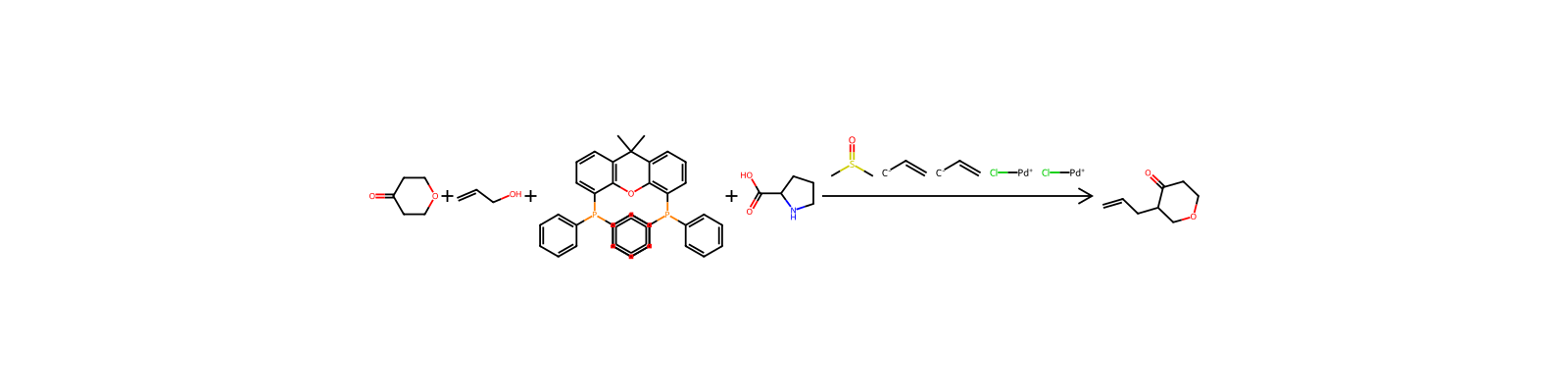
2.033




Notizen zur Verbindung
Wird geladen…