
Grundinformationen
- Standard-SMILES
FCF- InChIKey
RWRIWBAIICGTTQ-UHFFFAOYSA-N- Summenformel
- CH2F2
- Durchschnittliche Molmasse
- 52,023 g/mol
- Monoisotopische Masse
- 52,0124565
Überblick
Difluoromethane appears as a colorless odorless gas. Insoluble in water and has a high thermal stability. Its vapors are heavier than air. Under prolonged exposure to fire or intense heat the containers may rupture violently and rocket. Contact with the unconfined liquid can cause frostbite. Used as a refrigerant.
Namen und Bezeichner
- Bevorzugter Name
- Difluoromethane
- IUPAC
- difluoromethane
- Englischer Name
- Difluoromethane
- Summenformel
- CH2F2
- Molmasse
- 52.0233864
Namen und Synonyme
DIFLUOROMETHANE75-10-5Methylene difluorideMethane, difluoro-Freon 32Genetron 32Carbon fluoride hydrideHFC-32R 32 (refrigerant)Freon-32HFC 32Khladon 32
Weitere Namen anzeigen
GENETRON-3277JW9K722XECOLO ACE-32DTXSID6029597CHEBI:47855RefChem:133596DTXCID409597200-839-4
Datenbank-Bezeichner
- CAS
2154-59-8、75-10-5- PubChem CID
- 6345
- DTXSID
DTXSID6029597- ChEMBL
CHEMBL115186- ChEBI
CHEBI:47855- UNII
- 77JW9K722X
- EC Number
- 200-839-4
- Nikkaji
- J28.328B
Eigenschaften
Berechnete Struktureigenschaften
- XLogP
- 1
- Polarare Oberfläche (TPSA)
- 0 Ų
- H-Brücken-Donoren
- 0
- H-Brücken-Akzeptoren
- 2
- Frei drehbare Bindungen
- 0
- Schwere Atome
- 3
- Formalladung
- 0
- Komplexität
- 2,8
Experimentelle und physikochemische Eigenschaften
PFASPFAS -> PFAS with analytical method available
SolventsSolvents -> Chlorofluorocarbons
SpringerMaterials Properties19F nuclear magnetic resonance spectrum
LogPlog Kow = 0.20
Density
0.961 at 25 °C; 1.052 at 0 °C (liquid)
Density: 1.2139 g/cu cm at -52 °C
Critical density: 0.430
Color/Form
Colorless gas
Colorless gas at ambient conditions
Solubility
In water, 0.44% at 25 °C
Soluble in ethanol
Boiling Point-51.65 °C
DecompositionWhen heated to decomposition it emits toxic vapors of /flouride/
Melting Point-136.8 °C
Vapor Pressure1.26X10+4 mm Hg at 25 °C
Physical Description
Difluoromethane appears as a colorless odorless gas. Insoluble in water and has a high thermal stability. Its vapors are heavier than air. Under prolonged exposure to fire or intense heat the containers may rupture violently and rocket. Contact with the unconfined liquid can cause frostbite. Used as a refrigerant.
Liquid; CBI; Gas Vapor
Colorless gas; [Merck Index] Colorless liquefied gas with a faint ethereal odor; [MSDSonline]
Physikochemische Eigenschaften
- Schmelzpunkt
- -136 °C · -136 °C
- Siedepunkt
- -51.6 °C · -51.6 °C
- Dichte
- 0.5265 g/cm3 · 0.5265 g/cm3
Sicherheit und Regulatorisches
GHS-Klassifizierung
GHS Classification
Danger
H220 (78.2%): Extremely flammable gas [Danger Flammable gases]
P203, P210, P222, P280, P318, P377, P381, P403, P405, P410+P403, and P501 (click each P-code to see the statement)
Aggregated GHS information provided per 294 reports by companies from 7 notifications to the ECHA C&L Inventory. Each notification may be associated with multiple companies.
Danger
H220: Extremely flammable gas [Danger Flammable gases]
Gefahrenhinweise
Regulatory Information
Chemical: Methane, difluoro-
Methane, difluoro- is listed on the EPA's Chemical Data Reporting (CDR) system. Manufacturers and importers of Methane, difluoro- are required to report information about their production and use of this chemical to the EPA under the Toxic Substances Control Act (TSCA). (40 eCFR Part 711)
Status: Active Update: 23-03-2023 https://echa.europa.eu/registration-dossier/-/registered-dossier/15279
Methane, difluoro-: HSNO Approval: HSR001023 Approved with controls
DOT LabelFlammable Gas
Fire Hazards
Excerpt from ERG Guide 115 [Gases - Flammable (Including Refrigerated Liquids)]:
· EXTREMELY FLAMMABLE.
Fire PotentialDifluoromethane is a flammable gas.
Health Hazards
Excerpt from ERG Guide 115 [Gases - Flammable (Including Refrigerated Liquids)]:
· Vapors may cause dizziness or asphyxiation without warning, especially when in closed or confined areas.
Hazards Summary
Evaporating liquid can cause frostbite; May cause asphyxiation without warning; [CAMEO] Evaporating liquid can cause frostbite; Inhalation of high concentrations can cause CNS depression and cardiac arrhythmias; In confined space spill, may displace air and act as simple asphyxiant; [MSDSonline]
DOT ID and Guide3252 115
Reactive GroupFluorinated Organic Compounds
Special ReportsDanish EPA; Survey of selected fluorinated green-house gases (2015)[Available from, as of March 3, 2016: http://eng.mst.dk/]
Reactivity AlertsHighly Flammable
Reactivity Profile
DIFLUOROMETHANE can react with some metals to form dangerous products. May react violently with aluminum. Incompatible with strong oxidizing and reducing agents. Also incompatible with many amines, nitrides, azo/diazo compounds, alkali metals, and epoxides.
DOT Emergency Guidelines
/GUIDE 115 GASES - FLAMMABLE (Including Refrigerated Liquids)/ Fire or Explosion: EXTREMELY FLAMMABLE. Will be easily ignited by heat, sparks or flames. Will form explosive mixtures with air. Vapors from liquefied gas are initially heavier than air and spread along ground. CAUTION: Hydrogen (UN1049), Deuterium (UN1957), Hydrogen, refrigerated liquid (UN1966) and Methane (UN1971) are lighter than air and will rise. Hydrogen and Deuterium fires are difficult to detect since they burn with an invisible flame. Use an alternate method of detection (thermal camera, broom handle, etc.) Vapors may travel to source of ignition and flash back. Cylinders exposed to fire may vent and release flammable gas through pressure relief devices. Containers may explode when heated. Ruptured cylinders may rocket.
/GUIDE 115 GASES - FLAMMABLE (Including Refrigerated Liquids)/ Health: Vapors may cause dizziness or asphyxiation without warning. Some may be irritating if inhaled at high concentrations. Contact with gas or liquefied gas may cause burns, severe injury and/or frostbite. Fire may produce irritating and/or toxic gases.
/GUIDE 115 GASES - FLAMMABLE (Including Refrigerated Liquids)/ Public Safety: CALL Emergency Response Telephone Number on Shipping Paper first. If Shipping Paper not available or no answer, refer to appropriate telephone number listed on the inside back cover. As an immediate precautionary measure, isolate spill or leak area for at least 100 meters (330 feet) in all directions. Keep unauthorized personnel away. Stay upwind. Many gases are heavier than air and will spread along ground and collect in low or confined areas (sewers, basements, tanks). Keep out of low areas.
/GUIDE 115 GASES - FLAMMABLE (Including Refrigerated Liquids)/ Protective Clothing: Wear positive pressure self-contained breathing apparatus (SCBA). Structural firefighters' protective clothing will only provide limited protection. Always wear thermal protective clothing when handling refrigerated/cryogenic liquids.
For more DOT Emergency Guidelines (Complete) data for Difluoromethane (8 total), please visit the HSDB record page.
Sicherheit und Schutzausrüstung
Fire FightingExcerpt from ERG Guide 115 [Gases - Flammable (Including Refrigerated Liquids)]:
Accidental Release Measures
· CALL 911. Then call emergency response telephone number on shipping paper. If shipping paper not available or no answer, refer to appropriate telephone number listed on the inside back cover.
· ELIMINATE all ignition sources (no smoking, flares, sparks or flames) from immediate area.
First Aid
Excerpt from ERG Guide 115 [Gases - Flammable (Including Refrigerated Liquids)]:
General First Aid:
Exposure Control and Personal Protection· Wear positive pressure self-contained breathing apparatus (SCBA).
Fire Fighting Procedures
If material on fire or involved in fire: Do not extinguish fire unless flow can be stopped. Use water in flooding quantities as fog. Cool all affected containers with flooding quantities of water. Apply water from as far a distance as possible. ... If fire becomes uncontrollable or container is exposed to direct flame-- consider evacuation of one-half (1/2) mile radius.
Nonfire Spill ResponseExcerpt from ERG Guide 115 [Gases - Flammable (Including Refrigerated Liquids)]:
Disposal Methods
SRP: Recycle any unused portion of the material for its approved use or return it to the manufacturer or supplier. Ultimate disposal of the chemical must consider: the material's impact on air quality; potential migration in air, soil or water; effects on animal, aquatic and plant life; and conformance with environmental and public health regulations. If it is possible or reasonable use an alternative chemical product with less inherent propensity for occupational harm/injury/toxicity or environmental contamination.
Preventive Measures
If material not on fire and not involved in fire: Keep sparks, flames, an other sources of ignition away. Keep material out of water sources and sewers. Attempt to stop leak if without undue personnel hazard. Use water spray to knock-down vapors.
Personnel protection: Avoid breathing vapors. Keep upwind. ... Do not handle broken packages unless wearing appropriate personal protective equipment. Wash away any material which may have contacted the body with copious amounts of water or soap and water. Approach fire with caution.
If material leaking (not on fire) consider evacuation from downwind area based on amount of material spilled, location and weather conditions.
Isolation and Evacuation
Excerpt from ERG Guide 115 [Gases - Flammable (Including Refrigerated Liquids)]:
Immediate precautionary measure
Protective Action Criteria (PAC)
3000 [ppm]
6500 [ppm]
39000 [ppm]
Personal Protective Equipment (PPE)
Excerpt from ERG Guide 115 [Gases - Flammable (Including Refrigerated Liquids)]:
Wear positive pressure self-contained breathing apparatus. Wear appropriate chemical protective clothing.
Emergency Response Planning Guidelines· DO NOT EXTINGUISH A LEAKING GAS FIRE UNLESS LEAK CAN BE STOPPED.
Toxikologische Informationen
Environmental Fate
TERRESTRIAL FATE: Based on a classification scheme(1), an estimated Koc value of 22(SRC), determined from a structure estimation method(2), indicates that difluoromethane is expected to have very high mobility in soil(SRC). Volatilization of difluoromethane from moist soil surfaces is expected to be an important fate process(SRC) given an estimated Henry's Law constant of 0.29 atm-cu m/mole(SRC), using a fragment constant estimation method(2). Difluoromethane is expected to volatilize from dry soil surfaces(SRC) based upon a vapor pressure of 12,600 mm Hg at 25 °C(3). Difluoromethane, present at 3.38 mg/L, reached 8% of its Theoretical oxygen demand in 28 days using an activated sludge inoculum in the OECD 301D test(4), indicating that biodegradation is not an important environmental fate process(SRC).
AQUATIC FATE: Based on a classification scheme(1), an estimated Koc value of 22(SRC), determined from a structure estimation method(2), indicates that difluoromethane is not expected to adsorb to suspended solids and sediment(SRC). Volatilization from water surfaces is expected(3) based upon an estimated Henry's Law constant of 0.29 atm-cu m/mole(SRC), developed using a fragment constant estimation method(2). Using this Henry's Law constant and an estimation method(3), volatilization half-lives for a model river and model lake are 2 hours and 3 days, respectively(SRC). Difluoromethane is not expected to undergo hydrolysis in the environment due to the lack of functional groups that hydrolyze under environmental conditions(3). According to a classification scheme(4), an estimated BCF of 3(SRC), from its log Kow of 0.20(5) and a regression-derived equation(2), suggests the potential for bioconcentration in aquatic organisms is low(SRC). Difluoromethane, present at 3.38 mg/L, reached 8% of its Theoretical oxygen demand in 28 days using an activated sludge inoculum in the OECD 301D screening test(6).
ATMOSPHERIC FATE: According to a model of gas/particle partitioning of semivolatile organic compounds in the atmosphere(1), difluoromethane, which has a vapor pressure of 12,600 mm Hg at 25 °C(2), is expected to exist solely as a gas in the ambient atmosphere. Gas-phase difluoromethane is degraded in the atmosphere by reaction with photochemically-produced hydroxyl radicals(SRC); the half-life for this reaction in air is estimated to be 4 years(SRC), calculated from the preferred rate constant value of 1.1X10⁻¹⁴ cu cm/molecule-sec(3). The reaction of difluoromethane with hydroxyl radicals will form carbonyl difluoride(4). Atmospheric life-times for difluoromethane have been reported as 5.28-7.3 years(4-8). Difluoromethane has estimated 20-, 100- and 500-year Global Warming Potentials of 1800-2920, 550-889 and 180-276, respectively(4-7). Difluoromethane does not contain chromophores that absorb at wavelengths >290 nm(9) and, therefore, is not expected to be susceptible to direct photolysis by sunlight(SRC).
Adverse EffectsNeurotoxin - Acute solvent syndrome
Toxicity Summary
IDENTIFICATION AND USE: Difluoromethane (HFC32) is a colorless gas. It is used in refrigeration, organic synthesis, and as a tracer gas in gas chromatography and photoacoustic spectroscopy. HUMAN EXPOSURE AND TOXICITY: There are no data available. ANIMAL STUDIES: Inhalation of HFC32 (up to 50,000 ppm) caused no organ-specific effects. HFC32 did not sensitize the heart to adrenaline. HFC32 is slightly maternally and developmentally toxic at 50,000 ppm in rats, but not in rabbits. No evidence of teratogenicity was noted in rats or rabbits.
Effluent ConcentrationsDifluoromethane was detected in stack emissions from waste incineration(1). Difluoromethane emissions increased over the period of 2005 to 2013 from 0.1 to 12 Gg/year in China(2).
Soil Adsorption/Mobility
Using a structure estimation method based on molecular connectivity indices(1), the Koc of difluoromethane can be estimated to be 22(SRC). According to a classification scheme(2), this estimated Koc value suggests that difluoromethane is expected to have very high mobility in soil.
Artificial Pollution SourcesDifluoromethane's production and use as a refrigerant(1), coolant(1) and a tracer gas(2) may result in its release to the environment through various waste streams(SRC).
Environmental BiodegradationAEROBIC: Difluoromethane, present at 3.38 mg/L, reached 8% of its Theoretical oxygen demand in 28 days using an activated sludge inoculum in the OECD 301D screening test(1).
Environmental Bioconcentration
An estimated BCF of 3 was calculated in fish for difluoromethane(SRC), using a log Kow of 0.20(1) and a regression-derived equation(2). According to a classification scheme(3), this BCF suggests the potential for bioconcentration in aquatic organisms is low(SRC).
Volatilization from Water/Soil
The Henry's Law constant for difluoromethane is estimated as 0.29 atm-cu m/mole(SRC) using a fragment constant estimation method(1). This Henry's Law constant indicates that difluoromethane is expected to volatilize rapidly from water surfaces(2). Based on this Henry's Law constant, the volatilization half-life from a model river (1 m deep, flowing 1 m/sec, wind velocity of 3 m/sec)(2) is estimated as 2 hours(SRC). The volatilization half-life from a model lake (1 m deep, flowing 0.05 m/sec, wind velocity of 0.5 m/sec)(2) is estimated as 3 days(SRC). Difluoromethane's Henry's Law constant indicates that volatilization from moist soil surfaces will occur(SRC). Difluoromethane is expected to volatilize from dry soil surfaces(SRC) based upon a vapor pressure of 12,600 mm Hg(3).
Non-Human Toxicity Excerpts
/LABORATORY ANIMALS: Developmental or Reproductive Toxicity/ HFC32 (up to 50,000 ppm) caused no organ-specific effects, but resulted in slight maternal toxicity to the pregnant rat and rabbit and some fetotoxicity to the rat.
/LABORATORY ANIMALS: Developmental or Reproductive Toxicity/ The present paper summarizes data on the reproductive and developmental toxicity of hydrofluorocarbons (HFCs), including pentafluoroethane (HFC-125), 1,1,1,2-tetrafluoroethane (HFC-134a), 1,1,1-trifluoroethane (HFC-143a), 1,1-difluoroethane (HFC-152a), difluoromethane (HFC-32) and 1,1,1,3,3-pentafluoropropane (HFC-245fa), used as refrigerants, published in openly available scientific literature. ... HFC-32 is slightly maternally and developmentally toxic at 50,000 ppm in rats, but not in rabbits. ... No evidence of teratogenicity for these HFCs was noted in rats or rabbits. There is limited information about the reproductive toxicity of these HFCs. Animal studies remain necessary for risk assessments of chemicals because it is difficult to find alternative methods to determine the toxic effects of chemicals. It is required to reduce emissions of organic vapors containing HFCs to reduce the risk of exposure.
/OTHER TOXICITY INFORMATION/ HFC32 did not sensitize the heart to adrenaline. ...
Environmental Abiotic Degradation
The rate constant for the vapor-phase reaction of difluoromethane with photochemically-produced hydroxyl radicals has been reported as 2.52X10⁻¹⁵ to 9.5X10⁻¹³ cu cm/molecule-sec, the preferred value is 1.1X10⁻¹⁴ cu cm/molecule-sec(1-2). This corresponds to an atmospheric half-life of about 4 years at an atmospheric concentration of 5X10+5 hydroxyl radicals per cu cm(3). The reaction of difluoromethane with hydroxyl radicals will form carbonyl difluoride(4). Atmospheric life-times for difluoromethane have been reported as 5.28-7.3 years(4-8). Difluoromethane has estimated 20, 100 and 500 year Global Warming Potentials of 1800-2920, 550-889 and 180-276, respectively(4-7). Difluoromethane does not contain chromophores that absorb at wavelengths >290 nm(9) and, therefore, is not expected to be susceptible to direct photolysis by sunlight(SRC). Difluoromethane is not expected to undergo hydrolysis in the environment due to the lack of functional groups that hydrolyze under environmental conditions(9).
Probable Routes of Human Exposure
According to the 2012 TSCA Inventory Update Reporting data, five reporting facilities estimate the number of persons reasonably likely to be exposed in the manufacturing, processing, or use of difluoromethane in the United States may be as low as <10 workers up to the range of 100-499 workers per plant; the data may be greatly underestimated due to confidential business information (CBI) or unknown values(1).
Occupational exposure to difluoromethane may occur through inhalation and dermal contact with this compound at workplaces where difluoromethane is produced or used. With increasing emissions of difluoromethane, the general population may be exposed via inhalation of ambient air. (SRC)
Chemie und Industrie
Pharmakologische Informationen
Metabolism/Metabolites
Difluoromethane (HFC32) is under development as a replacement for chlorofluorocarbons (CFCs) in some refrigeration applications. It has been evaluated by standard studies of toxicity, developmental toxicity, and genotoxicity. In addition, the metabolism and disposition of HFC32 was investigated and a physiologically based pharmacokinetic (PB-PK) model constructed /using rats and rabbits/. ... The pharmacokinetics of [(14)C]difluoromethane (10,000 to 50,000 ppm/6 hr) revealed that about 2.1% of the inhaled HFC32 was absorbed and that steady state blood levels were achieved within 2 hr and were proportional to dose. Carbon dioxide was the major metabolite of HFC32 at all exposure levels. Carbon monoxide was not detected. The in vivo data were used to validate a PB-PK model to describe the uptake and metabolism of HFC32. Absorption and distribution are adequately described using rat blood:air and tissue:air partition coefficients. Metabolism, which was linear across the dose range, was described by a first order rate constant (Kf = 8.98 hr-1). Of the absorbed HFC32, about 63% was metabolized at all doses; however, when metabolism was expressed as a percentage of the inhaled dose it was much lower, being about 1.4% of the HFC32 entering the airways. ... /rat, rabbit/
Difluoromethane (HFC32) is under development as a replacement for chlorofluorocarbons (CFCs) in some refrigeration applications. The metabolism and disposition of [(14)C]-difluoromethane ([(14)C]-HFC32) was determined in male Swiss mice as a consequence of a single 6 hr inhalation exposure to atmospheres of 10 000 ppm. Of the inhaled dose, about 1-2% was recovered in expired air, urine, feces and carcass suggesting that systemic absorption of this hydrofluorocarbon from the alveolar air space of the lung into blood is poor. Upon cessation of exposure the majority of the systemically absorbed HFC32 was exhaled within 1 hr. Carbon dioxide was a major metabolite of HFC32. Carbon dioxide measured post-exposure accounted for about 0.3% of the inhaled dose. Urinary and fecal excretion of non-volatile metabolites accounted for about 0.34% and 0.07% of the inhaled dose, respectively. Carbon monoxide could not be detected. Total metabolism, measured as the sum of the radioactivity recovered in urine, feces, as carbon dioxide and that retained in the carcass, amounted to about 0.8% of the inhaled dose, equivalent to 64% of the total radioactivity recovered. Analysis of a range of tissues at 4 days post-exposure showed a relatively uniform distribution of radioactivity with the highest concentration in the lung, liver and kidney. There was no evidence of a specific retention in any organ or tissue.
Absorption, Distribution and Excretion
Difluoromethane (HFC32) is under development as a replacement for chlorofluorocarbons (CFCs) in some refrigeration applications. It has been evaluated by standard studies of toxicity, developmental toxicity, and genotoxicity. In addition, the metabolism and disposition of HFC32 was investigated and a physiologically based pharmacokinetic (PB-PK) model constructed /using rats and rabbits/. ... The pharmacokinetics of [(14)C]difluoromethane (10,000 to 50,000 ppm/6 hr) revealed that about 2.1% of the inhaled HFC32 was absorbed and that steady state blood levels were achieved within 2 hr and were proportional to dose. Carbon dioxide was the major metabolite of HFC32 at all exposure levels. Carbon monoxide was not detected. The in vivo data were used to validate a PB-PK model to describe the uptake and metabolism of HFC32. Absorption and distribution are adequately described using rat blood:air and tissue:air partition coefficients. Metabolism, which was linear across the dose range, was described by a first order rate constant (Kf = 8.98 hr-1). Of the absorbed HFC32, about 63% was metabolized at all doses; however, when metabolism was expressed as a percentage of the inhaled dose it was much lower, being about 1.4% of the HFC32 entering the airways. ...
Difluoromethane (HFC32) is under development as a replacement for chlorofluorocarbons (CFCs) in some refrigeration applications. The metabolism and disposition of [(14)C]-difluoromethane ([(14)C]-HFC32) was determined in male Swiss mice as a consequence of a single 6 hr inhalation exposure to atmospheres of 10,000 ppm. Of the inhaled dose, about 1-2% was recovered in expired air, urine, feces and carcass suggesting that systemic absorption of this hydrofluorocarbon from the alveolar air space of the lung into blood is poor. Upon cessation of exposure the majority of the systemically absorbed HFC32 was exhaled within 1 hr. Carbon dioxide was a major metabolite of HFC32. Carbon dioxide measured post-exposure accounted for about 0.3% of the inhaled dose. Urinary and fecal excretion of non-volatile metabolites accounted for about 0.34% and 0.07% of the inhaled dose, respectively. Carbon monoxide could not be detected. Total metabolism, measured as the sum of the radioactivity recovered in urine, feces, as carbon dioxide and that retained in the carcass, amounted to about 0.8% of the inhaled dose, equivalent to 64% of the total radioactivity recovered. Analysis of a range of tissues at 4 days post-exposure showed a relatively uniform distribution of radioactivity with the highest concentration in the lung, liver and kidney. There was no evidence of a specific retention in any organ or tissue.
Verwendung und Herstellung
Uses
Used as a refrigerant and to make other chemicals; [Hawley]
Field-scale tests were performed to evaluate the effectiveness of the gas-phase partitioning tracer method for in-situ measurement of soil-water content. The tracer tests were conducted before and after a controlled infiltration event to evaluate performance at two water contents. Nonpartitioning (sulfur hexafluoride) and water-partitioning (difluoromethane) tracers were injected into the test zone, and their effluent breakthrough curves were analyzed using the method of moments to calculate retardation factors for difluoromethane. ...
/As a tracer gas in gas chromatography and photoacoustic spectroscopy./
Refrigeration, organic synthesis.
U.S. Production
2023: 70,000,000 - <85,000,000 lb
Non-confidential 2012 Chemical Data Reporting (CDR) information on the production and use of chemicals manufactured or imported into the United States. Chemical: Methane, difluoro-. National Production Volume: 31,508,168 lb/yr.
Consumer UsesNot Known or Reasonably Ascertainable
Industry UsesRefrigerants
Methods of Manufacturing
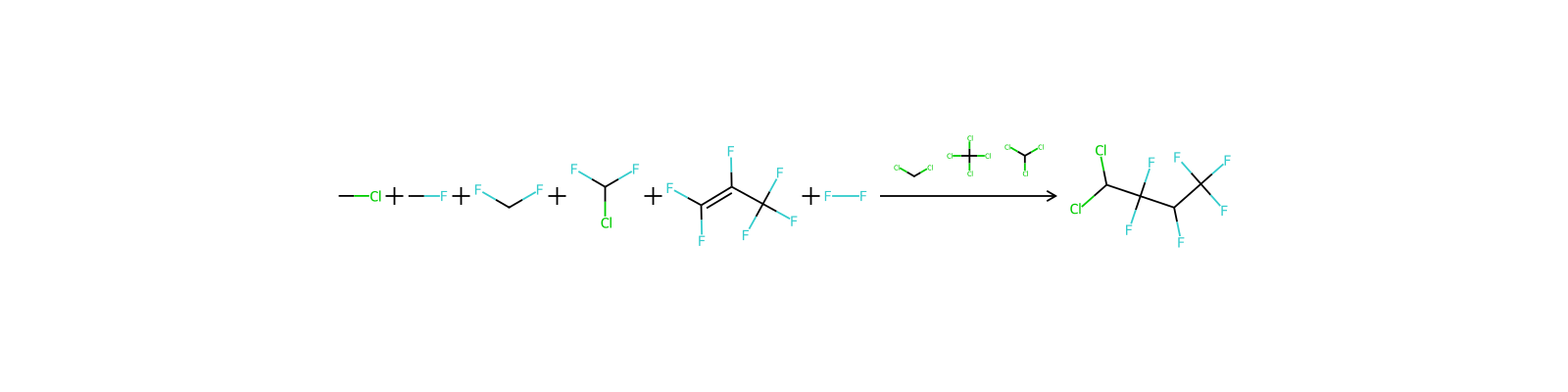
Higher temperatures and higher hydrogen fluoride-to-substrate ratios are necessary to achieve complete replacement of all chlorine atoms in the starting chloro compounds by fluorine. Both liquid-phase halogen exchange in the presence of catalysts, such as antimony(V) or tin(IV) chlorofluorides and vapor phase reactions using solid-phase catalysts based on chromium are employed. Preferred starting materials are chloroform for HFC 23, dichloromethane for HFC 32, and 1,1,1-trichloroethane for HFC 143a. The conversion of tetrachloroethylene to HFC 125 and trichloroethylene to HFC 134a involves initial HF-addition across the double bond followed by a series of chlorine-fluorine exchange reactions.
General Manufacturing Information
Wholesale and Retail Trade
Methane, difluoro-: ACTIVE
Hydrofluorocarbon refrigerant with zero ozone-depletion potential.
Zugehörige Reaktionen
19


Verknüpfte Notizen
Wird geladen…