
Grundinformationen
- Standard-SMILES
CC(F)F- InChIKey
NPNPZTNLOVBDOC-UHFFFAOYSA-N- Summenformel
- C2H4F2
- Durchschnittliche Molmasse
- 66,05 g/mol
- Monoisotopische Masse
- 66,02810657
Überblick
1,1-Difluoroethane is colorless, odorless gas shipped as a liquefied gas under its vapor pressure. Contact with the liquid can cause frostbite. It is easily ignited. Its vapors are heavier than air and a flame can travel back to the source of leak very easily. This leak can be either a liquid or vapor leak. It can asphyxiate by the displacement of air. Under prolonged exposure to fire or heat the containers may rupture violently and rocket.
Namen und Bezeichner
- Bevorzugter Name
- 1,1-Difluoroethane
- IUPAC
- 1,1-difluoroethane
- Englischer Name
- 1,1-Difluoroethane
- Summenformel
- C2H4F2
- Molmasse
- 66.05
Namen und Synonyme
1,1-DIFLUOROETHANE75-37-6Ethylidene fluorideEthylidene difluorideEthane, 1,1-difluoro-HFC-152aGenetron 152aAlgofrene type 67Freon 152aPropellant 152aHalocarbon 152ARefrigerant 152a
Weitere Namen anzeigen
Genetron 100Ethylene fluorideDymel 152ADymel 152Hydrofluorocarbon 152aHFC 152aFluorocarbon 152aR 152a
Datenbank-Bezeichner
- CAS
25497-28-3、75-37-6- PubChem CID
- 6368
- DTXSID
DTXSID0024050- ChEMBL
CHEMBL325493- UNII
- 0B1U8K2ME0
- EC Number
- 200-866-1、687-441-8
- Nikkaji
- J2.819C
Eigenschaften
Berechnete Struktureigenschaften
- XLogP
- 1,4
- Polarare Oberfläche (TPSA)
- 0 Ų
- H-Brücken-Donoren
- 0
- H-Brücken-Akzeptoren
- 2
- Frei drehbare Bindungen
- 0
- Schwere Atome
- 4
- Formalladung
- 0
- Komplexität
- 11,5
Experimentelle und physikochemische Eigenschaften
Chemical Classes
Flammable agents - 4th degree
Volatile Organic Compound (VOC)
PFAS
PFAS -> PFAS with analytical method available
PFAS -> Other/unspecified
SolventsSolvents -> Chlorofluorocarbons
Cosmetics
Cosmetic ingredients (Hydrofluorocarbon 152a) -> CIR (Cosmetic Ingredient Review)
Propellant
SpringerMaterials PropertiesSchoenflies notation
PesticidesPesticide -> EPA IRIS
LogP
log Kow = 0.75
0.75
0.75
OdorOdorless
Density
0.95 at 68 °F (USCG, 1999) - Less dense than water; will float
0.896 c/cu cm at 25 °C, >1 atm
Ratio of specific heats of vapor (gas): 1.141; saturated vp: 83.520 psi at 75 °F; saturated vapor density: 0.96110 lb/cu ft at 75 °F; ideal gas heat capacity: 0.245 Btu/lb at 75 °F
Density (for liquid): 0.91 g/cm³
0.896 @25 °C
Viscosity0.263 cP at 50 °F
Color/FormColorless gas
Solubility
In water, 3.2X10+3 mg/L at 25 °C
Solubility in water, g/100ml at 25 °C: 0.02 (very poor)
Physikochemische Eigenschaften
- Schmelzpunkt
- -117 °C · -117 °C
- Siedepunkt
- -24.7 °C · -24.7 °C
- Dichte
- 0.91 g/cm3 · 0.91 g/cm3(Temp: 21 °C)
Sicherheit und Regulatorisches
GHS-Klassifizierung
GHS Classification
This chemical does not meet GHS hazard criteria for 0.7% (5 of 678) of reports.
Danger
H220 (95%): Extremely flammable gas [Danger Flammable gases]
P203, P210, P222, P280, P377, P381, P403, and P410+P403 (click each P-code to see the statement)
Aggregated GHS information provided per 678 reports by companies from 21 notifications to the ECHA C&L Inventory. Each notification may be associated with multiple companies.
Not Classified
Gefahrenhinweise
Regulatory Information
Chemical: Ethane, 1,1-difluoro-
Ethane, 1,1-difluoro- is listed on the EPA's Chemical Data Reporting (CDR) system. Manufacturers and importers of Ethane, 1,1-difluoro- are required to report information about their production and use of this chemical to the EPA under the Toxic Substances Control Act (TSCA). (40 eCFR Part 711)
REACH registered substance: 1,1-difluoroethane (EC: 200-866-1)
Ethane, 1,1-difluoro- (Refrigerant gas R152A): HSNO Approval: HSR000994 Approved with controls
The New Jersey Worker and Community Right to Know Act requires public and private employers to provide information about hazardous substances at their workplaces. (N.J.S.A. 34:5A-1 et. seq.)
DOT LabelFlammable Gas
Fire Hazards
Special Hazards of Combustion Products: Irritating hydrogen fluoride fumes may form in fire.
· EXTREMELY FLAMMABLE.
Extremely flammable. Gives off irritating or toxic fumes (or gases) in a fire. Gas/air mixtures are explosive.
Fire PotentialA very dangerous fire hazard when exposed to heat or flame; can react vigorously with oxidizing materials.
Health Hazards
Inhalation of concentrated gas will cause suffocation. Contact with liquid can damage eyes because of low temperature. Frostbite may result from contact with liquid. (USCG, 1999)
· Vapors may cause dizziness or asphyxiation without warning, especially when in closed or confined areas.
Hazards Summary
Liquefied gas can cause frostbite; Can displace air and cause asphyxiation; Hydrogen fluoride fumes may be released in a fire; [CAMEO] Causes narcosis at high concentrations; [Hawley] Halogenated alkanes are highly lipophilic; they cross the blood-brain barrier to produce CNS depression. [Klaassen, p. 726] Human volunteers were exposed to 500,000 ppm for several minutes; Impending loss of consciousness was reported; [AIHA]
The major hazards encountered in the use and handling of freon 152A stem from its toxicologic properties and flammability. Toxic by inhalation and dermal contact, exposure to this colorless, odorless gas may occur from its use as a refrigerant, aerosol propellant, and intermediate. Effects from exposure may include light-headedness, irritation of the eyes, nose, and throat, frostbite, pulmonary edema, palpitations, ventricular fibrillation, and sudden death. In activities where overexposure may occur, wear a self-contained breathing apparatus and personal protective clothing. Freon 152A is extremely flammable and may be ignited by heat, sparks, or flames in a wide range of concentrations (flammable limits: 3.7%-18%. Freon 152A is an explosion hazard in confined spaces such as sewers, and its heavier than air vapor may travel to a source of ignition and flash back. Also, containers (cyllinders) of freon 152A may explode in the heat of a fire, and the burning substance may produce irritating or poisonous fumes such as hydrogen fluoride or phosgene. For fires involving freon 152A, consider evacuation for a 1/2 mile radius. Let tank cars, tank trucks or storage tanks burn unless the leak can be stopped. For smaller fires, extinguish with dry chemical, CO2, Halon, water spray or fog. For massive fires, use unmanned hose holders. Shipment of freon 152A is forbidden on passenger carrying aircraft and railcars. Any shippment of freon 152A should be done in containers bearing the label, "Flammable gas", and storage should be in areas away from sparks, flames, or other sources of ignition. Should a leak occur, isolate the area, use water spray to kock down vapor, and attempt to stop the leak if possible without undue personal risk. Do not allow the material to enter water sources or sewers. Before implementing land disposal of waste freon 152A, consult with environmental regulatory agencies for guidance.
DOT ID and Guide1030 115
Reactive GroupFluorinated Organic Compounds
UN ClassificationUN Hazard Class: 2.1
Special Reports
Danish EPA; Survey of selected fluorinated green-house gases (2015)[Available from, as of March 3, 2016: http://eng.mst.dk/]
Organization for Economic Cooperation and Development; Screening Information Data Set for 1,1-Difluoroethane (HFC-152a), 75-37-6 p.14 (June 2006). This OECD Initial Assessment of HPV Chemicals is part of a series of OECD SIDS documents published by UNEP Chemicals to facilitate the access to information needed for health and environmental risk assessments of chemicals.[Available from the Database Query page, as of March 1, 2016: http://www.chem.unep.ch/irptc/sids/OECDSIDS/sidspub.html]
TSCA Requirements
Pursuant to section 8(d) of TSCA, EPA promulgated a model Health and Safety Data Reporting Rule. The section 8(d) model rule requires manufacturers, importers, and processors of listed chemical substances and mixtures to submit to EPA copies and lists of unpublished health and safety studies. 1,1-Difluoroethane is included on this list. Effective date 4/13/89; Sunset date: 12/19/95.
FIFRA Requirements
Residues of 1,1-difluoroethane are exempted from the requirement of a tolerance when used in accordance with good agricultural practice as inert (or occasionally active) ingredients in pesticide formulations applied to growing crops or to raw agricultural commodities after harvest. Use: Aerosol propellant. Limit: For aerosol pesticide formulations used for insect control in food- and feed-handling establishments and animals.
Residues of 1,1-dichloroethane are exempted from the requirement of a tolerance when used in accordance with good agricultural practice as inert (or occasionally active) ingredients in pesticide formulations applied to animals. Use: Aerosol propellant. Limit: For aerosol pesticide formulations used for insect control in food- and feed-handling establishments and animals.
Sicherheit und Schutzausrüstung
Fire Fighting
Excerpt from ERG Guide 115 [Gases - Flammable (Including Refrigerated Liquids)]:
Use carbon dioxide, powder, water spray. In case of fire: keep cylinder cool by spraying with water. Combat fire from a sheltered position.
First Aid Measures
Fresh air, rest.
ON FROSTBITE: rinse with plenty of water, do NOT remove clothes. Refer for medical attention .
First rinse with plenty of water for several minutes (remove contact lenses if easily possible), then refer for medical attention.
Accidental Release Measures
· CALL 911. Then call emergency response telephone number on shipping paper. If shipping paper not available or no answer, refer to appropriate telephone number listed on the inside back cover.
· ELIMINATE all ignition sources (no smoking, flares, sparks or flames) from immediate area.
First Aid
INHALATION: remove to fresh air; use artificial respiration if necessary.
General First Aid:
Safe StorageFireproof. Separated from incompatible materials. Keep in a well-ventilated room.
Exposure Control and Personal Protection· Wear positive pressure self-contained breathing apparatus (SCBA).
Fire Fighting Procedures
Suitable extinguishing media: Use water spray, alcohol-resistant foam, dry chemical or carbon dioxide.
Advice for firefighters: Wear self-contained breathing apparatus for firefighting if necessary.
Use water spray to cool unopened containers.
If material on fire or involved in fire: Do not extinquish fire unless flow can be stopped. Use water in flooding quantities as fog. Cool all affected containers with flooding quantitites of water. Apply water from as far a distance as possible.
For more Fire Fighting Procedures (Complete) data for 1,1-Difluoroethane (7 total), please visit the HSDB record page.
Storage Conditions
Keep container tightly closed in a dry and well-ventilated place.
Closed system, ventilation, explosion-proof electrical equipment and lighting. Prevent build-up of electrostatic charges (e.g., by grounding). Use non-sparking handtools.
Fireproof. Separated from incompatible materials. Keep in a well-ventilated room.
Cleanup Methods
ACCIDENTAL RELEASE MEASURES: Personal precautions, protective equipment and emergency procedures: Avoid breathing vapors, mist or gas. Ensure adequate ventilation. Remove all sources of ignition. Evacuate personnel to safe areas. Beware of vapors accumulating to form explosive concentrations. Vapors can accumulate in low areas; Environmental precautions: Prevent further leakage or spillage if safe to do so. Do not let product enter drains; Methods and materials for containment and cleaning up: Clean up promptly by sweeping or vacuum.
Evacuate danger area! Consult an expert! Ventilation. Remove all ignition sources ... Remove vapor with fine water spray. NEVER direct water jet on liquid.
Nonfire Spill ResponseExcerpt from ERG Guide 115 [Gases - Flammable (Including Refrigerated Liquids)]:
Disposal Methods
SRP: Recycle any unused portion of the material for its approved use or return it to the manufacturer or supplier. Ultimate disposal of the chemical must consider: the material's impact on air quality; potential migration in air, soil or water; effects on animal, aquatic and plant life; and conformance with environmental and public health regulations. If it is possible or reasonable use an alternative chemical product with less inherent propensity for occupational harm/injury/toxicity or environmental contamination.
Product: Burn in a chemical incinerator equipped with an afterburner and scrubber but exert extra care in igniting as this material is highly flammable. Offer surplus and non-recyclable solutions to a licensed disposal company. Contact a licensed professional waste disposal service to dispose of this material; Contaminated packaging: Dispose of as unused product.
Spillage Disposal
Remove all ignition sources. Evacuate danger area! Consult an expert! Personal protection: chemical protection suit including self-contained breathing apparatus. Ventilation. Remove vapour with fine water spray. NEVER direct water jet on liquid.
Toxikologische Informationen
Body Burden
1,1-Difluoroethane concentrations in blood and exhaled air of healthy volunteers after 8-hour simulated exposure decreased rapidly(1). After three cases of death, blood, urine and gastric contents samples were found to contain 1,1-difluoroethane at 99.2-136.2 mg/L, 94.5-191.9 mg/L and 3.6-18.4 mg, respectively(2).
Environmental Fate
TERRESTRIAL FATE: Based on a classification scheme(1), an estimated Koc value of 32(SRC), determined from a structure estimation method(2), indicates that 1,1-difluoroethane is expected to have very high mobility in soil(SRC). Volatilization of 1,1-difluoroethane from moist soil surfaces is expected to be an important fate process(SRC) given a Henry's Law constant of 0.0203 atm-cu m/mole(3). 1,1-Difluoroethane is expected to volatilize from dry soil surfaces(SRC) based upon a vapor pressure of 4550 mm Hg at 25 °C(4). Biodegradation data in soil were not available(SRC, 2016).
AQUATIC FATE: Based on a classification scheme(1), an estimated Koc value of 32(SRC), determined from a structure estimation method(2), indicates that 1,1-difluoroethane is not expected to adsorb to suspended solids and sediment(SRC). Volatilization from water surfaces is expected(3) based upon a Henry's Law constant of 0.0203 atm-cu m/mole(4). Using this Henry's Law constant and an estimation method(3), volatilization half-lives for a model river and model lake are 2.4 hours and 3.2 days, respectively(SRC). 1,1-Difluoroethane is not expected to undergo hydrolysis in the environment due to the lack of functional groups that hydrolyze under environmental conditions(3). According to a classification scheme(5), an estimated BCF of 3(SRC), from its log Kow of 0.75(6) and a regression-derived equation(2), suggests the potential for bioconcentration in aquatic organisms is low(SRC). Biodegradation data in water were not available(SRC, 2016).
ATMOSPHERIC FATE: According to a model of gas/particle partitioning of semivolatile organic compounds in the atmosphere(1), 1,1-difluoroethane, which has a vapor pressure of 4550 mm Hg at 25 °C(2), is expected to exist solely as a gas in the ambient atmosphere. Gas-phase 1,1-difluoroethane is degraded in the atmosphere by reaction with photochemically-produced hydroxyl radicals(SRC); the half-life for this reaction in air is estimated to be 190-270 days(SRC), calculated from rate constants of 2.54X10⁻¹⁴ to 3.6X10⁻¹⁴ cu cm/molecule-sec at 25 °C(3-5). 1,1-Difluoroethane does not contain chromophores that absorb at wavelengths >290 nm(6) and, therefore, is not expected to be susceptible to direct photolysis by sunlight(SRC). 1,1-Difluoroethane's atmospheric life-time has been calculated as 1.5 years with a degradation product of carbonic difluoride(7).
Adverse EffectsNeurotoxin - Acute solvent syndrome
Exposure RoutesThe substance can be absorbed into the body by inhalation.
Toxicity Summary
Safe in the present practices of use and concentration. Ingredient, concentration, and use information are available in documents discoverable at https://cir-reports.cir-safety.org
IDENTIFICATION AND USE: 1,1-Difluoroethane (HFC-152a) is a colorless, odorless gas. The primary uses for HFC-152a are as an aerosol propellant and a foam expansion agent. Other potential uses include refrigeration blends and catalyst regeneration. Intermediate to vinyl fluoride. HUMAN EXPOSURE AND TOXICITY: Several volunteers were exposed to 500,000 ppm of HFC 152a for several min. Analgesia and an impending loss of consciousness were reported. Rapid evaporation of the liquid may cause frostbite. The substance may cause effects on the cardiovascular system , resulting in cardiac disorders. Abuse of fluorinated hydrocarbons is on the rise, especially among the adolescent population. Inhaling aerosolized computer-cleaning spray composed of HFC-152a led to marked upper and lower lip facial swelling consistent with angioedema. The patient also had a prolonged QT interval, mild inspiratory stridor, but no urticaria. In other case, acute myocardial injury and global hypokinesis along with rhabdomyolysis, acute kidney injury, and fulminant hepatitis developed after 2 days of nearly continuous huffing. A serious but rarely reported complication of halogenated hydrocarbon inhalation abuse is severe mucosal frostbite. HFC-152a showed evidence of weak clastogenicity in an in vitro human lymphocyte chromosome aberration test. ANIMAL STUDIES: HFC-152a has low acute inhalation toxicity. The repeat dose studies show some potential for irritation. HFC-152a has the potential to produce cardiac sensitization in dogs challenged simultaneously with high exposure concentrations and high doses of exogenous epinephrine. HFC-152a had anesthetic properties at a 100,000 ppm exposure level during a 2-week repeated dose inhalation study in rats. No adverse effects were observed in rats following a 3-month inhalation exposure to 25,000 ppm HFC-152a. In a developmental study, female rats were exposed via inhalation up to 50,000 ppm during days 6 to 15 of pregnancy for 6 hours per day. No compound related maternal and developmental effects were observed at any of the concentrations tested. No histopathological or weight effects on reproductive organs were observed in male and female rats exposed up to 25,000 ppm HFC-152a for 6 hours per day, 5 days per week for 3, 12 or 24 months. . In a 2-year bioassay, HFC-152a was not carcinogenic to rats at inhalation exposure levels up to 25,000 ppm. HFC-152a was not mutagenic in the in vitro bacterial reverse mutation test (Ames test) in Salmonella typhimurium and Escherichia coli strains. An in vivo rat Micronucleus Test did not show any evidence of chromosome damage or bone marrow cell toxicity when administered by whole body inhalation.
Signs and Symptoms
Dizziness. Drowsiness. Unconsciousness. Suffocation.
ON CONTACT WITH LIQUID: FROSTBITE.
See Skin.
Effluent Concentrations1,1-Difluoroethane was detected at a rate of 4 kilo tons CO2 equivalents/year in the effluent from an HFC packaging plant in The Netherlands, sampled in 1990(1).
EPA IRIS Information
1,1-Difluoroethane
4 x 10 ^1 mg/m^3
Medical Surveillance
A young female suffered burns to her hand after the ignition of gas from a compressed air duster. After debridement and dressing, the patient continued to have pain out of proportion to injury that was refractory to intravenous morphine. The material safety data sheet revealed that the chemical used was 1,1-difluoroethane. High temperatures can cause decompensation to form hydrofluoric acid. Calcium gluconate gel was applied topically to the patient's burns, which caused prompt and complete relief of her pain...
Soil Adsorption/Mobility
Using a structure estimation method based on molecular connectivity indices(1), the Koc of 1,1-difluoroethane can be estimated to be 32(SRC). According to a classification scheme(2), this estimated Koc value suggests that 1,1-difluoroethane is expected to have very high mobility in soil.
Human Toxicity Excerpts
/HUMAN EXPOSURE STUDIES/ ... Healthy volunteers were exposed to 0, 200 or 1000 ppm 1,1-difluoroethane for 2 hr at light exercise in an exposure chamber. ... Symptom ratings and changes in inflammatory markers revealed no exposure-related effects.
/HUMAN EXPOSURE STUDIES/ Several volunteers were exposed to 500,000 ppm of HFC 152a for several min. Good analgesia and an impending loss of consciousness were reported.
/SIGNS AND SYMPTOMS/ Rapid evaporation of the liquid may cause frostbite. The substance may cause effects on the cardiovascular system, resulting in cardiac disorders [SRP: CARDIAC SENSITIZATION]. Exposure at high levels may result in unconsciousness.
/CASE REPORTS/ Heterotopic ossification (HO) is the formation of mature, lamellar bone within soft tissues other than the periosteum. There are three recognized etiologies of HO: traumatic, neurogenic, and genetic. Presently, there are no definitively documented causal factors of HO. The following factors are presumed to place a patient at higher risk: 60 years of age or older, male, previous HO, hypertrophic osteoarthritis, ankylosing spondylitis, diffuse idiopathic skeletal hyperostosis, prior hip surgery, and surgical risk factors. A 33-year-old male, involved in a motor vehicle crash, sustained an irreducible acetabulum fracture/dislocation, displaced proximal humerus fracture, and an impacted pilon fracture. During the time of injury, he was intoxicated from inhaling the aerosol propellant used in "dust spray" cans (1,1-difluoroethane, C2H4F2). Radiographs identified rapid pathologic bone formation about the proximal humeral metaphysis, proximal femur, elbow, and soft tissue several months following the initial injury. The patient did not have any genetic disorders that could have attributed to the bone formation but had some risk factors (male, fracture with dislocation). Surgically, the recommended precautions were followed to decrease the chance of HO. Although the patient did not have neurogenic injuries, the difluoroethane in dusting spray can cause damage to the central nervous system. Signals may have been mixed causing the patient's body to produce bone instead of tissue to strengthen the injured area. What is unusual in this case is the rate at which the pathological bone formation appeared, which was long outside the 4-6 week window in which HO starts to appear. The authors are not certain as to the cause of this rapid formation but suspect that the patient's continued abuse of inhaled aerosol propellants may be the culprit.
For more Human Toxicity Excerpts (Complete) data for 1,1-Difluoroethane (16 total), please visit the HSDB record page.
Artificial Pollution Sources
1,1-Difluoroethane's production and use as a refrigerant(1) and synthesis intermediate for 1-chloro-1,1-difluoroethane (R-142b)(2) may result in its release to the environment through various waste streams(SRC). Its use as a foaming agent(1) and aerosol propellant(2) will result in its direct release to the environment(SRC).
Regulatorische Informationen
TSCA Requirements
Pursuant to section 8(d) of TSCA, EPA promulgated a model Health and Safety Data Reporting Rule. The section 8(d) model rule requires manufacturers, importers, and processors of listed chemical substances and mixtures to submit to EPA copies and lists of unpublished health and safety studies. 1,1-Difluoroethane is included on this list. Effective date 4/13/89; Sunset date: 12/19/95.
FIFRA Requirements
Residues of 1,1-difluoroethane are exempted from the requirement of a tolerance when used in accordance with good agricultural practice as inert (or occasionally active) ingredients in pesticide formulations applied to growing crops or to raw agricultural commodities after harvest. Use: Aerosol propellant. Limit: For aerosol pesticide formulations used for insect control in food- and feed-handling establishments and animals.
Residues of 1,1-dichloroethane are exempted from the requirement of a tolerance when used in accordance with good agricultural practice as inert (or occasionally active) ingredients in pesticide formulations applied to animals. Use: Aerosol propellant. Limit: For aerosol pesticide formulations used for insect control in food- and feed-handling establishments and animals.
Atmospheric Standards
This action promulgates standards of performance for equipment leaks of Volatile Organic Compounds (VOC) in the Synthetic Organic Chemical Manufacturing Industry (SOCMI). The intended effect of these standards is to require all newly constructed, modified, and reconstructed SOCMI process units to use the best demonstrated system of continuous emission reduction for equipment leaks of VOC, considering costs, non air quality health and environmental impact and energy requirements. Difluoroethane is produced, as an intermediate or final product, by process units covered under this subpart.
DHS Chemicals of Interest (COI)
Difluoroethane
1
10000
Flammable chemical that can be released at a facility.
Sicherheitsdaten
- ridadr
- UN 1030
- hazard_class
- 2.1
Chemie und Industrie
Pharmakologische Informationen
Biological Half-Life
... To investigate DFE toxicokinetics, groups (n = 3) of Sprague-Dawley rats were exposed to 30 s of 20 L/min DFE. ... Plots of concentration (log) versus time were consistent with a two compartment model. Initial distribution was rapid with average half life (t((1/2))) during the alpha phase of 9 s for blood, 18 s for brain and 27 s in cardiac tissue. During beta slope elimination average t((1/2)) was 86 s in blood, 110 s in brain and 168 s in heart. Late elimination half lives were longer with blood gamma = 240 s, brain gamma = 340 s, and heart gamma = 231 s. ...
Absorption, Distribution and Excretion
1,1-Difluoroethane (DFE) is a halogenated hydrocarbon used as a propellant in products designed for dusting electronic equipment and air brush painting. When abused, inhaled DFE produces intoxication and loss of muscular coordination. To investigate DFE toxicokinetics, groups (n = 3) of Sprague-Dawley rats were exposed to 30 s of 20 L/min DFE. The experimental model was designed to mimic exposure during abuse, a protocol which has not been conducted. Tissue collection (blood, brain, heart, liver, and kidney) occurred at 0, 10, 20, 30, 45, 60, 120, 240, 480, and 900 s. Average peak DFE levels were blood 352, brain 519, heart 338, liver 187, and kidney 364 mg/L or mg/kg. The total percent uptake of the administered dose was 4.0%. Uptake into individual compartments was 2.72, 0.38, 0.15, 0.41, and 0.32% for blood, brain, heart, liver, and kidney, respectively. All animals showed signs of intoxication within 20 s manifested as lethargy, prostration and loss of righting reflex. Marked intoxication continued for about 4 min when DFE averaged 21 mg/L in blood and 17 mg/kg in brain. Between 4 and 8 min, animals continued to show signs of sedation as evidenced by reduced aggression and excitement during handling. No discernable intoxication was evident after 8 min and blood and brain levels had fallen to 10 and 6 mg/L or kg, respectively. Plots of concentration (log) versus time were consistent with a two compartment model. Initial distribution was rapid with average half life (t((1/2))) during the alpha phase of 9 s for blood, 18 s for brain and 27 s in cardiac tissue. During beta slope elimination average t((1/2)) was 86 s in blood, 110 s in brain and 168 s in heart. Late elimination half lives were longer with blood gamma = 240 s, brain gamma = 340 s, and heart gamma = 231 s. Following acute exposure the Vd = 0.06 L, beta = 0.48 min(-1), AUC = 409.8 mg.min L(-1), and CL from blood was 0.03 L min(-1). The calculated toxicokinetic data may underestimate these parameters if DFE is abused chronically due to continued uptake into lowly perfused tissues with repeated dosing.
The aim of this study was to determine the toxicokinetics of inhaled 1,1-difluoroethane (HFC-152a) in humans. Healthy volunteers were exposed to 0, 200 or 1000 ppm 1,1-difluoroethane for 2 hr at light exercise in an exposure chamber. Capillary blood, urine and exhaled air were sampled up to 22 hr post-exposure and analyzed for 1,1-difluoroethane. Fluoride and other potential metabolites were analyzed in urine. Symptoms of irritation and central nervous system effects were rated and inflammatory markers were analyzed in blood. Within a few minutes of exposure to 200 and 1000 ppm, 1,1-difluoroethane increased rapidly in blood and reached average levels of 7.4 and 34.3 uM, respectively. The post-exposure decreases in blood were fast and parallel to those in exhaled air. The observed time courses in blood and breath agreed well with those obtained with the PBPK model. The PBPK simulations indicate a net uptake during exposure to 1000 ppm of 6.6 mmol (6.7%) which corresponds to the amount exhaled post-exposure. About 20 umol excess fluoride (0.013% of inhaled 1,1-difluoroethane on a molar basis) was excreted in urine after exposure to 1000 ppm, compared to control. No fluorine-containing metabolites were detected in urine. Symptom ratings and changes in inflammatory markers revealed no exposure-related effects.
Verwendung und Herstellung
Uses
CIR ingredient: Hydrofluorocarbon 152a
Used as a chemical intermediate, refrigerant, and propellant; [HSDB]
1,1-Difluoroethane is employed for aerosol pesticide formulations used for insect control in food and feed-handling establishments and animals. The predominant use of this chemical is in consumer products, including use as an aerosol propellant in food and non-food commodities, as refrigerant, and in the synthesis of 1-chloro-1,1-difluoroethane
Intermediate.
Intermediate to vinyl fluoride.
HFC 152a is a specialty liquified hydrofluorocarbon gas. It is used as an intermediate in the production of fluorinated polymers, as an aerosol propellant in some specialty applications, and as a component in some refrigerant blends.
ImpuritiesTypical impurities in HFC-152a include low level (ppm) water, low level (ppb) residual HCl and/or HF acids.
U.S. Production
2023: 50,000,000 - <100,000,000 lb
Production is currently limited to a few thousand tons per year.
Non-confidential 2012 Chemical Data Reporting (CDR) information on the production and use of chemicals manufactured or imported into the United States. Chemical: Ethane, 1,1-difluoro-. National Production Volume: 50,000,000 - 100,000,000 lb/yr.
Consumption Patterns
Refrigerants, 39%; foam blowing agents, 17%; solvents, 14%; fluoropolymers, 14%; sterilant gas, 2%; aerosol propellants, 2%; food freezant, 1%; other, 8%; exports, 3% (1985) /Fluorocarbons/
Approximately 80% of HFC-152a is used as an aerosol propellant and approximately 15% is used as a foam expansion agent. The remaining 5% of the HFC-152a is for other potential uses, which include refrigeration blends and catalyst regeneration.
Consumer UsesDusting agent
Industry UsesFoamant
Methods of Manufacturing
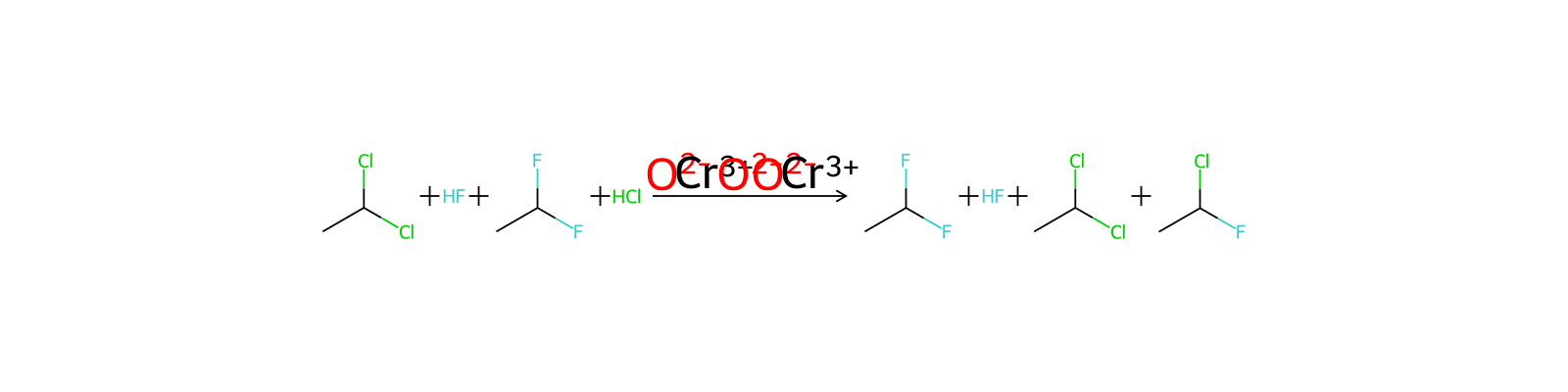
Mono- and difluoroalkanes can be produced by addition of hydrogen fluoride to olefins or alkynes (e.g., CF2H-CH3, HFC 152a). Another synthetic pathway is the exchange of chlorine (or bromine) for fluorine using hydrogen fluoride or metal fluorides, such as antimony fluoride.
By adding hydrogen fluoride to acetylene.
... gas-phase fluorination of acetylene using a magnesium and bismuth catalyst coadsorbed on aluminum fluoride (Mg/Bi/AlF3). This method proceeds via the intermediate product, vinyl fluoride.
... a nonselective reaction, which produced 57.9% of HFC-152a at 67% conversion, when 1,2-dichloroethane was fluorinated in the liquid phase using a Lewis acid catalyst such as SnCl4.
Perhaps the most promising industrial route for the manufacture of HFC-152a is based on the fluorination of the vinyl chloride monomer. The two-step process involves initial addition of HF in a liquid-phase process to form the intermediate HCFC-151a (CH3CHClF). This is followed by a second liquid-phase fluorination of HCFC-151a to HFC-152a.
Formulations/Preparations
Technical, 98%
The concentration of 1,1-difluoroethane as a propellant in pesticide formulations ranges from 14% to 78% by weight in the pesticide formulation.
AF 152a
Algofrene Type 67
For more Formulations/Preparations (Complete) data for 1,1-Difluoroethane (13 total), please visit the HSDB record page.
Household ProductsInformation on 378 consumer products that contain 1,1-Difluoroethane (Hydrofluorocarbon 152A) in the following categories is provided:
Use ClassificationCosmetics -> Propellant
General Manufacturing Information
Wholesale and Retail Trade
Ethane, 1,1-difluoro-: ACTIVE
The direct fluorination of hydrocarbon with elemental fluoride is extremely exothermic and difficult to control. ... The disadvantages of direct fluorination have been overcome by the use of fluorine carriers, in particular, high valence metal fluorides such as cobalt trifluoride, CoF3, or potassium tetrafluorocobalate, KCoF4.
Zugehörige Reaktionen
1
Verknüpfte Notizen
Wird geladen…