StartseiteMCPWorkbenchSkills
StartseiteWorkbenchBenachrichtigungenMein Bereich
llms.txt · MCP-AnleitungDatenschutz · Nutzungsbedingungen · Supportv1.8.0
  1. Startseite
  2. /Verbindung

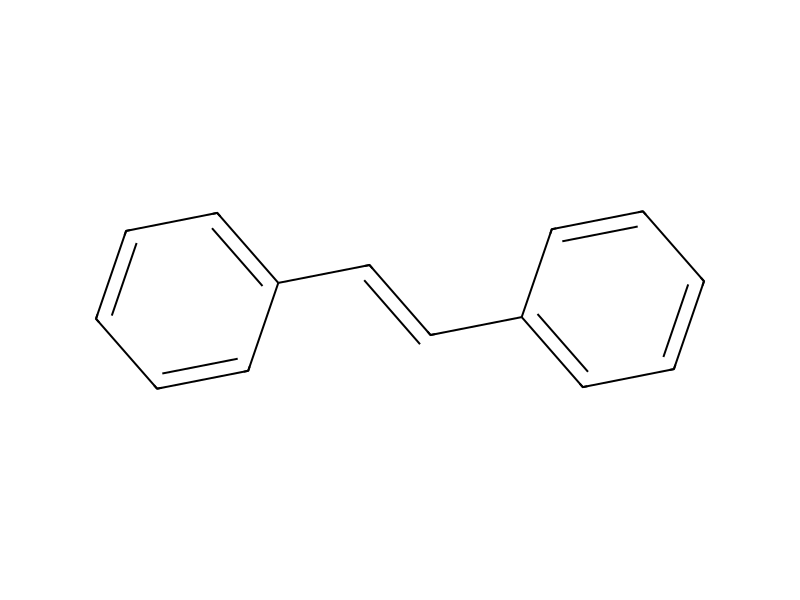
trans-Stilben

trans-Stilbene

HCID 638088
Neue NotizNeue ReaktionAnfrage stellen
Druckvorschau

Daten werden ergänzt – lade die Seite später neu, um den aktuellen Stand zu sehen
GrundinformationenÜberblickNamen und BezeichnerEigenschaftenSicherheit und RegulatorischesChemie und IndustrieZugehörige ReaktionenNotizen zur Verbindung
TeilstruktursucheÄhnliche Strukturen suchen

Grundinformationen

CAS
103-30-0
Standard-SMILES
C(=C\c1ccccc1)/c1ccccc1
InChIKey
PJANXHGTPQOBST-VAWYXSNFSA-N
Summenformel
C14H12
Durchschnittliche Molmasse
180,24 g/mol
Monoisotopische Masse
180,09390038

Überblick

Trans-stilbene appears as off-white crystals. Melting point of 122-124 °C. Shows blue fluorescence. (NTP, 1992)

Namen und Bezeichner

Bevorzugter Name
trans-Stilbene
IUPAC
(E)-stilbene
Lokaler Name
trans-Stilben
Englischer Name
trans-Stilbene
Summenformel
C14H12
Molmasse
180.25

Namen und Synonyme

trans-Stilbene103-30-0(E)-Stilbene(E)-1,2-DiphenyletheneTRANS-1,2-DIPHENYLETHYLENE(E)-1,2-DiphenylethyleneToluylenetrans-Diphenylethenetrans-1,2-DiphenyletheneBenzene, 1,1'-(1E)-1,2-ethenediylbis-trans-alpha,beta-DiphenylethyleneDTXSID4026050
Weitere Namen anzeigen
1,2-Diphenylethene1,2-DIPHENYLETHYLENEbenerans-stilbeneBibenzylidenecp46940BIBENZAL
Benzene, 1,1'-(1,2-ethenediyl)bis-, (E)-3FA7NW80A0NSC-2069STILBENE, TRANS-1,1'-(E)-ethene-1,2-diyldibenzene[(E)-2-Phenylethenyl]benzeneCHEBI:36007((E)-2-phenylethenyl)benzene

Datenbank-Bezeichner

CAS
103-30-0、588-59-0
PubChem CID
638088
DTXSID
DTXSID4026050
ChEMBL
CHEMBL113028
ChEBI
CHEBI:26775
UNII
3FA7NW80A0
EC Number
203-098-5
Nikkaji
J1.639J、J46.982C

Eigenschaften

Berechnete StruktureigenschaftenWird ergänzt

XLogP
4,8
Polarare Oberfläche (TPSA)
0 Ų
H-Brücken-Donoren
0
H-Brücken-Akzeptoren
0
Frei drehbare Bindungen
2
Schwere Atome
14
Formalladung
0
Komplexität
148

Experimentelle und physikochemische Eigenschaften

Chemical ClassesOther Classes -> Aromatic Hydrocarbons
SpringerMaterials Properties13C nuclear magnetic resonance spectrum
LogPlog Kow = 4.81
Density · 2 Einträge

0.9707 at 68 °F (NTP, 1992) - Less dense than water; will float

0.9707

Color/Form · 2 Einträge

Crystals from 95% ethanol

Colorless or slightly yellow crystals

Solubility · 3 Einträge

Insoluble (NTP, 1992)

Freely sol in benzene, ether; practically insol in water; sol in 90 parts cold alc, 13 parts boiling alc

2.90X10⁻¹ mg/l in water at 25 °C

Boiling Point · 2 Einträge

583 to 585 °F at 760 mmHg (NTP, 1992)

306-307 °C @ 760 mm Hg

DecompositionWhen heated to decomposition it emits acrid smoke and irritating vapors.

Sicherheit und Regulatorisches

Sicherheitsangaben dienen nur zur Orientierung und ersetzen weder das Sicherheitsdatenblatt (SDB) des Lieferanten noch geltende Vorschriften oder eine fachliche Bewertung.

GHS-Klassifizierung

GHS Classification · 5 Einträge

This chemical does not meet GHS hazard criteria for 4% (2 of 50) of reports.

Warning

H302 (94%): Harmful if swallowed [Warning Acute toxicity, oral]

P264, P264+P265, P270, P273, P280, P301+P317, P305+P351+P338, P330, P337+P317, P391, and P501 (click each P-code to see the statement)

Aggregated GHS information provided per 50 reports by companies from 6 notifications to the ECHA C&L Inventory. Each notification may be associated with multiple companies.

Gefahrenhinweise

Regulatory Information · 2 Einträge

Chemical: Benzene, 1,1'-(1,2-ethenediyl)bis-, (E)-

Benzene, 1,1'-(1E)-1,2-ethenediylbis-: Does not have an individual approval but may be used under an appropriate group standard

DOT LabelClass 9
Fire HazardsFlash point data for this chemical are not available, however it is probably combustible. (NTP, 1992)
Health HazardsExcerpt from ERG Guide 171 [Substances (Low to Moderate Hazard)]:
Hazards SummaryToxic effects in animal studies include inflammation, scarring, or necrosis of the bladder; [RTECS] May cause irritation; [MSDSonline] See cis-1,2-Diphenylethylene.
Reactive GroupHydrocarbons, Aliphatic Unsaturated
Reactivity ProfileTRANS-STILBENE may react vigorously with strong oxidizing agents. May react exothermically with reducing agents to release gaseous hydrogen.

Chemie und Industrie

Pharmakologische Informationen

Metabolism/Metabolites · 5 Einträge

TRANS-STILBENE GIVES 4-HYDROXY-TRANS-STILBENE IN RABBIT & GUINEA PIG. /FROM TABLE/

STUDY OF RING-HYDROXYLATED METABOLITES OF TRANS-STILBENE /SHOWS/...URINE CONTAINS RANGE OF POLYHYDROXYLATED BIBENZYL DERIVATIVES. ...EVIDENCE /SUGGESTS/ THAT BIBENZYL COMPD ARE FORMED BY MICROFLORAL REDUCTION OF STILBENES.

IN GUINEA PIGS & RABBITS, /TRANS-STILBENE/ BIOTRANSFORMATION INTO 4-HYDROXY-, 4,4'-DIHYDROXY-, 3-HYDROXY-4-METHOXY-, & 3-METHOXY-4-HYDROXYSTILBENES OCCURS... HOWEVER, IN MOUSE ONLY LIMITED CONVERSION TO 4,4'-DIHYDROXY- TAKES PLACE.

SCHEME FOR OXIDATIVE CLEAVAGE OF ETHYLENIC LINKAGE OF STILBENE IS PRESENTED.

For more Metabolism/Metabolites (Complete) data for TRANS-1,2-DIPHENYLETHYLENE (6 total), please visit the HSDB record page.

Verwendung und Herstellung

Uses · 2 Einträge

Used to make dyes and optical bleaches; as phosphors and scintillators (crystal forms); [HSDB]

Mfr of dyes and optical bleaches; crystals are used as phosphors and scintillators

U.S. Imports(1979) 9.9X10+4 G (PRINCPL CUSTMS DISTS-TRANS)
U.S. Production · 2 Einträge

(1977) NOT PRODUCED COMMERCIALLY IN US

(1979) NOT PRODUCED COMMERCIALLY IN US

Methods of Manufacturing · 3 Einträge

Trans-form prepd by Clemmensen redn of benzoin: Shriner, Berger, Org Syn Coll Vol III, 786 (1955); cis-form by copper-chromite decarboxylation of alpha-phenylcinnamic acid: Buckles, Wheeler, Org Synth Coll Vol IV, 857 (1963).

Synthesis of cis- and trans-forms by Wittig reaction and decarboxylation of phenylcinnamic acids: Wheeler, Batlle de Pabon, J Org Chem 30, 1473 (1965).

By passing toluene over hot lead oxide. Method of purification: crystallization; zone melting used for very pure crystals.

Formulations/Preparations

Zugehörige Reaktionen

148
Reaktionsaufzeichnung erstellen
Reaktionsgleichung von HRID 48541
HRID 48541als Eduktuspto-grants-2004_03
Reaktionsgleichung von HRID 48542
HRID 48542als Eduktuspto-grants-2004_03
Reaktionsgleichung von HRID 68030
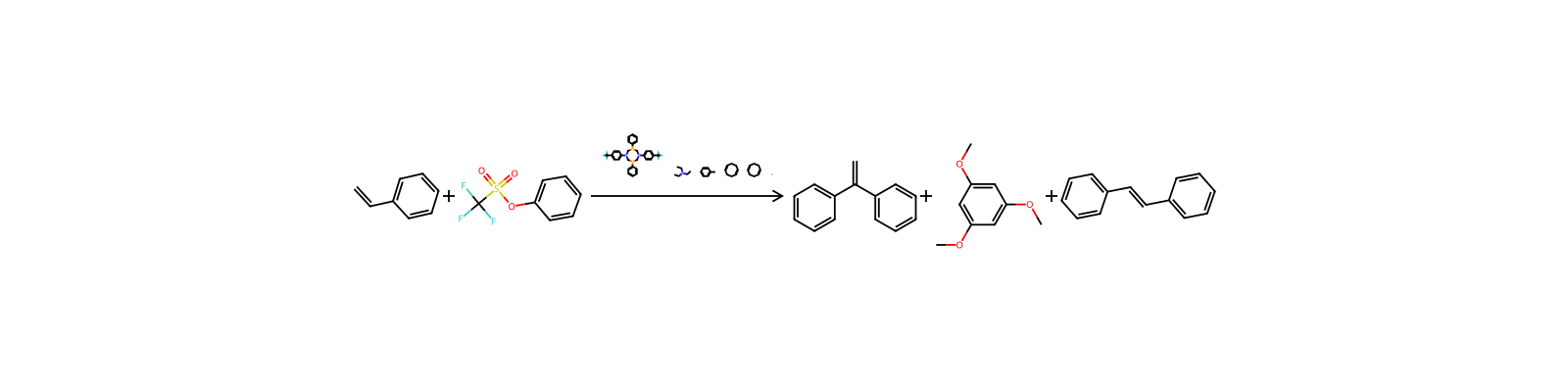
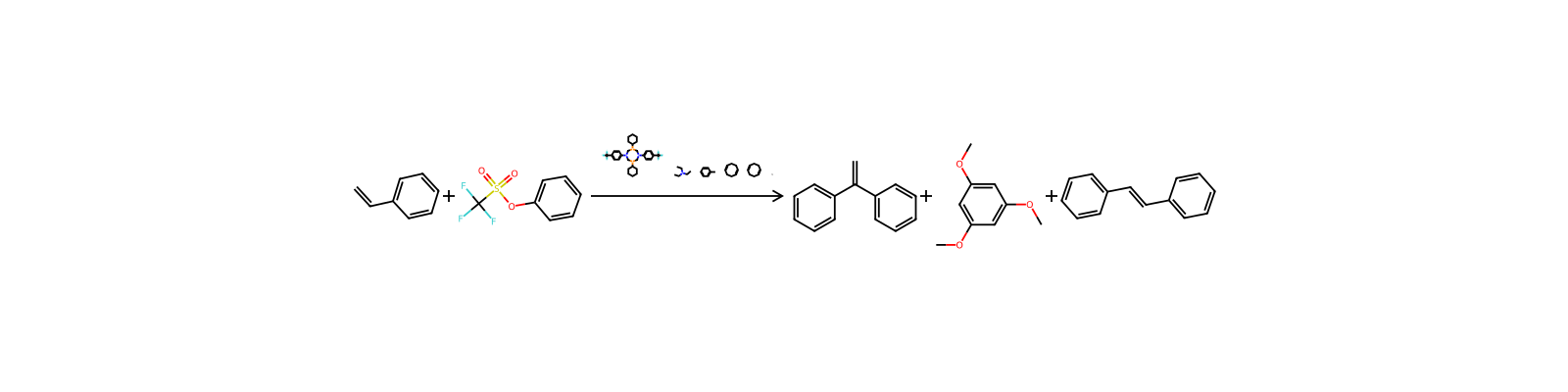
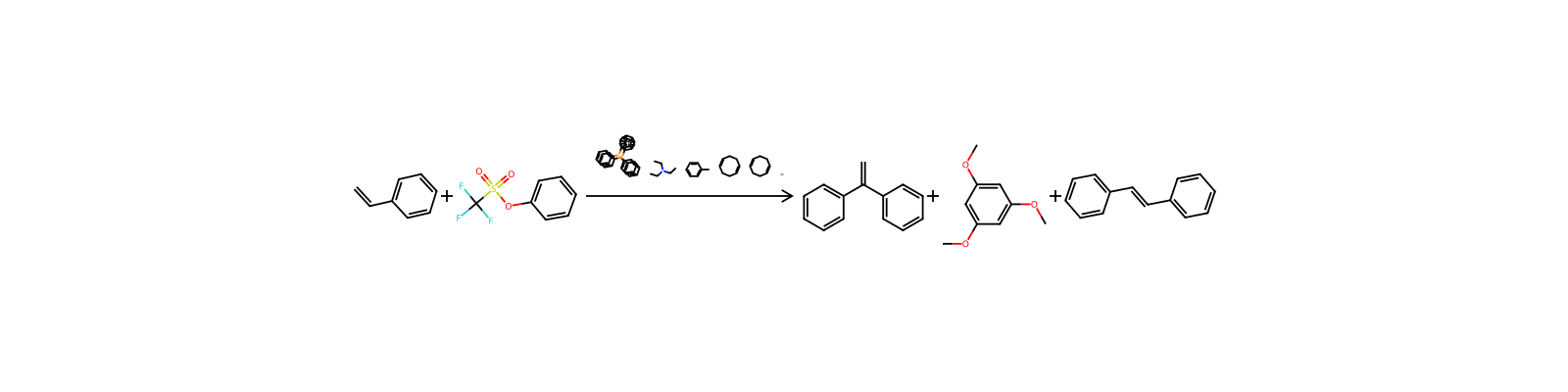
HRID 68030als ProduktStyrene Mizoroki-Heck
Reaktionsgleichung von HRID 68031
HRID 68031als ProduktStyrene Mizoroki-Heck
Reaktionsgleichung von HRID 68032
HRID 68032als ProduktStyrene Mizoroki-Heck
Reaktionsgleichung von HRID 68033
HRID 68033als ProduktStyrene Mizoroki-Heck
Reaktionsgleichung von HRID 68034
HRID 68034als ProduktStyrene Mizoroki-Heck
Reaktionsgleichung von HRID 68035
HRID 68035als ProduktStyrene Mizoroki-Heck
Seite 1 von 19

Notizen zur Verbindung

Wird geladen…

Auf dieser SeiteGrundinformationenÜberblickNamen und BezeichnerEigenschaftenSicherheit und RegulatorischesChemie und IndustrieZugehörige ReaktionenNotizen zur Verbindung
Weitere Aktionen
Neue NotizNeue ReaktionAnfrage stellen
Melting Point · 2 Einträge

255 to 257 °F (NTP, 1992)

124 °C

Vapor Pressure · 2 Einträge

0.000881 [mmHg]

8.81X10⁻⁴ mm Hg @ 25 °C

Refractive IndexIndex of refraction: 1.6264 @ 17 °C
Heat of CombustionNet heat of combustion of liquid = 17176 Btu/lb at 77 °F

Physikochemische Eigenschaften

Schmelzpunkt
123 · 123-125 °C(lit.)
Siedepunkt
305 · 305-307 °C744 mm Hg(lit.)
Dichte
0.97 g/mL · 0.97 g/mL at 25 °C(lit.)
Brechungsindex
1.623 · 1.6230
Flammpunkt
305 · 305-307°C
storage temp.
30 °C · Store below +30°C.
Löslichkeit
0.00029 g/l · 0.00029g/l
Aggregatzustand
Crystals or Crystalline Powder
Farbe
White to slightly beige
Wichte
0.97 · 0.97
Wasserlöslichkeit
Soluble in benzene and ether. Insoluble in water.
Merck
14 · 14,8817
BRN
1616740 · 1616740
Henry's Law Constant
1.4 · 1.4×10-2 mol/(m3Pa) at 25℃, Duchowicz et al. (2020)
Stabilität
Light Sensitive
InChI
1S/C14H12/c1-3-7-13(8-4-1)11-12-14-9-5-2-6-10-14/h1-12H/b12-11+
InChIKey
PJANXHGTPQOBST-VAWYXSNFSA-N
SMILES
c1ccc(cc1)\C=C\c2ccccc2
LogP
4.81 · 4.810
CAS Datenbank
103 · 103-30-0(CAS DataBase Reference)
EPA chemische Informationen
trans-Stilbene (103-30-0)
Air and Water Reactions
Sensitive to air and light. Insoluble in water.
Hazard Classes and CategoriesAcute Tox. 4 (94%)
Critical Temperature and PressureCritical temperature = 982.13 °F; critical pressure = 397.40 psia

Sicherheit und Schutzausrüstung

Fire FightingFires involving this compound can be controlled using a dry chemical, carbon dioxide or Halon extinguisher. (NTP, 1992)
First Aid · 1 Eintrag

EYES: First check the victim for contact lenses and remove if present. Flush victim's eyes with water or normal saline solution for 20 to 30 minutes while simultaneously calling a hospital or poison control center. Do not put any ointments, oils, or medication in the victim's eyes without specific instructions from a physician. IMMEDIATELY transport the victim after flushing eyes to a hospital even if no symptoms (such as redness or irritation) develop.

Nonfire Spill Response · 1 Eintrag

SMALL SPILLS AND LEAKAGE: If you spill this chemical, FIRST REMOVE ALL SOURCES OF IGNITION, then dampen the solid spill material with toluene, then transfer the dampened material to a suitable container. Use absorbent paper dampened with toluene to pick up any remaining material. Your contaminated clothing and absorbent paper should be sealed in a vapor-tight plastic bag for eventual disposal. Solvent-wash all contaminated surfaces with toluene followed by washing with a soap and water solution. Do not reenter the contaminated area until the Safety Officer (or other responsible person) has verified that the area has been properly cleaned.

Disposal Methods · 1 Eintrag

SRP: At the time of review, criteria for land treatment or burial (sanitary landfill) disposal practices are subject to significant revision. Prior to implementing land disposal of waste residue (including waste sludge), consult with environmental regulatory agencies for guidance on acceptable disposal practices.

Isolation and EvacuationExcerpt from ERG Guide 171 [Substances (Low to Moderate Hazard)]:
Personal Protective Equipment (PPE) · 1 Eintrag

RECOMMENDED RESPIRATOR: Where the neat test chemical is weighed and diluted, wear a NIOSH-approved half face respirator equipped with an organic vapor/acid gas cartridge (specific for organic vapors, HCl, acid gas and SO2) with a dust/mist filter. (NTP, 1992)

Toxikologische Informationen

Environmental Fate · 3 Einträge

TERRESTRIAL FATE: Based on a classification scheme(1), an estimated Koc value of 9,850(SRC), determined from a measured log Kow of 4.81(2) and a regression-derived equation(3), indicates that trans-1,2-diphenylethylene is expected to be immobile in soil(SRC). Volatilization of trans-1,2-diphenylethylene from moist soil surfaces is expected given an estimated Henry's Law constant of 7.2X10⁻⁴ atm-cu m/mole(SRC), determined from a water solubility of 0.29 mg/l(4) and a vapor pressure of 8.8X10⁻⁴ at 25 °C(5), however, adsorption to soil may attenuate this process(SRC). trans-1,2-Diphenylethylene is not expected to volatilize from dry soil surfaces(SRC) based upon its vapor pressure(5).

AQUATIC FATE: Based on a classification scheme(1), an estimated Koc value of 9,850(SRC), determined from a measured log Kow of 4.81(2) and a regression-derived equation(3), indicates that trans-1,2-diphenylethylene is expected to adsorb to suspended solids and sediment(SRC). trans-1,2-Diphenylethylene is expected to volatilize from water surfaces(3) based on an estimated Henry's Law constant of 7.2X10⁻⁴ atm-cu m/mole(SRC), determined from a water solubility of 0.29 mg/l(4) and a vapor pressure of 8.8X10⁻⁴ at 25 °C(5). Using this Henry's Law constant and an estimation method(3), volatilization half-lives for a model river and model lake are 2 and 140 hours, respectively(SRC). However, volatilization from water surfaces is expected to be attenuated by adsorption to suspended solids and sediment. The estimated volatilation half-life from a model pond is 90 days if adsorption is considered(6). According to a classification scheme(7), an estimated BCF of 1,000(SRC), from its log Kow(2) and a regression-derived equation(8), suggests the potential for bioconcentration in aquatic organisms is very high(SRC).

ATMOSPHERIC FATE: According to a model of gas/particle partitioning of semivolatile organic compounds in the atmosphere(1), trans-1,2-diphenylethylene, which has a vapor pressure of 8.81X10⁻⁴ mm Hg at 25 °C(2), is expected to exist solely as a vapor in the ambient atmosphere. Vapor-phase trans-1,2-diphenylethylene is degraded in the atmosphere by reaction with photochemically-produced hydroxyl radicals and ozone molecules(SRC). The half-life for the reaction in air with hydroxyl radicals is estimated to be 6 hours(SRC), calculated from its rate constant of 6.8X10⁻¹¹ cu cm/molecule-sec at 25 °C(SRC) determined using a structure estimation method(3). The half-life for the reaction in air with ozone is estimated to be 1 hour(SRC), calculated from its rate constant of 2.5X10⁻¹⁶ cu cm/molecule-sec(SRC), estimated with a structure estimation method(3).

Soil Adsorption/Mobility · 1 Eintrag

The Koc of trans-1,2-diphenylethylene is estimated as 9,850(SRC), using a log Kow of 4.81(1) and a regression-derived equation(2). According to a classification scheme(3), this estimated Koc value suggests that trans-1,2-diphenylethylene is expected to be immobile in soil.

Artificial Pollution Sourcestrans-1,2-Diphenylethylene's production and use in the manufacture of dyes and optical bleaches, and as phosphors and scintillators(1) may result in its release to the environment through various waste streams(SRC).
Environmental Bioconcentration · 1 Eintrag

An estimated BCF of 1,000 was calculated for trans-1,2-diphenylethylene(SRC), using a log Kow of 4.81(1) and a regression-derived equation(2). According to a classification scheme(3), this BCF suggests the potential for bioconcentration in aquatic organisms is very high(SRC).

Volatilization from Water/Soil · 1 Eintrag

The Henry's Law constant for trans-1,2-diphenylethylene is estimated as 7.2X10⁻⁴ atm-cu m/mole(SRC) based upon its vapor pressure, 8.81X10⁻⁴ mm Hg(1), and water solubility, 0.29 mg/l(2). This Henry's Law constant indicates that trans-1,2-diphenylethylene is expected to volatilize from water surfaces(3). Based on this Henry's Law constant, the volatilization half-life from a model river (1 m deep, flowing 1 m/sec, wind velocity of 3 m/sec)(3) is estimated as 2 hours(SRC). The volatilization half-life from a model lake (1 m deep, flowing 0.05 m/sec, wind velocity of 0.5 m/sec)(3) is estimated as 140 hours(SRC). However, volatilization from water surfaces is expected to be attenuated by adsorption to suspended solids and sediment in the water column. The estimated volatilization half-life from a model pond is 90 days if adsorption is considered(4). trans-1,2-Diphenylethylene's estimated Henry's Law constant(1,2) indicates that volatilization from moist soil surfaces may occur(SRC), however, adsorption to soil may attenuate this process(SRC). trans-1,2-Diphenylethylene is not expected to volatilize from dry soil surfaces(SRC) based upon its vapor pressure(1).

Non-Human Toxicity Excerpts · 1 Eintrag

trans-Stilbene oxide (TSO, 2 mmol/kg ip.) induced ornithine decarboxylase (ODC) and S-adenosylmethionine decarboxylase (SAMDC) to 60-fold and 5-fold of the controls, respectively, in the liver of rats. Parallel to ODC induction, there was a marked increase in putrescine content to 50-fold of the control levels. cis-Stilbene oxide (CSO), a stereoisomer of TSO, also produced the induction of ODC and SAMDC and the increase in putrescine content. There was no difference in the ability to induce ODC and SAMDC between TSO and CSO with respect to the extents of induction and the time needed to reach maximal levels. trans-Stilbene (TS), a mother compound of TSO, did not show such an effect on ODC, while cis-stilbene (CS) induced both ODC and SAMDC. Treatment with glutathione inhibited TSO- and CSO-mediated induction of ODC and SAMDC. These findings add new information concerning the abilities of TSO, CSO and CS on hepatic polyamine metabolism.

Environmental Abiotic Degradation · 1 Eintrag

The rate constant for the vapor-phase reaction of trans-1,2-diphenylethylene with photochemically-produced hydroxyl radicals has been estimated as 6.8X10⁻¹¹ cu cm/molecule-sec at 25 °C(SRC) using a structure estimation method(1). This corresponds to an atmospheric half-life of about 6 hours at an atmospheric concentration of 5X10+5 hydroxyl radicals per cu cm(1). The rate constant for the vapor-phase reaction of trans-1,2-diphenylethylene with ozone molecules has been estimated as 2.5X10⁻¹⁶ cu cm/molecule-sec at 25 °C(SRC) using a structure estimation method(1). This corresponds to an atmospheric half-life of 1 hour at an atmospheric concentration of 7X10+11 ozone molecules per cu cm(1). trans-1,2-Diphenylethylene was converted to trans-1,2-diphenylethylene oxide (ratio of conversion was 44%) after 1 hour of irradiation with a xenon lamp (operating through a Pyrex filter) in the presence of nitrogen dioxide in air(2). trans-1,2-Diphenylethylene is not expected to undergo hydrolysis(SRC) due to the lack of functional groups to hydrolyze(3).

Probable Routes of Human Exposure · 1 Eintrag

Occupational exposure to trans-1,2-diphenylethylene may occur through inhalation of dust particles and dermal contact with this compound at workplaces where it is produced or used. Limited monitoring data indicate that non-occupational exposure can occur from the ingestion of contaminated drinking water. (SRC)

Environmental Water Concentrations · 1 Eintrag

DRINKING WATER: Trans-1,2-diphenylethylene was detected in drinking water samples from Ottawa in January and February, 1978(1). Trans-1,2-diphenylethylene was quantitatively detected in drinking water in Poplarville, Mississippi in March 1989; Philadelphia, PA in February 1976; and in Ottumwa, Iowa in September 1976(2).

Environmental Fate/Exposure Summary · 1 Eintrag

trans-1,2-Diphenylethylene's production and use in the manufacture of dyes and optical bleaches, and as phosphors and scintillators may result in its release to the environment. If released to air, a vapor pressure of 8.81X10⁻⁴ mm Hg at 25 °C indicates trans-1,2-diphenylethylene will exist solely as a vapor in the ambient atmosphere. Vapor-phase trans-1,2-diphenylethylene will be degraded in the atmosphere by reaction with photochemically-produced hydroxyl radicals and ozone molecules. The half-life for the reaction in air with hydroxyl radicals is estimated to be 6 hours. The half-life for the reaction in air with ozone is estimated to be 1 hour. If released to soil, trans-1,2-diphenylethylene is expected to have no mobility based upon an estimated Koc of 9,850. Volatilization from moist soil surfaces may be an important fate process based upon an estimated Henry's Law constant of 7.2X10⁻⁴ atm-cu m/mole; however, adsorption to soil may attenuate this process. trans-1,2-Diphenylethylene is not expected to volatilize from dry soil surfaces based upon its vapor pressure. If released into water, trans-1,2-diphenylethylene is expected to adsorb to suspended solids and sediment based upon its estimated Koc. Volatilization from water surfaces may be an important fate process based upon this compound's estimated Henry's Law constant. Estimated volatilization half-lives for a model river and model lake are 2 and 140 hours, respectively. However, volatilization from water surfaces is expected to be attenuated by adsorption to suspended solids and sediment. The estimated volatilation half-life from a model pond is 90 days if adsorption is considered. An estimated BCF of 1,000 suggests the potential for bioconcentration in aquatic organisms is very high. Occupational exposure to trans-1,2-diphenylethylene may occur through inhalation of dust particles and dermal contact with this compound at workplaces where it is produced or used. Limited monitoring data indicate that non-occupational exposure can occur from the ingestion of contaminated drinking water. (SRC)

Non-Human Toxicity Values · 2 Einträge

LD50 Mouse oral 920 mg/kg

LD50 Mouse ip 6050 mg/kg

Sicherheitsdaten

wgk
2
tsca
TSCA listed
ridadr
UN3077
hs_code
29029090
RTECS-Nr.
WJ4926500
risk_code
22-36-51/53
hazard_code
Xn,N
safety_code
26-36/37-61
hazard_class
9
packing_group
III
Speicherklasse
11 - Combustible Solids
Giftige Stoffe Daten
103-30-0(Hazardous Substances Data)
Hazard Classifications
Acute Tox. 4 OralAquatic Chronic 2Eye Irrit. 2
Grades: technical; pure.
General Manufacturing InformationBenzene, 1,1'-(1E)-1,2-ethenediylbis-: ACTIVE
Anwendungen · 1 Eintrag

Verwendentrans-Stilbene is used in the manufacturing of dye lasers, optical brighteners, non-steroidal synthetic estrogens such as diethylstilbestrol, fosfestrol and dienestrol. It is used as a phosphor and a scintillator. It is also involved in transition metal catalyzed asymmetric epoxidation and dihydroxylation. Further, it is used as raw material in organic synthesis.

Vor- und nachgelagerte Produkte

Vorgelagerte Rohstoffe

α,α-Dibromtoluolcis-StilbenDesoxybenzoin1,2-diphenyl-1,2-disodiumethaneUndecenoic acidTriisopropylphosphin

Nachgelagerte Produkte

Diphenylacetylen(R,R)-(+)-HydrobenzoinBenzaldehydtrans,trans-Dibenzylideneacetonetrans-1-Amino-2,3-diphenylaziridinetrans-Stilbene-d12