
Grundinformationen
- Standard-SMILES
CC(C)(O)C(C)(C)O- InChIKey
IVDFJHOHABJVEH-UHFFFAOYSA-N- Summenformel
- C6H14O2
- Durchschnittliche Molmasse
- 118,17 g/mol
- Monoisotopische Masse
- 118,09937969
Überblick
Pinacol is a glycol that is ethylene glycol in which all four methylene hydrogens have been replaced by methyl groups.
Namen und Bezeichner
- Bevorzugter Name
- Pinacol
- IUPAC
- 2,3-dimethylbutane-2,3-diol
- Lokaler Name
- Pinakol
- Englischer Name
- Pinacol
- Summenformel
- C6H14O2
- Molmasse
- 118.17
Namen und Synonyme
PINACOL76-09-52,3-Dimethylbutane-2,3-diol2,3-Dimethyl-2,3-butanediolPinaconeTetramethylethylene glycol2,3-Butanediol, 2,3-dimethyl-1,1,2,2-Tetramethylethylene glycol2,3-Dihydroxy-2,3-dimethylbutane2,3-Dimethyl-2,3-dihydroxybutane527QE7I5CONSC-25943
Weitere Namen anzeigen
PinakolPINACOL ANHYDROUSPicolPinatolPinacol,99%Pinacol 98%
DTXSID3058793CHEBI:131185RefChem:174293DTXCID5047825200-933-5MFCD000044622,3-Dimethyl-butane-2,3-diolEINECS 200-933-5
Datenbank-Bezeichner
- CAS
76-09-5- PubChem CID
- 6425
- DTXSID
DTXSID3058793- ChEMBL
CHEMBL3289669- ChEBI
CHEBI:131185- UNII
- 527QE7I5CO
- EC Number
- 200-933-5
- Nikkaji
- J4.440G
Eigenschaften
Berechnete Struktureigenschaften
- XLogP
- 0,1
- Polarare Oberfläche (TPSA)
- 40,5 Ų
- H-Brücken-Donoren
- 2
- H-Brücken-Akzeptoren
- 2
- Frei drehbare Bindungen
- 1
- Schwere Atome
- 8
- Formalladung
- 0
- Komplexität
- 72,5
Experimentelle und physikochemische Eigenschaften
PolymersOther Classes -> Alcohols and Polyols, Other
SpringerMaterials PropertiesBoiling point
LogP-0.05
Vapor Pressure0.5 [mmHg]
Physical DescriptionWhite crystalline solid; [Alfa Aesar MSDS]
Physikochemische Eigenschaften
- Schmelzpunkt
- 40 · 40-43 °C (lit.)
- Siedepunkt
- 171 · 171-172 °C/739 mmHg (lit.)
- Dichte
- 0.967 g/cm3 · 0.967 g/cm3 (20℃)
- Brechungsindex
- 1.4347 · 1.4347 (estimate)
- Flammpunkt
- 171 °F · 171 °F
- storage temp.
- Inert atmosphere,Room Temperature
- Löslichkeit
- alcohol: freely soluble
- pka
- 14.8 · 14.80±0.29(Predicted)
- Aggregatzustand
- Crystalline Low Melting Solid
- Farbe
- White
- Geruch (Odor)
- 100 % · at 100.00 %. woody earthy patchouli warm bread
- Geruchsart
- woody
- Wasserlöslichkeit
- Soluble in hot water, alcohol, and diethyl ether.
- Merck
- 14 · 14,7439
- BRN
- 1340501 · 1340501
- Henry's Law Constant
- 1 · 1.0×102 mol/(m3Pa) at 25℃, Wang et al. (2017)
- Dielectric constant
- 7.4 · 7.4(24℃)
- Stabilität
- Stable. Combustible. Incompatible with strong oxidizing agents, strong bases, strong acids.
- Kosmetik-Inhaltsstoffe Funktionen
- PERFUMING
- InChI
- 1S/C6H14O2/c1-5(2,7)6(3,4)8/h7-8H,1-4H3
- InChIKey
- IVDFJHOHABJVEH-UHFFFAOYSA-N
- SMILES
- CC(C)(O)C(C)(C)O
- LogP
- 0.54 · 0.540
- CAS Datenbank
- 76 · 76-09-5(CAS DataBase Reference)
- NIST chemische Informationen
- 2 · 2,3-Butanediol, 2,3-dimethyl-(76-09-5)
- EPA chemische Informationen
- 2 · 2,3-Butanediol, 2,3-dimethyl- (76-09-5)
Sicherheit und Regulatorisches
GHS-Klassifizierung
GHS Classification
Danger
H228 (74.2%): Flammable solid [Danger Flammable solids]
P210, P240, P241, P261, P264, P264+P265, P271, P280, P302+P352, P304+P340, P305+P351+P338, P319, P321, P332+P317, P337+P317, P362+P364, P370+P378, P403+P233, P405, and P501 (click each P-code to see the statement)
Aggregated GHS information provided per 66 reports by companies from 11 notifications to the ECHA C&L Inventory. Each notification may be associated with multiple companies.
Gefahrenhinweise
Regulatory Information
Chemical: 2,3-Butanediol, 2,3-dimethyl-
Status: Active Update: 09-09-2021 https://echa.europa.eu/registration-dossier/-/registered-dossier/18466
2,3-Butanediol, 2,3-dimethyl-: Does not have an individual approval but may be used under an appropriate group standard
Hazards SummaryA moderate skin irritant; Causes anticonvulsant behavior in oral lethal-dose studies of mice; [RTECS] A skin and strong eye irritant; [Alfa Aesar MSDS] See 2,3-Butanediol.
Hazard Classes and CategoriesFlam. Sol. 1 (74.2%)
Toxikologische Informationen
Adverse EffectsNeurotoxin - Acute solvent syndrome
Sicherheitsdaten
- F
- 3
- wgk
- 2
- tsca
- TSCA listed
- hs_code
- 29053990
- RTECS-Nr.
- EK1720000
- risk_code
- 38-36/37/38-11
- hazard_code
- Xi,F
- safety_code
- 37-37/39-26
- Speicherklasse
- 11 - Combustible Solids
Chemie und Industrie
Verwendung und Herstellung
General Manufacturing Information2,3-Butanediol, 2,3-dimethyl-: ACTIVE
Anwendungen
OccurrenceHas apparently not been reported to occur in nature.
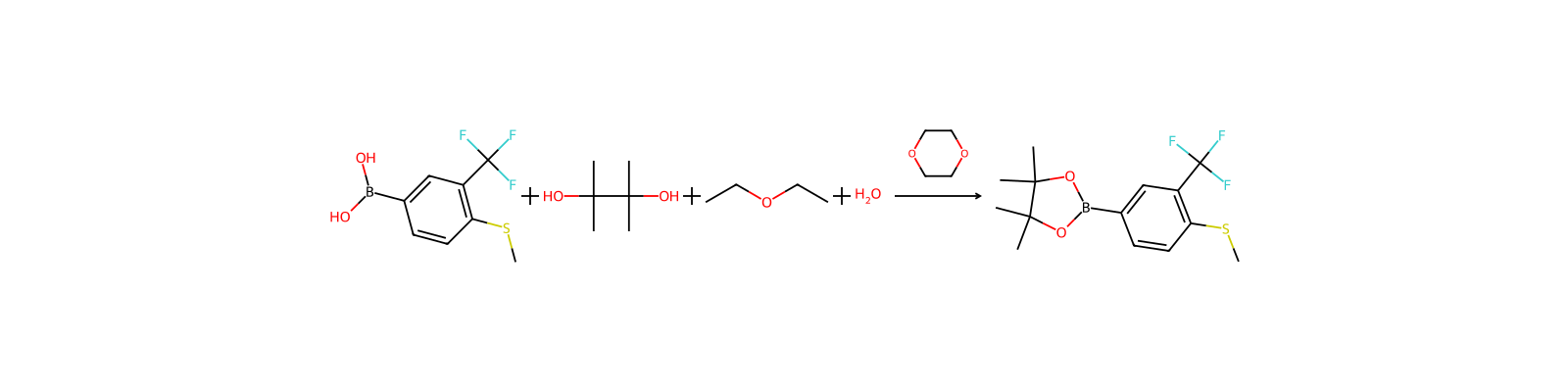
Verwendenpinacol be used as organic intermediates.The pinacol coupling reaction with the inorganic electride [Ca2N](+)·e(−) as an electron donor in organic solvents was studied. Pinacol is used in the synthesis of organic reagents such as alkenylphenylphosphonates and alkenylboronates.
Darstellung
synthetischeBy the bimolecular reduction of acetone.
Vor- und nachgelagerte Produkte
Vorgelagerte Rohstoffe
Nachgelagerte Produkte
Anbieter50 Anbieter
梯希爱(上海)化成工业发展有限公司021-67121386 · [email protected]
衢州润东化工有限公司0570-8789886 18892685668 · [email protected]
上海阿拉丁生化科技股份有限公司400-6206333 13167063860 · [email protected]
INTATRADE GmbH+49 3493/605464 · [email protected]
爱斯特(成都)生物制药股份有限公司+86-28-85122536 85324413 · [email protected]
科瑞迪化学400-821-5857 021-64326257 · [email protected]
上海迈瑞尔生化科技有限公司4006356688 18621169109 · [email protected]
阿法埃莎(中国)化学有限公司400-6106006 · [email protected]
太原市瑞和丰科贸有限公司+86 351 7031519 · [email protected]
上海德默医药科技有限公司400-021-7337 2355568890 · [email protected]
安耐吉化学&3A(安徽泽升科技股份有限公司)400-0056266 · [email protected]
武汉凯威斯科技有限公司86-027-67849912 · [email protected]
上海瀚鸿科技股份有限公司021-54306202 13764082696 · [email protected]
上海柯维化学技术有限公司021-64609169 18901607656 · [email protected]
上海萃森医药科技有限公司13472757003
聊城金信达新材料有限公司13370978787
上海相辉医药科技有限公司13761987713 · [email protected]
上海景颜化工科技有限公司13817811078 · [email protected]
嘉兴市艾森化工有限公司0573-85285100 18627885956 · [email protected]
上海忆嵘生物科技有限公司18049974220 · [email protected]
Beckmann-Kenko GmbH+49 4241 9308 88 · [email protected]
玛雅试剂+86 (573) 82222445 (0)18006601000 452520369 · [email protected]
四川库利南科技有限公司400-1166-196 18981987031 · [email protected]
天津希恩思生化科技有限公司400 638 7771 · [email protected]
南京维奥化工有限公司Please Send Email 18652950785 · [email protected]
河南多贝化工有限公司0370-2785118 17550508557 · [email protected]
艾科试剂4008-755-333 18080918076 · [email protected]
上海思域化工科技有限公司86-21-34053660 · [email protected]
北京世纪裕立化学有限公司010-64446226 13146983882 · [email protected]
赛默飞世尔科技(中国)有限公司800-810-5118 · [email protected]
北京伊诺凯科技有限公司400-810-7969 010-59572699 · [email protected]
江苏艾康生物医药研发有限公司025-66113011 13913916777 · [email protected]
TCI AMERICA800-4238616 · [email protected]
TOKYO CHEMICAL INDUSTRY CO., LTD.03-36680489 · [email protected]
TCI Europe320-37350700 · [email protected]
深圳康特腾科技有限公司86-0755-86635001 · [email protected]
越林试剂021-62960152 · [email protected]
无锡中坤生化科技有限公司+86 0510-85629785
上海乐晨国际贸易有限公司021-67256163 · [email protected]
上海喀露蓝科技有限公司18149758185 18149758185 · [email protected]
上海将来实业股份有限公司400-0066400 13621662912 · [email protected]
上海将来实业股份有限公司021-61552785 · [email protected]
HBCChem, Inc.+1-510-219-6317 · [email protected]
上海笛柏生物科技有限公司400-008-9730,021-54359730 400-008-9730 · [email protected]
日照力德士化工有限公司010-51268198 · [email protected]
美岚实业(上海)有限公司021-58958189 · [email protected]
上海爱蝶实业有限公司021-58957966 18930537195 · [email protected]
成都零六生物科技有限公司400-1166-196 13458535857 · [email protected]
广拓化学(上海)有限公司021-60899189-8001 18918189673 · [email protected]
雷丁试剂0510-85629785 18013409632 · [email protected]
Ergänzende Hinweise
DefinitionChEBI: A glycol that is ethylene glycol in which all four methylene hydrogens have been replaced by methyl groups.
Zugehörige Reaktionen
222


Verknüpfte Notizen
Wird geladen…