StartseiteMCPWorkbenchSkills
StartseiteWorkbenchBenachrichtigungenMein Bereich
llms.txt · MCP-AnleitungDatenschutz · Nutzungsbedingungen · Supportv1.8.3
  1. Startseite
  2. /Verbindung

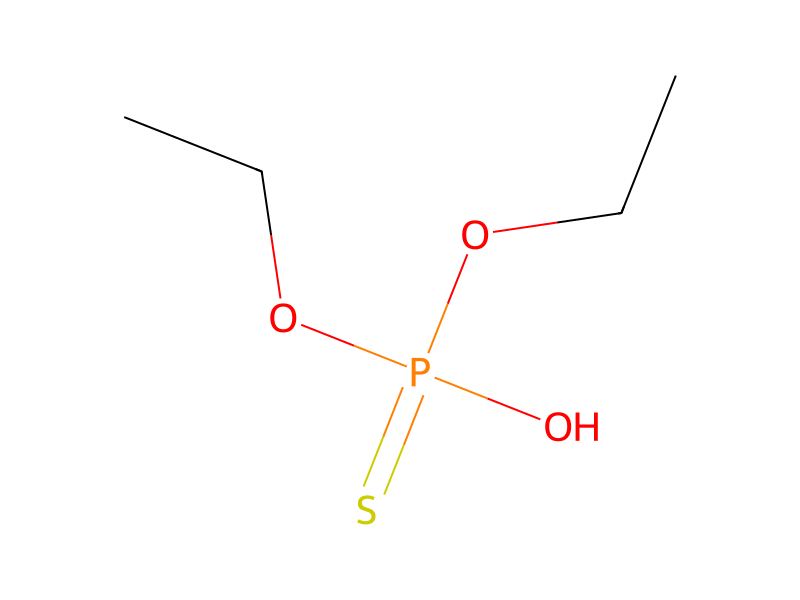
O,O-diethyl phosphorothioate

HCID 655
Neue Reaktion
Drucken

Daten werden ergänzt – lade die Seite später neu, um den aktuellen Stand zu sehen
GrundinformationenÜberblickNamen und BezeichnerEigenschaftenSicherheit und RegulatorischesChemie und IndustrieZugehörige ReaktionenNotizen zur Verbindung
TeilstruktursucheÄhnliche Strukturen suchen

Grundinformationen

CAS
2465-65-8
Standard-SMILES
CCOP(O)(=S)OCC
InChIKey
PKUWKAXTAVNIJR-UHFFFAOYSA-N
Summenformel
C4H11O3PS
Durchschnittliche Molmasse
170,17 g/mol
Monoisotopische Masse
170,01665184

Überblick

O,O-diethyl hydrogen thiophosphate is an organic thiophosphate that is the diethyl ester of phosphorothioic O,O,O-acid. It has a role as a mouse metabolite and a human xenobiotic metabolite. It is a conjugate acid of an O,O-diethyl thiophosphate.

Namen und Bezeichner

Bevorzugter Name
O,O-diethyl phosphorothioate
IUPAC
diethoxy-hydroxy-sulfanylidene-λ5-phosphane
Englischer Name
O,O-Diethyl thiophosphate, potassium salt
Summenformel
C4H11O3PS
Molmasse
170.17

Namen und Synonyme

2465-65-8O,O-Diethyl hydrogen phosphorothioateDETP (ester)O,O-Diethyl phosphorothionateDiethyl hydrogen phosphorothionateO,O-DIETHYL PHOSPHOROTHIOATEFND2ADQ374DTXSID9052844NSC-289183NSC-289427RefChem:928011DTXCID6031336
Weitere Namen anzeigen
O,O-diethyl O-hydrogen phosphorothioateDEPThDETP(ester)Chlorpyrifos Impurity 4Chlorpyrifos Impurity 2Thiophosphoric acid diethylO,O-DIETHYLPHOSPHOROTHIOATEThiophosphoric acid O,O-diethylO,O'-diethyl thiophosphoric acid
DETPO,O-DIETHYL HYDROGEN THIOPHOSPHATEDiethylthiophosphoric acidO,O-Diethyl thiophosphatePhosphorothioic acid, O,O-diethyl esterCHEBI:28006O,O-DIETHYL S-HYDROGEN PHOSPHOROTHIOATEdiethoxy-hydroxy-sulfanylidene-lambda5-phosphane

Datenbank-Bezeichner

CAS
2465-65-8、5871-17-0
PubChem CID
655
DTXSID
DTXSID9052844
ChEMBL
CHEMBL1232328
ChEBI
CHEBI:28006
UNII
FND2ADQ374
Nikkaji
J80.493B

Eigenschaften

Berechnete StruktureigenschaftenWird ergänzt

XLogP
1,4
Polarare Oberfläche (TPSA)
70,8 Ų
H-Brücken-Donoren
1
H-Brücken-Akzeptoren
4
Frei drehbare Bindungen
4
Schwere Atome
9
Formalladung
0
Komplexität
106

Experimentelle und physikochemische Eigenschaften

Physical DescriptionSolid

Physikochemische Eigenschaften

Schmelzpunkt
180 · 180-186 °C(lit.)
Siedepunkt
105 · 105-106 °C(Press: 2 Torr)
Dichte
1.1806 g/cm3 · 1.1806 g/cm3
pka
-0.1 · -0.10±0.34(Predicted)

Sicherheit und Regulatorisches

Sicherheitsangaben dienen nur zur Orientierung und ersetzen weder das Sicherheitsdatenblatt (SDB) des Lieferanten noch geltende Vorschriften oder eine fachliche Bewertung.

Toxikologische Informationen

Toxicity Summary · 1 Eintrag

Diethylthiophosphate (DETP) induces DNA damage only in the hepatic cell lines, and this effect could be related to a secondary non-diffusible metabolite generated by the activity of P450 enzymes since P450 enzyme inhibitors also inhibited the induction of DNA damage in hepatic cells. This organophosphorous (OP) metabolite has shown some toxicity in human peripheral blood mononucleated cells (PBMC). DETP is a cytotoxic compound in human PBMC. A relationship between urinary levels of DETP and the number of sperm susceptible to chromatin alteration has been reported among rural agricultural workers. In addition, a correlation between the frequency of aneuploidy in sperm and the levels of DETP in urine was identified in a rural population exposed to OP pesticides, indicating that the potential for genotoxicity following OP exposure may depend on the type and quantity of specific metabolites produced, such as DETP. (A15411)

Carcinogen ClassificationNo indication of carcinogenicity to humans (not listed by IARC).

Sicherheitsdaten

wgk
3
risk_code
36/37/38
hazard_code
Xi
safety_code
26-36

Chemie und Industrie

Pharmakologische Informationen

Metabolism/Metabolites · 2 Einträge

Diethyl thiophosphate is a known human metabolite of Diazinon.

Metabolism of organophosphates occurs principally by oxidation, by hydrolysis via esterases and by reaction with glutathione. Demethylation and glucuronidation may also occur. Oxidation of organophosphorus pesticides may result in moderately toxic products. In general, phosphorothioates are not directly toxic but require oxidative metabolism to the proximal toxin. The glutathione transferase reactions produce products that are, in most cases, of low toxicity. Paraoxonase (PON1) is a key enzyme in the metabolism of organophosphates. PON1 can inactivate some organophosphates through hydrolysis. PON1 hydrolyzes the active metabolites in several organophosphates insecticides as well as, nerve agents such as soman, sarin, and VX. The presence of PON1 polymorphisms causes there to be different enzyme levels and catalytic efficiency of this esterase, which in turn suggests that different individuals may be more susceptible to the toxic effect of organophosphate exposure.
Verwendung und Herstellung

UsesThis is a natural compound that is used as a pesticide.

Vor- und nachgelagerte Produkte

Nachgelagerte Produkte

O,O-DiethylhydrogendithiophosphatThiophosphoric acid O,O-diethyl S-benzyl esterEthylhydrogensulfat

Zugehörige Reaktionen

3
Reaktionsaufzeichnung erstellen
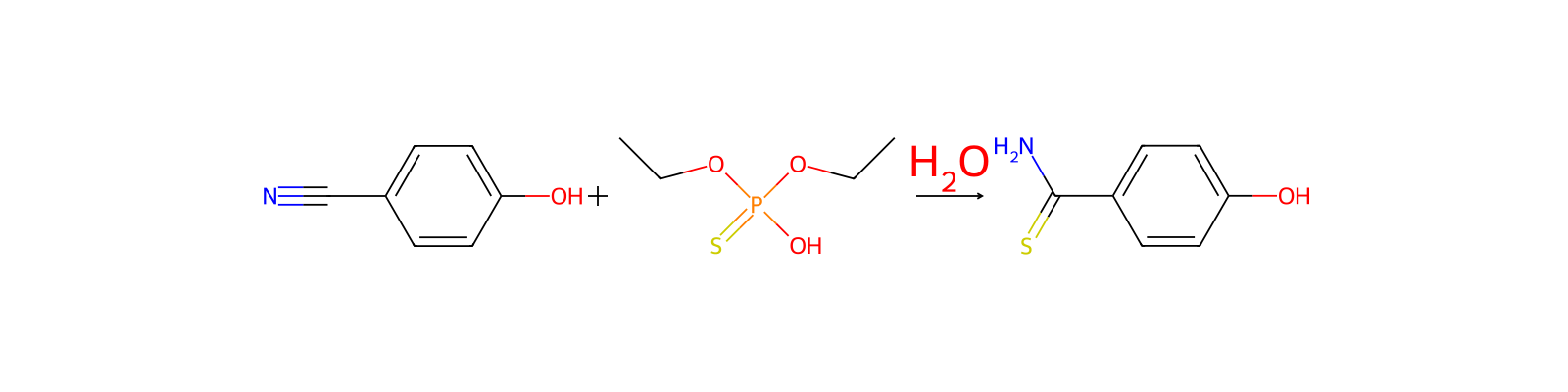
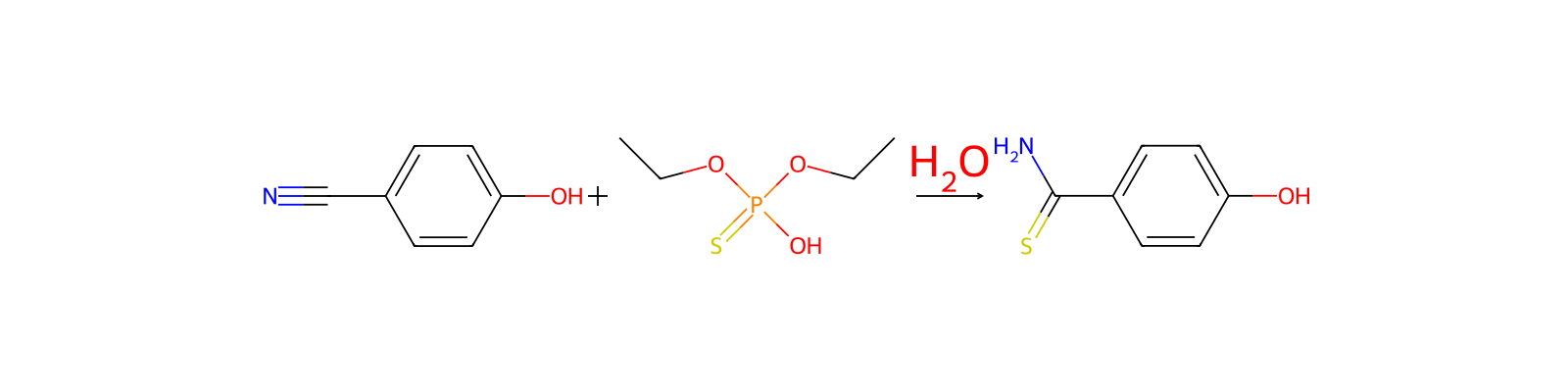
Reaktionsgleichung von HRID 49374
HRID 49374als Edukt
Reaktionsgleichung von HRID 413290
HRID 413290als Edukt
Reaktionsgleichung von HRID 1123747
HRID 1123747als Edukt

Notizen zur Verbindung

Auf dieser SeiteGrundinformationenÜberblickNamen und BezeichnerEigenschaftenSicherheit und RegulatorischesChemie und IndustrieZugehörige ReaktionenNotizen zur Verbindung