StartseiteMCPWorkbenchSkills
StartseiteWorkbenchBenachrichtigungenMein Bereich
llms.txt · MCP-AnleitungDatenschutz · Nutzungsbedingungen · Supportv1.8.0
  1. Startseite
  2. /Verbindung

Isobutylamin

Isobutylamine

HCID 6558
Neue NotizNeue ReaktionAnfrage stellen
Druckvorschau

Daten werden ergänzt – lade die Seite später neu, um den aktuellen Stand zu sehen

GrundinformationenÜberblickNamen und BezeichnerEigenschaftenSicherheit und RegulatorischesChemie und IndustrieZugehörige ReaktionenNotizen zur Verbindung
TeilstruktursucheÄhnliche Strukturen suchen

Grundinformationen

CAS
78-81-9
Standard-SMILES
CC(C)CN
InChIKey
KDSNLYIMUZNERS-UHFFFAOYSA-N
Summenformel
C4H11N
Durchschnittliche Molmasse
73,14 g/mol
Monoisotopische Masse
73,08914935

Überblick

Isobutylamine appears as a clear colorless liquid with a fishlike odor. Flash point 15 °F. Less dense (6.1 lb / gal) than water. Vapors heavier than air. Produces toxic oxides of nitrogen during combustion.

Namen und Bezeichner

Bevorzugter Name
Isobutylamine
IUPAC
2-methylpropan-1-amine
Lokaler Name
Isobutylamin
Englischer Name
Isobutylamine
Summenformel
C4H11N
Molmasse
73.14

Namen und Synonyme

ISOBUTYLAMINE78-81-92-methylpropan-1-amine1-Amino-2-methylpropane2-MethylpropylamineValamineMonoisobutylamine1-Propanamine, 2-methyl-iso-Butylamine2-MethylpropanamineI-Butylamine2-Methyl-1-propanamine
Weitere Namen anzeigen
IBAMIBAsobutylaMine2-Methyl-1-propylamineC02787nsc8028iso-C4H9NH2
3-Methyl-2-propylamine2-Methyl-1-Aminopropane1H60H4LOHZNSC-8028DTXSID9025459FEMA NO. 4239CHEBI:15997RefChem:791647

Datenbank-Bezeichner

CAS
78-81-9
PubChem CID
6558
DTXSID
DTXSID9025459
ChEBI
CHEBI:15997
UNII
1H60H4LOHZ
EC Number
201-145-4
Nikkaji
J46.573I

Eigenschaften

Berechnete StruktureigenschaftenWird ergänzt

XLogP
0,7
Polarare Oberfläche (TPSA)
26 Ų
H-Brücken-Donoren
1
H-Brücken-Akzeptoren
1
Frei drehbare Bindungen
1
Schwere Atome
5
Formalladung
0
Komplexität
17,6

Experimentelle und physikochemische Eigenschaften

Chemical Classes · 2 Einträge

Nitrogen Compounds -> Amines, Aliphatic

Flammable agents - 3rd degree

SpringerMaterials Properties15N nuclear magnetic resonance spectrum
LogP · 4 Einträge

log Kow = 0.73

0.73

0.73

0.73

Odor · 2 Einträge

Amine odor

Fish-like odor.

Food AdditivesFLAVORING AGENT OR ADJUVANT -> FDA Substance added to food
Density · 5 Einträge

0.739 at 68 °F (USCG, 1999) - Less dense than water; will float

0.724 at 25 °C/4 °C

Relative density (water = 1): 0.72

0.731-0.737

0.731 @ 20°C

Flavoring AgentsEU Flavoring substances
Color/FormColorless liquid

Sicherheit und Regulatorisches

Sicherheitsangaben dienen nur zur Orientierung und ersetzen weder das Sicherheitsdatenblatt (SDB) des Lieferanten noch geltende Vorschriften oder eine fachliche Bewertung.

GHS-Klassifizierung

GHS Classification · 6 Einträge

Danger

H225 (100%): Highly Flammable liquid and vapor [Danger Flammable liquids]

P210, P233, P240, P241, P242, P243, P260, P261, P262, P264, P264+P265, P270, P271, P280, P301+P316, P301+P317, P301+P330+P331, P302+P352, P302+P361+P354, P303+P361+P353, P304+P340, P305+P354+P338, P316, P317, P319, P321, P330, P361+P364, P363, P370+P378, P403+P233, P403+P235, P405, and P501 (click each P-code to see the statement)

Aggregated GHS information provided per 208 reports by companies from 14 notifications to the ECHA C&L Inventory. Each notification may be associated with multiple companies.

Danger

H225: Highly Flammable liquid and vapor [Danger Flammable liquids]

Gefahrenhinweise

Regulatory Information · 5 Einträge

Chemical: 1-Propanamine, 2-methyl-

Commission Regulation (EC) No 1565/2000 (Repealed by Com. Implementing Reg. (EU) No 872/2012)

Status: Active Update: 26-11-2020 https://echa.europa.eu/registration-dossier/-/registered-dossier/27674

Isobutylamine: Does not have an individual approval but may be used under an appropriate group standard

The New Jersey Worker and Community Right to Know Act requires public and private employers to provide information about hazardous substances at their workplaces. (N.J.S.A. 34:5A-1 et. seq.)

Other Safety InformationEvaluation - Chemicals that are unlikely to require further regulation to manage risks to environment
DOT LabelFlammable Liquid Corrosive
Fire Hazards · 3 Einträge

Special Hazards of Combustion Products: Toxic oxides of nitrogen may be formed in fire.

· Flammable/combustible material.

Highly flammable. Gives off irritating or toxic fumes (or gases) in a fire. Vapour/air mixtures are explosive.

Chemie und Industrie

Pharmakologische Informationen

Cellular LocationsCytoplasm

Verwendung und Herstellung

Uses · 3 Einträge

Used in the production of insecticides and other organic chemicals; [HSDB]

Organic synthesis, insecticides.

Dehairing agent

U.S. ProductionProduction volumes for non-confidential chemicals reported under the Inventory Update Rule. [Table#1716]
Methods of Manufacturing · 2 Einträge

From isobutyl alcohol + ammonia; British patent 847,799 (1960 to Cellulose-polymeres et Derives "Cepede"); Shirley, Speranza, US patent 3,128,311 (1964 to Jefferson Chem). Isolation from fungi: von Kamienski, Planta 50, 331 (1958).

THERMAL DECOMP PRODUCT FROM VALINE & LEUCINE. /FROM TABLE/

Formulations/PreparationsVALAMINE
Use Classification · 4 Einträge

Flavouring Agent -> FLAVOURING_AGENT -> JECFA Functional Classes

Flavoring Agents -> JECFA Flavorings Index

Flavouring Agent -> FLAVOURING_AGENT -> JECFA Functional Classes

Flavouring Agent -> FLAVOURING_AGENT -> JECFA Functional Classes

General Manufacturing Information · 3 Einträge

1-Propanamine, 2-methyl-: ACTIVE

With isobutylamine, crotonic acid forms interpolymerization products suitable for sizing and wood sealing.

Aziridines are hydrogenated in the presence of typical hydrogenation catalysts to give alkyl amines.

Vor- und nachgelagerte Produkte

Vorgelagerte Rohstoffe

1-Brom-2-methylpropan

Zugehörige Reaktionen

830
Reaktionsaufzeichnung erstellen
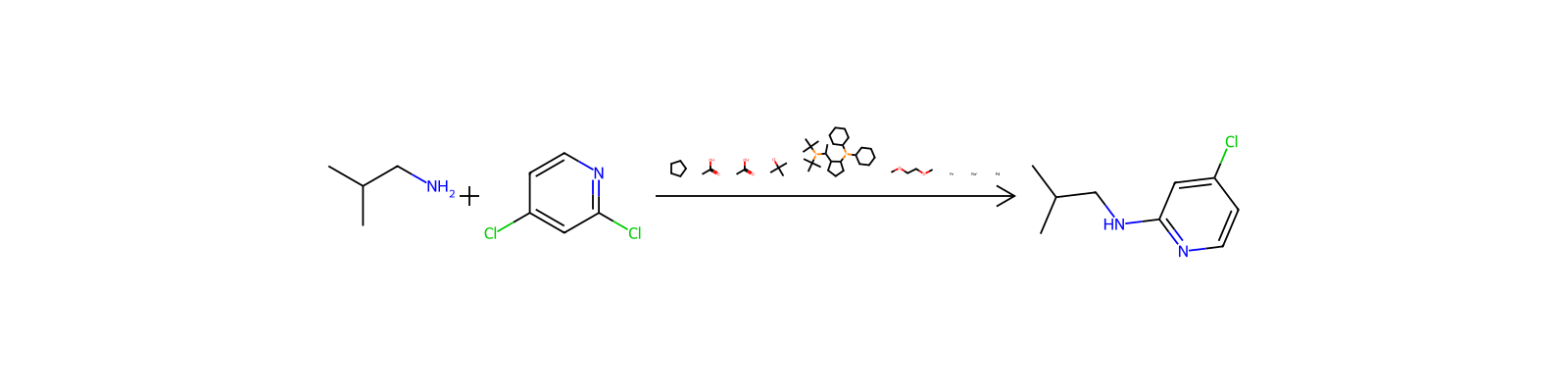
Reaktionsgleichung von HRID 428
HRID 428als Edukt750 AstraZeneca ELN dataset
Reaktionsgleichung von HRID 10157
HRID 10157als Eduktuspto-grants-2006_08
Reaktionsgleichung von HRID 11795
HRID 11795als Eduktuspto-grants-2006_08
Reaktionsgleichung von HRID 13816
HRID 13816als Eduktuspto-grants-2010_06
Reaktionsgleichung von HRID 13823
HRID 13823als Eduktuspto-grants-2010_06
Reaktionsgleichung von HRID 13838
HRID 13838als Eduktuspto-grants-2010_06
Reaktionsgleichung von HRID 14068
HRID 14068als Eduktuspto-grants-2010_06
Reaktionsgleichung von HRID 16106
HRID 16106als Eduktuspto-grants-2010_06
Seite 1 von 104

Notizen zur Verbindung

Wird geladen…

Auf dieser SeiteGrundinformationenÜberblickNamen und BezeichnerEigenschaftenSicherheit und RegulatorischesChemie und IndustrieZugehörige ReaktionenNotizen zur Verbindung
Weitere Aktionen
Neue NotizNeue ReaktionAnfrage stellen
Solubility · 6 Einträge

Very soluble (NTP, 1992)

Very sol in alcohol, ether; Sol in acetone, benzene

In water, 1X10+6 mg/L (miscible) at 25 °C

1000 mg/mL at 25 °C

Solubility in water: miscible

Soluble in water

CorrosivityStrongly caustic
Flash Point · 3 Einträge

15 °F (NTP, 1992)

15 °F (-9 °C) (closed cup)

-9.0 °C c.c.

Boiling Point · 6 Einträge

154 to 156 °F at 760 mmHg (NTP, 1992)

68-69 °C

68-69 °C

67.00 to 71.00 °C. @ 760.00 mm Hg

68-69 °C

68 °C

Physikochemische Eigenschaften

Schmelzpunkt
-85 °C · -85 °C (lit.)
Siedepunkt
64 · 64-71 °C (lit.)
Dichte
0.736 g/mL · 0.736 g/mL at 25 °C (lit.)
Dampfdruck
15.9 kPa · 15.9kPa at 20℃
FEMA
4239 · 4239 | ISOBUTYLAMINE
Brechungsindex
20 · n20/D 1.397(lit.)
Flammpunkt
15 °F · 15 °F
storage temp.
30 °C · Store below +30°C.
Löslichkeit
1000 g/l · 1000g/l
Aggregatzustand
Liquid
pka
1 · pK1:10.41(+1) (25°C)
Farbe
Clear colorless to slightly yellow
PH
12.2 · 12.2 (100g/l, H2O, 20℃)
Geruch (Odor)
Strong ammoniacal.
Explosionsgrenze
2 · 2-9%(V)
Odor Threshold
0.0015 ppm · 0.0015ppm
Geruchsart
fishy
Wasserlöslichkeit
soluble
Spezifische Wärmekapazität
2.5 J/ · Cp(liquid): 2.5 J/(g·K), at 25℃
JECFA Number
1583 · 1583
Merck
14 · 14,5132
BRN
385626 · 385626
Henry's Law Constant
7.3 · 7.3×10-1 mol/(m3Pa) at 25℃, Duchowicz et al. (2020)
Dielectric constant
4.4 · 4.4(Ambient)
InChI
1S/C4H11N/c1-4(2)3-5/h4H,3,5H2,1-2H3
InChIKey
KDSNLYIMUZNERS-UHFFFAOYSA-N
SMILES
CC(C)CN
LogP
-0.3 at · -0.3 at 25℃
CAS Datenbank
78 · 78-81-9(CAS DataBase Reference)
NIST chemische Informationen
1 · 1-Propanamine, 2-methyl-(78-81-9)
EPA chemische Informationen
Isobutylamine (78-81-9)
Fire Potential · 2 Einträge

Highly flammable. Gives off irritating or toxic fumes (or gases) in a fire.

DANGEROUS, WHEN EXPOSED TO HEAT OR FLAME; CAN REACT VIGOROUSLY WITH OXIDIZING MATERIALS

Health Hazards · 2 Einträge

Inhalation causes severe coughing and chest pain due to irritation of air passages; can cause lung edema. Compound is sympathomimetic and is also a cardiac depressant and convulsant; ingestion causes nausea and profuse salivation. Contact with eyes causes severe irritation and edema of the cornea. Contact with skin causes severe irritation. (USCG, 1999)

· May cause toxic effects if inhaled or ingested.

Hazards Summary · 1 Eintrag

Corrosive to skin; [Quick CPC] High inhalation exposure can cause pulmonary edema; [ICSC] Contact with skin may cause erythema and blistering; [Merck Index] Causes convulsions and ataxia in oral lethal-dose studies of rats; [RTECS] Short-term exposure causes second- and third-degree burns and corneal edema; Inhalation causes intense coughing, chest pain, and possibly pulmonary edema; [CHRIS] Safe when used as a flavoring agent in food; [JECFA]

DOT ID and Guide1214 132
Reactive GroupAmines, Phosphines, and Pyridines
UN ClassificationUN Hazard Class: 3; UN Subsidiary Risks: 8; UN Pack Group: II
Reactivity AlertsHighly Flammable
Reactivity Profile · 1 Eintrag

ISOBUTYLAMINE neutralizes acids in exothermic reactions to form salts plus water. May be incompatible with isocyanates, halogenated organics, peroxides, phenols (acidic), epoxides, anhydrides, and acid halides. Flammable gaseous hydrogen may be generated in combination with strong reducing agents, such as hydrides.

Sicherheit und Schutzausrüstung

Fire Fighting · 2 Einträge

Excerpt from ERG Guide 132 [Flammable Liquids - Corrosive]:

Use water spray, powder, alcohol-resistant foam, carbon dioxide. In case of fire: keep drums, etc., cool by spraying with water.

First Aid Measures · 4 Einträge

Fresh air, rest. Half-upright position. Artificial respiration may be needed. Refer for medical attention.

Remove contaminated clothes. Rinse skin with plenty of water or shower. Refer for medical attention .

First rinse with plenty of water for several minutes (remove contact lenses if easily possible), then refer for medical attention.

Rinse mouth. Do NOT induce vomiting. Give one or two glasses of water to drink. Refer for medical attention .

Accidental Release Measures · 2 Einträge

· CALL 911. Then call emergency response telephone number on shipping paper. If shipping paper not available or no answer, refer to appropriate telephone number listed on the inside back cover.

· ELIMINATE all ignition sources (no smoking, flares, sparks or flames) from immediate area.

First Aid · 2 Einträge

EYES: First check the victim for contact lenses and remove if present. Flush victim's eyes with water or normal saline solution for 20 to 30 minutes while simultaneously calling a hospital or poison control center. Do not put any ointments, oils, or medication in the victim's eyes without specific instructions from a physician. IMMEDIATELY transport the victim after flushing eyes to a hospital even if no symptoms (such as redness or irritation) develop.

General First Aid:

Safe StorageFireproof. Separated from strong oxidants, strong acids and food and feedstuffs.
Exposure Control and Personal Protection · 2 Einträge

· Wear positive pressure self-contained breathing apparatus (SCBA).

2.0 [ppm], Ceiling = 5 ppm[German Research Foundation (DFG)]

Fire Fighting Procedures · 2 Einträge

Dry chemical, foam, carbon dioxide, or alcohol foam.

If material on fire or involved in fire: Do not extinguish fire unless flow can be stopped. Use water in flooding quantities as fog. Solid streams of water may be ineffective. Cool all affected containers with flooding quantities of water. Apply water from as far a distance as possible. Use "alcohol" foam, dry chemical or carbon dioxide.

Storage Conditions · 2 Einträge

Fireproof. Separated from strong oxidants, strong acids, food and feedstuffs

Store in refrigerator. Keep under an inert atmosphere for long-term storage. /Butyl Amines/

Cleanup Methods · 5 Einträge

Personal protection: complete protective clothing including self-contained breathing apparatus. Collect leaking liquid in sealable containers. Cautiously neutralize spilled liquid. Absorb remaining liquid in sand or inert absorbent and remove to safe place. Then wash away with plenty of water.

Evacuate and restrict persons not wearing protective equipment from area of spill or leak until cleanup is complete. Remove all ignition sources. Establish forced ventilation to keep levels below explosive limit. Absorb liquids in vermiculite, dry sand, earth, peat, carbon, or a similar material and deposit in sealed containers. It may be necessary to contain and dispose of this chemical as a hazardous waste. If material or contaminated runoff enters waterways, notify downstream users of potentially contaminated waters. Contact your Department of Environmental Protection or your regional office of the federal EPA for specific recommendations. If employees are required to clean-up spills, they must be properly trained and equipped. OSHA 1910.120(q) may be applicable. /Butyl Amines/

Small Spill: Use absorbent paper to pick up spilled material. Follow by washing surfaces well with soap and water. Seal all wastes in vapor-tight plastic bags for eventual disposal.

Environmental considerations-land spill: Dig a pit, pond, lagoon, holding area to contain liquid or solid material. /SRP: If time permits, pits, ponds, lagoons, soak holes, or holding areas should be sealed with an impermeable flexible membrane liner./ Dike surface flow using soil, sand bags, foamed polyurethane, or foamed concrete. Absorb bulk liquid with fly ash, cement powder, or commercial sorbents. Apply appropriate foam to diminish vapor and fire hazard. Neutralize with sodium bisulfate (NaHSO4).

For more Cleanup Methods (Complete) data for ISOBUTYLAMINE (6 total), please visit the HSDB record page.

Nonfire Spill ResponseExcerpt from ERG Guide 132 [Flammable Liquids - Corrosive]:
Disposal Methods · 4 Einträge

SRP: The most favorable course of action is to use an alternative chemical product with less inherent propensity for occupational exposure or environmental contamination. Recycle any unused portion of the material for its approved use or return it to the manufacturer or supplier. Ultimate disposal of the chemical must consider: the material's impact on air quality; potential migration in soil or water; effects on animal, aquatic, and plant life; and conformance with environmental and public health regulations.

Incineration; Incinerator is equipped with a scrubber or thermal unit to reduce NOx emissions. Alternatively it may be poured into sodium bisulfate, neutralized and flushed with water. /n-Butylamine/

Burn the paper in a suitable location away from combustible material. Large quantities can be reclaimed or collected and atomized in suitable combustion chamber equipped with appropriate effluent gas cleaning device. /N-butylamine/

/Absorb small spills with paper and/ burn the paper in a suitable location away from combustible materials. Large quantities can be reclaimed or collected & atomized in suitable combustion chamber equipped with appropriate effluent gas cleaning device.

Spillage Disposal · 1 Eintrag

Personal protection: complete protective clothing including self-contained breathing apparatus. Collect leaking and spilled liquid in sealable containers as far as possible. Cautiously neutralize spilled liquid. Absorb remaining liquid in sand or inert absorbent. Then store and dispose of according to local regulations. Wash away remainder with plenty of water.

Toxikologische Informationen

Ecotoxicity Values · 3 Einträge

LC50 Danio rerio (Zebrafish, embryo) 1,267 umol/L/48 hr (95% confidence 1,093-1,610 umol/L); static (DarT test) /from table/

LD50 Danio rerio (Zebrafish, embryo) 3,282 umol/kg (calculated); static (DarT test) /from table/

LC100 Semotilus atromaculatus /(Creek chub)/ 820 umol/L/24 hr; static, 15-21 °C /from table/

Environmental Fate · 3 Einträge

TERRESTRIAL FATE: Based on a classification scheme(1), an estimated Koc value of 60(SRC), determined from a log Kow of 0.73(2) and a regression-derived equation(3), indicates that isobutylamine is expected to have high mobility in soil(SRC). The pKa of isobutylamine is 10.68(4) indicating that this compound will exist almost entirely in the cation form in the environment and cations generally adsorb more strongly to soils containing organic carbon and clay than their neutral counterparts(5). Volatilization of isobutylamine from moist soil surfaces is not expected to be an important fate process given its cation state(SRC). Isobutylamine is expected to volatilize from dry soil surfaces(SRC) based upon its vapor pressure(6). Isobutylamine was 87 percent and 68 percent biodegraded during a 2 week incubation period using a Japanese MITI test(7), suggesting that biodegradation may occur in soils(SRC).

AQUATIC FATE: Based on a classification scheme(1), an estimated Koc value of 60(SRC), determined from a log Kow of 0.73(2) and a regression-derived equation(3), indicates that isobutylamine is not expected to adsorb to suspended solids and sediment in water(SRC). A pKa of 10.68(4) indicates isobutylamine will exist almost entirely in the cation form at pH values of 5 to 9 and therefore volatilization from water surfaces is not expected to be an important fate process(5). According to a classification scheme(6), an estimated BCF of 3(SRC), from its log Kow(2) and a regression-derived equation(7), suggests the potential for bioconcentration in aquatic organisms is low(SRC). Isobutylamine was 87 percent and 68 percent biodegraded during a 2 week incubation period using a Japanese MITI test(8), suggesting that biodegradation may occur in water(SRC).

ATMOSPHERIC FATE: According to a model of gas/particle partitioning of semivolatile organic compounds in the atmosphere(1), isobutylamine, which has a vapor pressure of 138 mm Hg at 25 °C(2), is expected to exist solely as a vapor in the ambient atmosphere. Vapor-phase isobutylamine is degraded in the atmosphere by reaction with photochemically-produced hydroxyl radicals(SRC); the half-life for this reaction in air is estimated to be 11 hours(SRC) from its estimated rate constant of 3.4X10⁻¹¹ cu cm/molecule-sec at 25 °C(SRC), derived using a structure estimation method(3). Isobutylamine does not contain chromophores that absorb at wavelengths >290 nm(4) and therefore is not expected to be susceptible to direct photolysis by sunlight(SRC).

Food Survey Values · 4 Einträge

Volatile amines /including isobutylamine were/ isolated ... from 4 month old Chanakh cheese.

The concn of various amines in 13 red and 10 white Italian wines were determined. ... The mean value for the red and white wines were 0.06 mg/L and 0.23 mg/L for isobutylamine, respectively.

Isobutylamine has been qualitatively detected in various Italian cheeses, in German wine, in American beef, in Valencia oranges, lemons from CA and cooked and boiled beef(1-6).

Isobutylamine concentrations in various foods(1). [Table#1715]

Adverse EffectsDermatotoxin - Skin burns.
Exposure RoutesThe substance can be absorbed into the body by inhalation of its vapour and by ingestion.
Milk Concentrations · 1 Eintrag

... The presence of volatile aliphatic amines ... in human breast milk and amniotic fluid /was measured/ to assess their role in neonatal hypergastrinemia. These volatile nitrogenous amino acid metabolites have been previously demonstrated to stimulate gastrin release in in vivo and in vitro laboratory preparations. ... The present study ... demonstrated that these gastrin-stimulatory volatile amines were present in significant concentrations in breast milk during the first several weeks after parturition and in amniotic fluid. The individual amines that were identified in both human milk and amniotic fluid samples were methylamine, dimethylamine, ethylamine, trimethylamine, propylamine, isobutylamine, and butylamine. This study provides indirect evidence to support the possibility that the hypergastrinemia measured in the fetus/neonate during the period immediately before and after birth may be attributable, in part, to the ingestion of fluid containing high concentrations of gastrin-stimulating amines.

Plant ConcentrationsIsobutylamine has been detected in various species of marine algae(1). It has been found to occur naturally in Latakia tobacco leaves(2).
Signs and Symptoms · 4 Einträge

Burning sensation. Cough. Shortness of breath. Laboured breathing. Symptoms may be delayed.

Pain. Redness. Skin burns.

Redness. Pain. Severe deep burns.

Abdominal pain. Burning sensation. Shock or collapse.

Effluent ConcentrationsIsobutylamine was detected in the leachate from a municipal refuse waste disposal site in the Netherlands at a concn of 32 ppm(1). Isobutylamine was identified, not quantified, in the effluent of a cattle feed lot(2).
Soil Adsorption/Mobility · 1 Eintrag

The Koc of isobutylamine is estimated as 60(SRC), using a log Kow of 0.73(1) and a regression-derived equation(2). According to a classification scheme(3), this estimated Koc value suggests that isobutylamine is expected to have high mobility in soil. The pKa of isobutylamine is 10.68(4) indicating that this compound will exist almost entirely in the cation form in the environment and cations generally adsorb more strongly to soils containing organic carbon and clay than their neutral counterparts(5).

Natural Pollution Sources · 3 Einträge

... amines from decomposing fish ... /Amines/

/The microbe/ ... Proteus mirabilis was found to produce isobutylamine.

Isobutylamine is a natural component of tobacco(1) and has been detected in marine algae(2).

Human Toxicity Excerpts · 5 Einträge

/SIGNS AND SYMPTOMS/ INHALATION: Burning sensation. Cough. Shortness of breath. Labored breathing. Symptoms may be delayed. SKIN: Pain. Redness. EYES: Redness. Pain. Severe deep burns. Skin burns. INGESTION: Abdominal pain. Burning sensation. Shock or collapse.

/SIGNS AND SYMPTOMS/ SKIN CONTACT CAN RESULT IN ERYTHEMA, BLISTERING. INHALATION CAUSES HEADACHE, DRYNESS OF NOSE & THROAT.

/SIGNS AND SYMPTOMS/ Isobutylamine induces nausea and unpleasant salivation in man at 40 mg/kg orally.

/SIGNS AND SYMPTOMS/ Skin contact can result in erythema and blistering; inhalation causes headache and dryness of the nose and throat.

For more Human Toxicity Excerpts (Complete) data for ISOBUTYLAMINE (8 total), please visit the HSDB record page.

Regulatorische Informationen

CERCLA Reportable Quantities · 1 Eintrag

Persons in charge of vessels or facilities are required to notify the National Response Center (NRC) immediately, when there is a release of this designated hazardous substance, in an amount equal to or greater than its reportable quantity of 1000 lb or 454 kg. The toll free number of the NRC is (800) 424-8802. The rule for determining when notification is required is stated in 40 CFR 302.4 (section IV. D.3.b).

Clean Water Act Requirements · 1 Eintrag

Isobutyamine is designated as a hazardous substance under section 311(b)(2)(A) of the Federal Water Pollution Control Act and further regulated by the Clean Water Act Amendments of 1977 and 1978. These regulations apply to discharges of this substance. This designation includes any isomers and hydrates, as well as any solutions and mixtures containing this substance.

Sicherheitsdaten

F
10-23
OEL
STEL: 5.0 ppm; 15.0 mg/m3
wgk
1
tsca
TSCA listed
ridadr
UN 1214
hs_code
29211990
RTECS-Nr.
NP9900000
risk_code
11-22-35
Toxizität
LD50 (14 day) in male, female rats (mg/kg): 224.4, 231.8 orally (Cheever)
hazard_code
F,C
safety_code
26-36/37/39-45
hazard_class
3
packing_group
II
Speicherklasse
3 - Flammable liquids
Giftige Stoffe Daten
78-81-9(Hazardous Substances Data)
Hazard Classifications
Acute Tox. 3 OralFlam. Liq. 2Skin Corr. 1A
Selbstentzündungstemperatur
400°C
Isobutanol
Toluol-4-sulfonamid
Isobutyraldehyd

Nachgelagerte Produkte

IsobutyronitrilTriethyl 1,3,5-benzenetricarboxylate4-bromo-N-isobutylbenzenesulfonamideBenzenesulfonamide, 4-methoxy-N-(2-methylpropyl)-6-Quinolinamine, N-(2-methylpropyl)-N-Isobutyl-3,5-dimethoxyanilineAcetamide, 2-[(2-methylpropyl)amino]-N-Isobutylmethanesulfonamide-N-Isobutyl-3-phenylprop-2-en-1-amine2-(isobutylaMino)acetonitrile2,4(1H,3H)-Pyrimidinedione, 6-[(3-methylbutyl)amino]-2-(IsobutylaMino)benzonitrile