StartseiteMCPWorkbenchSkills
StartseiteWorkbenchBenachrichtigungenMein Bereich
llms.txt · MCP-AnleitungDatenschutz · Nutzungsbedingungen · Supportv1.8.3
  1. Startseite
  2. /Verbindung

1,2-Benzisothiazol-3(2H)-on-1,1-dioxid, Natriumsalz

Sodium saccharin

HCID 656582
Neue Reaktion
Drucken
GrundinformationenÜberblickNamen und BezeichnerEigenschaftenSicherheit und RegulatorischesChemie und IndustrieZugehörige ReaktionenNotizen zur Verbindung
TeilstruktursucheÄhnliche Strukturen suchen

Grundinformationen

CAS
128-44-9
Standard-SMILES
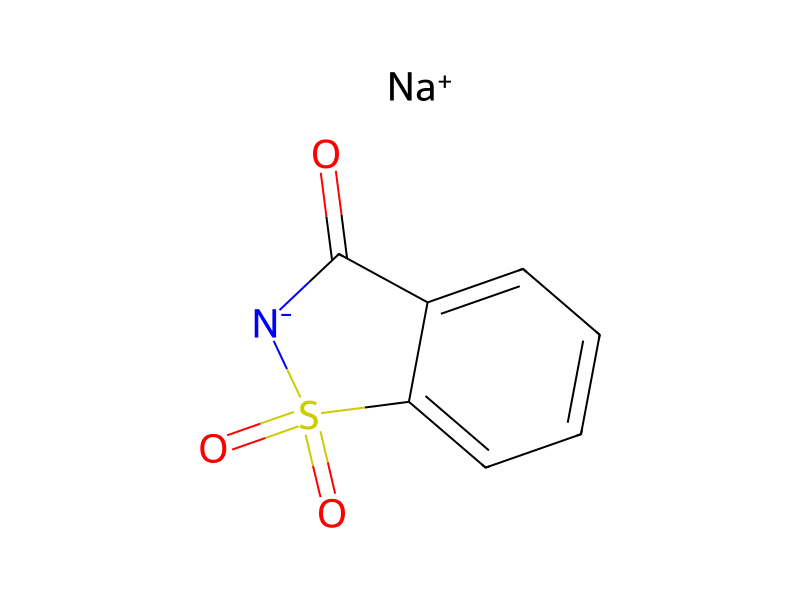
O=C1[N-]S(=O)(=O)c2ccccc21.[Na+]
InChIKey
WINXNKPZLFISPD-UHFFFAOYSA-M
Summenformel
C7H4NNaO3S
Durchschnittliche Molmasse
205,17 g/mol
Monoisotopische Masse
204,98095827

Überblick

Saccharin, sodium salt appears as odorless white crystals or crystalline powder. Aqueous solution is neutral or alkaline to litmus, but not alkaline to phenolphthalein. Effloresces in dry air. Intensely sweet taste. (NTP, 1992)

Namen und Bezeichner

Bevorzugter Name
Sodium saccharin
IUPAC
sodium 1,1-dioxo-1,2-benzothiazol-2-id-3-one
Lokaler Name
1,2-Benzisothiazol-3(2H)-on-1,1-dioxid, Natriumsalz
Englischer Name
Saccharin sodium
Summenformel
C7H5NNaO3S
Molmasse
206.17

Namen und Synonyme

SACCHARIN SODIUM128-44-9Sodium saccharinSaccharin, sodiumSaccharin sodium anhydrousSodium saccharineSodium saccharinateSaccharinnatriumSucraSoluble glusideCrystalloseKristallose
Weitere Namen anzeigen
SACCHARIN SODIUM SALTSACCHARINE SODIUM204-886-1sodium dihydrateo-sulfonbenzoicacidimidesodiumsaltSodium Saccharin Anhydrous
WillosettenDagutanMadhurinSucromatSaccharoidum natricumSaccharin sodium, anhydrousSodium benzosulphimideSodium saccharin, anhydrous

Datenbank-Bezeichner

CAS
128-44-9
PubChem CID
656582
DTXSID
DTXSID5021253
ChEMBL
CHEMBL2105416、CHEMBL2219743
ChEBI
CHEBI:32112
UNII

Eigenschaften

Berechnete Struktureigenschaften

Polarare Oberfläche (TPSA)
60,6 Ų
H-Brücken-Donoren
0
H-Brücken-Akzeptoren
4
Frei drehbare Bindungen
0
Schwere Atome
13
Formalladung
0
Komplexität
308

Experimentelle und physikochemische Eigenschaften

Chemical ClassesOther Uses -> Food Additives
CosmeticsOral care; Masking
FragrancesFragrance Ingredient (Saccharine, sodium salt) -> IFRA transparency List
Food AdditivesANTIMICROBIAL AGENT, FLAVOR ENHANCER, FLAVORING AGENT OR ADJUVANT, NON-NUTRITIVE SWEETENER, SOLVENT OR VEHICLE -> FDA Substance added to food
Solubilitygreater than or equal to 100 mg/mL at 68 °F (NTP, 1992)
Animal DrugsPharmaceuticals -> UK Veterinary Medicines Directorate List
Melting Pointgreater than 572 °F (Decomposes) (NTP, 1992)
Food Contact Substances · 2 Einträge

FCS -> FDA Inventory of Food Contact Substances Listed in 21 CFR

FCS -> FDA Inventory of Effective Food Contact Substance (FCS) Notifications

Physical Description · 3 Einträge

Sicherheit und Regulatorisches

Sicherheitsangaben dienen nur zur Orientierung und ersetzen weder das Sicherheitsdatenblatt (SDB) des Lieferanten noch geltende Vorschriften oder eine fachliche Bewertung.

GHS-Klassifizierung

GHS Classification · 3 Einträge

This chemical does not meet GHS hazard criteria for 95.6% (328 of 343) of all reports.

Not Classified

Aggregated GHS information provided per 343 reports by companies from 9 notifications to the ECHA C&L Inventory.

Gefahrenhinweise

Regulatory Information · 6 Einträge

Chemical: 1,2-Benzisothiazol-3(2H)-one, 1,1-dioxide, sodium salt (1:1)

Regulation (EC) No 1831/2003 (amended)

1,2-Benzisothiazol-3(2H)-one, 1,1-dioxide, sodium salt (1:1) is listed on the EPA's Chemical Data Reporting (CDR) system. Manufacturers and importers of 1,2-Benzisothiazol-3(2H)-one, 1,1-dioxide, sodium salt (1:1) are required to report information about their production and use of this chemical to the EPA under the Toxic Substances Control Act (TSCA). (40 eCFR Part 711)

TP - indicates a substance that is the subject of a proposed TSCA section 4 test rule.

Status: Active Update: 29-03-2022 https://echa.europa.eu/registration-dossier/-/registered-dossier/14605

Sodium saccharin: Does not have an individual approval but may be used under an appropriate group standard

Other Safety InformationEvaluation - Chemicals that are unlikely to require further regulation to manage risks to environment
Fire HazardsFlash point data are not available for this chemical, but it is probably combustible. (NTP, 1992)
Health HazardsSYMPTOMS: Symptoms of ingestion of this compound include nausea, vomiting and diarrhea. It may also cause anorexia. Inhalation may result in coughing and sneezing.
Hazards Summary · 1 Eintrag

Chemie und Industrie

Pharmakologische Informationen

MeSH Pharmacological ClassificationSubstances that sweeten food, beverages, medications, etc., such as sugar, saccharine or other low-calorie synthetic products. (From Random House Unabridged Dictionary, 2d ed)

Verwendung und Herstellung

Uses · 2 Einträge

Used as a non-nutritive sweetener, flavor, and in formulations for electroplating-bath brighteners; [Merck Index] Permitted for use as an inert ingredient in non-food pesticide products; [EPA] Used as an antimicrobial agent, flavor enhancer/agent/adjuvant, non-nutritive sweetener, and solvent or vehicle; [FDA] Used to stabilize drugs with a phenothiazine nucleus; [NTP]

Electroplating [Category: Plate]

U.S. Production2023: 50,000 - <75,000 lb
Industry UsesEtching agent
Household ProductsInformation on 298 consumer products that contain Sodium saccharin in the following categories is provided:
Use Classification · 4 Einträge

Fragrance Ingredients

Food Additives -> SWEETENER -> JECFA Functional Classes

Food Additives -> SWEETENER -> JECFA Functional Classes

Cosmetics -> Oral care; Masking

General Manufacturing Information · 2 Einträge

Wholesale and Retail Trade

1,2-Benzisothiazol-3(2H)-one, 1,1-dioxide, sodium salt (1:1): ACTIVE

Anwendungen · 1 Eintrag

VerwendenSaccharin Sodium is a flavoring agent and non-nutritive sweetener. It is a salt of saccharin widely used as sweetener in food and beverage. As a high-intensity sweetener, Saccharin Sodium can be used in a wide variety of industries including: food production, beverage, cosmetics, agriculture/animal feed, and various other industries. Saccharin Sodium Salt Hydrate can be used for the purification of recombinant polypeptides, such as antibodies.

Zugehörige Reaktionen

1
Reaktionsaufzeichnung erstellen
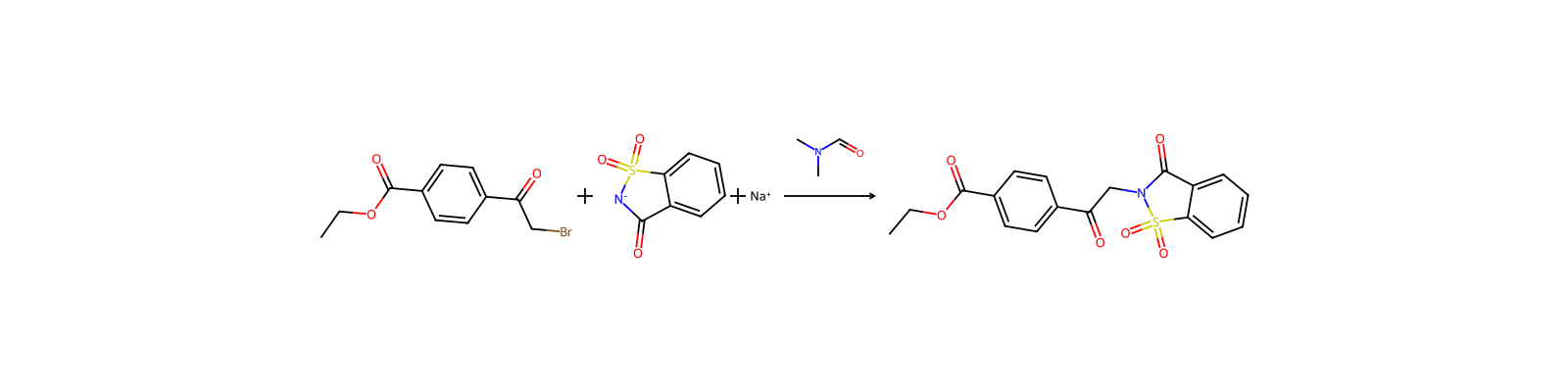
Reaktionsgleichung von HRID 864896
HRID 864896als Edukt

Notizen zur Verbindung

Auf dieser SeiteGrundinformationenÜberblickNamen und BezeichnerEigenschaftenSicherheit und RegulatorischesChemie und IndustrieZugehörige ReaktionenNotizen zur Verbindung
I4807BK602
EC Number
204-886-1

Saccharin, sodium salt appears as odorless white crystals or crystalline powder. Aqueous solution is neutral or alkaline to litmus, but not alkaline to phenolphthalein. Effloresces in dry air. Intensely sweet taste. (NTP, 1992)

Dry Powder; Liquid; Other Solid; Liquid

White odorless solid; Effloresces in dry air; [CAMEO] White odorless crystals; [Mallinckrodt Baker MSDS]

Physikochemische Eigenschaften

Schmelzpunkt
300 °C · >300°C
Dichte
1.69 · 1.69[at 20℃]
Dampfdruck
0 Pa · 0Pa at 25℃
FEMA
2997 · 2997 | SACCHARINE, SODIUM SALT
storage temp.
0 · 0-6°C
Löslichkeit
2 O: · H2O: 1 M at 20 °C, clear, colorless; sparingly soluble in ethanol.
pka
0.003 · 0.003-0.003[at 20 ℃]
Aggregatzustand
Solid
Farbe
White crystals or a white, crystalline efflorescent powder
Geruch (Odor)
odourless or with a faint, aromatic odour
Wasserlöslichkeit
10 g/100 · >=10 g/100 mL at 20 ºC
Stabilität
Stable. Incompatible with strong oxidizing agents.
Major Application
pharmaceutical (small molecule)
Kosmetik-Inhaltsstoffe Funktionen
FLAVOURINGFRAGRANCEORAL CARE
InChI
1S/C7H5NO3S.Na/c9-7-5-3-1-2-4-6(5)12(10,11)8-7;/h1-4H,(H,8,9,10,11);/q;+1/p-1
InChIKey
WINXNKPZLFISPD-UHFFFAOYSA-M
SMILES
[Na+].[S]1(=NC(=O)c2c1cccc2)(=O)[O-]
LogP
-2.84 · -2.84-0.11 at 25℃
CAS Datenbank
128 · 128-44-9(CAS DataBase Reference)
EPA chemische Informationen
Saccharin sodium (128-44-9)

Causes changes in psychophysiological tests in acute oral studies of monkeys; Causes kidney and bladder changes in 36-week constant oral studies of rats; [RTECS] Usually contains about 5% water; [NTP] Acceptable daily intake (ADI) of 0-5 mg/kg; [JECFA] The dihydrate is CAS# 6155-57-3; Contains 5-6% water; May cause mechanical eye irritation; [Mallinckrodt Baker MSDS]

Reactive GroupAmines, Phosphines, and Pyridines
Reactivity ProfileThis compound may react with oxidizing agents. (NTP, 1992). Very weak base in aqueous solution.
Air and Water ReactionsWater soluble.
Hazard Classes and CategoriesNot Classified

Sicherheit und Schutzausrüstung

Fire FightingFires involving this compound should be controlled with a dry chemical, carbon dioxide or Halon extinguisher. A water spray may also be used. (NTP, 1992)
First Aid · 1 Eintrag

EYES: First check the victim for contact lenses and remove if present. Flush victim's eyes with water or normal saline solution for 20 to 30 minutes while simultaneously calling a hospital or poison control center. Do not put any ointments, oils, or medication in the victim's eyes without specific instructions from a physician. IMMEDIATELY transport the victim after flushing eyes to a hospital even if no symptoms (such as redness or irritation) develop.

Nonfire Spill Response · 1 Eintrag

SMALL SPILLS AND LEAKAGE: If you spill this chemical, you should dampen the solid spill material with water, then transfer the dampened material to a suitable container. Use absorbent paper dampened with water to pick up any remaining material. Seal your contaminated clothing and the absorbent paper in a vapor-tight plastic bag for eventual disposal. Wash all contaminated surfaces with a soap and water solution. Do not reenter the contaminated area until the Safety Officer (or other responsible person) has verified that the area has been properly cleaned.

Personal Protective Equipment (PPE) · 1 Eintrag

RECOMMENDED RESPIRATOR: Where the neat test chemical is weighed and diluted, wear a NIOSH-approved half face respirator equipped with a combination filter cartridge, i.e. organic vapor/acid gas/HEPA (specific for organic vapors, HCl, acid gas, SO2 and a high efficiency particulate filter). (NTP, 1992)

Sicherheitsdaten

wgk
2
tsca
TSCA listed
RTECS-Nr.
DE4550000
Toxizität
LD50 oral in rat: 14200mg/kg
safety_code
24/25
Speicherklasse
11 - Combustible Solids

Vor- und nachgelagerte Produkte

Vorgelagerte Rohstoffe

Toluol-2-sulfonylchloridNatriumhypochlorit1,2-Benzisothiazol-3(2H)-on-1,1-dioxidAmmoniak, wssrige LsungToluol-2-sulfonamidSchwefeldioxidChloroschwefelsureTosylchloridNatriumnitritPhthalsureanhydridHydrogenchloridMethanolNatriumhydroxidSchwefelsure

Nachgelagerte Produkte

PiroxicamChlorimuron-ethylNatriumbenzoatAmmoniumhydrogen-2-sulfobenzoatN-Chlorosaccharin2-Methyl-1,2-benzisothiazol-3(2H)-on1,1-dioxid