
HRID 2685als Edukt
isopropyl beta-D-thiogalactopyranoside

367-93-1CC(C)S[C@@H]1O[C@H](CO)[C@H](O)[C@H](O)[C@H]1OBPHPUYQFMNQIOC-NXRLNHOXSA-NIsopropyl beta-D-thiogalactopyranoside is an S-glycosyl compound consisting of beta-D-1-thiogalactose having an isopropyl group attached to the anomeric sulfur.
Sicherheitsangaben dienen nur zur Orientierung und ersetzen weder das Sicherheitsdatenblatt (SDB) des Lieferanten noch geltende Vorschriften oder eine fachliche Bewertung.
This chemical does not meet GHS hazard criteria for 81% (115 of 142) of all reports.
Warning
H302 (12%): Harmful if swallowed [Warning Acute toxicity, oral]
P261, P264, P270, P271, P280, P301+P317, P302+P352, P304+P340, P317, P321, P330, P362+P364, and P501 (click each P-code to see the statement)
Aggregated GHS information provided per 142 reports by companies from 9 notifications to the ECHA C&L Inventory. Each notification may be associated with multiple companies.
PMN - indicates a commenced PMN (Pre-Manufacture Notices) substance.
Isopropyl thiogalactoside: Does not have an individual approval but may be used under an appropriate group standard
BeschreibungIPTG (also known as Isopropyl-β-D-Thiogalactopyranoside) is a molecular biology reagent that functions as an inducer of galactosidase activity by binding to and inhibiting the repressor. It is a molecular mimic of allolactose, a lactose metabolite that triggers transcription of the lac operon, and it is therefore used to induce protein expression where the gene is under the control of the lac operator. IPTG cannot be hydrolyzed or broken down by the E. coli therefore the concentration remains constant during cell replication. IPTG is often used at a final concentration ranging from 0.5-1.0 mM. X-Gal is often used with IPTG since it provides an easy visual method to monitor whether protein expression has occurred. X-Gal as the name implies contains a galactose group that once metabolized causes a bright blue color change.
VerwendenIsopropyl-β-D-thiogalactoside is used as a reagent in molecular biology. It is used as an effective β-galactosidase inducer of protein expression where the gene is under the control of the lac operator. It is used with 5-bromo-4-chloro-3-indolyl-beta-D-galactopyranoside to identify the non-recombinant plasmid in cloning experiments by blue-white screen methodology.
synthetischea synthetic method of isopropyl-β-D-thiogalactoside. The steps are as follows:Step 1: Dissolve β-D-galactose pentaacetate in any organic solvent of methylene chloride, chloroform or 1,2-dichloroethane, and add Lewis acid (boron trifluoride ether, (Aluminum trichloride, zinc chloride) catalyst and potassium ethylxanthate or sodium ethylxanthate are reacted to obtain tetraacetylgalactose ethylxanthate after treatment.Step 2: Dissolve tetraacetyl galactose ethyl xanthate, 2-bromopropane and sodium carbonate in methanol or ethanol at a temperature of 20°C to 80°C and react for 4-6 hours to obtain isopropyl group after treatment Isopropyl-β-D-thiogalactoside.


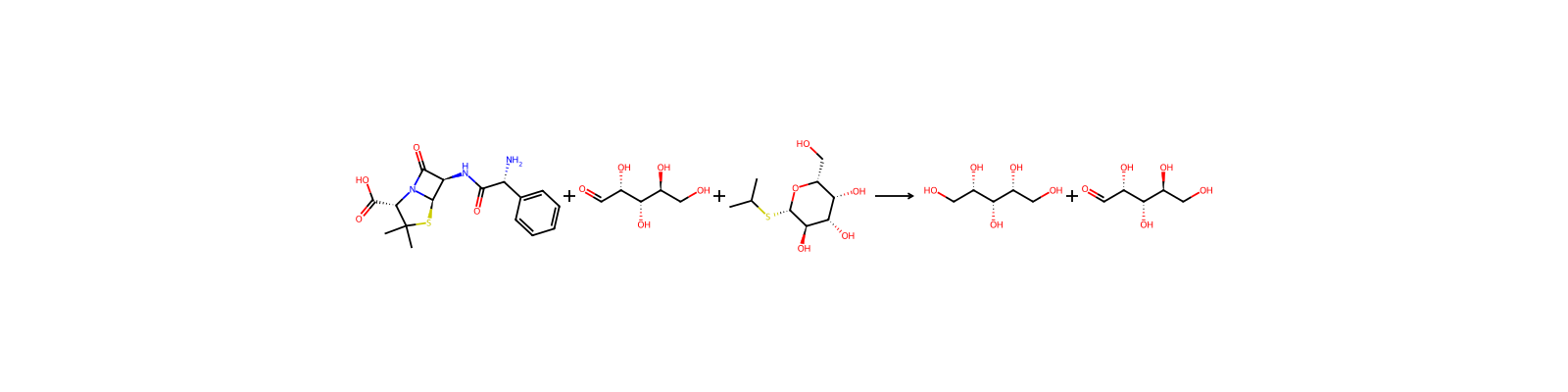


367-93-1DTXSID6041052CHEMBL1233651CHEBI:61448DefinitionChEBI: Isopropyl beta-D-thiogalactopyranoside is an S-glycosyl compound consisting of beta-D-1-thiogalactose having an isopropyl group attached to the anomeric sulfur.