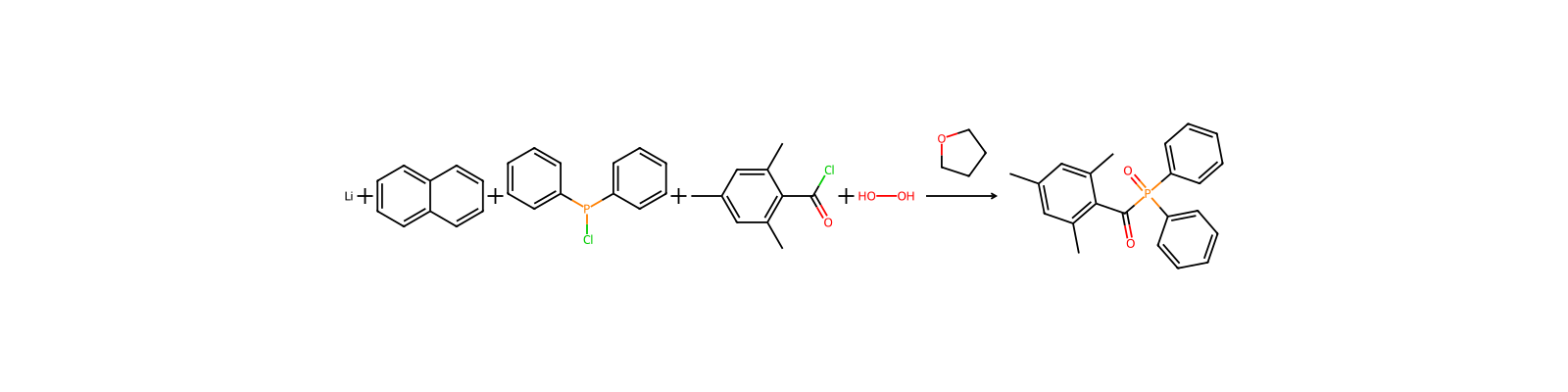
HRID 10932als Edukt
Chlorodiphenylphosphine

1079-66-9ClP(c1ccccc1)c1ccccc1XGRJZXREYAXTGV-UHFFFAOYSA-N1079-66-9DTXSID7038789Sicherheitsangaben dienen nur zur Orientierung und ersetzen weder das Sicherheitsdatenblatt (SDB) des Lieferanten noch geltende Vorschriften oder eine fachliche Bewertung.
This chemical does not meet GHS hazard criteria for 0.5% (1 of 212) of reports.
Danger
H290 (67%): May be corrosive to metals [Warning Corrosive to Metals]
P234, P260, P264, P264+P265, P270, P273, P280, P301+P317, P301+P330+P331, P302+P361+P354, P304+P340, P305+P354+P338, P316, P317, P321, P330, P363, P390, P405, P406, and P501 (click each P-code to see the statement)
Aggregated GHS information provided per 212 reports by companies from 19 notifications to the ECHA C&L Inventory. Each notification may be associated with multiple companies.
Chemical: Phosphinous chloride, diphenyl-
REACH registered substance: Chlorodiphenylphosphine (EC: 214-093-2)
Chlorodiphenylphosphine: Does not have an individual approval but may be used under an appropriate group standard
Reacts violently with water; Causes burns and lachrymation; [Merck Index] Reacts violently with water; Causes burns and lachrymation; Inhalation may cause corrosive injuries to upper respiratory tract and lungs; [Alfa Aesar MSDS] See Triphenylphosphine oxide.
VerwendenChlorodiphenylphosphine is used to introduce the diphenylphosphinyl moiety by aryl ortho-lithiation. It is also used as an intermediate to make antioxidants, flame retardants, stabilizers, catalysts, photoinitiators, and optical brighteners. Used as a halogenation reagent for the conversion of alcohols into halides, in the preparation of solid-phase reagent for the conversion of alcohols to alkyl halides.


