StartseiteMCPWorkbenchSkills
StartseiteWorkbenchBenachrichtigungenMein Bereich
llms.txt · MCP-AnleitungDatenschutz · Nutzungsbedingungen · Supportv1.8.3
  1. Startseite
  2. /Verbindung

2-Nitro-m-xylol

2,6-Dimethylnitrobenzene

HCID 6672
Neue Reaktion
Drucken
GrundinformationenÜberblickNamen und BezeichnerEigenschaftenSicherheit und RegulatorischesChemie und IndustrieZugehörige ReaktionenNotizen zur Verbindung
TeilstruktursucheÄhnliche Strukturen suchen

Grundinformationen

CAS
81-20-9
Standard-SMILES
Cc1cccc(C)c1[N+](=O)[O-]
InChIKey
HDFQKJQEWGVKCQ-UHFFFAOYSA-N
Summenformel
C8H9NO2
Durchschnittliche Molmasse
151,16 g/mol
Monoisotopische Masse
151,06332853

Überblick

1,3-dimethyl-2-nitrobenzene is a clear yellow liquid. (NTP, 1992)

Namen und Bezeichner

Bevorzugter Name
2,6-Dimethylnitrobenzene
IUPAC
1,3-dimethyl-2-nitrobenzene
Lokaler Name
2-Nitro-m-xylol
Englischer Name
2,6-Dimethyl-1-nitrobenzene
Summenformel
C8H9NO2
Molmasse
151.16

Namen und Synonyme

1,3-Dimethyl-2-nitrobenzene2-Nitro-m-xylene81-20-92,6-Dimethylnitrobenzenem-Xylene, 2-nitro-2-Nitro-1,3-dimethylbenzeneDTXSID7025134NSC-98112-NITRO-1,3-XYLENEDTXCID2051346G9386D931RefChem:88698
Weitere Namen anzeigen
2,6-Dimethy Nitrobenzenensc98111.3-DiMeth2-nitro-m-xylen2-Nitro-m-xylol2-Nitro-1,3-xylol
201-333-62,6-Dimethyl-1-nitrobenzeneBenzene, 1,3-dimethyl-2-nitro-1,3-dimethyl-2-nitro-benzeneMFCD00007181CAS-81-20-9CCRIS 3119NSC 9811

Datenbank-Bezeichner

CAS
81-20-9
PubChem CID
6672
DTXSID
DTXSID7025134
ChEMBL
CHEMBL1609131
UNII
6G9386D931
EC Number
201-333-6
Nikkaji
J54.461B

Eigenschaften

Berechnete Struktureigenschaften

XLogP
3
Polarare Oberfläche (TPSA)
45,8 Ų
H-Brücken-Donoren
0
H-Brücken-Akzeptoren
2
Frei drehbare Bindungen
0
Schwere Atome
11
Formalladung
0
Komplexität
143

Experimentelle und physikochemische Eigenschaften

SpringerMaterials Properties13C nuclear magnetic resonance spectrum
LogP2.95
Density · 2 Einträge

1.112 at 59 °F (NTP, 1992) - Denser than water; will sink

1.112 @ 15°C

Solubilityless than 1 mg/mL at 66 °F (NTP, 1992)
Flash Point190 °F (NTP, 1992)
Boiling Point · 2 Einträge

437 °F at 744 mmHg (NTP, 1992)

226 °C @760 [mm Hg]

Melting Point57 to 61 °F (NTP, 1992)
Vapor Pressure28.4 mmHg at 100 °F (NTP, 1992)
Physical Description1,3-dimethyl-2-nitrobenzene is a clear yellow liquid. (NTP, 1992)

Physikochemische Eigenschaften

Sicherheit und Regulatorisches

Sicherheitsangaben dienen nur zur Orientierung und ersetzen weder das Sicherheitsdatenblatt (SDB) des Lieferanten noch geltende Vorschriften oder eine fachliche Bewertung.

GHS-Klassifizierung

GHS Classification · 4 Einträge

This chemical does not meet GHS hazard criteria for 5.9% (3 of 51) of reports.

H411 (92.2%): Toxic to aquatic life with long lasting effects [Hazardous to the aquatic environment, long-term hazard]

P273, P391, and P501 (click each P-code to see the statement)

Aggregated GHS information provided per 51 reports by companies from 7 notifications to the ECHA C&L Inventory.

Gefahrenhinweise

DOT LabelPoison
Fire HazardsThis chemical is combustible. (NTP, 1992)
Health HazardsSYMPTOMS: Symptoms of exposure to this compound may include irritation of the skin, eyes and mucous membranes.
Reactive GroupNitro, Nitroso, Nitrate, and Nitrite Compounds, Organic
Reactivity Profile1,3-DIMETHYL-2-NITROBENZENE is incompatible with strong oxidizers and strong bases.
Air and Water ReactionsInsoluble in water.
Hazard Classes and CategoriesAquatic Chronic 2 (92.2%)

Sicherheit und Schutzausrüstung

Fire FightingFires involving this material can be controlled with a dry chemical, carbon dioxide or Halon extinguisher. (NTP, 1992)

Chemie und Industrie

Verwendung und Herstellung

General Manufacturing InformationBenzene, 1,3-dimethyl-2-nitro-: ACTIVE

Anwendungen

Verwenden2-Nitro-m-xylene is employed as a pharmaceutical intermediate in organic synthesis. It is also used in the preparation of Direct Violet 7 and solvent Red 26. Further, it is used in the petrochemical industry.

Vor- und nachgelagerte Produkte

Vorgelagerte Rohstoffe

Congo red paperm-Xylol

Nachgelagerte Produkte

Methyl-N-(2,6-dimethylphenyl)-N-(methoxyacetyl)-DL-alaninat2,4-Xylidin2,6-Xylidin2-Chlor-2',6'-dimethylacetanilid2,6-Dimethylphenyl isocyanate2,6-Xylidiniumchlorid

Zugehörige Reaktionen

15
Reaktionsaufzeichnung erstellen
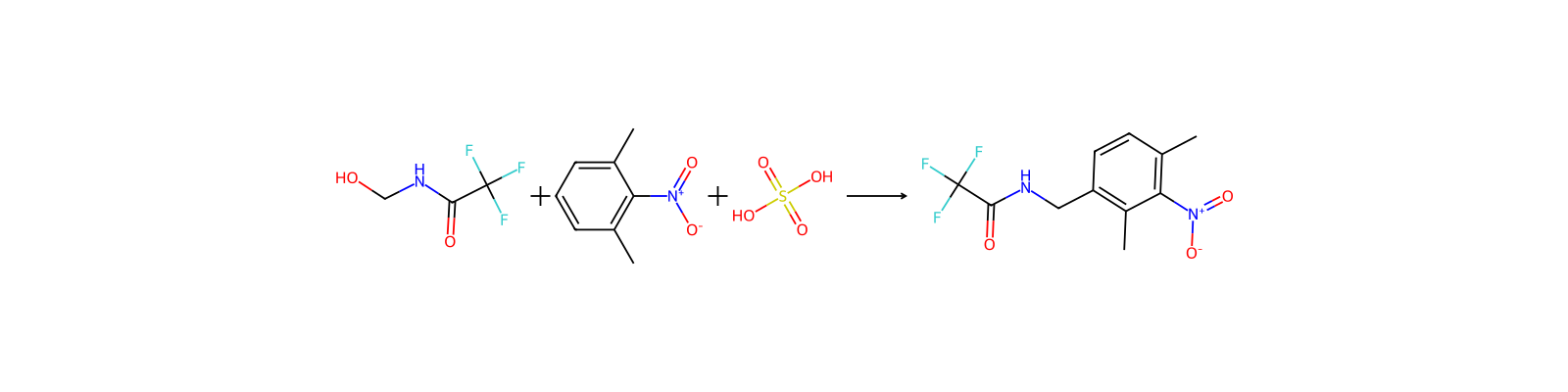
Reaktionsgleichung von HRID 136665
HRID 136665als Edukt
Reaktionsgleichung von HRID 185646
HRID 185646als Edukt
Reaktionsgleichung von HRID 239919
HRID 239919als Edukt
Reaktionsgleichung von HRID 246851
HRID 246851als Edukt
Reaktionsgleichung von HRID 410079
HRID 410079als Edukt
Reaktionsgleichung von HRID 751481
HRID 751481als Edukt
Reaktionsgleichung von HRID 905517
HRID 905517als Edukt
Reaktionsgleichung von HRID 1154004
HRID 1154004als Edukt
ZurückSeite 1 von 2

Notizen zur Verbindung

Auf dieser SeiteGrundinformationenÜberblickNamen und BezeichnerEigenschaftenSicherheit und RegulatorischesChemie und IndustrieZugehörige ReaktionenNotizen zur Verbindung
Schmelzpunkt
14 · 14-16 °C (lit.)
Siedepunkt
222 °C · 222 °C
Dichte
1.11 · 1.11
Brechungsindex
1.52 · 1.52
Flammpunkt
87 °C · 87 °C
storage temp.
30 °C · Store below +30°C.
Löslichkeit
Chloroform (Soluble), Methanol (Slightly)
Aggregatzustand
powder to lump to clear liquid
Farbe
White or Colorless to Yellow
Wasserlöslichkeit
insoluble
BRN
2046066 · 2046066
Stabilität
Stable. Incompatible with strong oxidizing agents.
InChI
1S/C8H9NO2/c1-6-4-3-5-7(2)8(6)9(10)11/h3-5H,1-2H3
InChIKey
HDFQKJQEWGVKCQ-UHFFFAOYSA-N
SMILES
Cc1cccc(C)c1[N+]([O-])=O
CAS Datenbank
81 · 81-20-9(CAS DataBase Reference)
NIST chemische Informationen
1 · Benzene, 1,3-dimethyl-2-nitro-(81-20-9)
EPA chemische Informationen
2 · 2-Nitro-m-xylene (81-20-9)
First Aid · 1 Eintrag

EYES: First check the victim for contact lenses and remove if present. Flush victim's eyes with water or normal saline solution for 20 to 30 minutes while simultaneously calling a hospital or poison control center. Do not put any ointments, oils, or medication in the victim's eyes without specific instructions from a physician. IMMEDIATELY transport the victim after flushing eyes to a hospital even if no symptoms (such as redness or irritation) develop.

Nonfire Spill Response · 1 Eintrag

SMALL SPILLS AND LEAKAGE: If you spill this chemical, FIRST REMOVE ALL SOURCES OF IGNITION. Then, use absorbent paper to pick up all liquid spill material. Your contaminated clothing and absorbent paper should be sealed in a vapor-tight plastic bag for eventual disposal. Solvent wash all contaminated surfaces with ethanol followed by washing with a soap and water solution. Do not reenter the contaminated area until the Safety Officer (or other responsible person) has verified that the area has been properly cleaned.

Isolation and EvacuationExcerpt from ERG Guide 152 [Substances - Toxic (Combustible)]:
Protective Action Criteria (PAC) · 3 Einträge

5.1 [mg/m3]

56 [mg/m3]

330 [mg/m3]

Personal Protective Equipment (PPE) · 1 Eintrag

RECOMMENDED RESPIRATOR: Where the neat test chemical is weighed and diluted, wear a NIOSH-approved half face respirator equipped with an organic vapor/acid gas cartridge (specific for organic vapors, HCl, acid gas and SO2) with a dust/mist filter. (NTP, 1992)

Sicherheitsdaten

wgk
2
tsca
TSCA listed
ridadr
UN 1665 6.1/PG 2
hs_code
29042000
RTECS-Nr.
ZE4686000
risk_code
51/53-20/21-40-36/37/38-23/24/25-38-11
Toxizität
LD50 ivn-mus: 45 mg/kg CSLNX* NX#00236
hazard_code
N,Xn,F,T,Xi
safety_code
61-36/37-36-26-16-45-36/37/39-13-24-9
hazard_class
6.1
packing_group
II
Speicherklasse
6.1A - Combustible acute toxic Cat. 1 and 2very toxic hazardous materials
Hazard Classifications
Acute Tox. 4 OralAquatic Chronic 2