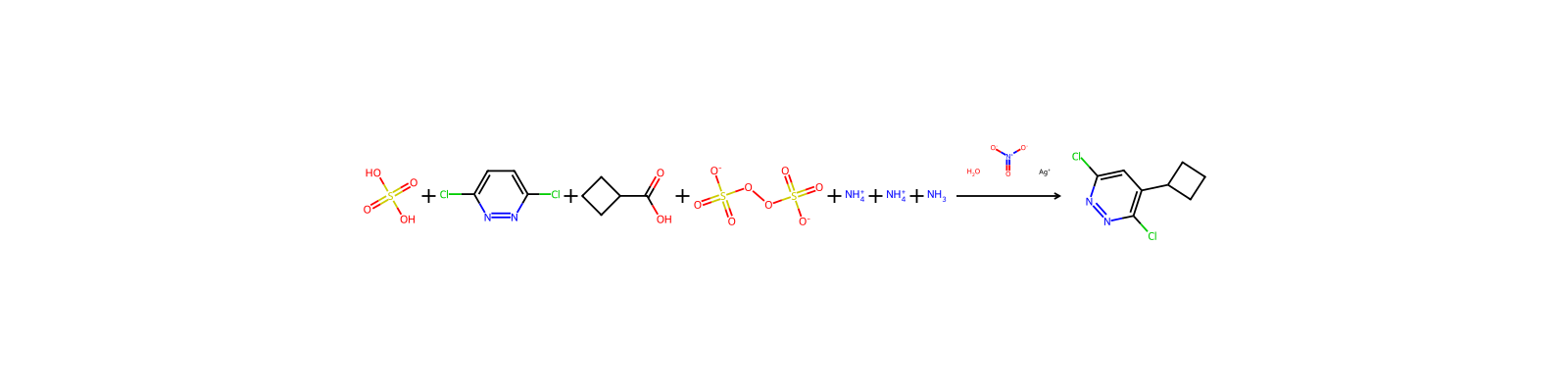
3,6-Dichlorpyridazin
3,6-Dichloropyridazine
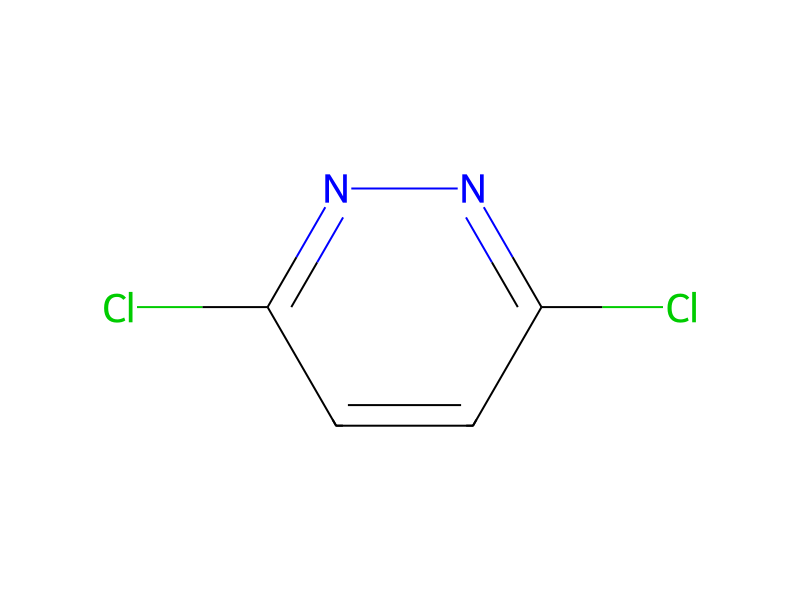
Grundinformationen
- CAS
141-30-0- Standard-SMILES
Clc1ccc(Cl)nn1- InChIKey
GUSWJGOYDXFJSI-UHFFFAOYSA-N- Summenformel
- C4H2Cl2N2
- Durchschnittliche Molmasse
- 148,98 g/mol
- Monoisotopische Masse
- 147,95950342
Namen und Bezeichner
- Bevorzugter Name
- 3,6-Dichloropyridazine
- IUPAC
- 3,6-dichloropyridazine
- Lokaler Name
- 3,6-Dichlorpyridazin
- Englischer Name
- 3,6-Dichloropyridazine
- Summenformel
- C4H2Cl2N2
- Molmasse
- 148.98
Namen und Synonyme
3,6-DichloropyridazinePyridazine, 3,6-dichloro-EINECS 205-478-6NSC 54498DTXSID4059704RefChem:91740Pyridazine, 3,6dichloroDTXCID0034568205-478-6GUSWJGOYDXFJSI-UHFFFAOYSA-NInChI=1/C4H2Cl2N2/c5-3-1-2-4(6)8-7-3/h1-2141-30-0
Weitere Namen anzeigen
3,6-dichlorpyridazine3,6-DichLAURORA KA-6560IFLAB-BB F1918-00766-Dichloropyridazine3,6-Dichloropyridazi3,6-Dichloro Pyridine3,6-dichloro-pyridazinLABOTEST-BB LT01148255
3,6-Dichloro-pyridazineMFCD00006466NSC-54498Resmetirom Impurity 13,6-dichloropyridazin3,6-dichloro pyridazineNSC544983,6 dichloropyridazine
Datenbank-Bezeichner
- CAS
141-30-0- PubChem CID
- 67331
- DTXSID
DTXSID4059704- UNII
- TJY3UR6EDV
- EC Number
- 205-478-6
- Nikkaji
- J52.353D
Eigenschaften
Berechnete Struktureigenschaften
- XLogP
- 1,7
- Polarare Oberfläche (TPSA)
- 25,8 Ų
- H-Brücken-Donoren
- 0
- H-Brücken-Akzeptoren
- 2
- Frei drehbare Bindungen
- 0
- Schwere Atome
- 8
- Formalladung
- 0
- Komplexität
- 68,4
Experimentelle und physikochemische Eigenschaften
Chemical ClassesNitrogen Compounds -> Other Aromatics (Nitrogen)
SpringerMaterials PropertiesSchoenflies notation
LogP0.93
Physical DescriptionSolid; [Sigma-Aldrich MSDS]
Physikochemische Eigenschaften
- Schmelzpunkt
- 65 · 65-69 °C (lit.)
- Siedepunkt
- 244.21 °C · 244.21°C (rough estimate)
- Dichte
- 1.6445 · 1.6445 (rough estimate)
- Brechungsindex
- 1.63 · 1.6300 (estimate)
- storage temp.
- Keep in dark place,Sealed in dry,Room Temperature
- Löslichkeit
- 0.0012 g/l · 0.0012g/l
- pka
- -1.18 · -1.18±0.10(Predicted)
- Aggregatzustand
- Crystalline Powder
Sicherheit und Regulatorisches
Sicherheitsangaben dienen nur zur Orientierung und ersetzen weder das Sicherheitsdatenblatt (SDB) des Lieferanten noch geltende Vorschriften oder eine fachliche Bewertung.
GHS-Klassifizierung
GHS Classification
Danger
H301 (81%): Toxic if swallowed [Danger Acute toxicity, oral]
P261, P264, P264+P265, P270, P271, P280, P301+P316, P302+P352, P304+P340, P305+P351+P338, P319, P321, P330, P332+P317, P337+P317, P362+P364, P403+P233, P405, and P501 (click each P-code to see the statement)
Aggregated GHS information provided per 58 reports by companies from 12 notifications to the ECHA C&L Inventory. Each notification may be associated with multiple companies.
Warning
H373: May causes damage to organs through prolonged or repeated exposure [Warning Specific target organ toxicity, repeated exposure]
Gefahrenhinweise
Regulatory InformationStatus: Active Update: 05-11-2021 https://echa.europa.eu/registration-dossier/-/registered-dossier/32994
Hazards Summary
Causes somnolence, ataxia, and weight loss in inhalation lethal-concentration studies of rats; Causes somnolence and muscle weakness in oral lethal-dose studies of rats; [RTECS] A skin and strong eye irritant; Toxic by ingestion; [Sigma-Aldrich MSDS] See Maleic hydrazide and Pyrazon.
Hazard Classes and Categories
Acute Tox. 3 (81%)
Specific target organ toxicity - Repeated exposure - Category 2 (liver, kidney, testis)
Toxikologische Informationen
Toxicity DataLC50 (rat) > 1,070 mg/m3/4hr
Sicherheitsdaten
Chemie und Industrie
Verwendung und Herstellung
General Manufacturing InformationPyridazine, 3,6-dichloro-: ACTIVE
Anwendungen
Verwenden3,6-Dichloropyridazine is used as an intermediate in synthetic chemistry, especially in active pharmaceutical ingredients. It is used in the preparation of alfa-(halohetaroyl)-2-azahetarylacetonitriles.
Vor- und nachgelagerte Produkte
Vorgelagerte Rohstoffe
Nachgelagerte Produkte
Zugehörige Reaktionen
447


Notizen zur Verbindung
Wird geladen…