HRID 18693als Produkt
Daten werden ergänzt – lade die Seite später neu, um den aktuellen Stand zu sehen

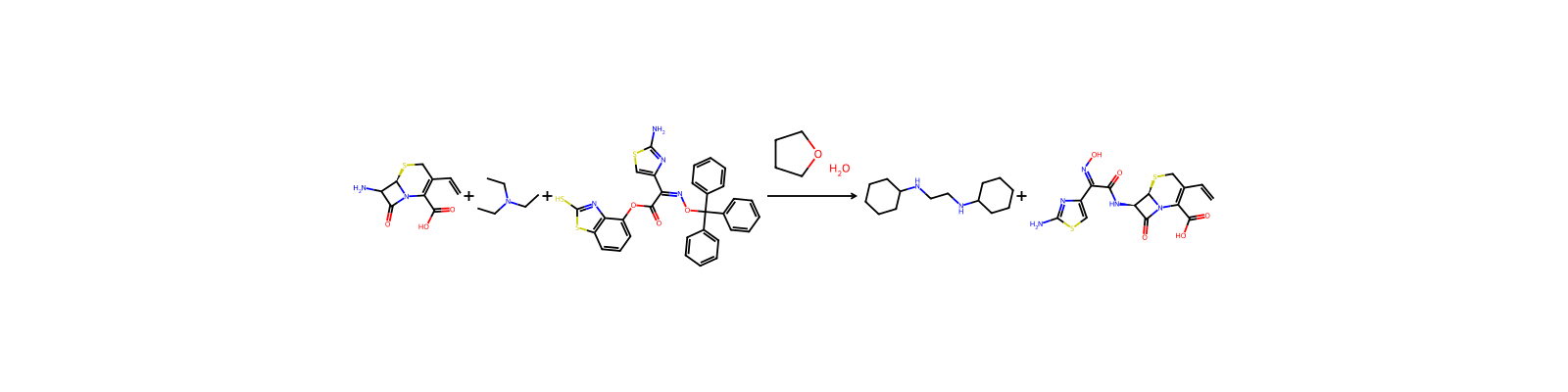
91832-40-5C=CC1=C(C(=O)O)N2C(=O)[C@@H](NC(=O)/C(=N\O)c3csc(N)n3)[C@H]2SC1RTXOFQZKPXMALH-GHXIOONMSA-NCefdinir is a cephalosporin compound having 7beta-2-(2-amino-thiazol-4-yl)-2-[(Z)-hydroxyimino]-acetylamino- and 3-vinyl side groups. It has a role as an antibacterial drug. It is a cephalosporin and a ketoxime.
Pharmaceuticals -> Antibiotics
Pharmaceuticals -> Listed in ZINC15
Breast Feeding; Lactation; Anti-Infective Agents; Antibacterial Agents; Cephalosporins;
FDA approved drugs -> Active ingredient
FDA approved drugs -> Active ingredient
3.35
9.7
Sicherheitsangaben dienen nur zur Orientierung und ersetzen weder das Sicherheitsdatenblatt (SDB) des Lieferanten noch geltende Vorschriften oder eine fachliche Bewertung.
Danger
H315 (20%): Causes skin irritation [Warning Skin corrosion/irritation]
P233, P260, P261, P264, P264+P265, P271, P272, P280, P284, P302+P352, P304+P340, P305+P351+P338, P319, P321, P332+P317, P333+P317, P337+P317, P342+P316, P362+P364, P403, P403+P233, P405, and P501 (click each P-code to see the statement)
Aggregated GHS information provided per 5 reports by companies from 3 notifications to the ECHA C&L Inventory. Each notification may be associated with multiple companies.
Drug Induced Liver Injury Rank (DILIrank 2.0)
Cefdinir
vLess-DILI-concern
7
Adverse reactions
DOI:10.1016/j.drudis.2016.02.015
J - Antiinfectives for systemic use
QJ - Antiinfectives for systemic use
Cefdinir is a bactericidal agent that treats bacterial infections by interfering with cell wall synthesis. Cefdinir exerts broad-spectrum activity against a variety of gram-positive and gram-negative bacterial infections. It is effective against several beta-lactamase enzyme producing bacteria. As a result, many organisms that are resistant to other cephalosporins may be susceptible to cefdinir.
Five-member thiazolidine rings that make up penicillins are replaced in cephalosporins by a six-member dihydrothiazine ring, conferring greater bactericidal activity. This 6-member ring enables cefdinir and other cephalosporins to resist inactivation by certain bacterial enzymes. With a mechanism similar to other beta-lactam antibiotics, the bactericidal activity of cefdinir is caused by the inhibition of cell wall synthesis via binding to penicillin-binding proteins (PBPs). Cefdinir, like other cephalosporins, penetrates the bacterial cell wall, combats inactivation by beta-lactamase enzymes, and inactivates penicillin-binding proteins. This interferes with the final step of transpeptidation in cell walls, eventually leading to cell lysis, which eventually leads to the death of bacteria that are susceptible to this drug. Cefdinir has shown affinity to penicillin protein binding proteins 2 and 3. It has also been shown to inhibit transpeptidase enzymes of various bacteria, which may play a role in its bactericidal action. One in vitro study suggests that cefdinir inhibits myeloperoxidase release extracellularly. The impact of this potential drug target in relation to its mechanism of action is unknown.


91832-40-5DTXSID8046084CHEMBL927CHEBI:3485CI0FAO63WC
CEFDINIR
Established Pharmacologic Class [EPC] - Cephalosporin Antibacterial
Chemical Structure [CS] - Cephalosporins
Cefdinir is a Cephalosporin Antibacterial.
CEFDINIR
Agents that are structurally similar to other CEPHALOSPORINS but have a broader spectrum of activity against bacteria than the first and second generation cephalosporins. These agents cover more resistant STREPTOCOCCUS, STAPHYLOCOCCUS, gram-positive anaerobes, and more resistant strains of HAEMOPHILUS, NEISSERIA, PROTEUS, ESCHERICHIA COLI, and KLEBSIELLA (HNPEK).
Maximal plasma cefdinir concentration can be attained between 2-4 hours after an ingested dose. The bioavailability of cefdinir depends on the formulation used. The estimated bioavailability of cefdinir in the capsule form is approximately 16%-21%, depending on the dose. Absolute bioavailability after the administration of a suspension of cefdinir is 25%.. The Cmax of cefdinir is 1.60 μg/mL after a 300 mg dose with an AUC of 7.05. Cmax is 2.87 μg/mL after a 600 mg dose with an AUC of 11. A meal high in fat can reduce the absorption of cefdinir by up to 15%, however, this is not a cause for clinically significant changes, therefore cefdinir may be taken with or without food. When given with aluminum or magnesium-containing antacids or iron, cefdinir absorption may decrease. It is recommended to allow 2 hours between cefdinir administration and the administration of these agents.
This drug is mainly excreted by the kidneys. Dose adjustments may be required for patients with renal impairment or patients on dialysis. Approximately 18.4% of a 300 mg dose of cefdinir was found unchanged in the urine after a 300 mg dose was administered during a pharmacokinetic study of 21 individuals. A large proportion of the administered dose is excreted in the feces, although the majority is found in the urine.
The average volume of distribution of cefdinir in adults is about 0.35 L/kg and 0.67 L/kg in children. Another resource estimates the volume of distribution in adults at 1.56–2.09 L/kg. Cefdinir is found to be distributed in various tissues at clinically effective concentrations. It may be found in the epithelial lining fluid, bronchial mucosa, tonsils, sinuses, skin blister fluid, as well as the middle ear fluid. Third-generation cephalosporins such as cefdinir cross the blood-brain barrier and are found in high concentrations in the cerebrospinal fluid, unlike their first and second generation counterparts. The wide tissue distribution of cefdinir allows it to treat a variety of infections throughout the body.
The renal clearance in healthy adults in a pharmacokinetic study was 2.0 (± 1.0) mL/min/kg and the clearance in patients with renal failure was lower, decreasing in proportion to the degree of renal impairment. Dose adjustment is required in patients with renal impairment.
BeschreibungCefdinir is an orally active, beta-lactamase stable cephalosporin with a broad spectrum of activity. Compared to other oral cephalosporins, cefdinir is more potent against Gram-positive bacteria, especially Staphylococci. Its activity against Gram-negative bacteria such as E.coli,K. pneumoniae and P.mirabilis is similar to cefixime, but superior to cefaclor and cephalexin.
VerwendenA Cephalosporin antibiotic structurally similar to Cefixime
DefinitionChEBI: A cephalosporin compound having 7beta-2-(2-amino-thiazol-4-yl)-2-[(Z)-hydroxyimino]-acetylamino- and 3-vinyl side groups.