StartseiteMCPWorkbenchSkills
StartseiteWorkbenchBenachrichtigungenMein Bereich
llms.txt · MCP-AnleitungDatenschutz · Nutzungsbedingungen · Supportv1.8.3
  1. Startseite
  2. /Verbindung

(1S,2S)-1,2-diphenylethane-1,2-diamine

HCID 6931238
Neue Reaktion
Drucken
GrundinformationenNamen und BezeichnerEigenschaftenSicherheit und RegulatorischesChemie und IndustrieZugehörige ReaktionenNotizen zur Verbindung
TeilstruktursucheÄhnliche Strukturen suchen

Grundinformationen

CAS
16635-95-3
Standard-SMILES
N[C@@H](c1ccccc1)[C@@H](N)c1ccccc1
InChIKey
PONXTPCRRASWKW-KBPBESRZSA-N
Summenformel
C14H16N2
Durchschnittliche Molmasse
212,29 g/mol
Monoisotopische Masse
212,13134852

Namen und Bezeichner

Bevorzugter Name
(1S,2S)-1,2-diphenylethane-1,2-diamine
IUPAC
(1S,2S)-1,2-diphenylethane-1,2-diamine
Englischer Name
1,2-Diphenylethylenediamine
Summenformel
C14H16N2
Molmasse
212.29

Namen und Synonyme

(1S,2S)-1,2-diphenylethane-1,2-diamineRefChem:393988608-420-129841-69-8(1S,2S)-(-)-1,2-Diphenylethylenediamine(1S,2S)-(-)-1,2-Diphenyl-1,2-ethanediamineMFCD00082751(1s,2s)-1,2-diphenyl-1,2-ethanediamine(S,S)-DPEN1,2-Ethanediamine, 1,2-diphenyl-, (1S,2S)-(-)-1,2-diphenylethylenediaminedl-Stilbenediamine
Weitere Namen anzeigen
TRANS-STILBENE1,2-DIPHENYLETHYLENESTILBENE, TRANS-DL-1,2-Diphenyl-1,2-ethanediamineBibenzilBIBENZALTRANS-TOLUYLENETRANS-BIBENZYLIDENESTILBENE, trans-(RG)TRANS-1,2-DIPHENYLETHYLENE
diphenylethylenediamine(1S,2S)-(-)-1,2-Diamino-1,2-diphenylethane(+/-)-Stilbenediamine(1s,2s)-1,2-diphenylethylenediaminerac-1,2-Diphenylethane-1,2-diamine16635-95-3(-)-STILBENEDIAMINENSC-167211

Datenbank-Bezeichner

CAS
16635-95-3、29841-69-8
PubChem CID
6931238
DTXSID
DTXSID20426127
ChEMBL
CHEMBL467308
UNII
9BB7UW58PU、W52J5QHV92
EC Number
605-438-1、608-420-1
Nikkaji
J276.439C

Eigenschaften

Berechnete Struktureigenschaften

XLogP
1,4
Polarare Oberfläche (TPSA)
52 Ų
H-Brücken-Donoren
2
H-Brücken-Akzeptoren
2
Frei drehbare Bindungen
3
Schwere Atome
16
Formalladung
0
Komplexität
171

Physikochemische Eigenschaften

Schmelzpunkt
123 · 123-125 °C(lit.)
Siedepunkt
305 · 305-307 °C744 mm Hg(lit.)
Dichte
0.97 g/mL · 0.97 g/mL at 25 °C(lit.)
storage temp.
2 · Keep in dark place,Inert atmosphere,2-8°C
Löslichkeit
soluble in Methanol
Aggregatzustand
powder to crystal
pka
9.78 · 9.78±0.10(Predicted)
Farbe
White to Yellow to Orange
CAS Datenbank
16635 · 16635-95-3(CAS DataBase Reference)

Sicherheit und Regulatorisches

Sicherheitsangaben dienen nur zur Orientierung und ersetzen weder das Sicherheitsdatenblatt (SDB) des Lieferanten noch geltende Vorschriften oder eine fachliche Bewertung.

GHS-Klassifizierung

GHS Classification · 6 Einträge

Warning

H315 (91.8%): Causes skin irritation [Warning Skin corrosion/irritation]

P261, P264, P264+P265, P271, P280, P302+P352, P304+P340, P305+P351+P338, P319, P321, P332+P317, P337+P317, P362+P364, P403+P233, P405, and P501 (click each P-code to see the statement)

Aggregated GHS information provided per 49 reports by companies from 9 notifications to the ECHA C&L Inventory. Each notification may be associated with multiple companies.

Warning

H302 (50%): Harmful if swallowed [Warning Acute toxicity, oral]

Gefahrenhinweise

Hazard Classes and Categories · 2 Einträge

Acute Tox. 4 (50%)

Skin Irrit. 2 (91.8%)

Sicherheitsdaten

wgk
2
ridadr
2735
hs_code
2921.59.8090
RTECS-Nr.
WJ4926500
risk_code
22-36-51/53
hazard_code
Xn,N
safety_code
26-36/37-61

Chemie und Industrie

Anwendungen · 1 Eintrag

Verwenden1,2-Diphenylethylenediamine (DPE) has been found to react in a neutral medium with catecholamines and other catechol compounds in the presence of hexacyanoferrate(III) to give a compound that fluoresces intensely. The reaction is accelerated by amino acids such as glycine. Nohta et al. described a sensitive spectrofluorimetric method for determining catecholamines with 1,2diphenylethylenediamine. The method is based on the reaction of catechol compounds in a neutral medium with 1,2-diphenylethylenediamine in the presence of hexacyanoferrate(II1) and glycine at ambient temperature. The fluorescence shows excitation and emission maxima around 345 and 480 nm, respectively. The method is simple, selective for catechol compounds, and very sensitive. Catecholamines can be determined at concentrations as low as 15-20 pmol ml-1[1].

Vor- und nachgelagerte Produkte

Nachgelagerte Produkte

Sumilight Supra Orangl 2GLDinatrium-4,4'-bis[(4-ethoxyphenyl)azo]stilben-2,2'-disulfonatMn(Ⅲ)salen epoxidation catalystHexanatrium-2,2'-[azobis[(2-sulfonato-4,1-phenylen)vinylen(3-sulfonato-4,1-phenylen)]]bis[2H-naphtho[1,2-d]triazol-5-sulfonat]Diphenylacetylenfluorescent bleaches BR

Zugehörige Reaktionen

5
Reaktionsaufzeichnung erstellen
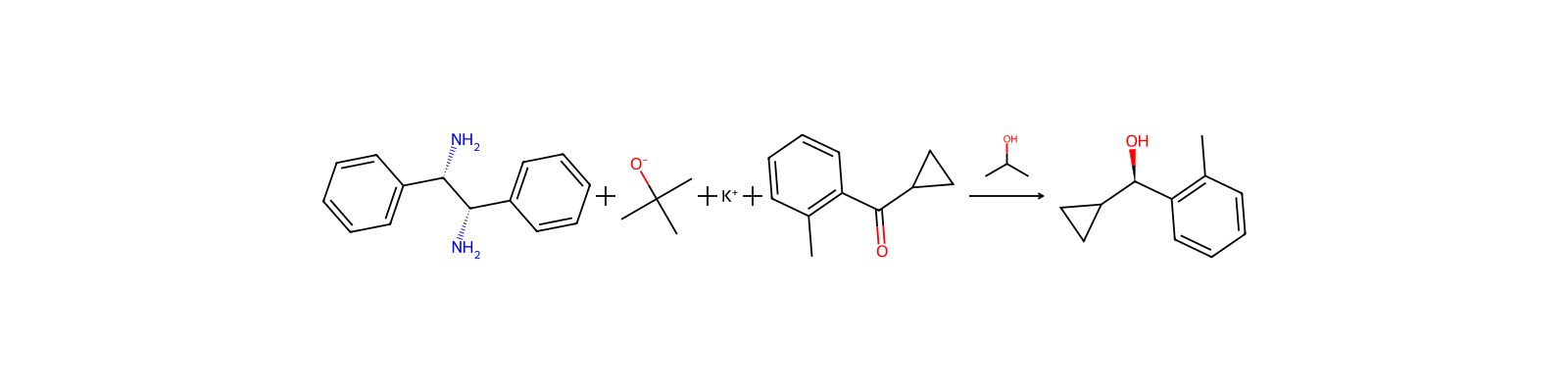
Reaktionsgleichung von HRID 429507
HRID 429507als Edukt
Reaktionsgleichung von HRID 895878
HRID 895878als Edukt
Reaktionsgleichung von HRID 1292552
HRID 1292552als Edukt
Reaktionsgleichung von HRID 1349449
HRID 1349449als Edukt
Reaktionsgleichung von HRID 1721506
HRID 1721506als Edukt

Notizen zur Verbindung

Auf dieser SeiteGrundinformationenNamen und BezeichnerEigenschaftenSicherheit und RegulatorischesChemie und IndustrieZugehörige ReaktionenNotizen zur Verbindung