
Indolin-2,3-dion
Isatin
Daten werden ergänzt – lade die Seite später neu, um den aktuellen Stand zu sehen

Grundinformationen
- CAS
91-56-5- Standard-SMILES
O=C1Nc2ccccc2C1=O- InChIKey
JXDYKVIHCLTXOP-UHFFFAOYSA-N- Summenformel
- C8H5NO2
- Durchschnittliche Molmasse
- 147,13 g/mol
- Monoisotopische Masse
- 147,0320284
Namen und Bezeichner
- Bevorzugter Name
- Isatin
- IUPAC
- 1H-indole-2,3-dione
- Lokaler Name
- Indolin-2,3-dion
- Englischer Name
- Isatin
- Summenformel
- C8H5NO2
- Molmasse
- 147.13
Namen und Synonyme
Isatin91-56-51H-Indole-2,3-dioneINDOLE-2,3-DIONE2,3-Diketoindoline2,3-DioxoindolinePseudoisatinIsotinIsatic acid lactamIsatinic acid anhydrideo-Aminobenzoylformic anhydride2,3-Dioxo-2,3-dihydroindole
Weitere Namen anzeigen
IsatinesatinlsatinISATIC ANHYDRIDE2,3-INDOLINEDIONE
2,3-dihydro-1H-indole-2,3-dioneDTXSID3038694CHEBI:27539NSC-926282X95S7M06DTXCID10186942,3 DioxoindolineRefChem:148910
Datenbank-Bezeichner
- CAS
91-56-5- PubChem CID
- 7054
- DTXSID
DTXSID3038694- ChEMBL
CHEMBL326294- ChEBI
CHEBI:27539- UNII
- 82X95S7M06
- EC Number
- 202-077-8
- Nikkaji
- J4.342G、J608.794I
Eigenschaften
Berechnete StruktureigenschaftenWird ergänzt
- XLogP
- 0,8
- Polarare Oberfläche (TPSA)
- 46,2 Ų
- H-Brücken-Donoren
- 1
- H-Brücken-Akzeptoren
- 2
- Frei drehbare Bindungen
- 0
- Schwere Atome
- 11
- Formalladung
- 0
- Komplexität
- 212
Experimentelle und physikochemische Eigenschaften
LogP
0.83
0.830
Melting Point
203
203.00 °C. @ 760.00 mm Hg
Vapor Pressure0.0000111 [mmHg]
Physical DescriptionOrange solid; [Merck Index] Orange odorless powder; [Alfa Aesar MSDS]
Kovats Retention Index1712;1712
Physikochemische Eigenschaften
- Schmelzpunkt
- 193 · 193-195 °C (dec.) (lit.)
- Siedepunkt
- 267.22 °C · 267.22°C (rough estimate)
- Dichte
- 1.3067 · 1.3067 (rough estimate)
- Dampfdruck
- 0 Pa · 0Pa at 25℃
- Brechungsindex
- 1.47 · 1.4700 (estimate)
- Flammpunkt
- 220 °C · 220 °C
Sicherheit und Regulatorisches
Sicherheitsangaben dienen nur zur Orientierung und ersetzen weder das Sicherheitsdatenblatt (SDB) des Lieferanten noch geltende Vorschriften oder eine fachliche Bewertung.
GHS-Klassifizierung
GHS Classification
This chemical does not meet GHS hazard criteria for 25.7% (44 of 171) of reports.
Warning
H317 (62.6%): May cause an allergic skin reaction [Warning Sensitization, Skin];H412 (60.8%): Harmful to aquatic life with long lasting effects [Hazardous to the aquatic environment, long-term hazard]
P261, P272, P273, P280, P302+P352, P321, P333+P317, P362+P364, and P501 (click each P-code to see the statement)
Aggregated GHS information provided per 171 reports by companies from 12 notifications to the ECHA C&L Inventory. Each notification may be associated with multiple companies.;Reported as not meeting GHS hazard criteria per 44 of 171 reports by companies.;There are 10 notifications provided by 127 of 171 reports by companies with hazard statement code(s).;Information may vary between notifications depending on impurities, additives, and other factors. The percentage value in parenthesis indicates the notified classification ratio from companies that provide hazard codes. Only hazard codes with percentage values above 10% are shown. For more detailed information, please visit ECHA C&L website.
Gefahrenhinweise
Regulatory Information
Chemical: 1H-Indole-2,3-dione
Status: Active Update: 02-09-2015 https://echa.europa.eu/registration-dossier/-/registered-dossier/15909
1H-Indole-2,3-dione: Does not have an individual approval but may be used under an appropriate group standard
Other Safety InformationIMAP assessments - 1H-Indole-2,3-dione: Human health tier II assessment
Hazards Summary
Not a skin or eye irritant in rabbits; A very potent skin sensitizer in guinea pig maximization study; No evidence of contact allergy in Buehler study of guinea pigs (considered inconclusive due to orange/red staining at application sites); Delayed contact hypersensitivity observed in local lymph node assay (LLNA) studies of mice; Teratogenicity observed in the presence of maternal toxicity in rats; [EC: SCCP] Causes flaccid paralysis without anesthesia (usually neuromuscular blockage) and changes in motor activity in oral and intravenous lethal-dose studies of rats; Causes pigmented or nucleated red blood cells and changes in erythrocyte count in 6-week oral studies of rats; [RTECS] May cause eye irritation; Reproductive effects observed in experimental animals; [Alfa Aesar MSDS]
Chemie und Industrie
Verwendung und Herstellung
Uses
Used to make vat dyes and in analytical chemistry as a reagent for cuprous ions, mercaptans, thiophene, and indican; [Merck Index] Used in hair coloring products; [EC: SCCP]
Dressing Hair [Category: Other]
General Manufacturing Information1H-Indole-2,3-dione: ACTIVE
Anwendungen
VerwendenIsatin is an endogenous monoamine oxidize (MAO) inhibitor involved in stress and anxiety. Additionally, isatin inhibits alkaline phosphatase (ALP), nitric oxide (NO)-stimulated soluble guanylate cyclase, and other enzymes. Isatins undergo a one-pot Wolff-Kishner like reduction with hydrazine hydrate, under surprisingly mild conditions, to give the corresponding oxindoles. It is used as chromatographic spray reagent for amino acid detection.
Vor- und nachgelagerte Produkte
Vorgelagerte Rohstoffe
Nachgelagerte Produkte
Zugehörige Reaktionen
445

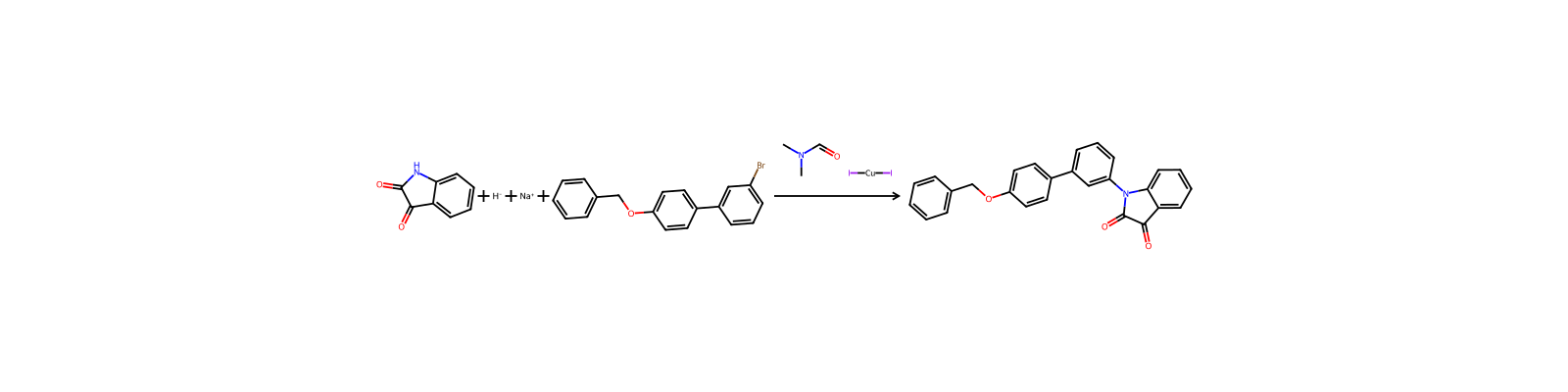
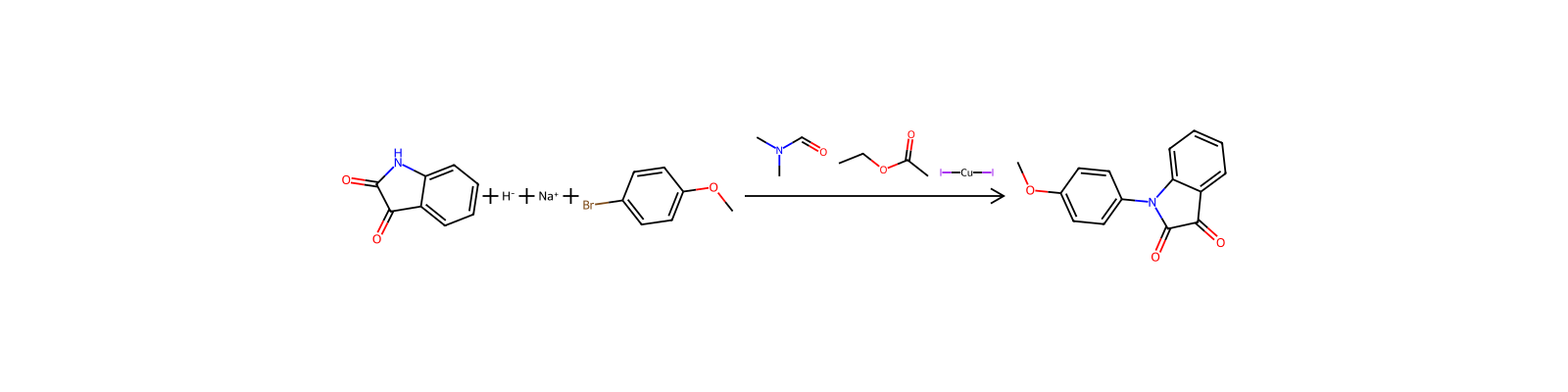


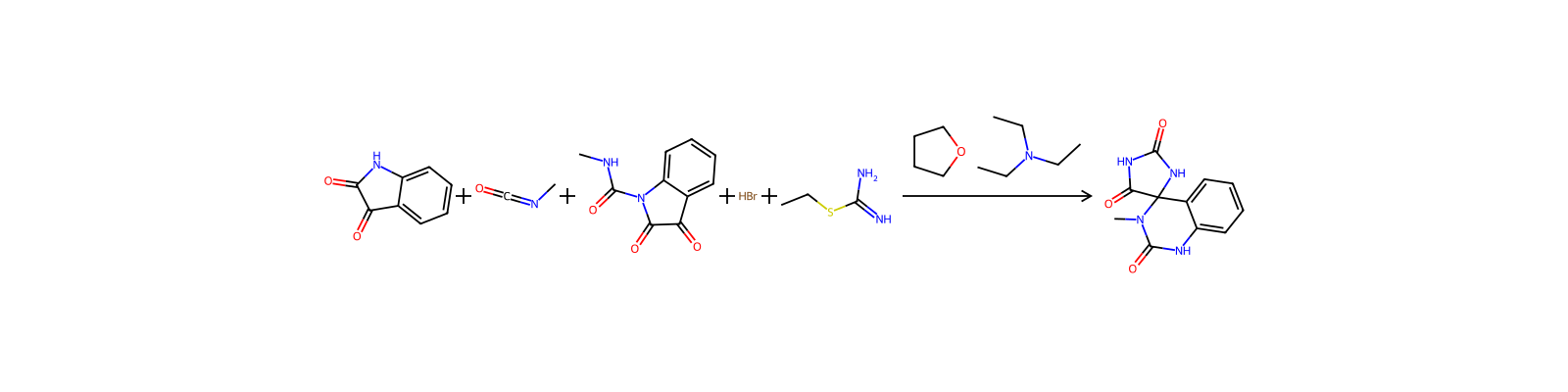

Notizen zur Verbindung
Wird geladen…