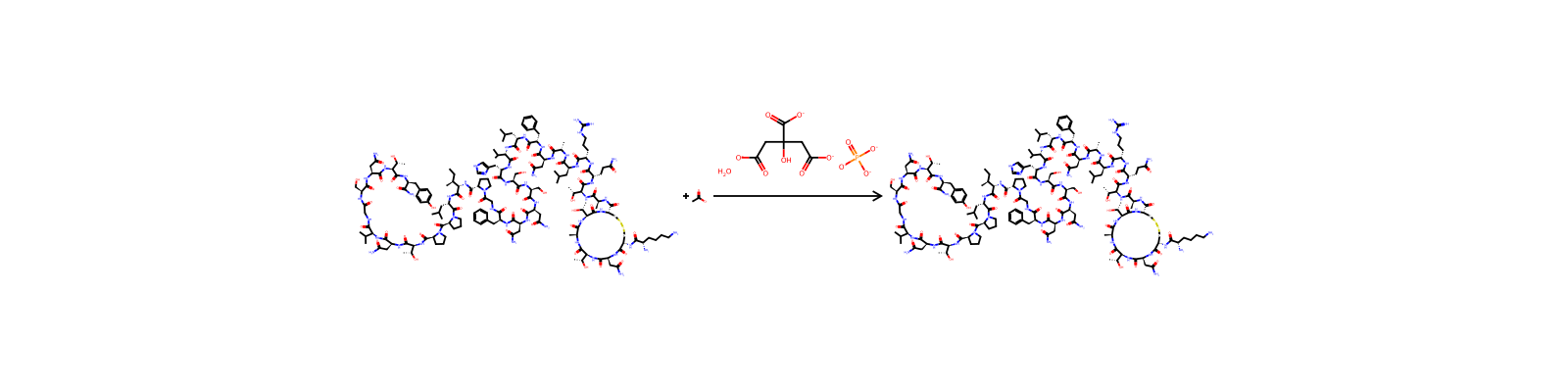
HRID 523616als Produkt
Daten werden ergänzt – lade die Seite später neu, um den aktuellen Stand zu sehen

151126-32-8CC[C@H](C)[C@H](NC(=O)[C@@H]1CCCN1C(=O)CNC(=O)[C@H](Cc1ccccc1)NC(=O)[C@H](CC(N)=O)NC(=O)[C@H](CC(N)=O)NC(=O)[C@H](CO)NC(=O)[C@H](CO)NC(=O)[C@H](Cc1c[nH]cn1)NC(=O)[C@@H](NC(=O)[C@H](CC(C)C)NC(=O)[C@H](Cc1ccccc1)NC(=O)[C@H](CC(N)=O)NC(=O)[C@H](C)NC(=O)[C@H](CC(C)C)NC(=O)[C@H](CCCNC(=N)N)NC(=O)[C@H](CCC(N)=O)NC(=O)[C@@H](NC(=O)[C@H](C)NC(=O)[C@@H]1CSSC[C@H](NC(=O)[C@@H](N)CCCCN)C(=O)N[C@@H](CC(N)=O)C(=O)N[C@@H]([C@@H](C)O)C(=O)N[C@@H](C)C(=O)N[C@@H]([C@@H](C)O)C(=O)N1)[C@@H](C)O)C(C)C)C(=O)N[C@@H](CC(C)C)C(=O)N1CCC[C@H]1C(=O)N1CCC[C@H]1C(=O)N[C@H](C(=O)N[C@@H](CC(N)=O)C(=O)N[C@H](C(=O)NCC(=O)N[C@@H](CO)C(=O)N[C@@H](CC(N)=O)C(=O)N[C@H](C(=O)N[C@@H](Cc1ccc(O)cc1)C(N)=O)[C@@H](C)O)C(C)C)[C@@H](C)OFVNLNEGMCMHEBF-CLRARMPYNA-NPramlintide is a polypeptide.
151126-32-8CHEMBL2103758CHEBI:135922Sicherheitsangaben dienen nur zur Orientierung und ersetzen weder das Sicherheitsdatenblatt (SDB) des Lieferanten noch geltende Vorschriften oder eine fachliche Bewertung.
Drug-Induced Liver Injury Severity and Toxicity (DILIst)
pramlintide
DILI Negative
Subcutaneous
DOI:10.1016/j.drudis.2019.09.022
A - Alimentary tract and metabolism
QA - Alimentary tract and metabolism
Pramlintide is a synthetic analog of amylin, a glucoregulatory hormone that is synthesized by pancreatic β-cells and released into the bloodstream, in a similar pattern as insulin, after a meal. Like insulin, amylin is deficient in individuals with diabetes. It is provided as an acetate salt. Pramlintide is a 37-amino acid polypeptide that differs structurally from human amylin by the replacement of alanine, serine, and serine at positions 25, 28, and 29 respectively with proline.
Pramlintide is an amlyinomimetic, a functional analog of the naturally occurring pancreatic hormone amylin. Amylin has activity in a number of gastrointestinal and glucodynamic systems, and by mimicking its activity, pramlintide acts to improve glycemic control through modulation of the rate of gastric emptying, prevention of post-prandial rise in glucagon levels, and by increasing sensations of satiety, thereby reducing caloric intake and potentiating weight loss. There appears to be at least three distinct receptor complexes that bind with high affinity to amylin. All three complexes contain the calcitonin receptor at the core, plus one of three Receptor activity-modifying proteins, RAMP1, RAMP2, or RAMP3.
D3FM8FA78T
PRAMLINTIDE
Mechanisms of Action [MoA] - Amylin Agonists
Established Pharmacologic Class [EPC] - Amylin Analog
Pramlintide is an Amylin Analog. The mechanism of action of pramlintide is as an Amylin Agonist.
The absolute bioavailability of a single subcutaneous dose of pramlintide is approximately 30 to 40%.
Pramlintide is metabolized primarily by the kidneys.
VerwendenAntidiabetic.