4-Brombenzaldehyd
4-Bromobenzaldehyde
Daten werden ergänzt – lade die Seite später neu, um den aktuellen Stand zu sehen
Grundinformationen
- CAS
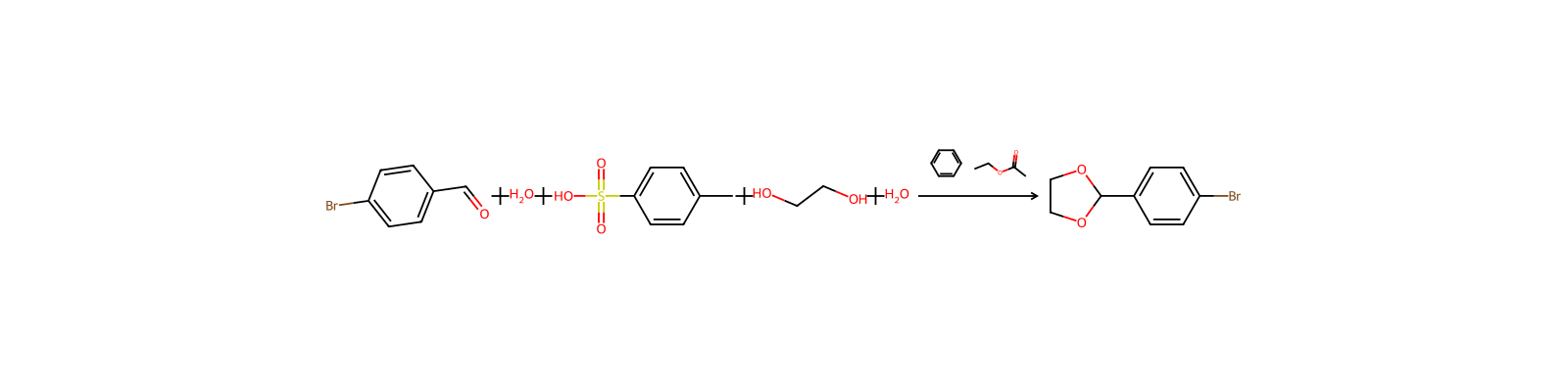
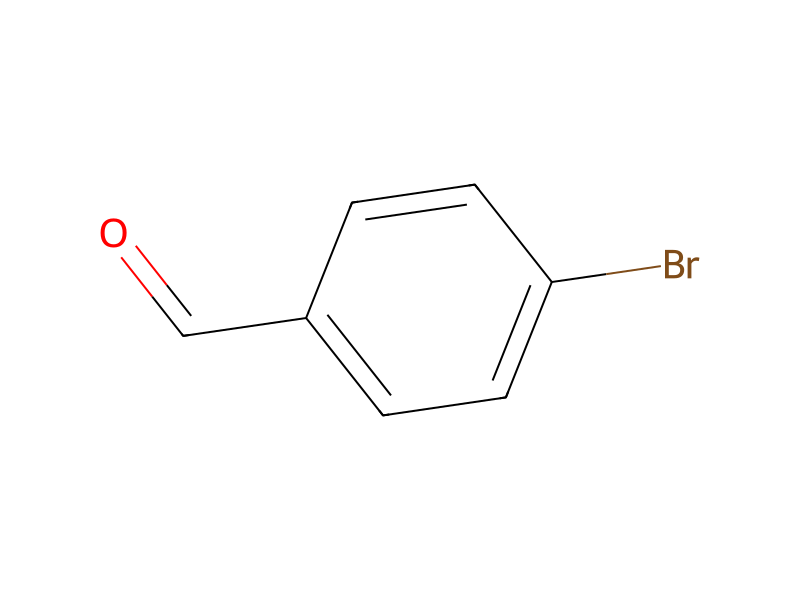
1122-91-4- Standard-SMILES
O=Cc1ccc(Br)cc1- InChIKey
ZRYZBQLXDKPBDU-UHFFFAOYSA-N- Summenformel
- C7H5BrO
- Durchschnittliche Molmasse
- 185,02 g/mol
- Monoisotopische Masse
- 183,95238
Namen und Bezeichner
- Bevorzugter Name
- 4-Bromobenzaldehyde
- IUPAC
- 4-bromobenzaldehyde
- Lokaler Name
- 4-Brombenzaldehyd
- Englischer Name
- 4-Bromobenzaldehyde
- Summenformel
- C7H5BrO
- Molmasse
- 185.02
Namen und Synonyme
4-Bromobenzaldehydep-BromobenzaldehydeBenzaldehyde, 4-bromo-Benzaldehyde, p-bromo-4-formylbromobenzene1-bromo-4-formylbenzene4-BrombenzaldehydBENZALDEHYDE,4-BROMOEINECS 214-365-0NSC 216384-FORMYLPHENYL BROMIDEUNII-4L8VM24F65
Weitere Namen anzeigen
Bromobenzaldehyde4-BBA4-bromo-benzaldehyd4-BROMOBENZYLALDEHYDE4-Bromobenzaldehyde99%BRBA1DK4844-BromobenzaL
DTXSID50615344L8VM24F65NSC-216384-FORMYL-1-BROMOBENZENEpBromobenzaldehydeBenzaldehyde, pbromoBenzaldehyde, 4bromoRefChem:98176
Datenbank-Bezeichner
- CAS
1122-91-4- PubChem CID
- 70741
- DTXSID
DTXSID5061534- ChEMBL
CHEMBL3753357- UNII
- 4L8VM24F65
- EC Number
- 214-365-0
- Nikkaji
- J30.727K
Eigenschaften
Berechnete StruktureigenschaftenWird ergänzt
- XLogP
- 2,2
- Polarare Oberfläche (TPSA)
- 17,1 Ų
- H-Brücken-Donoren
- 0
- H-Brücken-Akzeptoren
- 1
- Frei drehbare Bindungen
- 1
- Schwere Atome
- 9
- Formalladung
- 0
- Komplexität
- 95
Experimentelle und physikochemische Eigenschaften
Physical DescriptionWhite crystalline powder; [Alfa Aesar MSDS]
Kovats Retention Index1207.1;1216.5;1229
Physikochemische Eigenschaften
- Schmelzpunkt
- 55 · 55-58 °C(lit.)
- Siedepunkt
- 66 · 66-68°C 2mm
- Dichte
- 1.85 g/cm3 · 1.85 g/cm3
- Brechungsindex
- 1.5727 · 1.5727 (estimate)
- Flammpunkt
- 228 °F · 228 °F
- storage temp.
- 30 °C · Store below +30°C.
- Löslichkeit
- Chloroform, Ethyl Acetate
- Aggregatzustand
- Crystalline Solid
- Farbe
- White
- Wasserlöslichkeit
- INSOLUBLE
- BRN
- 507100 · 507100
Sicherheit und Regulatorisches
Sicherheitsangaben dienen nur zur Orientierung und ersetzen weder das Sicherheitsdatenblatt (SDB) des Lieferanten noch geltende Vorschriften oder eine fachliche Bewertung.
GHS-Klassifizierung
GHS Classification
This chemical does not meet GHS hazard criteria for 1.3% (1 of 78) of reports.
Danger
H302 (73.1%): Harmful if swallowed [Warning Acute toxicity, oral];H315 (98.7%): Causes skin irritation [Warning Skin corrosion/irritation];H319 (98.7%): Causes serious eye irritation [Warning Serious eye damage/eye irritation];H334 (48.7%): May cause allergy or asthma symptoms or breathing difficulties if inhaled [Danger Sensitization, respiratory];H335 (94.9%): May cause respiratory irritation [Warning Specific target organ toxicity, single exposure; Respiratory tract irritation]
P233, P260, P261, P264, P264+P265, P270, P271, P280, P284, P301+P317, P302+P352, P304+P340, P305+P351+P338, P319, P321, P330, P332+P317, P337+P317, P342+P316, P362+P364, P403, P403+P233, P405, and P501 (click each P-code to see the statement)
Aggregated GHS information provided per 78 reports by companies from 17 notifications to the ECHA C&L Inventory. Each notification may be associated with multiple companies.;Reported as not meeting GHS hazard criteria per 1 of 78 reports by companies.;There are 16 notifications provided by 77 of 78 reports by companies with hazard statement code(s).;Information may vary between notifications depending on impurities, additives, and other factors. The percentage value in parenthesis indicates the notified classification ratio from companies that provide hazard codes. Only hazard codes with percentage values above 10% are shown. For more detailed information, please visit ECHA C&L website.
Gefahrenhinweise
Regulatory Information
Chemical: Benzaldehyde, 4-bromo-
Status: Active Update: 16-04-2020 https://echa.europa.eu/registration-dossier/-/registered-dossier/19372
4-Bromobenzaldehyde: Does not have an individual approval but may be used under an appropriate group standard
Hazards SummaryA skin and strong eye irritant; Harmful by ingestion; [Alfa Aesar MSDS]
Chemie und Industrie
Verwendung und Herstellung
General Manufacturing InformationBenzaldehyde, 4-bromo-: ACTIVE
Anwendungen
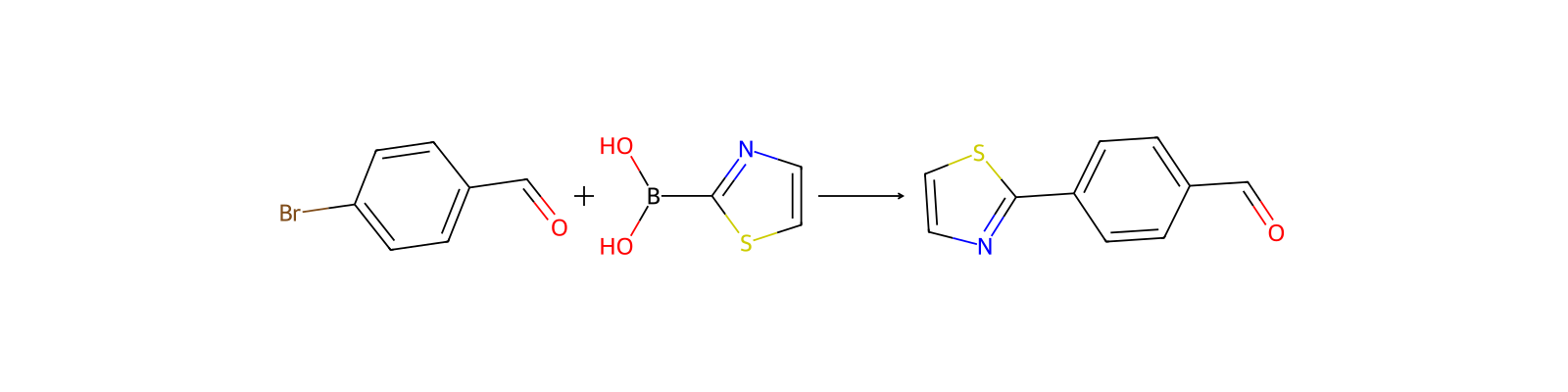
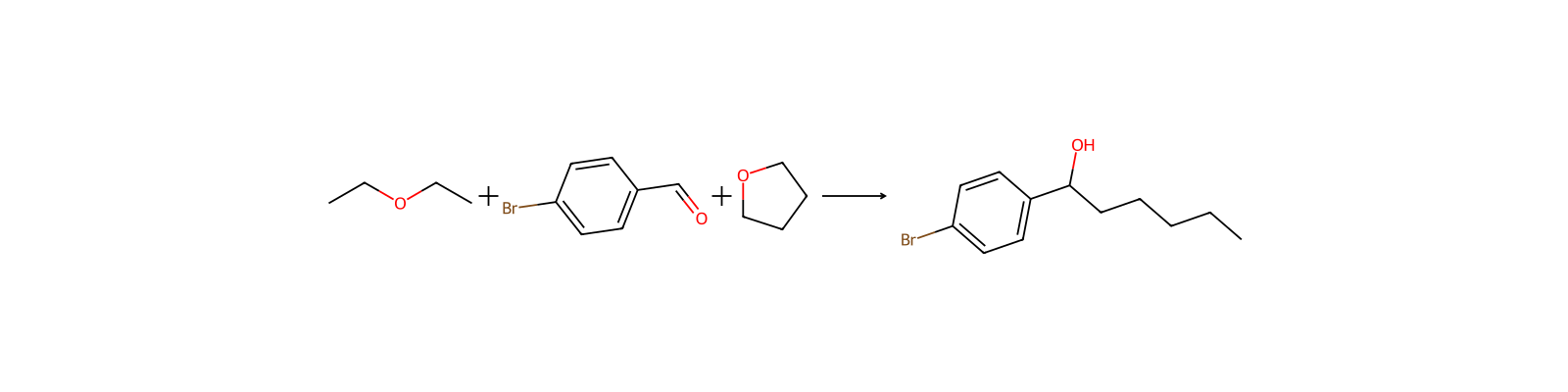
Verwenden4-Bromobenzaldehyde is widely utilized as an intermediate for the preparation of agrochemicals, pharmaceuticals and other organic compounds. It is used as a precursor and reacts with sulfamethoxazole to prepare Schiffs base, 4-[(4-Bromo-benzylidene)-amino]-N-(5-methyl-isoxazol-3-yl)-benzene sulfonamide, which can be used for the photo stability of polyvinyl chloride (PVC). It plays an important role in palladium-catalyzed mono- and bis-arylation of 3,4-(ethylenedioxy)thiophenes. It is employed in a cross-coupling study with potassium vinyltrifluoroborate.
Darstellung
synthetische4-Bromobenzaldehyde is prepared by 2-Iodoxy-5-Methylbenzenesulfonic Acid-Catalyzed Selective Oxidation of 4-Bromobenzyl Alcohol.
Vor- und nachgelagerte Produkte
Vorgelagerte Rohstoffe
Nachgelagerte Produkte
Zugehörige Reaktionen
750





Notizen zur Verbindung
Wird geladen…