
4-Brombiphenyl
4-Bromobiphenyl
Daten werden ergänzt – lade die Seite später neu, um den aktuellen Stand zu sehen

Grundinformationen
- CAS
92-66-0- Standard-SMILES
Brc1ccc(-c2ccccc2)cc1- InChIKey
PKJBWOWQJHHAHG-UHFFFAOYSA-N- Summenformel
- C12H9Br
- Durchschnittliche Molmasse
- 233,1 g/mol
- Monoisotopische Masse
- 231,98876
Überblick
4-bromobiphenyl appears as colorless crystals. Insoluble in water. (NTP, 1992)
Namen und Bezeichner
- Bevorzugter Name
- 4-Bromobiphenyl
- IUPAC
- 1-bromo-4-phenylbenzene
- Lokaler Name
- 4-Brombiphenyl
- Englischer Name
- 4-Bromobiphenyl
- Summenformel
- C12H9Br
- Molmasse
- 233.1
Namen und Synonyme
4-BROMOBIPHENYL92-66-04-Bromo-1,1'-biphenylp-Bromobiphenyl1-bromo-4-phenylbenzene4-Bromodiphenylp-Bromodiphenyl4-Biphenyl bromide1,1'-Biphenyl, 4-bromo-p-PhenylbromobenzeneBiphenyl, 4-bromo-4-Biphenylyl bromide
Weitere Namen anzeigen
pbb 3The broMine biphenyl1,1’-(biphenyl,-bromo-4-BROMOBIPHENYL PESTANAL, 250 MG4-Br-BPPBB NO 3
p-Biphenylyl bromidep-Phenylphenyl bromide(4-Bromophenyl)benzeneDTXSID4024640OE77OKH5BLNSC-406933DTXCID804640RefChem:98187
Datenbank-Bezeichner
- CAS
92-66-0- PubChem CID
- 7101
- DTXSID
DTXSID4024640- ChEMBL
CHEMBL1399688- UNII
- OE77OKH5BL
- EC Number
- 202-176-6
- Nikkaji
- J95.604J
Eigenschaften
Berechnete StruktureigenschaftenWird ergänzt
- XLogP
- 4,7
- Polarare Oberfläche (TPSA)
- 0 Ų
- H-Brücken-Donoren
- 0
- H-Brücken-Akzeptoren
- 0
- Frei drehbare Bindungen
- 1
- Schwere Atome
- 13
- Formalladung
- 0
- Komplexität
- 141
Experimentelle und physikochemische Eigenschaften
PolymersOther Classes -> Halogenated Polyaromatics
SpringerMaterials Properties13C nuclear magnetic resonance spectrum
LogP4.96
Density0.9327 (NTP, 1992) - Less dense than water; will float
SolubilityInsoluble (NTP, 1992)
Flash Point290 °F (NTP, 1992)
Boiling Point590 °F at 760 mmHg (NTP, 1992)
Melting Point196.2 °F (NTP, 1992)
Physical Description
4-bromobiphenyl appears as colorless crystals. Insoluble in water. (NTP, 1992)
Colorless solid; [CAMEO] White crystalline solid; [Sigma-Aldrich MSDS]
Collision Cross Section136.7 Ų [M]+ [CCS Type: TIMS, Method: calibration with PAHs]
Physikochemische Eigenschaften
- Schmelzpunkt
- 82 · 82-86 °C(lit.)
- Siedepunkt
- 310 °C · 310 °C(lit.)
- Dichte
- 0.9327 · 0.9327
- Brechungsindex
- 1.6565 · 1.6565 (estimate)
- Flammpunkt
- 143 °C · 143 °C
- storage temp.
- Sealed in dry,Room Temperature
- Löslichkeit
- 1 g/10 · dioxane: soluble1g/10 mL, clear, colorless to very faintly yellow
- Aggregatzustand
- Crystalline Flakes
- Farbe
- Almost white to slightly yellow
- Wasserlöslichkeit
- Insoluble
- BRN
- 1907453 · 1907453
- Henry's Law Constant
- 6 · 6.0×10-2 mol/(m3Pa) at 25℃, Zhang et al. (2010)
- Stabilität
- Stable. Incompatible with oxidizing agents.
- InChI
- 1S/C12H9Br/c13-12-8-6-11(7-9-12)10-4-2-1-3-5-10/h1-9H
- InChIKey
- PKJBWOWQJHHAHG-UHFFFAOYSA-N
- SMILES
- Brc1ccc(cc1)-c2ccccc2
- CAS Datenbank
- 92 · 92-66-0(CAS DataBase Reference)
- NIST chemische Informationen
- 1 · 1,1'-Biphenyl, 4-bromo-(92-66-0)
- EPA chemische Informationen
- 4 · 4-Bromobiphenyl (92-66-0)
Sicherheit und Regulatorisches
Sicherheitsangaben dienen nur zur Orientierung und ersetzen weder das Sicherheitsdatenblatt (SDB) des Lieferanten noch geltende Vorschriften oder eine fachliche Bewertung.
GHS-Klassifizierung
GHS Classification
This chemical does not meet GHS hazard criteria for 4% (2 of 50) of reports.
Danger
H302 (92%): Harmful if swallowed [Warning Acute toxicity, oral]
P261, P264, P264+P265, P270, P271, P273, P280, P301+P317, P302+P352, P304+P340, P305+P354+P338, P317, P319, P321, P330, P332+P317, P362+P364, P391, P403+P233, P405, and P501 (click each P-code to see the statement)
Aggregated GHS information provided per 50 reports by companies from 11 notifications to the ECHA C&L Inventory. Each notification may be associated with multiple companies.
Gefahrenhinweise
Regulatory Information
Regulation (EC) No 178/2002 (amended)
S - indicates a substance that is identified in a final Significant New Use Rule.
REACH registered substance: 4-bromobiphenyl (EC: 202-176-6)
Restricted substance: 4-bromobiphenyl
DOT LabelClass 9
Fire HazardsThis chemical is combustible. (NTP, 1992)
Health HazardsExcerpt from ERG Guide 171 [Substances (Low to Moderate Hazard)]:
Hazards SummaryAn irritant that may cause serious eye injury; Harmful by ingestion; [Sigma-Aldrich MSDS] See Polybrominated biphenyls.
Reactive GroupAryl Halides
Reactivity Profile4-BROMOBIPHENYL may be sensitive to light. This compound can react with oxidizing materials. (NTP, 1992)
Air and Water ReactionsInsoluble in water.
Hazard Classes and CategoriesAcute Tox. 4 (92%)
Sicherheit und Schutzausrüstung
Fire FightingFires involving this material should be controlled using a dry chemical, carbon dioxide or Halon extinguisher. (NTP, 1992)
First Aid
EYES: First check the victim for contact lenses and remove if present. Flush victim's eyes with water or normal saline solution for 20 to 30 minutes while simultaneously calling a hospital or poison control center. Do not put any ointments, oils, or medication in the victim's eyes without specific instructions from a physician. IMMEDIATELY transport the victim after flushing eyes to a hospital even if no symptoms (such as redness or irritation) develop.
Nonfire Spill Response
SMALL SPILLS AND LEAKAGE: Should a spill occur while you are handling this chemical, FIRST REMOVE ALL SOURCES OF IGNITION, then you should dampen the solid spill material with ethanol and transfer the dampened material to a suitable container. Use absorbent paper dampened with ethanol to pick up any remaining material. Seal the absorbent paper, and any of your clothes, which may be contaminated, in a vapor-tight plastic bag for eventual disposal. Solvent wash all contaminated surfaces with ethanol followed by washing with a soap and water solution. Do not reenter the contaminated area until the Safety Officer (or other responsible person) has verified that the area has been properly cleaned.
Isolation and EvacuationExcerpt from ERG Guide 171 [Substances (Low to Moderate Hazard)]:
Minimum Risk LevelAcute Oral: 0.01 mg/kg/day (L134)
Personal Protective Equipment (PPE)
RECOMMENDED RESPIRATOR: Where the neat test chemical is weighed and diluted, wear a NIOSH-approved half face respirator equipped with an organic vapor/acid gas cartridge (specific for organic vapors, HCl, acid gas and SO2) with a dust/mist filter. (NTP, 1992)
Toxikologische Informationen
Treatment
EYES: irrigate opened eyes for several minutes under running water. INGESTION: do not induce vomiting. Rinse mouth with water (never give anything by mouth to an unconscious person). Seek immediate medical advice. SKIN: should be treated immediately by rinsing the affected parts in cold running water for at least 15 minutes, followed by thorough washing with soap and water. If necessary, the person should shower and change contaminated clothing and shoes, and then must seek medical attention. INHALATION: supply fresh air. If required provide artificial respiration.
Health EffectsPBB exposure may cause weight loss, skin disorders (such as acne), nervous and immune systems effects, and effects on the liver, kidneys, and thyroid gland. (L628)
Exposure RoutesOral (L628) ; inhalation (L628) ; dermal (L628)
Toxicity Summary
The exact mechanism of toxicty of PBBs varies depending on the specific congener. The predominant interaction is believed to involve the aryl hydrocarbon receptor (AhR). PBBs bind to and activate the AhR, which in turn initiates the transcriptional upregulation of a number of genes, affecting biochemical and endocrine pathways, cell cycle regulation, morphogenesis, oxidative stress response, and various other processes. This results in the numerous toxic responses characteristic of PBBs. Some of the known induced genes include the cytochrome P-450-dependent monooxygenases CYP1A1 and CYP1A2. (L628)
Signs and SymptomsSymptoms of PBB exposure may include nausea, abdominal pain, loss of appetite, joint pain, fatigue, and weakness. (L629)
Carcinogen Classification2A, probably carcinogenic to humans. (L135)
Sicherheitsdaten
- wgk
- 3
- tsca
- TSCA listed
- ridadr
- UN 3152 9/PG 2
- hs_code
- 29036990
- RTECS-Nr.
- DV1750100
- risk_code
- 36/37/38-50/53-41-37/38-22
- hazard_code
- Xi,N,Xn
- safety_code
- 22-24/25-37/39-26-61-60-39
- hazard_class
- IRRITANT
- packing_group
- Ⅲ
- Speicherklasse
- 11 - Combustible Solids
- Hazard Classifications
- Acute Tox. 4 OralAquatic Acute 1Eye Dam. 1Skin Irrit. 2STOT SE 3
Chemie und Industrie
Pharmakologische Informationen
Metabolism/Metabolites
PBBs can be absorbed via oral, inhalation, and dermal routes. Due to their lipophilic nature, PBBs, especially the highly brominated congeners, tend to accumulate in lipid-rich tissues such as the liver, adipose, skin, and breast milk. Certain PBB compounds are metabolized by the microsomal monooxygenase system catalyzed by cytochrome P-450 of the type induced by phenobarbital. The rate of metabolism may depends on the bromine substitution pattern. PBB congeners of low bromine content are transformed into hydroxylated derivatives that are predominately eliminated in the urine. Highly brominated congeners are either retained or excreted unchanged in the feces. (L628)
Verwendung und Herstellung
Uses
Used in chemical synthesis; [NTP]
PBBs can be used as flame retardants and may be added to the plastics used to make products like computer monitors, televisions, textiles, and plastic foams to make them difficult to burn. However, the use of PBBs is banned or restricted in most areas due to their toxicity and persistence in the environment. (L628, L629)
General Manufacturing Information1,1'-Biphenyl, 4-bromo-: ACTIVE
Anwendungen
Verwenden4-Bromobiphenyl is used as halogenated hydrocarbon and Intermediates of Liquid Crystals. It is also used in used in the synthesis of 4-biphenylthiolate.
Vor- und nachgelagerte Produkte
Vorgelagerte Rohstoffe
Nachgelagerte Produkte
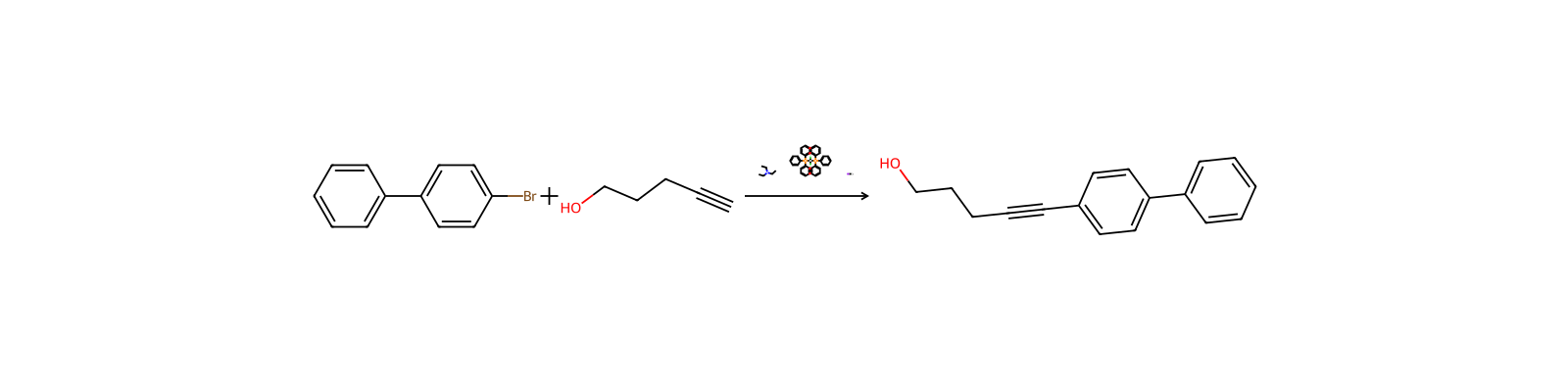
Zugehörige Reaktionen
132


Notizen zur Verbindung
Wird geladen…