
Grundinformationen
- Standard-SMILES
Oc1ccc(-c2ccc(O)cc2)cc1- InChIKey
VCCBEIPGXKNHFW-UHFFFAOYSA-N- Summenformel
- C12H10O2
- Durchschnittliche Molmasse
- 186,21 g/mol
- Monoisotopische Masse
- 186,06807956
Namen und Bezeichner
- Bevorzugter Name
- 4,4'-Dihydroxybiphenyl
- IUPAC
- 4-(4-hydroxyphenyl)phenol
- Lokaler Name
- Biphenyl-4,4'-diol
- Englischer Name
- 4,4'-Biphenol
- Summenformel
- C12H10O2
- Molmasse
- 186.21
Namen und Synonyme
4,4'-Dihydroxybiphenyl92-88-64,4'-BIPHENOL4,4'-Biphenyldiol[1,1'-Biphenyl]-4,4'-diolBiphenyl-4,4'-diolp,p'-Biphenolp,p'-Diphenol4,4'-dihydroxydiphenylAntioxidant DOD4,4'-Dioxydiphenyl4,4'-Bisphenol
Weitere Namen anzeigen
PPDPBIPHENOLDOD(1R,2R)-Cyclohexane-1,2-diolBIPHENOL SUBL5
p,p'-DihydroxybiphenylASM DOD(1,1'-Biphenyl)-4,4'-diolDihydroxybiphenylDTXSID1029120NSC-8711DTXCID709120GM-W06
Datenbank-Bezeichner
- CAS
92-88-6- PubChem CID
- 7112
- DTXSID
DTXSID1029120- ChEMBL
CHEMBL76398- ChEBI
CHEBI:34367- UNII
- R8994A0904
- EC Number
- 202-200-5
- Nikkaji
- J45.978J
Eigenschaften
Berechnete Struktureigenschaften
- XLogP
- 3,6
- Polarare Oberfläche (TPSA)
- 40,5 Ų
- H-Brücken-Donoren
- 2
- H-Brücken-Akzeptoren
- 2
- Frei drehbare Bindungen
- 1
- Schwere Atome
- 14
- Formalladung
- 0
- Komplexität
- 145
Experimentelle und physikochemische Eigenschaften
Vapor Pressure0.00000079 [mmHg]
Physical Description
Dry Powder; Other Solid
Off-white, light beige, or light gray odorless powder; [Acros Organics MSDS]
Kovats Retention Index
1979
2046
Physikochemische Eigenschaften
- Schmelzpunkt
- 280 · 280-282 °C(lit.)
- Siedepunkt
- 280.69 °C · 280.69°C (rough estimate)
- Dichte
- 1.22 · 1.22
- Dampfdruck
- 0 Pa · 0Pa at 25℃
- Brechungsindex
- 1.601 · 1.6010 (estimate)
- storage temp.
- Sealed in dry,Room Temperature
- pka
- 9.74 · 9.74±0.26(Predicted)
- Aggregatzustand
- Powder
- Farbe
- Off-white to light beige or light gray
- Wasserlöslichkeit
- sparingly soluble
- BRN
- 1908886 · 1908886
- Kosmetik-Inhaltsstoffe Funktionen
- BLEACHINGSKIN PROTECTING
- InChI
- 1S/C12H10O2/c13-11-5-1-9(2-6-11)10-3-7-12(14)8-4-10/h1-8,13-14H
- InChIKey
- VCCBEIPGXKNHFW-UHFFFAOYSA-N
- SMILES
- Oc1ccc(cc1)-c2ccc(O)cc2
- LogP
- 2.7 at · 2.7 at 20℃
- CAS Datenbank
- 92 · 92-88-6(CAS DataBase Reference)
- NIST chemische Informationen
- p,p'-Biphenol(92-88-6)
- EPA chemische Informationen
- 4 · 4,4'-Biphenyldiol (92-88-6)
Sicherheit und Regulatorisches
GHS-Klassifizierung
GHS Classification
This chemical does not meet GHS hazard criteria for 0.5% (1 of 211) of reports.
Warning
H312 (44.1%): Harmful in contact with skin [Warning Acute toxicity, dermal];H315 (26.1%): Causes skin irritation [Warning Skin corrosion/irritation];H317 (55.9%): May cause an allergic skin reaction [Warning Sensitization, Skin];H319 (25.6%): Causes serious eye irritation [Warning Serious eye damage/eye irritation];H335 (25.1%): May cause respiratory irritation [Warning Specific target organ toxicity, single exposure; Respiratory tract irritation];H411 (18.5%): Toxic to aquatic life with long lasting effects [Hazardous to the aquatic environment, long-term hazard];H412 (55.5%): Harmful to aquatic life with long lasting effects [Hazardous to the aquatic environment, long-term hazard]
P261, P264, P264+P265, P271, P272, P273, P280, P302+P352, P304+P340, P305+P351+P338, P317, P319, P321, P332+P317, P333+P317, P337+P317, P362+P364, P391, P403+P233, P405, and P501 (click each P-code to see the statement)
Aggregated GHS information provided per 211 reports by companies from 15 notifications to the ECHA C&L Inventory. Each notification may be associated with multiple companies.;Reported as not meeting GHS hazard criteria per 1 of 211 reports by companies.;There are 14 notifications provided by 210 of 211 reports by companies with hazard statement code(s).;Information may vary between notifications depending on impurities, additives, and other factors. The percentage value in parenthesis indicates the notified classification ratio from companies that provide hazard codes. Only hazard codes with percentage values above 10% are shown. For more detailed information, please visit ECHA C&L website.
Gefahrenhinweise
Regulatory Information
Chemical: [1,1'-Biphenyl]-4,4'-diol
[1,1'-Biphenyl]-4,4'-diol is listed on the EPA's Chemical Data Reporting (CDR) system. Manufacturers and importers of [1,1'-Biphenyl]-4,4'-diol are required to report information about their production and use of this chemical to the EPA under the Toxic Substances Control Act (TSCA). (40 eCFR Part 711)
Status: Active Update: 30-03-2023 https://echa.europa.eu/registration-dossier/-/registered-dossier/15910;Status: Active Update: 07-03-2018 https://echa.europa.eu/registration-dossier/-/registered-dossier/22776
Hazards Summary
Showed estrogenic activity in Saccharomyces cerevisiae hER in vivo assays; [EPA - TSCATS] Abnormal urinalysis, reversible gross and histopathological liver changes in males, and no evidence of reproductive or developmental toxicity observed in oral study of rats; [JECDB] May cause skin sensitization; [ECHA REACH Registrations] An irritant; Harmful by skin absorption; [Acros Organics MSDS] See Biphenyl.
Hazard Classes and Categories
Acute Tox. 4 (44.1%);Skin Irrit. 2 (26.1%);Skin Sens. 1 (55.9%);Eye Irrit. 2 (25.6%);STOT SE 3 (25.1%);Aquatic Chronic 2 (18.5%);Aquatic Chronic 3 (55.5%)
Acute toxicity (Dermal) - Category 4;Germ cell mutagenicity - Category 2;Hazardous to the aquatic environment (Acute) - Category 2;Hazardous to the aquatic environment (Long-term) - Category 2
Skin sensitization - Category 1;Hazardous to the aquatic environment (Acute) - Category 2;Hazardous to the aquatic environment (Long-term) - Category 2
Toxikologische Informationen
Adverse EffectsSkin Sensitizer - An agent that can induce an allergic reaction in the skin.
Regulatorische Informationen
Regulatory Information
Chemical: [1,1'-Biphenyl]-4,4'-diol
[1,1'-Biphenyl]-4,4'-diol is listed on the EPA's Chemical Data Reporting (CDR) system. Manufacturers and importers of [1,1'-Biphenyl]-4,4'-diol are required to report information about their production and use of this chemical to the EPA under the Toxic Substances Control Act (TSCA). (40 eCFR Part 711)
Status: Active Update: 30-03-2023 https://echa.europa.eu/registration-dossier/-/registered-dossier/15910;Status: Active Update: 07-03-2018 https://echa.europa.eu/registration-dossier/-/registered-dossier/22776
Sicherheitsdaten
- wgk
- 2
- tsca
- TSCA listed
- ridadr
- 3077
- hs_code
- 29061900
- RTECS-Nr.
- DV4725000
- risk_code
- 21-36/37/38-37/38/68-36
- Toxizität
- LD50 orl-rat: 9850 mg/kg TXAPA9 28,313,74
- hazard_code
- Xn
- safety_code
- 26-36-24/25-36/37
- hazard_class
- 9
- packing_group
- III
- Speicherklasse
- 4.2 - Pyrophoric and self-heating hazardous materials
- Hazard Classifications
- Aquatic Chronic 3Self-heat. 2Skin Sens. 1
Chemie und Industrie
Verwendung und Herstellung
UsesUsed to make plastics and as a laboratory reagent; [ECHA REACH Registrations]
U.S. Production2023: 10,000,000 - <25,000,000 lb;2022: 10,000,000 - <25,000,000 lb;2021: 10,000,000 - <25,000,000 lb;2020: 10,000,000 - <25,000,000 lb
Consumer UsesMonomers
Industry UsesMonomers;Intermediate
General Manufacturing Information
All Other Chemical Product and Preparation Manufacturing;Plastics Material and Resin Manufacturing
[1,1'-Biphenyl]-4,4'-diol: ACTIVE
Anwendungen
Verwenden4,4'-biphenol be used intermediate liquid crystal polymers raw materials. Synthetic polymers, due to its excellent heat resistance, it is used as polyester, urethane modified monomer, polycarbonate, polysulfone, and epoxy resin, for the manufacture of an excellent engineering plastics and composite materials. Antioxidant antioxidants for rubber and plastics. Dye intermediates or petroleum products stabilizer.
Vor- und nachgelagerte Produkte
Vorgelagerte Rohstoffe
Nachgelagerte Produkte
Anbieter50 Anbieter
国药集团化学试剂有限公司86-21-63210123 · [email protected]
梯希爱(上海)化成工业发展有限公司021-67121386 · [email protected]
衢州润东化工有限公司0570-8789886 18892685668 · [email protected]
上海阿拉丁生化科技股份有限公司400-6206333 13167063860 · [email protected]
INTATRADE GmbH+49 3493/605464 · [email protected]
江苏敬平新材料科技有限公司18852320356
T&W GROUP021-61551611 13296011611 · [email protected]
爱斯特(成都)生物制药股份有限公司+86-28-85122536 85324413 · [email protected]
山东前元高分子材料有限公司18678041314 18765609661 · [email protected]
韶远科技(上海)有限公司021-50795510 4000665055 · [email protected]
科瑞迪化学400-821-5857 021-64326257 · [email protected]
上海将来实业股份有限公司400-0066400 13621662912 · [email protected]
Syntechem Co.,Ltd[email protected]
上海迈瑞尔生化科技有限公司4006356688 18621169109 · [email protected]
武汉易泰科技有限公司上海分公司18930552037 · [email protected]
阿法埃莎(中国)化学有限公司400-6106006 · [email protected]
太原市瑞和丰科贸有限公司+86 351 7031519 · [email protected]
安耐吉化学&3A(安徽泽升科技股份有限公司)400-0056266 · [email protected]
石家庄斯迪亚诺精细化工有限公司0311-89250318 13582355795 · [email protected]
上海瀚鸿科技股份有限公司021-54306202 13764082696 · [email protected]
上海景颜化工科技有限公司13817811078 · [email protected]
上海尚饮思生化医药有限公司021-021-57872719 13761402923 · [email protected]
嘉兴市艾森化工有限公司0573-85285100 18627885956 · [email protected]
Pure Chemistry Scientific Inc.001-857-928-2050 or 1-888-588-9418 · [email protected]
湖北广奥生物科技有限公司027-02702759223056 18162699093 · [email protected]
武汉丰泰威远科技有限公司027-87465837 19945049750 · [email protected]
孝感深远化工有限公司15527621225; 15527621225 · [email protected]
云南西力生物技术股份有限公司0871-65217109 · [email protected]
山东西亚化学有限公司13355009207 13355009207 · [email protected]
玛雅试剂+86 (573) 82222445 (0)18006601000 452520369 · [email protected]
四川库利南科技有限公司400-1166-196 18981987031 · [email protected]
天津希恩思生化科技有限公司400 638 7771 · [email protected]
湖南汇百侍生物科技有限公司0731-85526065 13308475853 · [email protected]
常州创视电子科技有限公司+86 (519) 8829-2061 · [email protected]
艾科试剂4008-755-333 18080918076 · [email protected]
乐陵创利科技有限公司0534-8101711 13606437406
上海思域化工科技有限公司86-21-34053660 · [email protected]
赛默飞世尔科技(中国)有限公司800-810-5118 · [email protected]
北京伊诺凯科技有限公司400-810-7969 010-59572699 · [email protected]
上海特伯化学科技有限公司+86-21-60341587 · [email protected]
上海遐瑞医药科技有限公司+86 21 61551611
上海健超生物科技有限公司150-2103-5486 18017383231 · [email protected]
TCI AMERICA800-4238616 · [email protected]
TOKYO CHEMICAL INDUSTRY CO., LTD.03-36680489 · [email protected]
TCI Europe320-37350700 · [email protected]
上海贤鼎生物科技有限公司4009209199 · [email protected]
深圳振强药物研发有限公司0755-66853366 13670046396 · [email protected]
越林试剂021-62960152 · [email protected]
湖南复瑞生物医药技术有限责任公司15901640172,19275032510 15901640172 · [email protected]
苏州爱玛特生物科技有限公司0512-56316828 4008675858 · [email protected]
Ergänzende Hinweise
DefinitionChEBI: A member of the class of hydroxybiphenyls that is biphenyl with hydroxy groups at positions 4 and 4'.
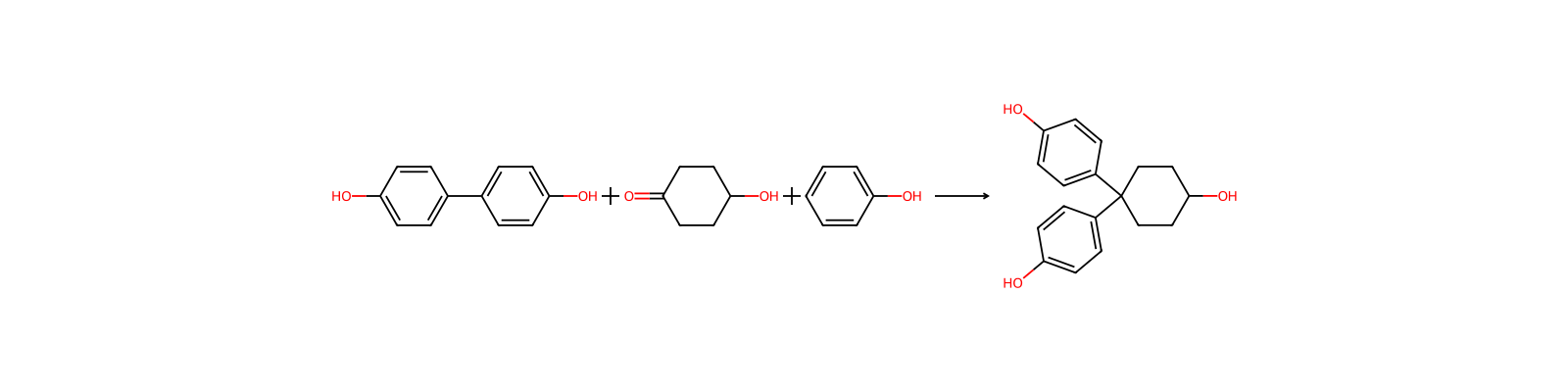
Zugehörige Reaktionen
112


Verknüpfte Notizen
Wird geladen…