Methylnicotinat
Methyl Nicotinate
Daten werden ergänzt – lade die Seite später neu, um den aktuellen Stand zu sehen

Grundinformationen
- CAS
93-60-7- Standard-SMILES
COC(=O)c1cccnc1- InChIKey
YNBADRVTZLEFNH-UHFFFAOYSA-N- Summenformel
- C7H7NO2
- Durchschnittliche Molmasse
- 137,14 g/mol
- Monoisotopische Masse
- 137,04767847
Namen und Bezeichner
- Bevorzugter Name
- Methyl Nicotinate
- IUPAC
- methyl pyridine-3-carboxylate
- Lokaler Name
- Methylnicotinat
- Englischer Name
- Methyl nicotinate
- Summenformel
- C7H7NO2
- Molmasse
- 137.14
Namen und Synonyme
METHYL NICOTINATE93-60-7methyl pyridine-3-carboxylateMethylnicotinateMethyl-nicotinateMethyl 3-pyridinecarboxylate3-Pyridinecarboxylic acid, methyl ester3-(Methoxycarbonyl)pyridineHeat sprayNicotinic acid, methyl ester3-(Carbomethoxy)pyridineFEMA No. 3709
Weitere Namen anzeigen
NICOTINIC ACID METHYL ESTERFEMA 3709NicomethNikometMethyl niacinMethyl nicotiteMethyl nictinateAKOS BBS-00004415
3-Pyridinecarboxylic acid methyl esterDTXSID70444717B1AVU9DJNNSC-13126DTXCID5024471VitathoneRefChem:157960202-261-8
Datenbank-Bezeichner
- CAS
93-60-7- PubChem CID
- 7151
- DTXSID
DTXSID7044471- ChEMBL
CHEMBL379845- ChEBI
CHEBI:134761- UNII
- 7B1AVU9DJN
- EC Number
- 202-261-8
- Nikkaji
- J39.098D
Eigenschaften
Berechnete StruktureigenschaftenWird ergänzt
- XLogP
- 0,8
- Polarare Oberfläche (TPSA)
- 39,2 Ų
- H-Brücken-Donoren
- 0
- H-Brücken-Akzeptoren
- 3
- Frei drehbare Bindungen
- 2
- Schwere Atome
- 10
- Formalladung
- 0
- Komplexität
- 125
Experimentelle und physikochemische Eigenschaften
LogP
0.8
0.83
Solubility
Soluble
47.6 mg/mL at 20 °C
Soluble in fat; Slightly soluble in water
Soluble (in ethanol)
Boiling Point
209
209.00 °C. @ 760.00 mm Hg
Melting Point
38-43
38 °C
Vapor Pressure0.27 [mmHg]
Physical Description
Solid; [Merck Index]
Solid
White crystalline solid; Fresh caramelic nutty, mild tobacco aroma
Kovats Retention Index
1100;1116;1098;1100;1127.1
1141.2;1152.2;1137.4;1139.2;1140.1;1145;1136;1137;1149;1136;1136.6
1743;1779;1739;1779;1767.7;1793;1773.5
Collision Cross Section
Sicherheit und Regulatorisches
Sicherheitsangaben dienen nur zur Orientierung und ersetzen weder das Sicherheitsdatenblatt (SDB) des Lieferanten noch geltende Vorschriften oder eine fachliche Bewertung.
GHS-Klassifizierung
GHS Classification
This chemical does not meet GHS hazard criteria for 0.8% (13 of 1623) of reports.
Warning
H315 (98.6%): Causes skin irritation [Warning Skin corrosion/irritation];H319 (99.1%): Causes serious eye irritation [Warning Serious eye damage/eye irritation]
P264, P264+P265, P280, P302+P352, P305+P351+P338, P321, P332+P317, P337+P317, and P362+P364 (click each P-code to see the statement)
Aggregated GHS information provided per 1623 reports by companies from 13 notifications to the ECHA C&L Inventory. Each notification may be associated with multiple companies.;Reported as not meeting GHS hazard criteria per 13 of 1623 reports by companies.;There are 12 notifications provided by 1610 of 1623 reports by companies with hazard statement code(s).;Information may vary between notifications depending on impurities, additives, and other factors. The percentage value in parenthesis indicates the notified classification ratio from companies that provide hazard codes. Only hazard codes with percentage values above 10% are shown. For more detailed information, please visit ECHA C&L website.
Gefahrenhinweise
Regulatory Information
Chemical: 3-Pyridinecarboxylic acid, methyl ester
Commission Regulation (EC) No 1565/2000 (Repealed by Com. Implementing Reg. (EU) No 872/2012)
Status: Cease Manufacture Update: 08-02-2019 https://echa.europa.eu/registration-dossier/-/registered-dossier/19335;Status: Active Update: 28-09-2017 https://echa.europa.eu/registration-dossier/-/registered-dossier/20643
Methyl nicotinate: Does not have an individual approval but may be used under an appropriate group standard
Other Safety InformationEvaluation - Chemicals that are unlikely to require further regulation to manage risks to human health
Hazards Summary
Chemie und Industrie
Pharmakologische Informationen
Protein BindingNo pharmacokinetic data available.
Pharmacodynamics
Following topical administration, methyl nicotinate acts as a peripheral vasodilator to enhance local blood flow at the site of application. It induced vasodilation of the peripheral blood capillaries which are located in the dermal papillae of upper dermis layers adjacent to the epidermis–dermis junction. During tissue penetration at the dermis, methyl nicotinate is hydrolyzed to nicotinic acid. In human volunteers, topical administration of methyl nicotinate caused vasodilation-induced generalized cutaneous erythema.
Mechanism of Action
While the mechanism of action of methyl nicotinate and other topically-administered nicotinic acid esters is not clear, it is thought that methyl nicotinate promotes the release of prostaglandin D2 that is strictly locally-acting due to its short half-life. It was demonstrated in human subjects that the local cutaneous vascular response to methyl nicotinic was suppressed by inhibitors of prostaglandin biosynthesis, indicating that the effect of methyl nicotinate on vascular smooth muscles may be mediated by the release of local prostaglandins. Prostaglandins released from the skin and blood vessels induce cutaneous vasodilation.
Biological Half-Life_In vitro_, the half-life of methyl nicotinate in the dermis was 3 to 10 minutes.
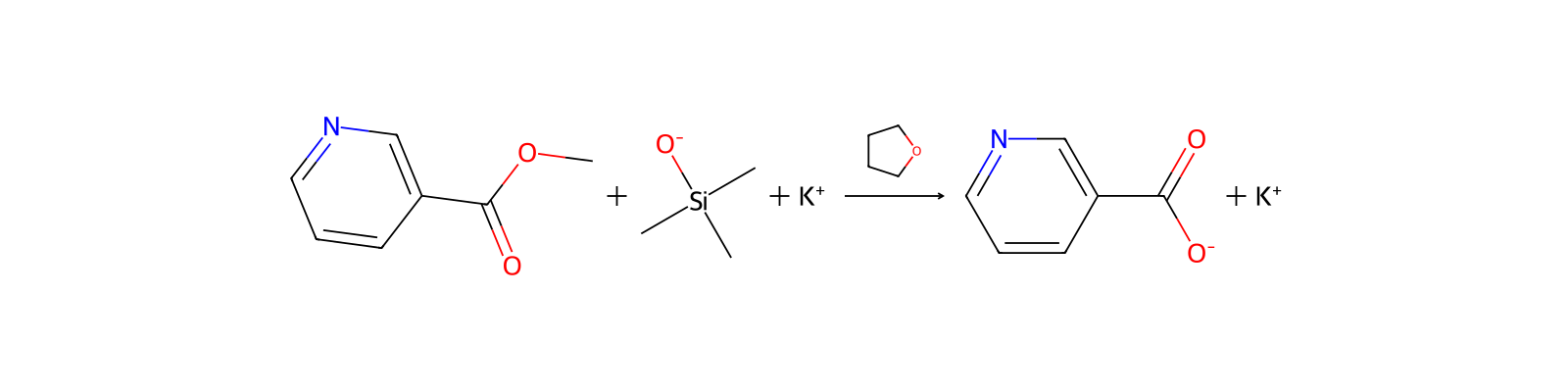
Metabolism/MetabolitesMethyl nicotinate undergoes ester hydrolysis to form nicotinic acid and methanol. The hydrolysis is thought to be mediated by nonspecific α-naphthylacetate-esterase at the dermis layer of the skin.
Absorption, Distribution and Excretion
The presence of methyl group facilitates the penetration of methyl nicotinate through the skin with good lipophilicity, allowing rapid absorption following topical administration. _In vitro_, about 80-90% of the polar compounds methyl nicotinate rapidly penetrated the skin. It was demonstrated in excised skin of hairless mice that methyl nicotinate can effectively bypass the stratum corneum layer of the skin. In humans, nicotinic acid and nicotinamide were shown to be rapidly absorbed from the stomach and intestine via a sodium carrier-mediated mechanism at low concentrations.
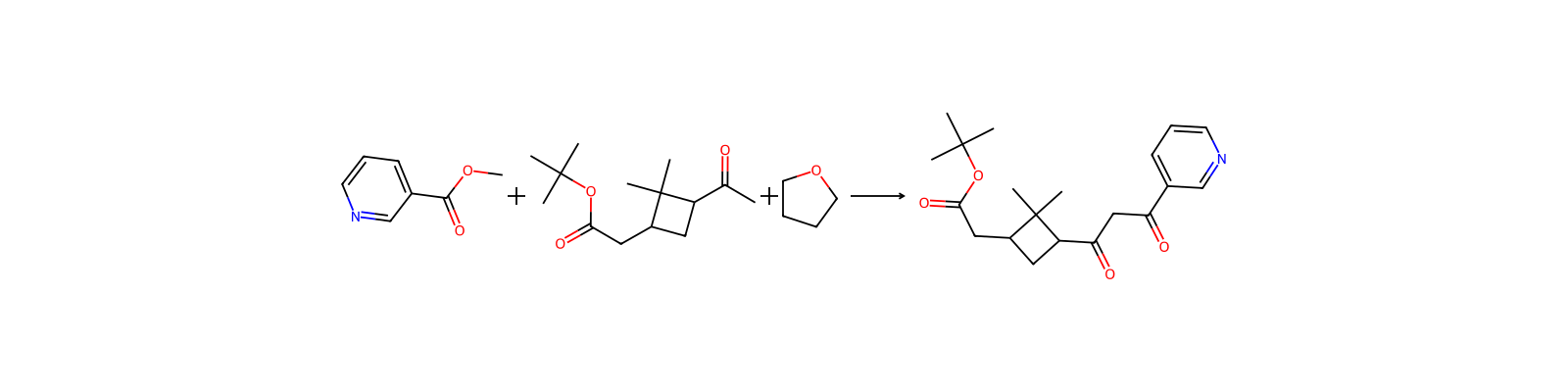
Zugehörige Reaktionen
59


Notizen zur Verbindung
Wird geladen…