StartseiteMCPWorkbenchSkills
StartseiteWorkbenchBenachrichtigungenMein Bereich
llms.txt · MCP-AnleitungDatenschutz · Nutzungsbedingungen · Supportv1.8.0
  1. Startseite
  2. /Verbindung

3,4-Xylidin

3,4-Dimethylaniline

HCID 7248
Neue NotizNeue ReaktionAnfrage stellen
Druckvorschau

Daten werden ergänzt – lade die Seite später neu, um den aktuellen Stand zu sehen

GrundinformationenÜberblickNamen und BezeichnerEigenschaftenSicherheit und RegulatorischesChemie und IndustrieZugehörige ReaktionenNotizen zur Verbindung
TeilstruktursucheÄhnliche Strukturen suchen

Grundinformationen

CAS
95-64-7
Standard-SMILES
Cc1ccc(N)cc1C
InChIKey
DOLQYFPDPKPQSS-UHFFFAOYSA-N
Summenformel
C8H11N
Durchschnittliche Molmasse
121,18 g/mol
Monoisotopische Masse
121,08914935

Überblick

3,4-xylidine appears as pale brown crystals or off-white solid. (NTP, 1992)

Namen und Bezeichner

Bevorzugter Name
3,4-Dimethylaniline
IUPAC
3,4-dimethylaniline
Lokaler Name
3,4-Xylidin
Englischer Name
3,4-Dimethylaniline
Summenformel
C8H11N
Molmasse
121.18

Namen und Synonyme

3,4-Dimethylaniline95-64-73,4-XYLIDINE4-Amino-o-xylene3,4-Dimethylbenzenamine3,4-XylylamineBenzenamine, 3,4-dimethyl-1-Amino-3,4-dimethylbenzene3,4-Dimethylphenylamine3,4-Dimethylaminobenzene4-Amino-1,2-dimethylbenzene3,4-Dimethylbenzeneamine
Weitere Namen anzeigen
AKOS 91143ASYM-O-XYLIDINEAKOS BBS-000036733,4-DitolueneAmine
DTXSID30263083,4-dimethylbenzene-1-amineBenzene, 4-amino-1,2-dimethyl-R27I33AIDTAI3-22779NSC-41800DTXCID406308CHEBI:39901

Datenbank-Bezeichner

CAS
95-64-7
PubChem CID
7248
DTXSID
DTXSID3026308
ChEMBL
CHEMBL1230039
ChEBI
CHEBI:39901
UNII
R27I33AIDT
EC Number
202-437-4
Nikkaji
J357C

Eigenschaften

Berechnete StruktureigenschaftenWird ergänzt

XLogP
2,5
Polarare Oberfläche (TPSA)
26 Ų
H-Brücken-Donoren
1
H-Brücken-Akzeptoren
1
Frei drehbare Bindungen
0
Schwere Atome
9
Formalladung
0
Komplexität
90,6

Experimentelle und physikochemische Eigenschaften

DrugsPharmaceuticals -> Listed in ZINC15
SpringerMaterials Properties13C nuclear magnetic resonance spectrum
LogP · 3 Einträge

log Kow= 1.84

1.84

1.86

Density · 3 Einträge

1.076 at 64 °F (NTP, 1992) - Denser than water; will sink

1.076 @ 18 °C

Relative density (water = 1): 1.07

Color/Form · 2 Einträge

Plates of prisms from petroleum ether

Crystalline solid

Solubility · 5 Einträge

less than 1 mg/mL at 66 °F (NTP, 1992)

Sol in ether, petroleum

Very soluble in ligroin; soluble in ether; slightly soluble in chloroform and water.

Soluble in aromatic solvents.

Solubility in water, g/100ml at 22 °C: 0.38

Flash Point · 2 Einträge

209 °F (NTP, 1992)

98 °C

Boiling Point

Sicherheit und Regulatorisches

Sicherheitsangaben dienen nur zur Orientierung und ersetzen weder das Sicherheitsdatenblatt (SDB) des Lieferanten noch geltende Vorschriften oder eine fachliche Bewertung.

GHS-Klassifizierung

GHS Classification · 6 Einträge

Danger

H301 (96.3%): Toxic if swallowed [Danger Acute toxicity, oral]

P260, P261, P262, P264, P270, P271, P273, P280, P301+P316, P302+P352, P304+P340, P316, P319, P321, P330, P361+P364, P391, P403+P233, P405, and P501 (click each P-code to see the statement)

Aggregated GHS information provided per 54 reports by companies from 11 notifications to the ECHA C&L Inventory. Each notification may be associated with multiple companies.

Warning

H302: Harmful if swallowed [Warning Acute toxicity, oral]

Gefahrenhinweise

Regulatory Information · 3 Einträge

Chemical: Benzenamine, 3,4-dimethyl-

Status: Cease Manufacture Update: 11-05-2012 https://echa.europa.eu/registration-dossier/-/registered-dossier/10998

3,4-Dimethylaniline: Does not have an individual approval but may be used under an appropriate group standard

Other Safety InformationIMAP assessments - Xylidines: Human health tier II assessment
DOT LabelPoison
Fire Hazards · 2 Einträge

This chemical is combustible. (NTP, 1992)

Combustible. Gives off irritating or toxic fumes (or gases) in a fire. Above 98 °C explosive vapour/air mixtures may be formed.

Health Hazards · 1 Eintrag

SYMPTOMS: Symptoms of exposure to this compound may include headaches, drowsiness, cyanosis, mental confusion, convulsions, anorexia, nervous system and blood effects, fatigue, loss of appetite, dizziness, and damage to the lungs, liver and kidneys.

Hazards Summary · 1 Eintrag

Chemie und Industrie

Pharmakologische Informationen

Metabolism/MetabolitesYIELDS 2-AMINO-4,5-DIMETHYLPHENOL, 3,4-DIMETHYLACETANILIDE AND 3,4-DIMETHYLPHENYLSULFAMATE IN RAT. /FROM TABLE/

Verwendung und Herstellung

UsesUsed as a chemical intermediate for the synthesis of riboflavin.
U.S. Imports · 2 Einträge

(1974) 4.99X10+4 GRAMS (PRINCPL CUSTMS DISTS)

(1975) 4.99X10+4 GRAMS (PRINCPL CUSTMS DISTS)

Methods of Manufacturing · 3 Einträge

NITRATION OF O-XYLENE FOLLOWED BY REDUCTION; BROMINATION OF O-XYLENE FOLLOWED BY REACTION WITH AMMONIA

o-Xylene (nitration/nitro reduction)

Soboley and Berezooskii patented the production of 3,4-xylidine by the hydrogenation of 2-chloromethyl-4-nitrotoluene.

General Manufacturing InformationBenzenamine, 3,4-dimethyl-: ACTIVE

Anwendungen

Verwenden3,4-Dimethylaniline is used to study electron donor-acceptor interaction with DCNQ. It is also used as a fine chemical &organic intermediate.

Vor- und nachgelagerte Produkte

Vorgelagerte Rohstoffe

o-XylolChloressigsäure1-(3,4-Dimethylphenyl)ethan-1-onAluminiumchlorid4-Nitrotoluol

Zugehörige Reaktionen

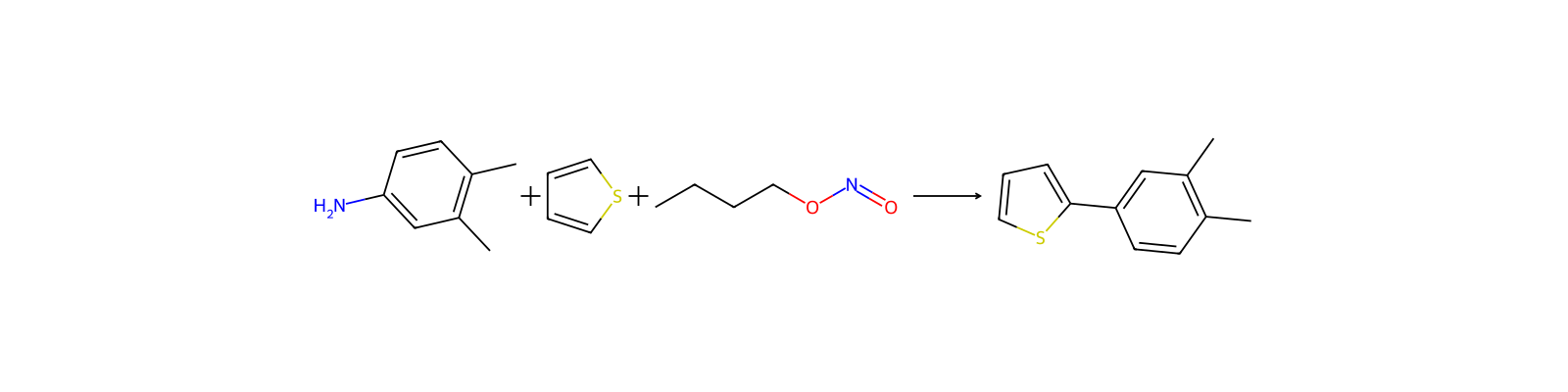
139
Reaktionsaufzeichnung erstellen
Reaktionsgleichung von HRID 2443
HRID 2443als Eduktuspto-grants-1998_03
Reaktionsgleichung von HRID 3023
HRID 3023als Eduktuspto-grants-1998_03
Reaktionsgleichung von HRID 3717
HRID 3717als Eduktuspto-grants-1998_03
Reaktionsgleichung von HRID 46648
HRID 46648als Eduktuspto-grants-1979_11
Reaktionsgleichung von HRID 58597
HRID 58597als Eduktuspto-grants-2016_09
Reaktionsgleichung von HRID 96483
HRID 96483als EduktTraining data from https://doi.org/10.1039/C8SC04228D (2/10)
Reaktionsgleichung von HRID 99053
HRID 99053als EduktTraining data from https://doi.org/10.1039/C8SC04228D (2/10)
Reaktionsgleichung von HRID 100992
HRID 100992als EduktTraining data from https://doi.org/10.1039/C8SC04228D (2/10)
Seite 1 von 18

Notizen zur Verbindung

Wird geladen…

Auf dieser SeiteGrundinformationenÜberblickNamen und BezeichnerEigenschaftenSicherheit und RegulatorischesChemie und IndustrieZugehörige ReaktionenNotizen zur Verbindung
Weitere Aktionen
Neue NotizNeue ReaktionAnfrage stellen
· 3 Einträge

442 °F at 760 mmHg (NTP, 1992)

228 °C @ 760 MM HG

228 °C

DecompositionWHEN HEATED TO DECOMP, XYLIDINES EMIT HIGHLY TOXIC FUMES. /XYLIDINES/
Melting Point · 3 Einträge

124 °F (NTP, 1992)

51 °C

51 °C

Vapor DensityRelative vapor density (air = 1): 4.19
Odor Threshold · 2 Einträge

Odor threshold in air= 1.00X10+12 molecules/cc /Xylidines/

Threshold for xylidine is 0.0240 mg/cu m. /Xylidine/

Physikochemische Eigenschaften

Schmelzpunkt
49 · 49-51 °C(lit.)
Siedepunkt
226 °C · 226 °C(lit.)
Dichte
1.076 · 1.076
Dampfdruck
3.72 Pa · 3.72Pa at 25℃
Brechungsindex
1.5135 · 1.5135 (estimate)
Flammpunkt
209 °F · 209 °F
storage temp.
30 °C · Store below +30°C.
Löslichkeit
0.1 g/mL, · methanol: 0.1 g/mL, clear
pka
1 · pK1:5.17(+1) (25°C)
Aggregatzustand
Crystalline Mass or Crystals
Farbe
Light beige to pink to brown
Wasserlöslichkeit
1 g/L · <1 g/L (24 ºC)
Merck
14 · 14,10084
BRN
507414 · 507414
Henry's Law Constant
5.3 · 5.3×100 mol/(m3Pa) at 25℃, Jayasinghe et al. (1992)
InChI
1S/C8H11N/c1-6-3-4-8(9)5-7(6)2/h3-5H,9H2,1-2H3
InChIKey
DOLQYFPDPKPQSS-UHFFFAOYSA-N
SMILES
Cc1ccc(N)cc1C
LogP
1.8 at · 1.8 at 25℃
CAS Datenbank
95 · 95-64-7(CAS DataBase Reference)
NIST chemische Informationen
3 · Benzenamine, 3,4-dimethyl-(95-64-7)
EPA chemische Informationen
3 · 3,4-Dimethylaniline (95-64-7)

The major hazards encountered in the use and handling of 3,4-xylidine stem from its toxicologic properties. Toxic by all routes (ie, inhalation, ingestion, and dermal absorption), exposure to this crystalline material may occur from its use as a chemical intermediate for the synthesis of riboflavin (vitamin B2). Contact with 3,4-xylidine may cause burns to the skin and eyes. Death is also a possible outcome from exposure. While the OSHA PEL is set at a TWA of 5 ppm, the ACGIH lists xylidine (mixed isomers) on its 1988-1989 Notice of Intended Changes with a proposed TLV of 0.5 ppm, and a designation of "suspected human carcinogen". In activities or situations where over-exposure may occur, wear a self-contained breathing apparatus, and full chemical protective clothing which is specifically recommended by the shipper or manufacturer to prevent skin contact with xylidine. If contact should occur, immediately flush the affected skin or eyes with running water for at least 15 minutes. Remove contaminated clothing and shoes at the site. Do not eat or smoke in xylidine work areas. While xylidine does not ignite easily, it can burn with the production of irritating or poisonous gases. Also, containers may explode violently in the heat of a fire. Fires involving xylidine may be extinguished with dry chemical, CO2, Halon, or standard foam. Water spray if used, should be applied with caution because it may cause frothing. Fight the fire from a maximum distance and dike runoff from fire control water. Xylidine should be stored away from heat, strong oxidizers, and hypochlorite bleaches. Shipping regulations and other DOT regulatory requirements should be consulted before transport. If 3,4-xylidine should spill, carefully shovel the material into clean covered containers (solutions are first diked far ahead, then taken up with sand or other noncombustible absorbent) for later disposal. Incineration is a possible form of disposal for xylidine. Before implementing land disposal of waste 3,4-xylidine, consult with environmental regulatory agencies for guidance.

Reactive GroupAmines, Aromatic
EC ClassificationSymbol: T, N; R: 23/24/25-33-51/53; S: (1/2)-28-36/37-45-61; Note: C
UN ClassificationUN Hazard Class: 6.1; UN Pack Group: II
OSHA Standards · 2 Einträge

Permissible Exposure Limit: Table Z-1 8-hr Time-Weighted Avg: 5 ppm (25 mg/cu m). Skin Designation. /Xylidine/

Vacated 1989 OSHA PEL TWA 2 ppm (10 mg/cu m), skin designation, is still enforced in some states. /Xylidine/

Reactivity Profile · 1 Eintrag

3,4-XYLIDINE ignites on contact with fuming nitric acid (NTP, 1992). Neutralizes acids in exothermic reactions to form salts plus water. May be incompatible with isocyanates, halogenated organics, peroxides, phenols (acidic), epoxides, anhydrides, and acid halides. Flammable gaseous hydrogen may be generated in combination with strong reducing agents, such as hydrides.

Chemical Dangers · 1 Eintrag

Decomposes on burning. This produces toxic and corrosive fumes including nitrogen oxides. Reacts violently with strong oxidants. Reacts with hypochlorites. This produces explosive chloroamines. Reacts with acids, acid anhydrides, acid chlorides and halogens. Attacks plastic and rubber.

Sicherheit und Schutzausrüstung

Fire Fighting · 2 Einträge

Fires involving this material can be controlled with a dry chemical, carbon dioxide or Halon extinguisher. (NTP, 1992)

Use water spray, carbon dioxide, foam, powder.

First Aid Measures · 4 Einträge

Fresh air, rest. Refer for medical attention.

Remove contaminated clothes. Rinse and then wash skin with water and soap. Refer for medical attention .

Rinse with plenty of water for several minutes (remove contact lenses if easily possible).

Rinse mouth. Refer for medical attention .

First Aid · 1 Eintrag

EYES: First check the victim for contact lenses and remove if present. Flush victim's eyes with water or normal saline solution for 20 to 30 minutes while simultaneously calling a hospital or poison control center. Do not put any ointments, oils, or medication in the victim's eyes without specific instructions from a physician. IMMEDIATELY transport the victim after flushing eyes to a hospital even if no symptoms (such as redness or irritation) develop.

Safe StorageSeparated from strong oxidants, acids, acid anhydrides, acid chlorides, hypochlorites, halogens and food and feedstuffs. Well closed. Provision to contain effluent from fire extinguishing. Store in an area without drain or sewer access.
Fire Fighting Procedures · 2 Einträge

USE WATER SPRAY, DRY CHEMICAL, FOAM, OR CO2. WEAR FULL PROTECTIVE CLOTHING. /XYLIDINES/

If material on fire or involved in fire: Extinguish fire using agent suitable for type of surrounding fire. (Material itself does not burn or burns with difficulty.) Use water in flooding quantities as fog. Cool all affected containers with flooding quantities of water. Apply water from as far a distance as possible. /Xylidines/

Cleanup Methods · 2 Einträge

Environmental considerations - land spill: Dig a pit, pond, lagoon, holding area to contain liquid or solid material. /SRP: If time permits, pits, ponds, lagoons, soak holes, or holding areas should be sealed with an impermeable flexible membrane liner./ Dike surface flow using soil, sand bags, foamed polyurethane, or foamed concrete. Absorb bulk liquid with fly ash, cement powder, or commercial sorbents. /Xylidines/

Environmental considerations - water spill: Use natural barriers or oil spill control booms to limit spill travel. Remove trapped material with suction hoses. /Xylidines/

Nonfire Spill Response · 1 Eintrag

SMALL SPILLS AND LEAKAGE: Should a spill occur while you are handling this chemical, FIRST REMOVE ALL SOURCES OF IGNITION, then you should dampen the solid spill material with 60-70% ethanol and transfer the dampened material to a suitable container. Use absorbent paper dampened with 60-70% ethanol to pick up any remaining material. Seal the absorbent paper, and any of your clothes, which may be contaminated, in a vapor-tight plastic bag for eventual disposal. Solvent wash all contaminated surfaces with 60-70% ethanol followed by washing with a soap and water solution. Do not reenter the contaminated area until the Safety Officer (or other responsible person) has verified that the area has been properly cleaned.

Disposal Methods · 2 Einträge

SRP: At the time of review, criteria for land treatment or burial (sanitary landfill) disposal practices are subject to significant revision. Prior to implementing land disposal of waste residue (including waste sludge), consult with environmental regulatory agencies for guidance on acceptable disposal practices.

Disposal methods: incineration. A). Dissolve in such combustible solvent as alcohols, benzene, etc. Spray solvent into the furnace with afterburner and scrubber. B). Pour into a mixture of sand and soda ash (9:1). After mixing, put into a paper carton stuffed full with packing paper to serve as fuel. Burn in the furnace. /Xylidines/

Spillage Disposal · 1 Eintrag

Personal protection: chemical protection suit and filter respirator for organic gases and particulates adapted to the airborne concentration of the substance. Do NOT let this chemical enter the environment. Sweep spilled substance into covered containers.

Preventive Measures · 5 Einträge

SRP: The scientific literature for the use of contact lenses in industry is conflicting. The benefit or detrimental effects of wearing contact lenses depend not only upon the substance, but also on factors including the form of the substance, characteristics and duration of the exposure, the uses of other eye protection equipment, and the hygiene of the lenses. However, there may be individual substances whose irritating or corrosive properties are such that the wearing of contact lenses would be harmful to the eye. In those specific cases, contact lenses should not be worn. In any event, the usual eye protection equipment should be worn even when contact lenses are in place.

Non-impervious clothing which becomes contaminated with xylidine should be removed immediately and not reworn until the xylidine is removed from the clothing. /Xylidines/

Eating and smoking should not be permitted in areas where liquid xylidine is handled, processed, or stored. /Xylidines/

Employees who handle liquid xylidine should wash their hands thoroughly with soap or mild detergent and water before eating, smoking, or using toilet facilities. /Xylidines/

For more Preventive Measures (Complete) data for 3,4-XYLIDINE (7 total), please visit the HSDB record page.

Isolation and EvacuationExcerpt from ERG Guide 153 [Substances - Toxic and/or Corrosive (Combustible)]:
Eye PreventionWear safety spectacles or eye protection in combination with breathing protection.

Toxikologische Informationen

Environmental Fate · 3 Einträge

TERRESTRIAL FATE: Based on a recommended classification scheme(1), an estimated Koc value of 240(SRC), determined from a measured log Kow of 1.84(2) and a recommended regression-derived equation(3), indicates that 3,4-xylidine will have moderate mobility in soil(SRC). However, anilines are expected to bind strongly to humus or soil organic matter in soils due to the high reactivity of the aromatic amino group(4,5), suggesting that mobility may be much lower in some soils(SRC). Volatilization of 3,4-xylidine may be important from moist soil surfaces(SRC) given a measured Henry's Law constant of 1.85X10⁻⁵ atm-cu m/mole(2). Based on limited aqueous screening study data, 3,4-xylidine may biodegrade under aerobic conditions in soil(SRC); 3,4-xylidine, present at 30 mg/l, reached 7.1% of the theoretical BOD in 4 weeks using an activated sludge inoculum(6).

AQUATIC FATE: Based on a recommended classification scheme(1), an estimated Koc value of 240(SRC), determined from a measured log Kow of 1.84(2) and a recommended regression-derived equation(1), indicates that 3,4-xylidine should not adsorb to suspended solids and sediment in water(SRC). However, aromatic amine groups are recognized as having a strong affinity to organic carbon, suggesting that this compound may bind strongly to suspended organic material in water(3,4). 3,4-Xylidine may volatilize from water surfaces(1,SRC) based on a measured Henry's Law constant of 1.85X10⁻⁵ atm-cu m/mole(2). Estimated volatilization half-lives for a model river and model lake are 2 and 21 days, respectively(1,SRC). According to a classification scheme(5), measured BCF values of 1.9-3.3 and <10(6), measured in carp, suggest that bioconcentration in aquatic organisms is low(SRC). Based on limited aqueous screening study data, 3,4-xylidine may biodegrade slowly under aerobic conditions in water(SRC); 3,4-xylidine, present at 30 mg/l, reached 7.1% of the theoretical BOD in 4 weeks using an activated sludge inoculum(6).

ATMOSPHERIC FATE: According to a model of gas/particle partitioning of semivolatile organic compounds in the atmosphere(1), 3,4-xylidine, which has a measured vapor pressure of 0.028 mm Hg at 25 °C(2), should exist solely as a vapor in the ambient atmosphere. Vapor-phase 3,4-xylidine is degraded in the atmosphere by reaction with photochemically-produced hydroxyl radicals(SRC); the half-life for this reaction in air is estimated to be about 2 hours(3,SRC).

Exposure RoutesThe substance can be absorbed into the body in hazardous amounts by inhalation, through the skin and by ingestion.
Signs and Symptoms · 3 Einträge

Dizziness. Drowsiness. Headache. Nausea.

MAY BE ABSORBED! See Ingestion.

Blue lips, fingernails and skin. Dizziness. Drowsiness. Headache. Nausea. Unconsciousness.

Effluent Concentrations3,4-Xylidine was identified at unreported concentrations in Latakia tobacco smoke and in a steam distillate of cured Latakia tobacco(1).
ICSC Environmental DataThe substance is toxic to aquatic organisms. It is strongly advised not to let the chemical enter into the environment.
Medical Surveillance · 1 Eintrag

Initial medical examination: A complete history & physical examination. The purpose is to detect existing conditions that might place the exposed employee at increased risk, and to establish a baseline for future health monitoring. Exam of the blood, lung, liver, kidneys, and cardiovascular system should be stressed. ... Periodic medical exam ... should be repeated on an annual basis. /Xylidines/

Soil Adsorption/Mobility · 1 Eintrag

The Koc of 3,4-xylidine is estimated as approximately 240(SRC), using a measured log Kow of 1.84(1) and a regression-derived equation(2,SRC). According to a recommended classification scheme(3), this estimated Koc value suggests that 3,4-xylidine has moderate mobility in soil(SRC). However, anilines are expected to bind stongly to humus or soil organic matter in soils due to the high reactivity of the aromatic amino group(4,5). Low adsorption is observed at a neutral pH with pure clay minerals or soils for substituted anilines(5).

Artificial Pollution Sources3,4-Xylidine's production and use in the manufacture of synthetic riboflavin(1) may result in its release to the environment through various waste streams(SRC).
Environmental Biodegradation · 1 Eintrag

3,4-Xylidine, present at 30 mg/l, reached 7.1% of the theoretical BOD in 4 weeks using an activated sludge inoculum(1). In the Japanese MITI test, 3,4-xylidine (present at 100 mg/l) was classified as slow to biodegrade indicating that only 0-29% of the theoretical BOD was reached in 2 weeks using an activated sludge inoculum(2). 3,4-Xylidine, present initially at 252 mg/L, was removed at a biodegradation rate of 30 mg COD/g-hr by an activated sludge inoculum(3). E.coli converted 3,4-xylidine to the corresponding (phenylazo)naphthol in the presence of nitrate with this reaction proceeding within 24 hours(4).

Environmental Bioconcentration · 1 Eintrag

BCF values of 1.9-3.3 and <10 were measured in carp for 3,4-xylidine at 1 and 0.1 mg/l, respectively, using a flow through system(1). According to a classification scheme(3), these BCF values suggest that bioconcentration in aquatic organisms is low(SRC).

Volatilization from Water/Soil · 1 Eintrag

A Henry's Law constant of 1.85X10⁻⁵ atm-cu m/mole was measured for 3,4-xylidine(1). This value indicates that 3,4-xylidine will volatilize from water surfaces(2,SRC). Based on this Henry's Law constant, the estimated volatilization half-life from a model river (1 m deep, flowing 1 m/sec, wind velocity of 3 m/sec) is estimated as approximately 2 days(2,SRC). The estimated volatilization half-life from a model lake (1 m deep, flowing 0.05 m/sec, wind velocity of 0.5 m/sec) is estimated as approximately 21 days(2,SRC) although adsorption to organic material in water may attenuate this process(SRC). 3,4-Xylidine's Henry's Law constant(1,SRC) indicates that volatilization from moist soil surfaces may occur(SRC).

Non-Human Toxicity Excerpts · 5 Einträge

... 3,4-DIMETHYLANILINE ... CARCINOGENIC, BECAUSE ... /IT/ INDUCED PITUITARY ADENOMAS IN BUFFALO RATS.

3,4-DIMETHYLANILINE WAS TESTED FOR ITS ABILITY TO MUTATE SALMONELLA TYPHIMURIUM & WAS FOUND TO BE WEAKLY MUTAGENIC (LESS THAN 150 REVERTANTS/UMOLE).

THE ORAL LD50 VALUES IN RATS FOR DI-SUBSTITUTED ANILINES INCR COMPARED TO MONO-SUBSTITUTED ANILINES. /SUBSTITUTED ANILINES/

In the Rec-assay using Bacillus subtillis, the 2,3-, 2,5-, 2,6-, 3,4-, and 3,5-isomers were negative; 2,4-xylidine was positive.

For more Non-Human Toxicity Excerpts (Complete) data for 3,4-XYLIDINE (6 total), please visit the HSDB record page.

Sicherheitsdaten

F
8
wgk
2
tsca
TSCA listed
ridadr
UN 3452 6.1/PG 2
hs_code
29214910
RTECS-Nr.
ZE9450000
risk_code
23/24/25-33-51/53
hazard_code
T,N
safety_code
28-36/37-45-61-28A
hazard_class
6.1
packing_group
II
Speicherklasse
6.1A - Combustible acute toxic Cat. 1 and 2very toxic hazardous materials
Giftige Stoffe Daten
95-64-7(Hazardous Substances Data)
Hazard Classifications
Acute Tox. 3 DermalAcute Tox. 3 InhalationAcute Tox. 3 OralAquatic Chronic 2STOT RE 2
Polyphosphorsuren
Natriumcyanid
Hydrogenchlorid
Wasserstoff
Bis(chlormethyl)ether
Hydroxylammoniumchlorid
Kaliumacetat
Propan-2-ol
Schwefelsure

Nachgelagerte Produkte

Vitamin B22,3-Dihydroxy-6,7-dimethylquinoxaline5,6-Dimethylbenzothiazol-2-ylamin4,5-Dimethyl-o-phenylendiaminRiboflavinPendimethalin2-Nitro-4,5-xylidin2,5-Xylidin3,4-Dimethylbenzoesure4-Chloro-6,7-dimethylquinoline1,2-Dimethyl-4-fluorobenzene

Ergänzende Hinweise

DefinitionChEBI: A primary arylamine that is aniline in which the hydrogens at the 3- and 4-positions are replaced by methyl groups. A low-melting, crystalline solid, it is used in the production of vitamin B2, dyes, pesticides and other chemicals.