
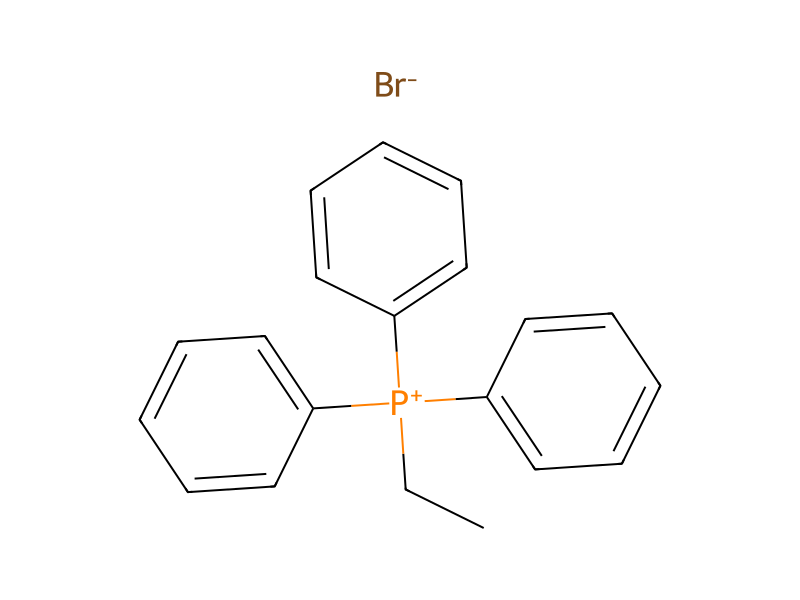
Grundinformationen
- Standard-SMILES
CC[P+](c1ccccc1)(c1ccccc1)c1ccccc1.[Br-]- InChIKey
JHYNXXDQQHTCHJ-UHFFFAOYSA-M- Summenformel
- C20H20BrP
- Durchschnittliche Molmasse
- 371,2 g/mol
- Monoisotopische Masse
- 370,04859937
Namen und Bezeichner
- Bevorzugter Name
- Phosphonium, ethyltriphenyl-, bromide (1:1)
- IUPAC
- ethyl(triphenyl)phosphanium bromide
- Lokaler Name
- Ethyltriphenylphosphoniumbromid
- Englischer Name
- Ethyltriphenylphosphonium bromide
- Summenformel
- C20H20BrP
- Molmasse
- 371.25
Namen und Synonyme
Ethyltriphenylphosphonium bromide1530-32-1Triphenylethylphosphonium bromidePhosphonium, ethyltriphenyl-, bromideEthyltriphenylfosfonium bromidePhosphonium, ethyltriphenyl-, bromide (1:1)R85V84UL5Vethyl(triphenyl)phosphonium bromideEINECS 216-223-3NSC-60660TEP (ONIUM COMPOUND)DTXSID90883687
Weitere Namen anzeigen
TEPETPPBEthyl triphenyl phosphine bromideethyltriphenylphosphanium bromideAD182tbepbETPPBREthyl triphenyl phoAntioxidants Impurity 15
EC 216-223-3NSC 60660J237.373DRefChem:862303DTXCID501023191216-223-3Ethyl triphenyl phosphonium bromideEthyl triphenylphosphonium Bromide
Datenbank-Bezeichner
- CAS
1530-32-1- PubChem CID
- 73727
- DTXSID
DTXSID90883687- ChEMBL
CHEMBL353497- UNII
- R85V84UL5V
- EC Number
- 216-223-3
Eigenschaften
Berechnete Struktureigenschaften
- Polarare Oberfläche (TPSA)
- 0 Ų
- H-Brücken-Donoren
- 0
- H-Brücken-Akzeptoren
- 1
- Frei drehbare Bindungen
- 4
- Schwere Atome
- 22
- Formalladung
- 0
- Komplexität
- 247
Experimentelle und physikochemische Eigenschaften
Physical DescriptionDry Powder
Physikochemische Eigenschaften
- Schmelzpunkt
- 203 · 203-205 °C(lit.)
- Siedepunkt
- 240 ℃[at · 240℃[at 101 325 Pa]
- Dichte
- 1.38 · 1.38[at 20℃]
- Dampfdruck
- 0 · 0-0.1Pa at 20-25℃
- Flammpunkt
- 200 °C · 200 °C
- storage temp.
- Inert atmosphere,Room Temperature
- Löslichkeit
- 174 g/l · 174g/l soluble
- Aggregatzustand
- Crystalline Powder
- Farbe
- White to off-white
- Wasserlöslichkeit
- 120 g/L · 120 g/L (23 ºC)
- BRN
- 3599630 · 3599630
- InChI
- 1S/C20H20P.BrH/c1-2-21(18-12-6-3-7-13-18,19-14-8-4-9-15-19)20-16-10-5-11-17-20;/h3-17H,2H2,1H3;1H/q+1;/p-1
- InChIKey
- JHYNXXDQQHTCHJ-UHFFFAOYSA-M
- SMILES
- [Br-].CC[P+](c1ccccc1)(c2ccccc2)c3ccccc3
- LogP
- -0.69 · -0.69--0.446 at 35℃
- CAS Datenbank
- 1530 · 1530-32-1(CAS DataBase Reference)
- EPA chemische Informationen
- Phosphonium, ethyltriphenyl-, bromide (1530-32-1)
Sicherheit und Regulatorisches
GHS-Klassifizierung
GHS Classification
This chemical does not meet GHS hazard criteria for 1% (6 of 577) of reports.
Danger
H301 (46.4%): Toxic if swallowed [Danger Acute toxicity, oral]
P260, P261, P264, P264+P265, P270, P271, P273, P280, P301+P316, P301+P317, P302+P352, P304+P340, P305+P351+P338, P305+P354+P338, P317, P319, P321, P330, P332+P317, P337+P317, P362+P364, P391, P403+P233, P405, and P501 (click each P-code to see the statement)
Aggregated GHS information provided per 577 reports by companies from 29 notifications to the ECHA C&L Inventory. Each notification may be associated with multiple companies.
Gefahrenhinweise
Regulatory Information
Phosphonium, ethyltriphenyl-, bromide (1:1) is listed on the EPA's Chemical Data Reporting (CDR) system. Manufacturers and importers of Phosphonium, ethyltriphenyl-, bromide (1:1) are required to report information about their production and use of this chemical to the EPA under the Toxic Substances Control Act (TSCA). (40 eCFR Part 711)
PMN - indicates a commenced PMN (Pre-Manufacture Notices) substance.
Status: Active Update: 22-06-2021 https://echa.europa.eu/registration-dossier/-/registered-dossier/5487
Ethyltriphenylphosphonium bromide: Does not have an individual approval but may be used under an appropriate group standard
Hazard Classes and CategoriesAcute Tox. 3 (46.4%)
Sicherheitsdaten
- wgk
- 2
- tsca
- TSCA listed
- ridadr
- UN 3077 9/PG 3
- hs_code
- 29310095
- risk_code
- 22-51/53-36/37/38-21/22
- hazard_code
- Xn,N,Xi
- safety_code
- 61-36/37/39-26-36
- hazard_class
- 6.1
- packing_group
- III
- Speicherklasse
- 6.1D - Non-combustible acute toxic Cat.3toxic hazardous materials or hazardous materials causing chronic effects
- Hazard Classifications
- Acute Tox. 3 OralAquatic Chronic 3Eye Dam. 1
Chemie und Industrie
Verwendung und Herstellung
U.S. Production2023: <75,000 lb
Industry UsesOther
General Manufacturing Information
Plastics Material and Resin Manufacturing
Phosphonium, ethyltriphenyl-, bromide (1:1): ACTIVE
Anwendungen
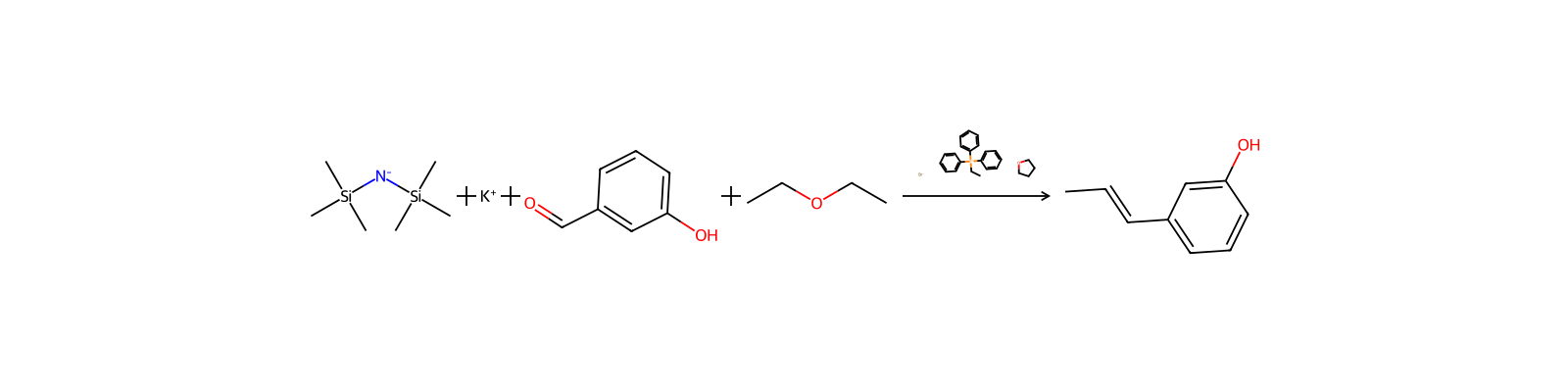
VerwendenEthyltriphenylphosphonium Bromide is used as a wittig reagent. Ethyltriphenylphosphonium Bromide and other phosphonium salts show antiviral activity.
Vor- und nachgelagerte Produkte
Vorgelagerte Rohstoffe
Nachgelagerte Produkte
Anbieter50 Anbieter
国药集团化学试剂有限公司86-21-63210123 · [email protected]
梯希爱(上海)化成工业发展有限公司021-67121386 · [email protected]
上海阿拉丁生化科技股份有限公司400-6206333 13167063860 · [email protected]
INTATRADE GmbH+49 3493/605464 · [email protected]
爱斯特(成都)生物制药股份有限公司+86-28-85122536 85324413 · [email protected]
北京安司莫森技术有限公司010-82954736 13391601435 · [email protected]
韶远科技(上海)有限公司021-50795510 4000665055 · [email protected]
科瑞迪化学400-821-5857 021-64326257 · [email protected]
杭州瑞科化工有限公司+86 0571 88254703 · [email protected]
上海将来实业股份有限公司400-0066400 13621662912 · [email protected]
Syntechem Co.,Ltd[email protected]
上海迈瑞尔生化科技有限公司4006356688 18621169109 · [email protected]
宁波亿诺化学品有限公司86-574-27787657 · [email protected]
北京东华力拓科技发展有限公司010-88425576 · [email protected]
阿法埃莎(中国)化学有限公司400-6106006 · [email protected]
上海德默医药科技有限公司400-021-7337 2355568890 · [email protected]
安耐吉化学&3A(安徽泽升科技股份有限公司)400-0056266 · [email protected]
石家庄斯迪亚诺精细化工有限公司0311-89250318 13582355795 · [email protected]
上海柏卡化学技术有限公司400-026-1533/(021) 6478-0600 · [email protected]
上海瀚鸿科技股份有限公司021-54306202 13764082696 · [email protected]
上海景颜化工科技有限公司13817811078 · [email protected]
嘉兴市艾森化工有限公司0573-85285100 18627885956 · [email protected]
维赛诺化学技术(北京)有限公司13811761079 · [email protected]
上海隆盛化工有限公司58099637 13585536065 · [email protected]
上海长根化学科技有限公司021-69106814 13917161715
武汉丰泰威远科技有限公司027-87465837 19945049750 · [email protected]
上海忆嵘生物科技有限公司18049974220 · [email protected]
孝感深远化工有限公司15527621225; 15527621225 · [email protected]
山东西亚化学有限公司13355009207 13355009207 · [email protected]
唐山默内德贸易有限公司0315-8309571 15633399667 · [email protected]
玛雅试剂+86 (573) 82222445 (0)18006601000 452520369 · [email protected]
四川库利南科技有限公司400-1166-196 18981987031 · [email protected]
天津希恩思生化科技有限公司400 638 7771 · [email protected]
北京泰亚杰科技有限公司021-33690831-8001 13552411790;18616022633 · [email protected]
艾科试剂4008-755-333 18080918076 · [email protected]
上海思域化工科技有限公司86-21-34053660 · [email protected]
苏州思变化学技术有限公司0512-65617459 18915409046 · [email protected]
赛默飞世尔科技(中国)有限公司800-810-5118 · [email protected]
天津尚德药缘科技有限公司13132578992 · [email protected]
上海遐瑞医药科技有限公司+86 21 61551611
南京诺利斯医药科技有限公司13901585132 · [email protected]
上海健超生物科技有限公司150-2103-5486 18017383231 · [email protected]
TCI AMERICA800-4238616 · [email protected]
TOKYO CHEMICAL INDUSTRY CO., LTD.03-36680489 · [email protected]
TCI Europe320-37350700 · [email protected]
上海贤鼎生物科技有限公司4009209199 · [email protected]
深圳振强药物研发有限公司0755-66853366 13670046396 · [email protected]
深圳康特腾科技有限公司86-0755-86635001 · [email protected]
越林试剂021-62960152 · [email protected]
无锡市乾丰化工科技有限公司0510-82860650 · [email protected]
Zugehörige Reaktionen
151





Verknüpfte Notizen
Wird geladen…