
α,α,α-Trifluor-p-tolylisocyanat
4-(Trifluoromethyl)phenyl isocyanate
Daten werden ergänzt – lade die Seite später neu, um den aktuellen Stand zu sehen
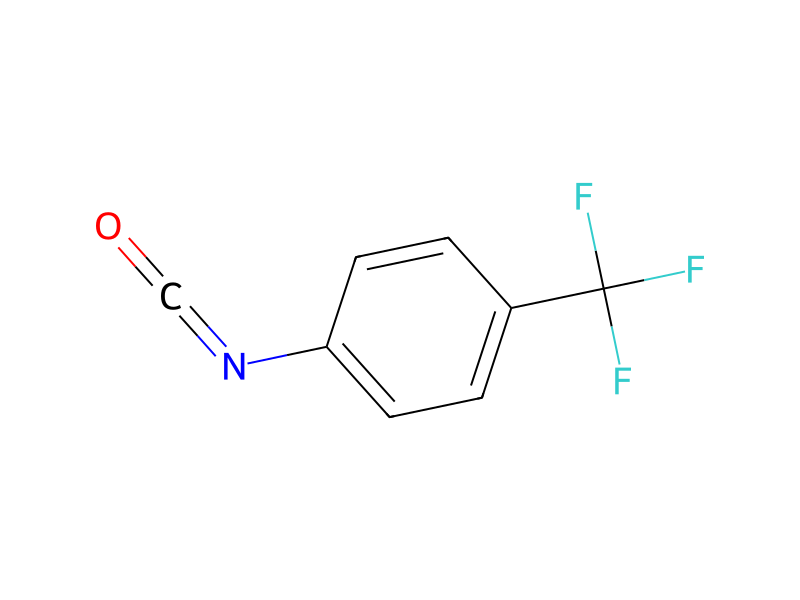
Grundinformationen
- CAS
1548-13-6- Standard-SMILES
O=C=Nc1ccc(C(F)(F)F)cc1- InChIKey
QZTWVDCKDWZCLV-UHFFFAOYSA-N- Summenformel
- C8H4F3NO
- Durchschnittliche Molmasse
- 187,12 g/mol
- Monoisotopische Masse
- 187,02449841
Namen und Bezeichner
- Bevorzugter Name
- 4-(Trifluoromethyl)phenyl isocyanate
- IUPAC
- 1-isocyanato-4-(trifluoromethyl)benzene
- Lokaler Name
- α,α,α-Trifluor-p-tolylisocyanat
- Englischer Name
- 4-(Trifluoromethyl)phenyl isocyanate
- Summenformel
- C8H4F3NO
- Molmasse
- 187.12
Namen und Synonyme
4-(Trifluoromethyl)phenyl isocyanateRefChem:5171651548-13-61-isocyanato-4-(trifluoromethyl)benzene4-(Trifluoromethyl)phenylisocyanatealpha,alpha,alpha-Trifluoro-p-tolyl isocyanate4-Trifluoromethylphenyl isocyanateBenzene, 1-isocyanato-4-(trifluoromethyl)-MFCD00002028Trifluoromethylphenyl isocyanate1-isocyanato-4-trifluoromethyl-benzene4-(trifluoromethyl)benzenisocyanate
Weitere Namen anzeigen
4-ISOCYANATOBENZYLTRIFLUORIDEà,à,à-trifluoro-p-tolyl isocyanateα,α,α-trifluoro-p-tolyl isocyanate4-(TRIFLUOROMETHYL)PHENYL ISOCYABATEp-Trifluoromethylphenylisocyanate,99%4-(TRIFLUOROMETHYL)PHENYL ISOCYANATE54-(Trifluoromethyl)phenylisocyanate97%
4-Isocyanatobenzotrifluoridep-TrifluoromethylphenylisocyanateEINECS 216-284-64-(trifluoro-methyl)phenyl isocyanateIsocyanic Acid 4-(Trifluoromethyl)phenyl Estertrifluoro-p-tolyl isocyanatepara-IsocyanatbenzotrifluoridSCHEMBL160983
Datenbank-Bezeichner
- CAS
1548-13-6- PubChem CID
- 73768
- DTXSID
DTXSID20935067- EC Number
- 216-284-6
- Nikkaji
- J206.772B
Eigenschaften
Berechnete StruktureigenschaftenWird ergänzt
- XLogP
- 3,6
- Polarare Oberfläche (TPSA)
- 29,4 Ų
- H-Brücken-Donoren
- 0
- H-Brücken-Akzeptoren
- 5
- Frei drehbare Bindungen
- 1
- Schwere Atome
- 13
- Formalladung
- 0
- Komplexität
- 212
Experimentelle und physikochemische Eigenschaften
SpringerMaterials PropertiesChemical shift
Physikochemische Eigenschaften
- Schmelzpunkt
- 58.5 °C · 58.5°C
- Siedepunkt
- 58 · 58-59 °C10 mm Hg(lit.)
- Dichte
- 1.31 g/mL · 1.31 g/mL at 25 °C(lit.)
- Brechungsindex
- 20 · n20/D 1.471
- Flammpunkt
- 69 °C · 69 °C
- storage temp.
- 2 · 2-8°C
- Aggregatzustand
- liquid
- Farbe
- colorless
- Wichte
- 1.31 · 1.31
- Wasserlöslichkeit
- It hydrolyzes in water.
- BRN
- 881041 · 881041
- CAS Datenbank
- 1548 · 1548-13-6(CAS DataBase Reference)
- EPA chemische Informationen
Sicherheit und Regulatorisches
Sicherheitsangaben dienen nur zur Orientierung und ersetzen weder das Sicherheitsdatenblatt (SDB) des Lieferanten noch geltende Vorschriften oder eine fachliche Bewertung.
GHS-Klassifizierung
GHS Classification
This chemical does not meet GHS hazard criteria for 44.6% (37 of 83) of reports.
Danger
H302 (48.2%): Harmful if swallowed [Warning Acute toxicity, oral]
P233, P260, P261, P264, P264+P265, P270, P271, P280, P284, P301+P317, P302+P352, P304+P340, P305+P351+P338, P317, P319, P321, P330, P332+P317, P337+P317, P342+P316, P362+P364, P403, P403+P233, P405, and P501 (click each P-code to see the statement)
Aggregated GHS information provided per 83 reports by companies from 7 notifications to the ECHA C&L Inventory. Each notification may be associated with multiple companies.
Gefahrenhinweise
Hazard Classes and CategoriesAcute Tox. 4 (48.2%)
Sicherheitsdaten
- F
- 10-21
- wgk
- 3
- ridadr
- UN 3382 6.1/PG 1
- hs_code
- 29291090
- risk_code
- 20/21/22-36/37/38-42
- hazard_code
- Xn,T
- hazard_note
- Toxic/Lachrymatory/Keep Cold
- safety_code
- 26-36/37/39
- hazard_class
- 6.1
- packing_group
- II
Chemie und Industrie
Anwendungen
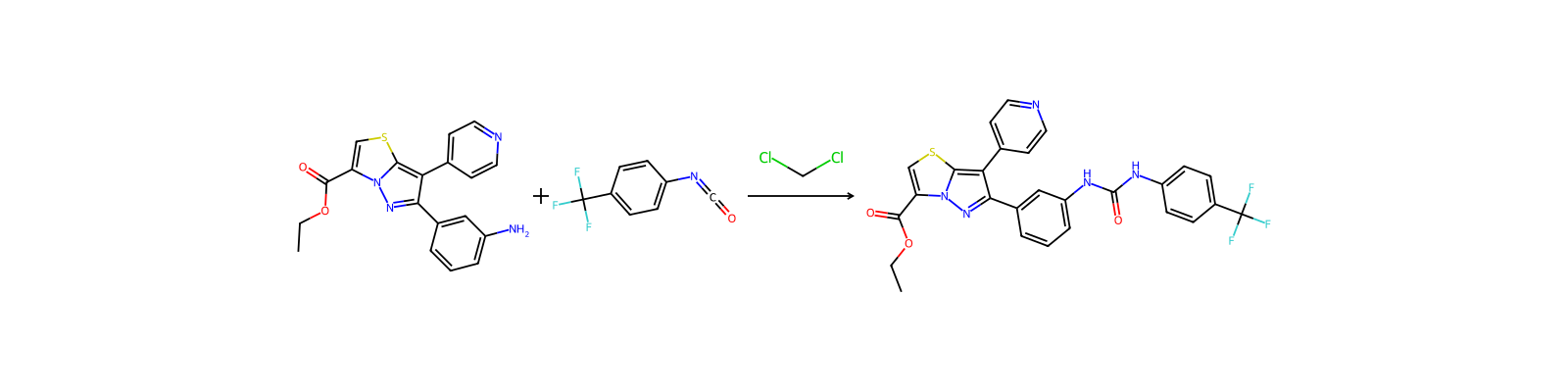
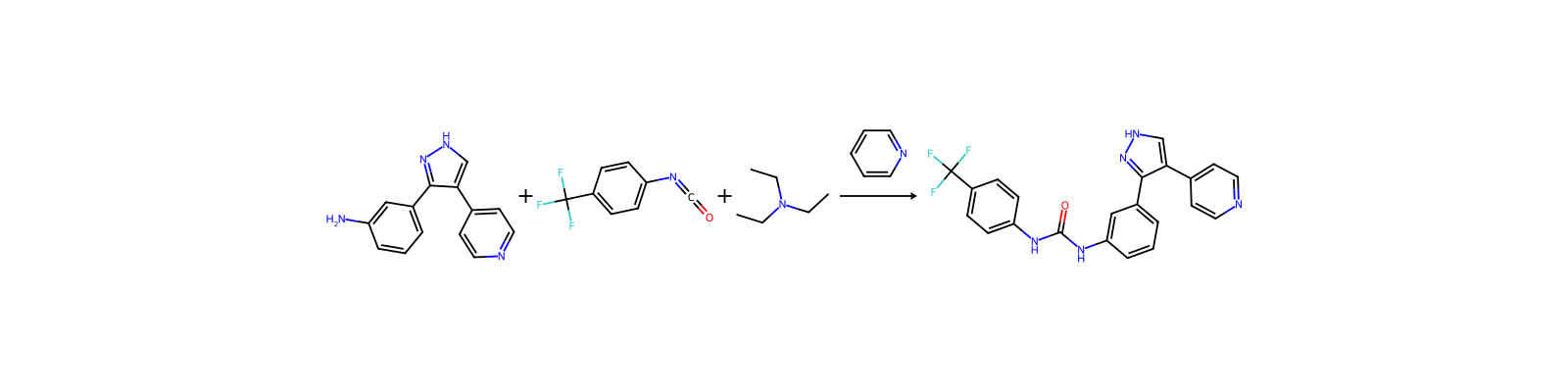
Verwenden4-(Trifluoromethyl)phenyl isocyanate has been used in the synthesis of fluorescent photoinduced electron transfer (PET) chemosensors and 2-ethyl-6-[(4-trifluoromethylphenylcarbamoyl)hydrazino]-benzo[de]iso-quinoline-1,3-dione, an amidourea-based sensor for anions. It has also been used in the synthesis of 1,8-naphthalimide based colorimetric and fluorescent sensor for anions.
Vor- und nachgelagerte Produkte
Vorgelagerte Rohstoffe
Nachgelagerte Produkte
Zugehörige Reaktionen
217




Notizen zur Verbindung
Wird geladen…