
4-(1,1-Dimethylethyl)-1,2-benzoldiol
4-tert-Butylcatechol
Daten werden ergänzt – lade die Seite später neu, um den aktuellen Stand zu sehen

Grundinformationen
- CAS
98-29-3- Standard-SMILES
CC(C)(C)c1ccc(O)c(O)c1- InChIKey
XESZUVZBAMCAEJ-UHFFFAOYSA-N- Summenformel
- C10H14O2
- Durchschnittliche Molmasse
- 166,22 g/mol
- Monoisotopische Masse
- 166,09937969
Namen und Bezeichner
- Bevorzugter Name
- 4-tert-Butylcatechol
- IUPAC
- 4-tert-butylbenzene-1,2-diol
- Lokaler Name
- 4-(1,1-Dimethylethyl)-1,2-benzoldiol
- Englischer Name
- 4-tert-Butylcatechol
- Summenformel
- C10H14O2
- Molmasse
- 166.22
Namen und Synonyme
4-tert-Butylcatechol98-29-3p-tert-Butylcatecholp-tert-Butyl catecholSynox TBC1,2-Benzenediol, 4-(1,1-dimethylethyl)-4-tert-butyl catecholDTXSID5024687NSC-53109A069144KRDTXCID804687para-tert-butyl catechol
Weitere Namen anzeigen
TBC4-tbcPTBC4-TERT-BUTYL-1,2-BENZENEDIOLT-BUTYL CATECHOLP-T-BUTYLCATECHOLp-tert-Butylpyrocatechol
4-tertiary butyl catecholRefChem:858183202-653-94-(tert-butyl)benzene-1,2-diol4-tert-butylbenzene-1,2-diol4-tert-Butylpyrocatechol4-T-BUTYLCATECHOL4-t-Butylpyrocatechol
Datenbank-Bezeichner
- CAS
98-29-3- PubChem CID
- 7381
- DTXSID
DTXSID5024687- ChEMBL
CHEMBL220845- UNII
- 9A069144KR
- EC Number
- 202-653-9
- Nikkaji
- J21.591K
Eigenschaften
Berechnete StruktureigenschaftenWird ergänzt
- XLogP
- 2,7
- Polarare Oberfläche (TPSA)
- 40,5 Ų
- H-Brücken-Donoren
- 2
- H-Brücken-Akzeptoren
- 2
- Frei drehbare Bindungen
- 1
- Schwere Atome
- 12
- Formalladung
- 0
- Komplexität
- 148
Experimentelle und physikochemische Eigenschaften
Chemical ClassesOther Classes -> Phenols
Density1.0496 @25 °C
Flash Point130 °C
Endocrine DisruptorsPotential endocrine disrupting compound
Boiling Point285 °C @760 [mm Hg]
Melting Point52 °C
Odor ThresholdOdor Threshold = 1.0 mg/l (detection)
Vapor Pressure
0.0028 [mmHg]
0.0028 [mm Hg] @25 °C
Food Contact SubstancesFCS -> FDA Inventory of Food Contact Substances Listed in 21 CFR
Physical Description
Liquid; Dry Powder; Liquid; Other Solid; CBI
White solid; [CHEMINFO] White or tan, odorless crystalline solid; [MSDSonline]
Collision Cross Section139.3 Ų [M-H]- [CCS Type: DT; Buffer gas: N2; Ionization: ESI-; Dataset: TOXCAST; Source Identifier: DTXSID5024687]
Physikochemische Eigenschaften
- Schmelzpunkt
- 52 · 52-55 °C(lit.)
- Siedepunkt
- 285 °C · 285 °C(lit.)
- Dichte
- 1.049 · 1.049
- Dampfdruck
- 1 hPa · <1 hPa (25 °C)
- Brechungsindex
- 20 · n20/D 1.508
- Flammpunkt
- 230 °F · >230 °F
- storage temp.
- 30 °C · Store below +30°C.
- Löslichkeit
- 1 g/10 · methanol: soluble1g/10 mL, clear, colorless to slightly yellow
- pka
- 9.92 · 9.92±0.10(Predicted)
- Aggregatzustand
- powder to lump
- Farbe
- White to Light yellow to Light red
- Geruch (Odor)
- 10 %indipropylene · at 10.00%indipropylene glycol. phenolic
- Wasserlöslichkeit
- 0.2 g/100 · 0.2 g/100 mL (25 ºC)
- BRN
- 2043335 · 2043335
- InChI
- 1S/C10H14O2/c1-10(2,3)7-4-5-8(11)9(12)6-7/h4-6,11-12H,1-3H3
- InChIKey
- XESZUVZBAMCAEJ-UHFFFAOYSA-N
- SMILES
- CC(C)(C)c1ccc(O)c(O)c1
- LogP
- 1.98 at · 1.98 at 25℃
- CAS Datenbank
- 98 · 98-29-3(CAS DataBase Reference)
- NIST chemische Informationen
- 1 · 1,2-Benzenediol, 4-(1,1-dimethylethyl)-(98-29-3)
- EPA chemische Informationen
- p-tert-Butylcatechol (98-29-3)
Sicherheit und Regulatorisches
Sicherheitsangaben dienen nur zur Orientierung und ersetzen weder das Sicherheitsdatenblatt (SDB) des Lieferanten noch geltende Vorschriften oder eine fachliche Bewertung.
GHS-Klassifizierung
GHS Classification
This chemical does not meet GHS hazard criteria for 1% (27 of 2665) of reports.
Danger
H302 (87.7%): Harmful if swallowed [Warning Acute toxicity, oral]
P260, P261, P262, P264, P264+P265, P270, P272, P273, P280, P301+P317, P301+P330+P331, P302+P352, P302+P361+P354, P304+P340, P305+P354+P338, P316, P317, P321, P330, P333+P317, P361+P364, P362+P364, P363, P391, P405, and P501 (click each P-code to see the statement)
Aggregated GHS information provided per 2665 reports by companies from 36 notifications to the ECHA C&L Inventory. Each notification may be associated with multiple companies.
Danger
Gefahrenhinweise
Regulatory Information
Chemical: 1,2-Benzenediol, 4-(1,1-dimethylethyl)-
1,2-Benzenediol, 4-(1,1-dimethylethyl)- is listed on the EPA's Chemical Data Reporting (CDR) system. Manufacturers and importers of 1,2-Benzenediol, 4-(1,1-dimethylethyl)- are required to report information about their production and use of this chemical to the EPA under the Toxic Substances Control Act (TSCA). (40 eCFR Part 711)
Status: Active Update: 10-06-2022 https://echa.europa.eu/registration-dossier/-/registered-dossier/13800
4-t-Butylpyrocatechol: Does not have an individual approval but may be used under an appropriate group standard
Other Safety InformationIMAP assessments - tert-butyl catechol: Human health tier II assessment
Hazards Summary
Has corrosive effects to skin and eyes; [CHEMINFO] Danger of skin sensitization; [MAK] No mortality occurred in animals exposed to saturated concentrations (3-4 ppm); Cases of skin depigmentation have been reported in workers; [AIHA] A corrosive substance that can cause injury to the skin, eyes, and respiratory tract; Inhalation may cause chemical pneumonitis; Can be absorbed through skin; May cause skin sensitization; [MSDSonline]
Hazard Classes and Categories
Acute Tox. 4 (87.7%)
Acute toxicity (ingestion) - category 4
Acute toxicity (Dermal) - Category 3
Sicherheit und Schutzausrüstung
Protective Action Criteria (PAC)
0.18 [mg/m3]
2.0 [mg/m3]
160 [mg/m3]
Toxikologische Informationen
Adverse EffectsDermatotoxin - Skin burns.
Sicherheitsdaten
- wgk
- 2
- tsca
- TSCA listed
- ridadr
- UN 2923 8/PG 3
- hs_code
- 2907299090
- RTECS-Nr.
- UX1400000
- risk_code
- 22-34-43-21-51/53-21/22-39/23/24/25-20/21/22-10-50/53
- Toxizität
- LD50 orally in Rabbit: 815 mg/kg LD50 dermal Rat 1331 mg/kg
- hazard_code
- C,N,T
- safety_code
- 26-36/37/39-45-61-24-60
- hazard_class
- 8
- packing_group
- III
- Speicherklasse
- 8A - Combustible corrosive hazardous materials
- Hazard Classifications
- Acute Tox. 4 DermalAcute Tox. 4 OralAquatic Acute 1Aquatic Chronic 1Eye Dam. 1Skin Corr. 1BSkin Sens. 1
- Selbstentzündungstemperatur
- 160 °C
Chemie und Industrie
Pharmakologische Informationen
MeSH Pharmacological ClassificationNaturally occurring or synthetic substances that inhibit or retard oxidation reactions. They counteract the damaging effects of oxidation in animal tissues.
Verwendung und Herstellung
UsesUsed to inhibit polymerization of styrene-butadiene and other olefins; [Hawley]
U.S. Production2023: 1,000,000 - <2,500,000 lb
Consumer UsesPigment
Industry UsesChemical reaction regulator
General Manufacturing Information
Printing Ink Manufacturing
1,2-Benzenediol, 4-(1,1-dimethylethyl)-: ACTIVE
Anwendungen
BeschreibungPara-tertiary butyl catechol is specially prepared by reacting the impure catechol fraction with tertiary butyl alcohol. Used for its various properties (inhibition of polymerization and as an antioxidizing agent) in the manufacture of rubber, plastics and paints, in the preparation of petrolatum products, and as an antioxidant in oils, it may induce vitiligo.
Vor- und nachgelagerte Produkte
Vorgelagerte Rohstoffe
Nachgelagerte Produkte
Zugehörige Reaktionen
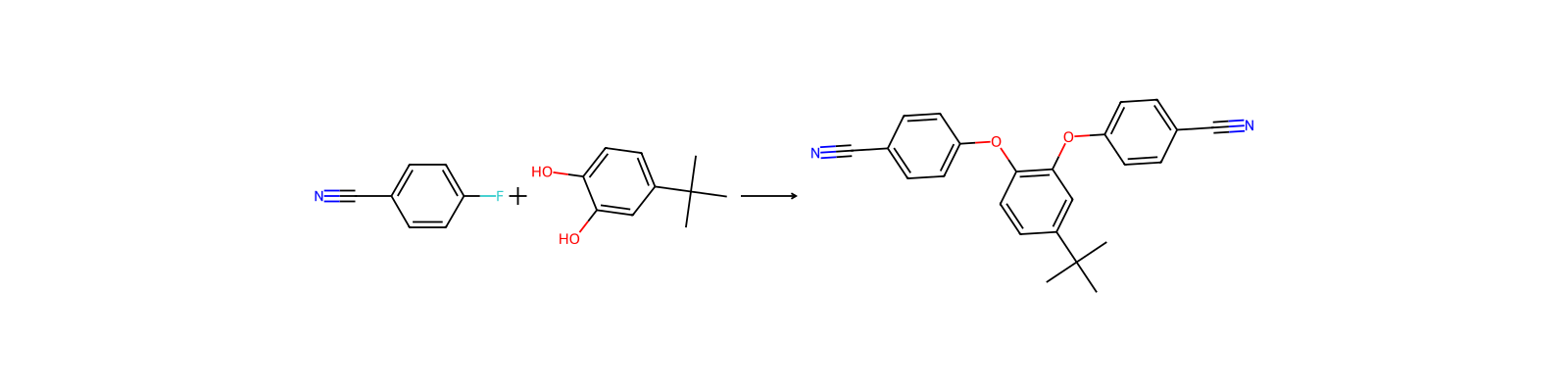
68




Notizen zur Verbindung
Wird geladen…