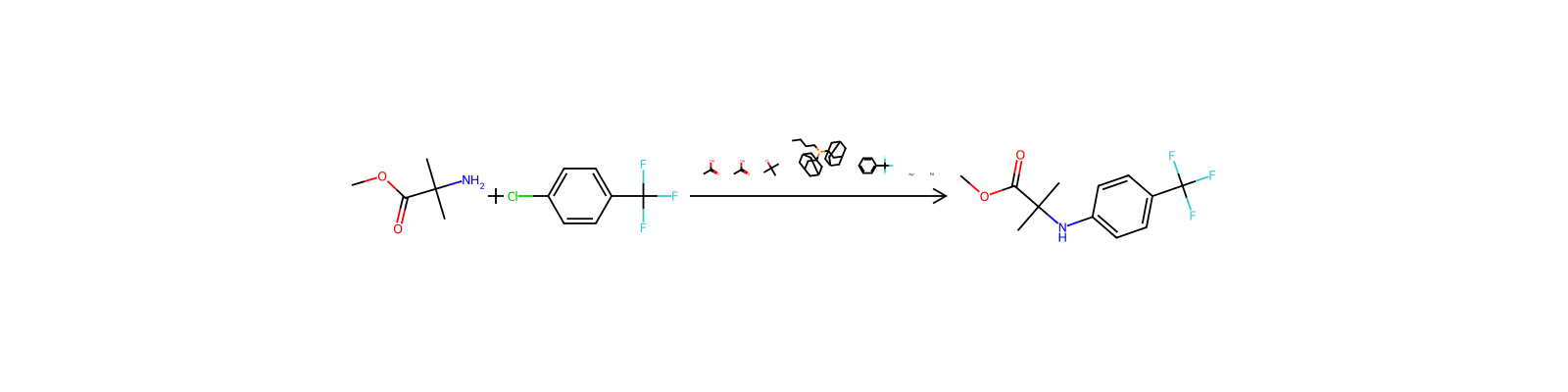
StartseiteMCPWorkbenchSkills
StartseiteWorkbenchBenachrichtigungenMein Bereich
llms.txt · MCP-AnleitungDatenschutz · Nutzungsbedingungen · Supportv1.8.0
  1. Startseite
  2. /Verbindung

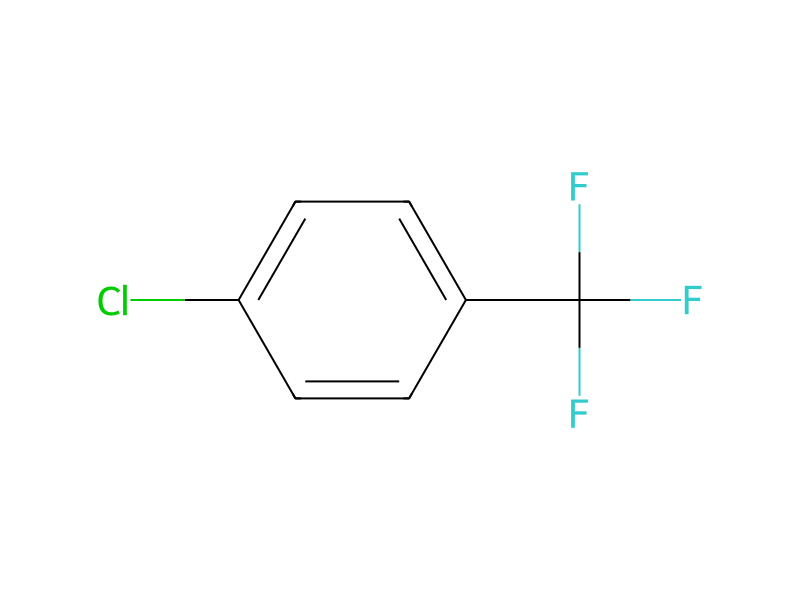
4-Chlor-α,α,α-trifluortoluol

1-Chloro-4-(trifluoromethyl)benzene

HCID 7394
Neue NotizNeue ReaktionAnfrage stellen
Druckvorschau

Daten werden ergänzt – lade die Seite später neu, um den aktuellen Stand zu sehen
GrundinformationenÜberblickNamen und BezeichnerEigenschaftenSicherheit und RegulatorischesChemie und IndustrieZugehörige ReaktionenNotizen zur Verbindung
TeilstruktursucheÄhnliche Strukturen suchen

Grundinformationen

CAS
98-56-6
Standard-SMILES
FC(F)(F)c1ccc(Cl)cc1
InChIKey
QULYNCCPRWKEMF-UHFFFAOYSA-N
Summenformel
C7H4ClF3
Durchschnittliche Molmasse
180,55 g/mol
Monoisotopische Masse
179,99536247

Überblick

p-Chloro-α,α,α-trifluorotoluene (para-Chlorobenzo trifluoride, PCBTF) can cause cancer according to US government or WHO authoritative bodies.

Namen und Bezeichner

Bevorzugter Name
1-Chloro-4-(trifluoromethyl)benzene
IUPAC
1-chloro-4-(trifluoromethyl)benzene
Lokaler Name
4-Chlor-α,α,α-trifluortoluol
Englischer Name
4-Chlorobenzotrifluoride
Summenformel
C7H4ClF3
Molmasse
180.55

Namen und Synonyme

4-Chlorobenzotrifluoride98-56-6p-Chlorobenzotrifluoride1-CHLORO-4-(TRIFLUOROMETHYL)BENZENEBenzene, 1-chloro-4-(trifluoromethyl)-(p-Chlorophenyl)trifluoromethanep-Chlorotrifluoromethylbenzenep-Trifluoromethylphenyl chloridep-(Trifluoromethyl)chlorobenzenep-Chloro-alpha,alpha,alpha-trifluorotoluene4-Chloro-alpha,alpha,alpha-trifluorotolueneDTXSID7024821
Weitere Namen anzeigen
PCBTFOxsol 1004-CHLOROTRIFLUOROTOLUENEPBTCF4-Chlorobenzotrifluoride, 98% 250MLNSC 10309P-Chlorbenzotrifluo
alpha,alpha,alpha-Trifluoro-4-chlorotoluene694YO34JHCpara-Chloro-alpha,alpha,alpha-trifluorotolueneToluene, p-chloro-alpha,alpha,alpha-trifluoro-NSC-103094-(TRIFLUOROMETHYL)CHLOROBENZENEDTXCID004821RefChem:431389

Datenbank-Bezeichner

CAS

Eigenschaften

Berechnete StruktureigenschaftenWird ergänzt

XLogP
3,8
Polarare Oberfläche (TPSA)
0 Ų
H-Brücken-Donoren
0
H-Brücken-Akzeptoren
3
Frei drehbare Bindungen
0
Schwere Atome
11
Formalladung
0
Komplexität
124

Experimentelle und physikochemische Eigenschaften

Chemical ClassesOther Classes -> Halogenated Monoaromatics
PFASPFAS -> PFAS identified in REACH Regulation EC No. 1272/2008
SpringerMaterials Properties13C nuclear magnetic resonance spectrum
OdorStrong though not unpleasant aromatic odor
Density · 3 Einträge

1.34 (NTP, 1992) - Denser than water; will sink

1.3340 g/cu cm at 25 °C

1.34

Color/FormWater-white liquid
Solubility · 2 Einträge

less than 1 mg/mL at 68 °F (NTP, 1992)

In water, 29 ppm at 25 °C

Flash Point · 3 Einträge

117 °F (NTP, 1992)

109 °F (43 °C) closed cup

117 °F

Boiling Point · 3 Einträge

277 to 280 °F at 760 mmHg (NTP, 1992)

Sicherheit und Regulatorisches

Sicherheitsangaben dienen nur zur Orientierung und ersetzen weder das Sicherheitsdatenblatt (SDB) des Lieferanten noch geltende Vorschriften oder eine fachliche Bewertung.

GHS-Klassifizierung

GHS Classification · 6 Einträge

This chemical does not meet GHS hazard criteria for 4.4% (54 of 1234) of reports.

Warning

H226 (91.1%): Flammable liquid and vapor [Warning Flammable liquids]

P210, P233, P240, P241, P242, P243, P261, P264, P264+P265, P271, P272, P273, P280, P302+P352, P303+P361+P353, P304+P340, P305+P351+P338, P319, P321, P332+P317, P333+P317, P337+P317, P362+P364, P370+P378, P391, P403+P233, P403+P235, P405, and P501 (click each P-code to see the statement)

Aggregated GHS information provided per 1234 reports by companies from 39 notifications to the ECHA C&L Inventory. Each notification may be associated with multiple companies.

Warning

Gefahrenhinweise

Regulatory Information · 5 Einträge

Chemical: Benzene, 1-chloro-4-(trifluoromethyl)-

Hazard Traits - Carcinogenicity

Benzene, 1-chloro-4-(trifluoromethyl)- is listed on the EPA's Chemical Data Reporting (CDR) system. Manufacturers and importers of Benzene, 1-chloro-4-(trifluoromethyl)- are required to report information about their production and use of this chemical to the EPA under the Toxic Substances Control Act (TSCA). (40 eCFR Part 711)

Status: Active Update: 18-03-2022 https://echa.europa.eu/registration-dossier/-/registered-dossier/5322

1-chloro-4-(trifluoromethyl)benzene: Does not have an individual approval but may be used under an appropriate group standard

Other Safety InformationEvaluation - Benzene, 1-chloro-4-(trifluoromethyl)-
DOT LabelFlammable Liquid
Fire HazardsThis chemical is combustible. (NTP, 1992)
Fire PotentialFlammable

Chemie und Industrie

Pharmakologische Informationen

Metabolism/Metabolites · 1 Eintrag

When rats were given a single oral dose of 1 mg/kg p-chloro(trifluoromethyl-(14)C) benzotrifluoride 3-4%, and 14-15% of the applied (14)C were excreted in feces and urine, respectively. The major urinary metabolites were glucuronides of dihydroxybenzotrifluoride and 4-chloro-3-hydroxybenzotrifluoride (each representing 3-4% of the applied (14)C), and minor amounts of a mercapturic acid conjugate of p-chlorobenzotrifluoride. p-Chlorobenzotrifluoride itself was rapidly expired by rats (62-82% of the applied dose) and was the major (14)C- labeled residue in feces. Levels of (14)C-labeled residues in tissues were low, but the small amount of radiolabel in the rat carcass 4 days after dosage (1% applied dose) was also identified as p-chlorobenzotrifluoride and was found predominantly in fat.

Absorption, Distribution and Excretion · 1 Eintrag

Toxicokinetics of p-chloro-alpha,alpha,alpha-trifluorotoluene (CTFT) after administration as an aqueous alpha-cyclodextrin (alpha-CD) molecular encapsulation suspension (alpha-CD vehicle) or as a corn oil solution (corn oil vehicle) were compared. Male F344 rats were administered intragastrically CTFT in alpha-CD vehicle or corn oil vehicle at dose levels of 10, 50, or 400 mg/kg. Other male F344 rats were administered CTFT intravenously in a 10% Tween 80 aqueous solution. Serial blood samples were taken from a cannulated jugular vein for up to 52 hr after dosing and the CTFT concentrations in whole blood were determined by gas chromatography. The biological elimination half-life of CTFT from the center compartment was not affected by the vehicle used; however, absorption of CTFT from the alpha-CD vehicle was much faster than from the corn oil vehicle. The average absorption half-lives from the alpha-CD vehicle and corn oil vehicle were 17 and 98 min, respectively. Despite the differences in absorption, no statistical difference was observed in the calculated areas under the blood concentration versus time curves (AUC) obtained from rats dosed with either vehicle. Dose proportionality for CTFT was established up to 400 mg/kg and bioavailability was shown to be complete for both vehicles.

Verwendung und Herstellung

Uses · 5 Einträge

Zugehörige Reaktionen

438
Reaktionsaufzeichnung erstellen
Reaktionsgleichung von HRID 168
HRID 168als Edukt750 AstraZeneca ELN dataset
Reaktionsgleichung von HRID 265426
HRID 265426als Eduktuspto-grants-1997_07
Reaktionsgleichung von HRID 325594
HRID 325594als Eduktuspto-grants-1984_04
Reaktionsgleichung von HRID 355560
HRID 355560als Eduktuspto-grants-1998_11
Reaktionsgleichung von HRID 355561
HRID 355561als Eduktuspto-grants-1998_11
Reaktionsgleichung von HRID 355562
HRID 355562als Eduktuspto-grants-1998_11
Reaktionsgleichung von HRID 365022
HRID 365022als Eduktuspto-grants-1986_08
Reaktionsgleichung von HRID 365023
HRID 365023als Eduktuspto-grants-1986_08
Seite 1 von 55

Notizen zur Verbindung

Wird geladen…

Auf dieser SeiteGrundinformationenÜberblickNamen und BezeichnerEigenschaftenSicherheit und RegulatorischesChemie und IndustrieZugehörige ReaktionenNotizen zur Verbindung
Weitere Aktionen
Neue NotizNeue ReaktionAnfrage stellen
98-56-6
PubChem CID
7394
DTXSID
DTXSID7024821
ChEMBL
CHEMBL1797001
UNII
694YO34JHC
EC Number
202-681-1、682-539-7
Nikkaji
J31.775F

139.3 °C

277-280 °F

DecompositionWhen heated to decomposition it emits toxic fumes of /hydrogen chloride/ and /fluorine/.
Melting Point · 3 Einträge

-33 °F (NTP, 1992)

-33 °C

-33 °F

Vapor Density · 3 Einträge

6.24 (NTP, 1992) - Heavier than air; will sink (Relative to Air)

6.24 (Air = 1)

6.24

Physikochemische Eigenschaften

Schmelzpunkt
-36 °C · -36 °C (lit.)
Siedepunkt
136 · 136-138 °C (lit.)
Dichte
1.353 g/mL · 1.353 g/mL at 25 °C (lit.)
Dampfdruck
10 hPa · 10hPa at 25℃
Brechungsindex
20 · n20/D 1.446(lit.)
Flammpunkt
117 °F · 117 °F
storage temp.
Flammables area
Löslichkeit
56 mg/l · 56mg/l
Aggregatzustand
Liquid
Wichte
1.353 · 1.353
Farbe
Clear colorless
Geruch (Odor)
aromatic odor
Wasserlöslichkeit
29 ppm · 29 ppm (23 ºC)
Merck
14 · 14,2126
BRN
510203 · 510203
Henry's Law Constant
2.8 · 2.8×10-4 mol/(m3Pa) at 25℃, HSDB (2015)
Stabilität
Stable, but heat and light sensitive. Reacts vigorously with oxidizing agents. Flammable. Incompatible with sodium dimethyl sulfonate, strong bases.
InChI
1S/C7H4ClF3/c8-6-3-1-5(2-4-6)7(9,10)11/h1-4H
InChIKey
QULYNCCPRWKEMF-UHFFFAOYSA-N
SMILES
FC(F)(F)c1ccc(Cl)cc1
LogP
3.7 at · 3.7 at 25℃
CAS Datenbank
98 · 98-56-6(CAS DataBase Reference)
NIST chemische Informationen
1 · Benzene, 1-chloro-4-(trifluoromethyl)-(98-56-6)
EPA chemische Informationen
p-Chlorobenzotrifluoride (98-56-6)
Health Hazards · 1 Eintrag

SYMPTOMS: Symptoms of exposure to this compound include local irritation to skin, eyes and respiratory system, central nervous system depression and dermatitis due to defatting of the skin. Other symptoms include coughing, wheezing, a burning sensation, laryngitis, shortness of breath, headache, nausea, vomiting, lung irritation, chest pain, edema (which may be fatal), and irritation to mucous membranes.

Hazards Summary · 1 Eintrag

A skin, eye, mucous membrane, and respiratory tract irritant; Inhalation of high concentrations can cause CNS depression; [CAMEO] A skin and eye irritant; In a two generation reproductive feeding study with rats, the NOAEL in F1 and F2 offspring was greater than or equal to the highest dose tested (45 mg/kg bw); No evidence of mutagenicity; [IUCLID] Effects observed from single oral dose in rats include ataxia, tremors, and decreased limb tone; Effects observed in F1 female rats in oral reproductive study include increase in SGPT, decrease in erythrocyte counts, and lesions in the lungs; Decrease in erythrocytes, hemoglobin, and mean corpuscular and packed cell volumes observed in male rats in 90 day oral study; Increased liver weights observed in both sexes; No evidence of mutagenicity; [EPA] Effects observed in feeding studies at 400 mg/kg include liver hypertrophy in rats and mice and adrenal changes in rats; Doses of 50 mg/kg caused nephropathy in male rats; [NTP]

Reactive GroupHalogenated Organic Compounds
Special Reports · 2 Einträge

European Commission, ESIS; IUCLID Dataset, 4-Chloro-alpha,alpha,alpha-trifluorotoluene (98-56-6) (2000 CD-ROM edition) contains information on use, toxicology, and environmental effects of this chemical as supplied to the European Union by industry.[Available from, as of September 14, 2010: http://esis.jrc.ec.europa.eu/]

DHHS/NTP; NTP Report on Toxicity Studies of p-Chloro-a,a,a-Trifluorotoluene Administered in Corn Oil and a-Cyclodextrin to F344/N Rats and B6C3F1 Mice in 14 Day Comparative Gavage Studies NTP Tox 14 (1992)

TSCA Requirements · 2 Einträge

Section 8(a) of TSCA requires manufacturers of this chemical substance to report preliminary assessment information concerned with production, exposure, and use to EPA as cited in the preamble in 51 FR 41329. Effective date 9/29/06; Reporting date: 11/28/06.

Pursuant to section 8(d) of TSCA, EPA promulgated a model Health and Safety Data Reporting Rule. The section 8(d) model rule requires manufacturers, importers, and processors of listed chemical substances and mixtures to submit to EPA copies and lists of unpublished health and safety studies. 4-Chlorobenzotrifluoride is included on this list.

Reactivity AlertsHighly Flammable
Reactivity Profile · 1 Eintrag

P-CHLOROBENZOTRIFLUORIDE is sensitive to heat and light. This chemical reacts vigorously with oxidizing materials such as permanganates and dichromates. It is incompatible with strong bases. It is also incompatible with sodium dimethyl sulfonate. (NTP, 1992)

Sicherheit und Schutzausrüstung

Fire FightingFires involving this material can be controlled with a dry chemical, carbon dioxide or Halon extinguisher. A water spray may also be used. (NTP, 1992)
First Aid · 1 Eintrag

EYES: First check the victim for contact lenses and remove if present. Flush victim's eyes with water or normal saline solution for 20 to 30 minutes while simultaneously calling a hospital or poison control center. Do not put any ointments, oils, or medication in the victim's eyes without specific instructions from a physician. IMMEDIATELY transport the victim after flushing eyes to a hospital even if no symptoms (such as redness or irritation) develop.

Fire Fighting Procedures · 1 Eintrag

Use dry chemical, carbon dioxide, or foam extinguishers. Vapors are heavier than air and will collect in low areas. Vapors may travel long distances to ignition sources and flashback. Vapors in confined areas may explode when exposed to fire. Containers may explode in fire. Storage containers and parts of containers may rocket great distances, in many directions. If material or contaminated runoff enters waterways, notify downstream users or potentially contaminated waters. Notify local health and fire officials and pollution control agencies. From a secure, explosion-proof location use water spray to cool exposed containers. If cooling streams are ineffective (venting sound increases in volume and pitch, tank discolors or shows any signs of deforming), withdraw immediately to a secure position ... The only respirators recommended for fire fighting are self-contained breathing apparatuses that have full facepieces and are operated in a pressure-demand or other positive-pressure mode.

Storage Conditions · 1 Eintrag

Store in tightly closed containers in a cool, well ventilated area away from oxidizers. Metal containers involving the transfer of this chemical should be grounded and bonded. Drums must be equipped with self-closing valves, pressure vacuum bungs, and flame arresters. Use only non-sparking tools and equipment, especially when opening and closing containers of this chemical. Sources of ignition, such as smoking and open flames, are prohibited where this chemical is used, handled, or stored in a manner that could create a potential fire hazard or explosion hazard.

Cleanup Methods · 1 Eintrag

Evacuate and restrict persons not wearing protective equipment from area of spill or leak until cleanup is complete. Remove all ignition sources. Ventilate area of spill or leak. Absorb liquids in vermiculite, dry sand, earth, peat, carbon, or a similar material and deposit in sealed containers. It may be necessary to contain and dispose of this chemical as a hazardous waste. If material or contaminated runoff enters waterways, notify downstream users of potentially contaminated waters. Contact your Department of Environmental Protection or your regional office of the federal EPA for specific recommendations.

Nonfire Spill Response · 1 Eintrag

SMALL SPILLS AND LEAKAGE: If you spill this chemical, FIRST REMOVE ALL SOURCES OF IGNITION. Then, use absorbent paper to pick up all liquid spill material. Your contaminated clothing and absorbent paper should be sealed in a vapor-tight plastic bag for eventual disposal. Solvent wash all contaminated surfaces with 60-70% ethanol followed by washing with a soap and water solution. Do not reenter the contaminated area until the Safety Officer (or other responsible person) has verified that the area has been properly cleaned.

Disposal Methods · 1 Eintrag

SRP: The most favorable course of action is to use an alternative chemical product with less inherent propensity for occupational harm/injury/toxicity or environmental contamination. Recycle any unused portion of the material for its approved use or return it to the manufacturer or supplier. Ultimate disposal of the chemical must consider: the material's impact on air quality; potential migration in soil or water; effects on animal and plant life; and conformance with environmental and public health regulations.

Preventive Measures · 2 Einträge

SRP: Contaminated protective clothing should be segregated in such a manner so that there is no direct personal contact by personnel who handle, dispose, or clean the clothing. The completeness of the cleaning procedures should be considered before the decontaminated protective clothing is returned for reuse by the workers. Contaminated clothing should not be taken home at the end of shift, but should remain at employee's place of work for cleaning.

SRP: Wastewater from contaminant suppression, cleaning of protective clothing/equipment, or contaminated sites should be contained and evaluated for subject chemical or decomposition product concentrations. Concentrations shall be lower than applicable environmental discharge or disposal criteria. Alternatively, pretreatment and/or discharge to a permitted wastewater treatment facility is acceptable only after review by the governing authority and assurance that "pass through" violations will not occur. Due consideration shall be given to remediation worker exposure (inhalation, dermal and ingestion) as well as fate during treatment, transfer and disposal. If it is not practicable to manage the chemical in this fashion, it must be evaluated in accordance with EPA 40 CFR Part 261, specifically Subpart B, in order to determine the appropriate local, state and federal requirements for disposal.

Isolation and EvacuationExcerpt from ERG Guide 130 [Flammable Liquids (Water-Immiscible / Noxious)]:
Personal Protective Equipment (PPE) · 2 Einträge

MINIMUM PROTECTIVE CLOTHING: If Tyvek-type disposable protective clothing is not worn during handling of this chemical, wear disposable Tyvek-type sleeves taped to your gloves.

Wear solvent-resistant gloves and clothing to prevent any reasonable probability of skin contact.

Toxikologische Informationen

Ecotoxicity Values · 2 Einträge

LC50; Species: Lepomis macrochirus (Bluegill sunfish); Conditions: static; Concentration: 5.6 mg/L for 96 hr

LC50; Species: /Oncorhynchus mykiss/ (Rainbow trout); Conditions: static; Concentration: 13.5 mg/L for 24 hr

Environmental Fate · 3 Einträge

TERRESTRIAL FATE: Based on a classification scheme(1), an estimated Koc value of 1600(SRC), determined from a structure estimation method(2), indicates that 1-chloro-4-(trifluoromethyl)benzene is expected to have low mobility in soil(SRC). Volatilization of 1-chloro-4-(trifluoromethyl)benzene from moist soil surfaces is expected to be an important fate process(SRC) given an estimated Henry's Law constant of 3.5X10⁻² atm-cu m/mole(SRC), using a fragment constant estimation method(3). 1-Chloro-4-(trifluoromethyl)benzene is expected to volatilize from dry soil surfaces(SRC) based upon a vapor pressure of 7.63 mm Hg at 25 °C(4). In an anaerobic screening test using digester sludge, 64% of the originally applied 1-chloro-4-(trifluoromethyl)benzene was degraded in 59 days(5).

AQUATIC FATE: Based on a classification scheme(1), an estimated Koc value of 1600(SRC), determined from a structure estimation method(2), indicates that 1-chloro-4-(trifluoromethyl)benzene is expected to adsorb to suspended solids and sediment(SRC). Volatilization from water surfaces is expected(3) based upon an estimated Henry's Law constant of 3.5X10⁻² atm-cu m/mole(SRC), developed using a fragment constant estimation method(4). Using this Henry's Law constant and an estimation method(3), volatilization half-lives for a model river and model lake are 4 hours and 5 days, respectively(SRC). 1-Chloro-4-(trifluoromethyl)benzene is not expected to undergo hydrolysis in the environment due to the lack of functional groups that hydrolyze under environmental conditions(3). According to a classification scheme(5), an estimated BCF of 110(SRC), from an estimated log Kow of 3.6(6) and a regression-derived equation(7), suggests the potential for bioconcentration in aquatic organisms is high(SRC). In an anaerobic screening test using digester sludge, 64% of the originally applied 1-chloro-4-(trifluoromethyl)benzene was degraded in 59 days(8).

ATMOSPHERIC FATE: According to a model of gas/particle partitioning of semivolatile organic compounds in the atmosphere(1), 1-chloro-4-(trifluoromethyl)benzene, which has a vapor pressure of 7.63 mm Hg at 25 °C(2), is expected to exist solely as a vapor in the ambient atmosphere. Vapor-phase 1-chloro-4-(trifluoromethyl)benzene is degraded in the atmosphere by reaction with photochemically-produced hydroxyl radicals(SRC); the half-life for this reaction in air is estimated to be 67 days(SRC), calculated from its rate constant of 2.4X10⁻¹³ cu cm/molecule-sec at 25 °C(3). 1-Chloro-4-(trifluoromethyl)benzene does not contain chromophores that absorb at wavelengths >290 nm(4) and therefore is not expected to be susceptible to direct photolysis by sunlight(SRC).

Adverse EffectsNeurotoxin - Acute solvent syndrome
Ongoing Test Status · 1 Eintrag

The following link will take the user to the National Toxicology Program (NTP) Test Agent Search Results page, which tabulates all of the "Standard Toxicology & Carcinogenesis Studies", "Developmental Studies", and "Genetic Toxicity Studies" performed with this chemical. Clicking on the "Testing Status" link will take the user to the status (i.e., in review, in progress, in preparation, on test, completed, etc.) and results of all the studies that the NTP has done on this chemical.[Available from: http://ntp-apps.niehs.nih.gov/ntp_tox/index.cfm?fuseaction=ntpsearch.searchresults&searchterm=98-56-6]

Soil Adsorption/Mobility · 1 Eintrag

Using a structure estimation method based on molecular connectivity indices(1), the Koc of 1-chloro-4-(trifluoromethyl)benzene can be estimated to be 1600(SRC). According to a classification scheme(2), this estimated Koc value suggests that 1-chloro-4-(trifluoromethyl)benzene is expected to have low mobility in soil.

TSCA Test Submissions · 5 Einträge

The ability of p-chlorobenzotrifluoride to induce morphological transformation was evaluated in Balb/3T3 mouse cells (Cell Transformation Assay). Based on preliminary toxicity determinations (exposure time = 72hrs), p-chlorobenzotrifluoride, was tested at concentrations of 0.1, 1.0, 10.0, 20.0 and 40.0nl/ml, resulting in a range of 80% to 50% relative survival. None of the applied concentrations resulted in the induction of any transformed foci, while the positive control (MCA) resulted in 38 transformed foci showing that the sensitivity of the assay was normal.

In a two-generation reproduction study, male and female Sprague Dawley rats (F0) (20/sex/group) were orally exposed to 4-(trifluoromethyl)chlorobenzene (TFCB) in corn oil vehicle by gavage at dosage levels of 0, 5, 15 or 45 mg/kg/day for 4 weeks prior to mating one-to-one with animals of the same group, and continuing through one reproduction period until F1 litters had been weaned. Randomly selected F1 pups (20/sex/group) were orally exposed to TFCB by gavage at the same concentration as their parents for 90 days and were then sacrificed. Significant differences between treated and control F0 rats were observed in the following: decreased and/or increased weight gain (high- and mid-dose animals). Significant differences between treated and control F1 rats were observed in the following: weight gain (increased for all treated male groups, decreased for high-dose females), decreased monocytes (females at low-dose), increased serum glutamic-pyruvic transaminase (mid-dose females), increased mean pups/litter (combined sexes of pups for low- and mid-dose groups, female pups of mid-dose group), increased percentage surviving pups and pup weights (all treated groups), decreased erythrocyte counts (low-dose females), decreased mean corpuscular hemoglobin (all treated male groups and high-dose females), increased mean corpuscular volume (high-dose females), and an increase in pathology of the lung including bronchopneumonia, adenomous hyperplasia, and inflammatory cell infiltrates (all treated groups). No significant differences between treated and control F0 rats were observed in the following: mortalities, urinalysis, and dam weights. No significant differences between treated and control F1 rats were observed in the following: mortalities, clinical chemistry values, urinalysis, and absolute or relative organ weights.

Mutagenicity of biologic fluids was determined after administration of 50, 167, or 500 mg/kg parachlorobenzotrifluoride by oral gavage over a 2 day period to groups of 7 male CD-1 mice. After collection, neither urine pretreated with beta-glucuronidase, or untreated urine, was mutagenic towards Salmonella typhimurium strains TA1535, TA1537, TA98 or TA100.

Parachlorobenzotrifluoride was examined for mutagenic activity in Salmonella typhimurium tester strains TA1535, TA1537, TA1538, TA98, TA100 and in Saccharomyces cerevisiae strain D4 with and without Aroclor induced rat liver S9 fraction metabolic activation. The test article did not cause a mutagenic effect in Salmonella tester strains, or gene conversion in Saccharomyces when administered at concentrations of 0.01, 0.10, 1.0, 5.0 and 10.0 ul/plate in the presence or absence of metabolic activation. Parachlorobenzotrifluoride was reported to be cytotoxic to Salmonella strains TA1535 and TA1537 at a concentration of 10 ul/plate.

Human Toxicity Excerpts/SIGNS AND SYMPTOMS/ Short Term Exposure: Causes local irritation to skin, eyes and mucous membranes. May cause irritation by any route of exposure.
Artificial Pollution Sources · 1 Eintrag

1-Chloro-4-(trifluoromethyl)benzene's production and use as an intermediate for dyes, pharmaceuticals, and pesticides(1), and as a solvent and dielectric fluid(2) may result in its release to the environment through various waste streams(SRC).

Environmental BiodegradationANAEROBIC: In an anaerobic screening test with digester sludge, 64% of the 1-chloro-4-(trifluoromethyl)benzene orginally applied was degraded in 59 days(1).
Sediment/Soil Concentrations1-Chloro-4-(trifluoromethyl)benzene was qualitatively detected in sediment and soil samples obtained in Love Canal, NY 1980(1).
Carcinogen Classification · 6 Einträge

4-Chlorobenzotrifluoride

Group 2B: Possibly carcinogenic to humans

Volume 125: (2020) Some Industrial Chemical Intermediates and Solvents

2020 online

2019

p-Chloro-α,α,α-trifluorotoluene

Environmental Bioconcentration · 1 Eintrag

An estimated BCF of 110 was calculated in fish for 1-chloro-4-(trifluoromethyl)benzene(SRC), using an estimated log Kow of 3.6(1) and a regression-derived equation(2). According to a classification scheme(3), this BCF suggests the potential for bioconcentration in aquatic organisms is high(SRC).

Regulatorische Informationen

TSCA Requirements · 2 Einträge

Section 8(a) of TSCA requires manufacturers of this chemical substance to report preliminary assessment information concerned with production, exposure, and use to EPA as cited in the preamble in 51 FR 41329. Effective date 9/29/06; Reporting date: 11/28/06.

Pursuant to section 8(d) of TSCA, EPA promulgated a model Health and Safety Data Reporting Rule. The section 8(d) model rule requires manufacturers, importers, and processors of listed chemical substances and mixtures to submit to EPA copies and lists of unpublished health and safety studies. 4-Chlorobenzotrifluoride is included on this list.

Sicherheitsdaten

wgk
2
tsca
TSCA listed
ridadr
UN 2234 3/PG 3
hs_code
29036990
RTECS-Nr.
XS9145000
risk_code
10-36/37/38
hazard_code
Xi,F,N
hazard_note
Flammable/Irritant
safety_code
26-36-24/25-16-36/37/39
hazard_class
3
packing_group
III
Speicherklasse
3 - Flammable liquids
Giftige Stoffe Daten
98-56-6(Hazardous Substances Data)
Hazard Classifications
Aquatic Chronic 2Flam. Liq. 3Skin Sens. 1

Used as an intermediate for dyes and pesticides; Also used as a environmentally friendly solvent and dielectric fluid; [Merck Index] Used as a solvent for paints, toners, and coatings, especially in the automotive industry; Used by workers and consumers in cleaners, degreasers, stain removers, and sealants; [IARC monographs, volume 125]

Painting (Solvents) [Category: Paint]

Dye intermediate; chemical intermediate; solvent and dielectric fluid

Key intermediate for the synthesis of dyes, pharmaceuticals, and pesticides. Intermediate for herbicides with a diphenyl ether structure - fluorodifen and acifluorfen - and the insecticide fluvalinate.

Chemical intermediate for dinitroaniline herbicides

U.S. Imports · 2 Einträge

(1977) 6.62X10+8 GRAMS (PRINCPL CUSTMS DISTS)

(1979) 2.90X10+9 GRAMS (PRINCPL CUSTMS DISTS)

U.S. Production · 6 Einträge

2023: 40,000,000 - <55,000,000 lb

(1977) PROBABLY GREATER THAN 2.27X10+6 GRAMS

(1979) PROBABLY GREATER THAN 2.27X10+6 GRAMS

Benzene, 1-chloro-4-(trifluoromethyl)- is listed as a High Production Volume (HPV) chemical (65FR81686). Chemicals listed as HPV were produced in or imported into the U.S. in >1 million pounds in 1990 and/or 1994. The HPV list is based on the 1990 Inventory Update Rule. (IUR) (40 CFR part 710 subpart B; 51FR21438).

Production volumes for non-confidential chemicals reported under the Inventory Update Rule. [Table#4888]

Production volume for non-confidential chemicals reported under the 2006 Inventory Update Rule. Chemical: Benzene, 1-chloro-4-(trifluoromethyl)-. Aggregated National Production Volume: 10 to < 50 million lbs.

Consumption PatternsESSENTIALLY 100% AS A CHEMICAL INTERMEDIATE
Consumer UsesSealant (barrier)
Industry UsesSolvents (which become part of product formulation or mixture)
Methods of Manufacturing · 2 Einträge

p-Chlorobenzotrichloride + hydrogen fluoride (fluorination).

... Chlorine is exchanged for fluorine with use of anhydrous hydrogen fluoride in the presence or absence of catalyst. This reaction can be carried out as a batch process in autoclaves or continuously in a series of autoclaves or tubular reactors. Typical conditions for the production of benzotrifluoride are a temperature of 80 - 110 °C, pressure of 1.2 - 1.4MPa, and a molar ratio of HF: benzotrichloride of 4:1. A yield of 70% is obtained within 3 - 4 hr. In continuous processing, a yield of over 90%is obtained in a nickel flow tube with a residence time of 1 hr at 90 - 130 °C and at 3-5MPa. Yields are increased by using additives such as hexamethylenetetramine or by employing chlorine - fluorine exchange in the gas phase in the presence of a transition metal - aluminum oxide catalyst. Corrosion is reduced by lowering the reaction temperature (<60 °C) and adding iron or iron compounds. This method is used to produce ... 4- chlorobenzotrifluoride ...

Household ProductsInformation on 66 consumer products that contain 4-Chlorobenzotrifluoride in the following categories is provided:
General Manufacturing Information · 2 Einträge

Printing and Related Support Activities

Benzene, 1-chloro-4-(trifluoromethyl)-: ACTIVE

Anwendungen · 2 Einträge

BeschreibungDas 4-Chlorbenzotrifluorid bildet eine farblose, wasserunlösliche Flüssigkeit. Die Verbindung besitzt nur wissenschaftliches Interesse.

Verwenden4-Chlorobenzotrifluoride acts as an important intermediate for dyes. It is used as an active component of polyurethane finishes. It is also used in adhesives, pigments, sealant chemicals, paints and coatings. Further, it is used as an environmental friendly solvent for cleaning or degreasing and dielectric fluid. It has a high capacity to dissolve inks, which is used in the printing industry. In addition to this, it is also used as xylene replacement in cleaners, thinners and other aromatic hydrocarbon blends.

Vor- und nachgelagerte Produkte

Vorgelagerte Rohstoffe

p-ChlorbenzotrichloridChlor4-FluortoluolChromatographyFluorwasserstoffChlortoluol (p)4-Chlorodithiobenzoic acid ethyl esterMethylchlordifluoracetat4-Trifluoromethylphenylboronic acid1,3-Dihydro-3,3-dimethyl-1-(trifluoromethyl)-1,2-benziodoxole, Tognis Reagent1-TrifluoroMethyl-1,2-benziodoxol-3(1H)-oneMethyl 2,2-difluoro-2-(fluorosulfonyl)acetateSodium trifluoromethanesulfinateS-(Trifluoromethyl)dibenzothiophenium trifluoromethanesulfonate1-Chlor-4-iodbenzol

Nachgelagerte Produkte

Flumetralin4-Chlor-3,5-dinitro-α,α,α-trifluortoluolTrifluralinα,α,α-Trifluor-p-toluidinFluoxetine4-Amino-3,5-dichlorobenzotrifluorideFluordifen5-[2-Chlor-4-(trifluormethyl)phenoxy]-N-(methylsulfonyl)-2-nitrobenzamidFlutolanil

For more TSCA Test Submissions (Complete) data for 1-Chloro-4-(trifluoromethyl)benzene (12 total), please visit the HSDB record page.