
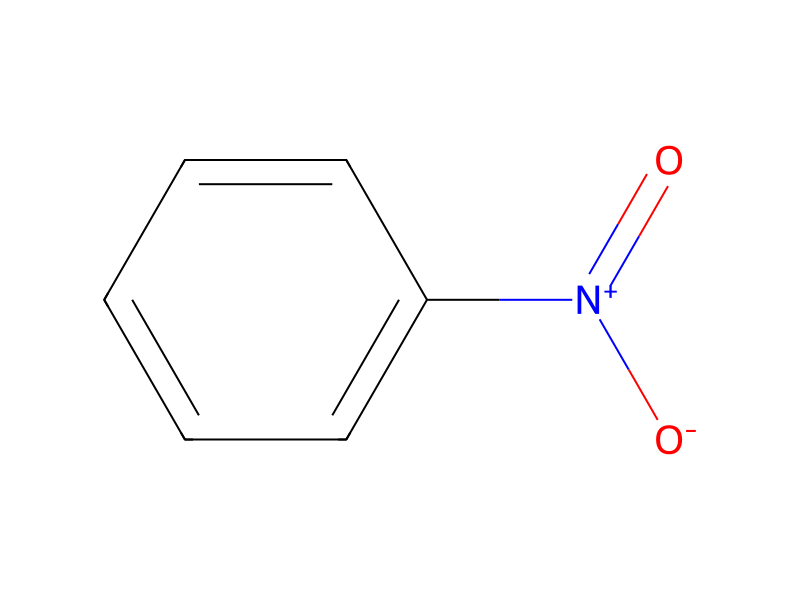
Grundinformationen
- Standard-SMILES
O=[N+]([O-])c1ccccc1- InChIKey
LQNUZADURLCDLV-UHFFFAOYSA-N- Summenformel
- C6H5NO2
- Durchschnittliche Molmasse
- 123,11 g/mol
- Monoisotopische Masse
- 123,0320284
Überblick
Nitrobenzene is an industrial chemical. It is an oily yellow liquid with an almond-like odor. It dissolves only slightly in water and will evaporate to air. It is produced in large quantities for use in industry. Most of the nitrobenzene produced in the United States is used to manufacture a chemical called aniline. Nitrobenzene is also used to produce lubricating oils such as those used in motors and machinery. A small amount of nitrobenzene is used in the manufacture of dyes, drugs, pesticides, and synthetic rubber.
Namen und Bezeichner
- Bevorzugter Name
- Nitrobenzene
- IUPAC
- nitrobenzene
- Lokaler Name
- Nitrobenzol
- Englischer Name
- Nitrobenzene
- Summenformel
- C6H5NO2
- Molmasse
- 123.11
Namen und Synonyme
NITROBENZENE98-95-3NitrobenzolBenzene, nitro-Essence of mirbanenitro-BenzeneNitrobenzeenNitrobenzenMononitrobenzeneEssence of Myrbanep-NitrobenzeneRCRA waste number U169
Weitere Namen anzeigen
MIRBANE OIL1-NitrobenzenePhSO3HMYRBANE OILnitro-benzenMitrobenzole
NCI-C60082DTXSID3020964E57JCN6SSYCHEBI:27798NSC-9573DTXCID30964NSC9573RefChem:6471
Datenbank-Bezeichner
- CAS
98-95-3- PubChem CID
- 7416
- DTXSID
DTXSID3020964- ChEMBL
CHEMBL15750- ChEBI
CHEBI:27798- UNII
- E57JCN6SSY
- EC Number
- 202-716-0
- Nikkaji
- J1.430.487H、J3.989F
Eigenschaften
Berechnete Struktureigenschaften
- XLogP
- 1,9
- Polarare Oberfläche (TPSA)
- 45,8 Ų
- H-Brücken-Donoren
- 0
- H-Brücken-Akzeptoren
- 2
- Frei drehbare Bindungen
- 0
- Schwere Atome
- 9
- Formalladung
- 0
- Komplexität
- 102
Experimentelle und physikochemische Eigenschaften
Chemical Classes
Hazardous Air Pollutants (HAPs)
Nitrogen Compounds -> Nitros, Aromatic
Carcinogens
Volatile Organic Compound (VOC) and(or) Semi-Volatile Organic Compound (SVOC)
SpringerMaterials Properties13C nuclear magnetic resonance spectrum
FragrancesFragrance substance (Nitrobenzene) -> IFRA amendment 40
PesticidesPesticide -> EPA IRIS
LogP
log Kow = 1.85
1.85
1.86
Odor
Odor of volatile oil almond
Pungent odor like paste shoe polish
TasteAqueous solutions are sweet tasting
Density
1.2037 at 68 °F (EPA, 1998) - Denser than water; will sink
1.2037 g/cu cm at 20 °C
Density: 1.199 g/cu cm at 25 °C/4 °C; Specific heat: 1.509 J/g at 30 °C
Relative density (water = 1): 1.2
1.20
1.205 @ 15°C
Viscosity1.863 mPa-s at 25 °C
Color/Form
Greenish-yellow crystals or yellow, oily liquid
Colorless to yellow, oily liquid (Note: A solid below 42 degrees F).
Bright-yellow crystals or pale-yellow to colorless, oily liquid
Solubility
Insoluble (<1 mg/ml at 75 °F) (NTP, 1992)
Slightly soluble in carbon tetrachloride; very soluble in ethanol, diethyl ether, acetone, benzene
Soluble in ~500 parts water; freely soluble in alcohol, benzene, ether, oils
Readily soluble in most organic solvents and is completely miscible with diethyl ether, benzene, and alcohol.
Slightly soluble in water with a solublity of 0.19% at 20 °C and 0.8% at 80 °C
In water, 2.09X10+3 mg/L at 25 °C
Flash Point
190.4 °F (EPA, 1998)
88 °C
190 °F (88 °C) (Closed cup)
88 °C c.c.
190 °F
190 °F
Physikochemische Eigenschaften
- Schmelzpunkt
- 5 · 5-6 °C (lit.)
- Siedepunkt
- 210 · 210-211 °C (lit.)
- Dichte
- 1.196 g/mL · 1.196 g/mL at 25 °C (lit.)
- Dampfdichte
- 4.2 · 4.2 (vs air)
- Dampfdruck
- 0.15 mm · 0.15 mm Hg ( 20 °C)
- Brechungsindex
- 20 · n20/D 1.551(lit.)
- Flammpunkt
- 190 °F · 190 °F
- storage temp.
- 30 °C · Store below +30°C.
- Löslichkeit
- 1.9 g/l · 1.90g/l
- pka
- 3.98 · 3.98(at 0℃)
- Aggregatzustand
- Liquid
- Farbe
- Clear yellow
- PH
- 8.1 · 8.1 (1g/l, H2O, 20℃)
- Explosionsgrenze
- 1.8 · 1.8-40%(V)
- Wasserlöslichkeit
- slightly soluble
- Spezifische Wärmekapazität
- 1.51 J/ · Cp(liquid): 1.51 J/(g·K); Cp(gas): 0.98 J/(g·K), at 25℃
- Merck
- 14 · 14,6588
- BRN
- 507540 · 507540
- Henry's Law Constant
- 9.86 at · 9.86 at 25 °C (thermodynamic method-GC/UV spectrophotometry, Altschuh et al., 1999)
- Dielectric constant
- 35.7 · 35.7(20℃)
- Stabilität
- Stable. Incompatible with strong oxidizing agents, strong reducing agents, strong bases. Flammable. Note wide explosion limits.
- InChI
- 1S/C6H5NO2/c8-7(9)6-4-2-1-3-5-6/h1-5H
- InChIKey
- LQNUZADURLCDLV-UHFFFAOYSA-N
- SMILES
- [O-][N+](=O)c1ccccc1
- LogP
- 1.86 at · 1.86 at 24.5℃ and pH7.9
- Oberflächenspannung
- 43.9 mN/m · 43.9mN/m at 20°C
- CAS Datenbank
- 98 · 98-95-3(CAS DataBase Reference)
- NIST chemische Informationen
- Benzene, nitro-(98-95-3)
- EPA chemische Informationen
- Nitrobenzene (98-95-3)
Sicherheit und Regulatorisches
GHS-Klassifizierung
GHS Classification
Danger
H301: Toxic if swallowed [Danger Acute toxicity, oral]
P203, P260, P261, P262, P264, P270, P271, P273, P280, P301+P316, P302+P352, P304+P340, P316, P318, P319, P321, P330, P361+P364, P403+P233, P405, and P501 (click each P-code to see the statement)
Danger
H301+H311+H331 (10%): Toxic if swallowed, in contact with skin or if inhaled [Danger Acute toxicity, oral; acute toxicity, dermal; acute toxicity, inhalation]
P203, P260, P261, P262, P264, P270, P271, P273, P280, P301+P316, P302+P352, P304+P340, P316, P318, P319, P321, P330, P361+P364, P391, P403+P233, P405, and P501 (click each P-code to see the statement)
Gefahrenhinweise
Regulatory Information
Chemical: Benzene, nitro-
Hazard Traits - Carcinogenicity; Endocrine Toxicity; Hematotoxicity; Hepatotoxicity and Digestive System Toxicity; Nephrotoxicity and Other Toxicity to the Urinary System; Neurotoxicity; Reproductive Toxicity; Respiratory Toxicity
Benzene, nitro- is listed on the EPA's Chemical Data Reporting (CDR) system. Manufacturers and importers of Benzene, nitro- are required to report information about their production and use of this chemical to the EPA under the Toxic Substances Control Act (TSCA). (40 eCFR Part 711)
Status: Active Update: 09-09-2022 https://echa.europa.eu/registration-dossier/-/registered-dossier/14701
Substance: Nitrobenzene
Nitrobenzene: Does not have an individual approval but may be used under an appropriate group standard
Other Safety InformationIMAP assessments - Benzene, nitro-: Human health tier II assessment
DOT LabelPoison
Fire Hazards
Moderate explosion hazard when exposed to heat or flame. Reacts violently with nitric acid, aluminum trichloride plus phenol, aniline plus glycerine, silver perchlorate and nitrogen tetroxide. Avoid aluminum trichloride; aniline; gycerol; sulfuric acid; oxidants; phosphorus pentachloride; potassium; potassium hydroxide. Avoid sunlight, physical damage to container, freezing, and intense heat. (EPA, 1998)
· Combustible material: may burn but does not ignite readily.
Combustible. Gives off irritating or toxic fumes (or gases) in a fire. Above 88 °C explosive vapour/air mixtures may be formed. Risk of fire and explosion. See Chemical Dangers.
Fire Potential/Fire hazard is/ moderate when exposed to heat, flame, or oxidizers.
Health Hazards
Can cause death due to respiratory failure. Classified as extremely toxic. The mean lethal oral dose is probably between 1 and 5 grams. Systemic effects may be delayed for a few hours. This compound is rapidly absorbed through the skin. It is a powerful methemoglobin former. Ethyl alcohol aggravates intoxication caused by nitrobenzene exposure. (EPA, 1998)
· Highly toxic, may be fatal if inhaled, ingested or absorbed through skin.
Hazards Summary
Nitrobenzene is an industrial chemical. It is an oily yellow liquid with an almond-like odor. It dissolves only slightly in water and will evaporate to air. It is produced in large quantities for use in industry. Most of the nitrobenzene produced in the United States is used to manufacture a chemical called aniline. Nitrobenzene is also used to produce lubricating oils such as those used in motors and machinery. A small amount of nitrobenzene is used in the manufacture of dyes, drugs, pesticides, and synthetic rubber.
Nitrobenzene is used to manufacture aniline. Acute (short-term) and chronic (long-term) inhalation, oral, and dermal exposure of humans to nitrobenzene result in effects on the blood (i.e., methemoglobinemia). At low nitrobenzene concentrations, symptoms include fatigue, weakness, dyspnea, headache, and dizziness. At higher concentrations, depressed respiration, bluish-gray skin, disturbed vision, and coma may occur. No information is available on the reproductive, developmental, or carcinogenic effects of nitrobenzene in humans. Animal studies indicate that inhalation exposure to nitrobenzene does not result in developmental effects, while reproductive effects, such as a decrease in fertility, reduced testicular weights, and decreased sperm production, have been noted. EPA has classified nitrobenzene as a Group D, not classifiable as to human carcinogenicity.
Liquid causes first degree burns on short exposure; [CHRIS] Most cases of nitrobenzene-induced methemoglobinemia are probably mild. Severe methemoglobinemia and liver damage have been reported after occupational exposure. Anemia is the most common finding seen after chronic poisoning. Methemoglobinemia has been produced by inhalation of nitrobenzene at 5 ppm in animals and 6 ppm in humans. There is no evidence that dermal exposure in the industrial environment could induce significant methemoglobinemia. [ACGIH] In high-dose reproductive studies of animals, nitrobenzene causes testicular damage. [Frazier, p. 347] Inhalation of high concentrations can cause CNS depression; [ICSC]
DOT ID and Guide
1662 152
1662 152
Reactive GroupNitro, Nitroso, Nitrate, and Nitrite Compounds, Organic
EC ClassificationSymbol: T, N; R: 23/24/25-40-48/23/24-51/53-62; S: (1/2)-28-36/37-45-61
UN ClassificationUN Hazard Class: 6.1; UN Pack Group: II
Special Reports
USEPA; Ambient Water Quality Criteria Doc: Nitrobenzene (1980) EPA 440/5-80-061.
WHO; Environmental Health Criteria 230: Nitrobenzene (2003). EHC are designed for scientists and administrators responsible for the establishment of safety standards and regulations and provide basic scientific risk evaluations of a wide range of chemicals and groups of chemicals.[http://www.inchem.org/pages/ehc.html]
DHHS/ATSDR; Toxicological Profile for Nitrobenzene (1990) ATSDR/TP-90/19. The ATSDR toxicological profile succinctly characterizes the toxicologic and adverse health effects information for a hazardous substance.[Available from, as of November 18, 2009: http://www.atsdr.cdc.gov/toxprofiles/tp140.html]
IARC Monographs on the Evaluation of Carcinogenic Risks to Humans. Nitrobenzene, in Printing Processes and Printing Inks, Carbon Black and Some Nitro Compounds, vol 65. p.381-408 (1996). IARC Monographs provide critical reviews of data on carcinogenicity for agents to which humans are known to be exposed and on specific exposure situations.[Available from, as of November 18, 2009: http://monographs.iarc.fr/ENG/Monographs/vol65/index.php]
National Toxicology Program. Eleventh Report on Carcinogens (2005). The Report on Carcinogens is an informational scientific and public health document that identifies and discusses substances (including agents, mixtures, or exposure circumstances) that may pose a carcinogenic hazard to human health. Nitrobenzene (98-95-3) is listed as reasonably anticipated to be a human carcinogen.[Available from, as of July 31, 2009: http://ntp.niehs.nih.gov/ntp/roc/eleventh/profiles/s121zntb.pdf]
Sicherheit und Schutzausrüstung
Fire Fighting
Move container from fire area if you can do it without risk. Fight fire from maximum distance. Dike fire control water for later disposal; do not scatter the material. Keep unnecessary people away; isolate hazard area and deny entry. Stay upwind; keep out of low areas. Ventilate closed spaces before entering them. Wear positive pressure breathing apparatus and special protective clothing. Remove and isolate contaminated clothing at the site.
Use water spray, alcohol-resistant foam, dry powder, carbon dioxide. In case of fire: keep drums, etc., cool by spraying with water.
First Aid Measures
Fresh air, rest. Artificial respiration may be needed. Refer for medical attention.
Remove contaminated clothes. Rinse and then wash skin with water and soap. Refer for medical attention .
First rinse with plenty of water for several minutes (remove contact lenses if easily possible), then refer for medical attention.
Rinse mouth. Give a slurry of activated charcoal in water to drink. Rest. Refer for medical attention .
Accidental Release Measures
· CALL 911. Then call emergency response telephone number on shipping paper. If shipping paper not available or no answer, refer to appropriate telephone number listed on the inside back cover.
· ELIMINATE all ignition sources (no smoking, flares, sparks or flames) from immediate area.
First Aid
Warning: Effects may be delayed. Caution is advised. Prior alcohol consumption aggravates the effects of nitrobenzene poisoning.
General First Aid:
(General first aid procedures)
Safe StorageSeparated from combustible substances, reducing agents, strong oxidants, strong acids and food and feedstuffs. Store in an area without drain or sewer access.
Exposure Control and Personal Protection
· Wear positive pressure self-contained breathing apparatus (SCBA).
Biological Exposure Indices (BEI) [ACGIH] - Methemoglobin in blood = 1.5% of hemoglobin during or end of shift;
0.1 [ppm]
Fire Fighting Procedures
Water, foam, carbon dioxide, or dry chemical
Use dry chemical, foam, carbon dioxide, or water spray. Use water spray to keep fire-exposed containers cool. Approach fire from upwind to avoid hazardous vapors and toxic decomposition products.
If material is on fire or involved in fire: Do not extinguish fire unless flow can be stopped. Use water in flooding quantities as fog. Solid streams of water may be ineffective. Cool all affected containers with flooding quantities of water. Apply water from as far a distance as possible. Use foam, dry chemical, or carbon dioxide.
Storage Conditions
Store in a cool, dry, well-ventilated, dark location. Separate from acids, bases, oxidizing materials, and metals.
PRECAUTIONS FOR "CARCINOGENS": Storage site should be as close as practical to lab in which carcinogens are to be used, so that only small quantities required for ... expt need to be carried. Carcinogens should be kept in only one section of cupboard, an explosion-proof refrigerator or freezer (depending on chemicophysical properties ...) that bears appropriate label. An inventory ... should be kept, showing quantity of carcinogen & date it was acquired ... Facilities for dispensing ... should be contiguous to storage area. /Chemical Carcinogens/
Cleanup Methods
SRP: Wastewater from contaminant suppression, cleaning of protective clothing/equipment, or contaminated sites should be contained and evaluated for subject chemical or decomposition product concentrations. Concentrations shall be lower than applicable environmental discharge or disposal criteria. Alternatively, pretreatment and/or discharge to a permitted wastewater treatment facility is acceptable only after review by the governing authority and assurance that "pass through" violations will not occur. Due consideration shall be given to remediation worker exposure (inhalation, dermal and ingestion) as well as fate during treatment, transfer and disposal. If it is not practicable to manage the chemical in this fashion, it must be evaluated in accordance with EPA 40 CFR Part 261, specifically Subpart B, in order to determine the appropriate local, state and federal requirements for disposal.
1. Ventilate area of spill or leak. 2. If in liq form, for small quantities, absorb on paper towels. Evaporate in safe place (such as fume hood). Allow sufficient time for evaporating vapors to completely clear hood ductwork. Burn paper in suitable location away from combustible materials. Large quantities can be collected and atomized in suitable combustion chamber equipped with an appropriate effluent gas cleaning device. 3. If in solid form, allow to melt and handle as indicated in ... /phrase 2/ above.
Environmental considerations: Land spill: Dig a pit, pond, lagoon, or holding area to contain liquid or solid material. /SRP: If time permits, pits, ponds, lagoons, soak holes, or holding areas should be contained with a flexible impermeable membrane liner./ Dike surface flow using soil, sand bags, foamed polyurethane, or foamed concrete. Absorb bulk liquid with fly ash or cement powder.
Environmental considerations: Water spill: Use natural deep water pockets, excavated lagoons, or sand bag barriers to trap material at bottom. If dissolved, in region of 10 ppm or greater concentration, apply activated carbon at ten times the spilled amount Remove trapped material with suction hoses. Use mechanical dredges or lifts to remove immobilized masses of pollutants and precipitates.
For more Cleanup Methods (Complete) data for NITROBENZENE (7 total), please visit the HSDB record page.
Nonfire Spill ResponseExcerpt from ERG Guide 152 [Substances - Toxic (Combustible)]:
Disposal Methods
Generators of waste (equal to or greater than 100 kg/mo) containing this contaminant, EPA hazardous waste number U169, F004, and D036 must conform with USEPA regulations in storage, transportation, treatment and disposal of waste.
Nitrobenzene is a waste chemical stream constituent which may be subjected to ultimate disposal by controlled incineration. Incineration (1800 °F, 2.0 sec minimum) with scrubbing for nitrogen oxide abatement.
A potential candidate for liquid injection incineration at a temperature range of 650 to 1,600 °C and a residence time of 0.1 to 2 seconds. A potential candidate for rotary kiln incineration at a temperature range of 820 to 1,600 °C and residence times of seconds for liquids and gases, and hours for solids. A potential candidate for fluidized bed incineration at a temperature range of 450 to 980 °C and residence times of seconds for liquids and gases, and longer for solids.
A comparison was made of various methods for treating petrochemical wastewater. Among these are wet air oxidation, carbon adsorption, chemical oxidation, and biological treatment. Among the biological treatment methods are stripping of volatile organic carbon, sorption on biomass, and biodegradation. Nitrobenzene was among the priority pollutants commonly present in oil refinery wastewater which show >95% biodegradation.
For more Disposal Methods (Complete) data for NITROBENZENE (13 total), please visit the HSDB record page.
Spillage Disposal
Personal protection: complete protective clothing including self-contained breathing apparatus. Do NOT let this chemical enter the environment. Collect leaking and spilled liquid in sealable containers as far as possible. Absorb remaining liquid in sand or inert absorbent. Then store and dispose of according to local regulations.
Toxikologische Informationen
Toxicological InformationCDC-ATSDR Toxicological Profile
Cancer SitesEndocrine
Interactions
Experiments pertaining to the influence of gut microflora on the metabolism of nitrobenzene, included an in vivo protocol in which normal or antibiotic-treated male F344 (COBS CDF/CrlBR) rats were gavaged with 225 mg/kg nitrobenzene (containing 0.1 uCi/mg (14C)-nitrobenzene). Rats were kept in metabolic cages for up to 72 hours after treatment, during which urine, feces, and expired air were collected. To the extent possible, the excretory products were characterized and measured by high-performance liquid chromatography. ... A statistically significant decrease in p-hydroxyacetanilide (a reductive metabolite of nitrobenzene) and a slight increase in p- and m-nitrophenol (oxidative metabolites) were observed in antibiotic-treated rats versus controls. Antibiotic pretreatment ameliorated the nitrobenzene-induced methemoglobinemia following a single oral dose of 300 mg/kg. Moreover, antibiotic-treated animals exposed to 300 mg/kg nitrobenzene had metHb concentrations of 2.1+ or - 0.4%, 2.8 + or - 0.5%, and 1.9 + or - 1.9% at 6, 24, and 96 hours after the dose. However, nitrobenzene-exposed vehicle-control rats still had elevated metHb concentrations (20.0 + or - 7.9%) 96 hours after the dose.
Synergism between orally administered nitrobenzene and six other common industrial compounds (formalin, butylether, aniline, dioxane, acetone, and carbon tetrachloride) was demonstrated in rat studies using death as the end-point.
When alcohol was given orally and nitrobenzene was given intravenously, there was increased toxicity in rabbits. Alcohol also enhanced the neural toxicity of nitrobenzene in rabbits when nitrobenzene was applied to the skin.
To determine whether nitro reduction by the gut flora can play an important role in chem toxicity, methemoglobin formation was measured after admin of nitrobenzene to germ-free rats and to germ-free rats acclimatized to the normal animal room. When nitrobenzene (200 mg/kg in sesame oil) was admin to normal male Sprague Dawley rats ip, about 30-40% of blood hemoglobin was converted to methemoglobin within 1-2 hr. When same dose was given to germ-free or antibiotic pretreated rats, no measurable methemoglobin formation occurred even up to 7 hr after admin. Since germ-free animals are free from microbial flora, gut flora present in normal and acclimatized animals may be responsible for redn of nitrobenzene in vivo and subsequent methemoglobin formation.
Target Organs
Cancer, Hematological (Blood Forming), Hepatic (Liver), Renal (Urinary System or Kidneys), Reproductive (Producing Children), Respiratory (From the Nose to the Lungs)
Hematologic
Eyes, skin, blood, liver, kidneys, cardiovascular system, reproductive system
Ecotoxicity Values
EC50; Species: Chlorella pyrenoidosa (Green algae, log growth phase, 2x10+8 cells/L); Conditions: freshwater, static, 25 °C, pH 6.6; Concentration: 18000 ug/L for 96 hr (95% confidence interval: 15000-22000 ug/L); Effect: growth, general /formulation/
EC50; Species: Chlorella pyrenoidosa (Green algae, 2x10+6 cells/mL); Conditions: freshwater, static, 22 °C, pH 7.4; Concentration: 28000 ug/L for 72 hr (95% confidence interval: 23000-36000 ug/L); Effect: decreased population growth rate />99.5% purity/
EC50; Species: Lymnaea stagnalis (snail); Concentration: 116 (98-139) mg/L for 1 day; Effect: mortality /Conditions of bioassay not specified in source/
EC50; Species: Scenedesmus obliquus (green algae); Conditions: static; Concentration: 67.7 mg/L for 48 hr; Effect: growth inhibition
For more Ecotoxicity Values (Complete) data for NITROBENZENE (52 total), please visit the HSDB record page.
Environmental Fate
TERRESTRIAL FATE: Based on a classification scheme(1), Koc values of 30.6(2) to 370(3), indicate that nitrobenzene is expected to have very high to moderate mobility in soil(SRC). Volatilization of nitrobenzene from moist soil surfaces is expected to be an important fate process(SRC) given a Henry's Law constant of 2.4X10⁻⁵ atm-cu m/mole(4). Nitrobenzene is not expected to volatilize from dry soil surfaces(SRC) based upon a vapor pressure of 0.245 mm Hg(5). Nitrobenzene had a half-life of 56 days in an aerobic soil column (sandy loam, pH 7.1)(6). An aerobic soil microcosm, planted with reed canary grass, was set up to mimic the fate of nitrobenzene in municipal wastewater applied to soil; >99.9% of the added nitrobenzene was removed during passage through the microcosm (<1% due to volatilization, <1% found in microcosm effluent)(7) suggesting that nitrobenzene is readily biodegraded(SRC).
AQUATIC FATE: Based on a recommended classification scheme(1), a measured Koc value of 89, determined for a river sediment(2), indicates that nitrobenzene is expected to adsorb to suspended solids and sediment in water(SRC). Volatilization from water surfaces is expected(3) based upon a Henry's Law constant of 2.4X10⁻⁵ atm-cu m/mole(4). Using this Henry's Law constant and an estimation method(3), volatilization half-lives for a model river and model lake are 44 hours and 17 days, respectively(SRC). The half-life of nitrobenzene in the Rhine River in The Netherlands was estimated as 1 day by measuring the concn reduction between sampling points(5). According to a classification scheme(6), 1.47(7), <10(8), 15(9), 6(10) and 28.32(11), measured in goldfish, golden orfe, fathead minnows, guppies, and carp, respectively, suggest that bioconcentration in aquatic organisms is low(SRC).
AQUATIC FATE: Nitrobenzene may be degraded in water by photolysis (a half-life of 133 days(1)), by reaction with hydrated electrons in eutrophic lakes (a half-life of 22 days(2)), or by reaction with sunlight and nitrate (a measured half-life of 11 hours(3-4)). Nitrobenzene, present in anaerobic sediments, is expected to be rapidly reduced by abiotic mechanisms(5). In model waste stabilization ponds that were continuously fed with a synthetic waste feedstock and retained for 12 days, 89.5% of the added nitrobenzene was degraded, 4.9% volatilized, 2.3% adsorbed to sediment, 2.3% was lost in effluent, and 1% remained in the water column(6). The biodegradation half-life in the pond was 3.8 days(6). Results of aerobic aqueous screening tests for nitrobenzene have results ranging from rapid degradation(7-9) to no degradation(10-12). Nitrobenzene was rapidly biodegraded after a lag phase of 70 to 85 days in an aerobic aquifer test done with groundwater and sediment from 8 locations over a 149 day incubation period(13).
ATMOSPHERIC FATE: According to a model of gas/particle partitioning of semivolatile organic compounds in the atmosphere(1), nitrobenzene, which has a vapor pressure of 0.245 mm Hg at 25 °C(2), is expected to exist solely as a vapor in the ambient atmosphere. Vapor-phase nitrobenzene is degraded in the atmosphere by reaction with photochemically-produced hydroxyl radicals(SRC); the half-life for this reaction in air is estimated to be 115 days(SRC), calculated from its rate constant of 1.4X10⁻¹³ cu cm/molecule-sec at 25 °C(3). Nitrobenzene will degrade in the atmosphere primarily by photolysis (38% degradation in 5 hr in laboratory tests)(4). Atmospheric removal of nitrobenzene through hydroxyl addition results in the formation of dinitrobenzene, nitrophenols, and dicarbonyls as reaction products(5). Results of modeling studies and field experiments suggest that wet deposition will have little effect on nitrobenzene loss in plumes within kilometers of a source(6).
Adverse EffectsOccupational hepatotoxin - Secondary hepatotoxins: the potential for toxic effect in the occupational setting is based on cases of poisoning by human ingestion or animal experimentation.
Exposure Routes
The substance can be absorbed into the body by inhalation, through the skin and by ingestion.
inhalation, skin absorption, ingestion, skin and/or eye contact
Toxicity Summary
IDENTIFICATION: Nitrobenzene is a colorless to pale yellow oily liquid with an odor similar to bitter almonds or shoe polish. It is soluble in water and it represents a fire hazard. Nitrobenzene is a synthetic chemical. It does not occur naturally. Its main use is in the synthesis of aniline and is used as a chemical intermediate to produce polyurethane. It is used as a solvent during petroleum refining and in the manufacture of cellulose ethers and acetates. It is used to produce dinitrobenzenes, dichloroanilines and in the synthesis of other compounds including acetominophen. HUMAN EXPOSURE: Nitrobenzene can be inhaled or by skin penetration. Nitrobenzene has been detected in ambient air and water and in finished water supplies. Nitrobenzene is found in fish. Occupational exposure occurs in petroleum plants and other facilities that produce nitrobenzene. The spleen is the target organ in humans occupationally exposed to this chemical. The spleen in tender and enlarged. Liver effects including hepatic enlargement and tenderness and altered serum chemistries have been reported in a woman exposed to nitrobenzene by inhalation. Headache, confusion, vertigo and nausea were reported. Orally exposed persons have included symptoms of apnea and coma. ANIMAL/PLANT/BACTERIAL STUDIES: Nitrobenzene causes toxicity in multiple organs by all routes of exposure, This solvent causes methemoglobinemia based on all routes of administration. All exposure routes are associated with hemolytic anemia, splenic conjestion, liver, bone marrow and spleen hematopoiesis. In rats, nitrobenzene caused splenic capsular lesions via gavage or dermal application. Effects on the liver were noted in rats and mice after both gavage and dermal application of nitrobenzene with centrilobular hepatocyte necrosis, hepatocellular nucleolar enlargement, severe hydroscopic degeneration and pigment accumulation in Kupfer cells. Incleased vacuolation of the X zone of the adrenal gland was noted in female mice after oral administration and dermal dosing. In subchronic oral and dermal studies in rats and mice, central nervous system lesions in the cerebellum and brainstem was life threatening. These lesions included petechial hemorrhages and hepatic toxicity. Dose dependent neurological effects included ataxia, head tilt, arching, loss of righting reflex, tremors, coma and consulsions were noted. Other target organs included kidney (increased kidney weight, glomerular and tubular epithelial swelling, pigmentation of tubular epithelial cells), nasal epithellium (glandularization of respiratory epithelium, pigment disposition and degeneration of olfactory epithellium), thyroid (follicular cell hyperplasia), thymus (involution) and pancreas (mononuclear cell infiltration) while lung pathology (emphysema, atelectasis and bronchiolization of alveolar celll walls) was reported in rabbits. In an inhalation study using male and female B6C3F1 mice and male and female Fischer 344 rats and male Sprague Dawley rats, survival was not adversely affected at the concentrations tested for mice; but nitrobenzene was toxic and carcinogenic in both species and both rat strains including a spectrum of benign and malignant (lung, thyroid, mammary gland, liver and kidney) neoplasms. Nitrobenzene was not genotoxic in bacteria and mammalian ceells in vitro and mammalian cells in vivo. Studies reported DNA damage in repair assays, genetic mutation assays, chromosomal effects assays and cell transformation assays. Nitrobenzene was a testicular toxicant. Nitrobenzene appears to be toxic to bacteria and may adversely affect sewage facilities. The toxicity of nitrobenzene to fresh water invertebrates, Daphnia, marine invertebrates and fish indicate high acute toxicity.[
Average Daily IntakeThe lowest annual average concentration occurring within 2 km of a specific US point source has been estimated as 3.6X10⁻⁵ ug/cu m, affecting 4,510,613 persons(1).
Ecotoxicity Excerpts
/AQUATIC SPECIES/ 21 day Daphnia reproduction tests were conducted in line with the provisional procedure proposed by the Federal Environmental Agency (Umweltbundesamt, FRG), as of Jan 1, 1984. Groups of 20, 24 hr old Daphnia magna were exposed to 1.6 to 200 mg/L nitrobenzene in semi-static test vessels. Parent animals in the test and control vessels had to be pipetted 3 times/wk in freshly prepared test and control media at the corresponding concentration level. The no observed effect concentration (NOEC) was determined from the parameters of mortality of the parent animals, reproduction rate and appearance of the first offspring during the test period. In preliminary acute Daphnia tests, the 24 hr EC50 was 60 mg/L for nitrobenzene, the EC0 was 19 mg/L. The nominal 21 day no observed effect concentration was 13 mg/L, with the most sensitive parameter being the reproductive rate.
/AQUATIC SPECIES/ Toxicity threshold /as determined by/ (cell multiplication inhibition test): bacteria (Pseudomonas putida) 7 mg/L; algae (Microcystis aeruginosa) 1.9 mg/L; green algae (Scenedesmus quadricauda) 33 mg/L; protozoa (Entosiphon sulcatum and Uronema parduczi) 1.9 mg/L and 15 mg/L, respectively.
/PLANTS/ Eight species of plants were exposed to nitrobenzene in a hydroponic solution. Four species experienced no depression of either transpiration or photosynthetic rates, while one was rapidly killed and the other three were temporarily affected but recovered from the treatment. Uptake of nitrobenzene was passive and was shown to be proportional to the rate of water flux in each species. The transpiration stream concentration factor (TSCF) was 0.72. The root concentration factor (RCF) was variable between the species and was higher than expected, presumably due to deposits of insoluble metabolic products. All of the species examined displayed a capacity to chemically alter nonpolar nitrobenzene into both polar and insoluble products. Volatilization of nitrobenzene from the leaves was a major route of chemical loss.
Animal Concentrations
Nitrobenzene was measured in the eggs of birds in the Selenga river estuary of Lake Baikal region, Russia; (species, concn ug/kg dry weight) mallard (Anas platyrhynchos), 156; pintail (Anas acuta), <5; shoveler (Anas clypeata), 144; tufted duck (Aythya fuligula), 80; pochard (Aythya ferina), <5; goose (Anser anser), 122.4; domestic fowl (Gallus gallus), 84 and 14.4; heron (Ardea cinerea), 18; herring gull (Larus argentatus), <5; common gull (Larus canus), <5; common tern(Sterna hirundo), 39.2; black headed gull (Larus ridibundus), 12; liapwing (Vanellus vanellus) 40.8; Slavonian grebe (Podiceps auritus), 132; marsh sandpiper (Tringa stagnatilis), <5(1).
Regulatorische Informationen
RCRA Requirements
U169; As stipulated in 40 CFR 261.33, when nitrobenzene, as a commercial chemical product or manufacturing chemical intermediate or an off-specification commercial chemical product or a manufacturing chemical intermediate, becomes a waste, it must be managed according to Federal and/or State hazardous waste regulations. Also defined as a hazardous waste is any residue, contaminated soil, water, or other debris resulting from the cleanup of a spill, into water or on dry land, of this waste. Generators of small quantities of this waste may qualify for partial exclusion from hazardous waste regulations (40 CFR 261.5).
F004; When nitrobenzene is a spent solvent, it is classified as a hazardous waste from a nonspecific source (F004), as stated in 40 CFR 261.31, and must be managed according to State and/or Federal hazardous waste regulations.
D036; A solid waste containing nitrobenzene may or may not become characterized as a hazardous waste when subjected to the Toxicity Characteristic Leaching Procedure listed in 40 CFR 261.24, and if so characterized, must be managed as a hazardous waste.
TSCA Requirements
Pursuant to section 8(d) of TSCA, EPA promulgated a model Health and Safety Data Reporting Rule. The section 8(d) model rule requires manufacturers, importers, and processors of listed chemical substances and mixtures to submit to EPA copies and lists of unpublished health and safety studies. Nitrobenzene is included on this list. Effective date 10/4/82; Sunset date: 10/4/92.
Atmospheric Standards
This action promulgates standards of performance for equipment leaks of Volatile Organic Compounds (VOC) in the Synthetic Organic Chemical Manufacturing Industry (SOCMI). The intended effect of these standards is to require all newly constructed, modified, and reconstructed SOCMI process units to use the best demonstrated system of continuous emission reduction for equipment leaks of VOC, considering costs, non air quality health and environmental impact and energy requirements. Nitrobenzene is produced, as an intermediate or a final product, by process units covered under this subpart.
Listed as a hazardous air pollutant (HAP) generally known or suspected to cause serious health problems. The Clean Air Act, as amended in 1990, directs EPA to set standards requiring major sources to sharply reduce routine emissions of toxic pollutants. EPA is required to establish and phase in specific performance based standards for all air emission sources that emit one or more of the listed pollutants. Nitrobenzene is included on this list.
CERCLA Reportable Quantities
Persons in charge of vessels or facilities are required to notify the National Response Center (NRC) immediately, when there is a release of this designated hazardous substance, in an amount equal to or greater than its reportable quantity of 1000 lb or 454 kg. The toll free number of the NRC is (800) 424-8802. The rule for determining when notification is required is stated in 40 CFR 302.4 (section IV. D.3.b).
Releases of CERCLA hazardous substances are subject to the release reporting requirement of CERCLA section 103, codified at 40 CFR part 302, in addition to the requirements of 40 CFR part 355. Nitrobenzene is an extremely hazardous substance (EHS) subject to reporting requirements when stored in amounts in excess of its threshold planning quantity (TPQ) of 10,000 lbs.
Clean Water Act Requirements
Toxic pollutant designated pursuant to section 307(a)(1) of the Federal Water Pollution Control Act and is subject to effluent limitations.
Nitrobenzene is designated as a hazardous substance under section 311(b)(2)(A) of the Federal Water Pollution Control Act and further regulated by the Clean Water Act Amendments of 1977 and 1978. These regulations apply to discharges of this substance. This designation includes any isomers and hydrates, as well as any solutions and mixtures containing this substance.
Two approaches were used to derive criterion levels for nitrobenzene. Based on available toxicity data, to protect public health the derived level is 19.8 mg/l. Using available organoleptic data, to control undesirable taste and odor qualities of ambient water the estimated level is 30 ug/l ... Organoleptic data have limitations as a basis for establishing water criterion, and have no demonstrated relationship to potential adverse human health effects.
DHS Chemicals of Interest (COI)
Nitrobenzene
A Commercial Grade
100
Explosive/Improvised Explosive Device Precursor material that, if stolen or diverted, can be converted into weapons using simple chemistry, equipment, or techniques.
State Drinking Water Guidelines
(AZ) ARIZONA 3.5 ug/L
(FL) FLORIDA 9.5 ug/L
(ME) MAINE 3.5 ug/L
Sicherheitsdaten
- OEB
- B
- OEL
- TWA: 1 ppm (5 mg/m3) [skin]
- wgk
- 2
- IDLA
- 200 ppm
- tsca
- TSCA listed
- ridadr
- UN 1662
- hs_code
- 29042010
- RTECS-Nr.
- DA6475000
- risk_code
- 23/24/25-40-48/23/24-51/53-62-39/23/24/25-11-36/37/38-60-52/53-48/23/24/25-36-20/21/22
- Toxizität
- LD50 orally in rats: 600 mg/kg (PB91-108398)
- hazard_code
- T,N,F,Xn
- safety_code
- 28-36/37-45-61-28A-16-7-27-53-26
- hazard_class
- 6.1
- packing_group
- II
- Speicherklasse
- 6.1A - Combustible acute toxic Cat. 1 and 2very toxic hazardous materials
- Giftige Stoffe Daten
- 98-95-3(Hazardous Substances Data)
- Hazard Classifications
- Acute Tox. 3 DermalAcute Tox. 3 InhalationAcute Tox. 3 OralAquatic Chronic 3Carc. 2Repr. 1BSTOT RE 1 Inhalation
- Selbstentzündungstemperatur
- 899 °F
Chemie und Industrie
Pharmakologische Informationen
Mechanism of Action
Methemoglobinemia, which may be defined as a metHb concentration exceeding 2-3% of total Hb, arises when the rate of metHb formation exceeds the rate of reduction of oxidized heme iron, and it can develop by three distinct mechanisms: genetic mutation resulting in the presence of abnormal Hb, a deficiency of metHb reductase enzyme, and toxin-induced oxidation of Hb. Small amounts of metHb are continually produced due to autoxidation of Hb during the normal respiratory function of loading and unloading of oxygen by erythrocytes. A variety of xenobiotics, including nitrobenzene and aromatic amines, can cause methemoglobinemia by accelerating the oxidation of Hb to metHb, which loses its ability to combine reversibly with oxygen
The particular redox chemistry associated with nitrobenzene metabolism in red blood cells (RBCs) is of special interest because of its association with the development of methemoglobinemia. ...An association of metHb formation with the reduction of nitrobenzene to nitrosobenzene, phenylhydroxylamine, and aniline by nitroreductases present within intestinal microflora /has been observed/. Moreover, in vitro incubation of RBCs with nitrobenzene does not result in the formation of metHb. Taken together, these findings suggest that it is the presence and cycling of the reductive products of nitrobenzene within RBCs that cause the conversion of oxyhemoglobin (oxyHb) to metHb. ... The primary metabolic event in the formation of metHb (Fe3+) from oxyHb (Fe2+) as a result of nitrobenzene exposure is the cycling between phenylhydroxylamine and nitrosobenzene.
In acute ... and subchronic studies in rodents ..., lesions in the brain stem and cerebellum were the most life-threatening toxic effects seen. In severe methemoglobinemia arising from extensive nitrobenzene poisoning, central nervous system effects may be predicted on the basis of hypoxia alone. It has also been hypothesized that these lesions might represent a hepatic encephalopathy secondary to the liver toxicity of nitrobenzene ... Other results suggest that it is possible that brain parenchymal damage may have resulted from anoxia or hypoxia due to vascular damage or decreased blood flow to affected areas ... Another possible mechanism for the central nervous system damage is the formation of superoxide radicals or toxic hydroxyl radicals generated from hydrogen peroxide ... Evidence has been adduced to indicate that the ability of a related compound, dinitrobenzene, to cause cell death in in vitro co-cultures of rat brain astrocytes and brain capillary endothelial cells (a blood-brain barrier model) is at least partly due to the generation of hydroxyl radicals in the culture.
... Cecal contents obtained and incubated in an anaerobic environment are capable of reducing nitrobenzene. Incubation of radioactive nitrobenzene with isolated rat hepatocytes under aerobic conditions produces no metabolites detectable by counting fractions of eluate from a high pressure liquid chromatographic system and no measurable disappearance of the parent compound. ... Conventional rats excrete an oral dose of nitrobenzene in the urine as an unknown metabolite, p-hydroxyacetanilide-sulfate, p-nitrophenol-sulfate, and m-nitrophenol-sulfate. /It was/ concluded that it is clear that metabolism by both mammalian and bacterial enzyme systems is important to the expression of toxicity of nitroaromatic compounds.
For more Mechanism of Action (Complete) data for NITROBENZENE (6 total), please visit the HSDB record page.
Biological Half-Life
Whole body: 2 days; [TDR, p. 942]
(14)C-Nitrobenzene /was injected/ intravenously into volunteers. Excretion in the urine was 60.5% of the dose over five days. The elimination half-life was 20 hours.
Measurement of nitrobenzene concn in blood of an acutely exposed person indicated that the cmpd is cumulative ... /and remains/ in human body for a prolonged period. There have been similar observations of persistence of 2 major urinary metabolites, p-aminophenol and p-nitrophenol, in patient streated for acute or subacute poisoning. Because of slow rate of nitrobenzene metabolism in humans, concn of p-nitrophenol in urine incr for approx 4 days during exposure, eventually reaching a value 2.5 times that found during the first day. Half-life for urinary excretion of p-nitrophenol from humans after single dose was approx 60 hr; 84 hr was observed in female who attempted suicide ... Urinary metabolites in humans account for only 20% or 30% of nitrobenzene dose.
Metabolism/Metabolites
Metabolism of nitrobenzene in mammals involves both oxidation and reduction reactions. Evidence for this has come from the identification of potential products of nitrobenzene oxidation and reduction reactions in the urine of humans and animals that had been exposed to the compound. Oxidation products of nitrobenzene include o-, m-, and p-nitrophenol; reduction products of nitrobenzene include nitrosobenzene, phenylhydroxylamine, and aniline. The metabolites from aniline include the following oxidative metabolites: o-, m-, and p-aminophenol, nitrocatechols, and aniline. For all metabolites, involvement in phase II reactions is likely, and the formation and appearance of sulfated or glucuronidated conjugates has been demonstrated
The processes driving the metabolism of nitrobenzene in mammals display tissue specificity. Three primary mechanisms have been identified: reduction to aniline by intestinal microflora, reduction by hepatic microsomes and in erythrocytes, and oxidative metabolism by hepatic microsomes. First, nitrobenzene has been shown to undergo a three-step, two-electronsper-step transfer reduction to aniline in intestinal microflora. The intermediates in this process are nitrosobenzene and phenylhydroxylamine. Second, nitrobenzene undergoes a six-step, one-electron-per-step transfer reduction to aniline that takes place in hepatic microsomes and erythrocytes ... intermediates in the latter process include a nitro anion free radical, nitrosobenzene, an hydronitroxide free radical, phenylhydroxylamine, and a theoretical amino-cation free radical. The reductive intermediates have been shown to reverse chemically (ie, aniline can oxidize back towards nitrobenzene or any step in between), with the direction of flow depending on local redox potentials. .
The appearance of conjugated derivatives of nitrophenols in the urine of female giant chinchilla rabbits having received an oral dose of nitrobenzene (0.5 g in 25 mL water by stomach tube) implied that the compound can undergo oxidation reactions in addition to the more extensively characterized reduction reactions.
The action of bacteria normally present in the small intestine of the rat is an important element in the formation of methemoglobin resulting from nitrobenzene exposure. Germ-free rats do not develop methemoglobinemia when intraperitoneally dosed with nitrobenzene ... When nitrobenzene (200 mg/kg bw in sesame oil) was intraperitoneally administered to normal Sprague-Dawley rats, 30-40% of the hemoglobin in the blood was converted to methemoglobin within 1-2 hr. When the same dose was administered to germ-free or antibiotic-pretreated rats, there was no measurable methemoglobin formation, even when measured up to 7 hr after treatment. The nitroreductase activities of various tissues (liver, kidney, gut wall) were not significantly different in germ-free and control rats, but the activity was negligible in gut contents from germ-free rats and high in control rats. This led the authors to suggest that a nitrobenzene metabolite such as aniline (which is formed by the bacterial reduction of nitrobenzene in the intestines of rats) is involved in methemoglobin formation. In addition, diet has been shown to play a role in the production of methemoglobin by influencing the intestinal microflora; the presence of pectin in the diets of rats was shown to increase the ability of orally administered nitrobenzene to induce methemoglobinemia. This was correlated with the increased in vitro reductive metabolism of (14C)nitrobenzene by the cecal contents of rats fed purified diets containing increasing amounts of pectin.
For more Metabolism/Metabolites (Complete) data for NITROBENZENE (30 total), please visit the HSDB record page.
Absorption, Distribution and Excretion
Extensive intestinal absorption of nitrobenzene has been demonstrated in experimental animals. For example, a total of six rabbits (sex and strain not stated) were administered (14C)nitrobenzene and unlabeled nitrobenzene at total doses of 200 mg/kg (two animals) and 250 mg/kg (three animals) by stomach tube. One animal was exposed to 400 mg/kg; however, it died after 2 days. Animals were kept in metabolic cages for 30 hours after dosing to permit the collection of feces, urine, and expired air. Exhaled derivatives were trapped in ethanol and/or CO2 absorbers. Thereafter, the animals were housed in open cages so that their urine and feces could be collected up to 10 days. By 4-5 days after dosing animals, the author found that nearly 70% of the radioactivity had been eliminated from the body. This included 1% of the radioactivity expired as CO2, 0.6% expired as nitrobenzene (up to 30 hours), 58% excreted as metabolites in the urine (up to 4-5 days), and 9% eliminated in the feces (up to 4-5 days).
Single oral doses of 22.5 or 225 mg/kg (14C)-labeled nitrobenzene were administered to male F344 (CDF[F344]/CrlBR), CD (Crl:CD[SD]BR), and axenic CDF(F344)/CrlGN rats and to male B6C3F1 (B6C3F1/Crl/BR) mice (225 mg/kg only). Animals were housed in metabolic cages for 72 hours after dosing to collect urine, feces, and expired air. In the conventional rats, 56-65% of the administered dose was recovered in the urine, with a maximum of 21.4% recovered in the feces. Six metabolites were found in the bile of conventional rats. Since the metabolites were absent from the bile of axenic rats, the authors concluded that the reduction of nitrobenzene at the nitro group that produced metabolites in conventional rats must have been initiated in the intestines. When corrected for overall recovery, these data provide intestinal absorption estimates of 62-69% in conventional rats. The estimate from the mouse data was lower (43%).
Data from a number of sources point to the capacity of nitrobenzene to penetrate the dermal barrier in humans. For example, human research subjects were placed in an exposure chamber containing nitrobenzene vapor for 6 hours, while receiving fresh air through a breathing tube and mask . The absorption rate per unit of concentration of nitrobenzene was highly variable (0.23 to 0.30 mg/hour per ug/L), depending on the nitrobenzene concentration in the chamber (5 to 30 ug/L) and whether the subject was dressed or naked. In naked subjects exposed to a chamber concentration of 10 ug/L nitrobenzene, the absorbed dose ranged from 10 to 19 mg compared with 8 to 16 mg in clothed subjects. Depending on the air concentration (5 to 30 ug/L), normal working clothes reduced the overall absorption of nitrobenzene by 20 to 30%.
(14C)-labeled /nitrobenzene/ in acetone (4 ug/sq cm) /was applied/ to a 13 sq cm circular area of the ventral forearm surface of six subjects. The skin site was not protected and the subjects were asked not to wash the area for 24 hours. The authors also examined the elimination of nitrobenzene following intravenous administration as a comparison with the dermal absorption and elimination studies. For the skin absorption studies, the cumulative amounts of radiolabel measured in urine over 5 days amounted to approximately 1.53 + or - 0.84% of the load. The highest rate of absorption was monitored in the first 24-hour period after application, but excretion in the urine was still measurable between 96 and 120 hours after application. The absorption rate (percent dose per hour) over the 120-hour period was as follows: 0.022%/hour: 0 to 12 hours; 0.022%/hour: 12 to 24 hours; 0.013%/hour: 24 to 48 hours; 0.013%/hour: 48 to 72 hours; 0.011%/hour: 72 to 96 hours; and 0.006%/hour: 96 to 120 hours. Continued excretion of (14C)-label at the later time points may have represented redistribution of nitrobenzene or its metabolites from adipose tissue rather than continued absorption. Following intravenous administration of (14C)-nitrobenzene, 60.5% of the radioactive label was detected in the urine by 20 hours after administration. When corrected for the appearance of nitrobenzene in urine following an intravenous injection, an overall dermal absorption factor of approximately 2.6% was determined for nitrobenzene.
For more Absorption, Distribution and Excretion (Complete) data for NITROBENZENE (22 total), please visit the HSDB record page.
Verwendung und Herstellung
Uses
The majority of nitrobenzene is used to manufacture aniline, which is a chemical used in the manufacture of polyurethane. Nitrobenzene is also used to produce lubricating oils and in the manufacture of dyes, drugs, pesticides, and synthetic rubber.
Used in the organic synthesis of aniline, benzidine, acetaminophen, and cellulose ethers and acetates; Also used in shoe and metal polishes and as a solvent; [ACGIH]
Semiconductor Manufacturing [Category: Industry]
For nitrobenzene (USEPA/OPP Pesticide Code: 056501) there are 0 labels match. /SRP: Not registered for current use in the U.S., but approved pesticide uses may change periodically and so federal, state and local authorities must be consulted for currently approved uses./
CHEMICAL PROFILE: Nitrobenzene. Most nitrobenzene is captively consumed for the production of aniline by direct hydrogenation of nitrobenzene.
Manufacture of aniline; solvent for cellulose ethers; modifying esterification of cellulose acetate; ingredient of metal polishes; manufacture of benzidine, quinoline, azobenzene, etc.
ImpuritiesBenzene, o-Nitrotoluene, p-Nitrotoluene, p-Dinitrobenzene, m-Dintrobenzene, o-Dinitrobenzene, Toluene, Water (purity > 98.9%)
U.S. Exports(1972) Negligible
U.S. Imports
(1972) Negligible
(1975) 4.0X10+7 g
U.S. Production
2023: 2,500,000,000 - <4,000,000,000 lb
(1960) 7.36 x 10+7 g
(1984) 3.55X10+11 g
(1985) 9.13X10+5 g
(1986) 4.349 x 10+8 g
For more U.S. Production (Complete) data for NITROBENZENE (18 total), please visit the HSDB record page.
Consumption Patterns
CHEMICAL PROFILE: Nitrobenzene. Uses: Aniline, 97.5%; other, including N-acetyl-p-aminophenol (APAP), 2.5%.
CHEMICAL PROFILE: Nitrobenzene. Uses: Aniline, 98%; others, including N-acetyl-p-aminophenol (acetaminophen), 2%.
CHEMICAL PROFILE: Nitrobenzene. Uses: Aniline, 98%; others, including N-acetyl-p-aminophenol (acetaminophen), 2%.
CHEMICAL PROFILE: Nitrobenzene. Uses: Aniline, 98%; miscellaneous uses, 2%.
For more Consumption Patterns (Complete) data for NITROBENZENE (16 total), please visit the HSDB record page.
Industry UsesOther
IFRA Fragrance Standards
Nitrobenzene
Benzene, nitro; Nitrobenzol; Mirbane oil
IFRA_STD_171.pdf
40
IFRA 51st Amendment - Guidance for the use of IFRA Standards
Prohibition: This material should not be used as a fragrance ingredient
Methods of Manufacturing
The traditional batchwise nitration process, in which mixed acid (27-32/56-60/8-17 wt%) is added to a slight excess of benzene with the temperature controlled at 50-55 °C and the reaction completed by heating to 80-90 °C, has been replaced by continuous processes that operate under similar conditions.
From benzene by nitrating with nitric acid-sulfuric acid mix.
CHEMICAL PROFILE: Nitrobenzene. /Nitrobenzene is/ produced by the nitration of benzene using a mixture of nitric acid and sulfuric acid.
Formulations/PreparationsAvailable as technical grade redistilled crystals, or as a 97% concentration
Use ClassificationChemical Classes -> Volatile organic compounds
General Manufacturing Information
Pesticide, Fertilizer, and Other Agricultural Chemical Manufacturing
Benzene, nitro-: ACTIVE
Method of purification: By washing and distilling with steam then redistilling.
Anwendungen
BeschreibungNitrobenzene is a greenish-yellow crystal or yellow oily liquid, and is slightly soluble in water. The primary hazard of nitrobenzene is toxicity; however, it is also combustible. The boiling point is about 410°F, the flash point is 190°F, and the ignition temperature is 900°F. The specific gravity is 1.2, which is heavier than water, and the material will sink to the bottom. The vapor density is 4.3, which is heavier than air. Nitrobenzene is toxic by ingestion, inhalation, and skin absorption, with a TLV of 1 ppm in air. The four-digit UN identification number is 1652. The NFPA 704 designation is health 3, flammability 2, and reactivity 1. Nitrobenzene is a nitro hydrocarbon derivative, but it is not very explosive. The primary uses are as a solvent, an ingredient of metal polishes and shoe polishes, and in the manufacture of aniline.
VerwendenNitrobenzene is an organic compound used a standard for detection and analyses as well as its removal from the environment. The compound’s cytotoxic effects have been studied in a hepatocarcinoma cell line.
Darstellung
synthetischeNitrobenzene is produced commercially by the exothermic nitration of benzene with fuming nitric acid in the presence of a sulfuric acid catalyst at 50 to 65℃. The crude nitrobenzene is passed through washer-separators to remove residual acid and is then distilled to remove benzene and water.
Vor- und nachgelagerte Produkte
Vorgelagerte Rohstoffe
Nachgelagerte Produkte
Ergänzende Hinweise
Definitionnitrobenzene: A yellow oily liquid,C6H5NO2; r.d. 1.2; m.p. 6°C; b.p.211°C. It is made by the nitration ofbenzene using a mixture of nitricand sulphuric acids.
Zugehörige Reaktionen
1.083






Verknüpfte Notizen
Wird geladen…