StartseiteMCPWorkbenchSkills
StartseiteWorkbenchBenachrichtigungenMein Bereich
llms.txt · MCP-AnleitungDatenschutz · Nutzungsbedingungen · Supportv1.8.0
  1. Startseite
  2. /Verbindung

Benzylmercaptan

Benzyl mercaptan

HCID 7509
Neue NotizNeue ReaktionAnfrage stellen
Druckvorschau

Daten werden ergänzt – lade die Seite später neu, um den aktuellen Stand zu sehen

GrundinformationenÜberblickNamen und BezeichnerEigenschaftenSicherheit und RegulatorischesChemie und IndustrieZugehörige ReaktionenNotizen zur Verbindung
TeilstruktursucheÄhnliche Strukturen suchen

Grundinformationen

CAS
100-53-8
Standard-SMILES
SCc1ccccc1
InChIKey
UENWRTRMUIOCKN-UHFFFAOYSA-N
Summenformel
C7H8S
Durchschnittliche Molmasse
124,21 g/mol
Monoisotopische Masse
124,03467126

Überblick

Benzyl thiol is a thiol that is toluene in which one of the methyl hydrogens has been replaced by a sulfanyl group. It has a role as a plant metabolite. It is a member of benzenes and a thiol. It derives from a hydride of a toluene.

Namen und Bezeichner

Bevorzugter Name
Benzyl mercaptan
IUPAC
phenylmethanethiol
Lokaler Name
Benzylmercaptan
Englischer Name
Benzyl mercaptan
Summenformel
C7H8S
Molmasse
124.2

Namen und Synonyme

BENZYL MERCAPTANPhenylmethanethiolBenzenemethanethiolBenzylthiolThiobenzyl alcoholToluene-alpha-thiolBenzylhydrosulfideMethanethiol, phenyl-benzyl thiolalpha-Tolyl mercaptanphenyl-methanethiolToluene, alpha-mercapto-
Weitere Namen anzeigen
TOLUENETHIOLBenzyl mercaptaneFEMA 2147ALPHA-TOLUENETHIOLBenzyl Merusafex-1509usafek-1509
a-toluenethiolUSAF ex-1509.alpha.-Tolyl mercaptanFEMA No. 2147benzylsulfaneNSC 41897CCRIS 9101DTXSID6026664

Datenbank-Bezeichner

CAS
100-53-8、16528-58-8
PubChem CID
7509
DTXSID
DTXSID6026664
ChEMBL
CHEMBL1224557
ChEBI
CHEBI:137674
UNII
OS34A21OBZ
EC Number

Eigenschaften

Berechnete StruktureigenschaftenWird ergänzt

XLogP
2,4
Polarare Oberfläche (TPSA)
1 Ų
H-Brücken-Donoren
1
H-Brücken-Akzeptoren
1
Frei drehbare Bindungen
1
Schwere Atome
8
Formalladung
0
Komplexität
55,4

Experimentelle und physikochemische Eigenschaften

Chemical ClassesOther Classes -> Thiols
SpringerMaterials PropertiesBoiling point
Odor · 2 Einträge

Repulsive, garlic-like odor

Odor of leek

TasteFLAVOR THRESHOLD VALUES OF BENZYL MERCAPTAN IN WATER: 1.0 UG/L. /FROM TABLE/
Food AdditivesFLAVOR ENHANCER, FLAVORING AGENT OR ADJUVANT -> FDA Substance added to food
Density · 2 Einträge

1.058 at 20 °C

1.050-1.058

Flavoring AgentsEU Flavoring substances
Color/Form · 2 Einträge

Colorless liquid

Water-white, mobile liquid

Solubility · 3 Einträge

Slightly soluble in carbon tetrachloride; soluble in carbon disulfide; very soluble in ethanol and ether

Sicherheit und Regulatorisches

Sicherheitsangaben dienen nur zur Orientierung und ersetzen weder das Sicherheitsdatenblatt (SDB) des Lieferanten noch geltende Vorschriften oder eine fachliche Bewertung.

GHS-Klassifizierung

GHS Classification · 6 Einträge

Warning

H302 (100%): Harmful if swallowed [Warning Acute toxicity, oral]

P264, P264+P265, P270, P280, P301+P317, P305+P351+P338, P330, P337+P317, and P501 (click each P-code to see the statement)

Aggregated GHS information provided per 1599 reports by companies from 12 notifications to the ECHA C&L Inventory. Each notification may be associated with multiple companies.

Danger

H227: Combustible liquid [Warning Flammable liquids]

Gefahrenhinweise

Regulatory Information · 4 Einträge

Chemical: Benzenemethanethiol

Regulation (EC) No 1831/2003 (amended)

SP - indicates a substance that is identified in a proposed Significant New Use Rule.

Benzyl mercaptan: Does not have an individual approval but may be used under an appropriate group standard

Fire Potential · 2 Einträge

Combustible

Flammable when exposed to heat or flame.

Hazards Summary · 1 Eintrag

A lachrymator; A skin, eye, and respiratory tract irritant; Inhalation of high concentrations can cause mild CNS depression; [CHEMINFO] Causes weakness, ataxia, and cyanosis in lethal inhalation studies of mice; [RTECS] Safe when used as a flavoring agent in food; [JECFA] An irritant; May have CNS effects; [MSDSonline] See Thiols.

FDA Requirements · 1 Eintrag

Benzyl mercaptan is a food additive permitted for direct addition to food for human consumption as a synthetic flavoring substance and adjuvant in accordance with the following conditions: a) they are used in the minimum quantity required to produce their intended effect, and otherwise in accordance with all the principles of good manufacturing practice, and 2) they consist of one or more of the following, used alone or in combination with flavoring substances and adjuvants generally recognized as safe in food, prior-sanctioned for such use, or regulated by an appropriate section in this part.

Chemie und Industrie

Pharmakologische Informationen

Metabolism/Metabolites · 4 Einträge

The simple thiol flavoring agents considered are alkyl and alicyclic thiols (/including benzyl mercaptan/) and aromatic thiols... . These substances may be metabolized along several pathways. Simple aliphatic and aromatic thiols undergo S-methylation in mammals to produce the corresponding methyl thioether or sulfide. Methylation is catalysed by thiopurine methyltransferase in the cytoplasm and thiol methyltransferase in microsomes, and both reactions require S-adenosyl-l-methionine as a methyl group donor. Thiopurine methyltransferase is present in human liver, kidney, and erythrocytes; preferential substrates for this enzyme include aromatic and heterocyclic thiols. S-Methylation of aliphatic thiols is catalysed by microsomal thiol methyltransferase, and the resulting methyl thioether (sulfide) metabolite would undergo S-oxidation to give the methyl sulfoxide and methyl sulfone analogues as urinary products. /Thiols/

The methyl aromatic thioethers (Methyl phenyl sulfide and Benzyl methyl sulfide) are predicted to be major metabolites of the corresponding aromatic thiols (Benzenethiol and Benzyl mercaptan) and would be oxidized to sulfoxides and sulfones, which would be excreted.

Benzyl mercaptan... is readily metabolized to benzyl disulfide, and then to benzyl alcohol by the basidiomycete fungi Coriolus versicolor and Tyromyces palustris.

Simple aliphatic and aromatic thiols undergo S-methylation in mammals to produce the corresponding methyl thioether or sulfide. Methylation is catalysed by thiopurine methyltransferase in the cytoplasm and thiol methyltransferase in microsomes, and both reactions require S-adenosyl-l-methionine as a methyl group donor. Thiopurine methyltransferase is present in human liver, kidney, and erythrocytes; preferential substrates for this enzyme include aromatic and heterocyclic thiols. S-Methylation of aliphatic thiols is catalysed by microsomal thiol methyltransferase, and the resulting methyl thioether (sulfide) metabolite would undergo S-oxidation to give the methyl sulfoxide and methyl sulfone analogues as urinary products. Thiols may react with glutathione and other endogenous thiol substances to form mixed disulfides. Both microsomal and cytoplasmic thioltransferasess have been reported to catalyse the formation of mixed disulfides. The resulting mixed disulfides can undergo reduction back to thiols, oxidative desulfuration, or oxidation to a sulfonic acid via the intermediate thiosulfinate and sulfinic acids. The principal form in the circulation would probably be a mixed disulfide formed with albumin. /Simple thiols/

Zugehörige Reaktionen

731
Reaktionsaufzeichnung erstellen
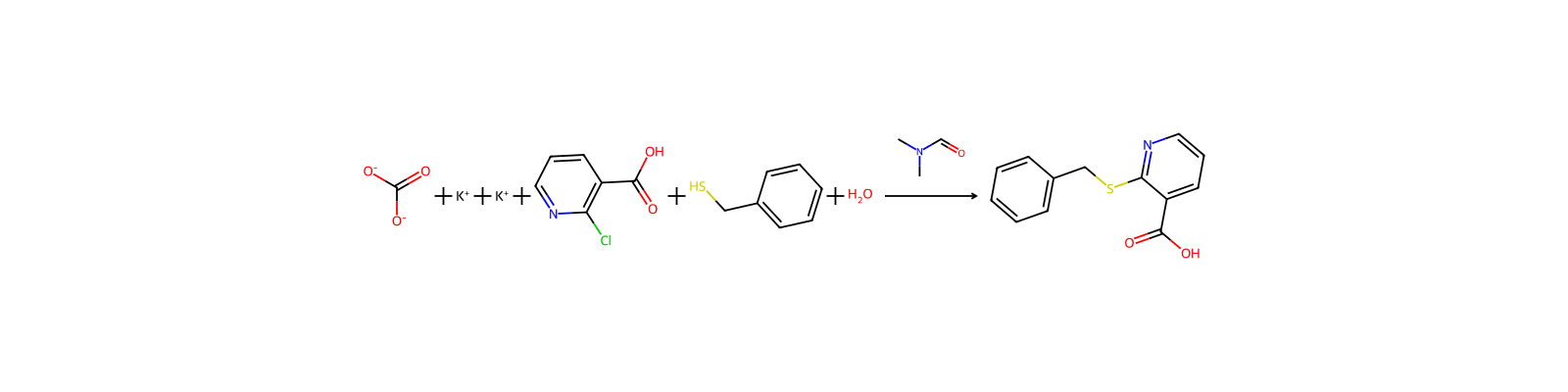
Reaktionsgleichung von HRID 9644
HRID 9644als Eduktuspto-grants-2006_08
Reaktionsgleichung von HRID 15291
HRID 15291als Eduktuspto-grants-2010_06
Reaktionsgleichung von HRID 18808
HRID 18808als Eduktuspto-grants-2010_06
Reaktionsgleichung von HRID 20248
HRID 20248als Eduktuspto-grants-2010_06
Reaktionsgleichung von HRID 20249
HRID 20249als Eduktuspto-grants-2010_06
Reaktionsgleichung von HRID 20250
HRID 20250als Eduktuspto-grants-2010_06
Reaktionsgleichung von HRID 22433
HRID 22433als Eduktuspto-grants-1995_06
Reaktionsgleichung von HRID 25759
HRID 25759als Eduktuspto-grants-2005_02
Seite 1 von 92

Notizen zur Verbindung

Wird geladen…

Auf dieser SeiteGrundinformationenÜberblickNamen und BezeichnerEigenschaftenSicherheit und RegulatorischesChemie und IndustrieZugehörige ReaktionenNotizen zur Verbindung
Weitere Aktionen
Neue NotizNeue ReaktionAnfrage stellen
202-862-5
Nikkaji
J4.011H

insoluble in water; soluble in oils

1 ml in 1 ml 95% alcohol (in ethanol)

Flash Point158 °F (70 °C)(Closed cup)
Boiling Point · 3 Einträge

194-195 °C

194.00 to 195.00 °C. @ 760.00 mm Hg

194-195 °C

DecompositionWhen heated to decomposition and on contact with acid or acid fumes it emits highly toxic fumes of /sulfur oxides/.

Physikochemische Eigenschaften

Schmelzpunkt
30 °C · −30 °C (−22 °F; 243 K)
Siedepunkt
195 °C · 195 °C (383 °F; 468 K)
Dichte
1.058 g/mL · 1.058 g/mL
Dampfdichte
4 · >4 (vs air)
FEMA
2147 · 2147 | BENZYL MERCAPTAN
Brechungsindex
1.5751 · 1.5751 (20 °C)
Flammpunkt
70 °C · 70 °C (158 °F; 343 K)
storage temp.
2 · 2-8°C
Löslichkeit
Chloroform (Slightly), Methanol (Slightly)
pka
9.43 · 9.43(at 25℃)
Aggregatzustand
liquid
Farbe
colourless
Geruch (Odor)
0.1 % · at 0.10 % in propylene glycol. sharp alliaceous onion sulfurous garlic horseradish mint coffee
Geruchsart
alliaceous
Biologische Quelle
synthetic
Explosionsgrenze
1 % · 1%(V)
Wasserlöslichkeit
Not miscible or difficult to mix in water.
JECFA Number
526 · 526
Merck
14 · 14,9322
BRN
605864 · 605864
Henry's Law Constant
4.7 · 4.7×10-2 mol/(m3Pa) at 25℃, HSDB (2015)
Stabilität
Stable. Combustible.
Major Application
flavors and fragrances
InChI
1S/C7H8S/c8-6-7-4-2-1-3-5-7/h1-5,8H,6H2
InChIKey
UENWRTRMUIOCKN-UHFFFAOYSA-N
SMILES
SCc1ccccc1
LogP
2.48 · 2.48
CAS Datenbank
100 · 100-53-8(CAS DataBase Reference)
NIST chemische Informationen
Benzenemethanethiol(100-53-8)
EPA chemische Informationen
Benzenemethanethiol (100-53-8)
Special ReportsEPA/Office of Pollution Prevention and Toxics; High Production Volume (HPV) Challenge Program's Robust Summaries and Test Plans. Available from: http://www.epa.gov/chemrtk/viewsrch.htm on Benzenemethanethiol (100-53-8) as of June 2, 2005.
NFPA Hazard Classification · 3 Einträge

2 - Materials that, under emergency conditions, can cause temporary incapacitation or residual injury.

2 - Materials that must be moderately heated or exposed to relatively high ambient temperatures before ignition can occur. Materials would not under normal conditions form hazardous atmospheres with air, but under high ambient temperatures or under moderate heating could release vapor in sufficient quantities to produce hazardous atmospheres with air.

0 - Materials that in themselves are normally stable, even under fire conditions.

Hazard Classes and Categories · 2 Einträge

Acute Tox. 4 (100%)

Flammable liquids - Category 4

Hazardous Reactivities and Incompatibilities · 2 Einträge

Can react vigorously with oxidizing materials.

Oxidizes in air to dibenzyl disulfide.

Sicherheit und Schutzausrüstung

Fire Fighting ProceduresTo fight fire use foam, carbon dioxide, dry chemical.
Storage Conditions · 1 Eintrag

In general, materials which are toxic as stored or which can decompose into toxic components ... should be stored in a cool, well-ventilated place, out of direct rays of the sun, away from areas of high fire hazard, and should be periodically inspected... Incompatible materials should be isolated from each other.

Disposal Methods · 1 Eintrag

SRP: The most favorable course of action is to use an alternative chemical product with less inherent propensity for occupational exposure or environmental contamination. Recycle any unused portion of the material for its approved use or return it to the manufacturer or supplier. Ultimate disposal of the chemical must consider: the material's impact on air quality; potential migration in soil or water; effects on animal, aquatic, and plant life; and conformance with environmental and public health regulations.

Preventive Measures · 1 Eintrag

SRP: Local exhaust ventilation should be applied wherever there is an incidence of point source emissions or dispersion of regulated contaminants in the work area. Ventilation control of the contaminant as close to its point of generation is both the most economical and safest method to minimize personnel exposure to airborne contaminants.

Toxikologische Informationen

Ecotoxicity Values · 2 Einträge

EC50 Daphnia magna straus (Waterflea, age <24 hr; immobilization) 0.26 mg/L/24 hr (95% confidence interval: 0.079-0.51 mg/L); static, temperature 19.5-20.5 °C, dissolved oxygen >2 mg/L, pH 7.97-8.17 /99.45% pure Benzyl mercaptan/

EC50 Daphnia magna straus (Waterflea, age <24 hr; immobilization) 0.15 mg/L/48 hr; static, temperature 19.5-20.5 °C, dissolved oxygen >2 mg/L, pH 7.97-8.17 /99.45% pure Benzyl mercaptan/

Environmental Fate · 3 Einträge

TERRESTRIAL FATE: Based on a classification scheme(1), an estimated Koc value of 520(SRC), determined from a structure estimation method(2), indicates that benzyl mercaptan is expected to have low mobility in soil(SRC). Volatilization of benzyl mercaptan from moist soil surfaces is expected to be an important fate process(SRC) given an estimated Henry's Law constant of 2.1X10⁻⁴ atm-cu m/mole(SRC), using a fragment constant estimation method(3). Benzyl mercaptan is not expected to volatilize from dry soil surfaces(SRC) based upon an estimated vapor pressure of 0.47 mm Hg(SRC), determined from a fragment constant method(4). Biodegradation data were not available(SRC, 2005).

AQUATIC FATE: Based on a classification scheme(1), an estimated Koc value of 520(SRC), determined from a structure estimation method(2), indicates that benzyl mercaptan is expected to adsorb to suspended solids and sediment(SRC). Volatilization from water surfaces is expected(3) based upon a estimated Henry's Law constant of 2.1X10⁻⁴ atm-cu m/mole(SRC), developed using a fragment constant estimation method(4). Using this Henry's Law constant and an estimation method(3), volatilization half-lives for a model river and model lake are 8 hours and 6 days, respectively(SRC). According to a classification scheme(5), an estimated BCF of 16(SRC), from an estimated log Kow of 2.5(6) and a regression-derived equation(7), suggests the potential for bioconcentration in aquatic organisms is low(SRC). Biodegradation data were not available(SRC, 2005).

ATMOSPHERIC FATE: According to a model of gas/particle partitioning of semivolatile organic compounds in the atmosphere(1), benzyl mercaptan, which has an estimated vapor pressure of 0.47 mm Hg at 25 °C(SRC), determined from a fragment constant method(2), is expected to exist solely as a vapor in the ambient atmosphere. Vapor-phase benzyl mercaptan is degraded in the atmosphere by reaction with photochemically-produced hydroxyl radicals(SRC); the half-life for this reaction in air is estimated to be 9 hours(SRC), calculated from its rate constant of 4.5X10⁻¹¹ cu cm/molecule-sec at 25 °C(SRC) that was derived using a structure estimation method(3). Benzyl mercaptan does contain chromophores that absorb at wavelengths >290 nm and therefore is expected to be susceptible to direct photolysis by sunlight(SRC).

Adverse EffectsOther Poison - Chemical Asphyxiant
Soil Adsorption/Mobility · 1 Eintrag

Using a structure estimation method based on molecular connectivity indices(1), the Koc of benzyl mercaptan can be estimated to be 520(SRC). According to a classification scheme(2), this estimated Koc value suggests that benzyl mercaptan is expected to have low mobility in soil.

Natural Pollution Sources · 2 Einträge

NATURALLY OCCURS IN COFFEE.

...BENZYL MERCAPTAN, WHICH ORIGINATES FROM A WEED (LAND CRESS), SOMETIMES PRESENT IN GRASSLAND.

Human Toxicity Excerpts/SIGNS AND SYMPTOMS/ Can cause mild irritation to mucous membranes.
Artificial Pollution SourcesBenzyl mercaptan's production and use as an odorant and in flavors(1) and chemical intermediate in the product of pesticides(2) may result in its release to the environment through various waste streams(SRC).
Environmental Bioconcentration · 1 Eintrag

An estimated BCF of 16 was calculated for benzyl mercaptan(SRC), using an estimated log Kow of 2.48(1) and a regression-derived equation(2). According to a classification scheme(3), this BCF suggests the potential for bioconcentration in aquatic organisms is low(SRC).

Volatilization from Water/Soil · 1 Eintrag

The Henry's Law constant for benzyl mercaptan is estimated as 2.1X10⁻⁴ atm-cu m/mole(SRC) using a fragment constant estimation method(1). This Henry's Law constant indicates that benzyl mercaptan is expected to volatilize from water surfaces(2). Based on this Henry's Law constant, the volatilization half-life from a model river (1 m deep, flowing 1 m/sec, wind velocity of 3 m/sec)(2) is estimated as 8 hours(SRC). The volatilization half-life from a model lake (1 m deep, flowing 0.05 m/sec, wind velocity of 0.5 m/sec)(2) is estimated as 6 days(SRC). Benzyl mercaptan is not expected to volatilize from dry soil surfaces(SRC) based upon an estimated vapor pressure of 0.47 mm Hg(SRC), determined from a fragment constant method(3).

Non-Human Toxicity Excerpts · 5 Einträge

/LABORATORY ANIMALS: Acute Exposure/ alpha-Toluenethiol rated 1 /(slight irritation)/ on rabbit eyes. ...Tested externally on eyes of rabbits and have been rated numerically on a scale of 1-10 according to degree of injury observed after 24 hr, paying particular attention to condition of cornea. Most severe injuries have been rated 10.

/LABORATORY ANIMALS: Acute Exposure/ ... A concentration of 17 mg/L (3347 ppm) was lethal to mice in 30 min, and a concentration of 6.3 mg/L (1240 ppm) was lethal in 2 hr.

/LABORATORY ANIMALS: Acute Exposure/ Clinical signs /of toxicity in male Wistar rats and Swiss mice exposed for 4 hr to/... several thiols /including benzyl mercaptan, 97% pure at doses of 58, 98, 130, 145, 185, and 235 ppm/ tested by inhalation: - Maximal sublethal and lethal concentrations induced characteristic symptoms of toxicity, i.e. increased respiration and restlessness (hyperactivity in mice), incoordinated movement and staggering gait, muscular weakness, partial skeletal muscle paralysis beginning in the hind limbs, light to severe cyanosis, tolerance of prone position, and mild to heavy sedation. - Fatal Responses usually followed one of two patterns: (1) animals exposed to maximal lethal concentrations died from respiratory arrest while in or shortly after removal from the chamber, and (2) those animals exposed to minimal lethal concentrations died while in a semiconscious condition of long duration. - The aromatic thiols induced some lethargy and sedation which was quickly terminated upon exposure to normal atmosphere. - Most of the thiols were irritating to the mucus membranes within approximately 15 minutes after exposure to high concentrations as evidenced by their rubbing of the eyes and nose, eye closure, occasional sneezing, watering of the eyes, and retracting of the head. /Aliphatic and Aromatic Thiols (Mercaptans)/

/LABORATORY ANIMALS: Acute Exposure/ /Benzyl mercaptan, 99.3% pure (sample contained 0.04% Dibenzylsulphide and 0.13% Dibenzyldisulphide)/... was applied in its original form to the dorsal area skin (10% surface area) of one group of 10 Sprague-Dawley rats (5 males and 5 females) at a dose of 2000 mg/kg. The test site was then covered by semi-occlusive dressing for 24 hours. Clinical signs, mortality and body weight gain were checked for a period of 14 days following the single administration of the test substance. ...No clinical signs and no cutaneous reactions were observed during the study. General behavior and body weight was not affected. Macroscopic examination of the main organs of the animals revealed no apparent abnormalities.

For more Non-Human Toxicity Excerpts (Complete) data for BENZYL MERCAPTAN (9 total), please visit the HSDB record page.

Environmental Abiotic Degradation · 1 Eintrag

The rate constant for the vapor-phase reaction of benzyl mercaptan with photochemically-produced hydroxyl radicals has been estimated as 4.5X10⁻¹¹ cu cm/molecule-sec at 25 °C(SRC) using a structure estimation method(1). This corresponds to an atmospheric half-life of about 9 hours at an atmospheric concentration of 5X10+5 hydroxyl radicals per cu cm(1). Benzyl mercaptan is not expected to undergo hydrolysis in the environment due to the lack of hydrolyzable functional groups(2). Benzyl mercaptan does contain chromophores that absorb at wavelengths >290 nm and therefore is expected to be susceptible to direct photolysis by sunlight(SRC).

Probable Routes of Human Exposure · 1 Eintrag

Occupational exposure to benzyl mercaptan may occur through inhalation and dermal contact with this compound at workplaces where benzyl mercaptan is produced or used. Use data indicate that the general population may be exposed to benzyl mercaptan ingestion of food products containing benzyl mercaptan as a flavoring. (SRC)

Regulatorische Informationen

FDA Requirements · 1 Eintrag

Benzyl mercaptan is a food additive permitted for direct addition to food for human consumption as a synthetic flavoring substance and adjuvant in accordance with the following conditions: a) they are used in the minimum quantity required to produce their intended effect, and otherwise in accordance with all the principles of good manufacturing practice, and 2) they consist of one or more of the following, used alone or in combination with flavoring substances and adjuvants generally recognized as safe in food, prior-sanctioned for such use, or regulated by an appropriate section in this part.

Sicherheitsdaten

F
10-13-23
wgk
3
tsca
TSCA listed
ridadr
2810
hs_code
29309090
RTECS-Nr.
XT8650000
risk_code
22-23-50/53
hazard_code
T,N
hazard_note
Harmful/Lachrymator
safety_code
23-26-36/37/39-45-61-60
hazard_class
6.1
packing_group
III
Speicherklasse
6.1A - Combustible acute toxic Cat. 1 and 2very toxic hazardous materials
Giftige Stoffe Daten
100-53-8(Hazardous Substances Data)
Hazard Classifications
Acute Tox. 2 InhalationAcute Tox. 4 OralAquatic Acute 1Aquatic Chronic 1
Cellular LocationsCytoplasm

Verwendung und Herstellung

Uses · 5 Einträge

Used as an odorant, synthetic flavor, and to make pesticides; [HSDB] Used as a bacteriostat; [Hawley]

Odorant; flavors

Synthetic flavoring agent; reported uses in non-alcoholic beverages 0.15-0.25 ppm; ice cream, ices, etc 0.15-0.50 ppm; candy 0.50-0.75 ppm; baked goods 0.50-0.75 ppm.

Benzyl mercaptan is a food additive used as a synthetic flavoring substance and adjuvant.

Chemical intermediate in the production of pesticides

U.S. Production · 1 Eintrag

Benzenemethanethiol is listed as a High Production Volume (HPV) chemical (65FR81686). Chemicals listed as HPV were produced in or imported into the U.S. in >1 million pounds in 1990 and/or 1994. The HPV list is based on the 1990 Inventory Update Rule. (IUR) (40 CFR part 710 subpart B; 51FR21438).

Methods of Manufacturing · 2 Einträge

Benzyl chloride + sodium hydrosulfide (thiolation).

Thiols can be prepared by a variety of methods. The most-utilized of these synthetic methods for tertiary and secondary thiols is acid-catalyzed synthesis; for normal and secondary thiols, the most-utilized methods are free-radical-initiated, alcohol substitution, or halide substitution; for mercaptoalcohols, the most-utilized method is oxirane addition; and for mercaptoacids and mercaptonitriles, the most-utilized methods are Michael-type additions. /Thiols/

Use Classification · 5 Einträge

Flavoring Agents -> JECFA Flavorings Index

Flavouring Agent -> FLAVOURING_AGENT -> JECFA Functional Classes

Flavouring Agent -> FLAVOURING_AGENT -> JECFA Functional Classes

Flavouring Agent -> FLAVOURING_AGENT -> JECFA Functional Classes

Flavouring Agent -> FLAVOURING_AGENT -> JECFA Functional Classes

General Manufacturing Information · 3 Einträge

Benzenemethanethiol: ACTIVE

...Benzyl mercaptan, which originates from a weed (land cress), sometimes present in grassland, can also cause off-flavors in milk.

FEMA No. 2147

Anwendungen · 2 Einträge

OccurrenceReported found in coffee.

VerwendenBenzyl mercaptan can be used as:A nucleophilic reagent in the cleavage of proanthocyanidins into their constitutive subunits.A reactant in the synthesis of dithiocarboxylic esters in the presence of phosphorus pentasulfide as a catalyst.A modifier to functionalize the surface of CNT for enhanced interaction with Pt-nanoparticles.

Darstellung

synthetischeFrom benzyl chloride and potassium hydrosulfide.

Vor- und nachgelagerte Produkte

Vorgelagerte Rohstoffe

Imidothiocarbonsäure-phenylmethyl-ester-monohydrochloridPotassium hydrogensulfide,Benzylchloriddilute sulphuric acidDesiccantFormaldehydThioharnstoff

Nachgelagerte Produkte

4-(Benzylthio)-3-nitrobenzaldehydeBenzylmethylsulfidS-(1-Methyl-1-phenylethyl)piperidin-1-carbothioatDibenzyldisulfidNicosulfuronPyridaben E.C.Pyridaben(E)-ChalkonS-Methyl-S-benzyl sulfoximinealpha-Toluolsulfonylfluorid1-(Benzylthio)acetonbis(benzylsulfanyl)methanethioneBenzyl benzodithioateBenzaldehyde, 3-[(phenylmethyl)thio]-