

Grundinformationen
- Standard-SMILES
COc1ccc(Cl)c(N)c1- InChIKey
GBOUQGUQUUPGLO-UHFFFAOYSA-N- Summenformel
- C7H8ClNO
- Durchschnittliche Molmasse
- 157,6 g/mol
- Monoisotopische Masse
- 157,0294416
Namen und Bezeichner
- Bevorzugter Name
- 6-Chloro-m-anisidine
- IUPAC
- 2-chloro-5-methoxyaniline
- Englischer Name
- 2-Chloro-5-methoxyaniline
- Summenformel
- C7H8ClNO
- Molmasse
- 157.6
Namen und Synonyme
2401-24-36-Chloro-m-anisidineBenzenamine, 2-chloro-5-methoxy-8UQ785S8U6EINECS 219-277-62-CHLORO-5-METHOXYBENZENAMINEDTXSID70178745RefChem:541851DTXCID30101236219-277-62-Chloro-5-methoxyaniline3-Amino-4-chloroanisole
Weitere Namen anzeigen
Eramod Impurity 52-Chloro-5-methoxyan2-CHLORO-M-ANISIDINE2-Chloro-5-anisidine2-Chloro-5-methoxyani2-Chloro-5-Methxyaniline6-Chloro-m-anisidine (NH2=1)
MFCD00047830EN300-556362-chloro-5-methoxy-aniline2-CHLORO-5-METHOXY-PHENYLAMINE3-methoxy-6-chloroaniline6-chloro-3-methoxyaniline2-chloro-5-methoxyphenylamineSCHEMBL110854
Datenbank-Bezeichner
- CAS
2401-24-3- PubChem CID
- 75460
- DTXSID
DTXSID70178745- UNII
- 8UQ785S8U6
- EC Number
- 219-277-6
- Nikkaji
- J160.869J
Eigenschaften
Berechnete Struktureigenschaften
- XLogP
- 1,6
- Polarare Oberfläche (TPSA)
- 35,3 Ų
- H-Brücken-Donoren
- 1
- H-Brücken-Akzeptoren
- 2
- Frei drehbare Bindungen
- 1
- Schwere Atome
- 10
- Formalladung
- 0
- Komplexität
- 110
Physikochemische Eigenschaften
- Schmelzpunkt
- 207 °C · 207 °C (dec.)(lit.)
- Siedepunkt
- 135 · 135-137°C 12mm
- Dichte
- 1.261 g/mL · 1.261 g/mL at 25 °C
- Brechungsindex
- 1.5848 · 1.5848
- Flammpunkt
- 135 · 135-137°C/12mm
- storage temp.
- Keep in dark place,Inert atmosphere,Room temperature
- Aggregatzustand
- powder to lump to clear liquid
- pka
- 2.23 · 2.23±0.10(Predicted)
- Farbe
- White or Colorless to Yellow to Orange
- Wasserlöslichkeit
- Slightly soluble in water.
- BRN
- 2082193 · 2082193
- InChI
- InChI=1S/C7H8ClNO/c1-10-5-2-3-6(8)7(9)4-5/h2-4H,9H2,1H3
- InChIKey
- GBOUQGUQUUPGLO-UHFFFAOYSA-N
- SMILES
- C1(N)=CC(OC)=CC=C1Cl
- CAS Datenbank
- 2401 · 2401-24-3(CAS DataBase Reference)
Sicherheit und Regulatorisches
GHS-Klassifizierung
GHS Classification
Danger
H301 (14.9%): Toxic if swallowed [Danger Acute toxicity, oral];H302 (85.1%): Harmful if swallowed [Warning Acute toxicity, oral];H311 (14.9%): Toxic in contact with skin [Danger Acute toxicity, dermal];H312 (85.1%): Harmful in contact with skin [Warning Acute toxicity, dermal];H315 (97.9%): Causes skin irritation [Warning Skin corrosion/irritation];H319 (97.9%): Causes serious eye irritation [Warning Serious eye damage/eye irritation];H335 (87.2%): May cause respiratory irritation [Warning Specific target organ toxicity, single exposure; Respiratory tract irritation];H373 (10.6%): May causes damage to organs through prolonged or repeated exposure [Warning Specific target organ toxicity, repeated exposure]
P260, P261, P262, P264, P264+P265, P270, P271, P280, P301+P316, P301+P317, P302+P352, P304+P340, P305+P351+P338, P316, P317, P319, P321, P330, P332+P317, P337+P317, P361+P364, P362+P364, P403+P233, P405, and P501 (click each P-code to see the statement)
Aggregated GHS information provided per 47 reports by companies from 7 notifications to the ECHA C&L Inventory. Each notification may be associated with multiple companies.;Information may vary between notifications depending on impurities, additives, and other factors. The percentage value in parenthesis indicates the notified classification ratio from companies that provide hazard codes. Only hazard codes with percentage values above 10% are shown. For more detailed information, please visit ECHA C&L website.
Gefahrenhinweise
Hazard Classes and CategoriesAcute Tox. 3 (14.9%);Acute Tox. 4 (85.1%);Acute Tox. 3 (14.9%);Acute Tox. 4 (85.1%);Skin Irrit. 2 (97.9%);Eye Irrit. 2 (97.9%);STOT SE 3 (87.2%);STOT RE 2 (10.6%)
Sicherheitsdaten
- wgk
- 3
- ridadr
- 2811
- hs_code
- 2922290090
- risk_code
- 36/37/38-20/21/22
- hazard_code
- Xi,T,Xn
- safety_code
- 26-37/39-36-36/37
- hazard_class
- 6.1
- packing_group
- III
- Speicherklasse
- 13 - Non Combustible Solids
- Hazard Classifications
- Acute Tox. 4 DermalAcute Tox. 4 OralEye Irrit. 2Skin Irrit. 2STOT SE 3
Chemie und Industrie
Anwendungen
Verwenden2-Chloro-5-methoxyaniline is used in the preparation of 4-amino-5-chloro-2-methoxyphenyl thiocyanate.
Vor- und nachgelagerte Produkte
Vorgelagerte Rohstoffe
Nachgelagerte Produkte
Anbieter50 Anbieter
湖北永阔科技有限公司027-59223108 15972152991 · [email protected]
上海阿拉丁生化科技股份有限公司400-6206333 13167063860 · [email protected]
湖北万得化工有限公司15377098680 15377098680 · [email protected]
上海策嵘生物科技有限公司[email protected]
苏州启航生物科技有限公司18151111370 · [email protected]
温州共赢化学有限公司+86-0086-577-64498589 +86-15355981851 · [email protected]
上海泰矶林实业有限公司02150630626 17717886015 · [email protected]
Dayang Chem (Hangzhou) Co.,Ltd.+86-0571-88938639 17705817739 · [email protected]
韶远科技(上海)有限公司021-50795510 4000665055 · [email protected]
淮安嘉目生物科技有限公司0517-83187139 18205232085 · [email protected]
毕佳索(上海毕得医药科技股份有限公司)400-6005915 · [email protected]
南通萧畅医药贸易有限公司0513-82104991 18862997351 · [email protected]
上海迈瑞尔生化科技有限公司4006356688 18621169109 · [email protected]
上海辅欣医药科技有限公司+86-021-021-50872116 · [email protected]
阿法埃莎(中国)化学有限公司400-6106006 · [email protected]
安耐吉化学&3A(安徽泽升科技股份有限公司)400-0056266 · [email protected]
广东云星生物技术有限公司0751-18902340975/189023400307 18902340307 · [email protected]
上海相辉医药科技有限公司13761987713 · [email protected]
山东沃德森生物科技有限公司0531-88723173 18596073690 · [email protected]
北京依特能化学科技有限责任公司010-59484199 18611897322;18611897322 · [email protected]
杭州东帆化学有限公司86-0571-85151182
山东西亚化学有限公司13355009207 13355009207 · [email protected]
苏州思变化学技术有限公司0512-65617459 18915409046 · [email protected]
南京诺利斯医药科技有限公司13901585132 · [email protected]
TCI AMERICA800-4238616 · [email protected]
TOKYO CHEMICAL INDUSTRY CO., LTD.03-36680489 · [email protected]
TCI Europe320-37350700 · [email protected]
上海睿升化工科技有限公司+86-021-50935922
上海贺康生物技术有限公司17721021104 18939837085 · [email protected]
上海将来实业股份有限公司400-0066400 13621662912 · [email protected]
HBCChem, Inc.+1-510-219-6317 · [email protected]
上海毕得医药科技股份有限公司400-164-7117 18317119277 · [email protected]
上海石洋化工有限公司021-56795766 · [email protected]
成都零六生物科技有限公司400-1166-196 13458535857 · [email protected]
上海纳谦化学科技有限公司13598610367 13598610367 · [email protected]
南京多隆生物科技有限公司18905173768 · [email protected]
深圳摩科生化科技有限公司18627923403 · [email protected]
江苏艾康生物医药研发有限公司025-66028182 17714375163 · [email protected]
湖北巨胜科技有限公司027-59599241 18871490274 · [email protected]
Sigma-Aldrich西格玛奥德里奇(上海)贸易有限公司021-61415566 800-8193336 · [email protected]
深圳振强药物研发有限公司+86-0755-66853366 +86-13670046396 · [email protected]
sgtlifesciences pvt ltd+91-8790379245 · [email protected]
上海石洋化工有限公司+86-021-56795779 +86-13651600618 · [email protected]
郑州阿尔法化工有限公司0371-53765687 18937137882 · [email protected]
Guangzhou Yuheng Pharmaceutical Technology Co., Ltd+8613580539051 · [email protected]
上海炎泽化工有限公司15345144255 19901447308 · [email protected]
上海西陇生化科技有限公司021-52907766-8042
上海源叶生物科技有限公司13636370518 · [email protected]
湖北齐飞医药化工有限公司027-59322506 18071128681 · [email protected]
安泰精细化工技术有限公司18503026267 · [email protected]
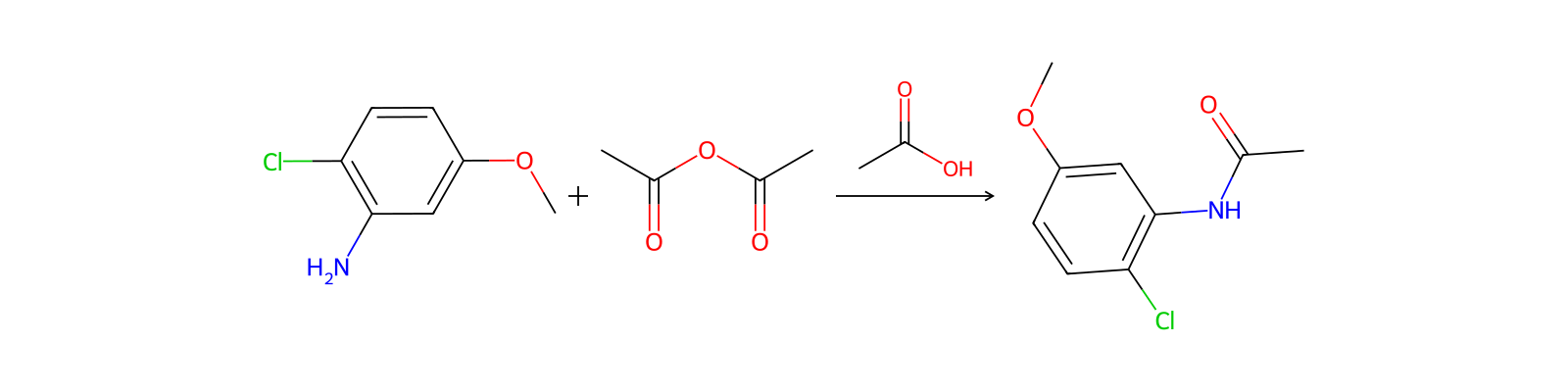
Zugehörige Reaktionen
53



Verknüpfte Notizen
Wird geladen…