Tricyclohexylphosphin
Tricyclohexylphosphine
Grundinformationen
- CAS
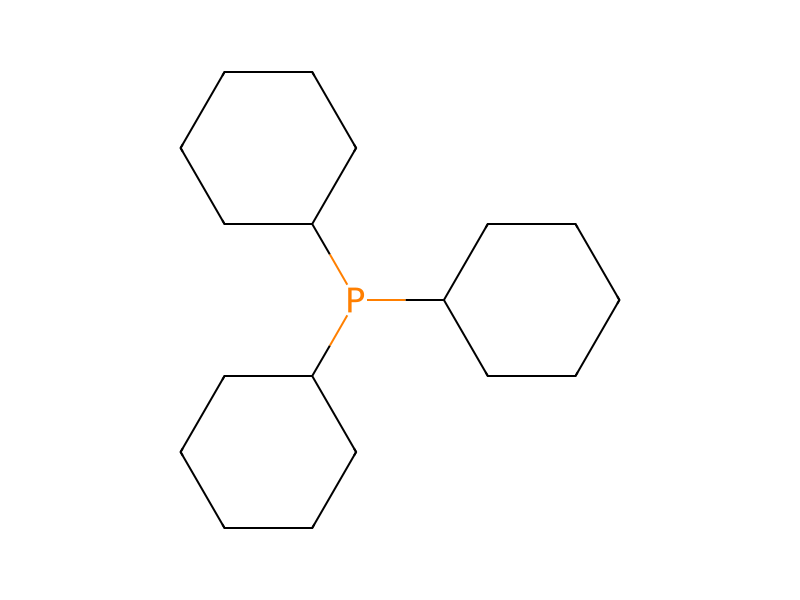
2622-14-2- Standard-SMILES
C1CCC(P(C2CCCCC2)C2CCCCC2)CC1- InChIKey
WLPUWLXVBWGYMZ-UHFFFAOYSA-N- Summenformel
- C18H33P
- Durchschnittliche Molmasse
- 280,4 g/mol
- Monoisotopische Masse
- 280,23198769
Namen und Bezeichner
- Bevorzugter Name
- Tricyclohexylphosphine
- IUPAC
- tricyclohexylphosphane
- Lokaler Name
- Tricyclohexylphosphin
- Englischer Name
- Tricyclohexyl phosphine
- Summenformel
- C18H33P
- Molmasse
- 280.43
Namen und Synonyme
TricyclohexylphosphinePhosphine, tricyclohexyl-EINECS 220-069-2NSC 158657DTXSID9062562Phosphine, tricyclohexylRefChem:191427DTXCID8037469220-069-2WLPUWLXVBWGYMZ-UHFFFAOYSA-N2622-14-2TRICYCLOHEXYL PHOSPHINE
Weitere Namen anzeigen
TCHPP(4-MeOC6H4)3TricycLProtein TCHPtricyclohexylphospine
TricyclohexylphosphanePCy3Tricyclohexyl-phosphaneMFCD00003853tris(cyclohexyl)phosphineP(Cy)3Cy3PP(cHex)3
Datenbank-Bezeichner
- CAS
2622-14-2- PubChem CID
- 75806
- DTXSID
DTXSID9062562- UNII
- 34HJS55VCG
- EC Number
- 220-069-2
- Nikkaji
- J87.295D
Eigenschaften
Berechnete Struktureigenschaften
- XLogP
- 5,4
- Polarare Oberfläche (TPSA)
- 0 Ų
- H-Brücken-Donoren
- 0
- H-Brücken-Akzeptoren
- 0
- Frei drehbare Bindungen
- 3
- Schwere Atome
- 19
- Formalladung
- 0
- Komplexität
- 202
Experimentelle und physikochemische Eigenschaften
Chemical ClassesOther Classes -> Phosphorus Compounds
Physical DescriptionCrystalline powder or chunks; [Sigma-Aldrich MSDS]
Physikochemische Eigenschaften
- Schmelzpunkt
- 81 · 81-83 °C (lit.)
- Siedepunkt
- 383.4 · 383.4±9.0 °C | Condition: Press: 760 Torr
- Dichte
- 0.909 g/mL · 0.909 g/mL at 25 °C
- Flammpunkt
- 48 °F · 48 °F
- storage temp.
- 2 · Inert atmosphere,2-8°C
- Löslichkeit
- Chloroform (Slightly), DMSO (Slightly, Heated, Sonicaetd), Ethyl Acetate (Slightly)
- Aggregatzustand
- Solution
- Wichte
- 0.9 · 0.9
- Farbe
- White to off-white
- Wasserlöslichkeit
- Soluble in most organic solvents. Insoluble in water.
Sicherheit und Regulatorisches
Sicherheitsangaben dienen nur zur Orientierung und ersetzen weder das Sicherheitsdatenblatt (SDB) des Lieferanten noch geltende Vorschriften oder eine fachliche Bewertung.
GHS-Klassifizierung
GHS Classification
Danger
H251 (18.7%): Self-heating; may catch fire [Danger Self-heating substances and mixtures]
P235, P261, P264, P264+P265, P270, P271, P273, P280, P301+P316, P301+P317, P302+P352, P304+P340, P305+P351+P338, P319, P321, P330, P332+P317, P337+P317, P362+P364, P391, P403+P233, P405, P407, P410, P413, P420, and P501 (click each P-code to see the statement)
Aggregated GHS information provided per 91 reports by companies from 14 notifications to the ECHA C&L Inventory. Each notification may be associated with multiple companies.
Gefahrenhinweise
Hazards SummaryA skin and strong eye irritant; [Sigma-Aldrich MSDS] See Triphenylphosphine.
Hazard Classes and CategoriesSelf-heat. 1 (18.7%)
Sicherheitsdaten
- wgk
- 3
- tsca
- TSCA listed
- ridadr
- UN 2056 3/PG 2
- hs_code
- 29319090
- risk_code
- 36/37/38-22-37/38-36-19-11-67-65-63-48/20-40
- hazard_code
- Xi,Xn,F
- safety_code
- 26-36/37-62-37/39-36-33-29-16
- hazard_class
- 3
- packing_group
- III
- Speicherklasse
- 3 - Flammable liquids
- Hazard Classifications
- Aquatic Chronic 3Asp. Tox. 1Eye Irrit. 2Flam. Liq. 2Repr. 2Skin Irrit. 2STOT RE 2STOT SE 3
Chemie und Industrie
Verwendung und Herstellung
General Manufacturing InformationPhosphine, tricyclohexyl-: ACTIVE
Anwendungen
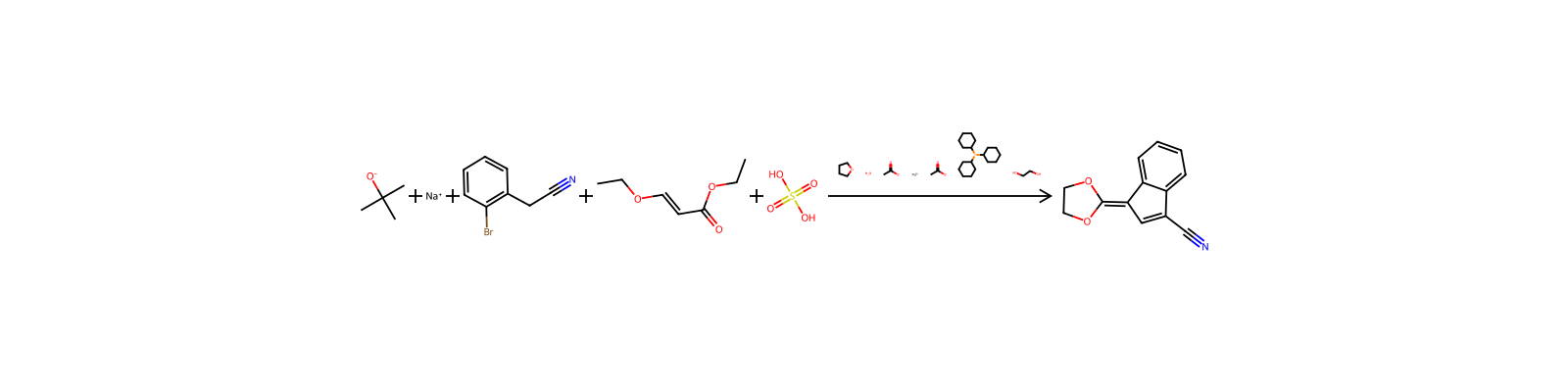
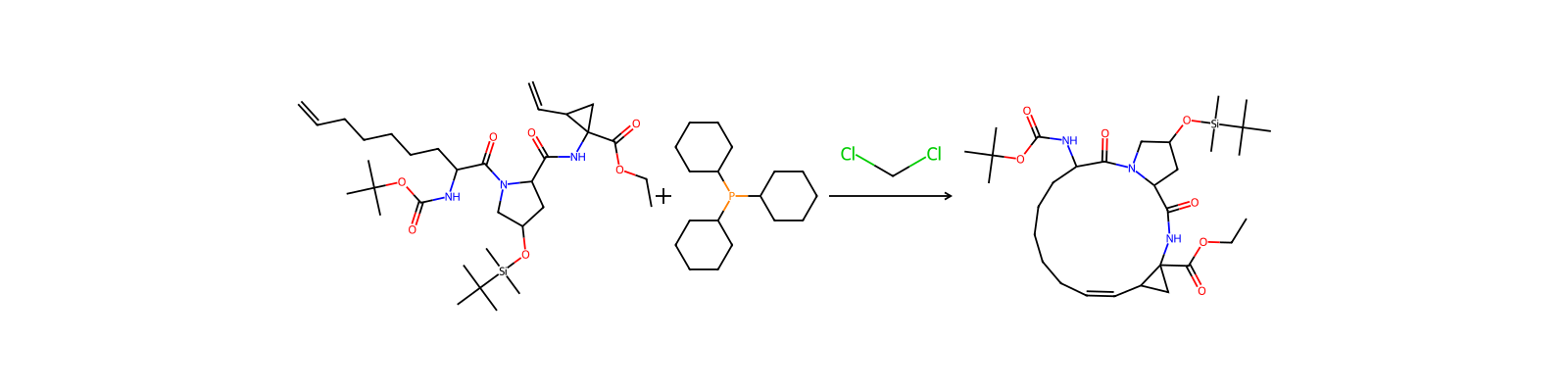
VerwendenTricyclohexyl Phosphine is a ligand catalyst used primarily in organometallic chemistry. Ligand used in the Pd-catalyzed coupling of malononitrile with aryl halides. suzuki reaction: Bulky phosphine ligand used with a Pd(0)-triolefinic macrocycle catalyst for Suzuki coupling of aryl bromides and chlorides. This ligand is applied with Ni as a key intermediate in the formation of cylcopentane compounds. As a reagent, Tricyclohexylphosphine is used for a range of metal-catalyzed organic transformations. Crabtree's catalyst is an organoiridium compound containing tricyclohexyl phosphine used for hydrogenation of mono-, di-, tri-, and tetra- substituted substrates and hydrogen transfer reactions. Grubbs' catalysts consists of transition metal ruthenium and tricylohexyl phosphine utilized in olefin metathesis in synthetic organic chemistry.
Vor- und nachgelagerte Produkte
Vorgelagerte Rohstoffe
Zugehörige Reaktionen
2.387





Notizen zur Verbindung
Wird geladen…