

Grundinformationen
- Standard-SMILES
O=C=Nc1ccc(Cl)c(Cl)c1- InChIKey
MFUVCHZWGSJKEQ-UHFFFAOYSA-N- Summenformel
- C7H3Cl2NO
- Durchschnittliche Molmasse
- 188,01 g/mol
- Monoisotopische Masse
- 186,95916908
Überblick
Isocyanic acid, 3,4-dichlorophenyl ester is a white to yellow solid. Used as a chemical intermediate and in organic synthesis. (EPA, 1998)
Namen und Bezeichner
- Bevorzugter Name
- 3,4-Dichlorophenyl isocyanate
- IUPAC
- 1,2-dichloro-4-isocyanatobenzene
- Lokaler Name
- 3,4-Dichlorphenylisocyanat
- Englischer Name
- Isocyanic acid 3,4-dichlorophenyl ester
- Summenformel
- C7H3Cl2NO
- Molmasse
- 188.01
Namen und Synonyme
3,4-DICHLOROPHENYL ISOCYANATEBenzene, 1,2-dichloro-4-isocyanato-3,4-DichlorfenylisokyanatIsocyanic acid, 3,4-dichlorophenyl esterDTXSID9033008HSDB 5348UNII-OZW0B7F1DUOZW0B7F1DU3,4-Dichlorfenylisokyanat [Czech]EINECS 203-026-2NSC 76605BRN 0608325
Weitere Namen anzeigen
dcpi1,2-Dichloro-4-isocyanatobenzene3,4-DCPIIsocyanic acid 3,4-dMethyl-Γ-ChlorobutyrateDichloroisocyanatobenzeneDICHLOROPHENYL ISOCYANATES3,4-Dichlorphenylisocyanat
AI3-28284NSC-766053,4-Dichlorphenyl isocyanateDTXCID7013008EC 203-026-23-12-00-01405 (Beilstein Handbook Reference)3,4-DICHLOROISOCYANATOBENZENE3,4-Dichlorfenylisokyanat (Czech)
Datenbank-Bezeichner
- CAS
102-36-3- PubChem CID
- 7607
- DTXSID
DTXSID9033008- ChEMBL
CHEMBL1565705- UNII
- OZW0B7F1DU
- EC Number
- 203-026-2
- Nikkaji
- J70.203J
Eigenschaften
Berechnete Struktureigenschaften
- XLogP
- 4,2
- Polarare Oberfläche (TPSA)
- 29,4 Ų
- H-Brücken-Donoren
- 0
- H-Brücken-Akzeptoren
- 2
- Frei drehbare Bindungen
- 1
- Schwere Atome
- 11
- Formalladung
- 0
- Komplexität
- 179
Experimentelle und physikochemische Eigenschaften
Chemical ClassesToxic Gases & Vapors -> Monoisocyanates
SpringerMaterials PropertiesBoiling point
Viscosity2X10-3 Pa.s at melting point
Color/FormWhite to yellow crystals
Boiling Point
244 °F at 18 mmHg (EPA, 1998)
BP: 113 at 9.75 mm Hg
240 °C @760 [mm Hg]
DecompositionWhen heated to decomposition it emits toxic fumes of /hydrogen cyanide and nitrogen oxides/.
Melting Point
113 °F (EPA, 1998)
43 °C
Vapor Pressure
VP: 5.6X10⁻¹ mm Hg at 43 °C
8.0X10⁻² mm Hg at 25 °C (extrapolated)
0.02 [mm Hg] @25 °C
Physical Description
Isocyanic acid, 3,4-dichlorophenyl ester is a white to yellow solid. Used as a chemical intermediate and in organic synthesis. (EPA, 1998)
White to yellow solid; [HSDB] White crystalline solid; [MSDSonline]
Other Experimental PropertiesLiquid Molar Volume = 0.1339 cu m/kmol
Physikochemische Eigenschaften
- Schmelzpunkt
- 41 · 41-43 °C(lit.)
- Siedepunkt
- 118 · 118-120 °C18 mm Hg(lit.)
- Dichte
- 1.3256 · 1.3256 (rough estimate)
- Dampfdruck
- 0.2 mm · 0.2 mm Hg ( 20 °C)
- Brechungsindex
- 1.575 · 1.5750 (estimate)
- Flammpunkt
- 230 °F · >230 °F
- Aggregatzustand
- powder to lump
- Farbe
- White to Almost white
- Geruch (Odor)
- wh. to yel. cryst. solid with irritating odor
- Wasserlöslichkeit
- decomposes
- BRN
- 608325 · 608325
- Henry's Law Constant
- 7.7 · 7.7×10-2 mol/(m3Pa) at 25℃, Zhang et al. (2010)
- InChI
- 1S/C7H3Cl2NO/c8-6-2-1-5(10-4-11)3-7(6)9/h1-3H
- InChIKey
- MFUVCHZWGSJKEQ-UHFFFAOYSA-N
- SMILES
- Clc1ccc(cc1Cl)N=C=O
- LogP
- 3.88 · 3.88
- CAS Datenbank
- 102 · 102-36-3(CAS DataBase Reference)
- NIST chemische Informationen
- 1 · Benzene, 1,2-dichloro-4-isocyanato-(102-36-3)
- EPA chemische Informationen
- 3 · 3,4-Dichlorophenyl isocyanate (102-36-3)
Sicherheit und Regulatorisches
GHS-Klassifizierung
GHS Classification
Danger
H301 (100%): Toxic if swallowed [Danger Acute toxicity, oral]
P233, P260, P261, P264, P264+P265, P270, P271, P272, P280, P284, P301+P316, P302+P352, P304+P340, P305+P351+P338, P317, P319, P321, P330, P332+P317, P333+P317, P337+P317, P342+P316, P362+P364, P403, P403+P233, P405, and P501 (click each P-code to see the statement)
Aggregated GHS information provided per 54 reports by companies from 10 notifications to the ECHA C&L Inventory. Each notification may be associated with multiple companies.
Danger
H301: Toxic if swallowed [Danger Acute toxicity, oral]
Gefahrenhinweise
Regulatory Information
Chemical: Benzene, 1,2-dichloro-4-isocyanato-
Status: Active Update: 30-07-2018 https://echa.europa.eu/registration-dossier/-/registered-dossier/26436
3,4-Dichlorophenyl isocyanate: HSNO Approval: HSR006192 Approved with controls
The New Jersey Worker and Community Right to Know Act requires public and private employers to provide information about hazardous substances at their workplaces. (N.J.S.A. 34:5A-1 et. seq.)
Other Safety InformationIMAP assessments - Benzene, 1,2-dichloro-4-isocyanato-: Human health tier I assessment
DOT LabelPoison
Fire HazardsInhalation of dust is poisonous; fire may produce irritating or poisonous gases. (EPA, 1998)
Fire PotentialFlammable liquid
Health HazardsStrong irritant to tissue, especially eyes and mucous membranes (EPA, 1998)
Hazards Summary
An irritant that can cause acute inhalation injury; Acute pneumonitis is the most immediate serious effect after isocyanate exposure; [HSDB] Highly irritating to tissue; [CAMEO] May cause skin sensitization based on animal studies; [IUCLID] A lachrymator; [CHEMINFO] An irritant; A lachrymator; No sensitizing effects known; [MSDSonline] See MONOISOCYANATES.
Reactive GroupIsocyanates and Isothiocyanates
TSCA Requirements
Section 8(a) of TSCA requires manufacturers of this chemical substance to report preliminary assessment information concerned with production, exposure, and use to EPA as cited in the preamble in 51 FR 41329. Effective date: 10/29/90; Reporting date: 12/27/90.
Pursuant to section 8(d) of TSCA, EPA promulgated a model Health and Safety Data Reporting Rule. The section 8(d) model rule requires manufacturers, importers, and processors of listed chemical substances and mixtures to submit to EPA copies and lists of unpublished health and safety studies. Benzene, 1,2-dichloro-4-isocyanato- is included on this list. Effective date: 10/29/90; Sunset date: 6/30/98.
Reactivity Profile
Isocyanates and thioisocyanates, such as ISOCYANIC ACID, 3,4-DICHLOROPHENYL ESTER, are incompatible with many classes of compounds, reacting exothermically to release toxic gases. Reactions with amines, aldehydes, alcohols, alkali metals, ketones, mercaptans, strong oxidizers, hydrides, phenols, and peroxides can cause vigorous releases of heat. Acids and bases initiate polymerization reactions in these materials. Some isocyanates react with water to form amines and liberate carbon dioxide.
DOT Emergency Guidelines
/GUIDE 156: SUBSTANCES - TOXIC AND/OR CORROSIVE (COMBUSTIBLE/WATER-SENSITIVE)/ Fire or Explosion: Combustible material: may burn but does not ignite readily. Substance will react with water (some violently) releasing flammable, toxic or corrosive gases and runoff. When heated, vapors may form explosive mixtures with air: indoors, outdoors and sewers explosion hazards. Most vapors are heavier than air. They will spread along ground and collect in low or confined areas (sewers, basements, tanks). Vapors may travel to source of ignition and flash back. Contact with metals may evolve flammable hydrogen gas. Containers may explode when heated or if contaminated with water. /Dichlorophenyl isocyanates/
/GUIDE 156: SUBSTANCES - TOXIC AND/OR CORROSIVE (COMBUSTIBLE/WATER-SENSITIVE)/ Health: TOXIC; inhalation, ingestion or contact (skin, eyes) with vapors, dusts or substance may cause severe injury, burns or death. Contact with molten substance may cause severe burns to skin and eyes. Reaction with water or moist air will release toxic, corrosive or flammable gases. Reaction with water may generate much heat which will increase the concentration of fumes in the air. Fire will produce irritating, corrosive and/or toxic gases. Runoff from fire control or dilution water may be corrosive and/or toxic and cause pollution. /Dichlorophenyl isocyanates/
/GUIDE 156: SUBSTANCES - TOXIC AND/OR CORROSIVE (COMBUSTIBLE/WATER-SENSITIVE)/ Public Safety: CALL Emergency Response Telephone Number ... As an immediate precautionary measure, isolate spill or leak area in all directions for at least 50 meters (150 feet) for liquids and at least 25 meters (75 feet) for solids. Keep unauthorized personnel away. Stay upwind. Keep out of low areas. Ventilate enclosed areas. /Dichlorophenyl isocyanates/
/GUIDE 156: SUBSTANCES - TOXIC AND/OR CORROSIVE (COMBUSTIBLE/WATER-SENSITIVE)/ Protective Clothing: Wear positive pressure self-contained breathing apparatus (SCBA). Wear chemical protective clothing that is specifically recommended by the manufacturer. It may provide little or no thermal protection. Structural firefighters' protective clothing provides limited protection in fire situations ONLY; it is not effective in spill situations where direct contact with the substance is possible. /Dichlorophenyl isocyanates/
For more DOT Emergency Guidelines (Complete) data for 3,4-DICHLOROPHENYL ISOCYANATE (8 total), please visit the HSDB record page.
Air and Water ReactionsNo rapid reaction with air. No rapid reaction with water.
Sicherheit und Schutzausrüstung
Fire FightingKeep unnecessary people away; isolate hazard area and deny entry. Stay upwind; keep out of low areas. Wear self-contained (positive pressure if available) breathing apparatus and full protective clothing.
First AidWarning: Isocyanic acid, 3,4-dichlorophenyl ester is a strong irritant to tissue, especially eyes and mucous membranes. Caution is advised.
Fire Fighting Procedures
If material on fire or involved in fire: Extinguish fire using agent suitable for type of surrounding fire. (Material itself does not bur or burns with difficulty.) Use water in flooding quantities as fog. Use foam, dry chemical, or carbon dioxide. /Dichlorophenyl isocyanates/
Where there is a fire involving isocyanates, carbon dioxide or powder extinguishers must be employed. Firemen must be equipped with self-contained breathing apparatus. /Isocyanates/
Storage Conditions
Isocyanates are transported in railroad tank cars, tank trucks, tanks in ships, containers, and drums. They are stored in steel tanks and processed in steel equipment. For long-term storage stainless steel is recommended. To avoid contamination by atmospheric moisture, a dry air or inert gas blanket is essential. /Isocyanates/
Cleanup Methods
Environmental considerations: Water spill: Use natural barriers or oil spill control booms to limit spill travel. Remove trapped material with suction hoses. /Dichlorophenyl isocyanates/
Environmental considerations: Land spill: Dig a pit, pond, lagoon, holding area to contain liquid or solid material. /SRP: If time permits, pits, ponds, lagoons, soak holes, or holding areas should be sealed with an impermeable flexible membrane liner./ Cover solids with a plastic sheet to prevent dissolving in rain or fire fighting water. /Dichlorophenyl isocyanates/
Decontamination of spilled isocyanates and disposal of isocyanate waste are best conducted by using aqueous ammonia (3-8% concentrated ammonia solution in 90-95% water with 0.2-5% liquid detergent) or aqueous sodium carbonate (5-10% sodium carbonate in 90-95% water and 0.2-5% liquid detergent). An alcoholic solution (50% ethanol, isopropyl alcohol, or butanol; 45% water; and 5% concentrated ammonia) may be preferred because of the low miscibility of isocyanates with water. /Isocyanates/
Nonfire Spill ResponseAvoid inhalation of dust. Do not touch spilled material; stop leak if you can do so without risk.
Disposal Methods
SRP: The most favorable course of action is to use an alternative chemical product with less inherent propensity for occupational harm/injury/toxicity or environmental contamination. Recycle any unused portion of the material for its approved use or return it to the manufacturer or supplier. Ultimate disposal of the chemical must consider: the material's impact on air quality; potential migration in soil or water; effects on animal and plant life; and conformance with environmental and public health regulations.
SRP: Wastewater from contaminant suppression, cleaning of protective clothing/equipment, or contaminated sites should be contained and evaluated for subject chemical or decomposition product concentrations. Concentrations shall be lower than applicable environmental discharge or disposal criteria. Alternatively, pretreatment and/or discharge to a permitted wastewater treatment facility is acceptable only after review by the governing authority and assurance that "pass through" violations will not occur. Due consideration shall be given to remediation worker exposure (inhalation, dermal and ingestion) as well as fate during treatment, transfer and disposal. If it is not practicable to manage the chemical in this fashion, it must be evaluated in accordance with EPA 40 CFR Part 261, specifically Subpart B, in order to determine the appropriate local, state and federal requirements for disposal.
Preventive Measures
SRP: Contaminated protective clothing should be segregated in such a manner so that there is no direct personal contact by personnel who handle, dispose, or clean the clothing. The completeness of the cleaning procedures should be considered before the decontaminated protective clothing is returned for reuse by the workers. Contaminated clothing should not be taken home at the end of shift, but should remain at employee's place of work for cleaning.
SRP: The scientific literature for the use of contact lenses by industrial workers is inconsistent. The benefits or detrimental effects of wearing contact lenses depend not only upon the substance, but also on factors including the form of the substance, characteristics and duration of the exposure, the uses of other eye protection equipment, and the hygiene of the lenses. However, there may be individual substances whose irritating or corrosive properties are such that the wearing of contact lenses would be harmful to the eye. In those specific cases, contact lenses should not be worn. In any event, the usual eye protection equipment should be worn even when contact lenses are in place.
Personnel protection: avoid breathing fumes from burning material. Avoid breathing vapors or dusts. Avoid bodily contact with the material. ... Do not handle broken packages unless wearing appropriate personal protective equipment. Wash away any material which may have contacted the body with copious amounts of water or soap and water. /Dichlorophenyl isocyanates/
If material not on fire and not involved in fire: Keep sparks, flames, and other sources of ignition away. Build dikes to contain flow as necessary. /Dichlorophenyl isocyanates/
For more Preventive Measures (Complete) data for 3,4-DICHLOROPHENYL ISOCYANATE (7 total), please visit the HSDB record page.
Isolation and EvacuationExcerpt from ERG Guide 156 [Substances - Toxic and/or Corrosive (Combustible / Water-Sensitive)]:
Protective Action Criteria (PAC)
1.3 [mg/m3]
14 [mg/m3]
120 [mg/m3]
Personal Protective Equipment (PPE)
For emergency situations, wear a positive pressure, pressure-demand, full facepiece self-contained breathing apparatus (SCBA) or pressure- demand supplied air respirator with escape SCBA and a fully-encapsulating, chemical resistant suit. (EPA, 1998)
NIOSH investigators recommend that dermal exposures to isocyanate-containing substances be prevented. Employers should provide protective clothing, gloves, and footwear that is impervious to isocyanate--containing compounds. The protective clothing should either be disposed or laundered after each use (e.g., at the end of the work shift). The gloves should be elbow-length and made of an isocyanate-resistant material. /Isocyanate-containing substances/
Face-shields and aprons should be used whenever there is a possibility of a splash or a spill of liquids containing isocyanate-containing materials. /Isocyanate-containing substances/
Toxikologische Informationen
Treatment
Antidotes to cyanide poisoning include hydroxocobalamin and sodium nitrite, which release the cyanide from the cytochrome system, and rhodanase, which is an enzyme occurring naturally in mammals that combines serum cyanide with thiosulfate, producing comparatively harmless thiocyanate. Oxygen therapy can also be administered. (L97)
Health Effects
Exposure to high levels of cyanide for a short time harms the brain and heart and can even cause coma, seizures, apnea, cardiac arrest and death. Chronic inhalation of cyanide causes breathing difficulties, chest pain, vomiting, blood changes, headaches, and enlargement of the thyroid gland. Skin contact with cyanide salts can irritate and produce sores. (L96, L97)
Environmental Fate
TERRESTRIAL FATE: If released to moist soil, isocyanic acid, p-chlorophenyl ester is not expected to leach or adsorb to solids nor volatilize due to its rapid hydrolysis(1). 3,4-Dichlorophenyl isocyanate is expected to volatilize from dry soil surfaces(SRC) based upon a vapor pressure of 0.194 mm Hg at 25 °C(2). Biodegradation data in soil were not available(SRC, 2012).
AQUATIC FATE: Isocyanates hydrolyze readily in water to yield a carbamic acid, which decarboxylates to produce CO2 and an amine(1). Therefore, adsorption sediments, volatilization, and bioconcentration of 3,4-dichlorophenyl isocyanate are not expected to be important environmental fate processes in water(SRC). Biodegradation data in water were not available(SRC, 2012).
ATMOSPHERIC FATE: According to a model of gas/particle partitioning of semivolatile organic compounds in the atmosphere(1), 3,4-dichlorophenyl isocyanate, which has an extrapolated vapor pressure of 8.0X10⁻² mm Hg at 25 °C(2), is expected to exist solely as a vapor in the ambient atmosphere. Vapor-phase 3,4-dichlorophenyl isocyanate is degraded in the atmosphere by reaction with photochemically-produced hydroxyl radicals(SRC); the half-life for this reaction in air is estimated to be 24 days(SRC), calculated from its rate constant of 4.4X10⁻¹³ cu cm/molecule-sec at 25 °C(SRC) that was derived using a structure estimation method(3). 3,4-Dichlorophenyl isocyanate does not contain chromophores that absorb at wavelengths >290 nm(4), and therefore is not expected to be susceptible to direct photolysis by sunlight(SRC).
Adverse EffectsLacrimator (Lachrymator) - A substance that irritates the eyes and induces the flow of tears.
Exposure RoutesOral (L96) ; inhalation (L96) ; dermal (L96)
Toxicity Summary
Cyanide is an inhibitor of cytochrome c oxidase in the fourth complex of the electron transport chain (found in the membrane of the mitochondria of eukaryotic cells). It complexes with the ferric iron atom in this enzyme. The binding of cyanide to this cytochrome prevents transport of electrons from cytochrome c oxidase to oxygen. As a result, the electron transport chain is disrupted and the cell can no longer aerobically produce ATP for energy. Tissues that mainly depend on aerobic respiration, such as the central nervous system and the heart, are particularly affected. Cyanide is also known produce some of its toxic effects by binding to catalase, glutathione peroxidase, methemoglobin, hydroxocobalamin, phosphatase, tyrosinase, ascorbic acid oxidase, xanthine oxidase, succinic dehydrogenase, and Cu/Zn superoxide dismutase. Cyanide binds to the ferric ion of methemoglobin to form inactive cyanmethemoglobin. (L97)
Signs and SymptomsCyanide poisoning is identified by rapid, deep breathing and shortness of breath, general weakness, giddiness, headaches, vertigo, confusion, convulsions/seizures and eventually loss of consciousness. (L96, L97)
Effluent Concentrations
3,4-Dichlorophenyl isocyanate was detected in effluent samples from 10 US wastewater treatment plants at a maximum concentration of 0.320 ug/L: overall, 72.5% frequency of detection, minimum 0.077 ug/L; maximum 0.32 ug/L; reporting level 0.5 ug/L(1).
Soil Adsorption/Mobility
Isocyanates hydrolyze readily in water to yield a carbamic acid, which decarboxylates to produce CO2 and an amine(1). Therefore, adsorption of 3,4-dichlorophenyl isocyanate to moist soils and sediments is not expected to be important environmental fate processes in water(SRC).
Human Toxicity Excerpts
/HUMAN EXPOSURE STUDIES/ Sera of six workers with conclusive evidence for IgE-mediated sensitization to isocyanates were used for evaluation of immunologic cross-reactivities among eight different isocyanate-protein conjugates. In all cases RAST and/or skin-test investigations revealed the presence of IgE antibodies reacting specifically with HSA conjugated with those isocyanates to which workers were exposed as well as with other isocyanates with which they had not been in contact. By the RAST inhibition technique, moderate to strong mutual cross-reactivities between all tested isocyanate-HSA conjugates--even between aromatic and aliphatic ones--could be demonstrated in tests with five sera. The magnitudes of cross-reactivities differed, however, from one patient to another. One serum contained IgE antibodies that were almost completely specific to TDI-HSA; with this serum only weak cross-reactivities with other isocyanate conjugates could be demonstrated. These results indicate the predominance of closely related antigenic determinants in HSA conjugated with different isocyanates. The common antibody-binding regions are obviously recognized to different extents by antibodies of clinically sensitized workers, indicating individual differences in specificities and avidities of antibody populations. Nearly complete lack of IgE binding of ovalbumin-bound TDI in RAST and RAST inhibition indicates carrier-specific antigenicity of isocyanate-protein conjugates. In addition, since unmodified HSA did not bind IgE, antigenic determinants of the conjugates studied should be predominantly formed by the isocyanate-protein bond regions and concurrently by neighboring amino acid residues of the HSA molecule. /Isocyanates/
/SIGNS AND SYMPTOMS/ Strong mucous membrane irritation causes eye, pulmonary, and gastrointestinal tract symptoms. These compounds are potent pulmonary sensitizers which cause bronchospasm, even in patients without prior airway hyperreactivity. Diisocyanate compounds act either as inducers of nonspecific bronchial hyperreactivity or as direct pharmacologic agonists. Isocyanates apparently have the potential to sensitize certain segments of the population. Elevated humoral antibodies (ie, specific IgE antibodies to the p-tolyl determinant but not the diisocyanate conjugate) were detected in sensitized workers, but cell-mediated immunity also may produce hypersensitivity reactions. In the absence of renewed exposure, radioallergosorbent titers may not distinguish sensitive from nonsensitized workers. At high doses, toluene diisocyanate may act directly on bronchial mucosa by interfering with cholinergic and adrenergic mechanisms. /Isocyanates/
/SIGNS AND SYMPTOMS/ Exposure to isocyanates is irritating to the skin, mucous membranes, eyes, and respiratory tract. The most common adverse health outcome associated with isocyanate exposure is asthma due to sensitization; less prevalent are contact dermatitis (both irritant and allergic forms) and hypersensitivity pneumonitis (HP). Contact dermatitis can result in symptoms such as rash, itching, hives, and swelling of the extremities. /Isocyanates/
/SIGNS AND SYMPTOMS/ A worker suspected of having isocyanate-induced asthma/sensitization will exhibit the traditional symptoms of acute airway obstruction, e.g., coughing, wheezing, shortness of breath, tightness in the chest, and nocturnal awakening. An isocyanate-exposed worker may first develop an asthmatic condition (i.e., become sensitized) after a single (acute) exposure, but sensitization usually takes a few months to several years of exposure. The asthmatic reaction may occur minutes after exposure (immediate), several hours after exposure (late), or a combination of both immediate and late components after exposure (dual). The late asthmatic reaction is the most common, occurring in approximately 40% of isocyanate sensitized workers. After sensitization, any exposure, even to levels below an occupational exposure limit or standard, can produce an asthmatic response that may be life threatening. Experience with isocyanates has shown that monomeric, prepolymeric and polyisocyanate species are capable of producing respiratory sensitization in exposed workers. /Isocyanates/
For more Human Toxicity Excerpts (Complete) data for 3,4-DICHLOROPHENYL ISOCYANATE (8 total), please visit the HSDB record page.
Artificial Pollution Sources3,4-Dichlorophenyl isocyanate's production and use as a chemical intermediate in organic synthesis(1) may result in its release to the environment through various waste streams(SRC).
Carcinogen ClassificationNo indication of carcinogenicity to humans (not listed by IARC).
Regulatorische Informationen
TSCA Requirements
Section 8(a) of TSCA requires manufacturers of this chemical substance to report preliminary assessment information concerned with production, exposure, and use to EPA as cited in the preamble in 51 FR 41329. Effective date: 10/29/90; Reporting date: 12/27/90.
Pursuant to section 8(d) of TSCA, EPA promulgated a model Health and Safety Data Reporting Rule. The section 8(d) model rule requires manufacturers, importers, and processors of listed chemical substances and mixtures to submit to EPA copies and lists of unpublished health and safety studies. Benzene, 1,2-dichloro-4-isocyanato- is included on this list. Effective date: 10/29/90; Sunset date: 6/30/98.
CERCLA Reportable Quantities
Releases of CERCLA hazardous substances are subject to the release reporting requirement of CERCLA section 103, codified at 40 CFR part 302, in addition to the requirements of 40 CFR part 355. Isocyanic acid, 3,4-dichlorophenyl ester is an extremely hazardous substance (EHS) subject to reporting requirements when stored in amounts in excess of its threshold planning quantity (TPQ) of 500 or 10,000 lbs. Extremely hazardous substances that are solids are subject to either of two threshold planning quantities ... The lower quantity applies only if the solid exists in powdered form and has a particle size less than 100 microns; or is handled in solution or in molten form; or meets the criteria for a National Fire Protection Association (NFPA) rating of 2, 3 or 4 for reactivity. If the solid does not meet any of these criteria, it is subject to the upper ... threshold planning quantity ... .
Sicherheitsdaten
- F
- 1-8-10-19
- wgk
- 2
- tsca
- TSCA listed
- ridadr
- UN 2250
- hs_code
- 29291090
- RTECS-Nr.
- NQ8760000
- risk_code
- 23-36/37/38-42
- hazard_code
- T
- safety_code
- 22-26-36/37/39-45
- hazard_class
- 6.1
- packing_group
- II
- Speicherklasse
- 6.1A - Combustible acute toxic Cat. 1 and 2very toxic hazardous materials
- Giftige Stoffe Daten
- 102-36-3(Hazardous Substances Data)
- Hazard Classifications
- Acute Tox. 2 InhalationAcute Tox. 3 OralAquatic Acute 1Aquatic Chronic 1Eye Dam. 1Resp. Sens. 1Skin Sens. 1ASTOT SE 3
Chemie und Industrie
Pharmakologische Informationen
Metabolism/Metabolites
Cyanide is rapidly alsorbed through oral, inhalation, and dermal routes and distributed throughout the body. Cyanide is mainly metabolized into thiocyanate by either rhodanese or 3-mercaptopyruvate sulfur transferase. Cyanide metabolites are excreted in the urine. (L96)
Verwendung und Herstellung
Uses
Used in organic synthesis; [Hawley]
Chemical intermediate, organic synthesis
Intermediate in the production of dyes
U.S. ProductionProduction volumes for non-confidential chemicals reported under the Inventory Update Rule. [Table#5361]
General Manufacturing InformationBenzene, 1,2-dichloro-4-isocyanato-: ACTIVE
Anwendungen
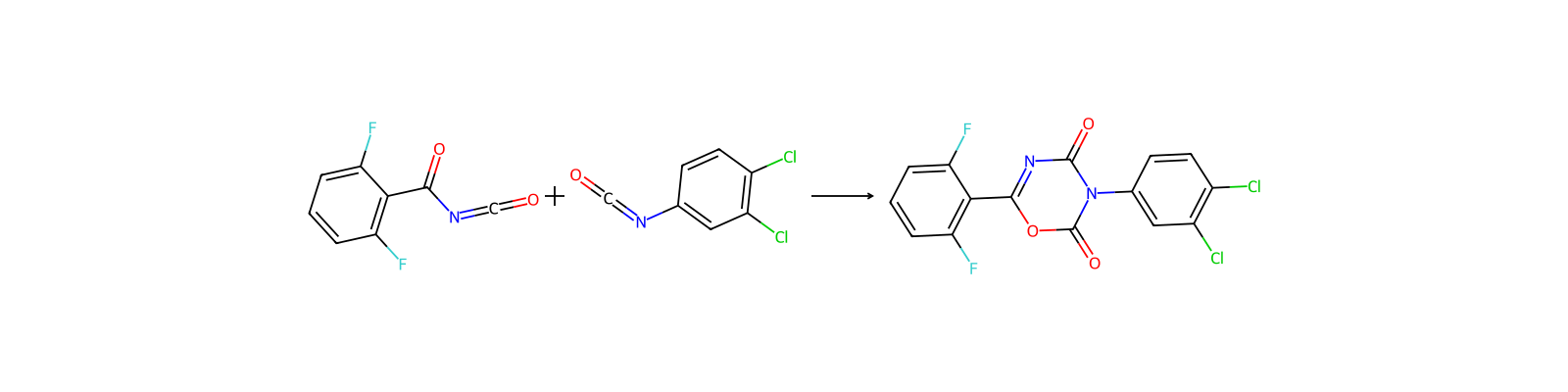
VerwendenMethyl-labeled diuron was prepared by the reaction of 3,4-dichlorophenyl- isocyanate with C '"labeled dimethylamine.Substituted urea derivatives were prepared by reacting 3,4-dichlorophenyl isocyanate with amino acids, dipeptides, histamine. The R- and S-isomers and RS-racemate of MBPU were synthesized by allowing equimolar quantities of 3,4-dichlorophenyl- isocyanate
Vor- und nachgelagerte Produkte
Vorgelagerte Rohstoffe
Nachgelagerte Produkte
Anbieter50 Anbieter
梯希爱(上海)化成工业发展有限公司021-67121386 · [email protected]
衢州润东化工有限公司0570-8789886 18892685668 · [email protected]
上海阿拉丁生化科技股份有限公司400-6206333 13167063860 · [email protected]
上海麦克林生化科技股份有限公司021-50706066 15221275939 · [email protected]
湖北成丰化工有限公司13125175253 · [email protected]
武汉欣扬瑞和化学科技有限公司153-07155313 15307155313 · [email protected]
河北展药生物科技有限公司15369953316 +8615369953316 · [email protected]
T&W GROUP021-61551611 13296011611 · [email protected]
爱斯特(成都)生物制药股份有限公司+86-28-85122536 85324413 · [email protected]
Dayang Chem (Hangzhou) Co.,Ltd.+86-0571-88938639 17705817739 · [email protected]
科瑞迪化学400-821-5857 021-64326257 · [email protected]
衢州明锋化工有限公司0570-3062502 13819002126;13819008176 · [email protected]
Syntechem Co.,Ltd[email protected]
阿法埃莎(中国)化学有限公司400-6106006 · [email protected]
安耐吉化学&3A(安徽泽升科技股份有限公司)400-0056266 · [email protected]
上海瀚鸿科技股份有限公司021-54306202 13764082696 · [email protected]
上海景颜化工科技有限公司13817811078 · [email protected]
武汉威顺达科技发展有限公司86-027-88774375 · [email protected]
武汉市皇臻生物化工有限公司13795480948 · [email protected]
山东西亚化学有限公司13355009207 13355009207 · [email protected]
玛雅试剂+86 (573) 82222445 (0)18006601000 452520369 · [email protected]
天津希恩思生化科技有限公司400 638 7771 · [email protected]
Xiamen AmoyChem Co., Ltd+86-86-5926051114 · [email protected]
艾科试剂4008-755-333 18080918076 · [email protected]
Shanghai Scibiotron Pharmaceutical Co., Ltd+86-16621589600 · [email protected]
上海思域化工科技有限公司86-21-34053660 · [email protected]
北京伊诺凯科技有限公司400-810-7969 010-59572699 · [email protected]
TCI AMERICA800-4238616 · [email protected]
TOKYO CHEMICAL INDUSTRY CO., LTD.03-36680489 · [email protected]
TCI Europe320-37350700 · [email protected]
上海贤鼎生物科技有限公司4009209199 · [email protected]
武汉普洛夫生物科技有限公司17612776928 · [email protected]
北京京土恒盛化工科技有限公司00-13911456598 13911456598 · [email protected]
Xunteng International Trading Co.,Limited—
上海将来实业股份有限公司400-0066400 13621662912 · [email protected]
HBCChem, Inc.+1-510-219-6317 · [email protected]
成都零六生物科技有限公司400-1166-196 13458535857 · [email protected]
上海鑫圭生物科技有限公司15121041756 · [email protected]
康迪斯化工(湖北)有限公司13125172151 · [email protected]
Changzhou Fullone Chemical Co., Ltd.+86-13328197671 +86-13861172460 · [email protected]
池州凯隆进出口贸易有限公司[email protected]
Sigma-Aldrich西格玛奥德里奇(上海)贸易有限公司021-61415566 800-8193336 · [email protected]
广东翁江化学试剂有限公司0751-2815987 13927875076 · [email protected]
厦门志信化学有限公司+86-5922680277 +86-13806087780 · [email protected]
sgtlifesciences pvt ltd+91-8790379245 · [email protected]
湖北万业众诚化学试剂有限责任公司18671296875 · [email protected]
成都润泽本土化工有限公司028-88469284 18000562381 · [email protected]
康幸生物科技(上海)有限公司021-61556450 15800904410
南通市苏北化工原料有限公司0513-85290972 18762756250 · [email protected]
上海西陇生化科技有限公司021-52907766-8042
Zugehörige Reaktionen
164


Verknüpfte Notizen
Wird geladen…