StartseiteMCPWorkbenchSkills
StartseiteWorkbenchBenachrichtigungenMein Bereich
llms.txt · MCP-AnleitungDatenschutz · Nutzungsbedingungen · Supportv1.8.0
  1. Startseite
  2. /Verbindung

1-Brom-2-phenylethan

Phenethyl bromide

HCID 7666
Neue NotizNeue ReaktionAnfrage stellen
Druckvorschau

Daten werden ergänzt – lade die Seite später neu, um den aktuellen Stand zu sehen

GrundinformationenÜberblickNamen und BezeichnerEigenschaftenSicherheit und RegulatorischesChemie und IndustrieZugehörige ReaktionenNotizen zur Verbindung
TeilstruktursucheÄhnliche Strukturen suchen

Grundinformationen

CAS
103-63-9
Standard-SMILES
BrCCc1ccccc1
InChIKey
WMPPDTMATNBGJN-UHFFFAOYSA-N
Summenformel
C8H9Br
Durchschnittliche Molmasse
185,06 g/mol
Monoisotopische Masse
183,98876239

Überblick

structure

Namen und Bezeichner

Bevorzugter Name
Phenethyl bromide
IUPAC
2-bromoethylbenzene
Lokaler Name
1-Brom-2-phenylethan
Englischer Name
(2-Bromoethyl)benzene
Summenformel
C8H9Br
Molmasse
185.06

Namen und Synonyme

(2-BROMOETHYL)BENZENE103-63-9Phenethyl bromide2-Phenylethyl bromidePhenylethyl bromide1-Bromo-2-phenylethaneBenzene, (2-bromoethyl)-2-Phenethyl bromide2-Phenyl-1-bromoethanebeta-BromoethylbenzeneDTXSID1033876NSC-33926
Weitere Namen anzeigen
PHENYL ETHYL BROMIDEβ-BroMoethyl-benzeneTetrabomoethaneβ - Bromobenzene
96O442668XDTXCID9013876RefChem:395520203-130-82-Bromoethylbenzene.beta.-Bromoethylbenzenephenethylbromide1-phenyl-2-bromoethane

Datenbank-Bezeichner

CAS
103-63-9、31620-80-1
PubChem CID
7666
DTXSID
DTXSID1033876
ChEMBL
CHEMBL1340745
UNII
96O442668X
EC Number
203-130-8、250-734-2
Nikkaji
J44.198H

Eigenschaften

Berechnete StruktureigenschaftenWird ergänzt

XLogP
3,1
Polarare Oberfläche (TPSA)
0 Ų
H-Brücken-Donoren
0
H-Brücken-Akzeptoren
0
Frei drehbare Bindungen
2
Schwere Atome
9
Formalladung
0
Komplexität
65

Experimentelle und physikochemische Eigenschaften

Chemical Classes · 2 Einträge

Other Classes -> Halogenated Monoaromatics

Other Classes -> Halogenated Monoaromatics

SpringerMaterials PropertiesBoiling point
LogP · 2 Einträge

Log Kow = 3.09

3.09

DensityDensity = 1.355
Solubility · 2 Einträge

Sol in ether, benzene; slightly soluble in carbon tetrachloride

Water solubility = 39.05 mg/l at 25 °C

Boiling Point219 °C
Melting Point-67.5 °C
Vapor Pressure · 2 Einträge

0.24 [mmHg]

Vapor pressure = 0.2445 mm Hg at 25 °C

Refractive IndexINDEX OF REFRACTION: 1.5572 AT 20 °C; SADTLER REFERENCE NUMBER: 4682 (IR, PRISM), 434 (IR, GRATING)

Sicherheit und Regulatorisches

Sicherheitsangaben dienen nur zur Orientierung und ersetzen weder das Sicherheitsdatenblatt (SDB) des Lieferanten noch geltende Vorschriften oder eine fachliche Bewertung.

GHS-Klassifizierung

GHS Classification · 6 Einträge

Warning

H302 (98.9%): Harmful if swallowed [Warning Acute toxicity, oral]

P264, P264+P265, P270, P280, P301+P317, P302+P352, P305+P351+P338, P321, P330, P332+P317, P337+P317, P362+P364, and P501 (click each P-code to see the statement)

Aggregated GHS information provided per 88 reports by companies from 9 notifications to the ECHA C&L Inventory. Each notification may be associated with multiple companies.

Warning

H227: Combustible liquid [Warning Flammable liquids]

Gefahrenhinweise

Regulatory Information · 4 Einträge

Chemical: Benzene, (2-bromoethyl)-

Benzene, (2-bromoethyl)- is listed on the EPA's Chemical Data Reporting (CDR) system. Manufacturers and importers of Benzene, (2-bromoethyl)- are required to report information about their production and use of this chemical to the EPA under the Toxic Substances Control Act (TSCA). (40 eCFR Part 711)

Status: Active Update: 04-01-2022 https://echa.europa.eu/registration-dossier/-/registered-dossier/19673

2-Phenylethyl bromide: Does not have an individual approval but may be used under an appropriate group standard

Hazards Summary · 1 Eintrag

Causes somnolence in lethal-dose feeding studies of rats; [RTECS] Effects observed in rats that died during seven day feeding study include reddened adrenal glands, hemorrhagic thymus glands, and intestinal abnormalities; [HSDB] An irritant; [MSDSonline] See Benzyl bromide.

Hazard Classes and Categories · 2 Einträge

Acute Tox. 4 (98.9%)

Flammable liquids - Category 4

Sicherheit und Schutzausrüstung

Chemie und Industrie

Pharmakologische Informationen

Metabolism/Metabolites · 2 Einträge

AFTER INJECTING (2-BROMOETHYL)BENZENE IN RATS ONLY N-ACETYL-S-2-PHENYLETHYLCYSTEINE & N-ACETYL-S-(2-PHENYL-2-HYDROXYETHYL)CYSTEINE WERE FOUND IN URINE. INTERMEDIATE FORMATION OF STYRENE OR STYRENE OXIDE DOES NOT OCCUR.

THE CHIEF SULFUR CONTAINING URINARY METABOLITE OF PHENETHYL BROMIDE IN RAT & RABBIT WAS CHROMATOGRAPHICALLY IDENTIFIED AS N-ACETYL-S-BETA-HYDROXYPHENETHYL-L-CYSTEINE (HYDROXYPHENETHYLMERCAPTURIC ACID) & N-ACETYL-S-PHENETHYL-L-CYSTEINE (PHENETHYLMERCAPTURIC ACID). AMT OF PHENETHYLMERCAPTURIC ACID & HYDROXYPHENETHYLMERCAPTURIC ACID EXCRETED IN URINE OF RABBITS & RATS DOSED BY STOMACH TUBE WERE 11.8 & 6.1, 14.2 & 1.9 OF DOSE RESPECTIVELY. RAT LIVER SLICES CONVERTED PHENETHYLCYSTEINE & PHENETHYLMERCAPTURIC ACID INTO N-ACETYL-S-BETA-HYDROXYPHENETHYL-L-CYSTEINE.

Verwendung und Herstellung

Uses · 2 Einträge

Used as a starting material for the production of various beta-phenethyl derivatives, pharmaceuticals, fragrances, and other chemicals; [HSDB]

Important starting material for the production of various beta-phenethyl derivatives, pharmaceuticals, fragrances, and other fine chemicals.

U.S. Production2023: 5,000,000 - <10,000,000 lb
Industry UsesIntermediate
Methods of Manufacturing · 2 Einträge

Usually manufactured by the free-radical addition of hydrogen bromide to styrene.

Reaction of beta-phenethyl alcohol with phosphorus tribromide or with other reagents.

General Manufacturing Information · 3 Einträge

All Other Chemical Product and Preparation Manufacturing

Benzene, (2-bromoethyl)-: ACTIVE

Benzene, bromoethyl-: INACTIVE

Anwendungen · 3 Einträge

Zugehörige Reaktionen

776
Reaktionsaufzeichnung erstellen
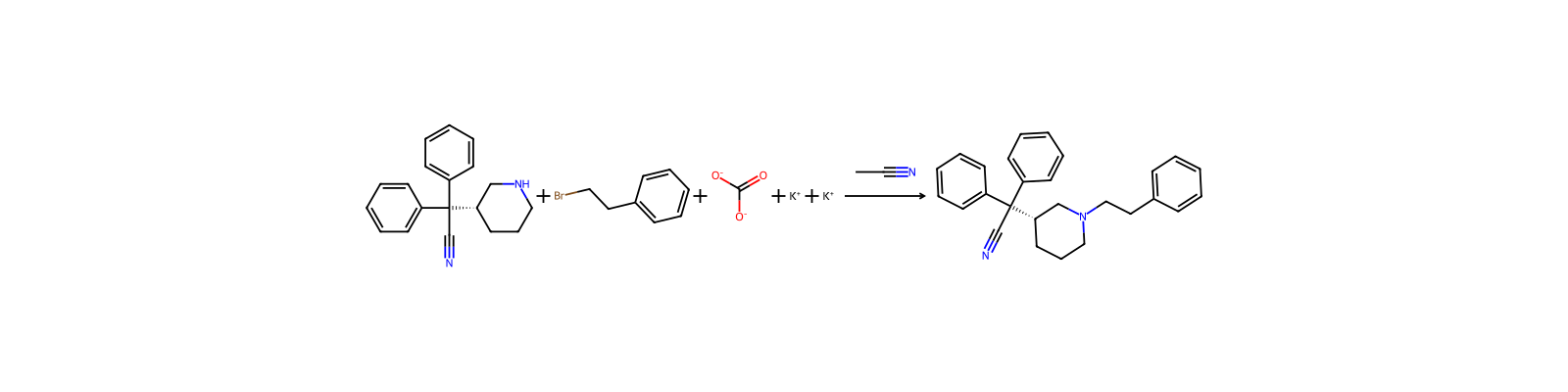
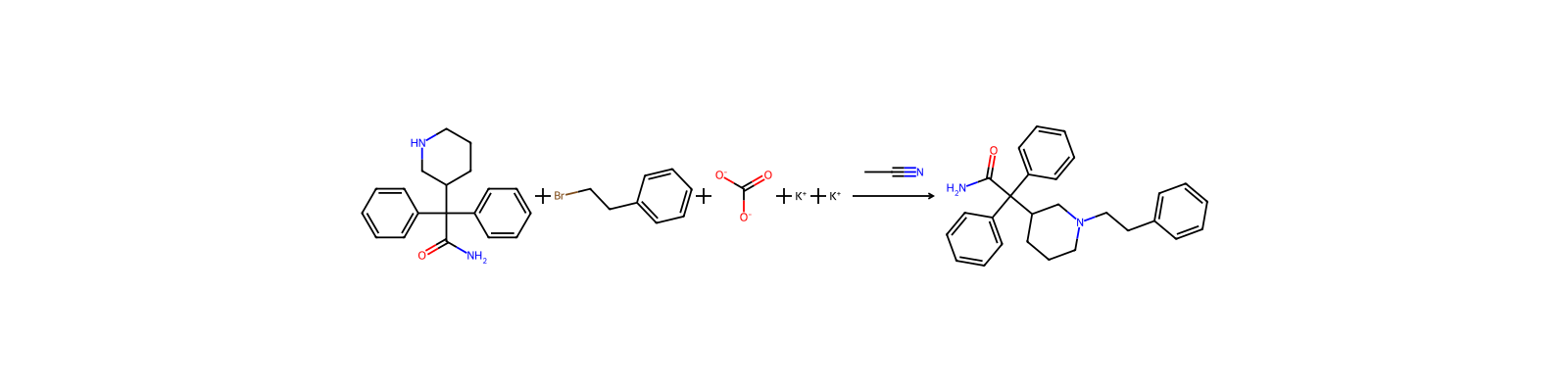
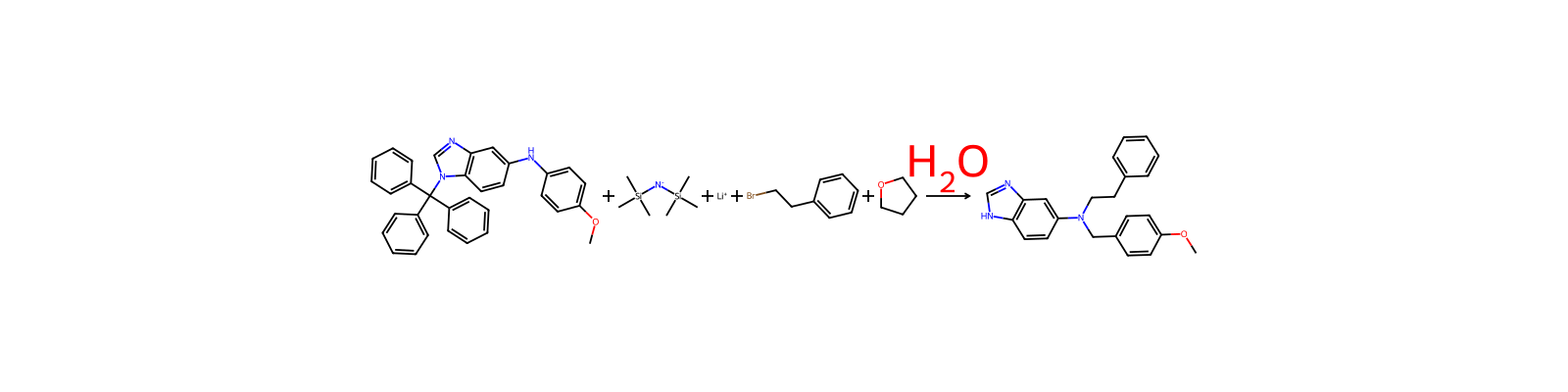
Reaktionsgleichung von HRID 20665
HRID 20665als Eduktuspto-grants-2010_06
Reaktionsgleichung von HRID 21386
HRID 21386als Eduktuspto-grants-1995_06
Reaktionsgleichung von HRID 21397
HRID 21397als Eduktuspto-grants-1995_06
Reaktionsgleichung von HRID 25791
HRID 25791als Lösungsmitteluspto-grants-2005_02
Reaktionsgleichung von HRID 26479
HRID 26479als Eduktuspto-grants-1979_04
Reaktionsgleichung von HRID 28265
HRID 28265als Eduktuspto-grants-1980_09
Reaktionsgleichung von HRID 45971
HRID 45971als Eduktuspto-grants-2013_09
Reaktionsgleichung von HRID 46773
HRID 46773als Eduktuspto-grants-1979_11
Seite 1 von 97

Notizen zur Verbindung

Wird geladen…

Auf dieser SeiteGrundinformationenÜberblickNamen und BezeichnerEigenschaftenSicherheit und RegulatorischesChemie und IndustrieZugehörige ReaktionenNotizen zur Verbindung
Weitere Aktionen
Neue NotizNeue ReaktionAnfrage stellen
Physical Description · 2 Einträge

Liquid

Colorless liquid; [MSDSonline]

Physikochemische Eigenschaften

Schmelzpunkt
56 °C · −56 °C (−69 °F; 217 K)
Siedepunkt
221 °C · 221 °C (430 °F; 494 K)
Dichte
1.355 g/cm3 · 1.355 g/cm3
Brechungsindex
1.56 · 1.56
Flammpunkt
89 °C · 89 °C (192 °F; 362 K)
storage temp.
2 · 2-8°C
Löslichkeit
0.039 g/l · 0.039g/l
Aggregatzustand
liquid
Farbe
Colorless
Wasserlöslichkeit
INSOLUBLE
BRN
507487 · 507487
Henry's Law Constant
6.5 · 6.5×10-3 mol/(m3Pa) at 25℃, Duchowicz et al. (2020)
Stabilität
Stable. Incompatible with strong oxidizing agents.
InChI
1S/C8H9Br/c9-7-6-8-4-2-1-3-5-8/h1-5H,6-7H2
InChIKey
WMPPDTMATNBGJN-UHFFFAOYSA-N
SMILES
BrCCc1ccccc1
CAS Datenbank
103 · 103-63-9(CAS DataBase Reference)
NIST chemische Informationen
1 · 1-Bromo-2-phenylethane(103-63-9)
EPA chemische Informationen
Benzene, (2-bromoethyl)- (103-63-9)
Disposal Methods · 1 Eintrag

SRP: At the time of review, criteria for land treatment or burial (sanitary landfill) disposal practices are subject to significant revision. Prior to implementing land disposal of waste residue (including waste sludge), consult with environmental regulatory agencies for guidance on acceptable disposal practices.

Toxikologische Informationen

Environmental Fate · 3 Einträge

TERRESTRIAL FATE: (2-Bromoethyl)benzene will have low mobility(3) in soil based on estimated Koc values of 581.6 and 955(1,2,SRC). Insufficient data are available to determine the rate or importance of biodegradation of (2-bromoethyl)benzene in soil conditions. Volatilization of (2-bromoethyl)benzene is expected from moist and dry soils based on an experimental vapor pressure of 0.2445 mm Hg at 25 °C(4) and an Henry's Law constant of 1.52X10⁻³ atm cu m/mole estimated from an experimental water solubility of 39.05 mg/l(4) and a vapor pressure of 0.2445 mm Hg(4).

AQUATIC FATE: (2-Bromoethyl)benzene is expected to volatilize rapidly from water(1) based upon an estimated Henry's Law constant of 1.52X10⁻³ atm cu m/mol estimated from an experimental water solubility of 39.05 mg/L(2) and a vapor pressure of 0.2445 mm Hg(2). Based on this Henry's Law constant the volatilization half-life from a model river (1 meter deep flowing 1 m/sec with a wind velocity of 3 m/sec) can be estimated to be about 4.8 hours(1,SRC). The volatilization half-life from a model lake (1 meter deep) can be estimated to be about 5.6 days(1,SRC). Insufficient data are available to determine the rate or importance of biodegradation of (2-bromoethyl)benzene in aquatic conditions(SRC). Aquatic bioconcentration and adsorption to sediment may be important fate processes in aquatic systems based on an estimated BCF of 78(1,SRC) and estimated Koc values of 582 and 955(1,3,SRC) but hydrolysis is not expected to be important(SRC).

ATMOSPHERIC FATE: Based on an experimental vapor pressure of 0.2445 mm Hg at 25 °C(1), (2-bromoethyl)benzene will exist in the atmosphere in the vapor phase(2). It will degrade in the atmosphere by reaction with photochemically produced hydroxyl radicals with an estimated half-life of 2.87 days(3). Removal of (2-bromoethyl)benzene from the atmosphere can occur through wet deposition(SRC).

Soil Adsorption/Mobility · 1 Eintrag

Using a structure estimation method based on molecular connectivity indices, the Koc for (2-bromoethyl)benzene can be estimated to be about 955(1). The Koc for (2-bromoethyl)benzene can also be estimated to be about 582 based on an experimental water solubility of 39.05 mg/l(3) and a regression derived equation(2). According to a suggested classification scheme(4), these estimated Koc values suggest that (2-bromoethyl)benzene has low soil mobility.

TSCA Test Submissions · 1 Eintrag

2-Bromoethylbenzene (CAS # 103-62-9) was evaluated for acute oral toxicity. The test substance was administered once orally, by gavage to groups of male and female fasted albino rats. Dosage and mortality data are as follows: 521 mg/kg (0/5 M, 0/5 F); 750 mg/kg (2/5 M, 2/5 F); and 1080 mg/kg (5/5 M, 4/5 F). All deaths occurred within 7 days of dosing. The combined LD50 value was determined to be 811 mg/kg. At 521 mg/kg and above, treatment-related toxicity included hypoactivity and salivation; at 750 mg/kg and above, ataxia, clear ocular discharge and labored breathing were seen. There also was a low incidence of urogenital staining, abnormal defecation, dry brown staining around nose, hypothermia, dried red material around the eye(s), prostration and rales. There were no treatment-related changes in body weights. Necropsy of rats that died revealed external matting, dark red or reddened adrenal glands, stomach abnormalities, hemorrhagic thymus glands, and intestinal abnormalities.

Artificial Pollution Sources · 1 Eintrag

(2-Bromoethyl)benzene's use as a starting material for the production of various beta-phenethyl derivatives, pharmaceuticals, fragrances, and other fine chemicals(1) could result in its release to the environment through various waste streams(SRC).

Environmental Bioconcentration · 1 Eintrag

Based upon an experimental water solubility of 39.05 mg/l(1), the BCF of (2-bromoethyl)benzene can be estimated to be approximately 78 from a regression-derived equation(2). This estimated BCF value suggests that bioconcentration in aquatic organisms may be an important fate process(SRC).

Volatilization from Water/Soil · 1 Eintrag

The Henry's Law constant for (2-bromoethyl)benzene can be estimated to be 1.52X10⁻³ atm-cu m/mole based on an experimental water solubility of 39.05(1) and an experimental vapor pressure of 0.2445(1). This value of the Henry's Law constant indicates that volatilization of (2-bromoethyl)benzene from water is rapid(2). Based on this Henry's Law constant, the volatilization half-life from a model river (1 meter deep flowing 1 m/sec with a wind velocity of 3 m/sec) can be estimated to be about 4.8 hours(2,SRC). The volatilization half-life from a model lake (1 meter deep) can be estimated to be about 5.6 days(2,SRC).

Environmental Abiotic Degradation · 1 Eintrag

The rate constant for the vapor-phase reaction of (2- bromoethyl)benzene with photochemically produced hydroxyl radicals has been estimated to be approximately 5.59X10⁻¹² cu cm/molecule-sec at 25 °C, which corresponds to an atmospheric half-life of about 2.9 days at an atmospheric concentration of 5X10+5 hydroxyl radicals per cu cm(1,SRC).

Probable Routes of Human ExposureOccupational exposure to bromine and compounds, such as (2-bromoethyl)benzene(SRC), can occur through dermal contact, inhalation, and ingestion(1).
Environmental Fate/Exposure Summary · 1 Eintrag

(2-Bromoethyl)benzene's use as an starting material for the production of various beta-phenethyl derivatives, pharmaceuticals, and fragrances could result in its release to the environment through various waste streams. (2-Bromoethyl)benzene should have low mobility in soil. Volatilization of (2-bromoethyl)benzene is expected from both moist and dry soils. In water, (2-bromoethyl)benzene is expected to volatilize rapidly with estimated half-lives of 4.8 hours and 5.6 days from a model river and a model lake, respectively. Bioconcentration and adsorption to sediment may be important fate processes in aquatic systems, but hydrolysis is not expected to be important. Insufficient data are available to determine the rate or importance of biodegradation of (2-bromoethyl)benzene in either soil or aquatic conditions. (2-Bromoethyl)benzene will exist in the vapor phase in the ambient atmosphere. If released to the atmosphere, it will degrade by reaction with photochemically produced hydroxyl radicals with an estimated half-life of approximately 2.9 days. Removal of (2-bromoethyl)benzene from the atmosphere can occur through wet deposition. Exposure to (2-bromoethyl)benzene can occur through dermal contact, inhalation, and ingestion. (SRC)

Sicherheitsdaten

wgk
3
tsca
TSCA listed
ridadr
UN 1993 / PGIII
hs_code
2903999090
RTECS-Nr.
CY9032000
risk_code
22-36-36/37/38
hazard_code
Xn
safety_code
26-37/39-39
Speicherklasse
10 - Combustible liquids
Giftige Stoffe Daten
103-63-9(Hazardous Substances Data)
Hazard Classifications
Acute Tox. 4 OralEye Irrit. 2

BeschreibungPhenethylbromide is an analytical reference material that is structurally categorized as an organobromide. It is used in the synthesis of a variety of compounds, including fentanyl. Phenethylbromide is combined with 4-piperidinone to produce N-phenethyl-4-piperidone, which, as a precursor in the synthesis of fentanyl, is scheduled as a List I chemical in the United States. Phenethylbromide may be found as in impurity in samples of fentanyl produced using this pathway.

Verwenden(2-Bromoethyl)benzene is used in the preparation of phenelzine by reacting with hydrazine. It is also used as a starting material to prepare various beta-phenethyl derivatives, active pharmaceutical ingredients, and fragrances. It finds application as a flame retardant.

Verwenden(2-Bromoethyl)benzene is an important starting material for the production of various b-phenethyl derivatives, pharmaceuticals, fragrances, and other fine chemicals.

Darstellung · 1 Eintrag

synthetische(2-Bromoethyl)benzene is synthesized by the reaction of phenethyl alcohol with hydrogen bromide.Reaction: The phenethyl alcohol was heated to 110°C, hydrogen bromide was slowly introduced, and the reaction was refluxed. The reaction was completed, cooled, washed with water, 10% sodium carbonate solution, and water in turn. After drying with anhydrous potassium carbonate, fractional distillation under reduced pressure was carried out to collect fractions at 97-99°C (2.0 kPa) with a yield of over 90%.

Vor- und nachgelagerte Produkte

Vorgelagerte Rohstoffe

Kaliumcarbonat2-Phenylethanol

Nachgelagerte Produkte

Phenylethan-1,2-diol1-Phenethylpiperazin1-(Chlormethyl)-4-vinylbenzolN-MethylbenzolethanaminCarfentanilBenzene, [dimethyl(2-phenylethyl)silyl]-5-Phenyl-n-valeric acid methyl esterdiethyl 2-acetamido-2-phenethyl-propanedioate2-Phenylethyl-1-boronic acid pinacol ester(2-Nitroethyl)benzol2-Phenylethyl phenyl ether4-(2-Bromethyl)benzoesurePhenethylpivalat1,4-Diphenylbutane1-Bromo-4-phenylbutanePhenethylpropionat1,2-Ethanediyl, 1-phenyl- (9CI)