StartseiteMCPWorkbenchSkills
StartseiteWorkbenchBenachrichtigungenMein Bereich
llms.txt · MCP-AnleitungDatenschutz · Nutzungsbedingungen · Supportv1.8.0
  1. Startseite
  2. /Verbindung

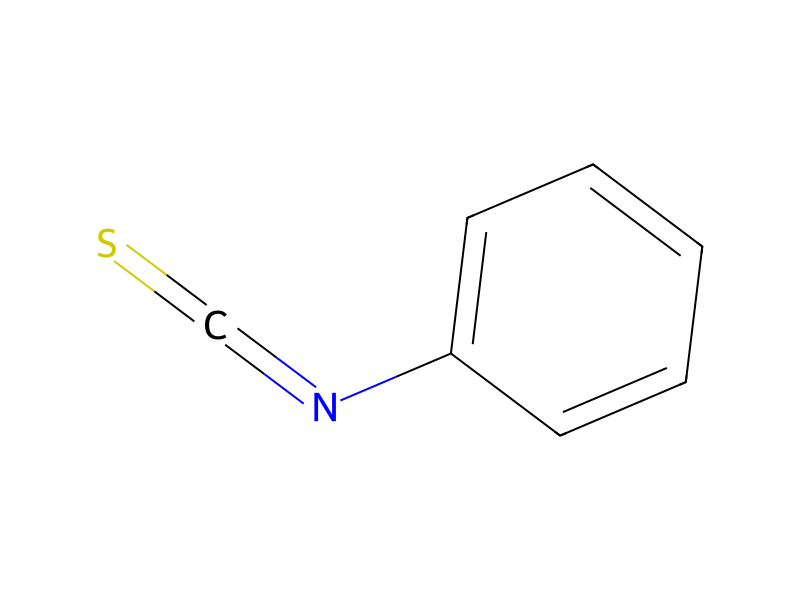
Phenylisothiocyanat

Phenyl Isothiocyanate

HCID 7673
Neue NotizNeue ReaktionAnfrage stellen
Druckvorschau

Daten werden ergänzt – lade die Seite später neu, um den aktuellen Stand zu sehen
GrundinformationenNamen und BezeichnerEigenschaftenSicherheit und RegulatorischesChemie und IndustrieZugehörige ReaktionenNotizen zur Verbindung
TeilstruktursucheÄhnliche Strukturen suchen

Grundinformationen

CAS
103-72-0
Standard-SMILES
S=C=Nc1ccccc1
InChIKey
QKFJKGMPGYROCL-UHFFFAOYSA-N
Summenformel
C7H5NS
Durchschnittliche Molmasse
135,19 g/mol
Monoisotopische Masse
135,01427034

Namen und Bezeichner

Bevorzugter Name
Phenyl Isothiocyanate
IUPAC
isothiocyanatobenzene
Lokaler Name
Phenylisothiocyanat
Englischer Name
Phenyl isothiocyanate
Summenformel
C7H5NS
Molmasse
135.19

Namen und Synonyme

IsothiocyanatobenzenePHENYL ISOTHIOCYANATE103-72-0PhenylisothiocyanatePITCThiocarbanilBenzene, isothiocyanato-PhenylsenfoelIsothiocyanic acid phenyl esterBenzene-1-isothiocyanatePhenyl thioisocyanateIsothiocyanic acid, phenyl ester
Weitere Namen anzeigen
PTCR1PITPhenyl thiocyanatePhenyl isothiocyanate,PITCPHENYL ISOTHIOCYANATE SOLUTION, FOR PROT.SEQ. ANAL.RR1H174
FenylisothiokyanatDTXSID0021129CHEBI:851030D58F84LSUNSC-5583DTXCID501129RefChem:57537Phenylisothiocyanate 1533

Datenbank-Bezeichner

CAS
103-72-0
PubChem CID
7673
DTXSID
DTXSID0021129
ChEMBL
CHEMBL309036
ChEBI
CHEBI:85103
UNII
0D58F84LSU
EC Number
203-138-1
Nikkaji
J5.019I

Eigenschaften

Berechnete StruktureigenschaftenWird ergänzt

XLogP
3,3
Polarare Oberfläche (TPSA)
44,5 Ų
H-Brücken-Donoren
0
H-Brücken-Akzeptoren
2
Frei drehbare Bindungen
1
Schwere Atome
9
Formalladung
0
Komplexität
121

Experimentelle und physikochemische Eigenschaften

Vapor Pressure1.5 [mmHg]
Physical DescriptionLiquid; [Merck Index] Colorless liquid; [Sigma-Aldrich MSDS]
Kovats Retention Index · 2 Einträge

1163

1138

Physikochemische Eigenschaften

Schmelzpunkt
21 °C · −21 °C(lit.)
Siedepunkt
218 °C · 218 °C(lit.)
Dichte
1.132 g/mL · 1.132 g/mL at 20 °C(lit.)
Dampfdruck
10 hPa · 10 hPa (20 °C)
Brechungsindex
20 · n20/D 1.6515(lit.)
Flammpunkt
190 °F · 190 °F
storage temp.
2 · 2-8°C
Löslichkeit
water: insoluble
Aggregatzustand
liquid

Sicherheit und Regulatorisches

Sicherheitsangaben dienen nur zur Orientierung und ersetzen weder das Sicherheitsdatenblatt (SDB) des Lieferanten noch geltende Vorschriften oder eine fachliche Bewertung.

GHS-Klassifizierung

GHS Classification · 6 Einträge

This chemical does not meet GHS hazard criteria for 0.5% (1 of 214) of reports.

Danger

H301 (82.2%): Toxic if swallowed [Danger Acute toxicity, oral];H314 (79.4%): Causes severe skin burns and eye damage [Danger Skin corrosion/irritation];H317 (79%): May cause an allergic skin reaction [Warning Sensitization, Skin];H318 (54.7%): Causes serious eye damage [Danger Serious eye damage/eye irritation];H334 (76.2%): May cause allergy or asthma symptoms or breathing difficulties if inhaled [Danger Sensitization, respiratory];H341 (54.2%): Suspected of causing genetic defects [Warning Germ cell mutagenicity];H361 (54.2%): Suspected of damaging fertility or the unborn child [Warning Reproductive toxicity];H400 (21.5%): Very toxic to aquatic life [Warning Hazardous to the aquatic environment, acute hazard];H410 (24.3%): Very toxic to aquatic life with long lasting effects [Warning Hazardous to the aquatic environment, long-term hazard]

P203, P233, P260, P261, P264, P264+P265, P270, P271, P272, P273, P280, P284, P301+P316, P301+P330+P331, P302+P352, P302+P361+P354, P304+P340, P305+P354+P338, P316, P317, P318, P321, P330, P333+P317, P342+P316, P362+P364, P363, P391, P403, P405, and P501 (click each P-code to see the statement)

Aggregated GHS information provided per 214 reports by companies from 11 notifications to the ECHA C&L Inventory. Each notification may be associated with multiple companies.;Reported as not meeting GHS hazard criteria per 1 of 214 reports by companies.;There are 10 notifications provided by 213 of 214 reports by companies with hazard statement code(s).;Information may vary between notifications depending on impurities, additives, and other factors. The percentage value in parenthesis indicates the notified classification ratio from companies that provide hazard codes. Only hazard codes with percentage values above 10% are shown. For more detailed information, please visit ECHA C&L website.

Gefahrenhinweise

Regulatory Information · 3 Einträge

Chemical: Benzene, isothiocyanato-

Chemie und Industrie

Pharmakologische Informationen

Metabolism/Metabolites · 1 Eintrag

Cyanide is rapidly alsorbed through oral, inhalation, and dermal routes and distributed throughout the body. Cyanide is mainly metabolized into thiocyanate by either rhodanese or 3-mercaptopyruvate sulfur transferase. Cyanide metabolites are excreted in the urine. (L96)

Verwendung und Herstellung

Uses · 2 Einträge

Used to derive primary and secondary amines, in sequencing of peptides by Edman degradation, and in amino acid analysis by HPLC; [Merck Index]

Phenyl isothiocyanate is a reagent used in reversed phase high-performance liquid chromatography (HPLC). (L197)

General Manufacturing InformationBenzene, isothiocyanato-: ACTIVE
Anwendungen · 1 Eintrag

VerwendenPhenyl isothiocyanate is the reagent of choice in automated Edman degradation systems. However, this reagent is highly toxic and for manual modification other reagents are preferred such as dimethy laminoazobenzene isothiocyanate (Chang, 1983; Wang et al, 2000) or trifluoroethyl isothiocyanate (Bartlet-Jones et al, 1994). This last reagent has the advantage of being volatile, so that the excess of reagent is easily removed by vacuum before MS analysis (Spengler, 1997). This compound was used successfully during seven successive cycles of manual cleavage coupled with MS analysis. Nevertheless, the high reactivity of such compounds seems to shows artefactual modification such as“acetylation' of the hydroxyl groups of the Ser and Thr. Allyl isothiocyanate shows better selectivity, but again this reagent is toxic and difficult to use in manual approaches (Gu & Preswich, 1997) .

Darstellung · 1 Eintrag

Synthetic procedure for phenyl isothiocyanate in 1-mol scaleInto a 2-L jacketed flask, 91.2 g of CS2 (1.2 mol) was dropwise added to a mixture of aniline (93.0 g, 1.0 mol) and K2CO3 (276.0 g, 2.0 mol) in 700 mL of water at room temperature within a period of 2.5 h. After the addition was complete, the mixture was stirred another 2 h. Then, the mixture was cooled to 0 °C, and a solution of 92.3 g of TCT (0.5 mol) in 450 mL of CH2Cl2 was dropwise added within 4 h. After the addition was complete, the mixture was stirred another 1 h to complete the conversion. The resulting mixture was basified to pH >11 with 250 mL of 6 N NaOH and yielded a clear solution. The organic layer was separated and the aqueous layer was extracted with 150 mL of CH2Cl2. The combined organic layers were dried over anhydrous Na2SO4, filtered, and the solvent of filtrate was removed via distillation under atmospheric pressure with a 25-cm Vigreux column. The residue was vacuum distilled and the desired product fraction was collected at 72–74 °C/1 mmHg. Finally, 127.0 g of colorless liquid (94%) was obtained.

Zugehörige Reaktionen

334
Reaktionsaufzeichnung erstellen
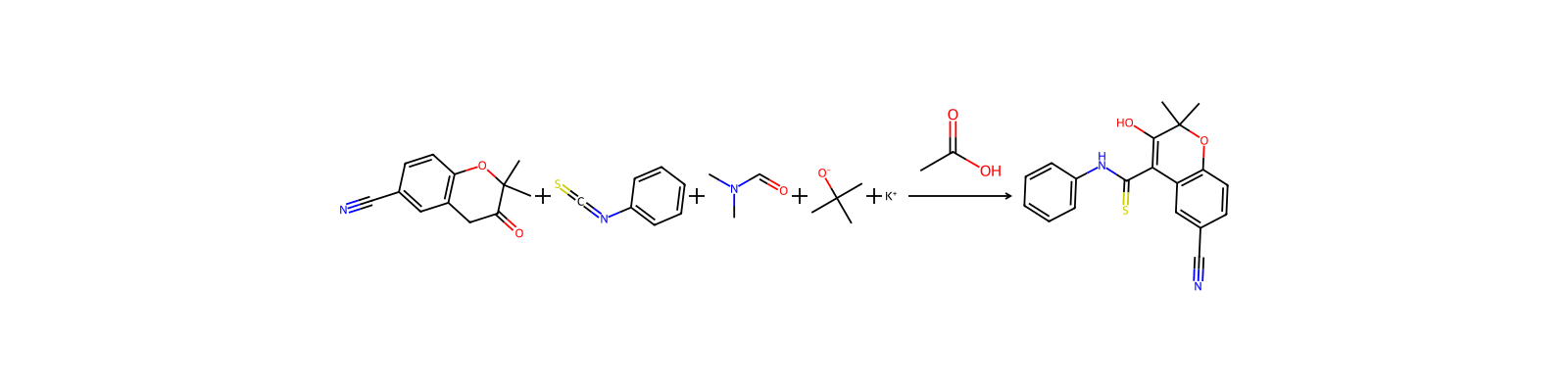
Reaktionsgleichung von HRID 754
HRID 754als Eduktuspto-grants-1998_03
Reaktionsgleichung von HRID 36065
HRID 36065als Eduktuspto-grants-1995_05
Reaktionsgleichung von HRID 38706
HRID 38706als Eduktuspto-grants-2013_09
Reaktionsgleichung von HRID 49699
HRID 49699als Eduktuspto-grants-2004_03
Reaktionsgleichung von HRID 49957
HRID 49957als Eduktuspto-grants-2004_03
Reaktionsgleichung von HRID 66562
HRID 66562als Eduktuspto-grants-1982_08
Reaktionsgleichung von HRID 72690
HRID 72690als Eduktuspto-grants-2014_09
Reaktionsgleichung von HRID 80000
HRID 80000als Eduktuspto-grants-2014_09
Seite 1 von 42

Notizen zur Verbindung

Wird geladen…

Auf dieser SeiteGrundinformationenNamen und BezeichnerEigenschaftenSicherheit und RegulatorischesChemie und IndustrieZugehörige ReaktionenNotizen zur Verbindung
Weitere Aktionen
Neue NotizNeue ReaktionAnfrage stellen
Wichte
1.137 · 1.137 (20/4℃)
Farbe
Clear pale yellow to yellow
Wasserlöslichkeit
Soluble in alcohol, and ether. Insoluble in water.
Merck
14 · 14,7297
BRN
471392 · 471392
Henry's Law Constant
3.3 · 3.3×10-3 mol/(m3Pa) at 25℃, Duchowicz et al. (2020)
Dielectric constant
10.7 · 10.7(20℃)
Stabilität
Stable. Combustible. Incompatible with strong oxidizing agents, strong acids.
InChI
1S/C7H5NS/c9-6-8-7-4-2-1-3-5-7/h1-5H
InChIKey
QKFJKGMPGYROCL-UHFFFAOYSA-N
SMILES
S=C=Nc1ccccc1
LogP
3.28 · 3.280
Oberflächenspannung
41.5 mN/m · 41.5mN/m at 20°C
CAS Datenbank
103 · 103-72-0(CAS DataBase Reference)
NIST chemische Informationen
Benzene, isothiocyanato-(103-72-0)
EPA chemische Informationen
Benzene, isothiocyanato- (103-72-0)

Status: Active Update: 10-12-2018 https://echa.europa.eu/registration-dossier/-/registered-dossier/26134

Phenyl isothiocyanate: Does not have an individual approval but may be used under an appropriate group standard

Hazards Summary · 1 Eintrag

Dermal studies of guinea pigs demonstrate severe irritation, good absorption, and sensitization; Effects on thyroid function (decreased serum T4 levels) observed in 4-week oral study of rats; [EPA - PPRTV] Causes burns and lachrymation; May cause skin and respiratory sensitization; Inhalation may cause corrosive injuries to upper respiratory tract and lungs; Harmful by ingestion; Targets the kidney and bladder; [Sigma-Aldrich MSDS]

Hazard Classes and CategoriesAcute Tox. 3 (82.2%);Skin Corr. 1B (79.4%);Skin Sens. 1 (79%);Eye Dam. 1 (54.7%);Resp. Sens. 1 (76.2%);Muta. 2 (54.2%);Repr. 2 (54.2%);Aquatic Acute 1 (21.5%);Aquatic Chronic 1 (24.3%)

Toxikologische Informationen

Treatment · 1 Eintrag

EYES: irrigate opened eyes for several minutes under running water. INGESTION: do not induce vomiting. Rinse mouth with water (never give anything by mouth to an unconscious person). Seek immediate medical advice. SKIN: should be treated immediately by rinsing the affected parts in cold running water for at least 15 minutes, followed by thorough washing with soap and water. If necessary, the person should shower and change contaminated clothing and shoes, and then must seek medical attention. INHALATION: supply fresh air. If required provide artificial respiration.

Health Effects · 1 Eintrag

Exposure to high levels of cyanide for a short time harms the brain and heart and can even cause coma, seizures, apnea, cardiac arrest and death. Chronic inhalation of cyanide causes breathing difficulties, chest pain, vomiting, blood changes, headaches, and enlargement of the thyroid gland. Skin contact with cyanide salts can irritate and produce sores. (L96, L97)

Adverse Effects · 1 Eintrag

Dermatotoxin - Skin burns.;Lacrimator (Lachrymator) - A substance that irritates the eyes and induces the flow of tears.;Skin Sensitizer - An agent that can induce an allergic reaction in the skin.;Toxic Pneumonitis - Inflammation of the lungs induced by inhalation of metal fumes or toxic gases and vapors.

Exposure RoutesInhalation (L96) ; oral (L96) ; dermal (L96)
Toxicity Summary · 1 Eintrag

Cyanide is an inhibitor of cytochrome c oxidase in the fourth complex of the electron transport chain (found in the membrane of the mitochondria of eukaryotic cells). It complexes with the ferric iron atom in this enzyme. The binding of cyanide to this cytochrome prevents transport of electrons from cytochrome c oxidase to oxygen. As a result, the electron transport chain is disrupted and the cell can no longer aerobically produce ATP for energy. Tissues that mainly depend on aerobic respiration, such as the central nervous system and the heart, are particularly affected. Cyanide is also known produce some of its toxic effects by binding to catalase, glutathione peroxidase, methemoglobin, hydroxocobalamin, phosphatase, tyrosinase, ascorbic acid oxidase, xanthine oxidase, succinic dehydrogenase, and Cu/Zn superoxide dismutase. Cyanide binds to the ferric ion of methemoglobin to form inactive cyanmethemoglobin. (L97)

Signs and SymptomsCyanide poisoning is identified by rapid, deep breathing and shortness of breath, general weakness, giddiness, headaches, vertigo, confusion, convulsions/seizures and eventually loss of consciousness. (L96, L97)
Carcinogen ClassificationNo indication of carcinogenicity to humans (not listed by IARC).
Toxicity DataLD50: 87 mg/kg (Oral, Mouse) (L565) LD50: 250 mg/kg (Subcutaneous, Mouse) (L565) LD50: 100 mg/kg (Intraperitoneal, Mouse) (L565)
RAIS Toxicity Values · 4 Einträge

0.0002

SCREEN Current

0.002

PPRTV Current

EPA Provisional Peer-Reviewed Toxicity Values · 5 Einträge

Phenyl Isothiocyanate

2 x 10^-3 mg/kg-day

PDF Document

Inadequate information to assess carcinogenic potential

2009

Hazard Quotient Level 0.1 or Cancer Risk Level 1E-06 · 6 Einträge

1.60e+01

2.30e+02

2.60e+00

1.5E+01(G)

1.70e-03

2.00e-04

Hazard Quotient Level 3 or Cancer Risk Level 1E-04 · 6 Einträge

4.70e+01

7.00e+02

7.90e+00

1.5E+01 (G)

2.00e-04

Volatile

Regulatorische Informationen

Regulatory Information · 3 Einträge

Chemical: Benzene, isothiocyanato-

Status: Active Update: 10-12-2018 https://echa.europa.eu/registration-dossier/-/registered-dossier/26134

Phenyl isothiocyanate: Does not have an individual approval but may be used under an appropriate group standard

Sicherheitsdaten

F
19
wgk
3
tsca
TSCA listed
ridadr
UN 1993 3/PG 2
hs_code
2930 90 98
RTECS-Nr.
NX9275000
risk_code
25-34-42/43-51/53-67-65-50/53-36/37/38-22-11-38-63-23/24/25-36/38
Toxizität
LD50 orally in Rabbit: 157 mg/kg
hazard_code
T,N,Xn,F
safety_code
9-16-29-33-60-61-62-36-26-23-45-36/37/39-38-28A-36/37
hazard_class
6.1
packing_group
II
Speicherklasse
6.1A - Combustible acute toxic Cat. 1 and 2very toxic hazardous materials
Hazard Classifications
Acute Tox. 3 OralResp. Sens. 1Skin Corr. 1BSkin Sens. 1
synthetische

Vor- und nachgelagerte Produkte

Vorgelagerte Rohstoffe

Calciumchlorid1,3-Diphenyl-2-thioharnstoff

Nachgelagerte Produkte

1-Phenyltetrazol-5-thiolN-(2-hydroxy-5-methylphenyl)-N'-phenylthioureaN-(Dichlormethylen)anilin4-Isothiocyanato-N,N-dimethylanilin5-Methyl-3-phenyl-2-thioxoimidazolidin-4-on2,3-Dihydro-2-thioxochinazolin-4(1H)-onTricyclo[3.3.1.13,7]dec-1-ylisocyanatThioacetanilidButylisothiocyanat4-(Phenyl)thiosemicarbazid

Ergänzende Hinweise

DefinitionChEBI: Phenyl isothiocyanate is an isothiocyanate having a phenyl group attached to the nitrogen; used for amino acid sequencing in the Edman degradation. It has a role as an allergen and a reagent.