StartseiteMCPWorkbenchSkills
StartseiteWorkbenchBenachrichtigungenMein Bereich
llms.txt · MCP-AnleitungDatenschutz · Nutzungsbedingungen · Supportv1.8.0
  1. Startseite
  2. /Verbindung

Butylbenzol

Butylbenzene

HCID 7705
Neue NotizNeue ReaktionAnfrage stellen
Druckvorschau
GrundinformationenÜberblickNamen und BezeichnerEigenschaftenSicherheit und RegulatorischesChemie und IndustrieZugehörige ReaktionenNotizen zur Verbindung
TeilstruktursucheÄhnliche Strukturen suchen

Grundinformationen

CAS
104-51-8
Standard-SMILES
CCCCc1ccccc1
InChIKey
OCKPCBLVNKHBMX-UHFFFAOYSA-N
Summenformel
C10H14
Durchschnittliche Molmasse
134,22 g/mol
Monoisotopische Masse
134,10955045

Überblick

N-butylbenzene appears as a colorless liquid. Less dense than water and insoluble in water. Used to make plastics and as a solvent.

Namen und Bezeichner

Bevorzugter Name
Butylbenzene
IUPAC
butylbenzene
Lokaler Name
Butylbenzol
Englischer Name
Butylbenzene
Summenformel
C10H14
Molmasse
134.22

Namen und Synonyme

ButylbenzeneN-BUTYLBENZENE104-51-81-Phenylbutane1-ButylbenzeneBenzene, butyl-DTXSID6022472S8XZ2901RZNSC-8465DTXCID902472CHEBI:44194butyl benzene
Weitere Namen anzeigen
Normal Butyl Benzenebutylbenzenesbutyl-benzen1-phenylbutanBenzene,butyl-4-Butylbenzene
RefChem:829425203-209-7n-butyl benzeneMFCD00009463CHEMBL195441Butane, phenyl-Butylbenzene, analytical standardButylbenzene; 1-Phenylbutane

Datenbank-Bezeichner

CAS
104-51-8
PubChem CID
7705
DTXSID
DTXSID6022472
ChEMBL
CHEMBL195441
ChEBI
CHEBI:44194
UNII
S8XZ2901RZ
EC Number
203-209-7
Nikkaji
J5.032F

Eigenschaften

Berechnete Struktureigenschaften

XLogP
4,4
Polarare Oberfläche (TPSA)
0 Ų
H-Brücken-Donoren
0
H-Brücken-Akzeptoren
0
Frei drehbare Bindungen
3
Schwere Atome
10
Formalladung
0
Komplexität
70,1

Experimentelle und physikochemische Eigenschaften

Chemical Classes · 2 Einträge

Flammable agents - 2nd degree

Volatile Organic Compound (VOC)

SolventsSolvents -> Aromatic Solvents
CosmeticsCosmetics ingredient -> Fragrance
SpringerMaterials PropertiesSchoenflies notation
LogP · 2 Einträge

log Kow = 4.38

4.29

Density · 2 Einträge

0.8601 g/cu cm @ 20 °C

0.8601 @ 20°C

Viscosity0.950 mPa-s @ 25 °C; 0.683 mPa-s @ 50 °C; 0.515 mPa-s @ 75 °C
Color/FormColorless liquid
Solubility · 2 Einträge

Miscible with alcohol, ether, benzene

In water, 11.8 mg/L @ 25 °C

Flash Point · 2 Einträge

Sicherheit und Regulatorisches

Sicherheitsangaben dienen nur zur Orientierung und ersetzen weder das Sicherheitsdatenblatt (SDB) des Lieferanten noch geltende Vorschriften oder eine fachliche Bewertung.

GHS-Klassifizierung

GHS Classification · 6 Einträge

This chemical does not meet GHS hazard criteria for 2.7% (5 of 185) of reports.

Danger

H226 (91.4%): Flammable liquid and vapor [Warning Flammable liquids]

P210, P233, P240, P241, P242, P243, P264, P264+P265, P273, P280, P301+P316, P302+P352, P303+P361+P353, P305+P351+P338, P321, P331, P332+P317, P337+P317, P362+P364, P370+P378, P391, P403+P235, P405, and P501 (click each P-code to see the statement)

Aggregated GHS information provided per 185 reports by companies from 11 notifications to the ECHA C&L Inventory. Each notification may be associated with multiple companies.

Warning

Gefahrenhinweise

Regulatory Information · 4 Einträge

Chemical: Benzene, butyl-

Hazard Traits - Nephrotoxicity and Other Toxicity to the Urinary System

Benzene, butyl-: HSNO Approval: HSR001246 Approved with controls

The New Jersey Worker and Community Right to Know Act requires public and private employers to provide information about hazardous substances at their workplaces. (N.J.S.A. 34:5A-1 et. seq.)

DOT LabelFlammable Liquid
Fire HazardsExcerpt from ERG Guide 128 [Flammable Liquids (Water-Immiscible)]:
Health HazardsExcerpt from ERG Guide 128 [Flammable Liquids (Water-Immiscible)]:
Hazards SummaryAn irritant; [MSDSonline]
Reactive GroupHydrocarbons, Aromatic
TSCA Requirements · 1 Eintrag

Chemie und Industrie

Pharmakologische Informationen

Mechanism of Action · 1 Eintrag

In the present study /the authors have/ examined the effects of hydrocarbons on the formation of reactive oxygen species (ROS) in human neutrophil granulocytes in vitro. We found that hydrocarbons induce ROS formation in a concentration-dependent manner and that the ROS-inducing potency increases with increasing number of carbon atoms in the structure. In general, aromatic hydrocarbons were less potent inducers of ROS than aliphatic and cyclic hydrocarbons. The most potent compound in each group, t-butylcyclohexane, n-decane, and n-butylbenzene, were chosen for mechanistic studies. ROS formation was inhibited by the MEK1/2 inhibitor U0126, the tyrosine kinase inhibitor erbstatin-A, and the phosphatidylinositol-3 kinase inhibitor wortmannin. The involvement of the ERK1/2 pathway was confirmed by Western blot analysis of phosphorylated ERK1/2. The study revealed only small differences in the mechanisms involved for the three compounds. The responses were not affected by Pertussis toxin, indicating that Gi-protein coupled receptors are not involved in neutrophil activation after hydrocarbon exposure. Based on these findings we propose a mechanism involving tyrosine kinases, PI3 kinase, and the ERK1/2 pathway, leading to activation of the NADPH oxidase and production of ROS in neutrophils stimulated by organic solvents.

Metabolism/Metabolites · 4 Einträge

They are metabolized by side-chain hydroxylation and conjugation for urinary excretion. /Butylbenzenes/

The effects of methyl n-alkyl ketones and n-alkylbenzenes on hepatic cytochrome P450s in vivo and in vitro were investigated. Male rats were treated with acetone, methyl ethyl ketone, methyl n-propyl ketone, methyl n-butyl ketone, benzene, toluene, ethylbenzene, n-propylbenzene, or n-butylbenzene. The methyl n-alkyl ketones induced the metabolic activities of hepatic microsomes toward aminopyrine, 7-ethoxycoumarin, and aniline. n-Alkylbenzenes induced aminopyrine and 7-ethoxycoumarin metabolic activities. ...Testosterone 16 beta-hydroxylation activity was induced by n-alkylbenzenes. These results indicate that the levels of multiple forms of cytochrome P450 were changed by treatment with these chemicals. P450IIE1, an acetone-inducible form, was induced by methyl n-alkyl ketones or n-alkylbenzenes. The inducibility did not depend on the length of the side chain of these chemicals. P450IIB1 and IIB2, both phenobarbital-inducible forms, were induced with methyl n-alkyl ketones and n-alkylbenzenes to an extent depending on the length of the side chain of these chemicals. Thus, the hydrophobicity of the inducer affected phenobarbital-type induction but not the induction of P450IIE1. /The authors/ further investigated the interactions of ketone and benzene derivatives with cytochrome P450 in vitro. Testosterone hydroxylation activities of hepatic microsomes were measured in the presence of methyl n-alkyl ketones and n-alkylbenzenes. Methyl n-alkyl ketones inhibited testosterone 16 beta-hydroxylation activity. n-Alkylbenzenes inhibited 2 beta-, 6 beta-, 15 alpha-, 16 alpha-, and 16 beta-hydroxylation activities. Testosterone hydroxylation activities were inhibited by these chemicals depending on the length of the side chain. n-Alkylbenzenes were stronger inhibitors than methyl n-alkyl ketones, n-Butylbenzene was the strongest inhibitor of these activities. These results indicate that hydrophobicity was important in the interaction of these chemicals with cytochrome P450, and that there is some relationship between the inducibility of cytochrome P450 and its interaction with inducers.

Zugehörige Reaktionen

42
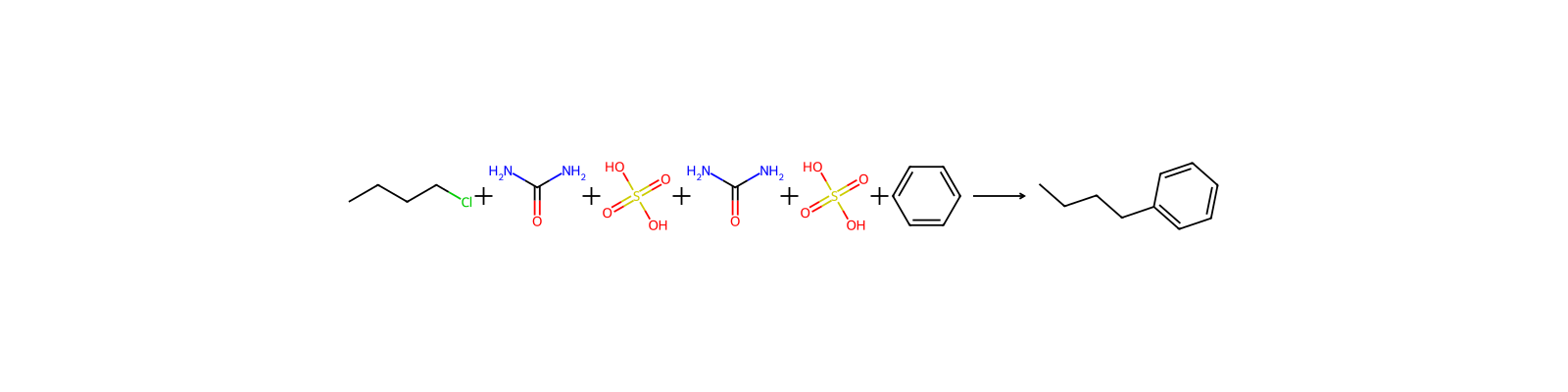
Reaktionsaufzeichnung erstellen
Reaktionsgleichung von HRID 1834
HRID 1834als Eduktuspto-grants-1998_03
Reaktionsgleichung von HRID 3904
HRID 3904als Produktuspto-grants-1988_02
Reaktionsgleichung von HRID 89691
HRID 89691als EduktTraining data from https://doi.org/10.1039/C8SC04228D (2/10)
Reaktionsgleichung von HRID 114934
HRID 114934als EduktTraining data from https://doi.org/10.1039/C8SC04228D (2/10)
Reaktionsgleichung von HRID 122509
HRID 122509als EduktTraining data from https://doi.org/10.1039/C8SC04228D (2/10)
Reaktionsgleichung von HRID 235786
HRID 235786als Eduktuspto-grants-1987_02
Reaktionsgleichung von HRID 289763
HRID 289763als EduktTraining data from https://doi.org/10.1039/C8SC04228D (8/10)
Reaktionsgleichung von HRID 305627
HRID 305627als EduktTraining data from https://doi.org/10.1039/C8SC04228D (8/10)
Seite 1 von 6

Notizen zur Verbindung

Wird geladen…

Auf dieser SeiteGrundinformationenÜberblickNamen und BezeichnerEigenschaftenSicherheit und RegulatorischesChemie und IndustrieZugehörige ReaktionenNotizen zur Verbindung
Weitere Aktionen
Neue NotizNeue ReaktionAnfrage stellen

160 °F (NFPA, 2010)

160 °F (71 °C) (open cup)

Boiling Point · 2 Einträge

183.3 °C

183.31 °C @760 [mm Hg]

Melting Point · 2 Einträge

-87.9 °C

-87.85 °C

Physikochemische Eigenschaften

Schmelzpunkt
-88 °C · -88 °C
Siedepunkt
183 °C · 183 °C(lit.)
Dichte
0.86 g/mL · 0.86 g/mL at 25 °C(lit.)
Dampfdichte
1 · >1 (vs air)
Dampfdruck
1.03 mm · 1.03 mm Hg ( 23 °C)
Brechungsindex
20 · n20/D 1.489(lit.)
Flammpunkt
139 °F · 139 °F
storage temp.
2 · 2-8°C
Löslichkeit
11.8 mg/l · 11.8mg/l
Aggregatzustand
Liquid
pka
14 · >14 (Schwarzenbach et al., 1993)
Farbe
Clear colorless
Odor Threshold
0.0085 ppm · 0.0085ppm
Explosionsgrenze
0.8 · 0.8-5.8%(V)
Wasserlöslichkeit
INSOLUBLE
Spezifische Wärmekapazität
1.81 J/ · Cp(liquid): 1.81 J/(g·K), at 25℃
Merck
14 · 14,1549
BRN
1903395 · 1903395
Henry's Law Constant
12.7 at · 12.7 at 45.00 °C, 14.1 at 50.00 °C, 15.7 at 55.00 °C, 17.3 at 60.00 °C, 18.9 at 65.00 °C, 22.2 at 70.00 °C, 26.1 at 80.00 °C (static headspace-GC, Park et al., 2004)
Dielectric constant
2.4 · 2.4(20℃)
Stabilität
Stable. Flammable. Incompatible with strong oxidizing agents.
Major Application
environmental
InChI
1S/C10H14/c1-2-3-7-10-8-5-4-6-9-10/h4-6,8-9H,2-3,7H2,1H3
InChIKey
OCKPCBLVNKHBMX-UHFFFAOYSA-N
Oberflächenspannung
29.23 mN/m · 29.23mN/m at 20°C
CAS Datenbank
104 · 104-51-8(CAS DataBase Reference)
NIST chemische Informationen
Benzene, butyl-(104-51-8)
EPA chemische Informationen
n-Butylbenzene (104-51-8)

Pursuant to section 8(d) of TSCA, EPA promulgated a model Health and Safety Data Reporting Rule. The section 8(d) model rule requires manufacturers, importers, and processors of listed chemical substances and mixtures to submit to EPA copies and lists of unpublished health and safety studies. n-Butylbenzene is included on this list.

Reactivity AlertsHighly Flammable
Reactivity Profile · 1 Eintrag

Vigorous reactions, sometimes amounting to explosions, can result from the contact between aromatic hydrocarbons, such as N-BUTYLBENZENE, and strong oxidizing agents. They can react exothermically with bases and with diazo compounds. Substitution at the benzene nucleus occurs by halogenation (acid catalyst), nitration, sulfonation, and the Friedel-Crafts reaction.

Flammable LimitsLower flammable limit: 0.8% by volume; Upper flammable limit: 5.8% by volume
DOT Emergency Guidelines · 5 Einträge

/GUIDE 128: FLAMMABLE LIQUIDS (NON-POLAR/WATER-IMMISCIBLE)/ Fire or Explosion: HIGHLY FLAMMABLE: Will be easily ignited by heat, sparks or flames. Vapors may form explosive mixtures with air. Vapors may travel to source of ignition and flash back. Most vapors are heavier than air. They will spread along ground and collect in low or confined areas (sewers, basements, tanks). Vapor explosion hazard indoors, outdoors or in sewers. Those substances designated with a "P" may polymerize explosively when heated or involved in a fire. Runoff to sewer may create fire or explosion hazard. Containers may explode when heated. Many liquids are lighter than water. Substances may be transported hot. /Butylbenzenes/

/GUIDE 128: FLAMMABLE LIQUIDS (NON-POLAR/WATER-IMMISCIBLE)/ Health: Inhalation or contact with material may irritate or burn skin and eyes. Fire may produce irritating, corrosive and/or toxic gases. Vapors may cause dizziness or suffocation. Runoff from fire control or dilution water may cause pollution. /Butylbenzenes/

/GUIDE 128: FLAMMABLE LIQUIDS (NON-POLAR/WATER-IMMISCIBLE)/ Public Safety: CALL Emergency Response Telephone Number ... . As an immediate precautionary measure, isolate spill or leak area for at least 50 meters (150 feet) in all directions. Keep unauthorized personnel away. Stay upwind. Keep out of low areas. Ventilate closed spaces before entering. /Butylbenzenes/

/GUIDE 128: FLAMMABLE LIQUIDS (NON-POLAR/WATER-IMMISCIBLE)/ Protective Clothing: Wear positive pressure self-contained breathing apparatus (SCBA). Structural firefighters' protective clothing will only provide limited protection. /Butylbenzenes/

For more DOT Emergency Guidelines (Complete) data for n-BUTYLBENZENE (8 total), please visit the HSDB record page.

DOT Hazard Classification · 2 Einträge

1-Phenylbutane

Marine pollutant

Sicherheit und Schutzausrüstung

Fire FightingExcerpt from ERG Guide 128 [Flammable Liquids (Water-Immiscible)]:
First AidExcerpt from ERG Guide 128 [Flammable Liquids (Water-Immiscible)]:
Exposure Control and Personal Protection10.0 [ppm]
Fire Fighting Procedures · 2 Einträge

Personnel protection: ... Wear positive pressure self-container breathing apparatus when fighting fires involving this material. ... /Butyl benzenes/

If material on fire or involved in fire: Do not extinguish fire unless flow can be stopped. Use water in flooding quantities as fog. Solid streams of water may be ineffective. Cool all affected containers with flooding quantities of water. Apply water from as far a distance as possible. Use foam, dry chemical, or carbon dioxide. Keep run-off water out of sewers and water sources. /Butyl benzenes/

Nonfire Spill ResponseExcerpt from ERG Guide 128 [Flammable Liquids (Water-Immiscible)]:
Disposal Methods · 1 Eintrag

SRP: The most favorable course of action is to use an alternative chemical product with less inherent propensity for occupational exposure or environmental contamination. Recycle any unused portion of the material for its approved use or return it to the manufacturer or supplier. Ultimate disposal of the chemical must consider: the material's impact on air quality; potential migration in soil or water; effects on animal, aquatic, and plant life; and conformance with environmental and public health regulations.

Preventive Measures · 2 Einträge

Personnel protection: Avoid breathing vapors. Keep upwind. Avoid bodily contact with the material. ... Do not handle broken packages unless wearing appropriate personal protective equipment. Wash away any material which may have contacted the body with copious amounts of water or soap and water. ... If contact with the material anticipated, wear appropriate chemical protective clothing. /Butyl benzenes/

If material not on fire and not involved in fire: Keep sparks, flames, and other sources of ignition away. Keep material out of water sources and sewers. Build dikes to contain flow as necessary. Attempt to stop leak if without undue personnel hazard. Use water spray to knock-down vapors. /Butyl benzenes/

Isolation and EvacuationExcerpt from ERG Guide 128 [Flammable Liquids (Water-Immiscible)]:
Protective Action Criteria (PAC) · 3 Einträge

160 [mg/m3]

370 [mg/m3]

2,200 [mg/m3]

Personal Protective Equipment (PPE) · 2 Einträge

Excerpt from ERG Guide 128 [Flammable Liquids (Water-Immiscible)]:

Personnel protection: ... Wear appropriate chemical protective gloves, boots and goggles. ... /Butyl benzenes/

Toxikologische Informationen

Toxicological Information · 2 Einträge

Ranking: 586 (total points: -1)

Ranking: 586 (total points: -1)

Ecotoxicity Values · 2 Einträge

EC50 Daphnia magna (Water flea; intoxication, immobilization) 550 ug/L/24 hr (95% confidence interval: 430-710 ug/L); static

EC50 Daphnia magna (Water flea; intoxication, immobilization) 340 ug/L/48 hr (95% confidence interval: 270-440 ug/L); static

Environmental Fate · 3 Einträge

TERRESTRIAL FATE: Based on a classification scheme(1), Koc values ranging from 2,450-2,510(2-6), indicate that n-butylbenzene is expected to have slight mobility in soil(SRC). Volatilization of n-butylbenzene from moist soil surfaces is expected to be an important fate process(SRC) given an estimated Henry's Law constant of 0.016 atm-cu m/mole(SRC), derived from its vapor pressure, 1.06 mm Hg(7), and water solubility, 11.8 mg/L(8). The potential for volatilization of n-butylbenzene from dry soil surfaces may exist(SRC) based upon its vapor pressure(7). However, adsorption to soil is expected to attenuate volatilization(SRC). n-Butylbenzene was categorized as difficult to degrade; having a persistence of 3 months to 1 year in unadapted soils(9).

AQUATIC FATE: Based on a classification scheme(1), Koc values ranging from 2,450-2,510(2-6), indicate that n-butylbenzene is expected to adsorb to suspended solids and sediment(SRC). Volatilization from water surfaces is expected(7) based upon an estimated Henry's Law constant of 0.016 atm-cu m/mole(SRC), derived from its vapor pressure, 1.06 mm Hg(8), and water solubility, 11.8 mg/L(9). Using this Henry's Law constant and an estimation method(7), volatilization half-lives for a model river and model lake are 3.5 and 110 hours, respectively(SRC). However, volatilization from water surfaces is expected to be attenuated by adsorption to suspended solids and sediment in the water column(SRC). The estimated volatilization half-life from a model pond is 16 days if adsorption is considered (10). According to a classification scheme(10), an estimated BCF of 470(SRC), from its log Kow of 4.38(12) and a regression-derived equation(13), suggests the potential for bioconcentration in aquatic organisms is high(SRC). n-Butylbenzene is not expected to undergo hydrolysis in the environment due to the lack of hydrolyzable functional groups(14). Biodegradation data in water were not located(SRC). n-Butylbenzene biodegradation in aquatic systems may be slow based on it being difficult to degrade in unadapted soils(15).

ATMOSPHERIC FATE: According to a model of gas/particle partitioning of semivolatile organic compounds in the atmosphere(1), n-butylbenzene, which has a vapor pressure of 1.06 mm Hg at 25 °C(2), is expected to exist solely as a vapor in the ambient atmosphere. Vapor-phase n-butylbenzene is degraded in the atmosphere by reaction with photochemically-produced hydroxyl radicals(SRC); the half-life for this reaction in air is estimated to be 1.8 days(SRC), calculated from its rate constant of 8.7X10⁻¹² cu cm/molecule-sec at 25 °C(SRC) that was derived using a structure estimation method(3). n-Butylbenzene does not absorb light with wavelengths >290 nm(4), and is not expected to be susceptible to direct photolysis by sunlight(SRC).

Food Survey Values · 1 Eintrag

n-Butylbenzene was identified as one of the volatile compounds in headspace samples of peanut oil heated to 150 and 200 °C(1). n-Butylbenzene was detected in 28 foods of the 234 table-ready food items of the FDA Total Diet Study; the average concn was 15.9 ppb (range: 7.26-93.7 ppb), with the highest levels found in cake doughunts(2). n-Butylbenzene was identified in the noncondensable volatile fraction extracted from raw beef with supercritical carbon dioxide(3). n-Butylbenzene was identified during the headspace analysis of the uncondensed volatile compounds emitted during atmospheric pressure steam distillation of roasted filberts(4). n-Butylbenzene was found in volatiles of cooked mutton, cooked chicken, and roast beef(5).

Adverse EffectsNeurotoxin - Acute solvent syndrome
Effluent Concentrations · 1 Eintrag

n-Butylbenzene was observed only at minor concns in the volatile organic compounds introduced into the water by boats with combustion engines(1). n-Butylbenzene was detected in industry average gasoline, EPA certification gasoline and M-85 (85% methanol, 15% gasoline), but was not detected in either exhaust or evaporative auto emissions(2). n-Butylbenzene was identified in the volatile organic compounds releases from textile floor coverings(3). n-Butylbenzene was one of the volatile organic compounds emitted into the water by a four-stroke outboard motor(4). n-Butylbenzene was one of the compounds found in the vapor and on particles emitted during the combustion of coal at the Ames power plant in Iowa(5). n-Butylbenzene was detected at a concn of 8 ng/g in the neutral fraction of wastewater from a Class B refinery after dissolved air floatation treatment(6). The average concn of n-butylbenzene in trade effluents in England and Wales in 1995 was 3.31 ug/L, with a 24% frequency of detection(7).

Soil Adsorption/Mobility · 1 Eintrag

An average of the log of the sediment to water partition coefficient (average log Kp) for n-butylbenzene of 2.00 was determined from 16 measurements(1); from this value a log Koc of 3.40 (Koc=2,510) was calculated(2). A measured log Koc of 3.39 (Koc=2,450) was reported for n-butylbenzene(3). A Koc of 2,460 was reported for n-butylbenzene(4), calculated from a measured partition coefficient of 3.69 for natural aquifer material and water(5). According to a classification scheme(6), these Koc values suggest that n-butylbenzene is expected to have slight mobility in soil.

Atmospheric Concentrations · 4 Einträge

URBAN/SUBURBAN: n-Butylbenzene was 1 of the 19 chemicals detected at concns between 0.1 and 0.15 ppbC in air samples collected during August-September 1992 in Atlanta, GA; it was detected with an occurrence of 12%(1). n-Butylbenzene concns in the air from the exhaust ventilation system of the Elbtunnel, a major highway tunnel in Hamburg, Germany at 4 sites were 2.5, 1.5, 1.5, and 2.2 ug/cu m(2). concns of n-butylbenzene ranged from 0-2 ppb volume in morning air from Los Angeles, CA samples from September-November 1981(3). n-Butylbenzene was detected in the atmosphere if 6 large cities, Baku, Kemerovo, Leningrad, Murmansk, Tashkent, and Tbilisi located in different geographic and climatic zones in the former USSR(4). Emissions from light-duty vehicle traffic were measured at the Caldecott Tunnel in the San Francisco Bay area during August and October 1994, between these 2 periods the average oxygen content of gasoline sold in this area increased from 0.3 to 2.0% by weight; n-butylbenzene composed 0.66 and 0.55% of the total volatile organic compounds measured during August (low oxygenate) and October (high oxygenate), respectively(5). n-Butylbenzene concns ranged from 0.004 to 0.024 ppb volume in ambient air in the Los Angeles basin(6). According to a national survey of ambient air, which included five site types (remote, rural, suburban, urban, and source dominated) the average daily atmospheric concns of n-butylbenzene was 0.051 ppb volume for 52 samples(7).

INDOOR: Based on a survey of the literature, n-butylbenzene was determined to have a weighted average geometric mean of <1 ug/cu-m for indoor air in established dwellings(1). Mean n-butylbenzene concns were 0.27 and 0.34 ug/cu m in nonsmoking (n=24) and smoking (n=25) homes, respectively(2). n-Butylbenzene was detected with an occurrence of 54% in the indoor air of 26 homes in Finland(3). In a survey of 300 Dutch homes in two cities between 1981 and 1983, the maximum indoor concn of n-butylbenzene reported was 40 ug/cu m(4).

RURAL/REMOTE: n-Butylbenzene was identified in forest air collected in the center of the Southern Black Forest (Kaelbelescheuer, Germany) in November 1984 and January 1985(1).

SOURCE DOMINATED: n-Butylbenzene was identified in the ambient air during 2 of 10 sample collections from the Kanawha Valley, WV, a heavily industrialized area with a wide variety of chemical industries(1). A survey of 8 different composting facilities found average n-butylbenzene air concn of ranging from 1 to 47 ug/cu m in 8 of the 10 areas sampled(2).

Artificial Pollution Sourcesn-Butylbenzene's production and use in organic synthesis(1) may result in its release to the environment through various waste streams(SRC).
Environmental Biodegradation · 1 Eintrag

AEROBIC: n-Butylbenzene (100 mg/L) was found to degrade 72-80% after 5 days when incubated at 25 °C with activated sludge from a wastewater treatment plant receiving predominately domestic sludge(1). n-Butylbenzene reached 12.6 and 13.9% of its theoretical BOD after 5 days at 20 °C, using sewage and acclimated sludge, respectively(2). In a Warburg test, n-butylbenzene (500 ppm) reached 1.5-47.5% of its theoretical BOD in 6-192 hours at 20 °C and pH 7, using activated sludge that was acclimated to benzene(3). n-Butylbenzene (500 mg/L) was found to be toxic to organisms in 2 sludges from municipal plants in Ohio during Warburg tests(4). In refinery wastewater with only natural microbial flora, n-butylbenzene did not degrade after 23 days (concentrations were not provided)(5).

Sediment/Soil Concentrations · 1 Eintrag

SOIL: Soil samples were collected from 30 industrial sites in Taiwan (8 chemical and petrochemical industrial districts, 2 technology industrial parks, 11 general industrial districts, 2 metal processing areas, 2 oil refinery plants, 1 pesticide manufacturing plant, and 4 landfills) were monitored for 60 volatile organic chemicals; n-butylbenzene was detected with a frequency of approximately 1% in 705 soil samples(1).

Carcinogen ClassificationNo indication of carcinogenicity to humans (not listed by IARC).

Regulatorische Informationen

TSCA Requirements · 1 Eintrag

Pursuant to section 8(d) of TSCA, EPA promulgated a model Health and Safety Data Reporting Rule. The section 8(d) model rule requires manufacturers, importers, and processors of listed chemical substances and mixtures to submit to EPA copies and lists of unpublished health and safety studies. n-Butylbenzene is included on this list.

State Drinking Water Guidelines · 2 Einträge

(FL) FLORIDA 280 ug/l

(NH) NEW HAMPSHIRE 260 ug/L

Sicherheitsdaten

wgk
3
tsca
TSCA listed
ridadr
UN 2709
hs_code
2902 90 00
RTECS-Nr.
CY9070000
risk_code
10-39/23/24/25-23/24/25-11-50/53
Toxizität
rat,LDLo,oral,10mL/kg (10mL/kg),LUNGS, THORAX, OR RESPIRATION: "FIBROSIS, FOCAL (PNEUMOCONIOSIS)"BLOOD: HEMORRHAGELUNGS, THORAX, OR RESPIRATION: ACUTE PULMONARY EDEMA,AMA Archives of Industrial Health. Vol. 19, Pg. 403, 1959.
hazard_code
F,T,N
safety_code
16-45-36/37-7-61-60
hazard_class
3
packing_group
III
Giftige Stoffe Daten
104-51-8(Hazardous Substances Data)
Selbstentzündungstemperatur
774 °F

Regio- and stereo-selective oxidation of butylbenzene (1) has been examined in vitro by rat liver supernatant fraction(S-9). When phenylbutane (1 ) was incubated at 37 degrees C for 1 hr with S-9, asymmetric oxidation occurred regioselectively at benzylic and omega-1 positions to afford preferentially (R)- and (S)-alcohol (2, 4), respectively. This enzymatic propensity was the case for the production of 1, 3-diols. (1R, 3S)- or (1R, 3R)-Butanediols(3a, 3b) were also obtained at 87% and 27%, respectively. This oxidation was induced by phenobarbital (PB) or beta-napthoflavone(beta-NF), and significant sex-related differences in control and PB pre-treated rats have been observed. Since these oxidations were inhibited with SKF-525A and CO, it was inferred that cytochrome P-450 was responsible for the oxidation.

The effect on energetic metabolism of rat liver mitochondria (RLM) of styrene and other aliphatic benzene derivatives, i.e. toluene, ethylbenzene, alpha-methylstyrene and butylbenzene, is studied. It is shown that these compounds uncouple oxidative phosphorylation and this effect is connected with the stimulation of passive entry of protons into mitochondria.

Cellular LocationsMembrane

Verwendung und Herstellung

Uses · 3 Einträge

Used as a plasticizer, surface active agent, and solvent for coatings; Found in asphalt and naphtha; [HSDB]

Painting (Solvents) [Category: Paint]

Organic synthesis; pesticide manufacturing; solvent for coating compositions; plasticizer; surface active agents; polymer linking agent; asphalt component; naphtha constituent.

Methods of ManufacturingPrepared from benzene and n-butyl chloride in presence of AlCl3
Household ProductsCosmetics product ingredient: n-Butylbenzene
General Manufacturing Information · 2 Einträge

Benzene, butyl-: ACTIVE

The temperature range for smooth interaction of bromobenzene, 1-bromobutane, and sodium in ether to give butylbenzene is critical. Below 15 C reaction is delayed but later becomes vigorous , and above 30 C the reaction becomes violent. /Sodium/

Anwendungen

VerwendenButylbenzene is used in the preparation of butyl-silica hybrid monolithic column.

Vor- und nachgelagerte Produkte

Vorgelagerte Rohstoffe

1-BrombutanBrombenzolBenzene, 1-butyl-4-ethyl-1-Bromo-4-butylbenzene1-(4'-Iodophenyl)butane4-ButylbenzoesaeureKohlenstoffdioxid

Nachgelagerte Produkte

α-Butyl-α-phenyl-1H-imidazol-1-propiononitrilAdhesive 707adhesive 7502 -phenyl-HexanenitrileSisthsne2-bromobutyrophenone4-Butylanilin1,3-Dibutylbenzene

Ergänzende Hinweise

DefinitionChEBI: An alkylbenzene that is benzene substituted by a butyl group at position 1.