

Grundinformationen
- Standard-SMILES
CC#CC(=O)OCC- InChIKey
FCJJZKCJURDYNF-UHFFFAOYSA-N- Summenformel
- C6H8O2
- Durchschnittliche Molmasse
- 112,13 g/mol
- Monoisotopische Masse
- 112,05242949
Namen und Bezeichner
- Bevorzugter Name
- Ethyl 2-butynoate
- IUPAC
- ethyl but-2-ynoate
- Lokaler Name
- Ethyl-2-butinoat
- Englischer Name
- Ethyl 2-butynoate
- Summenformel
- C6H8O2
- Molmasse
- 112.13
Namen und Synonyme
Ethyl 2-butynoate4341-76-8Ethyl tetrolate6UG3A7S3GBDTXSID20195846RefChem:594264DTXCID60118337224-395-6ethyl but-2-ynoate2-Butynoic Acid Ethyl Ester2-Butynoic acid, ethyl esterbut-2-ynoic acid ethyl ester
Weitere Namen anzeigen
2-butynoateEthyl ButynoateEthyltetrolate,Tethyle2-butynoateEthyl2-butynoate,98+%Ethyl 2-butynoate, 95%Ethyl 3-methylpropiolate
MFCD00015182ETHYL-2-BUTYNOATETetrolic Acid Ethyl EsterEthyl 2-butynoate, 98%ethyl but-2-ynoatAS-14742T1052Ethyl2-butynoate
Datenbank-Bezeichner
- CAS
4341-76-8- PubChem CID
- 78043
- DTXSID
DTXSID20195846- ChEMBL
CHEMBL4094027- UNII
- 6UG3A7S3GB
- EC Number
- 224-395-6
- Nikkaji
- J2.513.905D、J205.719K
Eigenschaften
Berechnete Struktureigenschaften
- XLogP
- 1,5
- Polarare Oberfläche (TPSA)
- 26,3 Ų
- H-Brücken-Donoren
- 0
- H-Brücken-Akzeptoren
- 2
- Frei drehbare Bindungen
- 2
- Schwere Atome
- 8
- Formalladung
- 0
- Komplexität
- 135
Physikochemische Eigenschaften
- Siedepunkt
- 160 · 160-161 °C/730 mmHg (lit.)
- Dichte
- 0.962 g/mL · 0.962 g/mL at 25 °C (lit.)
- Brechungsindex
- 20 · n20/D 1.436(lit.)
- Flammpunkt
- 145 °F · 145 °F
- storage temp.
- 2 · Inert atmosphere,2-8°C
- Löslichkeit
- Chloroform, Ethyl Acetate
- Aggregatzustand
- Powder
- Wichte
- 0.962 · 0.962
- Farbe
- Grey to red to brown
- Wasserlöslichkeit
- Miscible with water, chloroform and ethyl acetate.
- BRN
- 1744948 · 1744948
- InChI
- 1S/C6H8O2/c1-3-5-6(7)8-4-2/h4H2,1-2H3
- InChIKey
- FCJJZKCJURDYNF-UHFFFAOYSA-N
- SMILES
- CCOC(=O)C#CC
- CAS Datenbank
- 4341 · 4341-76-8(CAS DataBase Reference)
- NIST chemische Informationen
- 2 · Ethyl 2-butynoate(4341-76-8)
Sicherheit und Regulatorisches
GHS-Klassifizierung
GHS Classification
Warning
H226 (10.4%): Flammable liquid and vapor [Warning Flammable liquids];H315 (100%): Causes skin irritation [Warning Skin corrosion/irritation];H319 (100%): Causes serious eye irritation [Warning Serious eye damage/eye irritation];H335 (97.9%): May cause respiratory irritation [Warning Specific target organ toxicity, single exposure; Respiratory tract irritation]
P210, P233, P240, P241, P242, P243, P261, P264, P264+P265, P271, P280, P302+P352, P303+P361+P353, P304+P340, P305+P351+P338, P319, P321, P332+P317, P337+P317, P362+P364, P370+P378, P403+P233, P403+P235, P405, and P501 (click each P-code to see the statement)
Aggregated GHS information provided per 48 reports by companies from 8 notifications to the ECHA C&L Inventory. Each notification may be associated with multiple companies.;Information may vary between notifications depending on impurities, additives, and other factors. The percentage value in parenthesis indicates the notified classification ratio from companies that provide hazard codes. Only hazard codes with percentage values above 10% are shown. For more detailed information, please visit ECHA C&L website.
Gefahrenhinweise
Hazard Classes and CategoriesFlam. Liq. 3 (10.4%);Skin Irrit. 2 (100%);Eye Irrit. 2 (100%);STOT SE 3 (97.9%)
Sicherheitsdaten
- F
- 10-23
- wgk
- 3
- ridadr
- 1993
- hs_code
- 29161900
- risk_code
- 36/37/38
- hazard_code
- Xi
- hazard_note
- Irritant
- safety_code
- 26-36
- hazard_class
- 3.2
- packing_group
- III
- Speicherklasse
- 10 - Combustible liquids
- Hazard Classifications
- Eye Irrit. 2Skin Irrit. 2STOT SE 3
Chemie und Industrie
Anwendungen
VerwendenEthyl 2-butynoate is used as a precursor for the synthesis of 3-ethyl, 1-methyl 1-(2-nitrophenyl)-cyclopent-3-ene-1,3-dicarboxylate, alkenylsilanols and tricyclic aziridine derivatives. It acts as a methanogenesis inhibitor. As an electron deficient alkyne derivative, it plays a vital role in the preparation of 1,3-dienes catalyzed by rhodium(I)/H8-BINAP complex.
Vor- und nachgelagerte Produkte
Vorgelagerte Rohstoffe
Nachgelagerte Produkte
Anbieter50 Anbieter
梯希爱(上海)化成工业发展有限公司021-67121386 · [email protected]
衢州润东化工有限公司0570-8789886 18892685668 · [email protected]
上海阿拉丁生化科技股份有限公司400-6206333 13167063860 · [email protected]
T&W GROUP021-61551611 13296011611 · [email protected]
韶远科技(上海)有限公司021-50795510 4000665055 · [email protected]
Syntechem Co.,Ltd[email protected]
上海迈瑞尔生化科技有限公司4006356688 18621169109 · [email protected]
北京华威锐科化工有限公司0757-86329057 18934348241 · [email protected]
阿法埃莎(中国)化学有限公司400-6106006 · [email protected]
安耐吉化学&3A(安徽泽升科技股份有限公司)400-0056266 · [email protected]
上海瀚鸿科技股份有限公司021-54306202 13764082696 · [email protected]
上海钰康生物科技有限公司+86-18930848214 +86-021-56762820 · [email protected]
上海景颜化工科技有限公司13817811078 · [email protected]
嘉兴市艾森化工有限公司0573-85285100 18627885956 · [email protected]
上海攀鸿化工科技有限公司021-56491756 13512199871 · [email protected]
上海升华医药科技有限公司021-50793966 18917198199
杭州东帆化学有限公司86-0571-85151182
上海三牧化工技术有限公司021-38681880 13817889927
玛雅试剂+86 (573) 82222445 (0)18006601000 452520369 · [email protected]
四川库利南科技有限公司400-1166-196 18981987031 · [email protected]
天津希恩思生化科技有限公司400 638 7771 · [email protected]
艾科试剂4008-755-333 18080918076 · [email protected]
上海思域化工科技有限公司86-21-34053660 · [email protected]
赛默飞世尔科技(中国)有限公司800-810-5118 · [email protected]
上海拓莱化学科技有限公司021-31137757-00; 18121466954;18121466954 · [email protected]
南京诺利斯医药科技有限公司13901585132 · [email protected]
江苏艾康生物医药研发有限公司025-66113011 13913916777 · [email protected]
上海健超生物科技有限公司150-2103-5486 18017383231 · [email protected]
TOKYO CHEMICAL INDUSTRY CO., LTD.03-36680489 · [email protected]
上海熙誉化学科技有限公司021-15000143735 15221126179 · [email protected]
安庆济达生物科技有限公司0556-5881618 18956990316 · [email protected]
上海将来实业股份有限公司400-0066400 13621662912 · [email protected]
HBCChem, Inc.+1-510-219-6317 · [email protected]
上海毕得医药科技股份有限公司400-164-7117 18317119277 · [email protected]
Labnetwork lnc.+86-27-50766799 +86-18062016861 · [email protected]
成都零六生物科技有限公司400-1166-196 13458535857 · [email protected]
湖南华腾制药有限公司400-8592883 · [email protected]
杭州杰恒化工有限公司0571-87396432 · [email protected]
上海嵩爰化工科技有限公司010-1234567 18521000990 · [email protected]
北京欣赛维化学科技有限公司010-56218822 13717722232 · [email protected]
上海凯赛化工有限公司021-33516722 13701817765 · [email protected]
凯试(上海)科技有限公司021-50135380 · [email protected]
北京华扬致成科技有限公司13716033033 · [email protected]
上海容立化学科技有限公司021-69992220 13701886816 · [email protected]
Sigma-Aldrich西格玛奥德里奇(上海)贸易有限公司021-61415566 800-8193336 · [email protected]
铜陵恒优生物科技有限公司021-50426030 13856289449;13124863828 · [email protected]
盘锦研峰科技有限公司400-106-2016 17800804092 · [email protected]
盘锦研峰科技有限公司400-1062016 18612996721 · [email protected]
苏州克瑞斯特医药科技有限公司0512-62910395 17751098781 · [email protected]
上海皓之翔生物科技有限公司(原上海拓青化工有限公司)526763801 13301653310 · [email protected]
Zugehörige Reaktionen
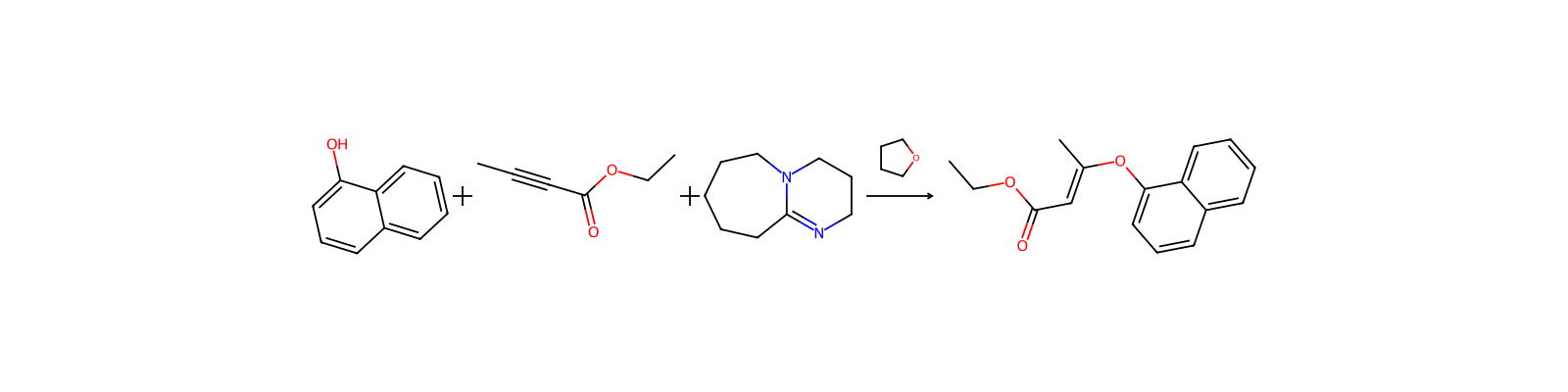
154



Verknüpfte Notizen
Wird geladen…