
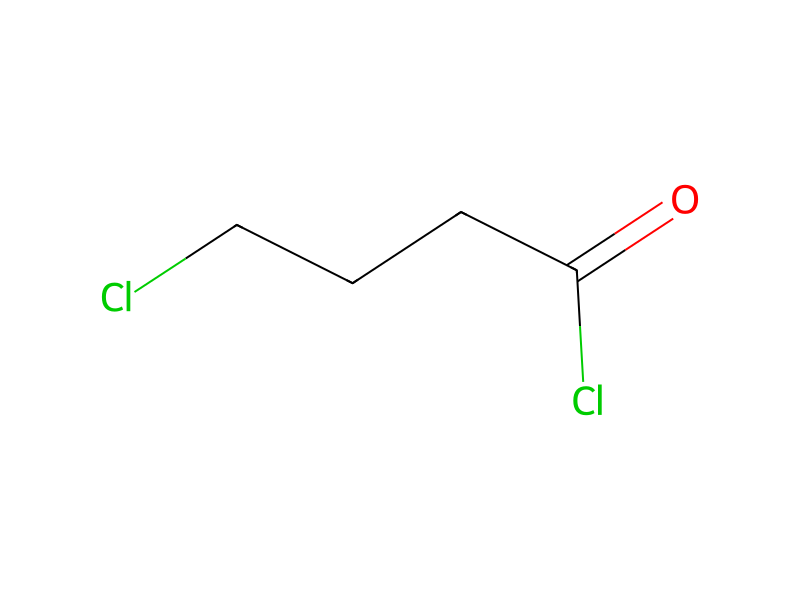
Grundinformationen
- Standard-SMILES
O=C(Cl)CCCCl- InChIKey
CDIIZULDSLKBKV-UHFFFAOYSA-N- Summenformel
- C4H6Cl2O
- Durchschnittliche Molmasse
- 140,99 g/mol
- Monoisotopische Masse
- 139,97957017
Namen und Bezeichner
- Bevorzugter Name
- 4-Chlorobutyryl chloride
- IUPAC
- 4-chlorobutanoyl chloride
- Lokaler Name
- 4-Chlorbutyrylchlorid
- Englischer Name
- 4-Chlorobutyryl chloride
- Summenformel
- C4H6Cl2O
- Molmasse
- 141
Namen und Synonyme
4-Chlorobutyryl chloride4-Chlorobutanoyl chlorideButanoyl chloride, 4-chloro-4-Chlorobutyroyl chloride4-Chlorobutyric acid chloride4-Chlorobutanoic acid chloridegamma-Chlorobutyryl chlorideButyryl chloride, 4-chloro-gamma-Chlorobutyroyl chlorideHSDB 7299EINECS 225-059-1UNII-3663U0VKRI
Weitere Namen anzeigen
4-CBCMONA-002orobutyryL4-Chlorobutyryl4-Chlorobutyryl chlo4-Chlorbutyrylchlorid-Chlorobutyrylchloride4-chloroprene chloride4-CHLOROBUTRYL CHLORIDE
.gamma.-Chlorobutyryl chloride3663U0VKRI4-Chlorobutyl chlorideDTXSID6052114CDIIZULDSLKBKV-UHFFFAOYSA-.gamma.-Chloro-n-butyryl chlorideEC 225-059-1.OMEGA.-CHLOROBUTYRYL CHLORIDE
Datenbank-Bezeichner
- CAS
4635-59-0- PubChem CID
- 78370
- DTXSID
DTXSID6052114- UNII
- 3663U0VKRI
- EC Number
- 225-059-1
- Nikkaji
- J26.724D
Eigenschaften
Berechnete Struktureigenschaften
- XLogP
- 1,7
- Polarare Oberfläche (TPSA)
- 17,1 Ų
- H-Brücken-Donoren
- 0
- H-Brücken-Akzeptoren
- 1
- Frei drehbare Bindungen
- 3
- Schwere Atome
- 7
- Formalladung
- 0
- Komplexität
- 62,7
Experimentelle und physikochemische Eigenschaften
Chemical ClassesToxic Gases & Vapors -> Acid Halides
SpringerMaterials PropertiesNuclear quadrupole resonance spectroscopy
Density
1.258
1.258 @25 °C
SolubilitySoluble in ethanol
Boiling Point
173.5 °C
173.5 °C @760 [mm Hg]
Vapor Pressure
1.32 [mmHg]
1.32 mm Hg at 25 °C at 25 °C /Estimated/
1.32 [mm Hg] @25 °C
Refractive IndexIndex of refraction = 1.462
Physical DescriptionLight gold liquid; [MSDSonline]
Other Experimental PropertiesHydroxyl radical reaction rate constant = 1.8X10⁻¹² cu cm/molec-sec at 25 °C /Estimated/
Physikochemische Eigenschaften
- Schmelzpunkt
- -47 °C · -47 °C
- Siedepunkt
- 173 · 173-174 °C(lit.)
- Dichte
- 1.26 g/mL · 1.26 g/mL at 25 °C(lit.)
- Dampfdruck
- 3 mm · 3 mm Hg ( 20 °C)
- Brechungsindex
- 20 · n20/D 1.461(lit.)
- Flammpunkt
- 163 °F · 163 °F
- storage temp.
- 30 °C · Store below +30°C.
- Löslichkeit
- Chloroform, DMSO (Sparingly), Ethyl Acetate (Slightly)
- Aggregatzustand
- Liquid
- Farbe
- Clear colorless to yellow
- Explosionsgrenze
- 5.5 · 5.5-11.7%(V)
- Wasserlöslichkeit
- soluble in diethyl ether, ethanol, slightly soluble in water.
- BRN
- 773860 · 773860
- Stabilität
- Hygroscopic, Moisture Sensitive
- InChI
- 1S/C4H6Cl2O/c5-3-1-2-4(6)7/h1-3H2
- InChIKey
- CDIIZULDSLKBKV-UHFFFAOYSA-N
- SMILES
- ClCCCC(Cl)=O
- CAS Datenbank
- 4635 · 4635-59-0(CAS DataBase Reference)
- NIST chemische Informationen
- 4 · Butanoyl chloride, 4-chloro-(4635-59-0)
- EPA chemische Informationen
- 4 · Butanoyl chloride, 4-chloro- (4635-59-0)
Sicherheit und Regulatorisches
GHS-Klassifizierung
GHS Classification
Danger
H290 (67.1%): May be corrosive to metals [Warning Corrosive to Metals]
P234, P260, P264, P270, P271, P280, P284, P301+P317, P301+P330+P331, P302+P361+P354, P304+P340, P305+P354+P338, P316, P320, P321, P330, P363, P390, P403+P233, P405, P406, and P501 (click each P-code to see the statement)
Aggregated GHS information provided per 161 reports by companies from 12 notifications to the ECHA C&L Inventory. Each notification may be associated with multiple companies.
Gefahrenhinweise
Regulatory Information
Chemical: Butanoyl chloride, 4-chloro-
Status: Active Update: 27-06-2012 https://echa.europa.eu/registration-dossier/-/registered-dossier/5789
4-Chlorobutyryl chloride: Does not have an individual approval but may be used under an appropriate group standard
Hazards SummaryReacts violently with water; A corrosive substance that can cause injury to the skin, eyes, and respiratory tract; Inhalation may cause edema and chemical pneumonitis; [MSDSonline]
Hazard Classes and CategoriesMet. Corr. 1 (67.1%)
Sicherheit und Schutzausrüstung
Disposal Methods
SRP: The most favorable course of action is to use an alternative chemical product with less inherent propensity for occupational exposure or environmental contamination. Recycle any unused portion of the material for its approved use or return it to the manufacturer or supplier. Ultimate disposal of the chemical must consider: the material's impact on air quality; potential migration in soil or water; effects on animal, aquatic, and plant life; and conformance with environmental and public health regulations.
Protective Action Criteria (PAC)
0.43 [mg/m3]
4.8 [mg/m3]
29 [mg/m3]
Toxikologische Informationen
Environmental FateAQUATIC FATE: 4-Chlorobutyryl chloride 2,4 is expected to hydrolyze rapidly in water to form 4-chlorobutyric acid(1).
Adverse EffectsDermatotoxin - Skin burns.
Non-Human Toxicity Excerpts
/LABORATORY ANIMALS: Acute Exposure/ In a further acute toxicity study in rats, the LD50 was determined as 1350 mg/kg body weight following oral administration of a 4.3- to 92.8 percent solution of the substances in olive oil and a 14 day observation period (male rats approximately 1500 mg/kg body weight, female rats 1210 mg/kg body weight; 5 male and 5 female rats). The LD100 was 2150 mg/kg body weight (death occurring within 1 hour), while the LD0 was 215 mg/kg body weight. The clinical signs of toxicity observed included staggering, tremors, apathy, dyspnoea, atonia, exsiccosis and paresis. Autopsy revealed atrial dilatation of the heart and congestive hyperemia, acinar pattern of the liver as well as several instances of hemorrhagic eschar formatio on the gastric mucosa and pronounced reddening of the intestinal mucosa. All animals sacrificed at the end of the test were found to have adhesions between the forestomach and the spleen, the liver and the peritoneum.
/LABORATORY ANIMALS: Acute Exposure/ In mice, exposure to 4-chlorobutanoic acid chloride vapors causes sensory irritation of the upper respiratory tract with biphasic impairment of respiratory rate.
/LABORATORY ANIMALS: Acute Exposure/ The application of the neat substance to the skin and eyes of rabbits produces a very severe corrosive effect.
/LABORATORY ANIMALS: Acute Exposure/ Groups of 5 male and 5 female Wistar rats each (average initial weights 317 g and 197 g, respectively) inhaled 4-chlorobutanoic acid chloride (purity of test substance 99.5%) at concentrations of 510, 650 and 870 mg/cu m in a single exposure lasting 4 hours. The observation period was 14 days. The signs of toxicity included labored breathing, closed eyes, piloerection, hunched posture and during the observation period a deteriorated general condition, irregular breathing, encrustations around the nares, including wounded noses, and encrustations around the eyes. Of all 10 rats exposed to the highest concentration (870 mg/cu m), 8 died or had to be killed in extremis in the course of the observation period. No deaths occurred in the other two concentration groups (650 and 510 mg/cu m). Body weight was extremely low in most of the animals which died and was also markedly decreased in the surviving animals up to day 7 of observation, though normal weight was regained by day 14 of the observation period. Post-mortems on the deceased rats revealed considerable abnormalities of the lungs (swellings, atelectasis, irregular surface markings, spongy appearance), and some of the rats which were sacrificed at the end of the observation period were found to have greyish, pale or spotted lungs. In addition, the gastrointestinal tracts of several of the deceased rats were filled with air. ...
For more Non-Human Toxicity Excerpts (Complete) data for 4-CHLOROBUTYRYL CHLORIDE (7 total), please visit the HSDB record page.
Environmental Abiotic Degradation4-Chlorobutyryl chloride 2,4 is expected to hydrolyze rapidly in water to form 4-chlorobutyric acid(1).
Antidote and Emergency Treatment
Basic treatment: Establish a patent airway. Suction if necessary. Watch for signs of respiratory insufficiency and assist respirations if necessary. Administer oxygen by nonrebreather mask at 10 to 15 L/min. Monitor for pulmonary edema and treat if necessary ... . Monitor for shock and treat if necessary ... . For eye contamination, flush eyes immediately with water. Irrigate each eye continuously with normal saline during transport ... . Do not use emetics. For ingestion, rinse mouth and administer 5 ml/kg up to 200 ml of water for dilution if the patient can swallow, has a strong gag reflex, and does not drool. Activated charcoal is not effective ... . Do not attempt to neutralize because of exothermic reaction. Cover skin burns with dry, sterile dressings after decontamination ... . /Organic acids and related compounds/
Advanced treatment: Consider orotracheal or nasotracheal intubation for airway control in the patient who is unconscious, has severe pulmonary edema, or is in respiratory arrest. Early intubation, at the first sign of upper airway obstruction, may be necessary. Positive pressure ventilation techniques with a bag valve mask device may be beneficial. Monitor cardiac rhythm and treat arrhythmias as necessary ... . Start an IV with D5W /SRP: "To keep open", minimal flow rate/. Use lactated Ringer's if signs of hypovolemia are present. Watch for signs of fluid overload. Consider drug therapy for pulmonary edema ... . For hypotension with signs of hypovolemia, administer fluid cautiously. Consider vasopressors if patient is hypotensive with a normal fluid volume. Watch for signs of fluid overload ... . Use proparacaine hydrochloride to assist eye irrigation ... . /Organic acids and related compounds/
Toxicity DataLC50 (rat) = 650 mg/m3/4h
Non-Human Toxicity Values
LC50 Rat inhalation 650 to 870 mg/cu m/4hr
LD50 Rat oral 1350 mg/kg bw
LD50 Rat oral 1510 mg/kg bw
Sicherheitsdaten
- wgk
- 1
- tsca
- TSCA listed
- ridadr
- UN 3390 6.1/PG 1
- hs_code
- 29159080
- RTECS-Nr.
- EM1406000
- risk_code
- 22-23-35
- hazard_code
- T,C
- hazard_note
- Toxic/Corrosive/Moisture Sensitive
- safety_code
- 26-28-36/37/39-45-28A
- hazard_class
- 6.1
- packing_group
- II
- Speicherklasse
- 6.1A - Combustible acute toxic Cat. 1 and 2very toxic hazardous materials
- Giftige Stoffe Daten
- 4635-59-0(Hazardous Substances Data)
- Hazard Classifications
- Acute Tox. 2 InhalationAcute Tox. 4 OralAquatic Acute 1Eye Dam. 1Met. Corr. 1Skin Corr. 1A
- Selbstentzündungstemperatur
- 824 °F
Chemie und Industrie
Verwendung und Herstellung
General Manufacturing InformationButanoyl chloride, 4-chloro-: ACTIVE
Anwendungen
Verwenden4-Chlorobutyryl chloride (4-CBCl) is mainly used in the production of pharmaceuticals and agrochemicals. It is used as pyrazinamide intermediate.
Vor- und nachgelagerte Produkte
Vorgelagerte Rohstoffe
Nachgelagerte Produkte
Anbieter50 Anbieter
国药集团化学试剂有限公司86-21-63210123 · [email protected]
梯希爱(上海)化成工业发展有限公司021-67121386 · [email protected]
上海阿拉丁生化科技股份有限公司400-6206333 13167063860 · [email protected]
爱斯特(成都)生物制药股份有限公司+86-28-85122536 85324413 · [email protected]
韶远科技(上海)有限公司021-50795510 4000665055 · [email protected]
Syntechem Co.,Ltd[email protected]
上海迈瑞尔生化科技有限公司4006356688 18621169109 · [email protected]
阿法埃莎(中国)化学有限公司400-6106006 · [email protected]
安耐吉化学&3A(安徽泽升科技股份有限公司)400-0056266 · [email protected]
上海瀚鸿科技股份有限公司021-54306202 13764082696 · [email protected]
南京欣丰康生物科技有限公司025-84683399 13952017251 · [email protected]
上海景颜化工科技有限公司13817811078 · [email protected]
嘉兴市艾森化工有限公司0573-85285100 18627885956 · [email protected]
池州捷峰生物科技有限公司0566-8928158 · [email protected]
武汉丰泰威远科技有限公司027-87465837 19945049750 · [email protected]
孝感深远化工有限公司15527621225; 15527621225 · [email protected]
山东西亚化学有限公司13355009207 13355009207 · [email protected]
玛雅试剂+86 (573) 82222445 (0)18006601000 452520369 · [email protected]
四川库利南科技有限公司400-1166-196 18981987031 · [email protected]
天津希恩思生化科技有限公司400 638 7771 · [email protected]
河南萬象化工有限公司(优势生产供应!)0371-56669001 13949088811 · [email protected]
河南多贝化工有限公司0370-2785118 17550508557 · [email protected]
斯百全化学(上海)有限公司021-021-021-67601398-809-809-809 15221380277 · [email protected]
艾科试剂4008-755-333 18080918076 · [email protected]
上海思域化工科技有限公司86-21-34053660 · [email protected]
赛默飞世尔科技(中国)有限公司800-810-5118 · [email protected]
北京伊诺凯科技有限公司400-810-7969 010-59572699 · [email protected]
江苏艾康生物医药研发有限公司025-66113011 13913916777 · [email protected]
TCI AMERICA800-4238616 · [email protected]
TOKYO CHEMICAL INDUSTRY CO., LTD.03-36680489 · [email protected]
TCI Europe320-37350700 · [email protected]
深圳振强药物研发有限公司0755-66853366 13670046396 · [email protected]
深圳康特腾科技有限公司86-0755-86635001 · [email protected]
越林试剂021-62960152 · [email protected]
无锡中坤生化科技有限公司+86 0510-85629785
北京环宇世纪化学科技有限公司hysj_bj.com
上海湄水化工科技有限公司021-60549325 18616193163
上海将来实业股份有限公司400-0066400 13621662912 · [email protected]
安徽科迪达化工有限公司0554-2106669 · [email protected]
HBCChem, Inc.+1-510-219-6317 · [email protected]
日照力德士化工有限公司010-51268198 · [email protected]
美岚实业(上海)有限公司021-58958189 · [email protected]
上海石洋化工有限公司021-56795766 · [email protected]
上海爱蝶实业有限公司021-58957966 18930537195 · [email protected]
成都零六生物科技有限公司400-1166-196 13458535857 · [email protected]
广拓化学(上海)有限公司021-60899189-8001 18918189673 · [email protected]
雷丁试剂0510-85629785 18013409632 · [email protected]
湖南华腾制药有限公司400-8592883 · [email protected]
上海馨远医药科技有限公司021-24206007 13764915196 · [email protected]
上海御略医药科技有限公司021-60345187 13671753212 · [email protected]
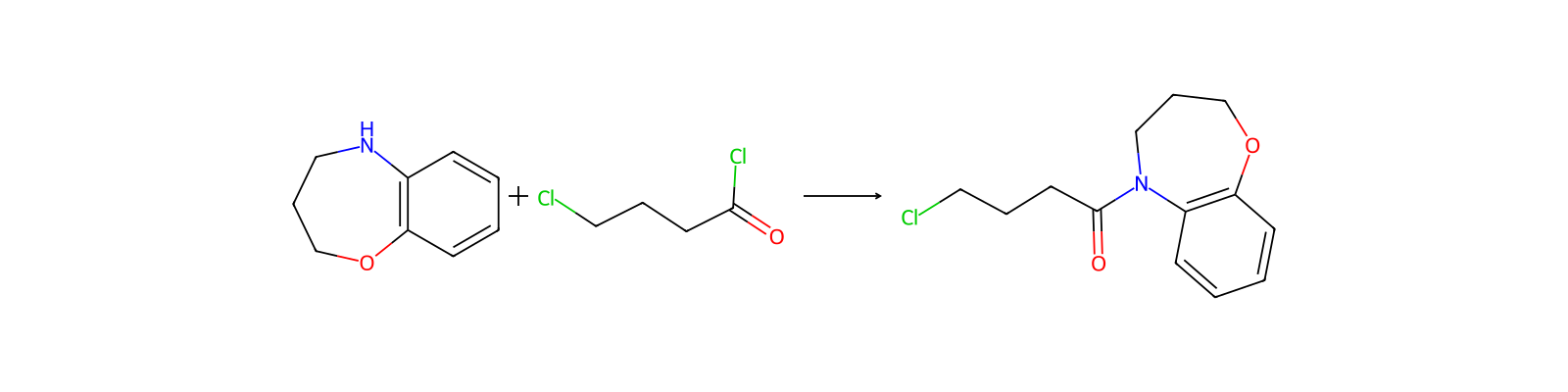
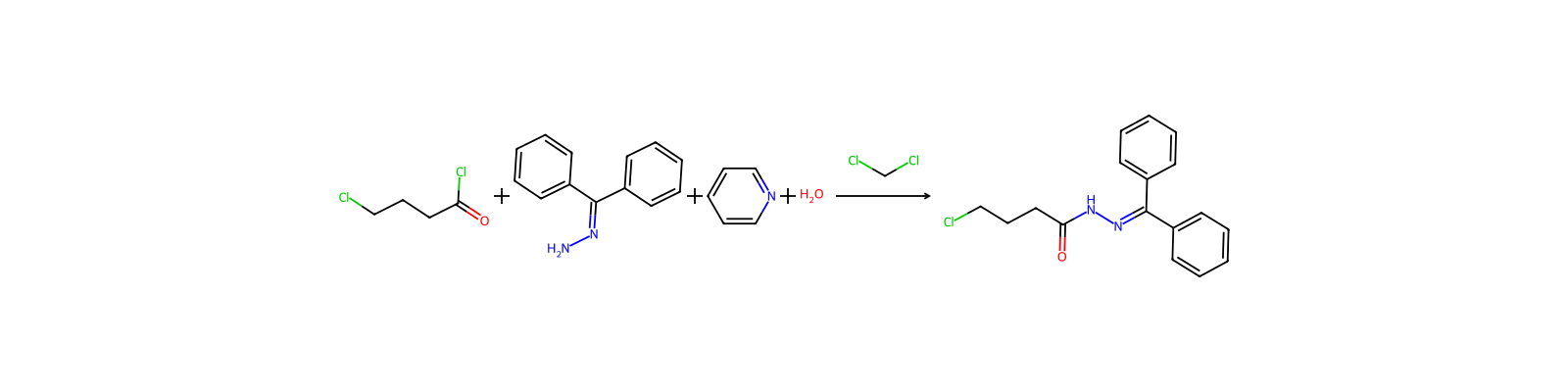
Zugehörige Reaktionen
564




Verknüpfte Notizen
Wird geladen…