

Grundinformationen
- CAS
4856-97-7- Standard-SMILES
OCc1nc2ccccc2[nH]1- InChIKey
IAJLTMBBAVVMQO-UHFFFAOYSA-N- Summenformel
- C8H8N2O
- Durchschnittliche Molmasse
- 148,16 g/mol
- Monoisotopische Masse
- 148,06366288
Namen und Bezeichner
- Bevorzugter Name
- 2-(Hydroxymethyl)-1H-benzimidazole
- IUPAC
- 1H-benzimidazol-2-ylmethanol
- Lokaler Name
- 2-(Hydroxymethyl)-1H-benzimidazol
- Englischer Name
- 1H-Benzimidazole-2-methanol
- Summenformel
- C8H8N2O
- Molmasse
- 148.16
Namen und Synonyme
4856-97-71H-Benzimidazole-2-methanol2-(Hydroxymethyl)-1H-benzimidazoleAI3-61986EINECS 225-451-2DTXSID70197552NSC 18284RefChem:461049DTXCID30120043225-451-2(1H-Benzoimidazol-2-yl)methanol1H-benzimidazol-2-ylmethanol
Weitere Namen anzeigen
Compound Fr13702IFLAB-BB F0266-0027TIMTEC-BB SBB0040852-HYDROXYBENXIMIDAZOLEBENZIMIDAZOLE-2-METHANOL(2-Benzimidazolyl)methanol1H-benzimidazol-2-methanol
2-Benzimidazolemethanol(1H-benzo[d]imidazol-2-yl)methanol2-(Hydroxymethyl)benzimidazole2-Hydroxymethyl-BenzoimidazoleMFCD00014560(1H-1,3-benzodiazol-2-yl)methanol2-Hydroxymethylbenzimidazole9SZ34H8DY7
Datenbank-Bezeichner
- CAS
4856-97-7- PubChem CID
- 78569
- DTXSID
DTXSID70197552- ChEMBL
CHEMBL71443- UNII
- 9SZ34H8DY7
- EC Number
- 225-451-2
- Nikkaji
- J68.955F
Eigenschaften
Berechnete Struktureigenschaften
- XLogP
- 0,9
- Polarare Oberfläche (TPSA)
- 48,9 Ų
- H-Brücken-Donoren
- 2
- H-Brücken-Akzeptoren
- 2
- Frei drehbare Bindungen
- 1
- Schwere Atome
- 11
- Formalladung
- 0
- Komplexität
- 140
Physikochemische Eigenschaften
- Schmelzpunkt
- 171 · 171-175 °C (lit.)
- Siedepunkt
- 268.75 °C · 268.75°C (rough estimate)
- Dichte
- 1.1828 · 1.1828 (rough estimate)
- Brechungsindex
- 1.6 · 1.6000 (estimate)
- storage temp.
- Sealed in dry,Room Temperature
- Löslichkeit
- soluble in Methanol
- pka
- 11.57 · 11.57±0.10(Predicted)
- Aggregatzustand
- Crystalline Powder
- Farbe
- Off-white to light brown
- InChI
- InChI=1S/C8H8N2O/c11-5-8-9-6-3-1-2-4-7(6)10-8/h1-4,11H,5H2,(H,9,10)
- InChIKey
- IAJLTMBBAVVMQO-UHFFFAOYSA-N
- SMILES
- C1(CO)NC2=CC=CC=C2N=1
- CAS Datenbank
- 4856 · 4856-97-7(CAS DataBase Reference)
Sicherheit und Regulatorisches
GHS-Klassifizierung
GHS Classification
Warning
H302 (93.2%): Harmful if swallowed [Warning Acute toxicity, oral];H312 (93.2%): Harmful in contact with skin [Warning Acute toxicity, dermal];H315 (100%): Causes skin irritation [Warning Skin corrosion/irritation];H319 (100%): Causes serious eye irritation [Warning Serious eye damage/eye irritation];H332 (93.2%): Harmful if inhaled [Warning Acute toxicity, inhalation];H335 (97.7%): May cause respiratory irritation [Warning Specific target organ toxicity, single exposure; Respiratory tract irritation]
P261, P264, P264+P265, P270, P271, P280, P301+P317, P302+P352, P304+P340, P305+P351+P338, P317, P319, P321, P330, P332+P317, P337+P317, P362+P364, P403+P233, P405, and P501 (click each P-code to see the statement)
Aggregated GHS information provided per 44 reports by companies from 6 notifications to the ECHA C&L Inventory. Each notification may be associated with multiple companies.;Information may vary between notifications depending on impurities, additives, and other factors. The percentage value in parenthesis indicates the notified classification ratio from companies that provide hazard codes. Only hazard codes with percentage values above 10% are shown. For more detailed information, please visit ECHA C&L website.
Gefahrenhinweise
Regulatory InformationChemical: 1H-Benzimidazole-2-methanol
Hazard Classes and CategoriesAcute Tox. 4 (93.2%);Acute Tox. 4 (93.2%);Skin Irrit. 2 (100%);Eye Irrit. 2 (100%);Acute Tox. 4 (93.2%);STOT SE 3 (97.7%)
Regulatorische Informationen
Regulatory InformationChemical: 1H-Benzimidazole-2-methanol
Sicherheitsdaten
- wgk
- 3
- hs_code
- 29339900
- risk_code
- 20/21/22-36/37/38
- hazard_code
- Xn,Xi
- safety_code
- 26-36-36/37
- hazard_class
- IRRITANT
- Speicherklasse
- 11 - Combustible Solids
- Hazard Classifications
- Acute Tox. 4 DermalAcute Tox. 4 InhalationAcute Tox. 4 OralEye Irrit. 2Skin Irrit. 2STOT SE 3
Chemie und Industrie
Anwendungen
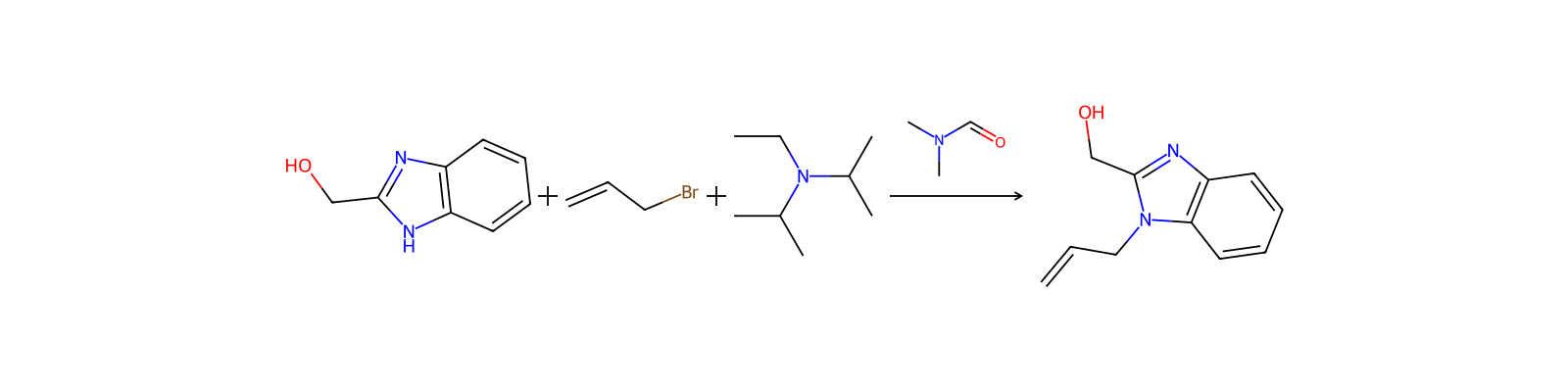
Verwenden2-Benzimidazolemethanol was used in the preparation of 2-(chloromethyl)-1-(methylsulfonyl)benzimidazole via methanesulfonylation. It was also used in the synthesis of 1H-benzimidazol-2-ylmethyl diethyl phosphate.
Vor- und nachgelagerte Produkte
Vorgelagerte Rohstoffe
Nachgelagerte Produkte
Anbieter100 Anbieter
梯希爱(上海)化成工业发展有限公司021-67121386 · [email protected]
上海阿拉丁生化科技股份有限公司400-6206333 13167063860 · [email protected]
Wuhan Chemwonders Technology Inc.027-85778276 · [email protected]
上海瀚麟生物科技有限公司183-0212-4410 18302124410 · [email protected]
爱斯特(成都)生物制药股份有限公司+86-28-85122536 85324413 · [email protected]
Dayang Chem (Hangzhou) Co.,Ltd.+86-0571-88938639 17705817739 · [email protected]
韶远科技(上海)有限公司021-50795510 4000665055 · [email protected]
科瑞迪化学400-821-5857 021-64326257 · [email protected]
Syntechem Co.,Ltd[email protected]
上海迈瑞尔生化科技有限公司4006356688 18621169109 · [email protected]
上海辅欣医药科技有限公司+86-021-021-50872116 · [email protected]
安耐吉化学&3A(安徽泽升科技股份有限公司)400-0056266 · [email protected]
常州科化生物科技有限公司0519-68985668 13685222090 · [email protected]
上海瀚鸿科技股份有限公司021-54306202 13764082696 · [email protected]
上海相辉医药科技有限公司13761987713 · [email protected]
嘉兴市艾森化工有限公司0573-85285100 18627885956 · [email protected]
上海忆嵘生物科技有限公司18049974220 · [email protected]
杭州东帆化学有限公司86-0571-85151182
山东西亚化学有限公司13355009207 13355009207 · [email protected]
天津希恩思生化科技有限公司400 638 7771 · [email protected]
成都海品信医药科技有限公司85114309 18982182443 · [email protected]
艾科试剂4008-755-333 18080918076 · [email protected]
上海思域化工科技有限公司86-21-34053660 · [email protected]
赛默飞世尔科技(中国)有限公司800-810-5118 · [email protected]
上海特伯化学科技有限公司+86-21-60341587 · [email protected]
江苏艾康生物医药研发有限公司025-66113011 13913916777 · [email protected]
TCI AMERICA800-4238616 · [email protected]
TOKYO CHEMICAL INDUSTRY CO., LTD.03-36680489 · [email protected]
TCI Europe320-37350700 · [email protected]
苏州亚科科技股份有限公司0512-87182055 13451648594 · [email protected]
上海湄水化工科技有限公司021-60549325 18616193163
上海将来实业股份有限公司400-0066400 13621662912 · [email protected]
上海将来实业股份有限公司021-61552785 · [email protected]
HBCChem, Inc.+1-510-219-6317 · [email protected]
上海毕得医药科技股份有限公司400-164-7117 18317119277 · [email protected]
北京奥秘佳得医药科技有限公司+86-13522808617 · [email protected]
成都零六生物科技有限公司400-1166-196 13458535857 · [email protected]
常州市新开化工有限公司15051102731
上海默达医药科技有限公司+86 (0)21 51320687 51371369 1744605818
上海御略医药科技有限公司021-60345187 13671753212 · [email protected]
天津安浩生物科技有限公司[email protected]
上海毓川医药科技有限公司02161555100
上海纳谦化学科技有限公司13598610367 13598610367 · [email protected]
上海嵩爰化工科技有限公司010-1234567 18521000990 · [email protected]
山东集润生物医药科技有限公司0539-0539-8613587 17661611089 · [email protected]
池州凯隆进出口贸易有限公司[email protected]
Sigma-Aldrich西格玛奥德里奇(上海)贸易有限公司021-61415566 800-8193336 · [email protected]
Accela ChemBio Inc.+1(858) 699-3322 · [email protected]
上海皓之翔生物科技有限公司(原上海拓青化工有限公司)526763801 13301653310 · [email protected]
九鼎化学(上海)科技有限公司4009209199 · [email protected]
Zugehörige Reaktionen
33



Notizen zur Verbindung
Wird geladen…