StartseiteMCPWorkbenchSkills
StartseiteWorkbenchBenachrichtigungenMein Bereich
llms.txt · MCP-AnleitungDatenschutz · Nutzungsbedingungen · Supportv1.8.0
  1. Startseite
  2. /Verbindung

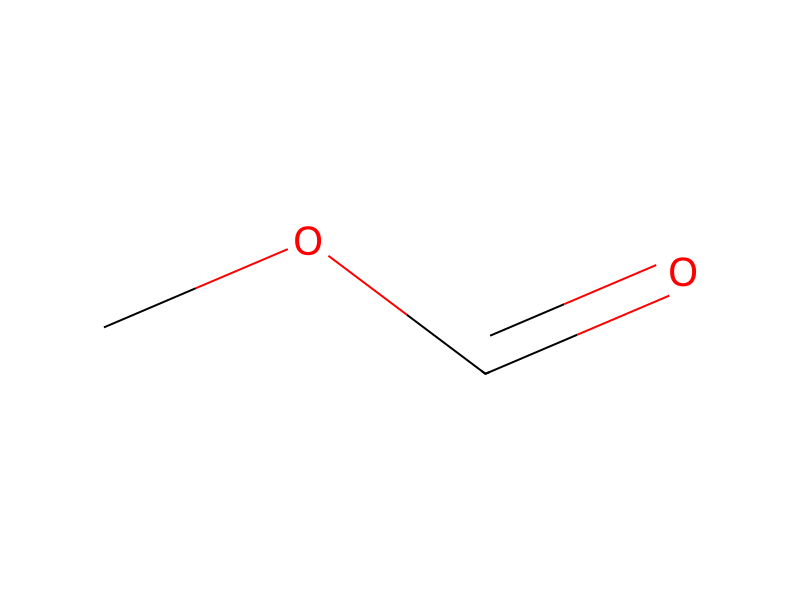
Methylformiat

Methyl formate

HCID 7865
Neue NotizNeue ReaktionAnfrage stellen
Druckvorschau

Daten werden ergänzt – lade die Seite später neu, um den aktuellen Stand zu sehen
GrundinformationenÜberblickNamen und BezeichnerEigenschaftenSicherheit und RegulatorischesChemie und IndustrieZugehörige ReaktionenNotizen zur Verbindung
TeilstruktursucheÄhnliche Strukturen suchen

Grundinformationen

CAS
107-31-3
Standard-SMILES
COC=O
InChIKey
TZIHFWKZFHZASV-UHFFFAOYSA-N
Summenformel
C2H4O2
Durchschnittliche Molmasse
60,05 g/mol
Monoisotopische Masse
60,02112937

Überblick

Methyl formate appears as a clear colorless liquid with an agreeable odor. Flash point -27 °F. Less dense than water Vapors heavier than air.

Namen und Bezeichner

Bevorzugter Name
Methyl formate
IUPAC
methyl formate
Lokaler Name
Methylformiat
Englischer Name
Methyl formate
Summenformel
C2H4O2
Molmasse
60.05

Namen und Synonyme

METHYL FORMATE107-31-3Formic acid, methyl esterMethyl methanoateFormic acid methyl esterMethylformiatFormiate de methyleMethylformiaatMravencan methylnatymethanoic acid methyl esterDTXSID5025609Methylester kyseliny mravenci
Weitere Namen anzeigen
HCOOCH3Methyl formate analytical standardMetilformiatedemethyleformiatedemethyle(french)Methyl forMate (C1:0) SolutionMETHYL FORMATE FOR SYNTHESIS 1 LMETHYL FORMATE FOR SYNTHESIS 100 MLacid-Me
Metil (formiato di)Methyle (formiate de)Methyl ester of formic acid1MPH591FTGDTXCID305609CHEBI:77699RefChem:6021203-481-7

Datenbank-Bezeichner

CAS
107-31-3
PubChem CID
7865
DTXSID
DTXSID5025609
ChEMBL
CHEMBL295026
ChEBI
CHEBI:77699
UNII
1MPH591FTG
EC Number
203-481-7
Nikkaji
J4.064I

Eigenschaften

Berechnete StruktureigenschaftenWird ergänzt

XLogP
0
Polarare Oberfläche (TPSA)
26,3 Ų
H-Brücken-Donoren
0
H-Brücken-Akzeptoren
2
Frei drehbare Bindungen
1
Schwere Atome
4
Formalladung
0
Komplexität
18

Experimentelle und physikochemische Eigenschaften

Chemical ClassesFlammable agents - 4th degree
SolventsSolvents -> Esters (<C12)
SpringerMaterials PropertiesCoriolis coupling
LogP · 2 Einträge

log Kow = 0.03

-0.21

Odor · 2 Einträge

Agreeable

Pleasant odor.

Density · 6 Einträge

0.977 at 68 °F (USCG, 1999) - Less dense than water; will float

0.987 at 15 °C/15 °C

DENSITY OF SATURATED AIR: 1.83 (AIR= 1)

Relative density (water = 1): 0.97

0.98

0.975 @ 20°C

Flavoring AgentsEU Flavoring substances
Viscosity0.325 mPa-s at 25 °C
Color/FormColorless liquid [Note: A gas above 89 degrees F].

Sicherheit und Regulatorisches

Sicherheitsangaben dienen nur zur Orientierung und ersetzen weder das Sicherheitsdatenblatt (SDB) des Lieferanten noch geltende Vorschriften oder eine fachliche Bewertung.

GHS-Klassifizierung

GHS Classification · 6 Einträge

Danger

H224: Extremely flammable liquid and vapor [Danger Flammable liquids]

P210, P233, P240, P241, P242, P243, P261, P264, P264+P265, P270, P271, P280, P301+P317, P303+P361+P353, P304+P340, P305+P351+P338, P317, P319, P330, P337+P317, P370+P378, P403+P233, P403+P235, P405, and P501 (click each P-code to see the statement)

This chemical does not meet GHS hazard criteria for 1.4% (11 of 764) of reports.

Danger

H224 (98.6%): Extremely flammable liquid and vapor [Danger Flammable liquids]

Gefahrenhinweise

Regulatory Information · 6 Einträge

Chemical: Formic acid, methyl ester

Commission Regulation (EC) No 1565/2000 (Repealed by Com. Implementing Reg. (EU) No 872/2012)

Formic acid, methyl ester is listed on the EPA's Chemical Data Reporting (CDR) system. Manufacturers and importers of Formic acid, methyl ester are required to report information about their production and use of this chemical to the EPA under the Toxic Substances Control Act (TSCA). (40 eCFR Part 711)

Status: Active Update: 07-04-2021 https://echa.europa.eu/registration-dossier/-/registered-dossier/2054

Formic acid, methyl ester: HSNO Approval: HSR001192 Approved with controls

The New Jersey Worker and Community Right to Know Act requires public and private employers to provide information about hazardous substances at their workplaces. (N.J.S.A. 34:5A-1 et. seq.)

Other Safety InformationIMAP assessments - Formic acid, methyl ester: Environment tier I assessment
DOT LabelFlammable Liquid
Fire Hazards · 3 Einträge

Behavior in Fire: Vapor is heavier than air and may travel considerable distance to a source of ignition and flash back. (USCG, 1999)

Chemie und Industrie

Pharmakologische Informationen

Metabolism/Metabolites · 3 Einträge

The products of hydrolysis have been found in significant quantity upon incubation of methyl formate with body fluids. Oxidation of the formic acid fraction may be carried out by the liver and striated muscle but not the kidney. No further metabolism of the methanol fraction has been observed in tissue slices.

...Methyl formate may be formed, under the action of alcohol dehydrogenase, in the bodies of animals exposed to formaldehyde and methanol.

Methyl formate is biotransformed via hydrolysis in the body to yield methanol and formic acid.

Absorption, Distribution and Excretion · 2 Einträge

This ester can be absorbed into body through respiratory and digestive systems and it may also penetrate skin.

Small quantities of the parent compound have been found in the blood of animals killed by methyl formate vapor.

Verwendung und Herstellung

Uses · 6 Einträge

Used as a solvent (cellulose acetate and quick drying finishes), fumigant and larvicide (food and tobacco crops), and chemical intermediate; Also used as a refrigeration solvent, blowing agent for foam insulation, and binding agent in mold cores in iron foundries; [ACGIH]

Molding and Core Making [Category: Foundry]

Smoking cigarettes [Category: Food & Drugs]

For Methyl formate (USEPA/OPP Pesticide Code: 053701) there are 0 labels match. /SRP: Not registered for current use in the U.S., but approved pesticide uses may change periodically and so federal, state and local authorities must be consulted for currently approved uses./

High-boiling refrigerant for house appliances /SRP: Formerly/

Solvent; intermediate for dimethylformamide

U.S. Production · 6 Einträge

2023: 100,000,000 - <500,000,000 lb

Formic acid, methyl ester is listed as a High Production Volume (HPV) chemical (65FR81686). Chemicals listed as HPV were produced in or imported into the U.S. in >1 million pounds in 1990 and/or 1994. The HPV list is based on the 1990 Inventory Update Rule. (IUR) (40 CFR part 710 subpart B; 51FR21438).

Zugehörige Reaktionen

547
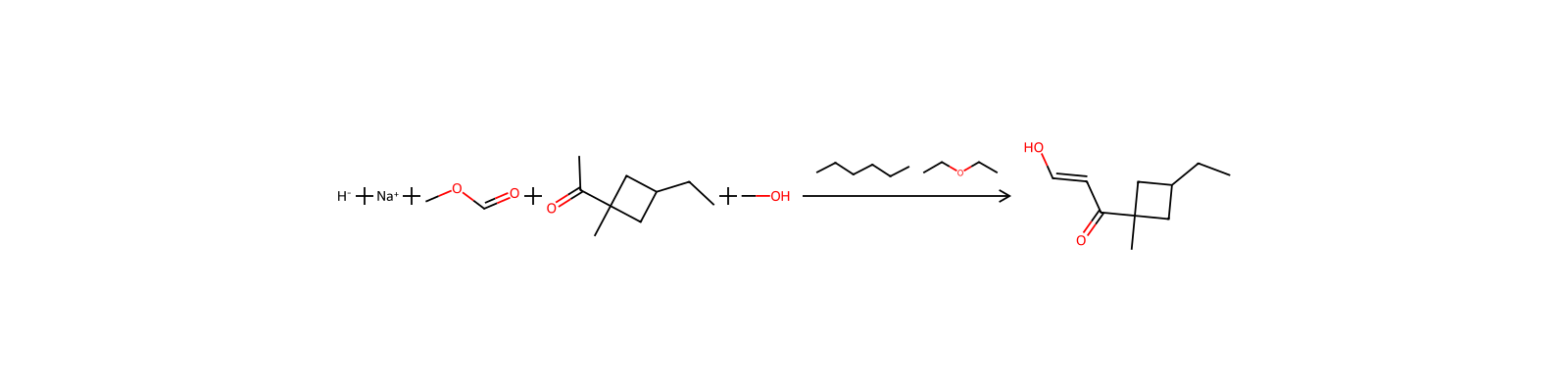
Reaktionsaufzeichnung erstellen
Reaktionsgleichung von HRID 20612
HRID 20612als Eduktuspto-grants-2010_06
Reaktionsgleichung von HRID 27299
HRID 27299als Eduktuspto-grants-1980_09
Reaktionsgleichung von HRID 34676
HRID 34676als Eduktuspto-grants-1988_08
Reaktionsgleichung von HRID 41096
HRID 41096als Eduktuspto-grants-2013_09
Reaktionsgleichung von HRID 53365
HRID 53365als Eduktuspto-grants-1997_04
Reaktionsgleichung von HRID 67169
HRID 67169als Eduktuspto-grants-1982_08
Reaktionsgleichung von HRID 76849
HRID 76849als Produktuspto-grants-2014_09
Reaktionsgleichung von HRID 76907
HRID 76907als Eduktuspto-grants-2014_09
Seite 1 von 69

Notizen zur Verbindung

Wird geladen…

Auf dieser SeiteGrundinformationenÜberblickNamen und BezeichnerEigenschaftenSicherheit und RegulatorischesChemie und IndustrieZugehörige ReaktionenNotizen zur Verbindung
Weitere Aktionen
Neue NotizNeue ReaktionAnfrage stellen
Solubility · 6 Einträge

greater than or equal to 100 mg/mL at 72 °F (NTP, 1992)

28.35 kJ/mol at 25 °C

Soluble in ether, chloroform; miscible with ethanol

In water, 230,000 mg/L at 25 °C

Solubility in water, g/100ml at 20 °C: 30 (good)

30%

Flash Point · 6 Einträge

-26 °F (NTP, 1992)

-2 °F

-2 °F (-19 °C) (Closed Cup)

-19 °C

-26 °F

-2 °F

Boiling Point · 6 Einträge

88.7 °F at 760 mmHg (NTP, 1992)

31.5 °C

32 °C

89 °F

31.5 °C @760 [mm Hg]

89 °F

Physikochemische Eigenschaften

Schmelzpunkt
-100 °C · -100 °C (lit.)
Siedepunkt
32 · 32-34 °C (lit.)
Dichte
0.974 g/mL · 0.974 g/mL at 20 °C (lit.)
Dampfdichte
2.1 · 2.1 (vs air)
Dampfdruck
32.91 psi · 32.91 psi ( 55 °C)
Brechungsindex
20 · n20/D 1.343(lit.)
Flammpunkt
16 °F · −16 °F
storage temp.
30 °C · Store below +30°C.
Löslichkeit
300 g/l, · 300g/l, 25% soluble in water, miscible with alcohol, Propylene glycol, Glycerin and oils.
Aggregatzustand
Liquid
Farbe
Clear colorless
Geruch (Odor)
Pleasant; agreeable.
PH
4 · 4-5 (200g/l, H2O, 20℃)
Explosionsgrenze
5 · 5-23%(V)
Odor Threshold
130 ppm · 130ppm
Biologische Quelle
synthetic
Geruchsart
fruity
Wasserlöslichkeit
300 G/L · 300 G/L (20 ºC)
Spezifische Wärmekapazität
1.98 J/ · Cp(liquid): 1.98 J/(g·K); Cp(gas): 1.07 J/(g·K), at 25℃
Merck
14 · 14,6077
BRN
1734623 · 1734623
Henry's Law Constant
0.9 at · 0.90 at 5.00 °C, 1.18 at 10.00 °C, 1.51 at 15.00 °C, 1.91 at 20.00 °C, 2.36 at 25.00 °C (column stripping-UV, Kutsuna et al., 2005)
Dielectric constant
8.5 · 8.5(20℃)
Stabilität
Stable. Extremely flammable. Readily forms explosive mixtures with air. Note low flash point and very wide explosion limits. Incompatible with oxidizing agents.
Major Application
cleaning productscosmeticsflavors and fragrancesfood and beveragespersonal care
InChI
1S/C2H4O2/c1-4-2-3/h2H,1H3
InChIKey
TZIHFWKZFHZASV-UHFFFAOYSA-N
SMILES
[H]C(=O)OC
LogP
-0.21 at · -0.21 at 25℃
CAS Datenbank
107 · 107-31-3(CAS DataBase Reference)
NIST chemische Informationen
Methyl formate(107-31-3)
EPA chemische Informationen
Methyl formate (107-31-3)

· HIGHLY FLAMMABLE: Will be easily ignited by heat, sparks or flames.

Extremely flammable. Vapour/air mixtures are explosive. Heating will cause rise in pressure with risk of bursting. Risk of fire and explosion on contact with strong oxidants.

Fire Potential · 3 Einträge

Flammable liquid.

Mixes with water. Flammable, irritating vapor is produced.

Very dangerous fire hazard when exposed to heat or flame.

Health Hazards · 2 Einträge

Inhalation causes irritation of mucous membranes. Prolonged inhalation can produce narcosis and central nervous symptoms, including some temporary visual disturbance. Contact with liquid irritates eyes and may irritate skin if allowed to remain. Ingestion causes irritation of mouth and stomach and central nervous system depression, including visual disturbances. (USCG, 1999)

· May cause toxic effects if inhaled or absorbed through skin.

Hazards Summary · 1 Eintrag

TLV Basis is CNS impairment, upper respiratory tract irritation, and eye damage. In animal inhalation studies, narcosis, pulmonary edema, and death occur at concentrations in the range of 5000 ppm to 10,000 ppm for one to three hours of exposure. Human volunteers exposed to 100 ppm for 8 hours have increased fatigue. Foundry workers exposed to 36 ppm had no adverse effects. Methyl formate breaks down into methanol and formic acid. Formic acid causes optic neuropathy in cases of methanol poisoning. Exposure to methyl formate at 50 ppm is equivalent to methanol exposure at the TLV. [ACGIH] Intravenous doses of approximately 4g/kg cause significant methemoglobinemia in experimental dogs. [HSDB] No reported cases of toxic pneumonitis in humans; May cause slight skin irritation; [CHEMINFO] A skin and eye irritant that causes CNS effects at high concentrations; [ICSC]

DOT ID and Guide · 2 Einträge

1243 129

1243 129

Reactive GroupEsters, Sulfate Esters, Phosphate Esters, Thiophosphate Esters, and Borate Esters
EC ClassificationSymbol: F+, Xn; R: 12-20/22-36/37; S: (2)-9-16-24-26-33
UN ClassificationUN Hazard Class: 3; UN Pack Group: I
Special Reports · 2 Einträge

EPA/Office of Pollution prevention and toxics; High production Volume (HPV) Challenge program's Robust summaries and Test Plans. Availible form: http://www.epa.gov/chemrtk/viewsrch.htm on Formates (December 2001) as of July 12, 2005.

European Chemicals Bureau; IUCLID Dataset, Methyl formate (107-31-3) (2000 CD-ROM edition). Available from the database query page: http://ecb.jrc.it/esis/esis.php as of July 12, 2005.

Sicherheit und Schutzausrüstung

Fire Fighting · 2 Einträge

Excerpt from ERG Guide 129 [Flammable Liquids (Water-Miscible / Noxious)]:

Use powder, alcohol-resistant foam, water spray, carbon dioxide. In case of fire: keep drums, etc., cool by spraying with water.

First Aid Measures · 4 Einträge

Fresh air, rest. Refer for medical attention.

Remove contaminated clothes. Rinse skin with plenty of water or shower.

First rinse with plenty of water for several minutes (remove contact lenses if easily possible), then refer for medical attention.

Rinse mouth. Do NOT induce vomiting. Rest. Refer for medical attention .

Accidental Release Measures · 2 Einträge

· CALL 911. Then call emergency response telephone number on shipping paper. If shipping paper not available or no answer, refer to appropriate telephone number listed on the inside back cover.

· ELIMINATE all ignition sources (no smoking, flares, sparks or flames) from immediate area.

First Aid · 3 Einträge

EYES: First check the victim for contact lenses and remove if present. Flush victim's eyes with water or normal saline solution for 20 to 30 minutes while simultaneously calling a hospital or poison control center. Do not put any ointments, oils, or medication in the victim's eyes without specific instructions from a physician. IMMEDIATELY transport the victim after flushing eyes to a hospital even if no symptoms (such as redness or irritation) develop.

General First Aid:

(General first aid procedures)

Safe StorageFireproof. Separated from strong oxidants. Cool.
Firefighting HazardsVapors are heavier than air (vapor density, 2.07) and may travel to a source of ignition and flash back.
Exposure Control and Personal Protection · 2 Einträge

· Wear positive pressure self-contained breathing apparatus (SCBA).

50.0 [ppm]

Fire Fighting Procedures · 2 Einträge

If material on fire or involved in fire: Do not extinguish unless flow can be stopped. Use "alcohol" foam, dry chemical or carbon dioxide. Cool all affected containers with flooding quantities of water. Apply water from as far a distance as possible. Do not use water on material itself.

Water may be ineffective. /Use/ alcohol foam.

Storage ConditionsStore in cool, dry, well-ventilated location. Seperate from alkalis, oxidizing materials, and moisture. Outside or detached storage is prefered.
Cleanup Methods · 1 Eintrag

1. Remove all ignition sources. 2. Ventilate area of spill or leak. 3. For small quantities, absorb on paper towels. Evaporate in a safe place (such as a fume hood). Allow sufficient time for evaporating vapors to completely clear the hood ductwork. Burn the paper in a suitable location away from combustible materials. Large quantities can be reclaimed or collected and atomized in a suitable combustion chamber.

Nonfire Spill ResponseExcerpt from ERG Guide 129 [Flammable Liquids (Water-Miscible / Noxious)]:
Disposal Methods · 2 Einträge

SRP: The most favorable course of action is to use an alternative chemical product with less inherent propensity for occupational exposure or environmental contamination. Recycle any unused portion of the material for its approved use or return it to the manufacturer or supplier. Ultimate disposal of the chemical must consider: the material's impact on air quality; potential migration in soil or water; effects on animal, aquatic, and plant life; and conformance with environmental and public health regulations.

Methyl formate may be disposed of by atomizing in a suitable combustion chamber.

Toxikologische Informationen

Target OrgansEyes, respiratory system, central nervous system
Ecotoxicity Values · 5 Einträge

LC50 Leuciscus idus (Ide) about 120 mg/L/96 hr; static /97.7% pure/

EC50 Daphnia magna (Water flea; immobilization) >500 mg/L/24 hr /Conditions of bioassay not specified in source examined/

EC50 Scenedesmus subspicatus (Green algae; cell multiplication inhibition) 240 mg/L/72 hr /Conditions of bioassay not specified in source examined/

EC50 Scenedesmus subspicatus (Green algae; cell multiplication inhibition) 190 mg/L/96 hr /Conditions of bioassay not specified in source examined/

EC50 Pseudomonas putida (aquatic bacteria; cell multiplication inhibition) >10,000 mg/L/17 hr /Conditions of bioassay not specified in source examined/

Environmental Fate · 3 Einträge

TERRESTRIAL FATE: Based on a classification scheme(1), an estimated Koc value of 25(SRC), determined from a log Kow of 0.03(2) and a regression-derived equation(3), indicates that methyl formate is expected to have very high mobility in soil(SRC). Volatilization of methyl formate from moist soil surfaces is expected to be an important fate process(SRC) given a Henry's Law constant of 2.2X10⁻⁴ atm-cu m/mole(4). Methyl formate is expected to volatilize from dry soil surfaces(SRC) based upon a vapor pressure of 5.9X10+2 mm Hg(5). Methyl formate is expected to undergo hydrolysis in moist soil. A base-catalyzed second-order hydrolysis rate constant of 16 L/mole-sec(SRC) was estimated using a structure estimation method(6); this corresponds to half-lives of 5.1 and 12 days at pH values of 7 and 8, respectively(6).

AQUATIC FATE: Based on a classification scheme(1), an estimated Koc value of 25(SRC), determined from a log Kow of 0.03(2) and a regression-derived equation(3), indicates that methyl formate is not expected to adsorb to suspended solids and sediment(SRC). Volatilization from water surfaces is expected(3) based upon a Henry's Law constant of 2.2X10⁻⁴ atm-cu m/mole(4). Using this Henry's Law constant and an estimation method(3), volatilization half-lives for a model river and model lake are 5.3 hours and 4.0 days, respectively(SRC). According to a classification scheme(5), an estimated BCF of 3.2(SRC), from its log Kow(2) and a regression-derived equation(6), suggests the potential for bioconcentration in aquatic organisms is low(SRC). Hydrolysis is expected to be an important fate process for methyl formate. A base-catalyzed second-order hydrolysis rate constant of 16 L/mole-sec(SRC) was estimated using a structure estimation method(7); this corresponds to half-lives of 5.1 and 12 days at pH values of 7 and 8, respectively(7).

ATMOSPHERIC FATE: According to a model of gas/particle partitioning of semivolatile organic compounds in the atmosphere(1), methyl formate, which has a vapor pressure of 5.9X10+2 mm Hg at 25 °C(2), is expected to exist solely as a vapor in the ambient atmosphere. Vapor-phase methyl formate is degraded in the atmosphere by reaction with photochemically-produced hydroxyl radicals(SRC); the half-life for this reaction in air is estimated to be 71 days(SRC), calculated from its rate constant of 2.3X10⁻¹³ cu cm/molecule-sec at 25 °C(3). Methyl formate did not undergo direct photolysis when irradiated with UV light >300 nm(4).

Food Survey Values · 1 Eintrag

Methyl formate was detected in the volatiles of chicken, beef, and pork flavor(1). Methyl formate was identified as a volatile constituent in brewed, roasted, and dried coffee(2). It has also been detected as an aroma substance in apples(3).

Adverse EffectsNeurotoxin - Acute solvent syndrome
Exposure Routes · 2 Einträge

The substance can be absorbed into the body by inhalation of its vapour, through the skin and by ingestion.

inhalation, skin absorption, ingestion, skin and/or eye contact

Ecotoxicity Excerpts/AQUATIC SPECIES/ Threshold /CNS depressant/ concentration to tadpoles (Rana pipiens): 240 mmol/L at room temperature.
Signs and Symptoms · 5 Einträge

Cough. Shortness of breath. Headache. Drowsiness.

Redness.

Redness. Pain.

Sore throat. Further see Inhalation.

irritation eyes, nose; chest tightness, dyspnea (breathing difficulty); visual disturbance; central nervous system depression; In Animals: pulmonary edema; narcosis

Effluent ConcentrationsThe amount of methyl formate detected in exhaust gases from the combustion of various hydrocarbon fuels ranged from <0.1 to 0.7 ppm(1).
Soil Adsorption/Mobility · 1 Eintrag

The Koc of methyl formate is estimated as 25(SRC), using a log Kow of 0.03(1)and a regression-derived equation(2). According to a classification scheme(3), this estimated Koc value suggests that methyl formate is expected to have very high mobility in soil.

Natural Pollution SourcesMethyl formate was identified as an aroma substance in apples(1).
Atmospheric ConcentrationsRURAL/REMOTE: Methyl formate was qualitatively detected in vapor-phase ambient air samples collected in the Kanawha Valley, WV in Sept 1977(1).

Regulatorische Informationen

TSCA Requirements · 2 Einträge

Section 8(a) of TSCA requires manufacturers of this chemical substance to report preliminary assessment information concerned with production, exposure, and use to EPA as cited in the preamble in 51 FR 41329.

Pursuant to section 8(d) of TSCA, EPA promulgated a model Health and Safety Data Reporting Rule. The section 8(d) model rule requires manufacturers, importers, and processors of listed chemical substances and mixtures to submit to EPA copies and lists of unpublished health and safety studies. Methyl formate is included on this list.

Atmospheric Standards · 1 Eintrag

This action promulgates standards of performance for equipment leaks of Volatile Organic Compounds (VOC) in the Synthetic Organic Chemical Manufacturing Industry (SOCMI). The intended effect of these standards is to require all newly constructed, modified, and reconstructed SOCMI process units to use the best demonstrated system of continuous emission reduction for equipment leaks of VOC, considering costs, non air quality health and environmental impact and energy requirements. Methyl formate is produced, as an intermediate or final product, by process units covered under this subpart.

DHS Chemicals of Interest (COI) · 4 Einträge

Methyl formate

1

10000

Flammable chemical that can be released at a facility.

Sicherheitsdaten

OEB
A
OEL
TWA: 100 ppm (250 mg/m3), STEL: 150 ppm (375 mg/m3)
wgk
1
IDLA
4,500 ppm
tsca
TSCA listed
ridadr
UN 1243
hs_code
2915 13 00
RTECS-Nr.
LQ8925000
risk_code
12-20/22-36/37
Toxizität
LD50 orally in Rabbit: 1500 mg/kg LD50 dermal Rat > 4000 mg/kg
hazard_code
F+,Xn
safety_code
9-16-24-26-33
hazard_class
3
packing_group
I
Speicherklasse
3 - Flammable liquids
Giftige Stoffe Daten
107-31-3(Hazardous Substances Data)
Hazard Classifications
Acute Tox. 3 DermalAcute Tox. 3 InhalationAcute Tox. 3 OralEye Irrit. 2Flam. Liq. 1STOT SE 1STOT SE 3
Selbstentzündungstemperatur
842 °F

(1972) PROBABLY GREATER THAN 4.54X10+5 GRAMS

(1986) > 10 million - 50 million pounds

(1990) > 1 million - 10 million pounds

For more U.S. Production (Complete) data for METHYL FORMATE (8 total), please visit the HSDB record page.

Consumer UsesIntermediate
Industry UsesProcessing aids not otherwise specified
Methods of Manufacturing · 3 Einträge

Reaction of methanol, carbon monoxide, and steam, over a charcoal or sodium methoxide catalyst at 200 degrees C and 200 atmospheres of pressure.

Methyl formate is produced by base-catalyzed carbonylation of methanol.

By heating methanol with sodium formate and hydrochloric acid with subsequent distillation.

Formulations/PreparationsGrade: Technical, refined, FCC
General Manufacturing Information · 4 Einträge

All Other Basic Organic Chemical Manufacturing

Formic acid, methyl ester: ACTIVE

Areginal: mixture of methyl formate and ethyl formate.

As a general industrial solvent it is often mixed with other esters such as ethyl formate, methyl acetate and ethyl acetate.

Anwendungen · 2 Einträge

BeschreibungMethyl Formate, also known as methyl methanoate, is the methyl ester of formic acid. The simplest example of an ester, it is a clear liquid with an ethereal odour, high vapor pressure, and low surface tension. It is an aromatic compound found in apples (Neubeller and Buchloh, 1986), and was identified as a volatile constituent in brewed, roasted, and dried coffee (Lovell et al., 1980); Methyl formate is used primarily to manufacture formamide, dimethylformamide, and formic acid. It is also used as a solvent for quick-drying finishes such as lacquers and in organic synthesis.

VerwendenMethyl formate is used as a fumigant, as alarvicide for food crops, and as a solvent forcellulose acetate.

Vor- und nachgelagerte Produkte

Vorgelagerte Rohstoffe

Methanol solutionIridium

Nachgelagerte Produkte

Methyl 2-amino-3,5-dibromobenzoate2-Fluoropyridine-5-carboxaldehydeEthametsulfuron-methylImidazole-2-carboxaldehyde1,2,4-TriazolBensulfuron methyl2-(N-(2-Hydroxyethyl)carbamoyl)-3-methyl-chinoxalin-1,4-dioxidMethyl-2-[[[[(4,6-dimethyl-2-pyrimidinyl)amino]carbonyl]amino]sulfonyl]benzoatN,N-Dimethylformamid1,4,5,6-Tetrahydro-1-methyl-2-(2-(2-thienyl)-ethenyl)pyrimidin,(E)-2,3-Quinoline dicarboxylic acid2-[2-[4-[(4-Ethoxyphenyl)methylamino]phenyl]vinyl]-5-(methoxycarbonyl)-1,3,3-trimethyl-3H-indoliumchlorid1,3-Bis(4-nitrophenyl)harnstoff-4,6-Dimethylpyrimidin-2-ol (1:1)AmeisensureTribenuron methyl5-methoxy-2-(methylthio)pyrimidin-4-ol ,97%2,4-Dichloro-5-methoxypyrimidine1-FormylhomopiperazineMethyl-4-acetamido-5-chlor-o-anisat3-(3,5-Dichlorphenyl)-1,5-dimethyl-3-azabicyclo[3.1.0]hexan-2,4-dion3,4-Dimethylpyrazole phosphatePiperazin-1,4-dicarbaldehyd4(1H)-Pyrimidinone, 2-methyl- (8CI,9CI)2-Bromo-5-fomylthiazoleDichlormethoxymethan4-Chloro-5-methoxy-2-(methylsulfanyl)pyrimidine5-Methoxy-2-sulfanyl-4-pyrimidinol4-MorpholincarbaldehydN-MethylformamidMetsulfuron methyl3,5-Difluoropyridine-4-carbaldehyde5-Ethyl-2-thiouracilFormamid
Ergänzende Hinweise · 1 Eintrag

DefinitionChEBI: Methyl formate is a formate ester resulting from the formal condensation of formic acid with methanol. A low-boiling (31.5 ℃) colourless, flammable liquid, it has been used as a fumigant and larvicide for tobacco and food crops. It has a role as a polar aprotic solvent, a fumigant, an insecticide and a refrigerant. It is a formate ester, a methyl ester and a volatile organic compound. It is functionally related to a methanol.