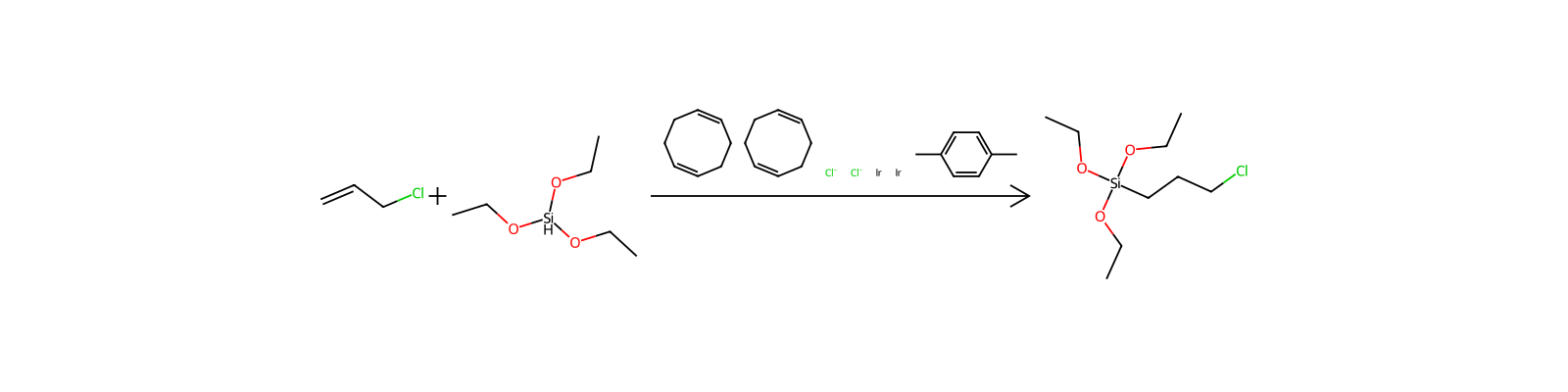
(3-Chlorpropyl)triethoxysilan
(3-Chloropropyl)triethoxysilane
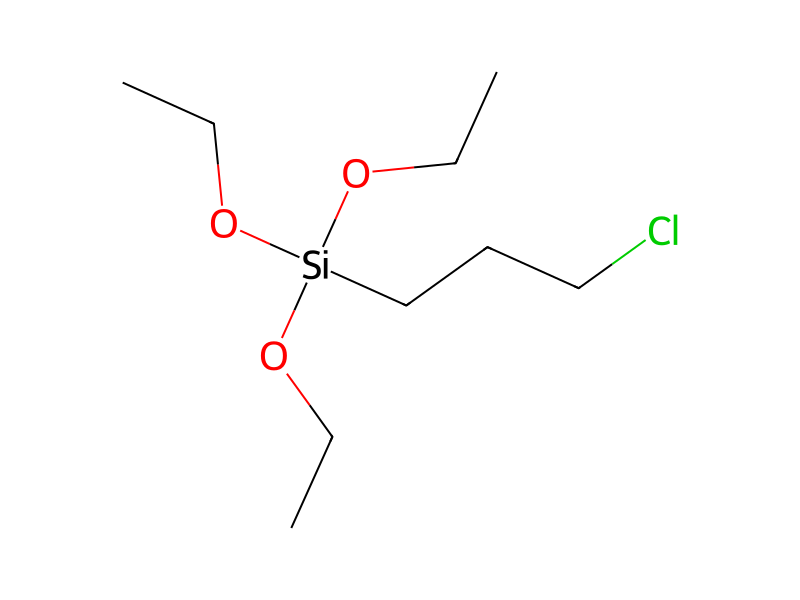
Grundinformationen
- CAS
29656-55-1- Standard-SMILES
CCO[Si](CCCCl)(OCC)OCC- InChIKey
KSCAZPYHLGGNPZ-UHFFFAOYSA-N- Summenformel
- C9H21ClO3Si
- Durchschnittliche Molmasse
- 240,8 g/mol
- Monoisotopische Masse
- 240,0948488
Namen und Bezeichner
- Bevorzugter Name
- (3-Chloropropyl)triethoxysilane
- IUPAC
- 3-chloropropyl(triethoxy)silane
- Lokaler Name
- (3-Chlorpropyl)triethoxysilan
- Englischer Name
- 3-Chloropropyltriethoxysilane
- Summenformel
- C9H21ClO3Si
- Molmasse
- 240.8
Namen und Synonyme
(3-Chloropropyl)triethoxysilane5089-70-3Silane, (3-chloropropyl)triethoxy-(3-chloropropyl)(triethoxy)silaneDynasylan CPTEODTXSID5029267Triethoxy(gamma-chloropropyl)silaneSi 230X7RB20518MNSC-252156J203.292IDTXCID909267
Weitere Namen anzeigen
Chloropropvl triethoxysilane3-Chloropropyltriethoxsilanetriethoxy(chloropropyl)silaneγ-Chloropropyltriethoxysilane3-fluoropropyltriethoxysilaneDOW CORNING(TM) PRODUCT 1-6376c3-Chloropropyltriethoxysilane(3-chloropropyl)triethoxy-silan3-Triethoxysilyl-1-chloropropane
DB 230RefChem:400116225-805-63-Chloropropyltriethoxysilane3-chloropropyl(triethoxy)silaneC9H21ClO3Sichloropropyltriethoxysilane3-(Triethoxysilyl)propyl Chloride
Datenbank-Bezeichner
- CAS
29656-55-1、5089-70-3- PubChem CID
- 78771
- DTXSID
DTXSID5029267- ChEMBL
CHEMBL3186873- UNII
- X7RB20518M
- EC Number
- 225-805-6、249-753-9
- Nikkaji
- J203.292I
Eigenschaften
Berechnete Struktureigenschaften
- Polarare Oberfläche (TPSA)
- 27,7 Ų
- H-Brücken-Donoren
- 0
- H-Brücken-Akzeptoren
- 3
- Frei drehbare Bindungen
- 9
- Schwere Atome
- 14
- Formalladung
- 0
- Komplexität
- 118
Experimentelle und physikochemische Eigenschaften
Chemical ClassesMetals -> Metalloid Compounds (Silicon)
SpringerMaterials PropertiesBoiling point
Physical Description
Liquid
Clear liquid; [Gelest MSDS]
Physikochemische Eigenschaften
- Siedepunkt
- 100 °C · 100 °C
- Dichte
- 1 g/mL · 1.000 g/mL at 25 °C(lit.)
- Dampfdruck
- 0 · 0-7910Pa at 25℃
- Brechungsindex
- 20 · n20/D 1.418(lit.)
- Flammpunkt
- 99 °F · 99 °F
- storage temp.
- Inert atmosphere,Room Temperature
- Aggregatzustand
- Liquid
- pka
- 10 · 10[at 20 ℃]
- Wichte
- 1.009 · 1.009
- Farbe
- Clear slightly yellow
Sicherheit und Regulatorisches
Sicherheitsangaben dienen nur zur Orientierung und ersetzen weder das Sicherheitsdatenblatt (SDB) des Lieferanten noch geltende Vorschriften oder eine fachliche Bewertung.
GHS-Klassifizierung
GHS Classification
This chemical does not meet GHS hazard criteria for 14% (13 of 93) of reports.
Warning
H226 (44.1%): Flammable liquid and vapor [Warning Flammable liquids]
P210, P233, P240, P241, P242, P243, P261, P264, P264+P265, P271, P273, P280, P302+P352, P303+P361+P353, P304+P340, P305+P351+P338, P319, P321, P332+P317, P337+P317, P362+P364, P370+P378, P403+P233, P403+P235, P405, and P501 (click each P-code to see the statement)
Aggregated GHS information provided per 93 reports by companies from 9 notifications to the ECHA C&L Inventory. Each notification may be associated with multiple companies.
Gefahrenhinweise
Regulatory Information
Chemical: Silane, (3-chloropropyl)triethoxy-
Silane, (3-chloropropyl)triethoxy- is listed on the EPA's Chemical Data Reporting (CDR) system. Manufacturers and importers of Silane, (3-chloropropyl)triethoxy- are required to report information about their production and use of this chemical to the EPA under the Toxic Substances Control Act (TSCA). (40 eCFR Part 711)
REACH registered substance: (3-chloropropyl)triethoxysilane (EC: 225-805-6)
Silane, (3-chloropropyl)triethoxy-: Does not have an individual approval but may be used as a component in a product covered by a group standard. It is not approved for use as a chemical in its own right.
Other Safety InformationEvaluation - Chemicals that are unlikely to require further regulation to manage risks to environment
Hazards SummaryContains less than 5% ethanol (CAS# 64-17-5); Slowly reacts with water or moisture evolving ethanol; May cause severe eye irritation; A pulmonary toxin that may cause lung injury on inhalation overexposure; [Gelest MSDS]
Hazard Classes and Categories
Chemie und Industrie
Verwendung und Herstellung
Uses
Used to make non-metal surface treatments, polymers, other organosilicon materials, large scale and fine chemicals, rubber and plastic products, non-metallic mineral products (i.e. plasters and cement), and in scientific research and development; [ExPub: ECHA REACH Registrations]
U.S. Production2023: 2,500,000 - <4,000,000 lb
Consumer UsesNot Known or Reasonably Ascertainable
Industry UsesNot Known or Reasonably Ascertainable
General Manufacturing Information
Miscellaneous Manufacturing
Silane, (3-chloropropyl)triethoxy-: ACTIVE
Anwendungen
Verwenden3-Chloropropyltriethoxysilane is the main raw material for preparing Si-69, KH-550 and other silane coupling agents. It is also used as a rubber processing aid to couple inorganic fillers in various halogenated rubber to improve various physical and mechanical properties. It can also be used to synthesize organosilicon compounds containing quaternary ammonium cations, as antifungal and odor-proof finishing agents, with special bactericidal, odor-proof, antistatic and surface activity.
Vor- und nachgelagerte Produkte
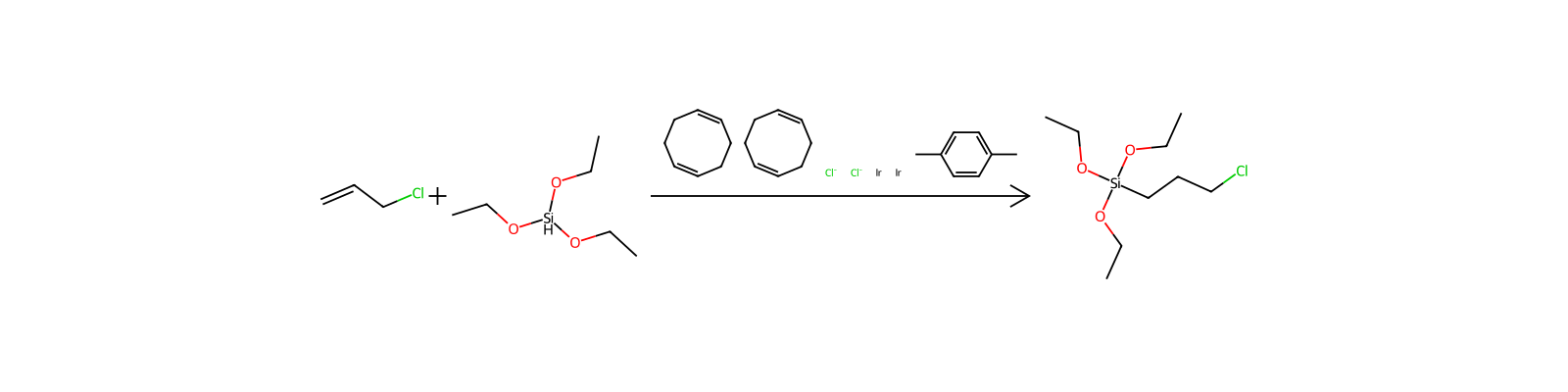
Vorgelagerte Rohstoffe
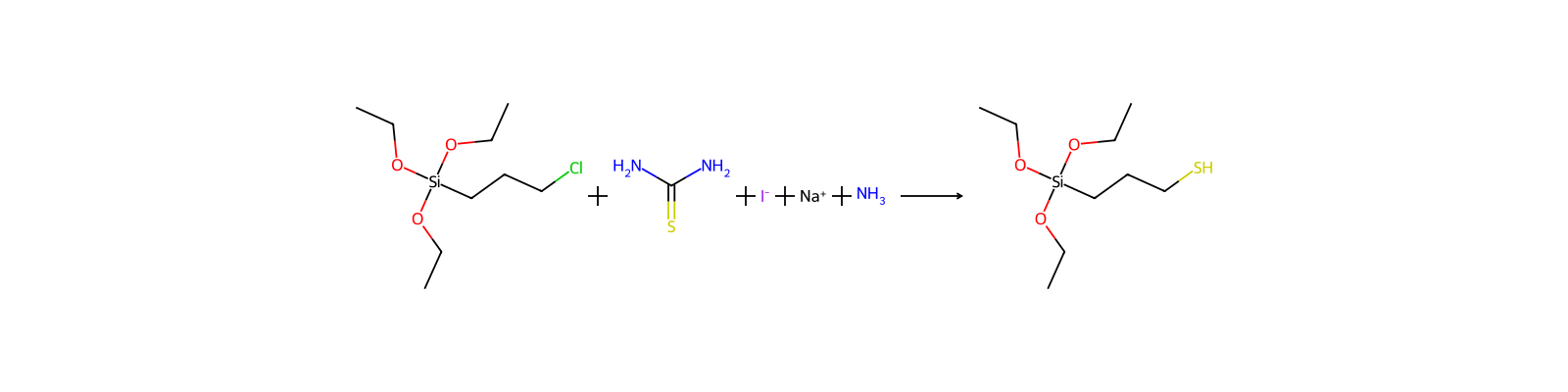
Zugehörige Reaktionen
36



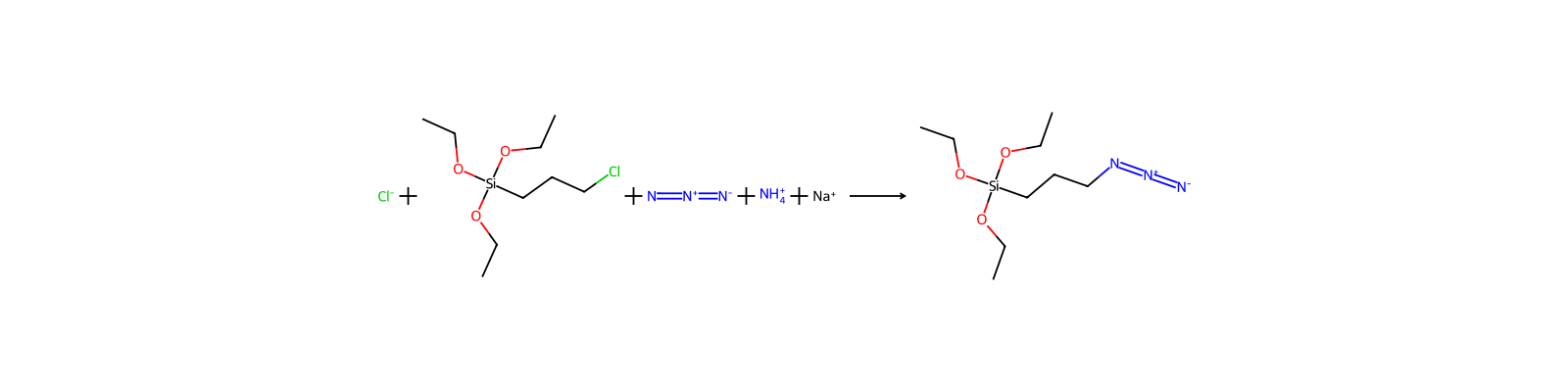
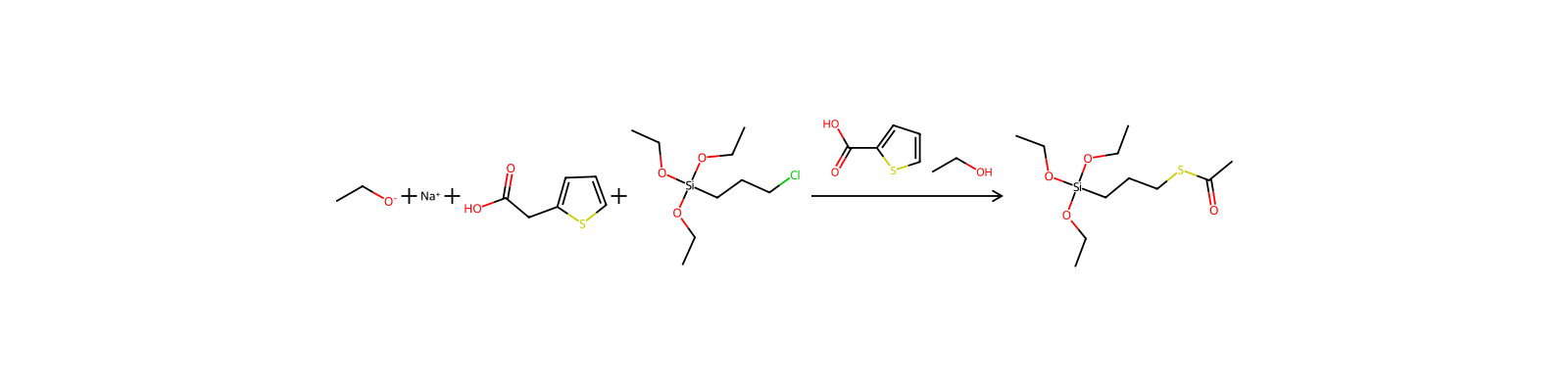
Notizen zur Verbindung
Wird geladen…