StartseiteMCPWorkbenchSkills
StartseiteWorkbenchBenachrichtigungenMein Bereich
llms.txt · MCP-AnleitungDatenschutz · Nutzungsbedingungen · Supportv1.8.0
  1. Startseite
  2. /Verbindung

Isopropenylacetat

Isopropenyl acetate

HCID 7916
Neue NotizNeue ReaktionAnfrage stellen
Druckvorschau
GrundinformationenÜberblickNamen und BezeichnerEigenschaftenSicherheit und RegulatorischesChemie und IndustrieZugehörige ReaktionenNotizen zur Verbindung
TeilstruktursucheÄhnliche Strukturen suchen

Grundinformationen

CAS
108-22-5
Standard-SMILES
C=C(C)OC(C)=O
InChIKey
HETCEOQFVDFGSY-UHFFFAOYSA-N
Summenformel
C5H8O2
Durchschnittliche Molmasse
100,12 g/mol
Monoisotopische Masse
100,0524295

Überblick

Isopropenyl acetate appears as a clear colorless liquid. Less dense than water. Vapors heavier than air. Used to make other chemicals.

Namen und Bezeichner

Bevorzugter Name
Isopropenyl acetate
IUPAC
prop-1-en-2-yl acetate
Lokaler Name
Isopropenylacetat
Englischer Name
Isopropenyl acetate
Summenformel
C5H8O2
Molmasse
100.12

Namen und Synonyme

Isopropenyl acetate108-22-5prop-1-en-2-yl acetate1-Methylvinyl acetate2-Acetoxypropene2-AcetoxypropyleneMethylvinyl acetatePropen-2-yl acetate1-Propen-2-yl acetate1-PROPEN-2-OL, ACETATE1-Acetoxy-1-methylethyleneAcetic acid, isopropenyl ester
Weitere Namen anzeigen
1-PROPEN-2-OL ACETATEACETIC ACID ISOPROPENYL ESTERIsopropyl Acrtatepropen-2-ylacetateACETONENOL ACETATEIPA)Isopropenyl ace
Isopropenylester kyseliny octoveDTXSID30314924AR9LAS337NSC-2197DTXCID1011492FEMA NO. 4152RefChem:149787203-562-7

Datenbank-Bezeichner

CAS
108-22-5
PubChem CID
7916
DTXSID
DTXSID3031492
ChEMBL
CHEMBL1385681
ChEBI
CHEBI:173340
UNII
4AR9LAS337
EC Number
203-562-7
Nikkaji
J35.907F

Eigenschaften

Berechnete Struktureigenschaften

XLogP
1
Polarare Oberfläche (TPSA)
26,3 Ų
H-Brücken-Donoren
0
H-Brücken-Akzeptoren
2
Frei drehbare Bindungen
2
Schwere Atome
7
Formalladung
0
Komplexität
94,3

Experimentelle und physikochemische Eigenschaften

Chemical Classes · 2 Einträge

Other Classes -> Esters, Other

Flammable agents - 3rd degree

SpringerMaterials PropertiesBoiling point
Food AdditivesFLAVORING AGENT OR ADJUVANT -> FDA Substance added to food
Density0.9090 g/cu cm at 20 °C
Flavoring AgentsEU Flavoring substances
Color/Form · 2 Einträge

WATER WHITE LIQUID

Liquid

Solubility · 2 Einträge

Soluble in ethanol and acetone, very soluble in ethyl ether.

Solubility in water 3.25% by weight.

Flash Point · 3 Einträge

60 °F (NFPA, 2010)

15.5 °C

60 °F (16 °C) (CLOSED CUP)

Boiling Point97 °C

Sicherheit und Regulatorisches

Sicherheitsangaben dienen nur zur Orientierung und ersetzen weder das Sicherheitsdatenblatt (SDB) des Lieferanten noch geltende Vorschriften oder eine fachliche Bewertung.

GHS-Klassifizierung

GHS Classification · 4 Einträge

Danger

H225 (100%): Highly Flammable liquid and vapor [Danger Flammable liquids]

P210, P233, P240, P241, P242, P243, P261, P271, P280, P303+P361+P353, P304+P340, P319, P370+P378, P403+P233, P403+P235, P405, and P501 (click each P-code to see the statement)

Aggregated GHS information provided per 300 reports by companies from 8 notifications to the ECHA C&L Inventory. Each notification may be associated with multiple companies.

Gefahrenhinweise

Regulatory Information · 5 Einträge

Chemical: 1-Propen-2-ol, acetate

Commission Regulation (EC) No 1565/2000 (Repealed by Com. Implementing Reg. (EU) No 872/2012)

Status: Active Update: 16-12-2019 https://echa.europa.eu/registration-dossier/-/registered-dossier/17298

Isopropenyl acetate: Does not have an individual approval but may be used under an appropriate group standard

The New Jersey Worker and Community Right to Know Act requires public and private employers to provide information about hazardous substances at their workplaces. (N.J.S.A. 34:5A-1 et. seq.)

DOT LabelFlammable Liquid
Fire Hazards · 2 Einträge

Excerpt from ERG Guide 129 [Flammable Liquids (Water-Miscible / Noxious); polymerization hazard]:

· HIGHLY FLAMMABLE: Will be easily ignited by heat, sparks or flames.

Fire Potential...DANGEROUS FIRE RISK.
Health Hazards · 2 Einträge

Excerpt from ERG Guide 129 [Flammable Liquids (Water-Miscible / Noxious); polymerization hazard]:

· May cause toxic effects if inhaled or absorbed through skin.

Chemie und Industrie

Pharmakologische Informationen

Cellular LocationsCytoplasm

Verwendung und Herstellung

Uses · 2 Einträge

Used as a reagent for acrylation of potential enols; [Merck Index]

REAGENT FOR ACYLATION OF POTENTIAL ENOLS

Methods of Manufacturing · 1 Eintrag

...FROM KETENE + ACETONE: HULL, AGETT; HAGEMEYER, US PATENTS 2,481,669; 2,476,860 (BOTH 1949 TO EASTMAN KODAK); YOUNG, US PATENTS 2,461,016; 2,511,423 (1949, 1950 BOTH TO CARBIDE & CARBON CHEM); MAWER, US PATENT 2,684,980 (1954 TO ICI); BUTTNER, ENK, US PATENT 2,867,653 (1959 TO WACKER-CHEMIE).

Use ClassificationFlavouring Agent -> -> JECFA Functional Classes
General Manufacturing Information1-Propen-2-ol, 2-acetate: ACTIVE
Anwendungen · 1 Eintrag

VerwendenIodine in isopropenyl acetate is a unique catalyst for the acetylation of a variety of alcohols, phenols and amines under solvent free conditions. It is used as a solvent for cellulose, plastics, oil and fats. It is also a building block used for various organic synthesis.

Vor- und nachgelagerte Produkte

Vorgelagerte Rohstoffe

prop-1-en-2-ol1-Propen-1-ol, acetate1,2Propanediol,2-acetate2-Hydroxypropylacetate

Zugehörige Reaktionen

208
Reaktionsaufzeichnung erstellen
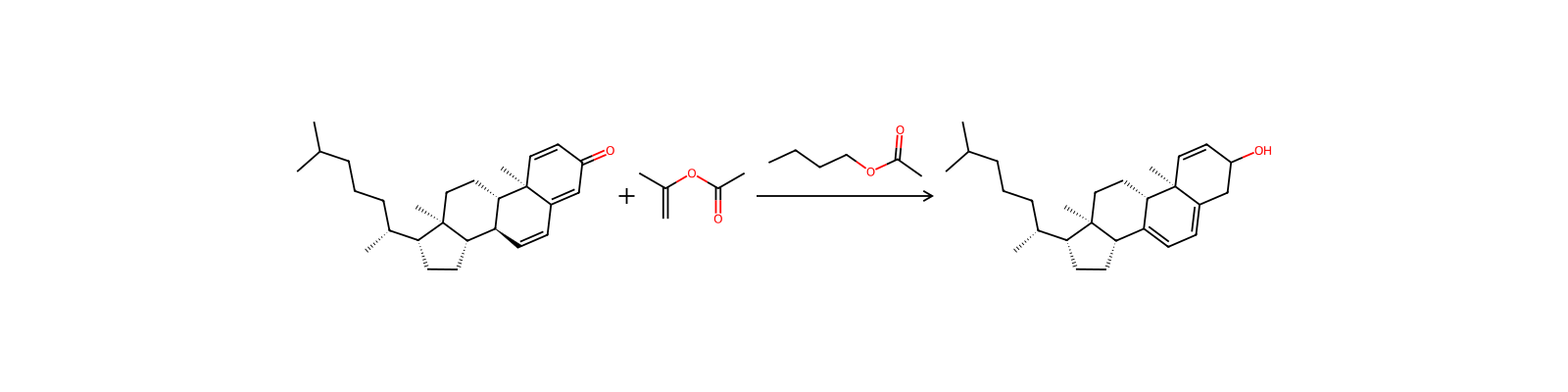
Reaktionsgleichung von HRID 3984
HRID 3984als Eduktuspto-grants-1988_02
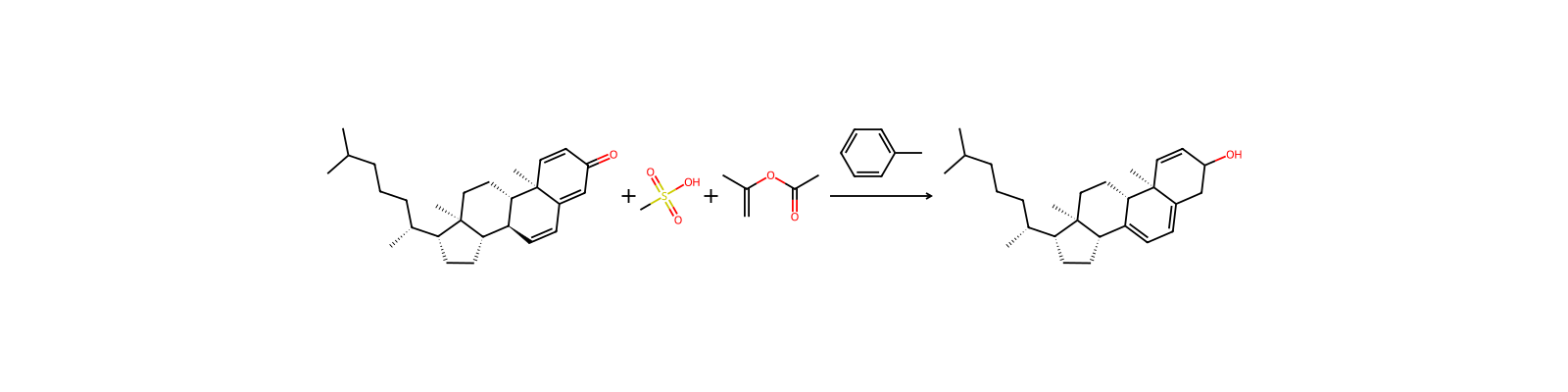
Reaktionsgleichung von HRID 3985
HRID 3985als Eduktuspto-grants-1988_02
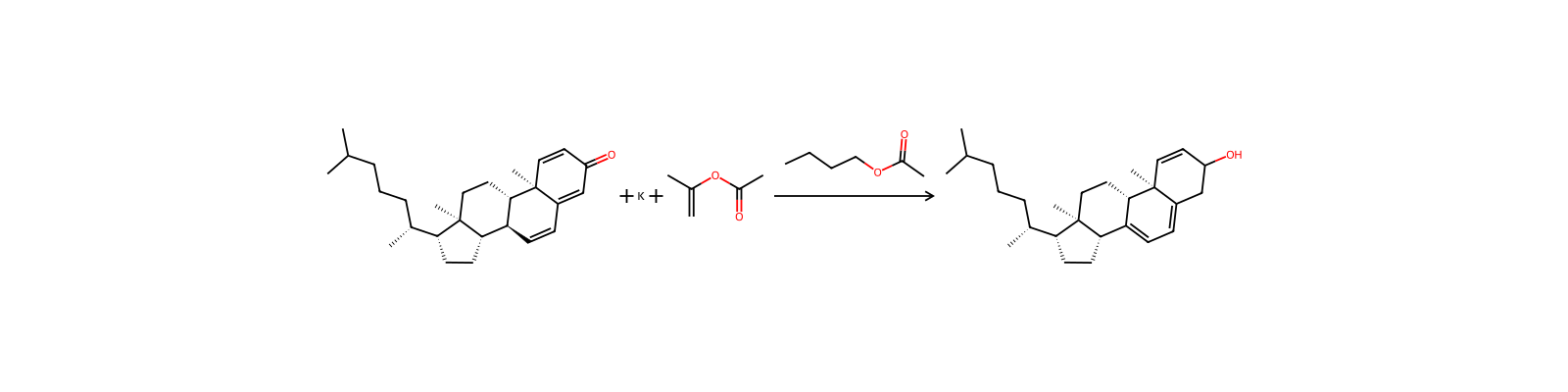
Reaktionsgleichung von HRID 3986
HRID 3986als Eduktuspto-grants-1988_02
Reaktionsgleichung von HRID 3987
HRID 3987als Eduktuspto-grants-1988_02
Reaktionsgleichung von HRID 23360
HRID 23360als Eduktuspto-grants-2005_02
Reaktionsgleichung von HRID 30386
HRID 30386als Eduktuspto-grants-2008_09
Reaktionsgleichung von HRID 52863
HRID 52863als Eduktuspto-grants-1997_04
Reaktionsgleichung von HRID 53188
HRID 53188als Lösungsmitteluspto-grants-1997_04
Seite 1 von 26

Notizen zur Verbindung

Wird geladen…

Auf dieser SeiteGrundinformationenÜberblickNamen und BezeichnerEigenschaftenSicherheit und RegulatorischesChemie und IndustrieZugehörige ReaktionenNotizen zur Verbindung
Weitere Aktionen
Neue NotizNeue ReaktionAnfrage stellen
Decomposition
When heated to decomposition it emits acrid smoke and irritating fumes.
Melting Point · 2 Einträge

-92.9 °C

-92.9 °C

Vapor Pressure · 2 Einträge

45.2 [mmHg]

45 mm Hg at 25 °C

Physikochemische Eigenschaften

Schmelzpunkt
-93 °C · -93 °C
Siedepunkt
94 °C · 94 °C (lit.)
Dichte
0.922 g/mL · 0.922 g/mL at 20 °C 0.909 g/mL at 25 °C (lit.)
Dampfdruck
23 hPa · 23 hPa (20 °C)
FEMA
4152 · 4152 | ISOPROPENYL ACETATE
Brechungsindex
20 · n20/D 1.401(lit.)
Flammpunkt
66 °F · 66 °F
storage temp.
30 °C · Store below +30°C.
Löslichkeit
34 g/l · 34g/l
Aggregatzustand
Liquid
Farbe
Clear colorless to very slightly yellow
PH
3 · 3 (34g/l, H2O, 20℃)
Geruch (Odor)
100 % · at 100.00 %. ethereal acetic fruity sweet berry grape skin
Geruchsart
fruity
Explosionsgrenze
1.8 % · 1.8%(V)
Wasserlöslichkeit
34 g/L · 34 g/L (20 ºC)
Merck
14 · 14,5203
JECFA Number
1835 · 1835
BRN
1280347 · 1280347
Henry's Law Constant
5.5 · 5.5×10-3 mol/(m3Pa) at 25℃, HSDB (2015)
InChI
1S/C5H8O2/c1-4(2)7-5(3)6/h1H2,2-3H3
InChIKey
HETCEOQFVDFGSY-UHFFFAOYSA-N
SMILES
CC(=C)OC(C)=O
LogP
1.28 · 1.28
CAS Datenbank
108 · 108-22-5(CAS DataBase Reference)
NIST chemische Informationen
1 · 1-Propen-2-ol, acetate(108-22-5)
EPA chemische Informationen
Isopropenyl acetate (108-22-5)
Hazards Summary · 1 Eintrag

A mild irritant; Narcotic in high concentrations; [Merck Index] May be toxic by inhalation and skin absorption; [CAMEO] Inhalation of high concentrations can cause CNS depression; [CHEMINFO] A mild to moderate irritant; [MSDSonline] Isopropenyl acetate (UN2403) has warning of explosive polymerization; [ERG 2016]

DOT ID and Guide2403 129P
Reactive GroupEsters, Sulfate Esters, Phosphate Esters, Thiophosphate Esters, and Borate Esters
Reactivity AlertsHighly Flammable
Reactivity Profile · 1 Eintrag

ISOPROPENYL ACETATE is an ester. Esters react with acids to liberate heat along with alcohols and acids. Strong oxidizing acids may cause a vigorous reaction that is sufficiently exothermic to ignite the reaction products. Heat is also generated by the interaction of esters with caustic solutions. Flammable hydrogen is generated by mixing esters with alkali metals and hydrides.

DOT Emergency Guidelines · 5 Einträge

/GUIDE 129P: FLAMMABLE LIQUIDS (POLAR/WATER-MISCIBLE/NOXIOUS)/ Fire or Explosion: HIGHLY FLAMMABLE: Will be easily ignited by heat, sparks or flames. Vapors may form explosive mixtures with air. Vapors may travel to source of ignition and flash back. Most vapors are heavier than air. They will spread along ground and collect in low confined areas (sewers, basements, tanks). Vapor explosion hazard indoors, outdoors or in sewers. Those substances designated with "P" may polymerize explosively when heated or involved in a fire. Runoff to sewer may create fire or explosion hazard. Containers may explode when heated. Many liquids are lighter than water.

/GUIDE 129P: FLAMMABLE LIQUIDS (POLAR/WATER-MISCIBLE/NOXIOUS)/ Health: May cause toxic effects if inhaled or absorbed through skin. Inhalation or contact with material may irritate or burn skin and eyes. Fire will produce irritating, corrosive and/or toxic gases. Vapors may cause dizziness or suffocation. Runoff from fire control or dilution water may cause pollution.

/GUIDE 129P: FLAMMABLE LIQUIDS (POLAR/WATER-MISCIBLE/NOXIOUS)/ Public Safety: CALL Emergency Response Telephone Number ... . As an immediate precautionary measure, isolate spill or leak area for at least 50 meters (150 feet) in all directions. Keep unauthorized personnel away. Stay upwind. Keep out of low areas. Ventilate closed spaces before entering.

/GUIDE 129P: FLAMMABLE LIQUIDS (POLAR/WATER-MISCIBLE/NOXIOUS)/ Protective Clothing: Wear positive pressure self-contained breathing apparatus (SCBA). Structural firefighters' protective clothing will only provide limited protection.

For more DOT Emergency Guidelines (Complete) data for 1-PROPEN-2-OL, ACETATE (8 total), please visit the HSDB record page.

DOT Hazard Classification · 4 Einträge

Isopropenyl acetate

UN2403

Class 3 Flammable and combustible liquid (49 eCFR § 173.120)

PG II: the degree of danger presented by the material is medium

Sicherheit und Schutzausrüstung

Fire FightingExcerpt from ERG Guide 129 [Flammable Liquids (Water-Miscible / Noxious); polymerization hazard]:
Accidental Release Measures · 2 Einträge

· CALL 911. Then call emergency response telephone number on shipping paper. If shipping paper not available or no answer, refer to appropriate telephone number listed on the inside back cover.

· ELIMINATE all ignition sources (no smoking, flares, sparks or flames) from immediate area.

First Aid · 2 Einträge

Excerpt from ERG Guide 129 [Flammable Liquids (Water-Miscible / Noxious); polymerization hazard]:

General First Aid:

Exposure Control and Personal Protection · 2 Einträge

· Wear positive pressure self-contained breathing apparatus (SCBA).

10.0 [ppm]

Fire Fighting ProceduresAlcohol foam. Water may be ineffective.
Nonfire Spill ResponseExcerpt from ERG Guide 129 [Flammable Liquids (Water-Miscible / Noxious); polymerization hazard]:
Disposal Methods · 1 Eintrag

SRP: At the time of review, criteria for land treatment or burial (sanitary landfill) disposal practices are subject to significant revision. Prior to implementing land disposal of waste residue (including waste sludge), consult with environmental regulatory agencies for guidance on acceptable disposal practices.

Isolation and Evacuation · 2 Einträge

Excerpt from ERG Guide 129 [Flammable Liquids (Water-Miscible / Noxious); polymerization hazard]:

Immediate precautionary measure

Personal Protective Equipment (PPE)Excerpt from ERG Guide 129 [Flammable Liquids (Water-Miscible / Noxious); polymerization hazard]:
Emergency Response Planning GuidelinesCAUTION: The majority of these products have a very low flash point. Use of water spray when fighting fire may be inefficient.

Toxikologische Informationen

Environmental Fate · 3 Einträge

TERRESTRIAL FATE: Based on a classification scheme(1), an estimated Koc value of 120(SRC), determined from an estimated log Kow of 1.3(2,SRC) and a regression-derived equation(3), indicates that isopropenyl acetate is expected to have high mobility in soil(SRC). Volatilization of isopropenyl acetate from moist soil surfaces is expected to be an important fate process(SRC) given an estimated Henry's Law constant of 1.8X10⁻³ atm-cu m/mole(SRC), using a fragment constant estimation method(4). The potential for volatilization of isopropenyl acetate from dry soil surfaces may exist(SRC) based on a vapor pressure of 45 mm Hg(5).

AQUATIC FATE: Based on a classification scheme(1), an estimated Koc value of 120(SRC), determined from an estimated log Kow of 1.3(2,SRC) and a regression-derived equation(3), indicates that isopropenyl acetate is not expected to adsorb to suspended solids and sediment in water(SRC). Isopropenyl acetate is expected to volatilize from water surfaces(3,SRC) based on an estimated Henry's Law constant of 1.8X10⁻³ atm-cu m/mole(SRC), developed using a fragment constant estimation method(4). Estimated volatilization half-lives for a model river and model lake are 3.4 hours and 4.1 days, respectively(3,SRC). According to a classification scheme(5), an estimated BCF of 5.5(3,SRC), from an estimated log Kow(2,SRC), suggests that bioconcentration in aquatic organisms is low(SRC). Estimated hydrolysis half-lives of 300 and 30 days at pHs 7 and 8, respectively(6), indicate that hydrolysis is not expected to be an important process(SRC).

ATMOSPHERIC FATE: According to a model of gas/particle partitioning of semivolatile organic compounds in the atmosphere(1), isopropenyl acetate, which has a vapor pressure of 45 mm Hg at 25 °C(2,SRC), is expected to exist solely as a vapor in the ambient atmosphere. Vapor-phase isopropenyl acetate is degraded in the atmosphere by reaction with photochemically-produced hydroxyl radicals and ozone(SRC); the half-lives for these reactions in air are estimated to be about 7.5 and 24 hours, respectively(3,SRC).

Adverse EffectsNeurotoxin - Acute solvent syndrome
Soil Adsorption/Mobility · 1 Eintrag

The Koc of isopropenyl acetate is estimated as approximately 120(SRC), using an estimated log Kow of 1.3(1) and a regression-derived equation(2,SRC). According to a classification scheme(3), this estimated Koc value suggests that isopropenyl acetate is expected to have high mobility in soil(SRC).

Human Toxicity ExcerptsMILD IRRITANT. .../CNS DEPRESSANT/ IN HIGH CONCENTRATIONS.
Artificial Pollution SourcesIsopropenyl acetate's use as a reagent for acylation of enols(1) may result in its release to the environment through various waste streams(SRC).
Environmental Bioconcentration · 1 Eintrag

An estimated BCF of 5.5 was calculated for isopropenyl acetate(SRC), using an estimated log Kow of 1.3(1,SRC) and a regression-derived equation(2). According to a classification scheme(3), this BCF suggests that bioconcentration in aquatic organisms is low(SRC).

Volatilization from Water/Soil · 1 Eintrag

The Henry's Law constant for isopropenyl acetate is estimated as 1.8X10⁻³ atm-cu m/mole(SRC) using a fragment constant estimation method(1). This Henry's Law constant indicates that isopropenyl acetate is expected to volatilize rapidly from water surfaces(2,SRC). Based on this Henry's Law constant, the estimated volatilization half-life from a model river (1 m deep, flowing 1 m/sec, wind velocity of 3 m/sec) is estimated as approximately 3.4 hours(2,SRC). The estimated volatilization half-life from a model lake (1 m deep, flowing 0.05 m/sec, wind velocity of 0.5 m/sec) is estimated as approximately 4.1 days(2,SRC). Isopropenyl acetate's Henry's Law constant(1,SRC) indicates that volatilization from moist soil surfaces may occur(SRC). The potential for volatilization of isopropenyl acetate from dry soil surfaces may exist(SRC) based on a vapor pressure of 45 mm Hg(3).

Non-Human Toxicity ExcerptsTHREE OF SIX RATS DIED FOLLOWING INHALATION OF 4,000 PPM FOR 4 HR. IT CAUSED SLIGHT SKIN IRRITATION IN RABBITS. /FROM TABLE/
Environmental Abiotic Degradation · 1 Eintrag

The rate constant for the vapor-phase reaction of isopropenyl acetate with photochemically-produced hydroxyl radicals has been estimated as 5.2X10⁻¹¹ cu cm/molecule-sec at 25 °C(SRC) using a structure estimation method(1,SRC). This corresponds to an atmospheric half-life of about 7.5 hours at an atmospheric concentration of 5X10+5 hydroxyl radicals per cu cm(1,SRC). The rate constant for the vapor-phase reaction of isopropenyl acetate with ozone has been estimated as 1.1X10⁻¹⁷ cu cm/molecule-sec at 25 °C(1,SRC). This corresponds to an atmospheric half-life of about 24 hours at an atmospheric ozone concn of 7X10+11 cu cm/molecule-sec at 25 °C(1,SRC). A base-catalyzed second-order hydrolysis rate constant of 0.27 L/mol-sec(SRC) was estimated using a structure estimation method(2); this corresponds to half-lives of 300 and 30 days at pH values of 7 and 8, respectively(2,SRC).

Probable Routes of Human ExposureOccupational exposure to isopropenyl acetate may occur through inhalation and dermal contact with this compound at workplaces where isopropenyl acetate is produced or used. (SRC)
Environmental Fate/Exposure Summary · 1 Eintrag

Isopropenyl acetate's use as a reagent for acylation of enols may result in its release to the environment through various waste streams. If released to air, a vapor pressure of 45 mm Hg at 25 °C indicates isopropenyl acetate is expected to exist solely as a vapor in the ambient atmosphere. Vapor-phase isopropenyl acetate will be degraded in the atmosphere by reaction with ozone and photochemically-produced hydroxyl radicals; estimated half-lives for these reactions are 24 and 7.5 hours, respectively. If released to soil, isopropenyl acetate is expected to have high mobility based upon an estimated Koc of 120. Volatilization from wet soil surfaces is expected to occur based on an estimated Henry's Law constant of 1.8X10⁻³ atm-cu m/mole. This compound's vapor pressure indicates that volatilization from dry soil surfaces may potentially occur. If released into water, adsorption to suspended solids and sediment in the water column is not expected given the estimated Koc for this compound. Volatilization from water surfaces is expected based upon this compound's Henry's Law constant. Estimated volatilization half-lives for a model river and model lake are 3.4 hours and 4.1 days, respectively. The potential for bioconcentration in aquatic organisms is low based upon the estimated BCF of 5.5. Hydrolysis is not expected to be an important process based upon estimated half-lives of 300 and 30 days at pHs 7 and 8, respectively. Occupational exposure to isopropenyl acetate may occur through inhalation and dermal contact with this compound at workplaces where isopropenyl acetate is produced or used. (SRC)

Sicherheitsdaten

F
10-21
wgk
1
tsca
TSCA listed
ridadr
UN 2403
hs_code
2915 39 00
RTECS-Nr.
UD4200000
risk_code
11
Toxizität
LD50 orally in rats: 3.0 g/kg (Smyth)
hazard_code
F
safety_code
9-16-29-33
hazard_class
3
packing_group
II
Speicherklasse
3 - Flammable liquids
Giftige Stoffe Daten
108-22-5(Hazardous Substances Data)
Hazard Classifications
Flam. Liq. 2STOT SE 3
Selbstentzündungstemperatur
439 °C DIN 51794
Acetic acid 3-hydroxypropyl ester
Isopropenylmethylketon
Schwefelsure
Ethenon
Acetylchlorid
Methylmethacrylat
propene
Palladium(II) acetat

Nachgelagerte Produkte

5-Chloro-4-methoxythiophene-3-carboxylic acid4,4'-[(2β,3α,5α,16β,17β)-3,17-Bis(acetoxy)androstan-2,16-diyl]bis[1,1-dimethylpiperazinium]dibromid2,4-Pentandion5-Chloro-4-methoxythiophene-3-carbonyl chloride5-Bromo-4-methoxythiophene-3-carboxylic acid5-Bromo-4-methoxythiophene-3-carbonyl chlorideFurfurylacetat4-Methoxythiophene-3-carboxamideEstra-1,3,5(10),16-tetraen-3,17-dioldiacetat4-Methoxythiophene-3-carboxylic acidN-AcetylimidazolMethyl 4-methoxythiophene-3-carboxylate