StartseiteMCPWorkbenchSkills
StartseiteWorkbenchBenachrichtigungenMein Bereich
llms.txt · MCP-AnleitungDatenschutz · Nutzungsbedingungen · Supportv1.8.0
  1. Startseite
  2. /Verbindung

2,4,6-Trimethylpyridin

2,4,6-Trimethylpyridine

HCID 7953
Neue NotizNeue ReaktionAnfrage stellen
Druckvorschau

Daten werden ergänzt – lade die Seite später neu, um den aktuellen Stand zu sehen

GrundinformationenÜberblickNamen und BezeichnerEigenschaftenSicherheit und RegulatorischesChemie und IndustrieZugehörige ReaktionenNotizen zur Verbindung
TeilstruktursucheÄhnliche Strukturen suchen

Grundinformationen

CAS
108-75-8
Standard-SMILES
Cc1cc(C)nc(C)c1
InChIKey
BWZVCCNYKMEVEX-UHFFFAOYSA-N
Summenformel
C8H11N
Durchschnittliche Molmasse
121,18 g/mol
Monoisotopische Masse
121,08914935

Überblick

Collidine appears as a clear colorless liquid. Less dense than water and insoluble in water. Hence floats on water. Vapors heavier than air. Produces toxic oxides of nitrogen during combustion. Used to make other chemicals.

Namen und Bezeichner

Bevorzugter Name
2,4,6-Trimethylpyridine
IUPAC
2,4,6-trimethylpyridine
Lokaler Name
2,4,6-Trimethylpyridin
Englischer Name
2,4,6-Collidine
Summenformel
C8H11N
Molmasse
121.18

Namen und Synonyme

2,4,6-Trimethylpyridine108-75-82,4,6-COLLIDINEs-Collidinegamma-CollidinePyridine, 2,4,6-trimethyl-sym-Collidine2,4,6-Kollidinalpha,gamma,alpha'-Collidine7IE4BK5J5VNSC-460DTXSID1051561
Weitere Namen anzeigen
g-Collidine2,4,6-CoLSYM COLLIDINE246CO246BD
RefChem:82156pyridine, 2,4,6-trimethylDTXCID5030113203-613-3COLLIDINE.gamma.-Collidine2,4,6-trimethyl-pyridineNSC 460

Datenbank-Bezeichner

CAS
108-75-8、29611-84-5
PubChem CID
7953
DTXSID
DTXSID1051561
ChEMBL
CHEMBL1209580
ChEBI
CHEBI:189131
UNII
7IE4BK5J5V
EC Number
203-613-3
Nikkaji
J5.079B

Eigenschaften

Berechnete StruktureigenschaftenWird ergänzt

XLogP
1,9
Polarare Oberfläche (TPSA)
12,9 Ų
H-Brücken-Donoren
0
H-Brücken-Akzeptoren
1
Frei drehbare Bindungen
0
Schwere Atome
9
Formalladung
0
Komplexität
80,6

Experimentelle und physikochemische Eigenschaften

Chemical ClassesNitrogen Compounds -> Pyridines
SpringerMaterials PropertiesBoiling point
LogPlog Kow = 1.88
OdorAromatic odor
Density0.913 @ 20 °C/20 °C
Flavoring AgentsEU Flavoring substances
Color/FormColorless liquid
Solubility · 3 Einträge

Sol in methanol, ethanol, chloroform, benzene, toluene, and dil acids; miscible with ether

Sol in acetone

Sol in water (in g/100 ml water): 20.8 g @ 6 °C, 3.5 g @ 20 °C, 1.8 g @ 100 °C

Flash Point · 2 Einträge

58 °C

136 °F

Boiling Point170.4 °C

Sicherheit und Regulatorisches

Sicherheitsangaben dienen nur zur Orientierung und ersetzen weder das Sicherheitsdatenblatt (SDB) des Lieferanten noch geltende Vorschriften oder eine fachliche Bewertung.

GHS-Klassifizierung

GHS Classification · 6 Einträge

This chemical does not meet GHS hazard criteria for 0.5% (1 of 187) of reports.

Danger

H226 (99.5%): Flammable liquid and vapor [Warning Flammable liquids]

P210, P233, P240, P241, P242, P243, P261, P262, P264, P264+P265, P270, P271, P280, P301+P317, P302+P352, P303+P361+P353, P304+P340, P305+P351+P338, P316, P317, P319, P321, P330, P332+P317, P337+P317, P361+P364, P362+P364, P370+P378, P403+P233, P403+P235, P405, and P501 (click each P-code to see the statement)

Aggregated GHS information provided per 187 reports by companies from 15 notifications to the ECHA C&L Inventory. Each notification may be associated with multiple companies.

Danger

Gefahrenhinweise

Regulatory Information · 4 Einträge

Chemical: Pyridine, 2,4,6-trimethyl-

Commission Regulation (EC) No 1565/2000 (Repealed by Com. Implementing Reg. (EU) No 872/2012)

Status: Active Update: 16-02-2021 https://echa.europa.eu/registration-dossier/-/registered-dossier/32320

Pyridine, 2,4,6-trimethyl-: HSNO Approval: HSR001388 Approved with controls

DOT LabelFlammable Liquid
Fire HazardsExcerpt from ERG Guide 128 [Flammable Liquids (Water-Immiscible)]:
Health HazardsExcerpt from ERG Guide 128 [Flammable Liquids (Water-Immiscible)]:
Hazards Summary · 1 Eintrag

Emergency treatment: Pyridine; Pyridine is an irritant that causes CNS depression after ingestion of 1/2 cup or inhalation of 6-12 ppm; It can cause liver and kidney injury; [HSDB] [HSDB] A skin and strong eye irritant; [Alfa Aesar MSDS] See Pyridine.

Chemie und Industrie

Pharmakologische Informationen

Metabolism/MetabolitesMETABOLIC FATE OF PYRIDINES IS NOT COMPLETELY KNOWN. HYDROXYLATION, N-METHYLATION, OXIDN & CONJUGATION REACTIONS HAVE BEEN IDENTIFIED. /PYRIDINES/
Absorption, Distribution and ExcretionPYRIDINE & ITS ALKYL DERIV ARE ABSORBED FROM GI TRACT, IP CAVITY, & LUNGS. /PYRIDINE & ITS ALKYL DERIV/

Verwendung und Herstellung

Uses · 5 Einträge

Used as a chemical intermediate, dehydrohalogenation agent, tissue fixative for electron microscopy, and solvent for the manufacture of anthraquinones; [HSDB]

Chemical intermediate

Used as a chemical intermediate and as a dehydrohalogenation agent

TISSUE FIXATIVE FOR ELECTRON MICROSCOPY

SOLVENT FOR MANUFACTURE OF ANTHRAQUINONES (AS MIXTURE)

U.S. Imports · 2 Einträge

(1979) 6.09X10+6 GRAMS (MIXT OF COLLIDINES)

(1981) 1.70X10+6 GRAMS (MIXT OF COLLIDINES)

U.S. Production · 2 Einträge

(1979) PROBABLY GREATER THAN 2.27X10+6 GRAMS

(1981) PROBABLY GREATER THAN 2.27X10+6 GRAMS

Methods of Manufacturing · 3 Einträge

Produced commercially from coal tar to some extent; also produced by Hantzsch pyridine synthesis: Hantzsch, Ann 215, 1 (1882); Mosher in Heterocyclic Compd vol 1, RC Elderfield, ed, (John Wiley, NY, 1950) pp 462-472...

Produced...from acetone and ammonia: Mosher in Kirk-Othmer Encyclopedia of Chemical Technology vol II (NY, 1953) p 287, Compare Durkopf, Ber 21, 2713 (1888); from paraldehyde, acetone, ammonium acetate, and ammonia water: German patent 349,267; FRDL 14, 539...

Produced...from 3,5-dimethyl-2-cyclohexen-1-one, ammonium acetate, and ammonia water: Frank, Meikle, J Am Chem Soc 72, 4184 (1950).

Formulations/Preparations

Zugehörige Reaktionen

706
Reaktionsaufzeichnung erstellen
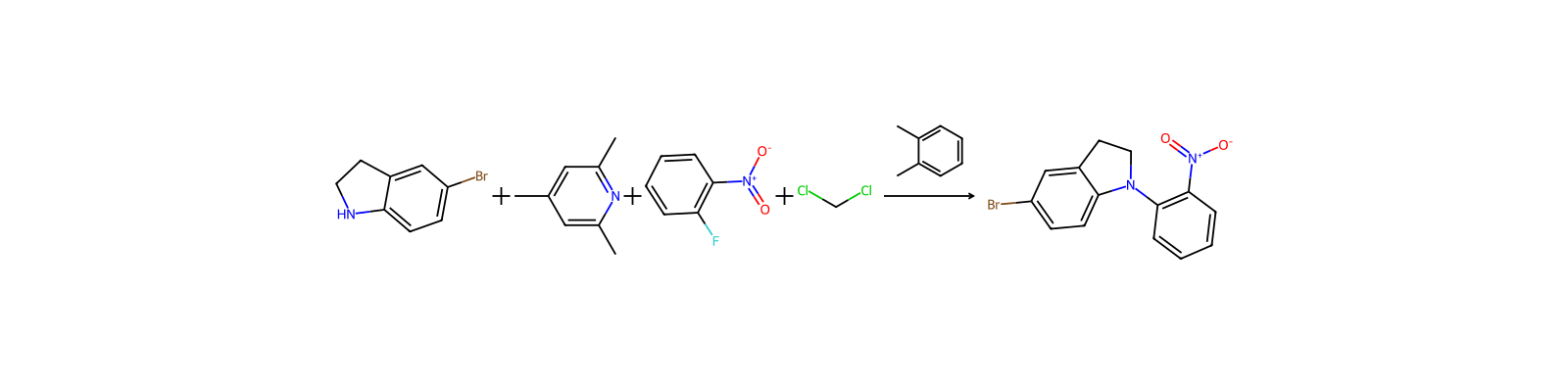
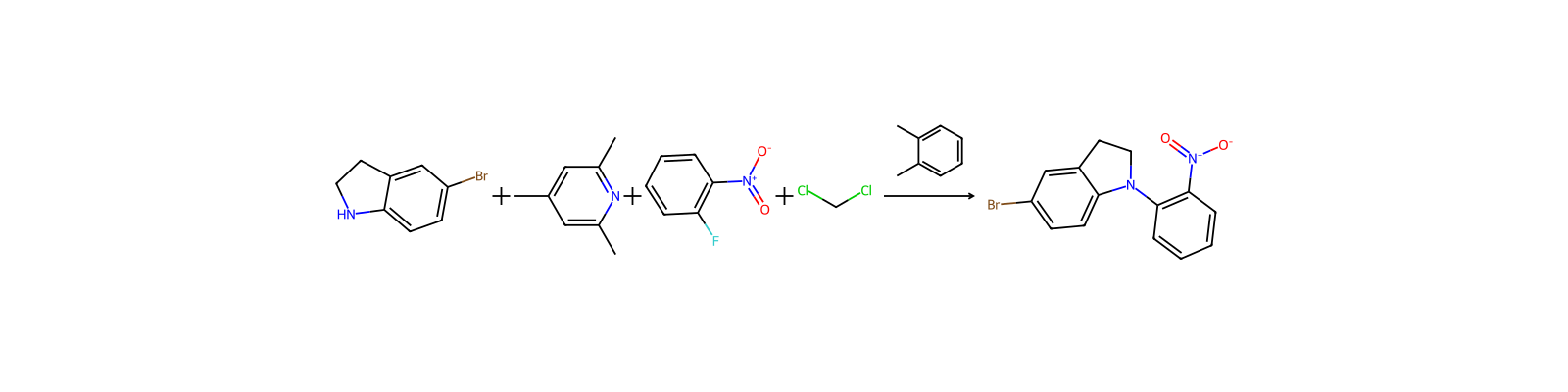
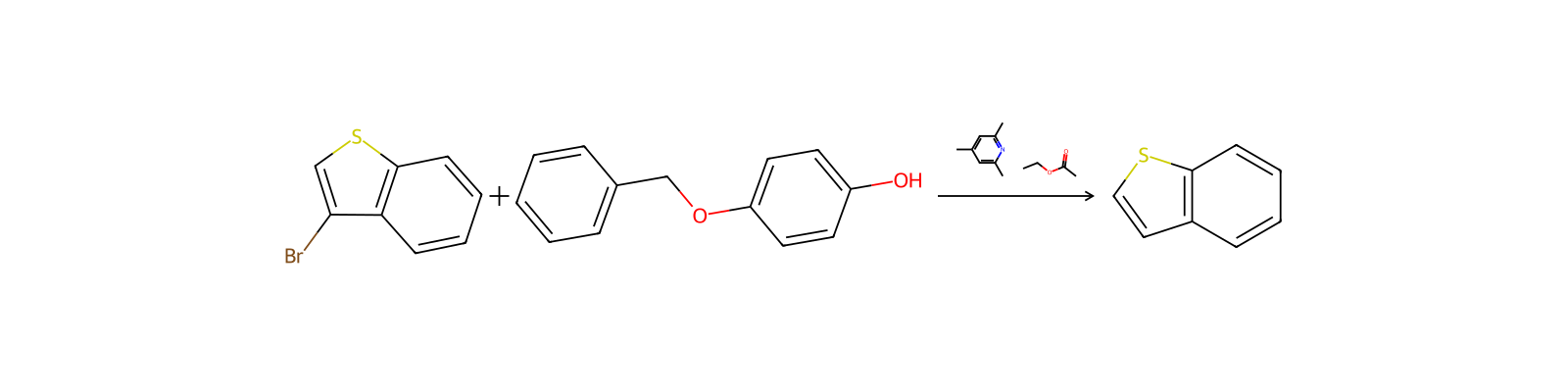
Reaktionsgleichung von HRID 992
HRID 992als Lösungsmitteluspto-grants-1998_03
Reaktionsgleichung von HRID 2707
HRID 2707als Eduktuspto-grants-1998_03
Reaktionsgleichung von HRID 4003
HRID 4003als Eduktuspto-grants-1988_02
Reaktionsgleichung von HRID 4022
HRID 4022als Eduktuspto-grants-1988_02
Reaktionsgleichung von HRID 4030
HRID 4030als Eduktuspto-grants-1988_02
Reaktionsgleichung von HRID 4043
HRID 4043als Eduktuspto-grants-1988_02
Reaktionsgleichung von HRID 4061
HRID 4061als Eduktuspto-grants-1988_02
Reaktionsgleichung von HRID 4080
HRID 4080als Eduktuspto-grants-1988_02
Seite 1 von 89

Notizen zur Verbindung

Wird geladen…

Auf dieser SeiteGrundinformationenÜberblickNamen und BezeichnerEigenschaftenSicherheit und RegulatorischesChemie und IndustrieZugehörige ReaktionenNotizen zur Verbindung
Weitere Aktionen
Neue NotizNeue ReaktionAnfrage stellen
DecompositionWhen heated to decomposition it emits toxic vapors of /nitrogen oxides/.
Melting Point-44.5 °C

Physikochemische Eigenschaften

Schmelzpunkt
-44 · -44,5 °C
Siedepunkt
171 · 171–172 °C
Dichte
0.92 · 0.92
Dampfdruck
4 hPa · 4 hPa (20 °C)
Brechungsindex
1.5 · 1.50
Flammpunkt
58 °C · 58 °C
storage temp.
30 °C · Store below +30°C.
Löslichkeit
35 g/l · 35g/l
pka
7.43 · 7.43(at 25℃)
Aggregatzustand
liquid
Farbe
colourless
Geruch (Odor)
Peculiar odor
Wasserlöslichkeit
35 g/L · 35 g/L (20 ºC)
Merck
14 · 14,9718
BRN
107283 · 107283
Henry's Law Constant
1.1 · 1.1×100 mol/(m3Pa) at 25℃, Duchowicz et al. (2020)
Dielectric constant
1.9 · 1.9(20℃)
Stabilität
Stable. Combustible. Incompatible with strong oxidizing agents.
InChI
1S/C8H11N/c1-6-4-7(2)9-8(3)5-6/h4-5H,1-3H3
InChIKey
BWZVCCNYKMEVEX-UHFFFAOYSA-N
SMILES
Cc1cc(C)nc(C)c1
LogP
1.25 at · 1.25 at 20℃
CAS Datenbank
108 · 108-75-8(CAS DataBase Reference)
NIST chemische Informationen
2 · Pyridine, 2,4,6-trimethyl-(108-75-8)
EPA chemische Informationen
2 · 2,4,6-Trimethylpyridine (108-75-8)
Reactive Group
Amines, Phosphines, and Pyridines
Reactivity Profile · 1 Eintrag

COLLIDINE neutralizes acids in exothermic reactions to form salts plus water. These acid-base reactions are exothermic. Incompatible with isocyanates, halogenated organics, peroxides, phenols (acidic), epoxides, anhydrides, and acid halides. May generate flammable gaseous hydrogen in combination with strong reducing agents such as hydrides.

Air and Water ReactionsFlammable. Insoluble in water.
Hazard Classes and Categories · 2 Einträge

Flam. Liq. 3 (99.5%)

Flammable liquids - Category 3

Sicherheit und Schutzausrüstung

Fire FightingExcerpt from ERG Guide 128 [Flammable Liquids (Water-Immiscible)]:
First AidExcerpt from ERG Guide 128 [Flammable Liquids (Water-Immiscible)]:
Nonfire Spill ResponseExcerpt from ERG Guide 128 [Flammable Liquids (Water-Immiscible)]:
Disposal Methods · 1 Eintrag

SRP: At the time of review, criteria for land treatment or burial (sanitary landfill) disposal practices are subject to significant revision. Prior to implementing land disposal of waste residue (including waste sludge), consult with environmental regulatory agencies for guidance on acceptable disposal practices.

Isolation and EvacuationExcerpt from ERG Guide 128 [Flammable Liquids (Water-Immiscible)]:
Protective Action Criteria (PAC) · 3 Einträge

1.3 [ppm]

14 [ppm]

85 [ppm]

Personal Protective Equipment (PPE)Excerpt from ERG Guide 128 [Flammable Liquids (Water-Immiscible)]:

Toxikologische Informationen

Environmental Fate · 3 Einträge

TERRESTRIAL FATE: Based on a classification scheme(1), an estimated Koc value of 250(SRC), determined from a log Kow of 1.9(2) and a regression-derived equation(3), indicates that 2,4,6-trimethylpyridine is expected to have moderate mobility in soil(SRC). The pKa of 2,4,6-trimethylpyridine is 7.4(4), indicating that this compound will mainly exist in the protonated form in the environment and cations generally adsorb to organic carbon and clay more strongly than their neutral counterparts, thus attenuating soil mobility(5). Volatilization of 2,4,6-trimethylpyridine from moist soil surfaces is expected to be an important fate process(SRC) given an estimated Henry's Law constant of 8.8X10⁻⁶ atm-cu m/mole(SRC), derived from its vapor pressure, 2.0 mm Hg(6), and water solubility, 3.5X10+4 mg/l(7). However, adsorption to soil is expected to attenuate volatilization(SRC). The potential for volatilization of 2,4,6-trimethylpyridine from dry soil surfaces may exist(SRC) based upon a vapor pressure of 2.0 mm Hg(6). Under aerobic and anaerobic conditions, 2,4,6-trimethylpyridine, present at 1 mM, degraded 100% in >97 days at pH 7 using a 0.5% garden soil suspension with glucose-yeast extract (20 ppm) and a screening test(8). Within 2 weeks under aerobic conditions, 100% transformation of 2,4,6-trimethylpyridine occurred in soil previously contaminated with pyridine contaminants(9).

AQUATIC FATE: Based on a classification scheme(1), an estimated Koc value of 250(SRC), determined from a log Kow of 1.9(2) and a regression-derived equation(3), indicates that 2,4,6-trimethylpyridine is expected to adsorb slightly to suspended solids and sediment(SRC). However, the pKa of 2,4,6-trimethylpyridine is 7.4(4), indicating that this compound will mainly exist in the protonated form in the environment and cations generally adsorb to organic carbon and clay more strongly than their neutral counterparts(5). Volatilization from water surfaces is expected(3) based upon an estimated Henry's Law constant of 8.8X10⁻⁶ atm-cu m/mole(SRC), derived from its vapor pressure, 2.0 mm Hg(6), and water solubility, 3.5x10+4 mg/l(7). Using this Henry's Law constant and an estimation method(3), volatilization half-lives for a model river and model lake are 3.1 and 38 days, respectively(SRC). According to a classification scheme(8), an estimated BCF of 6(SRC), from its log Kow(2) and a regression-derived equation(9), suggests the potential for bioconcentration in aquatic organisms is low(SRC). Under aerobic and anaerobic conditions, 2,4,6-trimethylpyridine, present at 1 mM, degraded 100% in >97 days at pH 7 using a 0.5% garden soil suspension with glucose-yeast extract (20 ppm) and a screening test(10).

ATMOSPHERIC FATE: According to a model of gas/particle partitioning of semivolatile organic compounds in the atmosphere(1), 2,4,6-trimethylpyridine, which has a vapor pressure of 2.0 mm Hg at 25 °C(2), is expected to exist solely as a vapor in the ambient atmosphere(SRC). Vapor-phase 2,4,6-trimethylpyridine is degraded in the atmosphere by reaction with photochemically-produced hydroxyl radicals(SRC); the half-life for this reaction in air is estimated to be 2.3 days(SRC), calculated from its rate constant of 7.0X10⁻¹² cu cm/molecule-sec at 25 °C(SRC) that was derived using a structure estimation method(3).

Adverse EffectsNeurotoxin - Other CNS neurotoxin
Effluent Concentrations · 1 Eintrag

The concn of 2,4,6-trimethylpyridine in Australian oil shale retort water (basic fraction) was 2 mg/l(1). The concn of 2,4,6-trimethylpyridine in condensate and process retort water produced in modified in situ oil-shale retort were 70.1 and 4.0 mg/l, respectively(2). In a closed system, 2,4,6-trimethylpyridine was detected in air above 1 of 3 samples of shale oil wastewaters (detection limit of 0.4 ng per 1 ml air)(3); a concn of 8.3 ng of 2,4,6-trimethylpyridine per 1 ml of air was measured above a 1 ml sample of wastewater with a concn of <0.8 ng/ml of 2,4,6-trimethylpyridine(3).

Soil Adsorption/Mobility · 1 Eintrag

The Koc of 2,4,6-trimethylpyridine is estimated as 250(SRC), using a log Kow of 1.9(1) and a regression-derived equation(2). According to a classification scheme(3), this estimated Koc value suggests that 2,4,6-collidine is expected to have moderate mobility in soil(SRC). The pKa of 2,4,6-trimethylpyridine is 7.4(4), indicating that this compound will partially exist in the protonated form in the environment and cations generally adsorb to organic carbon and clay more strongly than their neutral counterparts(5).

Natural Pollution Sources2,4,6-Trimethylpyridine is found in small amounts in coal tar and shale oil(1).
Human Toxicity Excerpts · 5 Einträge

MAJOR ACTIONS OF PYRIDINE & ITS SIMPLE ALKYL DERIV ARE...NERVOUS SYSTEM DEPRESSION... /PYRIDINE & ITS ALKYL DERIV/

...PYRIDINE AND ITS DERIV CAUSE LOCAL IRRITATION ON CONTACT WITH SKIN, MUCOUS MEMBRANES AND CORNEA. /PYRIDINE & DERIVATIVES/

TRANSIENT SYMPTOMS OF NAUSEA, HEADACHE, INSOMNIA, NERVOUSNESS, & LOW BACK OR ABDOMINAL DISCOMFORT WITH URINARY FREQUENCY HAVE BEEN OBSERVED IN PERSONS WITH REPEATED EXPOSURES TO PYRIDINE IN CONCN VARYING FROM 15-330 PPM. /PYRIDINE/

...EXPOSURE TO...MIXT OF PYRIDINE, PICOLINE, LUTIDINE, & COLLIDINE...IN 2 MEN. BOTH HAD GI DISTURBANCES, & 1 HAD...LOSSES OF CONSCIOUSNESS...FACIAL PARALYSIS, ANISOCORIA, & ATAXIA. OTHER HAD HEADACHE... RIGHT-SIDE FACIAL PARALYSIS, & 2 DAYS LATER...PTOSIS...ANISOCORIA, & LEFT-SIDED ABDUCENS PARESIS.

...COLLIDINES, CAUSE SYMPTOMS RESEMBLING THOSE OBSERVED WITH PYRIDINE. THESE ARE LARGELY, NONSPECIFIC & INCL WEAKNESS, ATAXIA, DIARRHEA, & UNCONSCIOUSNESS. DELAYED DEATHS FOLLOWING SINGLE DOSE ARE UNCOMMON & SURVIVORS GENERALLY GAIN WT NORMALLY. /COLLIDINES/

Artificial Pollution Sources2,4,6-Trimethylpyridine's production and use as a chemical intermediate and as a dehydrohalogenation agent(1) may result in its release to the environment through various waste streams(SRC).
Environmental Biodegradation · 2 Einträge

AEROBIC: 2,4,6-Trimethylpyridine, present at 1 mM, degraded 100% in >97 days at pH 7 using a 0.5% garden soil suspension with glucose-yeast extract (20 ppm) and a screening test(1). Within 2 weeks, 100% transformation of 2,4,6-trimethylpyridine occurred in soil previously contaminated with pyridine contaminants(2).

ANAEROBIC: 2,4,6-Trimethylpyridine, present at 1 mM, degraded 100% in >97 days at pH 7 using a 0.5% garden soil suspension with glucose-yeast extract (20 ppm) and a screening test(1).

Environmental Bioconcentration · 1 Eintrag

An estimated BCF of 6 was calculated for 2,4,6-trimethylpyridine(SRC), using a log Kow of 1.9(1) and a regression-derived equation(2). According to a classification scheme(3), this BCF suggests the potential for bioconcentration in aquatic organisms is low(SRC).

Volatilization from Water/Soil · 1 Eintrag

The Henry's Law constant for 2,4,6-trimethylpyridine is estimated as 8.8X10⁻⁶ atm-cu m/mole(SRC) derived from its vapor pressure, 2 mm Hg(1), and water solubility, 3.5X10+4 mg/l(2). This Henry's Law constant indicates that 2,4,6-trimethylpyridine is expected to volatilize from water surfaces(3). Based on this Henry's Law constant, the volatilization half-life from a model river (1 m deep, flowing 1 m/sec, wind velocity of 3 m/sec)(3) is estimated as 3.1 days(SRC). The volatilization half-life from a model lake (1 m deep, flowing 0.05 m/sec, wind velocity of 0.5 m/sec)(3) is estimated as 38 days(SRC). 2,4,6-Trimethylpyridine's estimated Henry's Law constant indicates that volatilization from moist soil surfaces may occur(SRC). However, the pKa of 2,4,6-trimethylpyridine is 7.4(4) which suggests that volatilization from water surfaces is expected to be attenuated slightly since ions are not expected to volatilize(SRC). 2,4,6-Trimethylpyridine is expected to volatilize from dry soil surfaces(SRC) based upon its vapor pressure(1).

Non-Human Toxicity Excerpts · 3 Einträge

THE AMINO DERIVATIVES, THE 2- & 4-VINYL DERIVATIVES, & COLLIDINE APPEAR TO BE THE MOST POTENT PRIMARY IRRITANTS OF THE /PYRIDINE/ SERIES.

...RANGE-FINDING STUDIES... /TABLE:/ APPROX LD50 (G/KG) RATS ORAL 0.4; IP 0.05-0.1. MICE ORAL 0.2-0.4; IP 0.1-0.2. APPROX LD50 (ML/KG) GUINEA PIGS PERCUTANEOUS 1.0-2.0. WHERE RANGE IS GIVEN, ALL ANIMALS DIED AT HIGH DOSE & ALL SURVIVED AT LOWER DOSE. WHERE SINGLE FIGURE IS GIVEN, APPROX 1/2 THE ANIMALS DIED AT THAT DOSE.

THREE OF THREE RATS DIED FOLLOWING EXPOSURE TO 2500 PPM FOR 2 HR. CONCENTRATED VAPOR PRODUCED BY BUBBLING AIR THROUGH COMPD AT ROOM TEMP. /FROM TABLE/

Environmental Abiotic Degradation · 1 Eintrag

The rate constant for the vapor-phase reaction of 2,4,6-trimethylpyridine with photochemically-produced hydroxyl radicals has been estimated as 7.0X10⁻¹² cu cm/molecule-sec at 25 °C(SRC) using a structure estimation method(1). This corresponds to an atmospheric half-life of about 2.3 hrs at an atmospheric concentration of 5X10+5 hydroxyl radicals per cu cm(1). 2,4,6-Trimethylpyridine is not expected to undergo hydrolysis in the environment due to the lack of hydrolyzable functional groups(2). 3,5-Lutidine, a structurally similar alkylated pyridine, has a weak absorption band that extends into the environmental UV spectrum(3), which suggests that direct photolysis is not likely to be an important fate process for alkylated pyridines(SRC).

Sicherheitsdaten

wgk
3
tsca
TSCA listed
ridadr
UN 1992 3/PG 3
hs_code
2933399090
RTECS-Nr.
UU0970000
risk_code
10-20/21/22-36/37/38
Toxizität
LD50 orally in Rabbit: 400 mg/kg
hazard_code
Xn
safety_code
26-36/37-36
hazard_class
3
packing_group
III
Speicherklasse
3 - Flammable liquids
Giftige Stoffe Daten
108-75-8(Hazardous Substances Data)
Hazard Classifications
Acute Tox. 3 DermalAcute Tox. 4 OralAquatic Chronic 3Eye Irrit. 2Flam. Liq. 3Skin Irrit. 2STOT SE 3
Grades: Technical (97.5% purity)
General Manufacturing InformationPyridine, 2,4,6-trimethyl-: ACTIVE

Anwendungen

Verwenden2,4,6-Collidine is an reagent used for various synthetic preparations such as the synthesis of methylated pyridines by three-componet catalytic condensation of acetylene, acetone and ammonia.

Vor- und nachgelagerte Produkte

Vorgelagerte Rohstoffe

AcetonZinkchloridHarnstoffBenzolDiphosphorpentaoxidSchwefelsureAmmoniak, wasserfrei2,3,6-Trimethylpyridin1,2,4-TrimethylbenzolMesitylenAcetonitrilPropin

Nachgelagerte Produkte

4,6-Dimethyl-pyridine-2-carboxylic acidCyclopenten-2-onEstron2.4.6-Trimethyl-3-nitropyridine

Ergänzende Hinweise

DefinitionMethyl, ethyl, propyl, and trimethyl homologs of pyridine.