StartseiteMCPWorkbenchSkills
StartseiteWorkbenchBenachrichtigungenMein Bereich
llms.txt · MCP-AnleitungDatenschutz · Nutzungsbedingungen · Supportv1.8.0
  1. Startseite
  2. /Verbindung

Cyclohexanon

Cyclohexanone

HCID 7967
Neue NotizNeue ReaktionAnfrage stellen
Druckvorschau

Daten werden ergänzt – lade die Seite später neu, um den aktuellen Stand zu sehen

GrundinformationenÜberblickNamen und BezeichnerEigenschaftenSicherheit und RegulatorischesChemie und IndustrieZugehörige ReaktionenNotizen zur Verbindung
TeilstruktursucheÄhnliche Strukturen suchen

Grundinformationen

CAS
108-94-1
Standard-SMILES
O=C1CCCCC1
InChIKey
JHIVVAPYMSGYDF-UHFFFAOYSA-N
Summenformel
C6H10O
Durchschnittliche Molmasse
98,14 g/mol
Monoisotopische Masse
98,07316494

Überblick

Cyclohexanone appears as a colorless to pale yellow liquid with a pleasant odor. Less dense than water. Flash point 111 °F. Vapors heavier than air. Used to make nylon, as a chemical reaction medium, and as a solvent.

Namen und Bezeichner

Bevorzugter Name
Cyclohexanone
IUPAC
cyclohexanone
Lokaler Name
Cyclohexanon
Englischer Name
Cyclohexanone
Summenformel
C6H10O
Molmasse
98.14

Namen und Synonyme

CYCLOHEXANONE108-94-1KetohexamethylenePimelic ketoneSextoneNadoneAnoneAnonHytrol OCyclohexanonHexanonketocyclohexane
Weitere Namen anzeigen
HEXANONEFEMA 3909CYCLOHEXANONE REAGENT (ACS)
Pimelin ketoneoxocyclohexaneCicloesanoneCykloheksanonNCI-C55005RCRA waste number U057DTXSID6020359EPA Pesticide Chemical Code 025902

Datenbank-Bezeichner

CAS
108-94-1、9003-41-2
PubChem CID
7967
DTXSID
DTXSID6020359
ChEMBL
CHEMBL18850
ChEBI
CHEBI:17854
UNII
5QOR3YM052
EC Number
203-631-1
Nikkaji
J2.872J

Eigenschaften

Berechnete StruktureigenschaftenWird ergänzt

XLogP
0,8
Polarare Oberfläche (TPSA)
17,1 Ų
H-Brücken-Donoren
0
H-Brücken-Akzeptoren
1
Frei drehbare Bindungen
0
Schwere Atome
7
Formalladung
0
Komplexität
68,2

Experimentelle und physikochemische Eigenschaften

Chemical Classes · 2 Einträge

Flammable agents - 2nd degree

Volatile Organic Compound (VOC)

DrugsPharmaceuticals -> Listed in ZINC15
SolventsSolvents -> Ketones (<C12)
SpringerMaterials PropertiesCoriolis coupling
FragrancesFragrance Ingredient (Cyclohexanone) -> IFRA transparency List
PesticidesPesticide -> EPA IRIS
LogP · 4 Einträge

Log Kow= 0.81

0.81

0.81

0.81

Odor · 2 Einträge

ODOR REMINISCENT OF PEPPERMINT & ACETONE

... Peppermint- or acetone-like odor.

Food AdditivesFLAVORING AGENT OR ADJUVANT -> FDA Substance added to food

Sicherheit und Regulatorisches

Sicherheitsangaben dienen nur zur Orientierung und ersetzen weder das Sicherheitsdatenblatt (SDB) des Lieferanten noch geltende Vorschriften oder eine fachliche Bewertung.

GHS-Klassifizierung

GHS Classification · 6 Einträge

Warning

H226: Flammable liquid and vapor [Warning Flammable liquids]

P210, P233, P240, P241, P242, P243, P261, P271, P280, P303+P361+P353, P304+P340, P317, P370+P378, P403+P235, and P501 (click each P-code to see the statement)

Danger

H226 (> 99.9%): Flammable liquid and vapor [Warning Flammable liquids]

P210, P233, P240, P241, P242, P243, P261, P264, P264+P265, P270, P271, P280, P301+P317, P302+P352, P303+P361+P353, P304+P340, P305+P354+P338, P317, P321, P330, P332+P317, P362+P364, P370+P378, P403+P235, and P501 (click each P-code to see the statement)

Gefahrenhinweise

Regulatory Information · 6 Einträge

Chemical: Cyclohexanone

Regulation (EC) No 1334/2008 (amended)

Cyclohexanone is listed on the EPA's Chemical Data Reporting (CDR) system. Manufacturers and importers of Cyclohexanone are required to report information about their production and use of this chemical to the EPA under the Toxic Substances Control Act (TSCA). (40 eCFR Part 711)

REACH registered substance: Cyclohexanone (EC: 203-631-1)

Cyclohexanone: HSNO Approval: HSR001112 Approved with controls

The New Jersey Worker and Community Right to Know Act requires public and private employers to provide information about hazardous substances at their workplaces. (N.J.S.A. 34:5A-1 et. seq.)

Other Safety InformationIMAP assessments - Cyclohexanone: Human health tier I assessment
DOT LabelFlammable Liquid
Fire Hazards · 3 Einträge

Excerpt from ERG Guide 127 [Flammable Liquids (Water-Miscible)]:

· HIGHLY FLAMMABLE: Will be easily ignited by heat, sparks or flames.

Flammable. Above 44 °C explosive vapour/air mixtures may be formed.

Chemie und Industrie

Pharmakologische Informationen

Biological Half-LifeFor 1,2-cyclohexanediol and 1,4-cyclohexanediol: 14-22 hours; [TDR, p. 434]
Metabolism/Metabolites · 5 Einträge

/AFTER/ IP INJECTION OF 0.5 ML/MOUSE ... ONE OF METABOLIC PRODUCTS ... FOUND WAS ADIPIC ACID, PRESUMABLY DUE TO OXIDN OF CYCLOHEXANONE.

IT IS METABOLIZED BY REDUCTION INTO CYCLOHEXANOL & IS EXCRETED AS CYCLOHEXYLGLUCURONIDE.

... MINOR (1-2%) METABOLITES OF ... CYCLOHEXANONE & CYCLOHEPTANONE HAVE BEEN DETECTED IN RAT & RABBIT URINE. 2-HYDROXYCYCLOALKYLMERCAPTURIC ACIDS WHICH WERE PRESENT AS ... SULFATES ("DOUBLE CONJUGATES") ARE PRESUMABLY FORMED FROM DEHYDRATION OF CYCLOALKANOLS (MAJOR METABOLITES) TO CYCLOALKENES WITH SUBSEQUENT EPOXIDATION & MERCAPTURATION.

HEPATIC NICOTINAMIDE ADENINE DINUCLEOTIDE-DEPENDENT ALCOHOL DEHYDROGENASE ... HAS BEEN SHOWN TO BE RESPONSIBLE FOR METABOLISM OF ... CYCLOHEXANOL TO CORRESPONDING ... KETONE. SAME ENZYME IS CAPABLE OF CATALYZING REVERSE REACTION IN WHICH ... CYCLOHEXANONE ... /IS/ REDUCED TO ALCOHOL. EQUILIBRIUM OF SYSTEM FAVORS ... REVERSE REACTION & ... REDUCED NICOTINAMIDE ADENINE DINUCLEOTIDE PHOSPHATE ... /MAY/ FUNCTION AS COENZYME.

For more Metabolism/Metabolites (Complete) data for CYCLOHEXANONE (6 total), please visit the HSDB record page.

Absorption, Distribution and Excretion... ABSORPTION OF CYCLOHEXANONE THROUGH SKIN PRODUCES SAME EFFECTS AS BY OTHER ROUTES BUT DOSAGE REQUIRED IS LARGER.

Verwendung und Herstellung

Uses · 6 Einträge

Has many uses as an industrial solvent; used as a paint remover and in printing inks; [ACGIH]

Painting (Solvents) [Category: Paint]

The active ingredient is no longer contained in any registered pesticide products ... "cancelled."

SOLVENT FOR CELLULOSE ACETATE, NITROCELLULOSE, WAXES, FAT, VINYL RESINS, CRUDE RUBBER, NATURAL RESINS, SHELLAC, DDT; IN PREPN OF CYCLOHEXANONE RESINS. 2,4-DINITROPHENYLHYDRAZONE DERIV AS STANDARD IN ELEMENTAL ANALYSIS.

METAL DEGREASING SOLVENT FOR LACQUERS, RESINS AND INSECTICIDES

Zugehörige Reaktionen

1.576
Reaktionsaufzeichnung erstellen
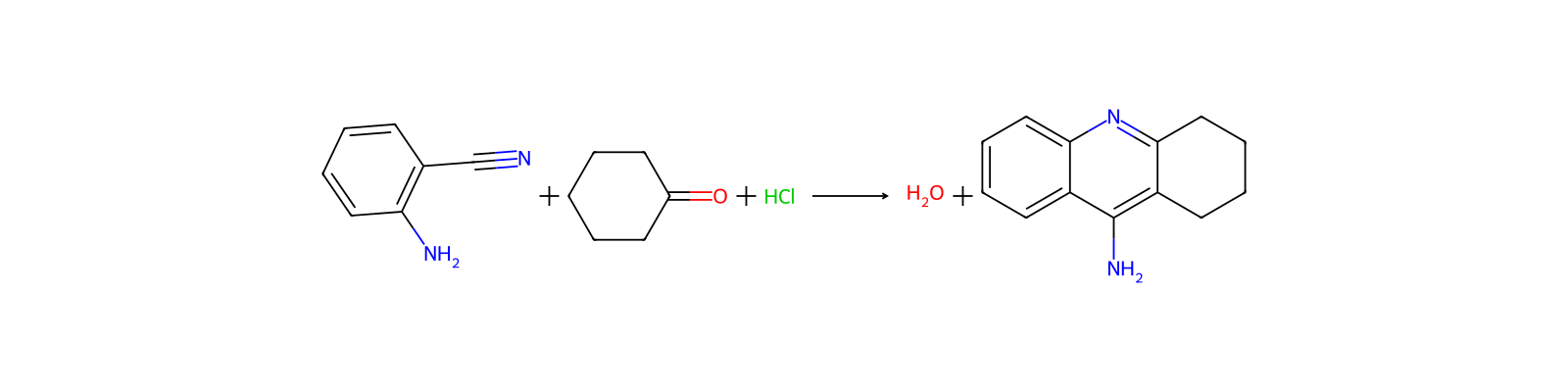
Reaktionsgleichung von HRID 2352
HRID 2352als Eduktuspto-grants-1998_03
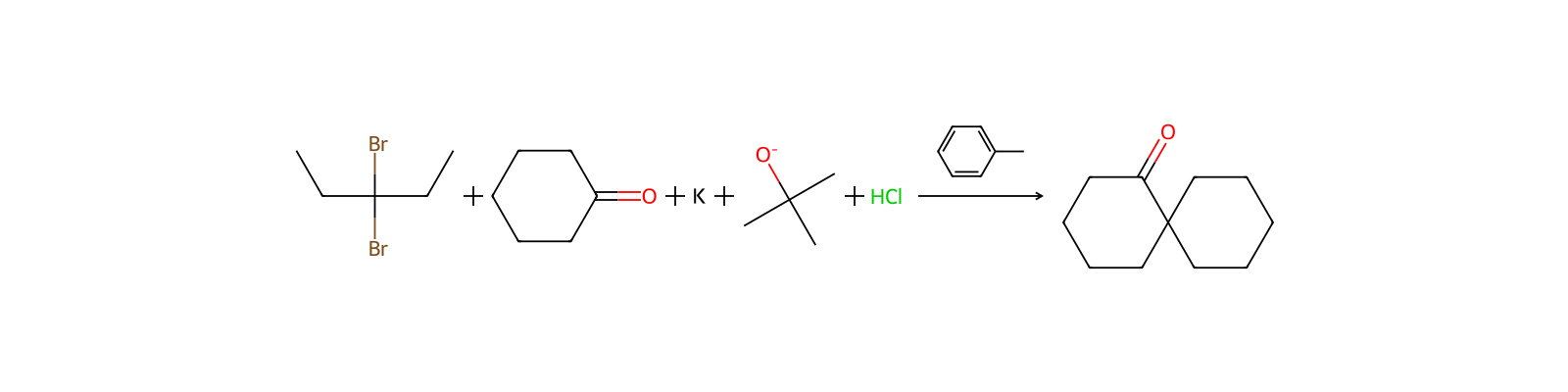
Reaktionsgleichung von HRID 2917
HRID 2917als Eduktuspto-grants-1998_03
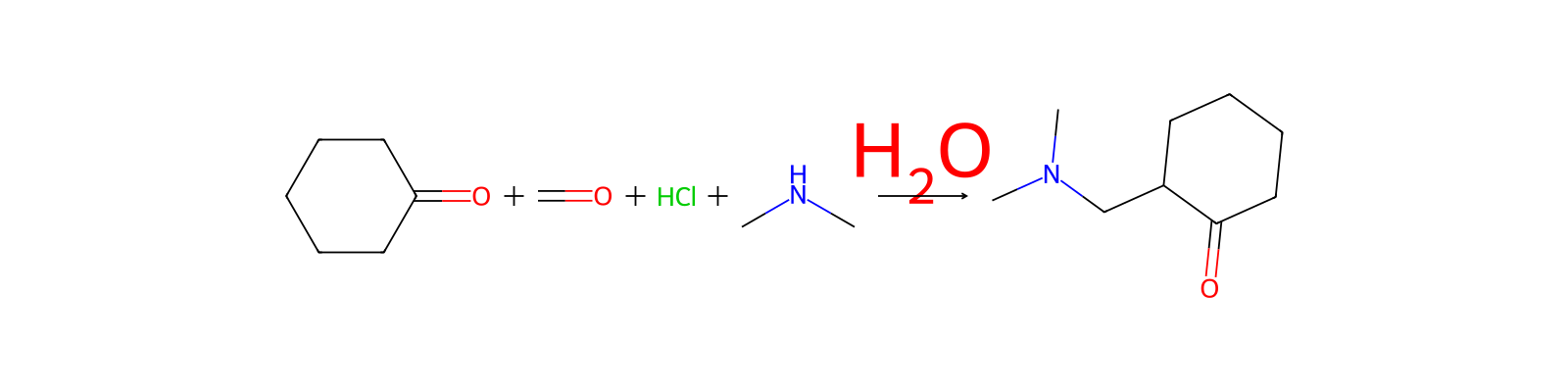
Reaktionsgleichung von HRID 2993
HRID 2993als Eduktuspto-grants-1998_03
Reaktionsgleichung von HRID 6221
HRID 6221als Eduktuspto-grants-1993_09
Reaktionsgleichung von HRID 7339
HRID 7339als Eduktuspto-grants-2006_08
Reaktionsgleichung von HRID 9745
HRID 9745als Produktuspto-grants-2006_08
Reaktionsgleichung von HRID 12046
HRID 12046als Eduktuspto-grants-2010_06
Reaktionsgleichung von HRID 12487
HRID 12487als Eduktuspto-grants-2010_06
Seite 1 von 197

Notizen zur Verbindung

Wird geladen…

Auf dieser SeiteGrundinformationenÜberblickNamen und BezeichnerEigenschaftenSicherheit und RegulatorischesChemie und IndustrieZugehörige ReaktionenNotizen zur Verbindung
Weitere Aktionen
Neue NotizNeue ReaktionAnfrage stellen
Density · 6 Einträge

0.945 at 68 °F (USCG, 1999) - Less dense than water; will float

0.9421 @ 25 °C/4 °C; 0.9478 @ 20 °C/4 °C

Relative density (water = 1): 0.95

0.947-0.950

0.95

0.9421 @25 °C

Flavoring AgentsEU Flavoring substances
Viscosity2.2 mPa.s (=cP) @ 25 °C

Physikochemische Eigenschaften

Schmelzpunkt
-47 °C · -47 °C (lit.)
Siedepunkt
155 °C · 155 °C (lit.)
Dichte
0.947 g/mL · 0.947 g/mL at 25 °C (lit.)
Dampfdichte
3.4 · 3.4 (vs air)
Dampfdruck
3.4 mm · 3.4 mm Hg ( 20 °C)
Brechungsindex
20 · n20/D 1.450(lit.)
FEMA
3909 · 3909 | CYCLOHEXANONE
Flammpunkt
116 °F · 116 °F
storage temp.
5 °C · Store at +5°C to +30°C.
Löslichkeit
90 g/l · 90g/l
pka
17 · 17(at 25℃)
Aggregatzustand
Liquid
Farbe
10 · APHA: ≤10
PH
7 · 7 (70g/l, H2O, 20℃)
Geruch (Odor)
Like peppermint and acetone.
Geruchsart
minty
Biologische Quelle
synthetic
Explosionsgrenze
1.1 %, · 1.1%, 100°F
Wasserlöslichkeit
150 g/L · 150 g/L (10 ºC)
Spezifische Wärmekapazität
1.86 J/ · Cp(liquid): 1.86 J/(g·K), at 25℃
JECFA Number
1100 · 1100
Merck
14 · 14,2726
BRN
385735 · 385735
Henry's Law Constant
1.2 x · 1.2 x 10-5 atmm3/mol at 25 °C (Hawthorne et al., 1985) 6.92 x 10⁻⁵ atmm3/mol at 60.00 °C, 10.7 at 70.00 °C, 16.4 at 80.00 °C (headspace-GC, Hovorka et al., 2002)
Dielectric constant
18.2 · 18.2(20℃)
Stabilität
Stable. Combustible. Incompatible with strong oxidizing agents.
Major Application
flavors and fragrances
Kosmetik-Inhaltsstoffe Funktionen
PERFUMINGSOLVENT
InChI
1S/C6H10O/c7-6-4-2-1-3-5-6/h1-5H2
InChIKey
JHIVVAPYMSGYDF-UHFFFAOYSA-N
SMILES
O=C1CCCCC1
LogP
0.86 at · 0.86 at 25℃
Oberflächenspannung
33.74 mN/m · 33.74mN/m at 298.15K
CAS Datenbank
108 · 108-94-1(CAS DataBase Reference)
NIST chemische Informationen
Cyclohexanone(108-94-1)
EPA chemische Informationen
Cyclohexanone (108-94-1)
Fire Potential · 2 Einträge

MODERATE, WHEN EXPOSED TO HEAT OR FLAME; CAN REACT VIGOROUSLY WITH OXIDIZING MATERIALS ...

/CYCLOHEXANONE/ ... SHOULD NOT PRESENT A PROBLEM OF FLAMMABILITY UNLESS HANDLED AT ELEVATED TEMP.

Health Hazards · 2 Einträge

Inhalation of vapors from hot material can cause narcosis. The liquid may cause dermatitis. (USCG, 1999)

· Inhalation or contact with material may irritate or burn skin and eyes.

Hazards Summary · 1 Eintrag

Liquid causes first degree burns on short exposure; [CHRIS] Animals become stuporous in high-dose inhalation studies and develop liver necrosis after high-dose feeding studies. [ACGIH] [Sanmartin O, et al. Occupational contact dermatitis from cyclohexanone as a PVC adhesive. Contact Dermatitis. 1992 Sep;27(3):189-90. No abstract available. Abstract in NIOSHTIC #179644]

DOT ID and Guide · 2 Einträge

1915 127

1915 127

Reactive GroupKetones
EC ClassificationSymbol: Xn; R: 10-20; S: (2)-25
UN ClassificationUN Hazard Class: 3; UN Pack Group: III
Special Reports · 3 Einträge

Occupational exposure to ketones, including cyclohexanone, is discussed.[NIOSH; Criteria Document: Ketones p.1-244 (1978) DHEW Pub. NIOSH 78-173.]

44 FR 31866 (6/1/79). The fourth report of the TSCA interagency testing committee to the administrator, EPA concerning cyclohexanone is discussed.

Spencer PS et al; Crit Rev Toxicol 7 (4): 279-356 (1980). Neurotoxicity of cyclohexanone is discussed.

Sicherheit und Schutzausrüstung

Fire Fighting · 2 Einträge

Excerpt from ERG Guide 127 [Flammable Liquids (Water-Miscible)]:

Use alcohol-resistant foam, carbon dioxide, powder. In case of fire: keep drums, etc., cool by spraying with water.

First Aid Measures · 4 Einträge

Fresh air, rest. Refer for medical attention.

Remove contaminated clothes. Rinse skin with plenty of water or shower. Refer for medical attention .

First rinse with plenty of water for several minutes (remove contact lenses if easily possible), then refer for medical attention.

Rinse mouth. Give one or two glasses of water to drink. Refer for medical attention .

Accidental Release Measures · 2 Einträge

· CALL 911. Then call emergency response telephone number on shipping paper. If shipping paper not available or no answer, refer to appropriate telephone number listed on the inside back cover.

· ELIMINATE all ignition sources (no smoking, flares, sparks or flames) from immediate area.

First Aid · 3 Einträge

EYES: First check the victim for contact lenses and remove if present. Flush victim's eyes with water or normal saline solution for 20 to 30 minutes while simultaneously calling a hospital or poison control center. Do not put any ointments, oils, or medication in the victim's eyes without specific instructions from a physician. IMMEDIATELY transport the victim after flushing eyes to a hospital even if no symptoms (such as redness or irritation) develop.

General First Aid:

(General first aid procedures)

Safe StorageFireproof. Separated from strong oxidants.
Exposure Control and Personal Protection · 3 Einträge

· Wear positive pressure self-contained breathing apparatus (SCBA).

Biological Exposure Indices (BEI) [ACGIH] - 1,2-Cyclohexanediol (with hydrolysis) in urine: 80 mg/L (end of shift at end of workweek); Cyclohexanol (with hydrolysis) in urine: 8 mg/L (end of shift); See notations in ACGIH TLVs and BEIs.

756.0 [ppm]

Fire Fighting Procedures · 2 Einträge

ALCOHOL FOAM, DRY CHEMICAL OR CARBON DIOXIDE

If material on fire or involved in fire: Do not extinguish fire unless flow can be stopped. Use water in flooding quantities as fog. Solid streams of water may be ineffective. Cool all affected containers with flooding quantities of water. Apply water from as far a distance as possible.

Storage ConditionsKeep containers closed; prohibit open flame. Store in cool and dark plane.
Cleanup Methods · 3 Einträge

Remove all ignition sources. Ventilate area of spill or leak. For small quantities of liquids containing cyclohexanone, absorb on paper towels and place in an appropriate container. Place towels in a safe place (such as a fume hood) for evaporation. Allow sufficient time for evaporation of the vapors so that the hood ductwork is free from cyclohexanone vapors. Burn the paper in a suitable location away from combustible materials.

Large quantities of liquids containing cyclohexanone may be absorbed in vermiculite, dry sand, earth, or a similar material and placed in an appropriate container. Cyclohexanone should not be allowed to enter a confined space such as a sewer because of the possibility of an explosion. Cyclohexanone may be collected by vacuuming with an appropriate system. If a vacuum system is used, there should be no sources of ignition in the vicinity of the spill and flashback prevention devices should be provided.

Absorb on paper. Evaporate on a glass or an iron dish in hood. Burn the paper.

Nonfire Spill ResponseExcerpt from ERG Guide 127 [Flammable Liquids (Water-Miscible)]:
Disposal Methods · 3 Einträge

Generators of waste (equal to or greater than 100 kg/mo) containing this contaminant, EPA hazardous waste number U057, F003, must conform with USEPA regulations in storage,transportation, treatment and disposal of waste.

Cyclohexanone is a waste chemical stream constituent which may be subjected to ultimate disposal by controlled incineration.

A good candidate for fluidized bed incineration at a temperature range of 450 to 980 °C and residence times of seconds for liquids and gases, and longer for solids. A good candidate for rotary kiln incineration at a temperature range of 820 to 1,600 °C and residence times of seconds for liquids and gases, and hours for solids. A good candidate for liquid injection incineration at a temperature range of 650 to 1,600 °C and a residence time of 0.1 to 2 seconds.

Spillage Disposal · 1 Eintrag

Personal protection: chemical protection suit and filter respirator for organic gases and vapours adapted to the airborne concentration of the substance. Remove all ignition sources. Ventilation. Collect leaking and spilled liquid in sealable containers as far as possible. Absorb remaining liquid in sand or inert absorbent. Then store and dispose of according to local regulations.

Toxikologische Informationen

Toxicological InformationRanking: 544 (total points: 260.05)
Body Burden · 1 Eintrag

In a study including 42 production workers from a large video tape manufacturing plant and 17 workers from two plastic bag printing plants in Singapore, the mean cyclohexanone level in breath was 1.08 ppm with a range of 0-6.4 ppm(1). Environmental levels of cyclohexanone in the plants ranged from 0.1 to 36.0 ppm, with a mean of 9.04 ppm.

Target OrgansEyes, skin, respiratory system, central nervous system, liver, kidneys
Ecotoxicity ValuesLC50 Pimephales promelas (fathead minnow) 527 mg/l 96 hr flow-through bioassay, wt 0.12 g, water hardness 45.5 mg/l CaCO3, temp: 25 +/- 1 °C, pH 7.5, dissolved oxygen greater than 60% of saturation
Environmental Fate · 3 Einträge

TERRESTRIAL FATE: Cyclohexanone is estimated to be highly mobile in soil(1,3,SRC). In view of its moderate vapor pressure(2) and low adsorption to soil(3), it would be expected to volatilize from surface soil. Although data are lacking, it may also undergo direct photolysis on the soil surface(4). Cyclohexanone is readily biodegradable according to aerobic screening tests(5-12) and therefore would be expected to biodegrade in soil(SRC).

AQUATIC FATE: If released in water, cyclohexanone would be slowly lost by volatilization. Its estimated half-lives in a model river and model lake are 4.1 and 33 days, respectively(1,2). Cyclohexanone is readily biodegradable according to aerobic screening tests(6) and in a die-away test performed using microorganisms from river water(3) and therefore, may be expected to biodegrade in natural waters. Adsorption to sediment(2,4) and bioconcentration(2,5) in aquatic organisms should be minimal(2) based upon its high water solubility(4) and low octanol/water partition coefficient(5).

ATMOSPHERIC FATE: In the atmosphere, cyclohexanone will degrade by reacting with photochemically-produced hydroxyl radicals. Its estimated half-life resulting from this reaction is 1.3 days(1,2).

Adverse EffectsNeurotoxin - Acute solvent syndrome
Exposure Routes · 2 Einträge

The substance can be absorbed into the body by inhalation of its vapour, through the skin and by ingestion.

inhalation, skin absorption, ingestion, skin and/or eye contact

Signs and Symptoms · 5 Einträge

Cough. Sore throat. Dizziness. Drowsiness.

MAY BE ABSORBED! Dry skin. Redness.

Redness. Pain.

Abdominal pain. Burning sensation.

irritation eyes, skin, mucous membrane; headache; narcosis, coma; dermatitis; In Animals: liver, kidney damage

Ongoing Test Status · 1 Eintrag

The following link will take the user to the National Toxicology Program (NTP) Test Agent Search Results page, which tabulates all of the "Standard Toxicology & Carcinogenesis Studies", "Developmental Studies", and "Genetic Toxicity Studies" performed with this chemical. Clicking on the "Testing Status" link will take the user to the status (i.e., in review, in progress, in preparation, on test, completed, etc.) and results of all the studies that the NTP has done on this chemical. [http://ntp-apps.niehs.nih.gov/ntp_tox/index.cfm?fuseaction=ntpsearch.searchresults&searchterm=108-94-1]

Effluent Concentrations · 2 Einträge

In a comprehensive survey of wastewater from 4,000 industrial and publicly owned treatment works (POTWs) sponsored by the Effluent Guidelines Division of the U.S. EPA, cyclohexanone was identified in discharges of the following industrial category (positive occurrences, median concentration in ppb): leather tanning (4; 593), iron and steel manufacturing (2; 13.3), nonferrous metals (1; 28.1), paint and ink (5; 34.4), printing and publishing (2; 149), ore mining (2; 3.1), inorganic chemicals (5; 32.7), plastics and synthetics (23; 75.8), auto and other laundries (1; 1.2), pharmaceuticals (2; 44.2), explosives (1; 16.8), aluminum (4; 12.9), electronics (4; 11.9), organic chemicals (2; 62.7), and POTWs (12; 23.5)(1). Maximum effluent concentrations above 1000 ppb were observed in leather tanning (1,927 ppb), inorganic chemicals (10,256 ppb), and plastics and synthetics (2,345 ppb)(1).

Wastewater from advanced treatment facilities in Lake Tahoe, CA, Dallas, TX, and Blue Plains, Washington, DC contained cyclohexanone(1). A final effluent grab sample from the Danville, IL POTW collected in June 1980 contained cyclohexanone(2). Wastewaters from processing shale oil have been found to contain cyclohexanone(3,4). It was identified in leachate from a municipal landfill in Ontario, Canada(5). The concentration of cyclohexanone in active compost blower exhaust from a wastewater sludge composting facility was 13 ug/cu m(6).

EPA IRIS Information · 2 Einträge

Cyclohexanone

5 mg/kg-day

Medical SurveillanceConsider the points of attack /respiratory system, eyes, skin, central nervous system/ in preplacement and periodic physical examinations.

Regulatorische Informationen

RCRA Requirements · 2 Einträge

U057; As stipulated in 40 CFR 261.33, when CYCLOHEXANONE, as a commercial chemical product or manufacturing chemical intermediate or an off-specification commercial chemical product or a manufacturing chemical intermediate, becomes a waste, it must be managed according to Federal and/or State hazardous waste regulations. Also defined as a hazardous waste is any residue, contaminated soil, water, or other debris resulting from the cleanup of a spill, into water or on dry land, of this waste. Generators of small quantities of this waste may qualify for partial exclusion from hazardous waste regulations (40 CFR 261.5).

When cyclohexanone is a spent solvent, it is classified as a hazardous waste from a nonspecific source (F003), as stated in 40 CFR 261.31, and must be managed according to State and/or Federal hazardous waste regulations.

TSCA Requirements · 2 Einträge

Section 8(a) of TSCA requires manufacturers of this chemical substance to report preliminary assessment information concerned with production, use, and exposure to EPA as cited in the preamble in 51 FR 41329.

Pursuant to section 8(d) of TSCA, EPA promulgated a model Health and Safety Data Reporting Rule. The section 8(d) model rule requires manufacturers, importers, and processors of listed chemical substances and mixtures to submit to EPA copies and lists of unpublished health and safety studies. Cyclohexanone is included on this list.

FIFRA Requirements · 3 Einträge

As the federal pesticide law FIFRA directs, EPA is conducting a comprehensive review of older pesticides to consider their health and environmental effects and make decisions about their future use. Under this pesticide reregistration program, EPA examines health and safety data for pesticide active ingredients initially registered before November 1, 1984, and determines whether they are eligible for reregistration. In addition, all pesticides must meet the new safety standard of the Food Quality Protection Act of 1996. Pesticides for which EPA had not issued Registration Standards prior to the effective date of FIFRA, as amended in 1988, were divided into three lists based upon their potential for human exposure and other factors, with List B containing pesticides of greater concern and List D pesticides of less concern. Cyclohexanone is found on List C. Case No: 3053; Pesticide type: insecticide; Case Status: No products containing the pesticide are actively registered ... The case /is characterized/ as "cancelled." Under FIFRA, pesticide producers may voluntarily cancel their registered products. EPA also may cancel pesticide registrations if registrants fail to pay required fees or make/meet certain reregistration commitments, or if EPA reaches findings of unreasonable adverse effects.; Active ingredient (AI): Cyclohexanone; AI Status: The active ingredient is no longer contained in any registered pesticide products ... "cancelled."

Cyclohexanone is exempted from the requirement of a tolerance when used as a solvent or cosolvent in accordance with good agricultural practice as inert (or occasionally active) ingredients in pesticide formulations applied to growing crops only.

Cyclohexanone is exempted from the requirement of a tolerance when used as a solvent or cosolvent accordance with good agricultural practice as inert (or occasionally active) ingredients in pesticide formulations applied to animals.

Atmospheric Standards · 1 Eintrag

This action promulgates standards of performance for equipment leaks of Volatile Organic Compounds (VOC) in the Synthetic Organic Chemical Manufacturing Industry (SOCMI). These standards implement Section 111 of the Clean Air Act and are based on the Administrator's determination that emissions from the Synthetic Organic Chemical Manufacturing Industry cause, or contribute significantly to, air pollution which may reasonably be anticipated to endanger public health or welfare. The intended effect of these standards is to require all newly constructed, modified, and reconstructed Synthetic Organic Chemical Manaufacturing Industry process units to use the best demonstrated system of continuous emission reduction for equipment leaks of Volatile Organic Compounds, considering costs, non air quality health and environmental impact and energy requirements. Cyclohexanone is produced, as an intermediate or final product, by process units covered under this subpart. These standards of performance become effective upon promulgation but apply to affected facilities for which construction or modification commenced after January 5, 1981.

CERCLA Reportable Quantities · 1 Eintrag

Persons in charge of vessels or facilities are required to notify the National Response Center (NRC) immediately, when there is a release of this designated hazardous substance, in an amount equal to or greater than its reportable quantity of 5000 lb or 2700 kg. The toll free number of the NRC is (800) 424-8802; In the Washington D.C. metropolitan area (202) 426-2675. The rule for determining when notification is required is stated in 40 CFR 302.4 (section IV. D.3.b).

State Drinking Water Guidelines(FL) FLORIDA 35,000 ug/l

Sicherheitsdaten

OEB
A
OEL
TWA: 25 ppm (100 mg/m3) [skin]
wgk
1
IDLA
700 ppm
tsca
TSCA listed
ridadr
UN 1915
hs_code
2914 22 00
RTECS-Nr.
GW1050000
risk_code
10-20-41-38-20/21/22
Toxizität
LD50 orally in rats: 1.62 ml/kg (Smyth)
hazard_code
Xn
safety_code
25-36/37/39-26
hazard_class
3
packing_group
III
Speicherklasse
3 - Flammable liquids
Giftige Stoffe Daten
108-94-1(Hazardous Substances Data)
Hazard Classifications
Acute Tox. 4 DermalAcute Tox. 4 InhalationAcute Tox. 4 OralEye Dam. 1Flam. Liq. 3Skin Irrit. 2STOT SE 3
Selbstentzündungstemperatur
788 °F

SOLVENT FOR PVC POLYMERS & COPOLYMERS, LACQUERS; SPOT REMOVER AND DEGREASER FOR LEATHER

U.S. Exports · 2 Einträge

(1972) NEGLIGIBLE

(1975) NEGLIGIBLE

U.S. Imports · 2 Einträge

(1972) NEGLIGIBLE

(1983) 1.91X10+9 g

U.S. Production · 6 Einträge

2023: 1,000,000,000 - <2,500,000,000 lb

(1972) 3.56X10+11 G

(1975) 2.51X10+11 G

(1984) 3.61X10+11 g

(1992) 6.65x10+5 t (estimated)

(1992) 4.78X10+8 kg

Consumption Patterns · 2 Einträge

95% FOR CAPROLACTAM AND ADIPIC ACID; 5% FOR SOLVENT APPLICATIONS (1973)

97% FOR NYLON 6 OR NYLON 66 MFR (1979)

Consumer UsesIntermediate
Industry UsesCleaning agent
Methods of Manufacturing · 3 Einträge

CATALYTIC OXIDATION OF CYCLOHEXANE

OBTAINED FROM CYCLOHEXANOL BY CATALYTIC DEHYDROGENATION OR BY OXIDN (WHICH YIELDS CYCLOHEXANONE & ADIPIC ACID) ... BRITISH PATENT 310,055 (SCHERING-KAHLBAUM 1928); US PATENTS 2,223,493-4 (DU PONT 1940); 2,285,914 (DU PONT 1942).

CATALYTIC HYDROGENTION OF PHENOL OR BY THE CATALYTIC AIR-OXIDATION OF CYCLOHEXANE; MAY BE PREPARED BY EITHER THE CATAYLTIC DEHYDROGENATION OR OXIDATIVE DEHYDROGENATION OF CYCHEXANOL. THE PROCESS IS CARRIED OUT IN EITHER A LIQUID PHASE CATALYZED BY PALLADIUM OR CARBON, OR IN THE VAPOR PHASE CATALYZED BY PALLADIUM OR ALUMINA.

Formulations/Preparations · 2 Einträge

Technical: 99.8%

COMMERCIAL: 89%; HIGH PURITY: 99.5%

Household ProductsInformation on 83 consumer products that contain Cyclohexanone in the following categories is provided:
Use Classification · 6 Einträge

Fragrance Ingredients

Flavouring Agent -> FLAVOURING_AGENT -> JECFA Functional Classes

Flavoring Agents -> JECFA Flavorings Index

Flavouring Agent -> FLAVOURING_AGENT -> JECFA Functional Classes

Flavouring Agent -> FLAVOURING_AGENT -> JECFA Functional Classes

Flavouring Agent -> FLAVOURING_AGENT -> JECFA Functional Classes

General Manufacturing Information · 4 Einträge

Printing Ink Manufacturing

Cyclohexanone: ACTIVE

IN LACQUER INDUST AS SLOWLY EVAPORATING IMPROVER, ALSO FOR LACQUERS & INSULATORS FOR HEAT & ELECTRICITY & FOR AUTOMOBILE LACQUERS. IN TEXTILE & PLASTIC INDUST, AS SPOTTING AGENT & RE-LUSTERING AGENT FOR CELLULOSE ACETATE SILK & IN SPRAY PAINTING OF FABRIC & PLASTIC TEXTILES. USED IN THE LEATHER INDUSTRY; AS A METAL DEGREASER; IN PAINT REMOVERS & IN PRINTING INKS.

DISTILLATION OF PIMELIC ACID SALTS WILL ALSO YIELD CYCLOHEXANONE.

Anwendungen · 3 Einträge

BeschreibungCyclohexanone, a colorless liquid is a cyclic ketone. It is an important building block for the synthesis of a variety of organic compounds. Majority of the cyclohexanone synthesized is utilized as an intermediate in the synthesis of nylon.Used as a polyvinyl chloride (PVC) solvent, cyclohexanone caused contact dermatitis in a woman manufacturing PVC fluidotherapy bags. Cyclohexanone probably does not cross react with cyclohexanone resin. A cyclohexanone-derived resin used in paints and varnishes caused contact dermatitis in painters.

OccurrenceReported present in Cistus labdaniferus.

VerwendenCyclohexanone is used in the productionof adipic acid for making nylon; in thepreparation of cyclohexanone resins; and asa solvent for nitrocellulose, cellulose acetate,resins, fats, waxes, shellac, rubber, and DDT..

Vor- und nachgelagerte Produkte

Vorgelagerte Rohstoffe

2-Hexanon1108Cyclohexanolheavy benzolWasserstoffperoxidCyclohexanWasserNaphthaBenzolWasserstoffCyclohexanolNatriumhydroxidtert-Butyl chromate

Nachgelagerte Produkte

Venlafaxine hydrochlorideethyl-2-Amino-4,5,6,7-tetrahydrobenzo[b]thiophen-3-carboxylatPramipexoleHexan-6-olid(1S,2S)-(-)-1,2-Diphenyl-1,2-ethanediamineN,N-Dimethylcyclohexanamin1-EthinylcyclohexanolCarbosulfanPorcelain-like coating2-ETHYLCYCLOHEXANONE2-Amino-4,5,6,7-tetrahydrobenzo[b]thiophen-3-carbonitril(R)-1,5-Dimethylhexylamin3-AMINO-4,5,6,7-TETRAHYDRO-BENZO[B]THIOPHENE-2-CARBOXYLIC ACID METHYL ESTER2-(1-Cyclohexen-1-yl)cyclohexan-1-onTramadol hydrochlorideClethodim1-NITROMETHYLCYCLOHEXANOL3-AMINO-5,6,7,8-TETRAHYDRO-3H-BENZO[4,5]THIENO[2,3-D]PYRIMIDIN-4-ONE1-Aminomethylcyclohexan-1-olhydrochloridMethoxydienone5,6,7,8-TETRAHYDRO-3H-BENZO[4,5]THIENO[2,3-D]-PYRIMIDIN-4-ONEPolyurethane varnishCyclohexanon, PeroxidCyclohexyl(methyl)aminOndansetronEthyl-2-oxocyclohexancarboxylatVenlafaxine1-(1-PIPERIDINO)CYCLOHEXENEadhesive No.1 for shrink packaging2-ChlorcyclohexanonTacrin(1-HYDROXY-CYCLOHEXYL)-ACETONITRILECyclohexan-1,2-dionSulfadimidinDeflazacort1-Hydroperoxycyclohexyl-1-hydroxycyclohexylperoxid2-(HYDROXYMETHYL)CYCLOHEXANONECycloheptanonDinatrium-7-hydroxy-8-[[4-[1-[4-[(4-hydroxyphenyl)azo]phenyl]cyclohexyl]phenyl]azo]naphthalin-1,3-disulfonat1-(Aminomethyl)cyclohexan-1-ol

Ergänzende Hinweise

DefinitionChEBI: A cyclic ketone that consists of cyclohexane bearing a single oxo substituent.