StartseiteMCPWorkbenchSkills
StartseiteWorkbenchBenachrichtigungenMein Bereich
llms.txt · MCP-AnleitungDatenschutz · Nutzungsbedingungen · Supportv1.8.3
  1. Startseite
  2. /Verbindung

N,N'-Methylendiacrylamid

Methylenebisacrylamide

HCID 8041
Neue Reaktion
Drucken

Daten werden ergänzt – lade die Seite später neu, um den aktuellen Stand zu sehen

GrundinformationenÜberblickNamen und BezeichnerEigenschaftenSicherheit und RegulatorischesChemie und IndustrieZugehörige ReaktionenNotizen zur Verbindung
TeilstruktursucheÄhnliche Strukturen suchen

Grundinformationen

CAS
110-26-9
Standard-SMILES
C=CC(=O)NCNC(=O)C=C
InChIKey
ZIUHHBKFKCYYJD-UHFFFAOYSA-N
Summenformel
C7H10N2O2
Durchschnittliche Molmasse
154,17 g/mol
Monoisotopische Masse
154,07422757

Überblick

N,n'-methylenebisacrylamide is a white crystalline powder with a neutral odor. (NTP, 1992)

Namen und Bezeichner

Bevorzugter Name
Methylenebisacrylamide
IUPAC
N-[(prop-2-enoylamino)methyl]prop-2-enamide
Lokaler Name
N,N'-Methylendiacrylamid
Englischer Name
N,N'-Methylenebisacrylamide
Summenformel
C7H10N2O2
Molmasse
154.17

Namen und Synonyme

N,N'-METHYLENEBISACRYLAMIDE110-26-9MethylenebisacrylamideMethylenediacrylamide2-Propenamide, N,N'-methylenebis-N,N'-Methylenebis(acrylamide)N,N'-MethylidenebisacrylamideAcrylamide, N,N'-methylenebis-N,N'-Methylenebis(2-propenamide)DTXSID8025595EDK4RIE19CDTXCID205595
Weitere Namen anzeigen
MBABISBISACRYLAMIDEN, N-METHYLENE-BIS-ACRYLAMIDEnappN,N-MethylenebisaMFM6
N,N'-Methylenebis[acrylamide]RefChem:161037n,n'-methylene-bis(acrylamide)2-propenamide, N,N'-methyl-enebisN,N'-METHYLENEBIS-2-PROPENAMIDEmethylene bisacrylamideN,N'-Methylenediacrylamiden,n-methylenebisacrylamide

Datenbank-Bezeichner

CAS
110-26-9
PubChem CID
8041
DTXSID
DTXSID8025595
ChEMBL

Eigenschaften

Berechnete StruktureigenschaftenWird ergänzt

XLogP
0,1
Polarare Oberfläche (TPSA)
58,2 Ų
H-Brücken-Donoren
2
H-Brücken-Akzeptoren
2
Frei drehbare Bindungen
4
Schwere Atome
11
Formalladung
0
Komplexität
167

Experimentelle und physikochemische Eigenschaften

PolymersPlastics & Rubber -> Other Monomers
Density · 2 Einträge

1.235 at 86 °F (NTP, 1992) - Denser than water; will sink

1.235 @ 30°C

Solubility0.1 to 1 mg/mL at 64 °F (NTP, 1992)
Melting Point365 °F (with decomposition) (NTP, 1992)
Vapor Density5.31 (NTP, 1992) - Heavier than air; will sink (Relative to Air)
Food Contact Substances · 2 Einträge

FCS -> FDA Cumulative Estimated Daily Intake (CEDI)

FCS -> FDA Inventory of Food Contact Substances Listed in 21 CFR

Physical Description · 3 Einträge

N,n'-methylenebisacrylamide is a white crystalline powder with a neutral odor. (NTP, 1992)

Dry Powder

White solid; [CAMEO]

Collision Cross Section138.1 Ų [M+Na]+ [CCS Type: DT; Buffer gas: N2; Ionization: ESI+; Dataset: TOXCAST; Source Identifier: DTXSID8025595]

Sicherheit und Regulatorisches

Sicherheitsangaben dienen nur zur Orientierung und ersetzen weder das Sicherheitsdatenblatt (SDB) des Lieferanten noch geltende Vorschriften oder eine fachliche Bewertung.

GHS-Klassifizierung

GHS Classification · 6 Einträge

Danger

H340: May cause genetic defects [Danger Germ cell mutagenicity]

P203, P280, P318, P405, and P501 (click each P-code to see the statement)

Danger

H301 (54.4%): Toxic if swallowed [Danger Acute toxicity, oral]

P203, P260, P261, P264, P264+P265, P270, P271, P272, P280, P301+P316, P301+P317, P302+P352, P304+P340, P305+P354+P338, P317, P318, P319, P321, P330, P333+P317, P362+P364, P405, and P501 (click each P-code to see the statement)

Gefahrenhinweise

Regulatory Information · 5 Einträge

Chemical: 2-Propenamide, N,N'-methylenebis-

Hazard Traits - Genotoxicity

2-Propenamide, N,N'-methylenebis- is listed on the EPA's Chemical Data Reporting (CDR) system. Manufacturers and importers of 2-Propenamide, N,N'-methylenebis- are required to report information about their production and use of this chemical to the EPA under the Toxic Substances Control Act (TSCA). (40 eCFR Part 711)

REACH registered substance: N,N'-methylenediacrylamide (EC: 203-750-9)

2-Propenamide, N,N'-methylenebis: Does not have an individual approval but may be used under an appropriate group standard

Other Safety InformationEvaluation - 2-Propenamide, N,N'-methylenebis- (N,N'-methylenebisacrylamide)
Fire HazardsFlash point data for this chemical are not available; however, it is probably combustible. (NTP, 1992)
Health Hazards · 1 Eintrag

SYMPTOMS: Symptoms of exposure to this type of compound may include irritation and redness of the skin, irritation of the eyes, drowsiness, tingling sensation, fatigue, weakness, stumbling, slurred speech and shaking. Chronic exposure to this type of compound may lead to muscular weakness, incoordination, skin rashes, excessive sweating of the hands and feet, cold hands and peeling of the skin.

Chemie und Industrie

Verwendung und Herstellung

UsesUsed as an organic intermediate, cross-linking agent, for making polyacrylamides, and for preparing polyacrylamide gel for electrophoresis, chemical grouting, and other uses; [NTP]
U.S. Production2023: <50,000 lb
Industry UsesMonomers
General Manufacturing Information · 2 Einträge

All Other Basic Organic Chemical Manufacturing

2-Propenamide, N,N'-methylenebis-: ACTIVE

Anwendungen · 1 Eintrag

VerwendenN,N'-Methylenebisacrylamide is used in the preparation of polyacrylamide gels for electrophoretic separation of nucleic acids and proteins. It has also been used as a test compound for studying the biochemical isolation of insoluble Tau in transgenic mouse models of tauopathy by examining the two main isolation methods sarkosyl and formic acid extraction.

Vor- und nachgelagerte Produkte

Vorgelagerte Rohstoffe

Acrylamid

Nachgelagerte Produkte

super absorbent resin synthesized by microwave cation ion radiationamphoteric super absorbent resin synthesized by microwave radiation

Zugehörige Reaktionen

7
Reaktionsaufzeichnung erstellen
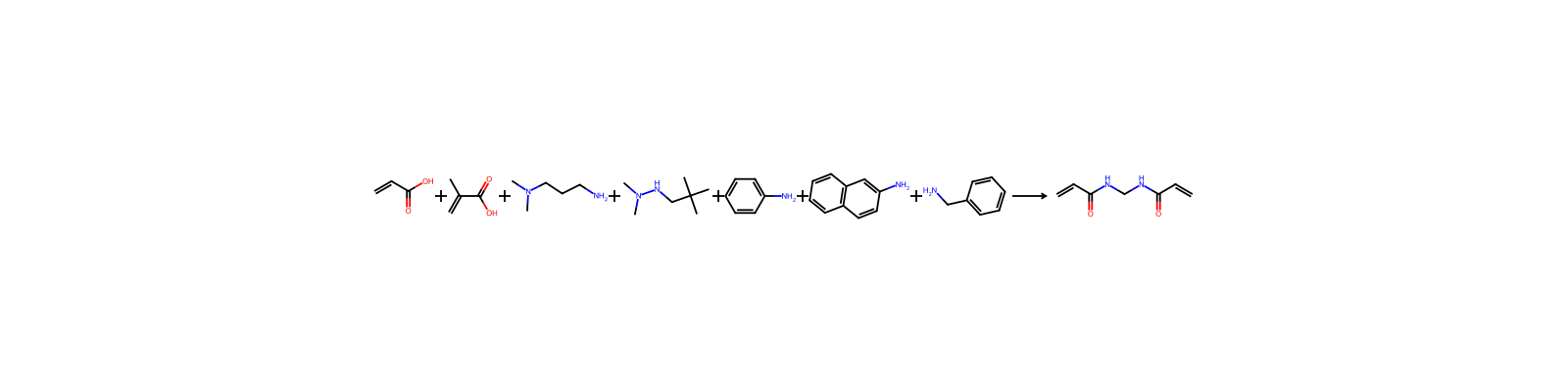
Reaktionsgleichung von HRID 653232
HRID 653232als Produkt
Reaktionsgleichung von HRID 1064554
HRID 1064554als Produkt
Reaktionsgleichung von HRID 1577777
HRID 1577777als Edukt
Reaktionsgleichung von HRID 1597710
HRID 1597710als Edukt
Reaktionsgleichung von HRID 2234720
HRID 2234720als Edukt
Reaktionsgleichung von HRID 2357694
HRID 2357694als Edukt
Reaktionsgleichung von HRID 2419190
HRID 2419190als Edukt

Notizen zur Verbindung

Auf dieser SeiteGrundinformationenÜberblickNamen und BezeichnerEigenschaftenSicherheit und RegulatorischesChemie und IndustrieZugehörige ReaktionenNotizen zur Verbindung
CHEMBL1401480
UNII
EDK4RIE19C
EC Number
203-750-9
Nikkaji
J33.815J

Physikochemische Eigenschaften

Schmelzpunkt
300 °C · >300 °C(lit.)
Siedepunkt
277.52 °C · 277.52°C (rough estimate)
Dichte
1.235 · 1.235
Dampfdichte
5.31 · 5.31 (vs air)
Dampfdruck
0 · 0-0.073Pa at 20-84.85℃
Brechungsindex
1.488 · 1.4880 (estimate)
storage temp.
2 · 2-8°C
Löslichkeit
2 O: · H2O: 20 mg/mL at 20 °C, clear, colorless
Aggregatzustand
powder
pka
13.07 · 13.07±0.46(Predicted)
Farbe
White
Geruch (Odor)
Odorless
PH
5 · >=5.0 (25g/l, H2O, 20℃)
Wasserlöslichkeit
0.01 · 0.01-0.1 g/100 mL at 18 ºC
BRN
1706297 · 1706297
Stabilität
Light Sensitive
InChI
1S/C7H10N2O2/c1-3-6(10)8-5-9-7(11)4-2/h3-4H,1-2,5H2,(H,8,10)(H,9,11)
InChIKey
ZIUHHBKFKCYYJD-UHFFFAOYSA-N
SMILES
C=CC(=O)NCNC(=O)C=C
LogP
-1.52 · -1.52--0.08 at 24-25℃ and pH4-10
Oberflächenspannung
70.2 · 70.2-70.3mN/m at 1g/L and 20℃
CAS Datenbank
110 · 110-26-9(CAS DataBase Reference)
NIST chemische Informationen
2 · 2-Propenamide, n,n'-methylenebis-(110-26-9)
EPA chemische Informationen
N,N'-Methylenebisacrylamide (110-26-9)
Absorption
0.2 at · ≤0.2 at 290 at 1%
Hazards Summary · 1 Eintrag

May cause skin and eye irritation and symptoms indicative of nervous system effects; [NTP] May cause irritation; Harmful by ingestion and inhalation; May cause reproductive disorders, based on animal studies; [Sigma-Aldrich MSDS] See Acrylamide.

Reactive GroupAmides and Imides
Reactivity ProfileN,N'-METHYLENEBISACRYLAMIDE is incompatible with strong oxidizers, strong acids and strong bases. (NTP, 1992)
Air and Water ReactionsVery slightly water soluble.
Hazard Classes and Categories · 3 Einträge

Acute Tox. 3 (54.4%)

Acute toxicity (Oral) - Category 3

Muta. 1B

Sicherheit und Schutzausrüstung

Fire FightingFires involving this material can be controlled with a dry chemical, carbon dioxide or Halon extinguisher. A water spray may also be used. (NTP, 1992)
First Aid · 1 Eintrag

EYES: First check the victim for contact lenses and remove if present. Flush victim's eyes with water or normal saline solution for 20 to 30 minutes while simultaneously calling a hospital or poison control center. Do not put any ointments, oils, or medication in the victim's eyes without specific instructions from a physician. IMMEDIATELY transport the victim after flushing eyes to a hospital even if no symptoms (such as redness or irritation) develop.

Nonfire Spill Response · 1 Eintrag

SMALL SPILLS AND LEAKAGE: Should a spill occur while you are handling this chemical, FIRST REMOVE ALL SOURCES OF IGNITION, then you should dampen the solid spill material with 60-70% ethanol and transfer the dampened material to a suitable container. Use absorbent paper dampened with 60-70% ethanol to pick up any remaining material. Seal the absorbent paper, and any of your clothes, which may be contaminated, in a vapor-tight plastic bag for eventual disposal. Solvent wash all contaminated surfaces with 60-70% ethanol followed by washing with a soap and water solution. Do not reenter the contaminated area until the Safety Officer (or other responsible person) has verified that the area has been properly cleaned.

Protective Action Criteria (PAC) · 3 Einträge

1.2 [mg/m3]

13 [mg/m3]

77 [mg/m3]

Personal Protective Equipment (PPE) · 1 Eintrag

RECOMMENDED RESPIRATOR: Where the neat test chemical is weighed and diluted, wear a NIOSH-approved half face respirator equipped with an organic vapor/acid gas cartridge (specific for organic vapors, HCl, acid gas and SO2) with a dust/mist filter. (NTP, 1992)

Toxikologische Informationen

Toxicity DataLC (rat) > 41 ppm/6hr

Sicherheitsdaten

F
8
wgk
2
tsca
TSCA listed
ridadr
UN 2811
hs_code
29241900
RTECS-Nr.
AS3678000
risk_code
20/22-20/21/22-36/37/38
Toxizität
LD50 orally in Rabbit: 390 mg/kg
hazard_code
Xn,Xi
safety_code
22-36/37-36-26
hazard_class
6.1(b)
packing_group
III
Speicherklasse
6.1C - Combustible acute toxic Cat.3toxic compounds or compounds which causing chronic effects
Hazard Classifications
Acute Tox. 3 OralAcute Tox. 4 DermalCarc. 1BMuta. 1BRepr. 2STOT RE 1 Oral