
Pentylamin
Pentylamine

Grundinformationen
- CAS
110-58-7- Standard-SMILES
CCCCCN- InChIKey
DPBLXKKOBLCELK-UHFFFAOYSA-N- Summenformel
- C5H13N
- Durchschnittliche Molmasse
- 87,16 g/mol
- Monoisotopische Masse
- 87,10479942
Überblick
N-amylamine appears as a clear colorless liquid with an ammonia-like odor. Irritates the eyes and respiratory system. Vapors are heavier than air. Produces toxic oxides of nitrogen during combustion. Used as a corrosion inhibitor, solvent, flotation agent and in the manufacture of other chemicals.
Namen und Bezeichner
- Bevorzugter Name
- Pentylamine
- IUPAC
- pentan-1-amine
- Lokaler Name
- Pentylamin
- Englischer Name
- Amylamine
- Summenformel
- C5H13N
- Molmasse
- 87.16
Namen und Synonyme
AmylaminePentylamine110-58-7pentan-1-amine1-Aminopentane1-PentylamineN-AMYLAMINE1-Pentanaminen-PentylamineMonoamylamineNorleucamineE05QM3V8EF
Weitere Namen anzeigen
PentylaminAMYLAMINESAmylaminAMINE C5
FEMA NO. 4242NSC-7906DTXSID0021919CHEBI:74848RefChem:171523DTXCID801919203-780-2932-628-4
Datenbank-Bezeichner
- CAS
110-58-7- PubChem CID
- 8060
- DTXSID
DTXSID0021919- ChEBI
CHEBI:74848- UNII
- E05QM3V8EF
- EC Number
- 203-780-2、932-628-4、935-734-9
- Nikkaji
- J1.978J
Eigenschaften
Berechnete Struktureigenschaften
- XLogP
- 1,5
- Polarare Oberfläche (TPSA)
- 26 Ų
- H-Brücken-Donoren
- 1
- H-Brücken-Akzeptoren
- 1
- Frei drehbare Bindungen
- 3
- Schwere Atome
- 6
- Formalladung
- 0
- Komplexität
- 19,9
Experimentelle und physikochemische Eigenschaften
Chemical Classes
Nitrogen Compounds -> Amines, Aliphatic
Corrosives
DrugsPharmaceuticals -> Listed in ZINC15
SpringerMaterials PropertiesBoiling point
LogP1.49
Food AdditivesFLAVORING AGENT OR ADJUVANT -> FDA Substance added to food
Density
0.7547 (NTP, 1992) - Less dense than water; will float
0.750-0.759
Flavoring AgentsEU Flavoring substances
Solubility
Very soluble (NTP, 1992)
Soluble in water
Soluble (in ethanol)
Flash Point45 °F (NTP, 1992)
Boiling Point
219.9 °F at 760 mmHg (NTP, 1992)
103 °C
104 °C @760 [mm Hg]
Melting Point-67 to -58 °F (NTP, 1992)
Vapor Density3.01 (NTP, 1992) - Heavier than air; will sink (Relative to Air)
Physikochemische Eigenschaften
- Schmelzpunkt
- 55 °C; · −55 °C; −67 °F; 218 K
- Siedepunkt
- 94 to · 94 to 110 °C; 201 to 230 °F; 367 to 383 K
- Dichte
- 0.752 g · 0.752 g mL−1
- Dampfdichte
- 3.01 · 3.01 (vs air)
- Dampfdruck
- 120.9 hPa · 120.9 hPa (47 °C)
- FEMA
- 4242 · 4242 | PENTYLAMINE
- Brechungsindex
- 1.411 · 1.411
- Flammpunkt
- 1 °C · 1 °C (34 °F; 274 K)
- storage temp.
- Flammables area
- Löslichkeit
- Soluble in alcohol, ether.
- pka
- 10.63 · 10.63(at 25℃)
- Aggregatzustand
- liquid
- Farbe
- Colourless
- Geruch (Odor)
- 0.1 % · at 0.10 % in propylene glycol. ammoniacal fishy
- Geruchsart
- fishy
- Biologische Quelle
- synthetic
- Explosionsgrenze
- 2.2 · 2.2-22%(V)
- Wasserlöslichkeit
- soluble
- Spezifische Wärmekapazität
- 2.5 J/ · Cp(liquid): 2.5 J/(g·K), at 25℃
- JECFA Number
- 1585 · 1585
- Merck
- 14 · 14,598
- BRN
- 505953 · 505953
- Henry's Law Constant
- 4.3 · 4.3×10-1 mol/(m3Pa) at 25℃, Brockbank (2013)
- Dielectric constant
- 4.6 · 4.6(22℃)
- Major Application
- flavors and fragrances
- InChI
- 1S/C5H13N/c1-2-3-4-5-6/h2-6H2,1H3
- InChIKey
- DPBLXKKOBLCELK-UHFFFAOYSA-N
- SMILES
- CCCCCN
- LogP
- 1.49 · 1.49
- CAS Datenbank
- 110 · 110-58-7(CAS DataBase Reference)
- NIST chemische Informationen
- 1 · 1-Pentanamine(110-58-7)
- EPA chemische Informationen
- Amylamine (110-58-7)
Sicherheit und Regulatorisches
Sicherheitsangaben dienen nur zur Orientierung und ersetzen weder das Sicherheitsdatenblatt (SDB) des Lieferanten noch geltende Vorschriften oder eine fachliche Bewertung.
GHS-Klassifizierung
GHS Classification
Danger
H225 (100%): Highly Flammable liquid and vapor [Danger Flammable liquids]
P210, P233, P240, P241, P242, P243, P260, P261, P264, P264+P265, P270, P271, P273, P280, P301+P317, P301+P330+P331, P302+P352, P302+P361+P354, P303+P361+P353, P304+P340, P305+P354+P338, P316, P317, P321, P330, P362+P364, P363, P370+P378, P403+P233, P403+P235, P405, and P501 (click each P-code to see the statement)
Aggregated GHS information provided per 171 reports by companies from 9 notifications to the ECHA C&L Inventory. Each notification may be associated with multiple companies.
Danger
H225 (100%): Highly Flammable liquid and vapor [Danger Flammable liquids]
Gefahrenhinweise
Regulatory Information
Chemical: 1-Pentanamine
Commission Regulation (EC) No 1565/2000 (Repealed by Com. Implementing Reg. (EU) No 872/2012)
REACH registered substance: Pentylamine (EC: 203-780-2)
Amylamine: Does not have an individual approval but may be used under an appropriate group standard
The New Jersey Worker and Community Right to Know Act requires public and private employers to provide information about hazardous substances at their workplaces. (N.J.S.A. 34:5A-1 et. seq.)
DOT LabelFlammable Liquid Corrosive
Fire Hazards
Excerpt from ERG Guide 132 [Flammable Liquids - Corrosive]:
· Flammable/combustible material.
Health Hazards
Excerpt from ERG Guide 132 [Flammable Liquids - Corrosive]:
· May cause toxic effects if inhaled or ingested.
Hazards Summary
Corrosive to skin; [Quick CPC] A severe irritant; [NTP] Safe when used as a flavoring agent in food; [JECFA] Causes burns; Inhalation may cause corrosive injuries to upper respiratory tract and lungs; Harmful by ingestion, inhalation, and skin absorption; [Alfa Aesar MSDS]
DOT ID and Guide1106 132
Reactive GroupAmines, Phosphines, and Pyridines
Reactivity AlertsHighly Flammable
Reactivity Profile
N-AMYLAMINE is an amine. Amines are chemical bases. They neutralize acids to form salts plus water. These acid-base reactions are exothermic. The amount of heat that is evolved per mole of amine in a neutralization is largely independent of the strength of the amine as a base. Amines may be incompatible with isocyanates, halogenated organics, peroxides, phenols (acidic), epoxides, anhydrides, and acid halides. Flammable gaseous hydrogen is generated by amines in combination with strong reducing agents, such as hydrides. Can react with oxidizing materials. [NTP 1992].
Air and Water ReactionsHighly flammable. Less dense than water and soluble in water.
Hazard Classes and Categories
Flam. Liq. 2 (100%)
Flam. Liq. 2 (100%)
Flam. Liq. 2 (100%)
Corrosives, Flammable agents - 3rd degree
Lower Explosive Limit (LEL)
2.2 % (NTP, 1992)
22000 [ppm]
Sicherheit und Schutzausrüstung
Fire FightingExcerpt from ERG Guide 132 [Flammable Liquids - Corrosive]:
Accidental Release Measures
· CALL 911. Then call emergency response telephone number on shipping paper. If shipping paper not available or no answer, refer to appropriate telephone number listed on the inside back cover.
· ELIMINATE all ignition sources (no smoking, flares, sparks or flames) from immediate area.
First Aid
EYES: First check the victim for contact lenses and remove if present. Flush victim's eyes with water or normal saline solution for 20 to 30 minutes while simultaneously calling a hospital or poison control center. Do not put any ointments, oils, or medication in the victim's eyes without specific instructions from a physician. IMMEDIATELY transport the victim after flushing eyes to a hospital even if no symptoms (such as redness or irritation) develop.
General First Aid:
Exposure Control and Personal Protection· Wear positive pressure self-contained breathing apparatus (SCBA).
Nonfire Spill ResponseExcerpt from ERG Guide 132 [Flammable Liquids - Corrosive]:
Isolation and Evacuation
Excerpt from ERG Guide 132 [Flammable Liquids - Corrosive]:
Immediate precautionary measure
Protective Action Criteria (PAC)
1.3 [ppm]
14 [ppm]
86 [ppm]
Personal Protective Equipment (PPE)Excerpt from ERG Guide 132 [Flammable Liquids - Corrosive]:
Emergency Response Planning Guidelines· Some of these materials may react violently with water.
Toxikologische Informationen
Adverse EffectsDermatotoxin - Skin burns.
Toxicity DataLCLo (rat) = 2,000 ppm/4hr
Sicherheitsdaten
- F
- 34
- wgk
- 3
- tsca
- TSCA listed
- ridadr
- UN 1106 3/PG II/III (AMYLAMINE)
- hs_code
- 2921199090
- RTECS-Nr.
- SC0300000
- risk_code
- 11-22-34-42/43-20/21/22-52/53
- Toxizität
- LD50 orally in Rabbit: 470 mg/kg LD50 dermal Rabbit 1120 mg/kg
- hazard_code
- F,C
- safety_code
- 16-26-36/37/39-45-33-61
- hazard_class
- 3
- packing_group
- II
- Speicherklasse
- 3 - Flammable liquids
- Hazard Classifications
- Acute Tox. 4 DermalAcute Tox. 4 OralAquatic Chronic 3Eye Dam. 1Flam. Liq. 2Skin Corr. 1B
- Selbstentzündungstemperatur
- 305 °C
Chemie und Industrie
Verwendung und Herstellung
UsesUsed as a chemical intermediate, solvent, gasoline additive, and in corrosion inhibitors, dyestuffs, flotation agents, rubber chemicals, insecticides, and pharmaceuticals; [NTP]
Use Classification
Flavouring Agent -> FLAVOURING_AGENT -> JECFA Functional Classes
Flavoring Agents -> JECFA Flavorings Index
Flavouring Agent -> FLAVOURING_AGENT -> JECFA Functional Classes
General Manufacturing Information1-Pentanamine: ACTIVE
Anwendungen
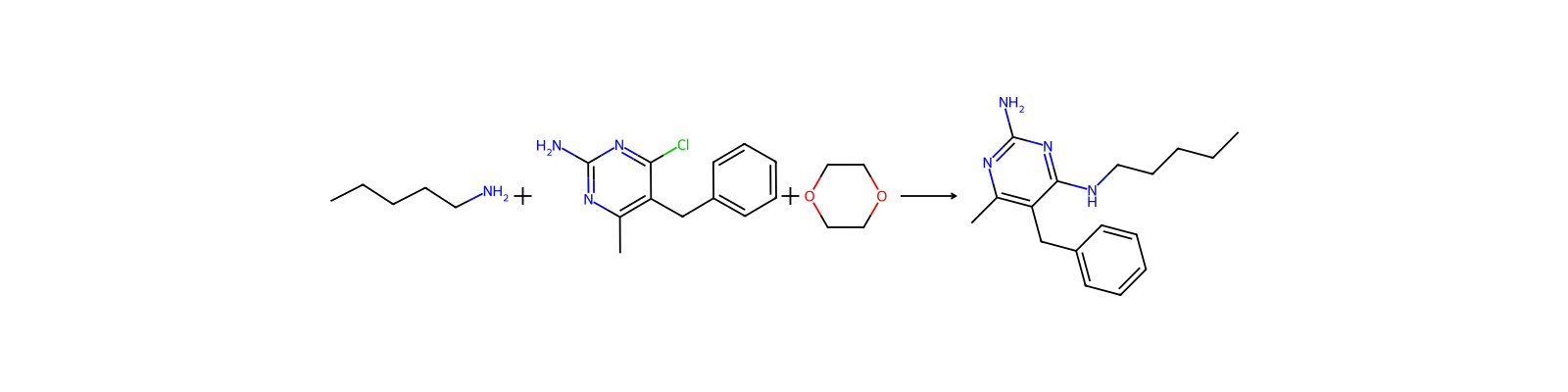
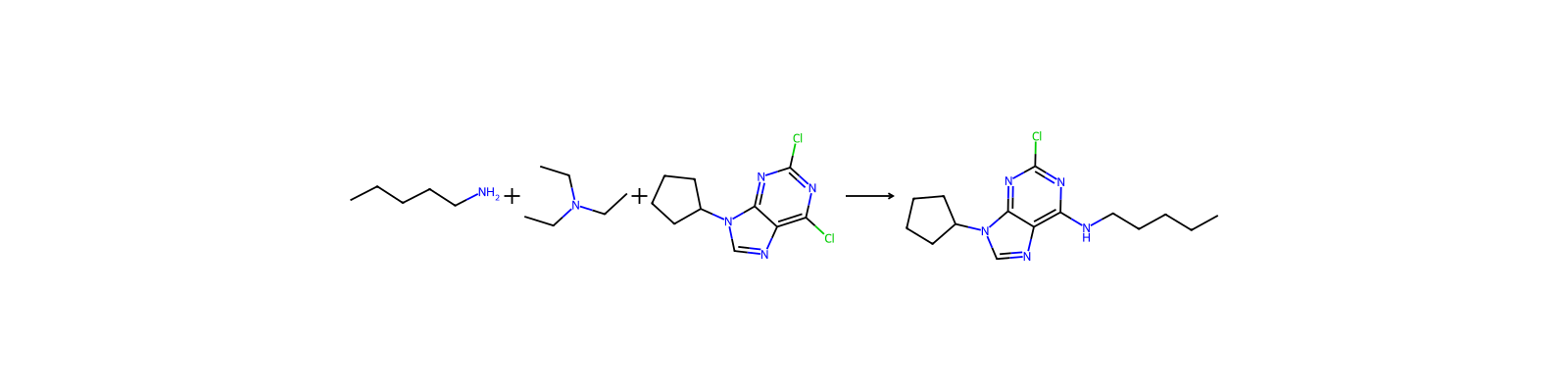
VerwendenAmylamine is a general reagent used in functionalizing the target molecules with pentyl chain. It has also been used as a cosurfactant to increase the phase stability of the bilayer systems.
Vor- und nachgelagerte Produkte
Vorgelagerte Rohstoffe
Nachgelagerte Produkte
Zugehörige Reaktionen
235




Notizen zur Verbindung
Wird geladen…