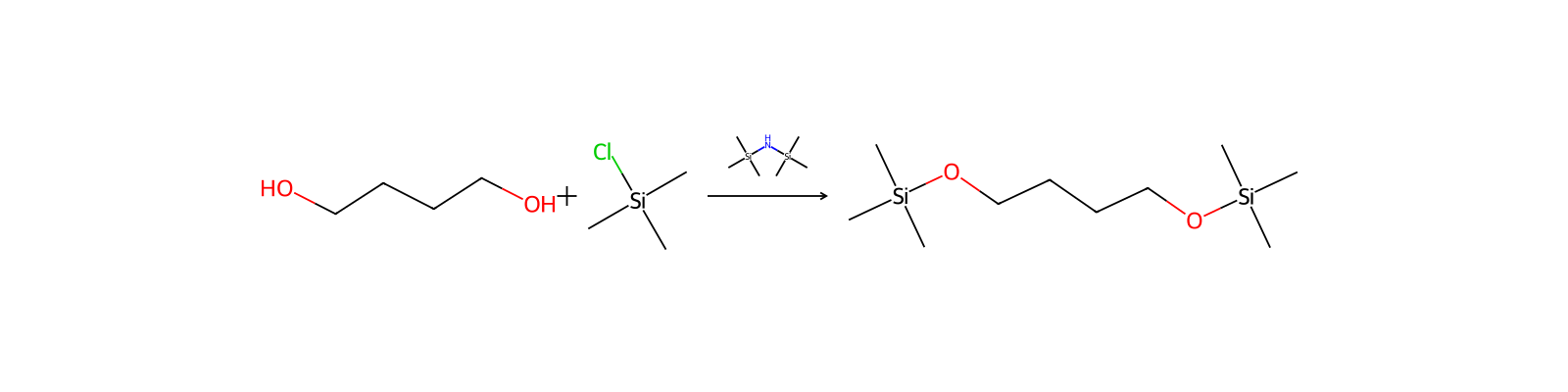
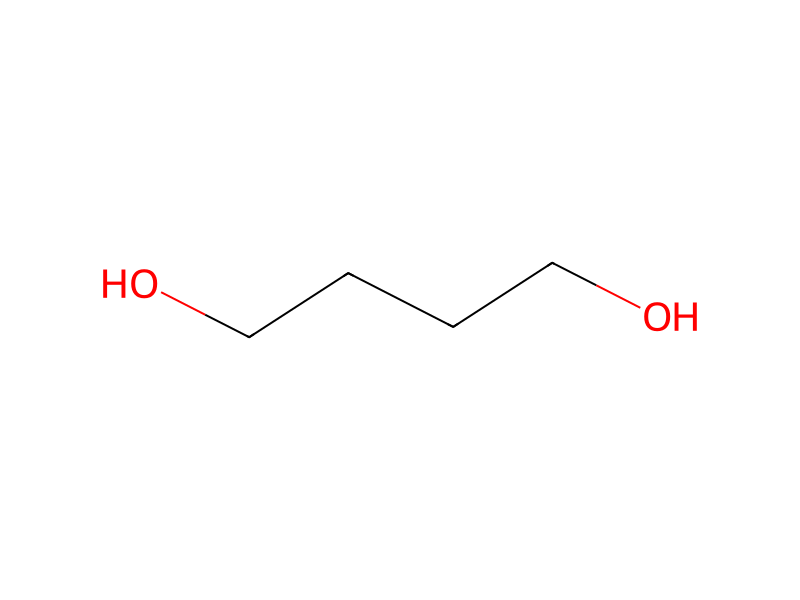
Grundinformationen
- Standard-SMILES
OCCCCO- InChIKey
WERYXYBDKMZEQL-UHFFFAOYSA-N- Summenformel
- C4H10O2
- Durchschnittliche Molmasse
- 90,12 g/mol
- Monoisotopische Masse
- 90,06807956
Namen und Bezeichner
- Bevorzugter Name
- 1,4-Butanediol
- IUPAC
- butane-1,4-diol
- Lokaler Name
- Butan-1,4-diol
- Englischer Name
- 1,4-Butanediol
- Summenformel
- C4H10O2
- Molmasse
- 90.12
Namen und Synonyme
1,4-BUTANEDIOLButane-1,4-diol110-63-4Tetramethylene glycol1,4-Butylene glycol1,4-Dihydroxybutane1,4-Tetramethylene glycolSucol BTetramethylene 1,4-diolDIOL 14B1,4-BDAgrisynth B1D
Weitere Namen anzeigen
BDOButanediol1,4-Butandiol1,4-Butylenesucolb
DTXSID20246667XOO2LE6G3NSC-406696DTXCID804666CHEBI:41189RefChem:6711203-786-5615-930-8
Datenbank-Bezeichner
- CAS
110-63-4、732189-03-6- PubChem CID
- 8064
- DTXSID
DTXSID2024666- ChEMBL
CHEMBL171623- ChEBI
CHEBI:41189- UNII
- 7XOO2LE6G3
- EC Number
- 203-786-5、615-930-8
- Nikkaji
- J5.097K
Eigenschaften
Berechnete Struktureigenschaften
- XLogP
- -0,8
- Polarare Oberfläche (TPSA)
- 40,5 Ų
- H-Brücken-Donoren
- 2
- H-Brücken-Akzeptoren
- 2
- Frei drehbare Bindungen
- 3
- Schwere Atome
- 6
- Formalladung
- 0
- Komplexität
- 17
Physikochemische Eigenschaften
- Schmelzpunkt
- 16 °C · 16 °C (lit.)
- Siedepunkt
- 230 °C · 230 °C (lit.)
- Dichte
- 1.017 g/mL · 1.017 g/mL at 25 °C (lit.)
- Dampfdichte
- 3.1 · 3.1 (vs air)
- Dampfdruck
- 0.1 hPa · <0.1 hPa (20 °C)
- Brechungsindex
- 20 · n20/D 1.445(lit.)
- Flammpunkt
- 135 °C · 135 °C
- storage temp.
- 30 °C · Store below +30°C.
- Aggregatzustand
- Liquid
- pka
- 14.73 · 14.73±0.10(Predicted)
- Farbe
- Clear colorless
- Geruch (Odor)
- Odorless
- PH
- 7 · 7-8 (500g/l, H2O, 20℃)
- Explosionsgrenze
- 1.95 · 1.95-18.3%(V)
- Wasserlöslichkeit
- Miscible
- Spezifische Wärmekapazität
- 2.22 J/ · Cp(liquid): 2.22 J/(g·K), at 25℃
- BRN
- 1633445 · 1633445
- Henry's Law Constant
- 3.5 · 3.5×104 mol/(m3Pa) at 25℃, Burkholder et al. (2019)
- Dielectric constant
- 30 · 30.0(30℃)
- Stabilität
- Stable. Combustible. Incompatible with strong oxidizing agents, mineral acids, acid chlorides, acid anhydrides.
- Kosmetik-Inhaltsstoffe Funktionen
- SOLVENT
- InChI
- 1S/C4H10O2/c5-3-1-2-4-6/h5-6H,1-4H2
- InChIKey
- WERYXYBDKMZEQL-UHFFFAOYSA-N
- SMILES
- OCCCCO
- LogP
- -0.88 at · -0.88 at 25℃
- Oberflächenspannung
- 45.33 mN/m · 45.33mN/m at 298.15K
- CAS Datenbank
- 110 · 110-63-4(CAS DataBase Reference)
- NIST chemische Informationen
- 1 · 1,4-Butanediol(110-63-4)
- EPA chemische Informationen
- 1 · 1,4-Butanediol (110-63-4)
Sicherheit und Regulatorisches
Sicherheitsdaten
- wgk
- 1
- tsca
- TSCA listed
- hs_code
- 29053980
- RTECS-Nr.
- EK0525000
- risk_code
- 22-67
- Toxizität
- LD50 orally in Rabbit: 1525 mg/kg LD50 dermal Rabbit > 2000 mg/kg
- hazard_code
- Xn
- safety_code
- 36-23-24/25
- Speicherklasse
- 10 - Combustible liquids
- Giftige Stoffe Daten
- 110-63-4(Hazardous Substances Data)
- Hazard Classifications
- Acute Tox. 4 OralSTOT SE 3
- Selbstentzündungstemperatur
- 698 °F
Chemie und Industrie
Anwendungen
VerwendenButanediol and its derivatives is used in a broad spectrum of applications in the chemical industry; amongst others in the manufacturing of technical plastics, polyurethanes, solvents, electronic chemicals and elastic fibres. 1,4-Butanediol is used in the synthesis of epothilones, a new class of cancer drugs. Also used in the stereoselective synthesis of (-)-Brevisamide. 1,4-Butanediol's largest use is within tetrahydrofuran (THF) production, used to make polytetramethylene ether glycol, which goes mainly into spandex fibers, urethane elastomers, and copolyester ethers. It is commonly used as a solvent in the chemical industry to manufacture gamma-butyrolactone and elastic fibers like spandex. It is used as a cross-linking agent for thermoplastic urethanes, polyester plasticizers, paints and coatings. It undergoes dehydration in the presence of phosphoric acid yielded teterahydrofuran, which is an important solvent used for various applications. It acts an intermediate and is used to manufacture polytetramethylene ether glycol (PTMEG), polybutylene terephthalate (PBT) and polyurethane (PU). It finds application as an industrial cleaner and a glue remover. 1,4-butanediol is also used as a plasticiser (e.g. in polyesters and cellulosics), as a carrier solvent in printing ink, a cleaning agent, an adhesive (in leather, plastics, polyester laminates and polyurethane footwear), in agricultural and veterinary chemicals and in coatings (in paints, varnishes and films).
Vor- und nachgelagerte Produkte
Vorgelagerte Rohstoffe
Nachgelagerte Produkte
Anbieter50 Anbieter
国药集团化学试剂有限公司86-21-63210123 · [email protected]
梯希爱(上海)化成工业发展有限公司021-67121386 · [email protected]
衢州润东化工有限公司0570-8789886 18892685668 · [email protected]
上海阿拉丁生化科技股份有限公司400-6206333 13167063860 · [email protected]
广州纳珑化工有限公司13192879270; 13192879270 · [email protected]
上海炎泽化工有限公司15345144255 19975051755 · [email protected]
T&W GROUP021-61551611 13296011611 · [email protected]
爱斯特(成都)生物制药股份有限公司+86-28-85122536 85324413 · [email protected]
科瑞迪化学400-821-5857 021-64326257 · [email protected]
上海迈瑞尔生化科技有限公司4006356688 18621169109 · [email protected]
天津中信凯泰化工有限公司022-66880623 · [email protected]
阿法埃莎(中国)化学有限公司400-6106006 · [email protected]
安耐吉化学&3A(安徽泽升科技股份有限公司)400-0056266 · [email protected]
广东云星生物技术有限公司0751-18902340975/189023400307 18902340307 · [email protected]
北京绿百草科技发展有限公司010-61136123 · [email protected]
上海瀚鸿科技股份有限公司021-54306202 13764082696 · [email protected]
成都普思生物科技股份有限公司028-85370565-229 18080489829 · [email protected]
南通合润生物科技有限公司18362409333 · [email protected]
上海景颜化工科技有限公司13817811078 · [email protected]
合肥天健化工有限公司551-65418679 15856988503;15837135945 · [email protected]
南京蓝白化工有限公司025-85499326 15366059326;13813836665 · [email protected]
山东曜明化工有限公司15550028560 · [email protected]
山东西亚化学有限公司13355009207 13355009207 · [email protected]
玛雅试剂+86 (573) 82222445 (0)18006601000 452520369 · [email protected]
四川库利南科技有限公司400-1166-196 18981987031 · [email protected]
天津希恩思生化科技有限公司400 638 7771 · [email protected]
Connect Chemicals GmbH+49 2102 2077 19 · [email protected]
北京泰亚杰科技有限公司021-33690831-8001 13552411790;18616022633 · [email protected]
武汉海正工贸发展有限公司027-8866 0053/88660577/88660578
艾科试剂4008-755-333 18080918076 · [email protected]
上海思域化工科技有限公司86-21-34053660 · [email protected]
赛默飞世尔科技(中国)有限公司800-810-5118 · [email protected]
北京伊诺凯科技有限公司400-810-7969 010-59572699 · [email protected]
江苏艾康生物医药研发有限公司025-66113011 13913916777 · [email protected]
上海健超生物科技有限公司150-2103-5486 18017383231 · [email protected]
TOKYO CHEMICAL INDUSTRY CO., LTD.03-36680489 · [email protected]
TCI Europe320-37350700 · [email protected]
深圳振强药物研发有限公司0755-66853366 13670046396 · [email protected]
南京杜莱生物技术有限公司025-84699383-8003;025-846993838003-8003 18013301590 · [email protected]
上海倍卓生物科技有限公司021-61119791,13386096464 · [email protected]
上海将来实业股份有限公司400-0066400 13621662912 · [email protected]
上海将来实业股份有限公司021-61552785 · [email protected]
安徽科迪达化工有限公司0554-2106669 · [email protected]
HBCChem, Inc.+1-510-219-6317 · [email protected]
日照力德士化工有限公司010-51268198 · [email protected]
上海爱蝶实业有限公司021-58957966 18930537195 · [email protected]
成都零六生物科技有限公司400-1166-196 13458535857 · [email protected]
湖北瑞今化学有限公司027 83642615 13995607107 · [email protected]
广拓化学(上海)有限公司021-60899189-8001 18918189673 · [email protected]
上海麦克林生化科技股份有限公司15221275939 15221275939 · [email protected]
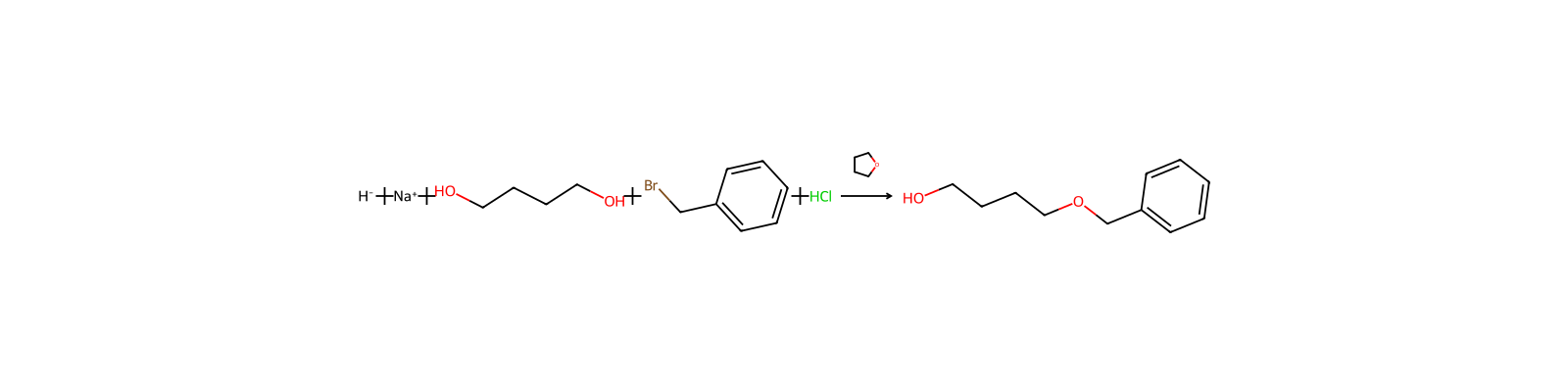
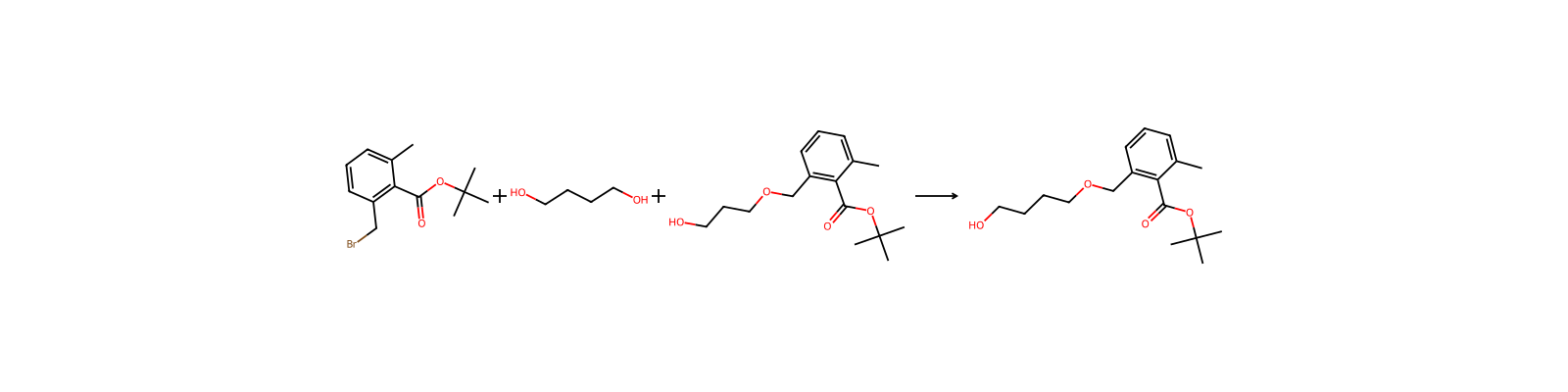
Zugehörige Reaktionen
334

Verknüpfte Notizen
Wird geladen…