1,8-Diazabicyclo(5.4.0)undec-7-en
1,8-Diazabicyclo(5.4.0)undec-7-ene

Grundinformationen
- CAS
6674-22-2- Standard-SMILES
C1CCC2=NCCCN2CC1- InChIKey
GQHTUMJGOHRCHB-UHFFFAOYSA-N- Summenformel
- C9H16N2
- Durchschnittliche Molmasse
- 152,24 g/mol
- Monoisotopische Masse
- 152,13134852
Namen und Bezeichner
- Bevorzugter Name
- 1,8-Diazabicyclo(5.4.0)undec-7-ene
- IUPAC
- 2,3,4,6,7,8,9,10-octahydropyrimido[1,2-a]azepine
- Lokaler Name
- 1,8-Diazabicyclo(5.4.0)undec-7-en
- Englischer Name
- DBU
- Summenformel
- C9H16N2
- Molmasse
- 152.24
Namen und Synonyme
6674-22-21,8-Diazabicyclo[5.4.0]undec-7-ene1,8-Diazabicyclo(5.4.0)undec-7-enePyrimido[1,2-a]azepine, 2,3,4,6,7,8,9,10-octahydro-AMICURE DBUEDABCO DBUDTXSID2049424H1ILJ6IBUXALCANPOUDRE DBU 70-3KGNSC-111184DTXCID1029384NSC-230466
Weitere Namen anzeigen
DBU2,3,4,6,7,8,9,10-OCTAHYDROPYRIMIDO[1,2-A]AZEPINEDiazabicycloundecene1,5-DIAZABICYCLO(5,4,0)UNDEC-5-ENE1,8-DIAZABICYCLO[5,4,0]-7-UNDECENE1,8-Diazabicyclo[5.4.0]undecane-7-ene1,8-DiazabicycL1,8-DIAZABICYCLO[5.4.0]UNDEC-7-ENE (DBU)
1,8-DIAZA-7-BICYCLO(5.4.0)UNDECENEPyrimido(1,2-a)azepine, 2,3,4,6,7,8,9,10-octahydro-1,8-diazabicyclo(5.4.0]undec-7-ene1,8-Diazabicyclo[5.4.0}undec-7-ene1,8-diazabicyclo{5.4.0]undec-7-eneRefChem:737341,8-DBU229-713-7
Datenbank-Bezeichner
- CAS
6674-22-2- PubChem CID
- 81184
- DTXSID
DTXSID2049424- ChEMBL
CHEMBL1489129- UNII
- H1ILJ6IBUX
- EC Number
- 229-713-7
- Nikkaji
- J39.656G
Eigenschaften
Berechnete Struktureigenschaften
- XLogP
- 1,4
- Polarare Oberfläche (TPSA)
- 15,6 Ų
- H-Brücken-Donoren
- 0
- H-Brücken-Akzeptoren
- 1
- Frei drehbare Bindungen
- 0
- Schwere Atome
- 11
- Formalladung
- 0
- Komplexität
- 163
Experimentelle und physikochemische Eigenschaften
Chemical ClassesNitrogen Compounds -> Other Nitrogen Compounds
LogP1.38
Density1.018 @25 °C
Vapor Pressure
0.05 [mmHg]
5.3 [mm Hg] @37.700000000000003 °C
Physical Description
Liquid; Dry Powder
Light yellow liquid with unpleasant odor; [MSDSonline]
Ionization Efficiency
Positive
4.24
2.7
Agilent XCT
Electrospray ionization
formic acid (5.3nM)
Physikochemische Eigenschaften
- Schmelzpunkt
- -70 °C · -70 °C
- Siedepunkt
- 80 · 80-83 °C0.6 mm Hg(lit.)
- Dichte
- 1.019 g/mL · 1.019 g/mL at 20 °C(lit.)
- Dampfdruck
Sicherheit und Regulatorisches
Sicherheitsangaben dienen nur zur Orientierung und ersetzen weder das Sicherheitsdatenblatt (SDB) des Lieferanten noch geltende Vorschriften oder eine fachliche Bewertung.
GHS-Klassifizierung
GHS Classification
This chemical does not meet GHS hazard criteria for 6.2% (48 of 776) of reports.
Danger
H290 (18.3%): May be corrosive to metals [Warning Corrosive to Metals]
P234, P260, P264, P264+P265, P270, P273, P280, P301+P316, P301+P317, P301+P330+P331, P302+P352, P302+P361+P354, P304+P340, P305+P354+P338, P316, P317, P321, P330, P362+P364, P363, P390, P405, P406, and P501 (click each P-code to see the statement)
Aggregated GHS information provided per 776 reports by companies from 26 notifications to the ECHA C&L Inventory. Each notification may be associated with multiple companies.
Gefahrenhinweise
Regulatory Information
Chemical: Pyrimido[1,2-a]azepine, 2,3,4,6,7,8,9,10-octahydro-
Pyrimido[1,2-a]azepine, 2,3,4,6,7,8,9,10-octahydro- is listed on the EPA's Chemical Data Reporting (CDR) system. Manufacturers and importers of Pyrimido[1,2-a]azepine, 2,3,4,6,7,8,9,10-octahydro- are required to report information about their production and use of this chemical to the EPA under the Toxic Substances Control Act (TSCA). (40 eCFR Part 711)
REACH registered substance: 1,8-diazabicyclo[5.4.0]undec-7-ene (EC: 229-713-7)
1,8-Diazabicyclo[5.4.0]undec-7-ene: Does not have an individual approval but may be used under an appropriate group standard
Hazards SummaryHarmful after ingestion; Corrosive to skin; Can cause chemical pneumonitis; [MSDSonline]
Hazard Classes and CategoriesMet. Corr. 1 (18.3%)
Sicherheit und Schutzausrüstung
Protective Action Criteria (PAC)
Chemie und Industrie
Verwendung und Herstellung
UsesUsed as a catalyst in the production of polyurethanes; [Ullmann]
U.S. Production2023: 400,000 - <550,000 lb
Consumer UsesNot Known or Reasonably Ascertainable
Industry UsesOther
General Manufacturing Information
Plastics Material and Resin Manufacturing
Pyrimido[1,2-a]azepine, 2,3,4,6,7,8,9,10-octahydro-: ACTIVE
Anwendungen
BeschreibungDBU is a bicyclic amidine base. It is non-nucleophilic, sterically hindered, tertiary amine base in organic chemistry. It is reported to be superior to amine catalyst in Baylis-Hillman reaction.It promotes the methylation reaction of phenols, indoles and benzimidazoles with dimethyl carbonate under mild conditions.
OccurrenceAlthough all commercially available DBU is produced synthetically, it may also be isolated from the sea sponge Niphates digitalis.The biosynthesis of DBU has been proposed to begin with 1,6-hexanedial and 1,3-diaminopropane.
VerwendenDBU may be used:as catalyst for carboxylic acid esterification with dimethyl carbonatein the synthesis of duocarmycin and CC-1065 analogsas catalyst in aza-Michael addition and Knovenegal condensation reactionas base for dehalogenation of halogenated Diels-Alder adducts and the resulting activated 2,4-dienones were subjected to regio- and stereo-directed Michael additions, using Yamamoto′s reagent (CH3Cu · BF3)in a new synthesis of the ABCD ring system of CamptothecinDBU may be used as an catalyst for the dissolution and activation of cellulose by a reversible reaction of its hydroxyl groups with carbon dioxide. This dissolved cellulose system can be derivatized to form cellulose mixed esters.Used in a new synthesis of the ABCD ring system of Camptothecin.
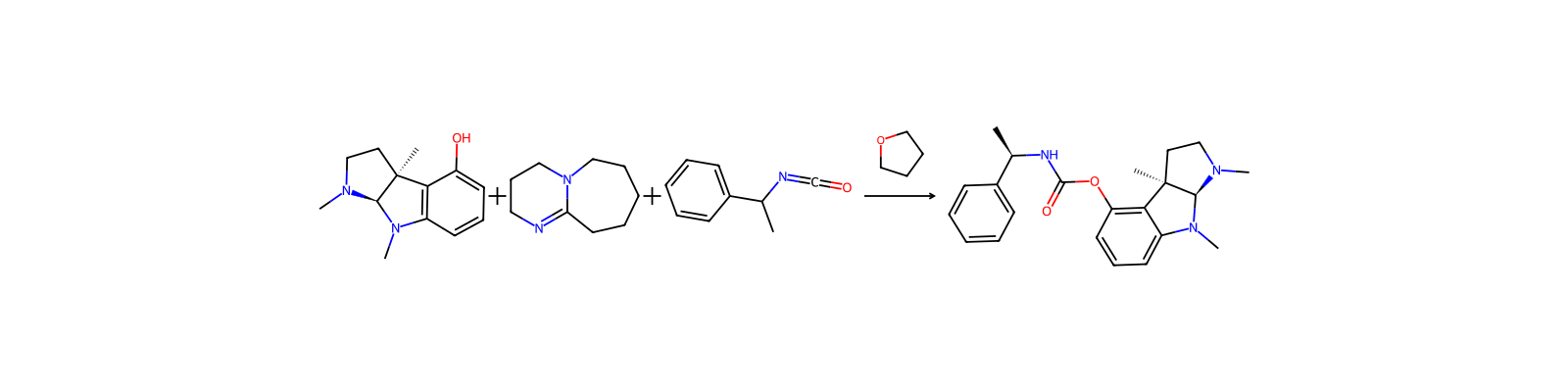
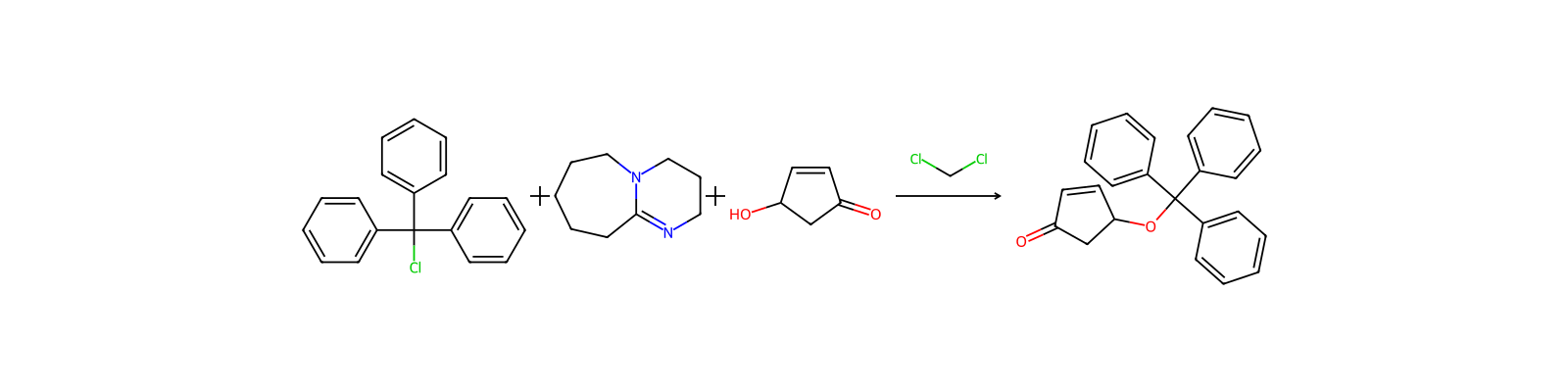
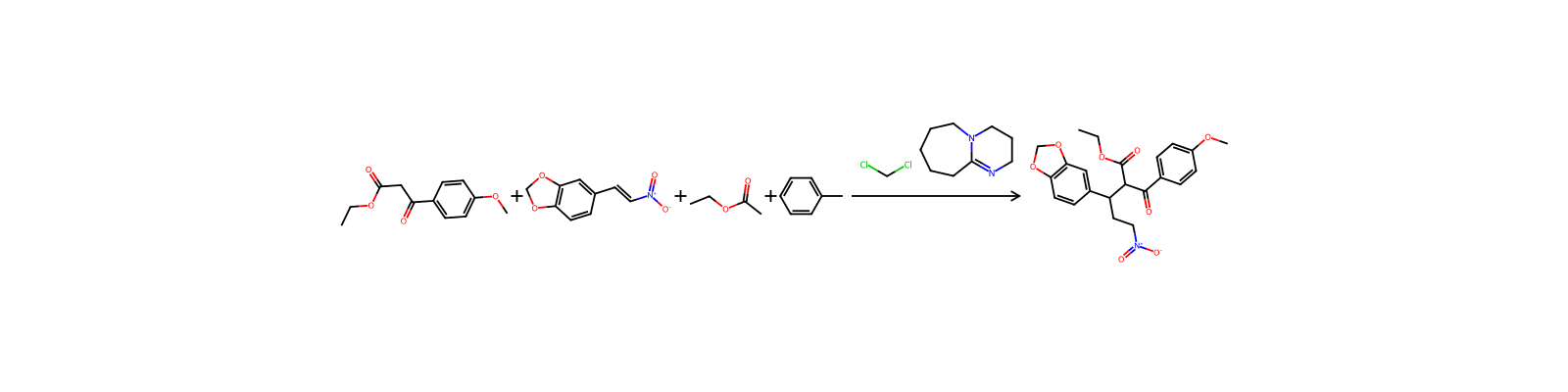
Zugehörige Reaktionen
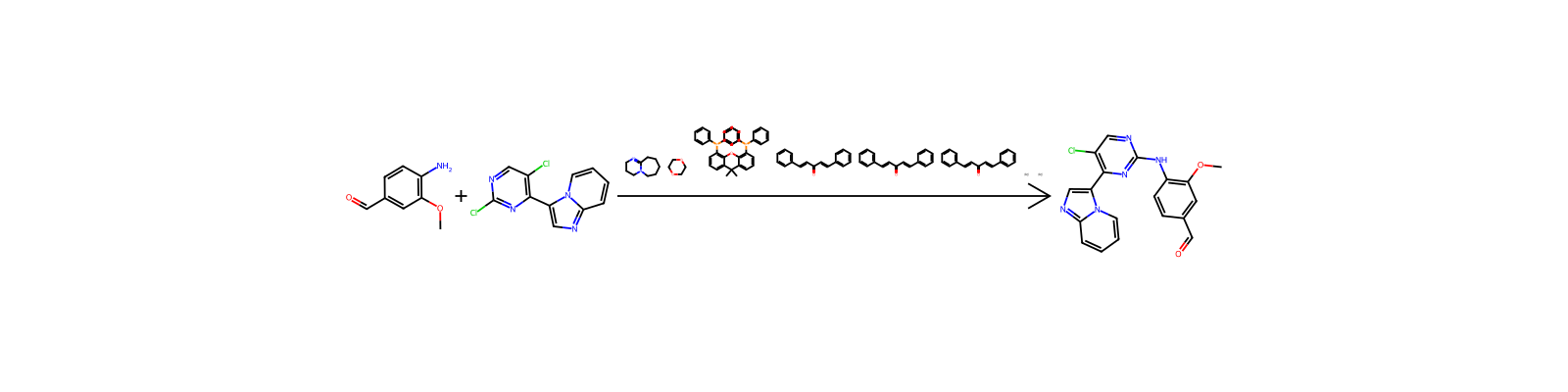
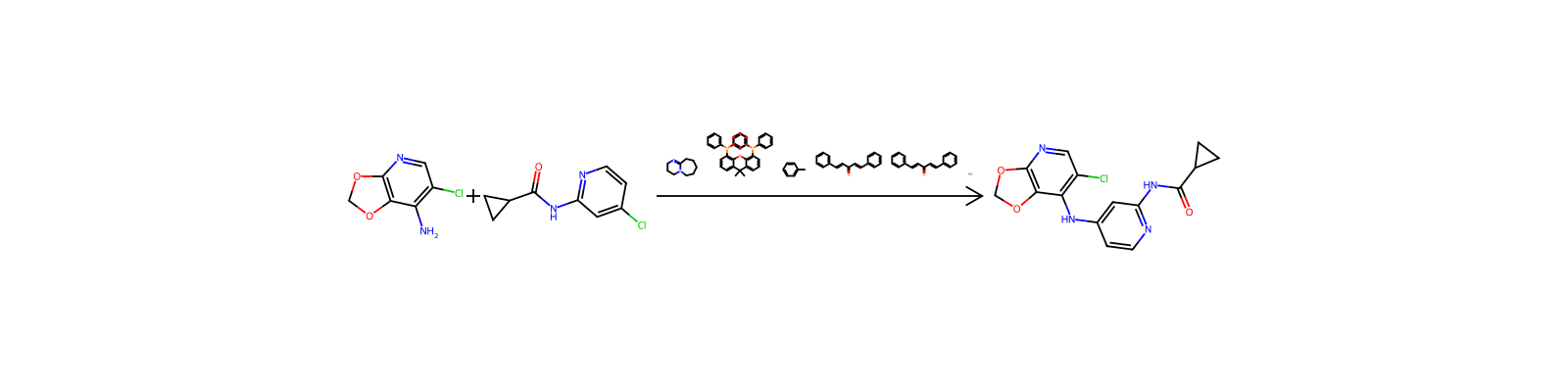
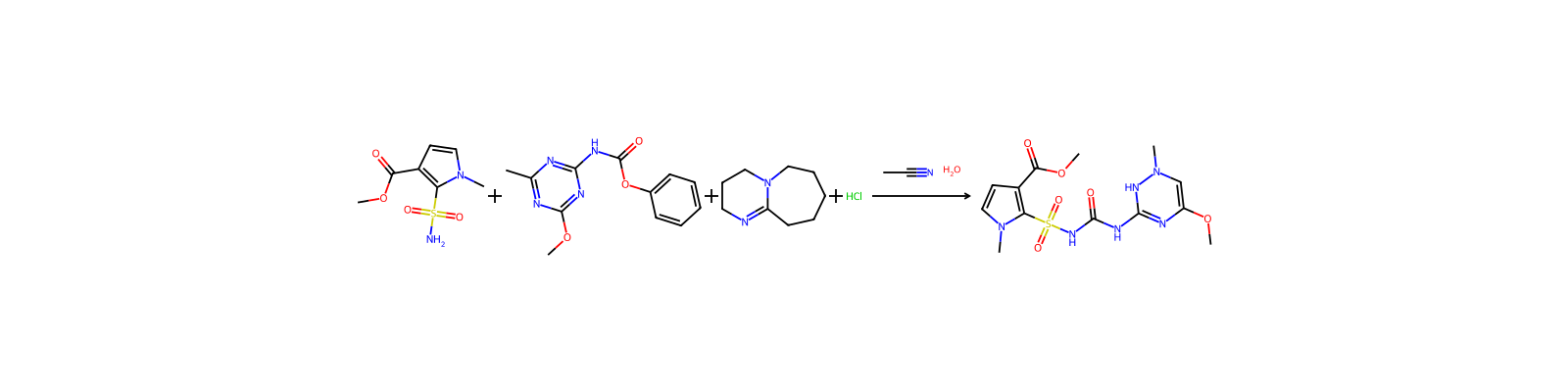
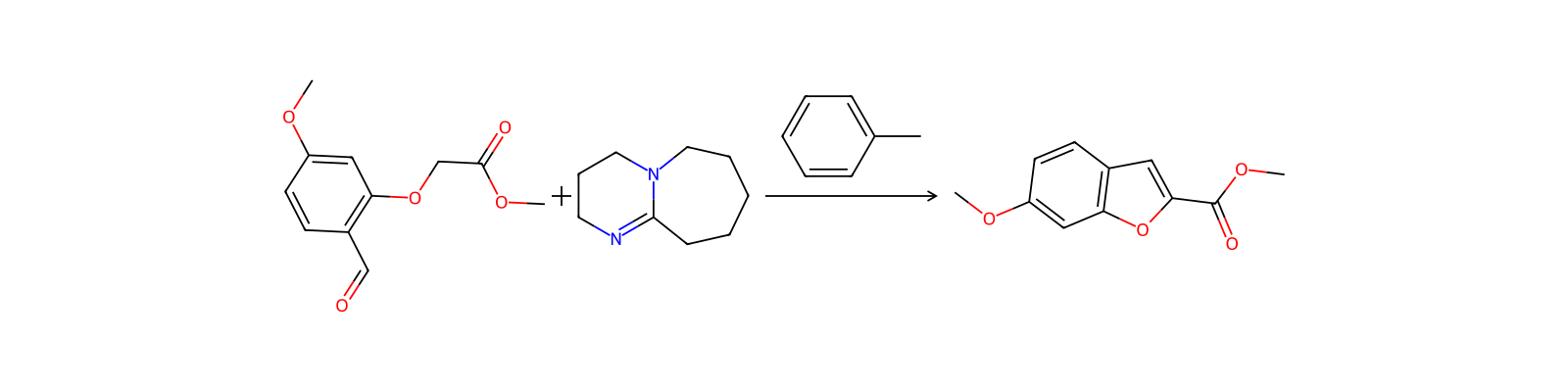
10.318

Notizen zur Verbindung
Wird geladen…