StartseiteMCPWorkbenchSkills
StartseiteWorkbenchBenachrichtigungenMein Bereich
llms.txt · MCP-AnleitungDatenschutz · Nutzungsbedingungen · Supportv1.8.0
  1. Startseite
  2. /Verbindung

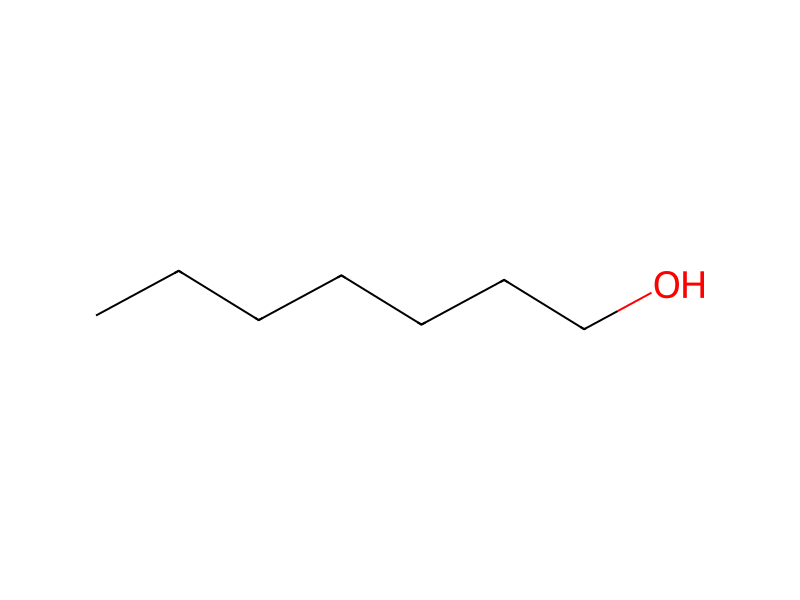
Heptan-1-ol

Heptanol

HCID 8129
Neue NotizNeue ReaktionAnfrage stellen
Druckvorschau

Daten werden ergänzt – lade die Seite später neu, um den aktuellen Stand zu sehen
GrundinformationenÜberblickNamen und BezeichnerEigenschaftenSicherheit und RegulatorischesChemie und IndustrieZugehörige ReaktionenNotizen zur Verbindung
TeilstruktursucheÄhnliche Strukturen suchen

Grundinformationen

CAS
111-70-6
Standard-SMILES
CCCCCCCO
InChIKey
BBMCTIGTTCKYKF-UHFFFAOYSA-N
Summenformel
C7H16O
Durchschnittliche Molmasse
116,2 g/mol
Monoisotopische Masse
116,12011513

Überblick

Watery colorless liquid with a weak alcohol odor. Floats on water. (USCG, 1999)

Namen und Bezeichner

Bevorzugter Name
Heptanol
IUPAC
heptan-1-ol
Lokaler Name
Heptan-1-ol
Englischer Name
1-Heptanol
Summenformel
C7H16O
Molmasse
116.2

Namen und Synonyme

1-HEPTANOLHeptan-1-olHeptyl alcoholHeptanoln-HeptanolEnanthic alcoholHydroxy heptaneHexyl carbinolC7 alcoholHydroxyheptanePri-n-heptyl alcoholHeptyl alcohol, primary
Weitere Namen anzeigen
EnantholFEMA 2548ALCOHOL C71-HeptanoIn-Heptan-1-ol1-Heptanol 98%
1-heptyl alcoholFEMA Number 2548Heptyl alcohol (natural)DTXSID8021937HSDB 1077heptanol-1HEPTYL ALCOHOL, N-EINECS 203-897-9

Datenbank-Bezeichner

CAS
111-70-6、53535-33-4
PubChem CID
8129
DTXSID
DTXSID8021937
ChEMBL
CHEMBL273459
ChEBI
CHEBI:43003
UNII
8JQ5607IO5
EC Number
203-897-9、258-615-7
Nikkaji
J2.457K

Eigenschaften

Berechnete StruktureigenschaftenWird ergänzt

XLogP
2,7
Polarare Oberfläche (TPSA)
20,2 Ų
H-Brücken-Donoren
1
H-Brücken-Akzeptoren
1
Frei drehbare Bindungen
5
Schwere Atome
8
Formalladung
0
Komplexität
35,4

Experimentelle und physikochemische Eigenschaften

LipidsFatty Acyls [FA] -> Fatty alcohols [FA05]
SolventsSolvents -> Alcohols (<C12)
SpringerMaterials PropertiesBoiling point
FragrancesFragrance Ingredient (Heptyl alcohol) -> IFRA transparency List
LogP · 4 Einträge

Log Kow = 2.62

2.62

2.62

2.57

Odor · 2 Einträge

Fragrant

FAINT, AROMATIC, FATTY

TastePUNGENT, SPICY TASTE
Food AdditivesFLAVORING AGENT OR ADJUVANT -> FDA Substance added to food
Density · 6 Einträge

0.822 at 68 °F (USCG, 1999) - Less dense than water; will float

0.8219 at 20 °C/4 °C

0.82 g/cm³

Relative density of the vapour/air-mixture at 20 °C (air = 1): 1.01

Sicherheit und Regulatorisches

Sicherheitsangaben dienen nur zur Orientierung und ersetzen weder das Sicherheitsdatenblatt (SDB) des Lieferanten noch geltende Vorschriften oder eine fachliche Bewertung.

GHS-Klassifizierung

GHS Classification · 6 Einträge

Warning

H319 (94.5%): Causes serious eye irritation [Warning Serious eye damage/eye irritation]

P264+P265, P280, P305+P351+P338, and P337+P317 (click each P-code to see the statement)

Aggregated GHS information provided per 1619 reports by companies from 10 notifications to the ECHA C&L Inventory.

Warning

H227: Combustible liquid [Warning Flammable liquids]

Gefahrenhinweise

Regulatory Information · 5 Einträge

Chemical: 1-Heptanol

1-Heptanol is listed on the EPA's Chemical Data Reporting (CDR) system. Manufacturers and importers of 1-Heptanol are required to report information about their production and use of this chemical to the EPA under the Toxic Substances Control Act (TSCA). (40 eCFR Part 711)

REACH registered substance: Heptan-1-ol (EC: 203-897-9)

1-Heptanol: Does not have an individual approval but may be used under an appropriate group standard

Heptanol: Does not have an individual approval but may be used as a component in a product covered by a group standard. It is not approved for use as a chemical in its own right.

Other Safety InformationIMAP assessments - Primary aliphatic alcohols (C7, C8): Human health tier II assessment
DOT LabelPoison
Fire Hazards · 2 Einträge

Excerpt from ERG Guide 153 [Substances - Toxic and/or Corrosive (Combustible)]:

Combustible. Above 70 °C explosive vapour/air mixtures may be formed.

Fire PotentialFire hazard moderate when exposed to heat of flame; can react with oxidizing materials.

Chemie und Industrie

Pharmakologische Informationen

Mechanism of Action · 4 Einträge

... The epicardial surface of 12 isolated-perfused canine left atria was optically mapped before and after 1-50 microM heptanol infusion. At baseline, no sustained (>30 s) AF could be induced in any of the 12 tissues. However, after 2 microM heptanol infusion, sustained AF was induced in 9 of 12 tissues (P < 0.001). Heptanol >5 microM caused loss of 1:1 capture during rapid pacing, causing no AF to be induced. ... Heptanol at 2 microM had no effect on the cellular action potential duration restitution or on the maximal velocity rate over time of the upstroke. The effects of heptanol were reversible.

... The experiments investigated the effects of heptanol on isolated Langendorff-perfused rabbit hearts. Heptanol inhibited both pressure generation and electrical conduction. These effects were completely reversible ... Low concentrations of heptanol (less than 0.3 mM) caused small but significant increases in the delay between the stimulus (delivered to the basal septum) artifact and local activation of the left ventricle, as measured from bipolar electrogram (BEG) recordings. There was a steep increase in the latency between stimulus and left-ventricular activation at concentrations of heptanol above 0.3 mM ... Heptanol decreased repolarization duration, measured from the activation recovery interval (ARI) of BEGs, and monophasic action potential duration at 70% repolarization (MAPD70). Heptanol also reduced left-ventricular developed pressure (LVDP), and the maximum rates of contraction and relaxation of the left ventricle; these effects were concentration dependent and reversible. Changes in ARIs, LVDP and the maximum rates of change of pressure lacked the steep response to 0.3 to 1.0 mM heptanol shown by the latency ... During premature stimulation protocols arrhythmias could be induced in hearts perfused with 0.1 to 0.3 mM heptanol but not at higher concentrations.

... Incubation of n-heptane with microsomal extracts resulted in formation of four isomeric n-heptanols. The relationship of the hydroxylating process to protein concentration and to the formation of the three main alcoholic products, namely 1-heptanol (111706), 2-heptanol (543497), and 3-heptanol (589822), were linear up to 1mg/4 minutes. Treatment of rats with phenobarbitol (50066) for 2 days enhanced hydroxylation and formation of 2-heptanol, 3-heptanol and 4-heptanol about 4 fold, but 1-heptanol was increased only 60 percent. In contrast, 3,4-benzpyrene depressed the formation of 1-heptanol to about 70 percent and increased the formation of 3-heptanol and 4-heptanol slightly. Carbon-monoxide inhibited formation of 1-heptanol. Similar results were obtained with metyrapone.

Zugehörige Reaktionen

87
Reaktionsaufzeichnung erstellen
Reaktionsgleichung von HRID 18036
HRID 18036als Lösungsmitteluspto-grants-2010_06
Reaktionsgleichung von HRID 41746
HRID 41746als Eduktuspto-grants-2013_09
Reaktionsgleichung von HRID 62569
HRID 62569als Lösungsmitteluspto-grants-2016_09
Reaktionsgleichung von HRID 84205
HRID 84205als Eduktuspto-grants-2014_09
Reaktionsgleichung von HRID 143007
HRID 143007als EduktTraining data from https://doi.org/10.1039/C8SC04228D (9/10)
Reaktionsgleichung von HRID 143054
HRID 143054als EduktTraining data from https://doi.org/10.1039/C8SC04228D (9/10)
Reaktionsgleichung von HRID 167363
HRID 167363als EduktTraining data from https://doi.org/10.1039/C8SC04228D (9/10)
Reaktionsgleichung von HRID 168755
HRID 168755als EduktTraining data from https://doi.org/10.1039/C8SC04228D (9/10)
Seite 1 von 11

Notizen zur Verbindung

Wird geladen…

Auf dieser SeiteGrundinformationenÜberblickNamen und BezeichnerEigenschaftenSicherheit und RegulatorischesChemie und IndustrieZugehörige ReaktionenNotizen zur Verbindung
Weitere Aktionen
Neue NotizNeue ReaktionAnfrage stellen

0.820-1.824

0.824 @ 20°C

Flavoring AgentsEU Flavoring substances
Viscosity7.4 centapoise at 20 °C
Color/FormColorless liquid

Physikochemische Eigenschaften

Schmelzpunkt
-36 °C · -36 °C (lit.)
Siedepunkt
176 °C · 176 °C (lit.)
Dichte
0.822 g/mL · 0.822 g/mL at 25 °C (lit.)
Dampfdruck
0.5 mm · 0.5 mm Hg ( 20 °C)
Brechungsindex
20 · n20/D 1.424(lit.)
FEMA
2548 · 2548 | HEPTYL ALCOHOL
Flammpunkt
165 °F · 165 °F
storage temp.
30 °C · Store below +30°C.
Löslichkeit
1 g/l · 1g/l
Aggregatzustand
Liquid
pka
15.38 · 15.38±0.10(Predicted)
Farbe
Clear
Geruch (Odor)
Weak alcoholic.
Odor Threshold
0.0048 ppm · 0.0048ppm
Geruchsart
green
Biologische Quelle
synthetic
Explosionsgrenze
0.9 % · 0.9%(V)
Wasserlöslichkeit
2.85 g/L · 2.85 g/L (100 ºC)
Spezifische Wärmekapazität
2.34 J/ · Cp(liquid): 2.34 J/(g·K), at 25℃
JECFA Number
94 · 94
Merck
14 · 14,4661
BRN
1731686 · 1731686
Henry's Law Constant
5.3 · 5.3×10-1 mol/(m3Pa) at 25℃, Brockbank (2013)
Dielectric constant
6.7 · 6.7(21℃)
Stabilität
Stable. Flammable. Incompatible with strong acids, strong oxidizing agents.
Major Application
cleaning productscosmeticsenvironmentalflavors and fragrancesfood and beveragespersonal care
Kosmetik-Inhaltsstoffe Funktionen
PERFUMING
InChI
1S/C7H16O/c1-2-3-4-5-6-7-8/h8H,2-7H2,1H3
InChIKey
BBMCTIGTTCKYKF-UHFFFAOYSA-N
SMILES
CCCCCCCO
LogP
2.2 at · 2.2 at 20℃
Oberflächenspannung
26.47 mN/m · 26.47mN/m at 298.15K
CAS Datenbank
111 · 111-70-6(CAS DataBase Reference)
NIST chemische Informationen
1 · 1-Heptanol(111-70-6)
EPA chemische Informationen
1 · 1-Heptanol (111-70-6)
Health Hazards
Low toxicity; liquid may irritate eyes. (USCG, 1999)
Hazards Summary · 1 Eintrag

A skin, eye, and respiratory tract irritant; Inhalation of high concentrations may cause CNS effects; [HSDB] Inhalation of high concentrations can cause CNS depression; [CHEMINFO] Defats the skin; May cause effects on the central nervous system; [ICSC] An irritant; May be absorbed through skin; [MSDSonline]

FDA Requirements · 1 Eintrag

Heptyl alcohol is a food additive permitted for direct addition to food for human consumption as a synthetic flavoring substance and adjuvant in accordance with the following conditions: a) they are used in the minimum quantity required to produce their intended effect, and otherwise in accordance with all the principles of good manufacturing practice, and 2) they consist of one or more of the following, used alone or in combination with flavoring substances and adjuvants generally recognized as safe in food, prior-sanctioned for such use, or regulated by an appropriate section in this part.

Reactive GroupAlcohols and Polyols
UN ClassificationUN Hazard Class: 6.1; UN Pack Group: III
Special Reports · 1 Eintrag

OPDYKE DL J; MONOGRAPHS ON FRAGRANCE RAW MATERIALS. ALCOHOL C-7; FOOD COSMET TOXICOL 13 (SUPPL): 697 (1975). NATURAL OCCURRENCE & PREPN, COSMETIC & PERFUME USE, LEGAL STATUS FOR USE IN FOOD, & METABOLISM & TOXICOLOGY OF ALCOHOL C-7 ARE REVIEWED WITH 16 REFERENCES.

Reactivity Profile · 1 Eintrag

HEPTANOL is an alcohol. Flammable and/or toxic gases are generated by the combination of alcohols with alkali metals, nitrides, and strong reducing agents. They react with oxoacids and carboxylic acids to form esters plus water. Oxidizing agents convert them to aldehydes or ketones. Alcohols exhibit both weak acid and weak base behavior. They may initiate the polymerization of isocyanates and epoxides.

Sicherheit und Schutzausrüstung

Fire Fighting · 2 Einträge

Fire Extinguishing Agents: Foam, carbon dioxide, or dry chemical (USCG, 1999)

Use alcohol-resistant foam. Use dry powder. Use carbon dioxide.

First Aid Measures · 4 Einträge

Fresh air, rest.

Remove contaminated clothes. Rinse and then wash skin with water and soap.

First rinse with plenty of water for several minutes (remove contact lenses if easily possible), then refer for medical attention.

Rinse mouth. Give one or two glasses of water to drink. Do NOT induce vomiting. Refer for medical attention .

First AidFlush all affected parts with plenty of water. (USCG, 1999)
Safe StorageSeparated from strong acids, oxidants and food and feedstuffs.
Fire Fighting Procedures/To fight fire use/ alcohol foam, carbon dioxide, dry chemical.
Storage ConditionsSeparated from strong acids, oxidants, food and feedstuffs.
Cleanup Methods · 2 Einträge

AEROBIC: 1-Heptanol degrades fast in aerobic biodegradation screening tests(1-5). In a 5-day BOD test using acclimated mixed cultures, 56.3% of theoretical BOD was consumed(1). Other tests show 30% of theoretical BOD was expended in 5 days(2) and 28.9% of theoretical BOD was expended in 1 day using 500 ppm of 1-heptanol and an activated sludge inoculum(3). An aerobic biodegradation rate constant of 0.124 1/hr(4), which corresponds to a half-life of 0.23 days(SRC), was determined in an aerobic screening test at pH 7 and 25 °C using an activated sludge inocula. In a similar screening test, the rate constant was measured to be 2.53X10⁻² 1/hr(5), which corresponds to a biodegradation half-life of 1.14 days(SRC).

Do NOT let this chemical enter the environment. Cover the spilled material with absorbent. Collect leaking liquid in sealable containers.

Nonfire Spill ResponseExcerpt from ERG Guide 153 [Substances - Toxic and/or Corrosive (Combustible)]:
Disposal Methods · 1 Eintrag

SRP: The most favorable course of action is to use an alternative chemical product with less inherent propensity for occupational exposure or environmental contamination. Recycle any unused portion of the material for its approved use or return it to the manufacturer or supplier. Ultimate disposal of the chemical must consider: the material's impact on air quality; potential migration in soil or water; effects on animal, aquatic, and plant life; and conformance with environmental and public health regulations.

Spillage Disposal · 1 Eintrag

Personal protection: filter respirator for organic gases and vapours adapted to the airborne concentration of the substance. Do NOT let this chemical enter the environment. Cover the spilled material with inert absorbent. Collect leaking and spilled liquid in sealable containers as far as possible.

Isolation and EvacuationExcerpt from ERG Guide 153 [Substances - Toxic and/or Corrosive (Combustible)]:
Eye PreventionWear safety goggles.

Toxikologische Informationen

Body Burden · 1 Eintrag

Of the expired air from an urban population of 54 normal, healthy, nonsmoking subjects (387 samples), 39.5% were positive for 1-heptanol, containing a geometric mean concn of 3.9 ng/L(1). The one-sigma limits were 1.86 and 8.2 ng/L. Besides being carefully selected, subjects refrained from medication for 14 days prior to sampling and for 7 days prior to sampling avoided prolonged exposure to perfume, paint, glue, aerosols, dust, tobacco smoke, or areas polluted with industrial waste.

Ecotoxicity Values · 5 Einträge

LC50 Nitocra spinipes (Harpacticoid copepod) 169 mg/L/96 hr /Conditions of bioassay not specified in source examined/

LC50 Alburnus alburnus (Bleak) 45 mg/L/96 hr /Conditions of bioassay not specified in source examined/

LC50 Xenopus laevis (African clawed frog, 3-4 wk after hatching) 44 mg/L/48 hr /Conditions of bioassay not specified in source examined/

LC50 Ambystoma mexicanum (Mexican axolotl, 3-4 wk after hatching) 52 mg/L/48 hr /Conditions of bioassay not specified in source examined/

For more Ecotoxicity Values (Complete) data for 1-HEPTANOL (21 total), please visit the HSDB record page.

Environmental Fate · 3 Einträge

TERRESTRIAL FATE: Based on a classification scheme(1), an estimated Koc value of 74(SRC), determined from a water solubility of 1670 mg/L(2) and a regression-derived equation(3), indicates that 1-heptanol is expected to have high mobility in soil(SRC). Volatilization of 1-heptanol from moist soil surfaces is expected to be an important fate process(SRC) given a Henry's Law constant of 1.88X10⁻⁵ atm-cu m/mole(4). 1-Heptanol is not expected to volatilize from dry soil surfaces(SRC) based upon a vapor pressure of 0.216 mm Hg(5). 1-Heptanol has been demonstrated to be readily biodegradable in aerobic screening tests(6-10) and therefore should biodegrade in soil(SRC).

AQUATIC FATE: Based on a classification scheme(1), an estimated Koc value of 74(SRC), determined from a water solubility of 1670 mg/L(2) and a regression-derived equation(3), indicates that 1-heptanol is expected to adsorb to suspended solids and sediment(SRC). Volatilization from water surfaces is expected(3) based upon a Henry's Law constant of 1.88X10⁻⁵ atm-cu m/mole(4). Using this Henry's Law constant and an estimation method(3), volatilization half-lives for a model river and model lake are 2.2 days and 20 days, respectively(SRC). According to a classification scheme(5), an estimated BCF of 21(SRC), from its log Kow of 2.62(6) and a regression-derived equation(7), suggests the potential for bioconcentration in aquatic organisms is low(SRC). 1-Heptanol has been demonstrated to be readily biodegradable in aerobic screening tests(8-12) and therefore should biodegrade in water(SRC).

ATMOSPHERIC FATE: According to a model of gas/particle partitioning of semivolatile organic compounds in the atmosphere(1), 1-heptanol, which has a vapor pressure of 0.216 mm Hg at 25 °C(2), is expected to exist solely as a vapor in the ambient atmosphere. Vapor-phase 1-heptanol is degraded in the atmosphere by reaction with photochemically-produced hydroxyl radicals(SRC); the half-life for this reaction in air is estimated to be 28 hours(SRC), calculated from its rate constant of 1.36X10⁻¹¹ cu cm/molecule-sec at 25 °C(3).

Food Survey Values · 1 Eintrag

1-Heptanol is a food volatile found in meat and seafood such as raw beef(1), frankfurters(2) fried bacon(3), duck(4), raw and roasted earth almonds (Cyperus esculentus L.)(5), clams(6), and short-necked clams(6). It has been identified as a volatile of nectarines(7), chickpeas(8), Kogyoku apples(9), peanut oil(10), and champagne(11). 1-Heptanol has also been identified as an aroma component of Beaufort (Gruyere) cheese(12). Fermented soybean (Glycine max) curds were found to contain 275.7 ug/kg of 1-heptanol(13).

Adverse EffectsNeurotoxin - Acute solvent syndrome
Exposure RoutesThe substance can be absorbed into the body by inhalation of its vapour and by ingestion.
Milk Concentrations1-Heptanol was detected, not quantified in store bought milk in Australia(1).
Ecotoxicity Excerpts · 1 Eintrag

/AQUATIC SPECIES/ /In flow through acute toxicity testing using Pimephales promelas (Fathead minnow) exposed to concentrations of 0, 12.5, 19.3, 29.7, 45.7, and 70.3 mg/L 1-heptanol for 96 hr,/ affected fish lost schooling behavior and were hypoactive. Half of the affected fish were located at the surface and the other half on the bottom of the aquaria. They were underreactive to external stimuli, darkly colored, and they lost equilibrium prior to death.

Plant Concentrations1-Heptanol was identified as a volatile component of earth almonds (Cyperus esculentus L.)(1), nectarines(2), Kogyoku apples(3) and kiwi fruit flowers(4). 1-Heptanol has been identified as a volatile emission from dawn redwood trees(5).
Signs and Symptoms · 4 Einträge

Cough. Sore throat.

Redness.

Redness. Pain.

Burning sensation. Headache. Dizziness. Nausea. Drowsiness.

Effluent Concentrations · 1 Eintrag

1-Heptanol was detected in concentrates of effluent from advanced treatment plants in Pomona, CA(1). Emissions of 1-heptanol, in percent of total carbon emission, were identified in roadway emissions (0.02), bus parking garage, hot soak (0.54), bus parking garage, cold start (0.12), motorcycle emissions (0.01), petroleum refinery emissions (0.05), lead smelter (0.36), and cast iron factory emissions (0.23) in Cairo, Egypt(2). 1-Heptanol was detected but not quantified in the emissions of waste exudate(3) and kitchen waste exudate(4).

ICSC Environmental DataThe substance is harmful to aquatic organisms.

Regulatorische Informationen

FDA Requirements · 1 Eintrag

Heptyl alcohol is a food additive permitted for direct addition to food for human consumption as a synthetic flavoring substance and adjuvant in accordance with the following conditions: a) they are used in the minimum quantity required to produce their intended effect, and otherwise in accordance with all the principles of good manufacturing practice, and 2) they consist of one or more of the following, used alone or in combination with flavoring substances and adjuvants generally recognized as safe in food, prior-sanctioned for such use, or regulated by an appropriate section in this part.

Sicherheitsdaten

wgk
1
tsca
TSCA listed
ridadr
2810
hs_code
29051900
RTECS-Nr.
MK0350000
risk_code
20/21/22-36-52
Toxizität
LD50 orally in Rabbit: 500 mg/kg LD50 dermal Rabbit 2000 mg/kg
hazard_code
Xn,Xi
safety_code
36-36/37/39-26
hazard_class
6.1(b)
packing_group
III
Speicherklasse
10 - Combustible liquids
Giftige Stoffe Daten
111-70-6(Hazardous Substances Data)
Hazard Classifications
Aquatic Chronic 3Eye Irrit. 2
Selbstentzündungstemperatur
662 °F

... Heptanol caused a significant growth inhibition of Xenopus tadpoles and the median lethal dose and mean teratogenic effect at 120 hours were 1.49 and 0.37 millimolar, respectively. The teratogenic index of 4.03 suggested that heptanol is a strong teratogen.

Metabolism/Metabolites · 1 Eintrag

1-Heptanol is primarily oxidized in the rabbit to heptanoic acid, which either undergoes further oxidation to CO2 or forms an ester glucuronide. There is also a lesser metabolic pathway using direct conjugation with glucuronic acid to form an ether glucuronide conjugate.

Absorption, Distribution and ExcretionThe dermal flux for 1-heptanol in human skin (epidermis) in vitro is 0.021 mg/sq cm/hr.
Cellular LocationsExtracellular

Verwendung und Herstellung

Uses · 5 Einträge

Used as an organic intermediate, solvent, and additive in cosmetics, fragrances, and flavoring agents; [HSDB]

In the United States, practically the whole production is processed further to phthalates or adipates, used as plasticizers. ... The alcohol mixtures are used as solvents or solubilizers in the paint and printing ink sector, as components in textile auxiliaries and pesticides, for hormone extraction, and in the surfactant field as foam boosters or antifrothing agents. /C7 alcohol mixtures/

Food additive

Org intermediate, solvent, cosmetic formulations

/1-Heptanol/ has little commercial value except in fragrances and as an artificial flavoring agent.

U.S. Production · 6 Einträge

2023: 250,000 - <550,000 lb

This chemical is listed as a High Production Volume (HPV) (65FR81686). Chemicals listed as HPV were produced in or imported into the U.S. in >1 million pounds in 1990 and/or 1994. The HPV list is based on the 1990 Inventory Update Rule. (IUR) (40 CFR part 710 subpart B; 51FR21438).

(1984) 1.28X10+11 g /ALCOHOLS C11 OR LOWER/

(1994) >1 million-10 million pounds

(1998) >10 thousand-500 thousand pounds

(2002) >500 thousand-1 million pounds

Consumption PatternsApproximately 70-80% are processed into plasticizers.
Industry UsesIntermediate
Methods of Manufacturing · 4 Einträge

Prepared from heptaldehyde by reduction with iron filings in dilute acetic acid. ... Other methods include reaction between pentane and ethylene oxide in presence of anhydrous aluminum bromide: I.G. Farbenind., French patent 716,604 ... and action of amyl magnesium bromide on ethylene oxide.

By reduction of enanthic aldehyde, which is a distillation product of castor oil.

From 1-hexene by oxo synthesis.

1-Heptanol is made by the oxo process by reacting hexenes with carbon monoxide ...

Formulations/Preparations · 3 Einträge

C7 alcohol isomeric mixtures

C7-C9-C11 alcohol isomeric mixtures

C7-C8-C9 alcohol isomeric mixtures

Use Classification · 5 Einträge

Fragrance Ingredients

Flavouring Agent -> FLAVOURING_AGENT -> JECFA Functional Classes

Flavoring Agents -> JECFA Flavorings Index

Flavouring Agent -> FLAVOURING_AGENT -> JECFA Functional Classes

Flavouring Agent -> FLAVOURING_AGENT -> JECFA Functional Classes

General Manufacturing Information · 6 Einträge

All Other Basic Organic Chemical Manufacturing

1-Heptanol: ACTIVE

Heptanol: ACTIVE

Reported found in a few essential oils: hyacinth, violet leaves, Litsea zeylanica.

Commercial products from the family of 6 to 11 carbon alcohols that make up the plasticizer range are available both as ... pure single carbon chain materials and as complex isomeric mixtures. Commercial descriptions of plasticizer range alcohols are ... in general a ... pure material is called "-anol" /eg, 1-heptanol/, and the mixtures are called "-yl alcohol /eg, heptyl alcohol/ or "iso ... yl alcohol" /eg, isoheptyl alcohol/.

/Used in/ non-alcoholic beverages 4.14 ppm; ice cream, ices, etc 5.28 ppm; candy 4.38 ppm; baked goods 11.22 ppm.

Anwendungen · 2 Einträge

BeschreibungHeptyl alcohol has a faint, aromatic, fatty odor and a pungent, spicy taste. It may be synthesized by reduction of enanthic aldehyde, which is a distillation product of castor oil.

OccurrenceReported found in a few essential oils, hyacinth, violet leaves, Litsea zeylanica Also reported found in apple, banana, citrus peel oils, orange juice, bilberry, cranberry, blueberry, other berries, currants, melon, papaya, peach, pear, pineapple, asparagus, peas, potato, mustard, cheeses, butter, milk, meats, hop oil, beer, cognac, rum, bourbon whiskey, grape wines, cocoa, tea, flberts, pecans, peanuts, soybeans, passion fruit juice, olive, macadamia nuts, mango, tamarind, fgs, cardamom, rice, calamus, dill, corn, malt, kiwifruit, truffe, nectarine, crab, crayfsh, clams and other sources

Darstellung

synthetischeBy reduction of enanthic aldehyde, which is a distillation product of castor oil.

Vor- und nachgelagerte Produkte

Vorgelagerte Rohstoffe

Iron filingsHeptanalPentan

Nachgelagerte Produkte

1-Iodheptanpotassium ω-hydroperfluroheptylateHEPTYL ISOBUTYRATE5-Methylheptan-3-onHeptyloctanoatHEPTYL FORMATEHeptylbutyratHeptyl-4-hydroxybenzoatHeptylheptanoat3-Decen-2-onHept-1-enMethylheptanoatHeptylamin3-HeptanolHEPTYLCARBAMATEDI-N-HEPTYL MALONATE